
Enzymes of Digestion BIOLOGY 12 What is a
Enzymes of Digestion BIOLOGY 12
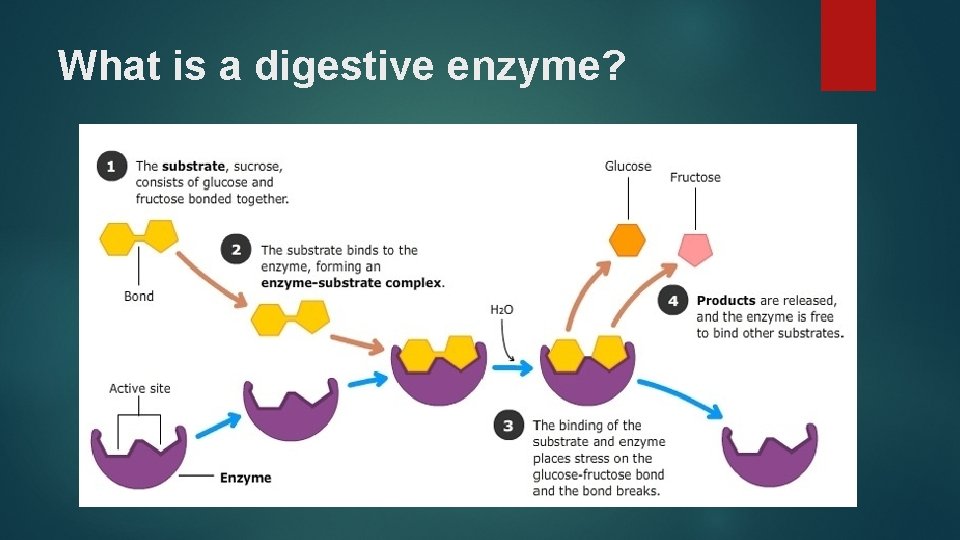
What is a digestive enzyme?
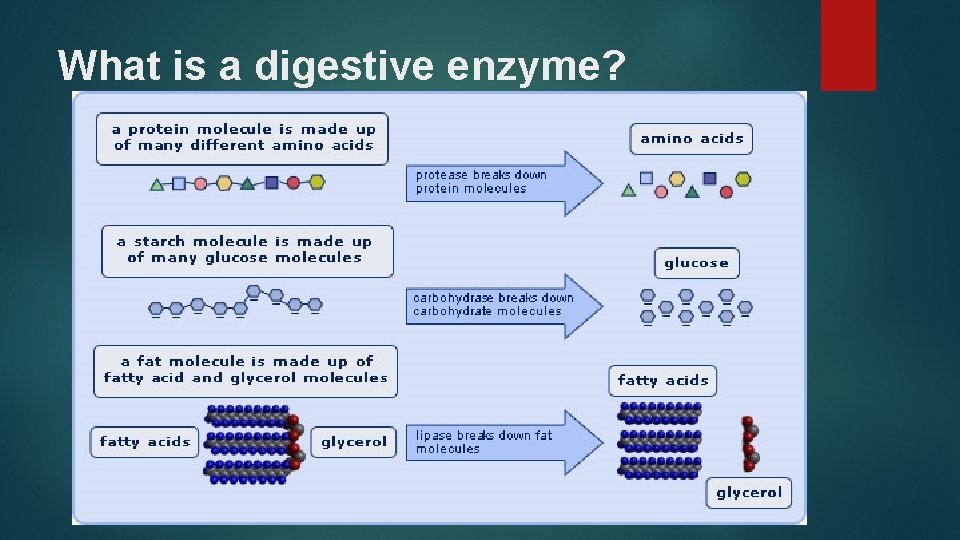
What is a digestive enzyme?
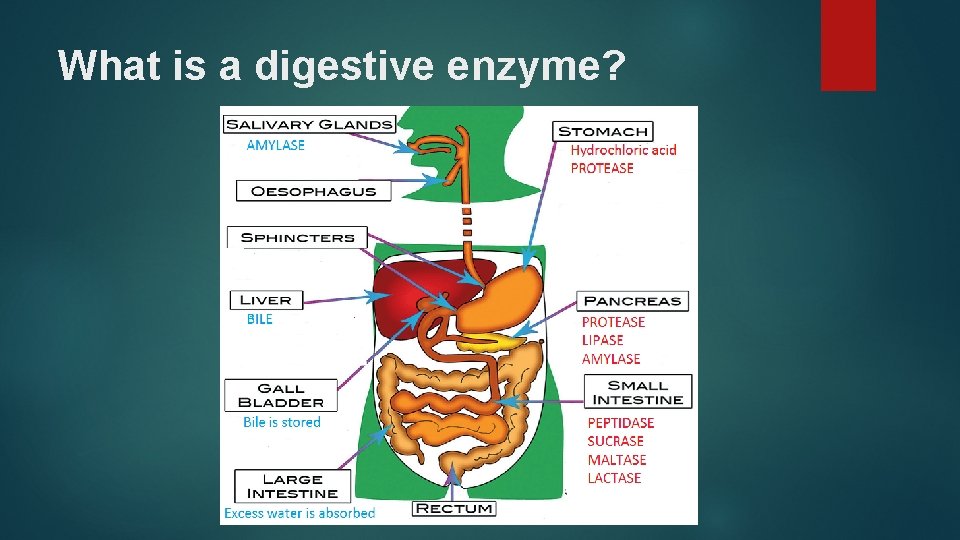
What is a digestive enzyme?

Carbohydrate Enzymes Salivary Amylase – from parotid salivary amylase (p. H 6. 5) Pancreatic Sucrase, amylase – from pancreatic juices (p. H 8) maltase, lactase – from duodenum (p. H 8)

Protein Enzymes Pepsinogen (inactive enzymes released by stomach cells) + HCl produces pepsin (p. H 2) Trypsin released by pancreas (p. H 8) Peptidases (p. H 8) released in duodenum
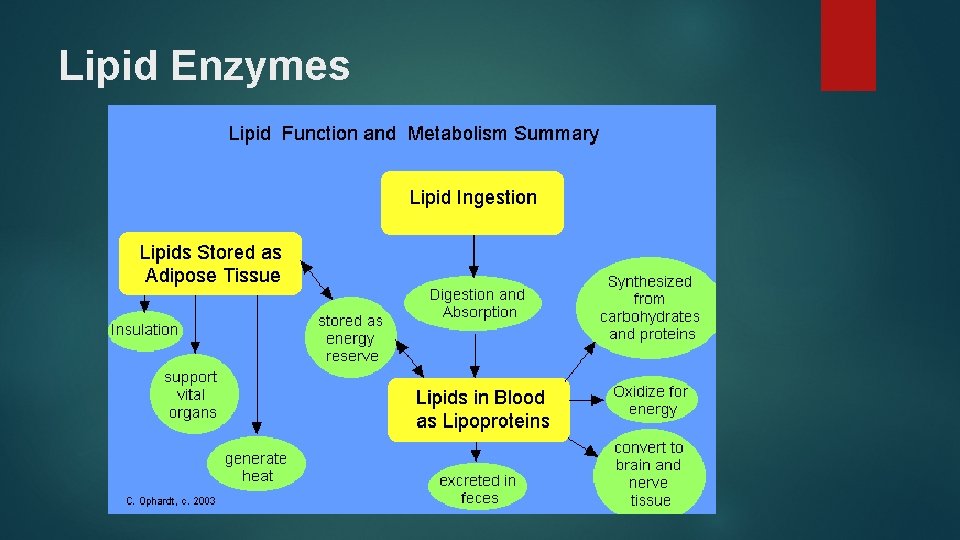
Lipid Enzymes
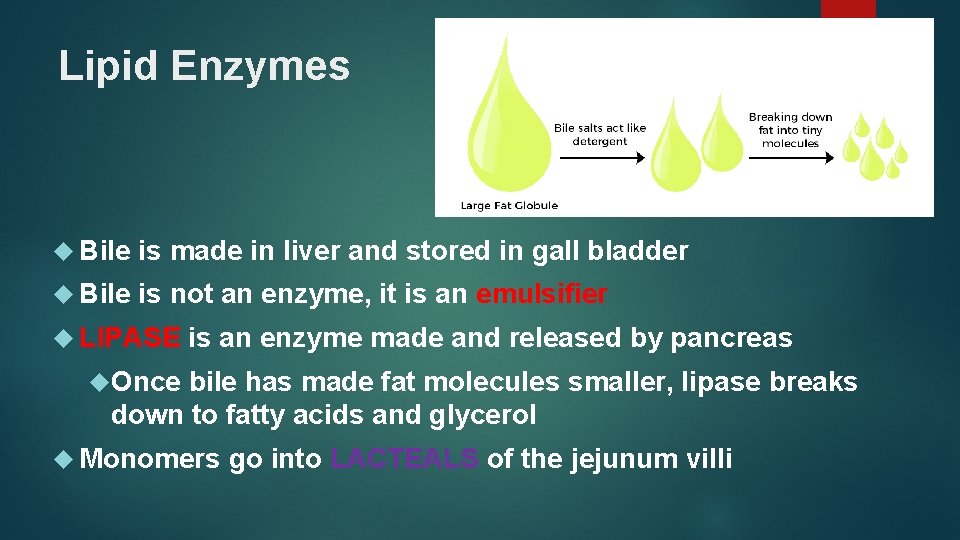
Lipid Enzymes Bile is made in liver and stored in gall bladder Bile is not an enzyme, it is an emulsifier LIPASE is an enzyme made and released by pancreas Once bile has made fat molecules smaller, lipase breaks down to fatty acids and glycerol Monomers go into LACTEALS of the jejunum villi
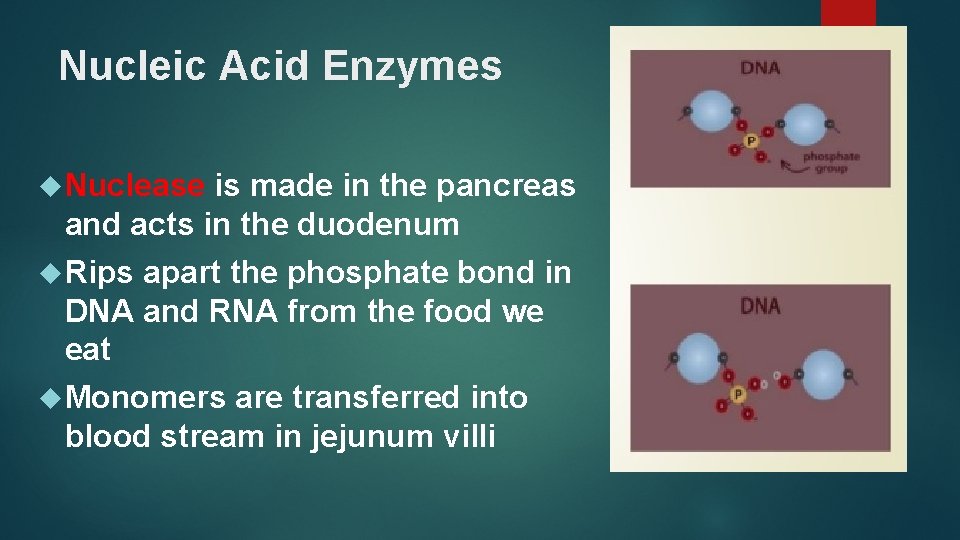
Nucleic Acid Enzymes Nuclease is made in the pancreas and acts in the duodenum Rips apart the phosphate bond in DNA and RNA from the food we eat Monomers are transferred into blood stream in jejunum villi
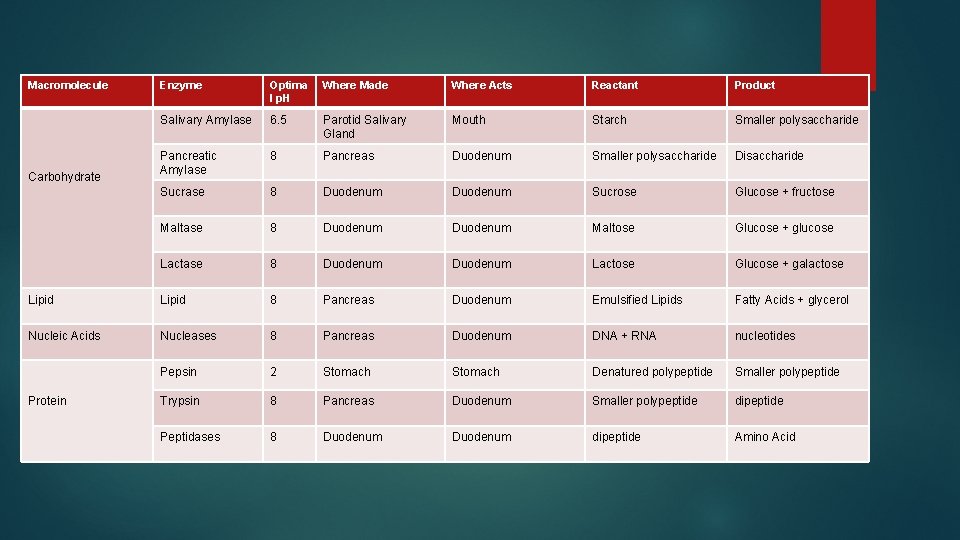
Macromolecule Enzyme Optima l p. H Where Made Where Acts Reactant Product Salivary Amylase 6. 5 Parotid Salivary Gland Mouth Starch Smaller polysaccharide Pancreatic Amylase 8 Pancreas Duodenum Smaller polysaccharide Disaccharide Sucrase 8 Duodenum Sucrose Glucose + fructose Maltase 8 Duodenum Maltose Glucose + glucose Lactase 8 Duodenum Lactose Glucose + galactose Lipid 8 Pancreas Duodenum Emulsified Lipids Fatty Acids + glycerol Nucleic Acids Nucleases 8 Pancreas Duodenum DNA + RNA nucleotides Pepsin 2 Stomach Denatured polypeptide Smaller polypeptide Trypsin 8 Pancreas Duodenum Smaller polypeptide dipeptide Peptidases 8 Duodenum dipeptide Amino Acid Carbohydrate Protein
- Slides: 10