
Enzymes Most reactions take place in a number
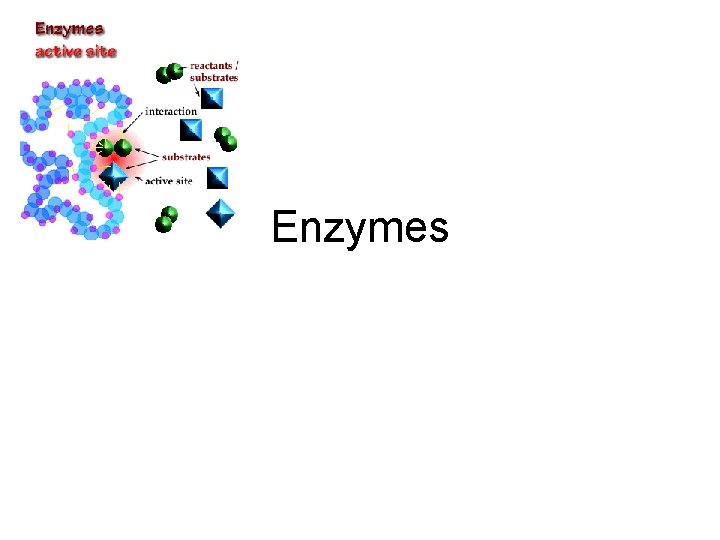
Enzymes
• Most reactions take place in a number of steps which need to be carefully controlled if the cell is to function properly • Enzymes are the most important controllers of cellular reactions
Catalysts • Catalysts speed up reactions without themselves being involved in the reaction • Enzymes are catalysts made of protein they speed up a reaction without being used up themselves in the reaction • Because enzymes are made in living things they are called biological (or organic catalysts)
• We learned in the chapter on food that proteins are made when amino acids join together • The function of a protein is decided not only by the sequence of amino acids but also by the way the protein folds • Most enzymes are globular proteins
Learning Check • What is an Enzyme? • What are catalysts? • To what group of bio-molecules do enzymes belong?
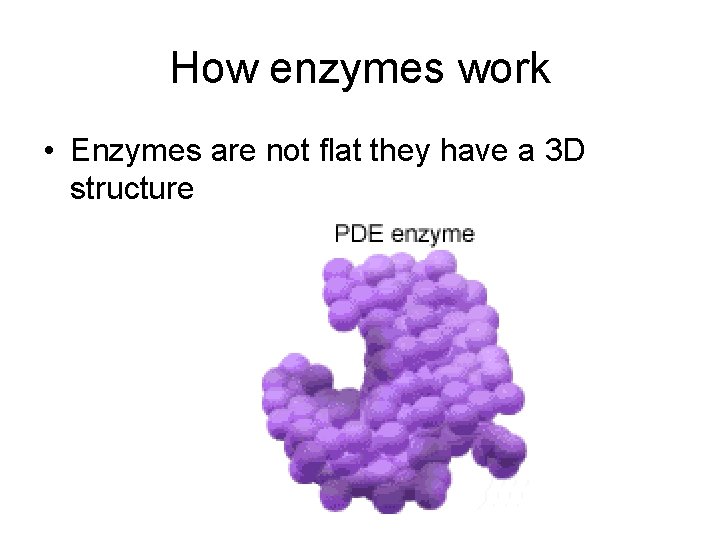
How enzymes work • Enzymes are not flat they have a 3 D structure
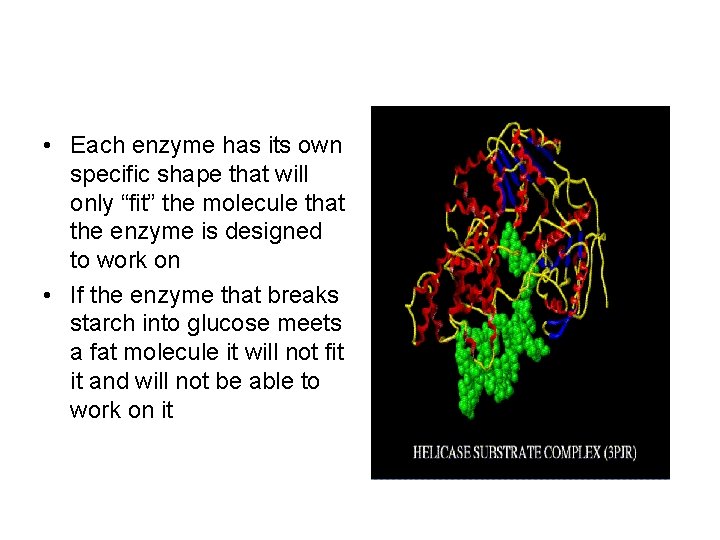
• Each enzyme has its own specific shape that will only “fit” the molecule that the enzyme is designed to work on • If the enzyme that breaks starch into glucose meets a fat molecule it will not fit it and will not be able to work on it
A movie on the action of Enzymes! • http: //www. bishopstopford. com/faculties/sc ience/arthur/? sortby=3 http: //www. angelo. edu/faculty/nflynn/Biochemistry/ • http: //www. angelo. edu/faculty/nflynn/Bioch emistry/
Learning Check • Why is the shape of an enzyme important? • Are enzymes flat, 3 D or 2 D in shape?
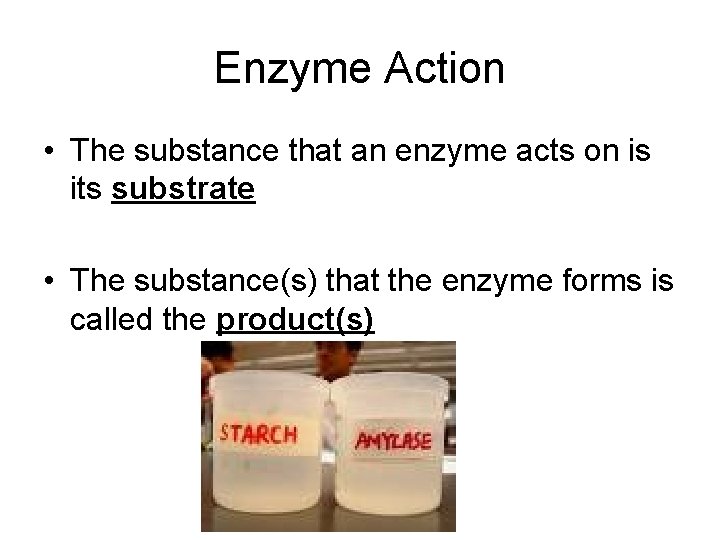
Enzyme Action • The substance that an enzyme acts on is its substrate • The substance(s) that the enzyme forms is called the product(s)

A Catabolic enzyme • Amylase converts starch to maltose • Catabolic as it breaks a big molecule into a smaller one • It is produced by saliva glands in mouth and by the pancreas
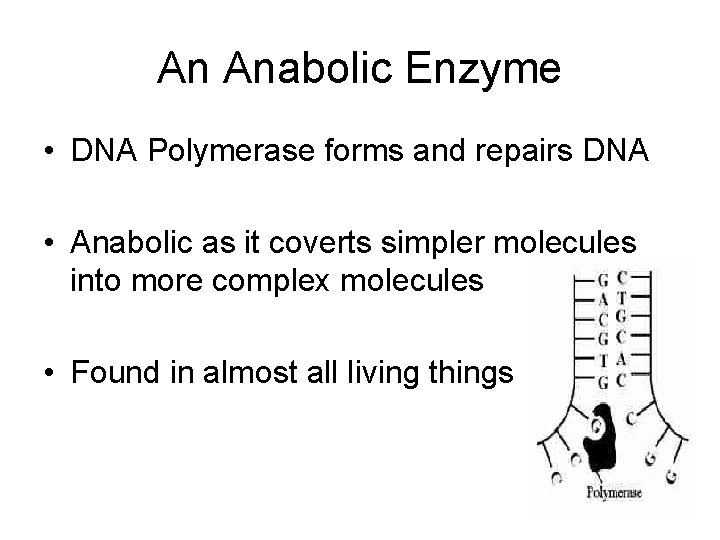
An Anabolic Enzyme • DNA Polymerase forms and repairs DNA • Anabolic as it coverts simpler molecules into more complex molecules • Found in almost all living things

Consider This • Amylase is an enzyme found in saliva. It breaks starch molecules into smaller maltose molecules • What is the substrate? • What is the product? • Will amylase break fats into fatty acids + glycerol? Why? • Is this an example of a catabolic or an anabolic reaction? Why?
And This • DNA Polymerase is an enzyme that builds DNA using tiny molecules in our cells • What is the substrate? • What is the product? • Will amylase build keratin out of peptides? Why? • Is this an example of a catabolic or an anabolic reaction? Why?

• Enzymes work because they have the correct shape to fit the substrate • They have a complex 3 dimensional shape to fit the substrate • When enzymes and their substrates meet and come together they form an Enzyme/Substrate complex

Learning Check • What is meant by a substrate? • What is the unit formed when an enzyme combines with its substrate called? • Give an example of an anabolic reaction • Give an example of a catabolic reaction
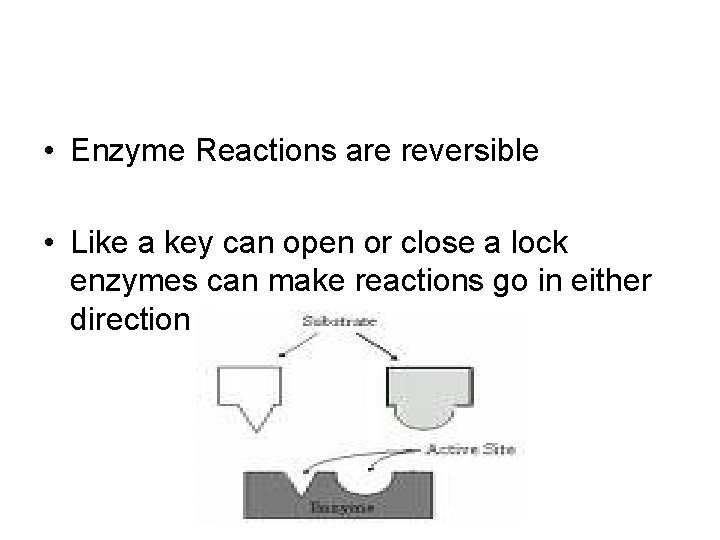
• Enzyme Reactions are reversible • Like a key can open or close a lock enzymes can make reactions go in either direction
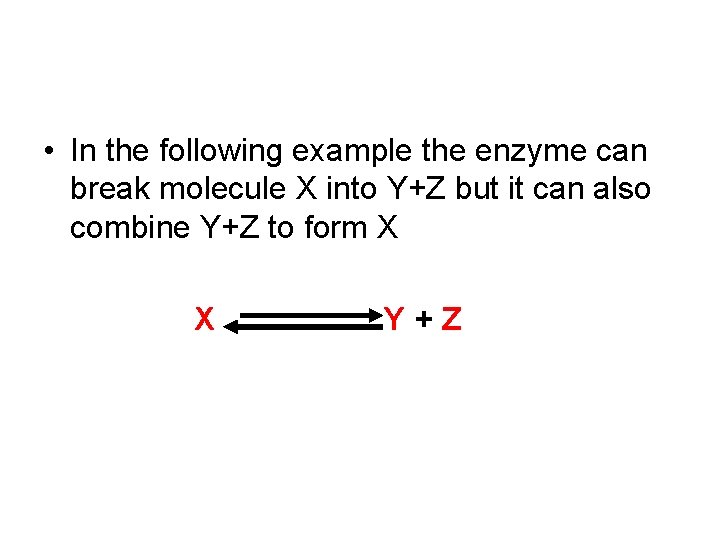
• In the following example the enzyme can break molecule X into Y+Z but it can also combine Y+Z to form X X Y+Z
Learning Check • Can enzyme reactions be reversed?
Naming Enzymes • Enzymes are named by adding the suffix ase to the name of their substrate Eg. • Enzyme that acts on Amylose (starch) is called amylase • Enzymes that act on proteins are called proteases
Learning Check • Can you think of a name for enzymes that act on Lipids? • Amazingly enough they are called Lipases!

Inhibitors • Inhibitors attach to enzymes and destroy their shape • When this happens the enzymes are said to be denatured
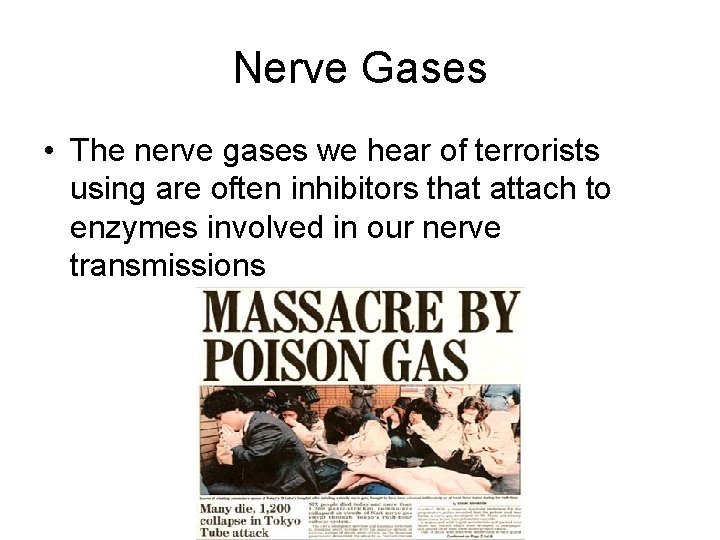
Nerve Gases • The nerve gases we hear of terrorists using are often inhibitors that attach to enzymes involved in our nerve transmissions
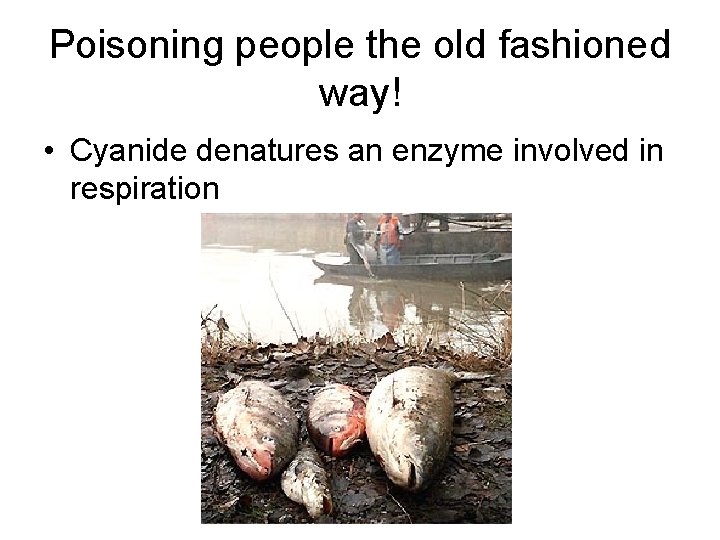
Poisoning people the old fashioned way! • Cyanide denatures an enzyme involved in respiration
Beneficial Inhibitors • Insecticides affect enzymes in insects causing their death • Drugs can affect enzymes involved in pain causing the pain to stop • Antibiotics can affect enzymes in bacteria causing the bacteria to die
Learning Check • What is an inhibitor? • How do inhibitors work? • Can you give an example of a harmful inhibitor? • Can you give an example of a beneficial inhibitor?

Enzymes at work! • Enzymes work best in certain conditions Factors that affect enzymes include • Temperature • p. H • Substrate concentration • Enzyme concentration • We will be examining these in experiments
Temperature • At very low temperatures ice forms, liquids become solids and enzymes can’t work • As temperature increases molecules start to move and bump into each other causing the rate of reaction to increase
• Human enzymes work best at body temperature (37°C) • Plant Enzymes work best at 20 -30 °C • Above certain temperatures enzymes start to lose their shape the rate of reaction falls • When the shape is fully lost the enzyme is said to be denatured this is usually a permanent condition
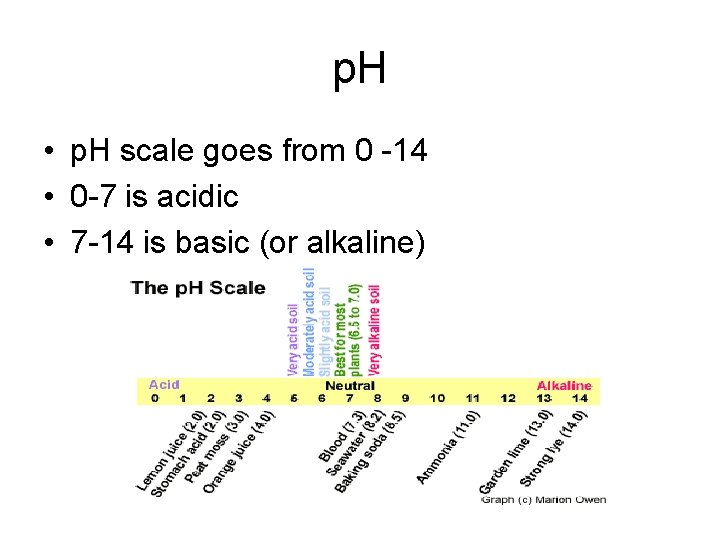
p. H • p. H scale goes from 0 -14 • 0 -7 is acidic • 7 -14 is basic (or alkaline)
• Enzymes work over a very narrow p. H • Most enzymes work at p. H 6 -8 • Outside this they lose shape and get denatured • The optimum or best ph is usually p. H 7
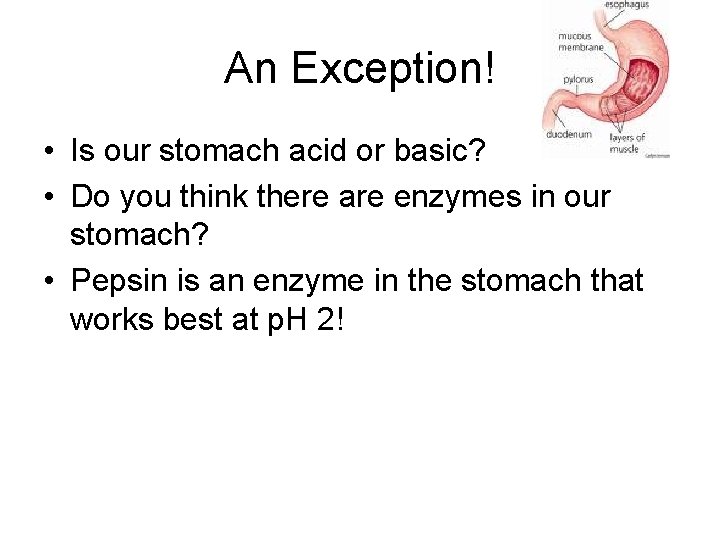
An Exception! • Is our stomach acid or basic? • Do you think there are enzymes in our stomach? • Pepsin is an enzyme in the stomach that works best at p. H 2!
Learning Check • What factors affect enzyme action? • What is the best temperature for (a) human enzymes and (b) plant enzymes • What is meant by p. H? • Do enzymes work over a narrow or wide p. H range?
Immobilised Enzymes • Bio-processing is the use of enzyme controlled reactions to produce a product • Bio-processing can be used to produce a vast range of products such as cheeses, beer, antibiotics, vaccines, methane gas, food flavours, vitamins and perfumes
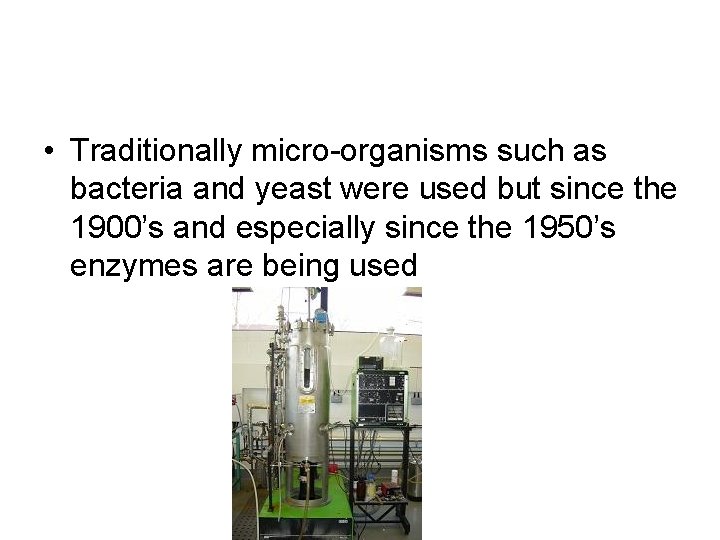
• Traditionally micro-organisms such as bacteria and yeast were used but since the 1900’s and especially since the 1950’s enzymes are being used
• If enzymes are used freely dissolved in a vessel it can be very wasteful as they are lost at the end of the process • To prevent this problem enzymes are often immobilised or fixed • This means they are attached to each other or an inert substance and can be used repeatedly
Learning Check • What is bio-processing? • What type of organisms are uasually used in bio-processing? • Why is bio-processing advantageous?
How to immobilise enzymes • Physical methods • Adsorption where enzymes are physically attached to inactive supports such as glass beads or ceramics • Enclosed by a membrane when enzymes are kept within a membrane • Trapped in a gel, sodium alginate is commonly used this allows substrates in and products out
• Chemical Methods • Bonded to a support enzymes chemically bonded to a support such as glass beads or ceramics • Bonded to each other Enzymes are chemically bonded to each other
Learning Check • Describe 2 physical methods of immobilising enzymes • Describe 2 chemical methods of immobilising enzymes
Advantages of Immobilised Enzymes • Efficiency of enzyme is not affected • Immobilised enzymes can be easily recovered from the product so you can get a pure sample of product easily • Immobilised enzymes can be reused this cuts costs • Enzymes frequently become more stable when immobilised
Uses of Immobilised Enzymes • Immobilised glucose isomerase converts glucose to fructose which is used to sweeten drinks
• Penicillin acylase changes the structure of penicillin to make more antibiotics that will fight a wider range of bacteria
• Lactase converts lactose to sweeter sugars glucose and galactose which are then used by food manufacturers
Learning check • What are the advantages of immobilising enzymes? • Can you name 3 things immobilised enzymes are used for?
Syllabus Can you. . . . • Define the term: enzymes • State the nature, folded shape & functions of enzymes. • Explain the role of enzymes in plants and animals including role in metabolism • Explain the effects of p. H & temperature on enzyme activity. • State the procedure and advantages of Bioprocessing. • State the use of Bio-processing.
- Slides: 47