
ENZYMES Enzymes Special proteins Increase the speed of
- Slides: 11
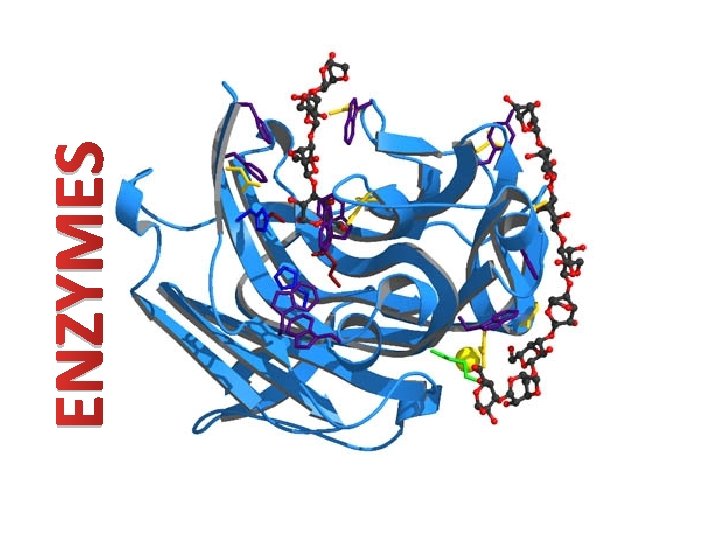
ENZYMES
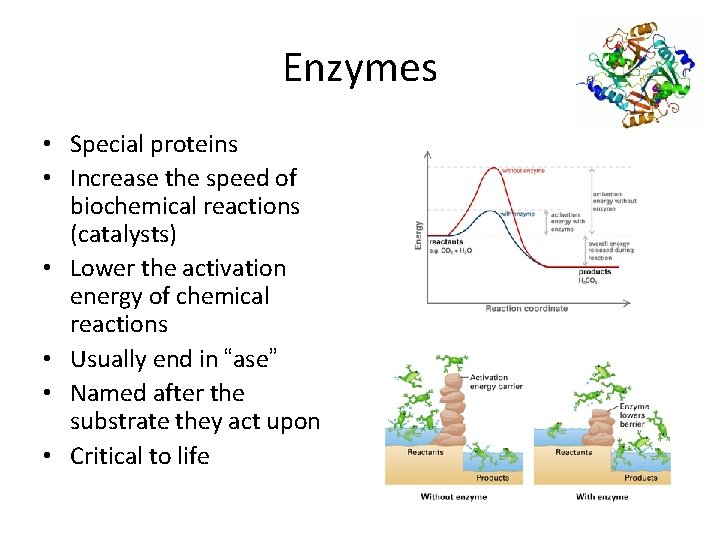
Enzymes • Special proteins • Increase the speed of biochemical reactions (catalysts) • Lower the activation energy of chemical reactions • Usually end in “ase” • Named after the substrate they act upon • Critical to life
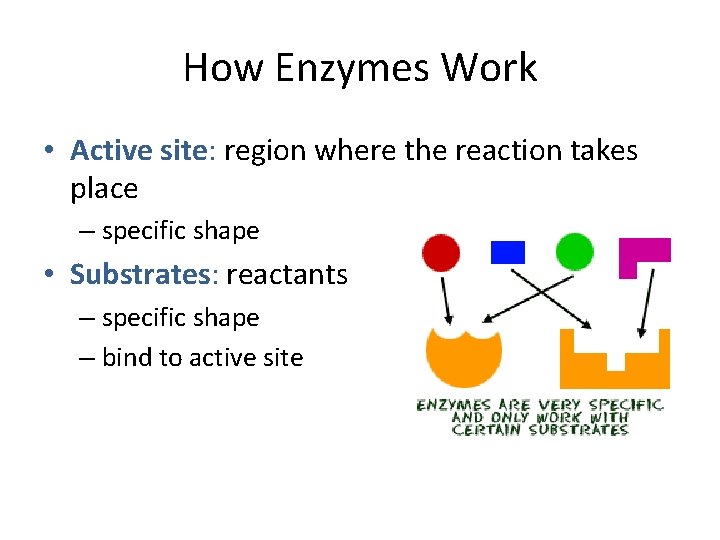
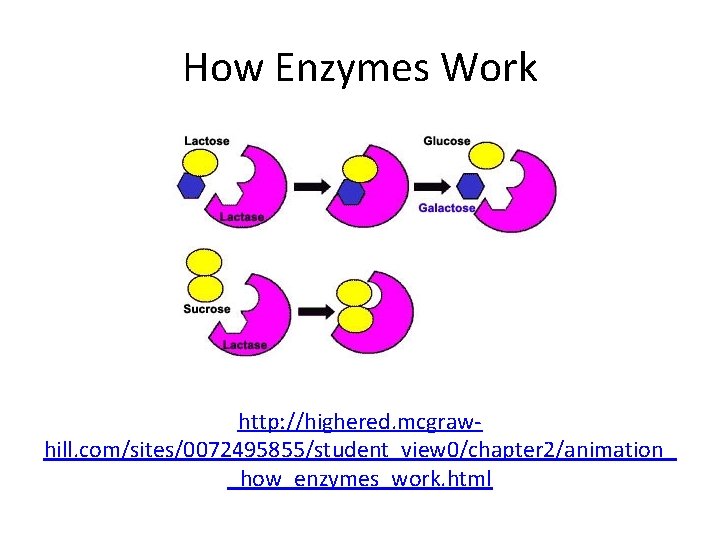
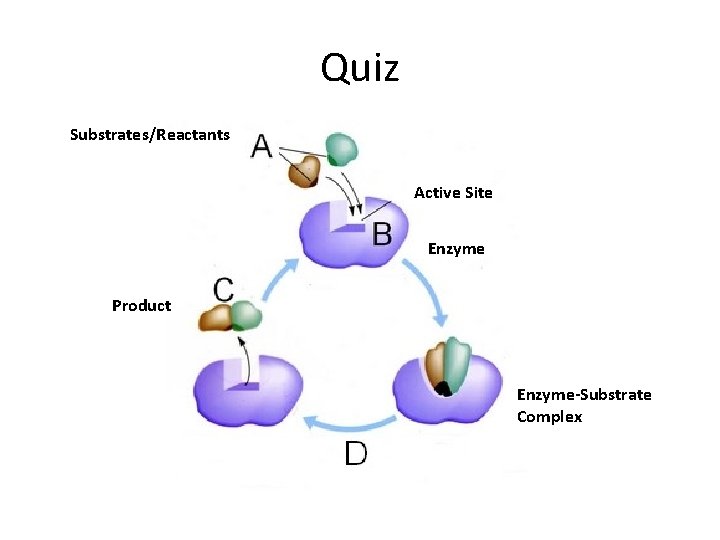
How Enzymes Work • Active site: region where the reaction takes place – specific shape • Substrates: reactants – specific shape – bind to active site
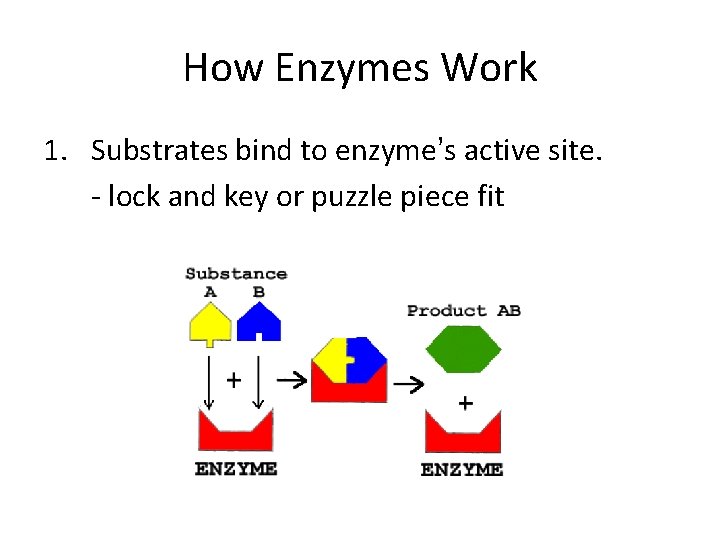
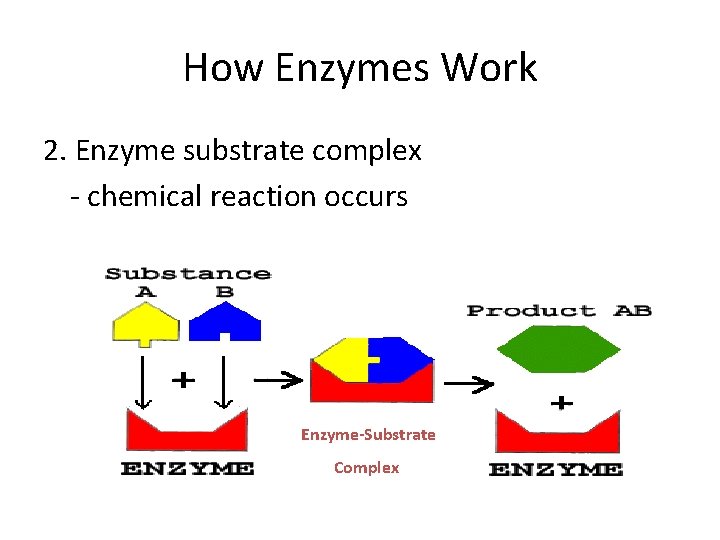
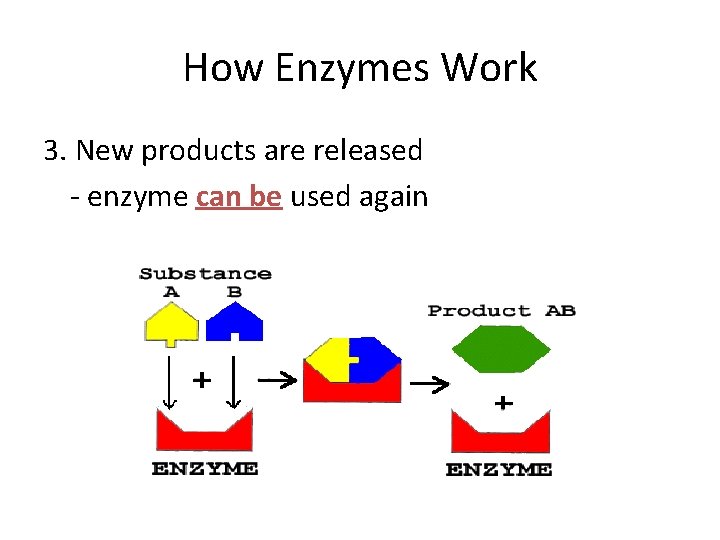
How Enzymes Work 1. Substrates bind to enzyme’s active site. - lock and key or puzzle piece fit
How Enzymes Work 2. Enzyme substrate complex - chemical reaction occurs Enzyme-Substrate Complex
How Enzymes Work 3. New products are released - enzyme can be used again
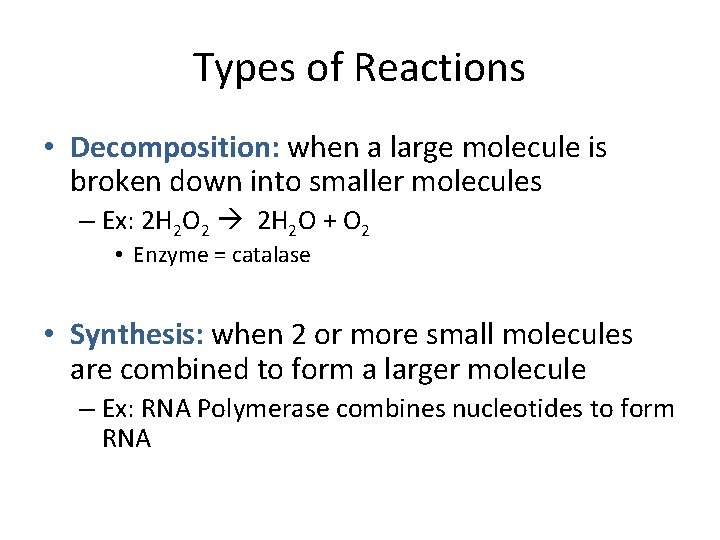
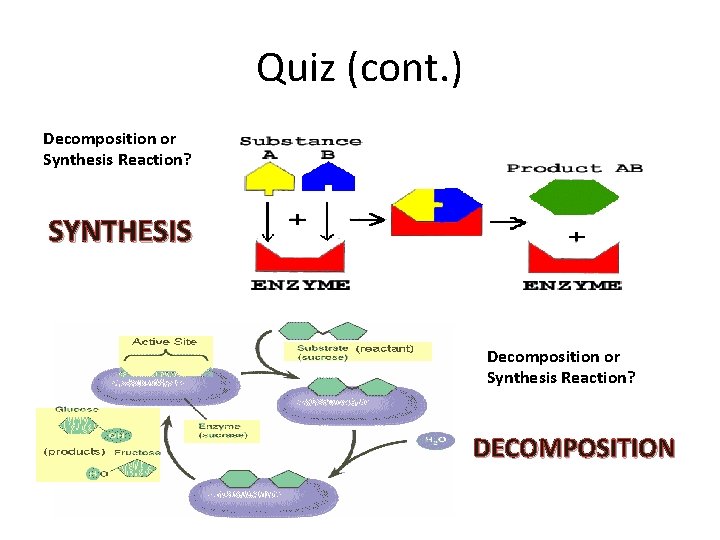
Types of Reactions • Decomposition: when a large molecule is broken down into smaller molecules – Ex: 2 H 2 O 2 2 H 2 O + O 2 • Enzyme = catalase • Synthesis: when 2 or more small molecules are combined to form a larger molecule – Ex: RNA Polymerase combines nucleotides to form RNA
How Enzymes Work http: //highered. mcgrawhill. com/sites/0072495855/student_view 0/chapter 2/animation_ _how_enzymes_work. html
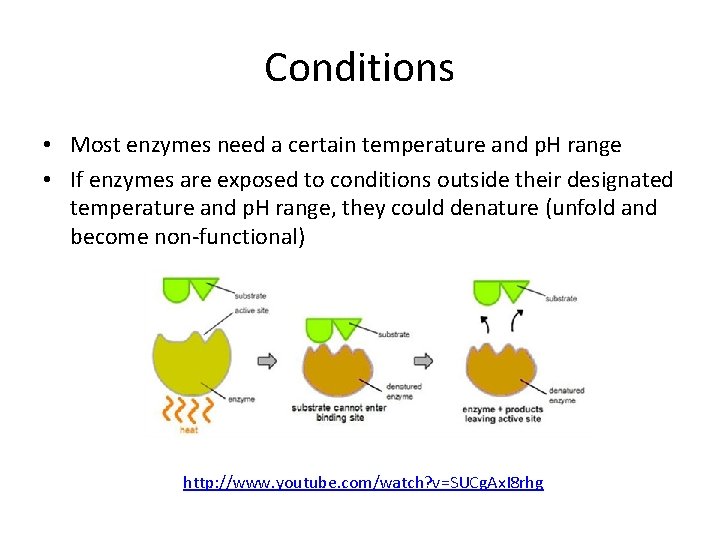
Conditions • Most enzymes need a certain temperature and p. H range • If enzymes are exposed to conditions outside their designated temperature and p. H range, they could denature (unfold and become non-functional) http: //www. youtube. com/watch? v=SUCg. Ax. I 8 rhg
Quiz Substrates/Reactants Active Site Enzyme Product Enzyme-Substrate Complex
Quiz (cont. ) Decomposition or Synthesis Reaction? SYNTHESIS Decomposition or Synthesis Reaction? DECOMPOSITION