
ENZYMES Enzymes Enzyme Action Factors Affecting Enzyme Action

- Slides: 22
ENZYMES Enzymes Enzyme Action Factors Affecting Enzyme Action 1
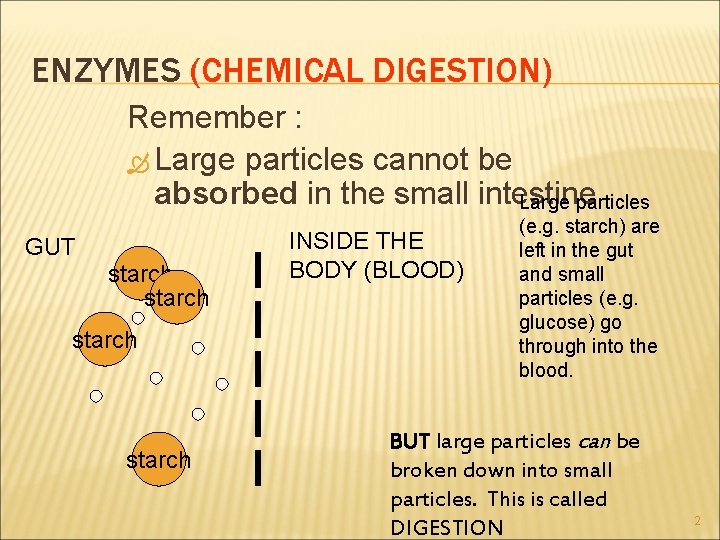
ENZYMES (CHEMICAL DIGESTION) Remember : Large particles cannot be absorbed in the small intestine Large particles INSIDE THE BODY (BLOOD) GUT starch G G G (e. g. starch) are left in the gut and small particles (e. g. glucose) go through into the blood. G G starch BUT large particles can be broken down into small particles. This is called DIGESTION 2
ENZYMES Digestive enzymes speed up the process of hydrolysis. Enzymes are biological catalysts. All enzymes are protein in nature. They are ORGANIC CATALYSTS that SPEED UP CONTROL __________ and ________ chemical reactions without being used up in the process. This means they remain unchanged by the reaction and can be used. OVER ______ and OVER _____; A small amount of enzyme can REACTION catalyse a _________ many times, processing a lot of substrate. 3
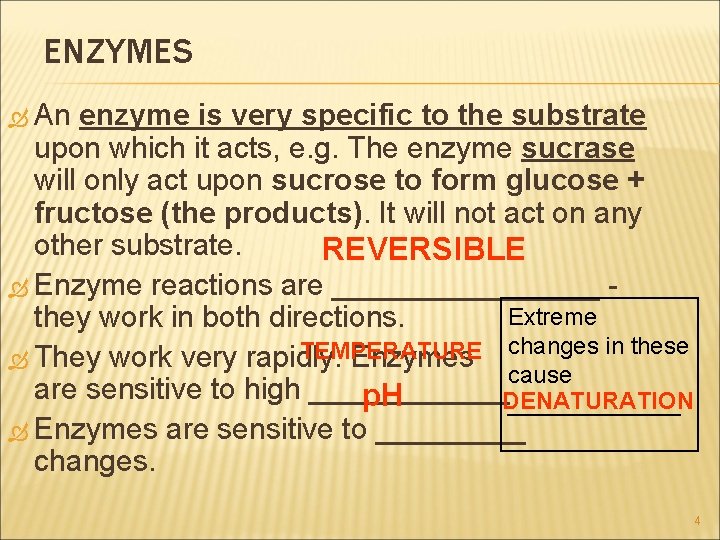
ENZYMES An enzyme is very specific to the substrate upon which it acts, e. g. The enzyme sucrase will only act upon sucrose to form glucose + fructose (the products). It will not act on any other substrate. REVERSIBLE Enzyme reactions are ________ Extreme they work in both directions. TEMPERATURE They work very rapidly. Enzymes changes in these cause are sensitive to high ______ p. H DENATURATION _______ Enzymes are sensitive to _____ changes. 4
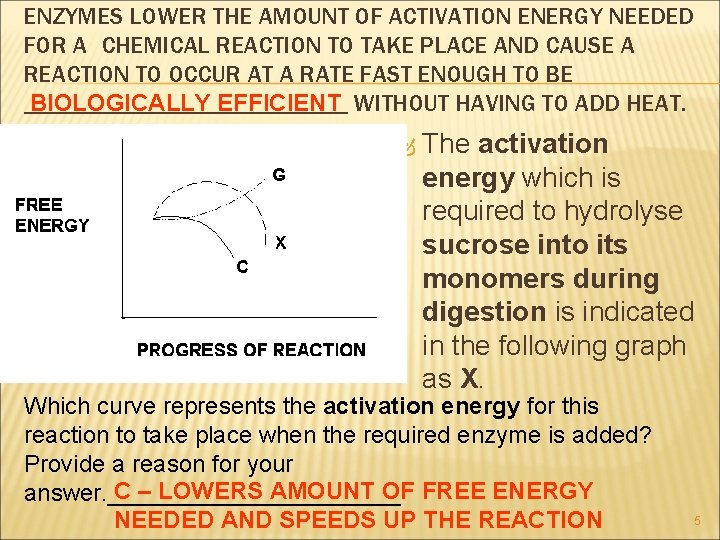
ENZYMES LOWER THE AMOUNT OF ACTIVATION ENERGY NEEDED FOR A CHEMICAL REACTION TO TAKE PLACE AND CAUSE A REACTION TO OCCUR AT A RATE FAST ENOUGH TO BE ______________ BIOLOGICALLY EFFICIENT WITHOUT HAVING TO ADD HEAT. The activation energy which is required to hydrolyse sucrose into its monomers during digestion is indicated in the following graph as X. Which curve represents the activation energy for this reaction to take place when the required enzyme is added? Provide a reason for your C – LOWERS AMOUNT OF FREE ENERGY answer. ___________ NEEDED AND SPEEDS UP THE REACTION 5
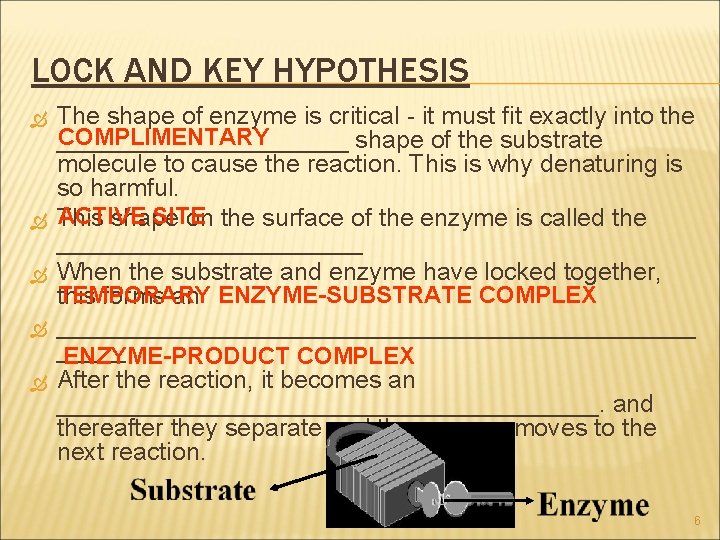
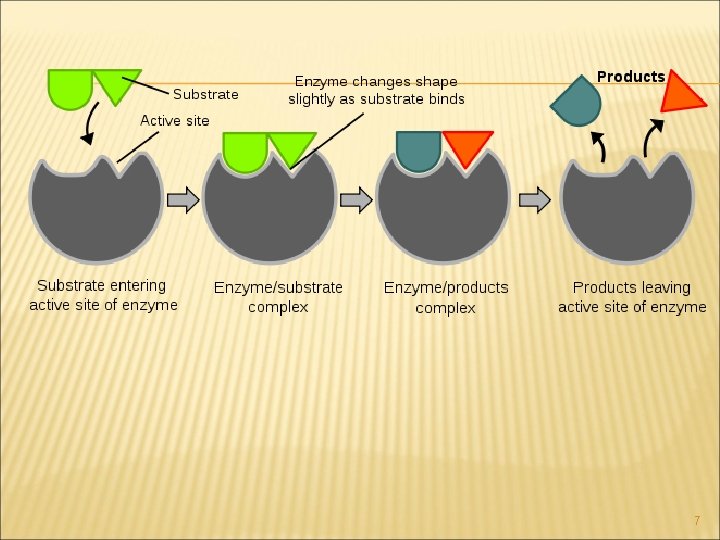
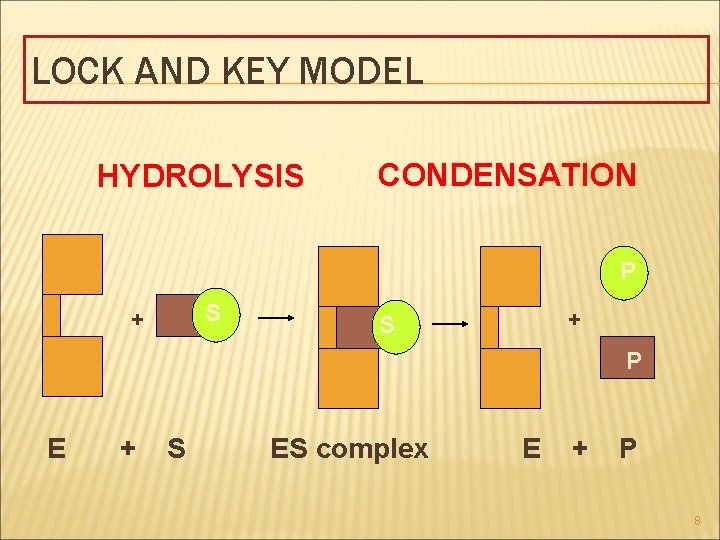
LOCK AND KEY HYPOTHESIS The shape of enzyme is critical - it must fit exactly into the COMPLIMENTARY ___________ shape of the substrate molecule to cause the reaction. This is why denaturing is so harmful. ACTIVE SITE This shape on the surface of the enzyme is called the ___________ When the substrate and enzyme have locked together, TEMPORARY this forms an ENZYME-SUBSTRATE COMPLEX _______________________ ENZYME-PRODUCT COMPLEX After the reaction, it becomes an ____________________. and thereafter they separate and the enzyme moves to the next reaction. 6
7
LOCK AND KEY MODEL HYDROLYSIS CONDENSATION P S + + S P E + S ES complex E + P 8
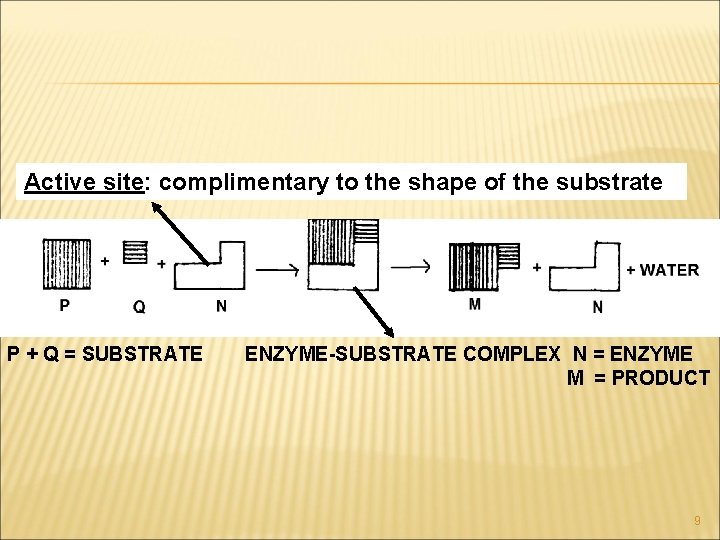
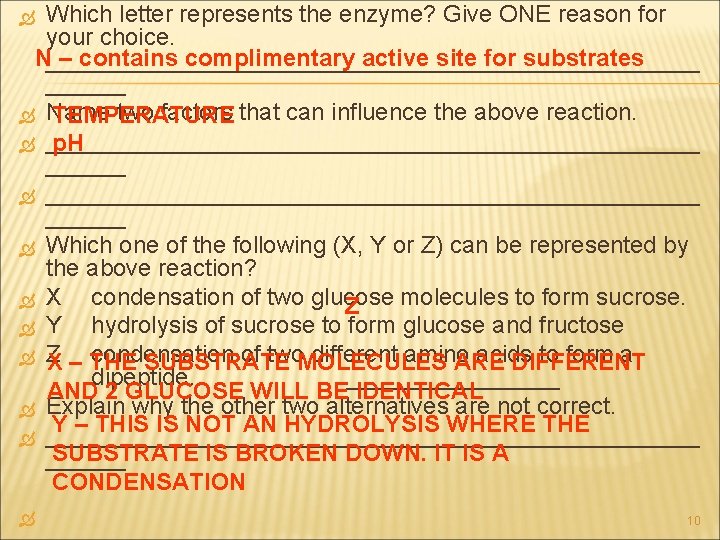
Active site: complimentary to the shape of the substrate P + Q = SUBSTRATE ENZYME-SUBSTRATE COMPLEX N = ENZYME M = PRODUCT 9
Which letter represents the enzyme? Give ONE reason for your choice. N_________________________ – contains complimentary active site for substrates ______ Name two factors that can influence the above reaction. TEMPERATURE _________________________ p. H _________________________ Which one of the following (X, Y or Z) can be represented by the above reaction? X condensation of two glucose molecules to form sucrose. Z Y hydrolysis of sucrose to form glucose and fructose Z condensation of two. MOLECULES different amino acids to form a X – THE SUBSTRATE ARE DIFFERENT dipeptide. ________ AND 2 GLUCOSE WILL BE IDENTICAL Explain why the other two alternatives are not correct. Y – THIS IS NOT AN HYDROLYSIS WHERE THE _________________________ SUBSTRATE IS BROKEN DOWN. IT IS A ______ CONDENSATION 10
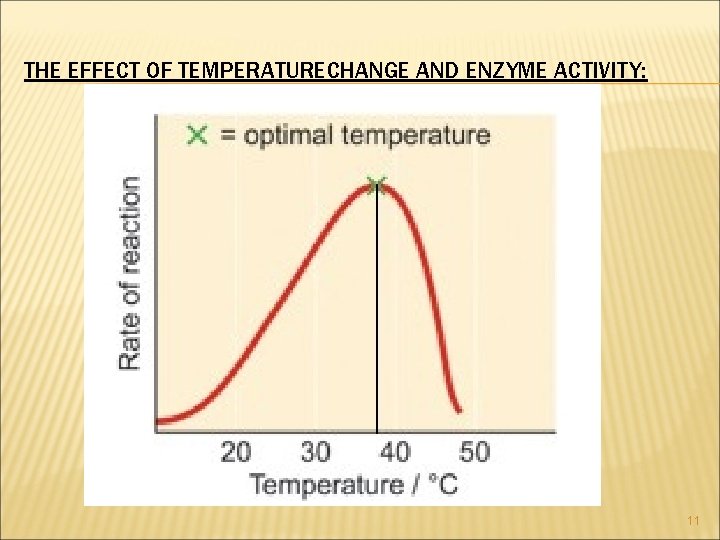
THE EFFECT OF TEMPERATURECHANGE AND ENZYME ACTIVITY: 11
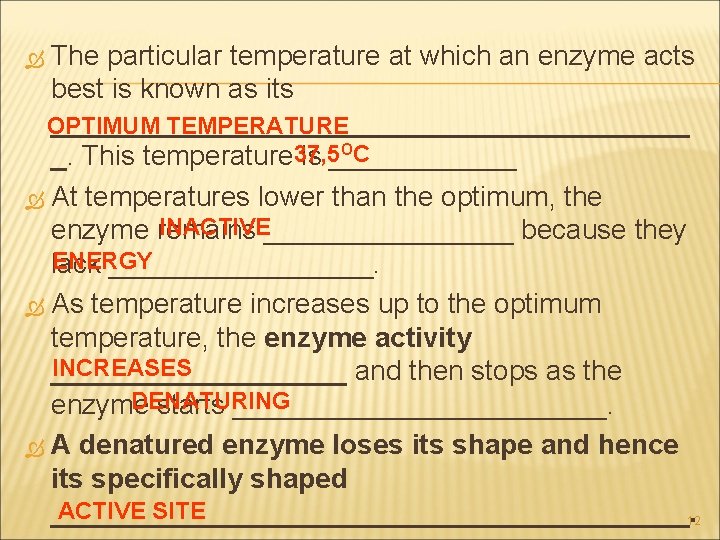
The particular temperature at which an enzyme acts best is known as its _____________________ OPTIMUM TEMPERATURE OC _. This temperature 37, 5 is ______ At temperatures lower than the optimum, the INACTIVE________ because they enzyme remains ENERGY lack _________. As temperature increases up to the optimum temperature, the enzyme activity INCREASES __________ and then stops as the DENATURING enzyme starts ____________. A denatured enzyme loses its shape and hence its specifically shaped ACTIVE SITE _____________________. 12
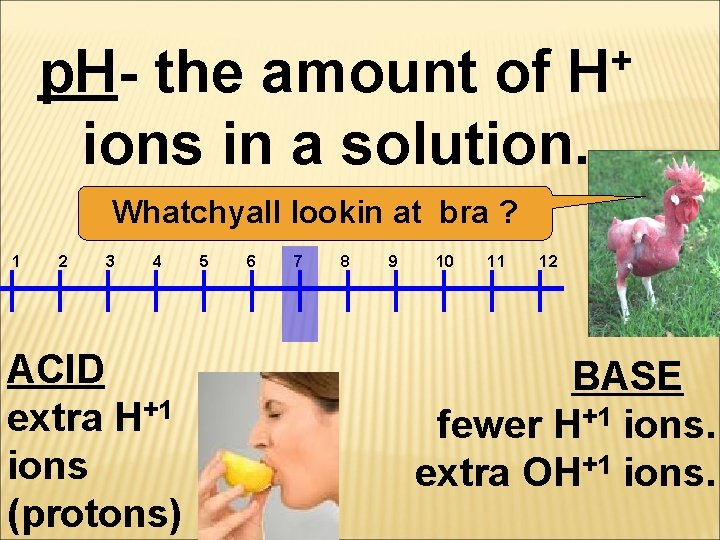
+ H p. H- the amount of ions in a solution. Whatchyall lookin at bra ? 1 2 3 4 ACID extra H+1 ions (protons) 5 6 7 8 9 10 11 12 BASE fewer H+1 ions. extra OH+1 ions.
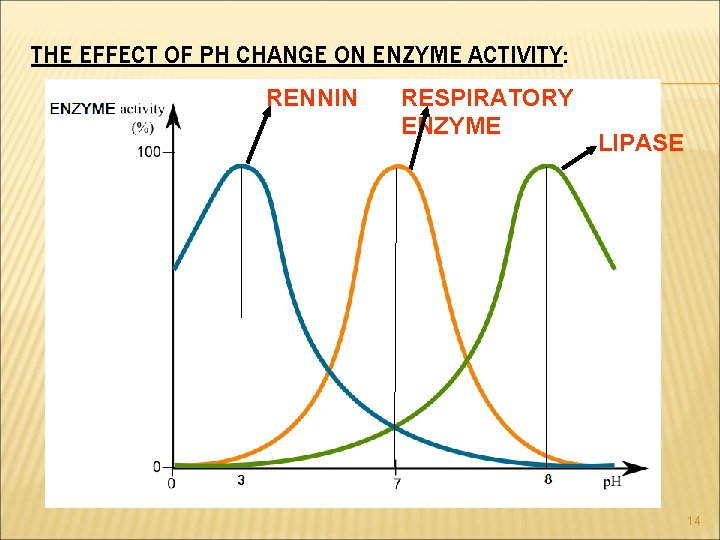
THE EFFECT OF PH CHANGE ON ENZYME ACTIVITY: RENNIN RESPIRATORY ENZYME LIPASE 14
Enzymes work: at their best at a specific p. H OPTIMUM p. H called the __________ p. H changes in BOTH directions away from the optimum p. H cause the enzyme to DENATURE become ____________ - the ACTIVE SITE ____________ is damaged and can no longer fit the substrate, so it cannot function. 15
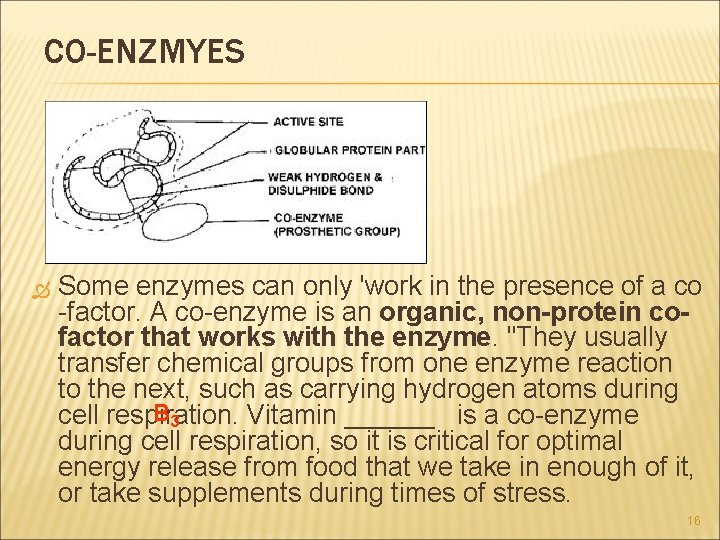
CO-ENZMYES Some enzymes can only 'work in the presence of a co -factor. A co-enzyme is an organic, non-protein cofactor that works with the enzyme. "They usually transfer chemical groups from one enzyme reaction to the next, such as carrying hydrogen atoms during B 3 cell respiration. Vitamin ______ is a co-enzyme during cell respiration, so it is critical for optimal energy release from food that we take in enough of it, or take supplements during times of stress. 16
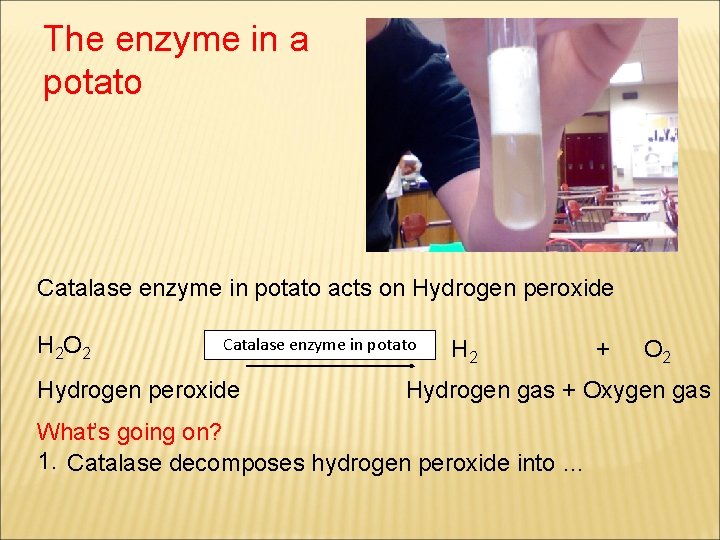
The enzyme in a potato Catalase enzyme in potato acts on Hydrogen peroxide H 2 O 2 Catalase enzyme in potato Hydrogen peroxide H 2 + O 2 Hydrogen gas + Oxygen gas What’s going on? 1. Catalase decomposes hydrogen peroxide into …
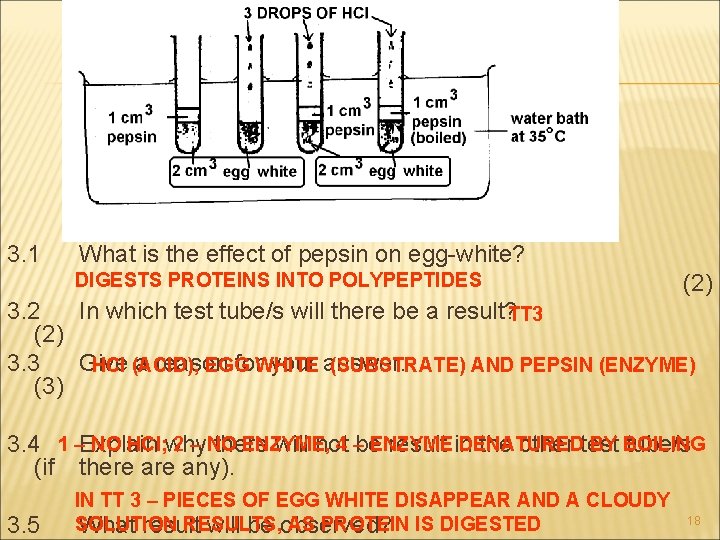
3. 1 What is the effect of pepsin on egg-white? DIGESTS PROTEINS INTO POLYPEPTIDES (2) 3. 2 In which test tube/s will there be a result? TT 3 (2) 3. 3 Give a reason for. WHITE your answer. HCl (ACID), EGG (SUBSTRATE) AND PEPSIN (ENZYME) (3) NO HCl; why 2 – NO ENZYME, ENZYME DENATURED BY BOILING 3. 4 1 –Explain there will not 4 –be result in the other test tube/s (if there any). 3. 5 IN TT 3 – PIECES OF EGG WHITE DISAPPEAR AND A CLOUDY SOLUTION RESULTS, AS PROTEIN IS DIGESTED What result will be observed? 18
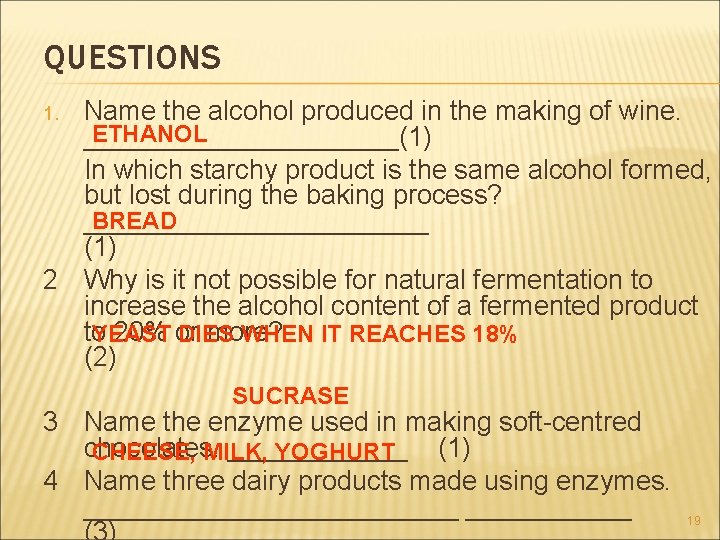
QUESTIONS Name the alcohol produced in the making of wine. ETHANOL ___________(1) In which starchy product is the same alcohol formed, but lost during the baking process? BREAD ____________ (1) 2 Why is it not possible for natural fermentation to increase the alcohol content of a fermented product to 20% or more? YEAST DIES WHEN IT REACHES 18% (2) 1. SUCRASE 3 Name the enzyme used in making soft-centred chocolates. ______ (1) CHEESE, MILK, YOGHURT 4 Name three dairy products made using enzymes. _____________ 19
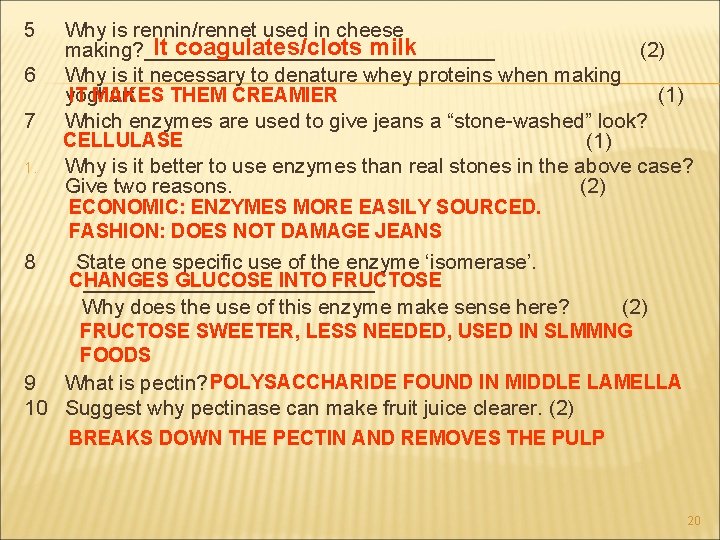
Why is rennin/rennet used in cheese It coagulates/clots milk making? _______________ (2) 6 Why is it necessary to denature whey proteins when making IT MAKES THEM CREAMIER yoghurt (1) 7 Which enzymes are used to give jeans a “stone-washed” look? CELLULASE (1) 1. Why is it better to use enzymes than real stones in the above case? Give two reasons. (2) ECONOMIC: ENZYMES MORE EASILY SOURCED. FASHION: DOES NOT DAMAGE JEANS 8 State one specific use of the enzyme ‘isomerase’. CHANGES GLUCOSE INTO FRUCTOSE _____________ Why does the use of this enzyme make sense here? (2) FRUCTOSE SWEETER, LESS NEEDED, USED IN SLMMNG FOODS 9 What is pectin? POLYSACCHARIDE FOUND IN MIDDLE LAMELLA 10 Suggest why pectinase can make fruit juice clearer. (2) BREAKS DOWN THE PECTIN AND REMOVES THE PULP 5 20
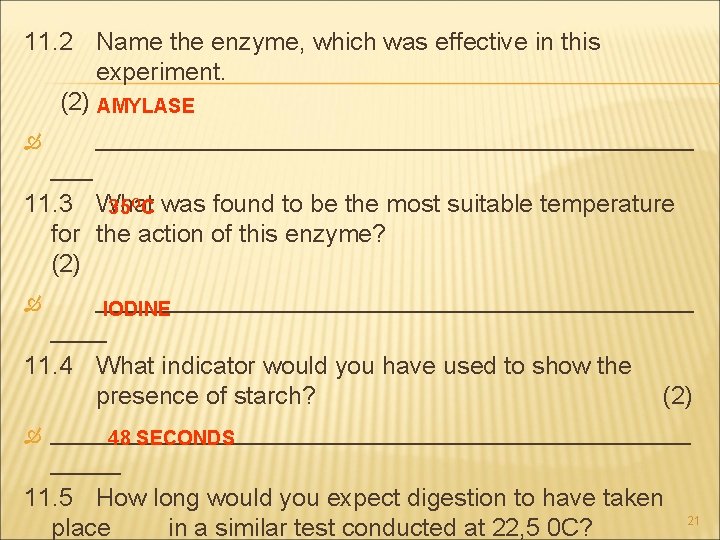
11. 2 Name the enzyme, which was effective in this experiment. (2) AMYLASE ______________________ ___ 11. 3 What 35 OC was found to be the most suitable temperature for the action of this enzyme? (2) ______________________ IODINE ____ 11. 4 What indicator would you have used to show the presence of starch? (2) _______________________ 48 SECONDS _____ 11. 5 How long would you expect digestion to have taken 21 place in a similar test conducted at 22, 5 0 C?
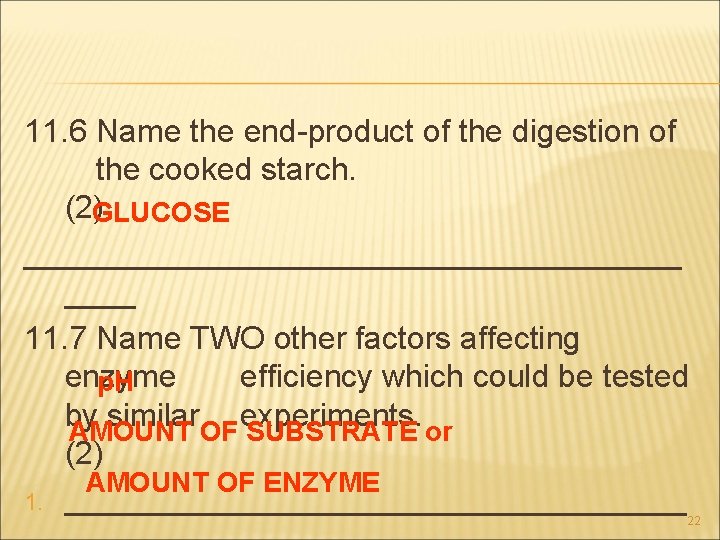
11. 6 Name the end-product of the digestion of the cooked starch. (2)GLUCOSE ___________________ 11. 7 Name TWO other factors affecting enzyme efficiency which could be tested p. H by similar experiments. AMOUNT OF SUBSTRATE or (2) AMOUNT OF ENZYME 1. __________________ 22