
ENZYMES Enzymes are Catalyst Enzymes speed up chemical

- Slides: 29
ENZYMES
Enzymes are Catalyst • Enzymes speed up chemical reactions. • Enzymes are catalyst to over 4000 biochemical reactions! http: //en. wikipedia. org/wiki/File: GLO 1_Homo_sapiens_small_fast. gif Life Sciences-HHMI Outreach. Copyright 2009 President and Fellows of Harvard College
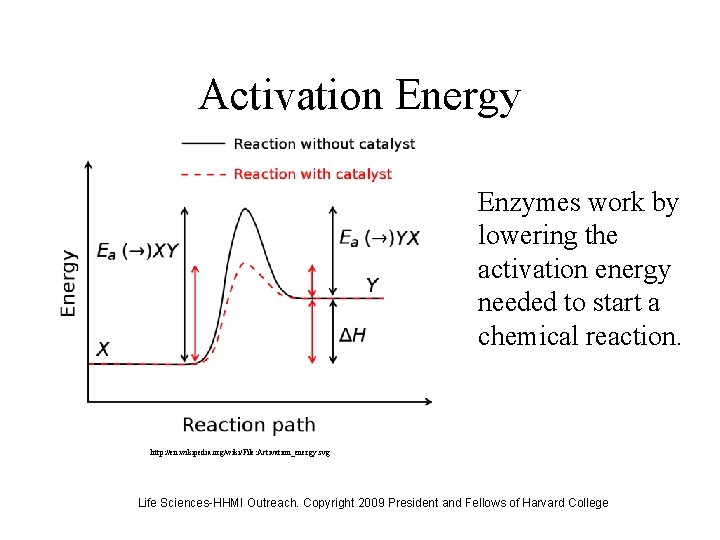
Activation Energy Enzymes work by lowering the activation energy needed to start a chemical reaction. http: //en. wikipedia. org/wiki/File: Activation_energy. svg Life Sciences-HHMI Outreach. Copyright 2009 President and Fellows of Harvard College
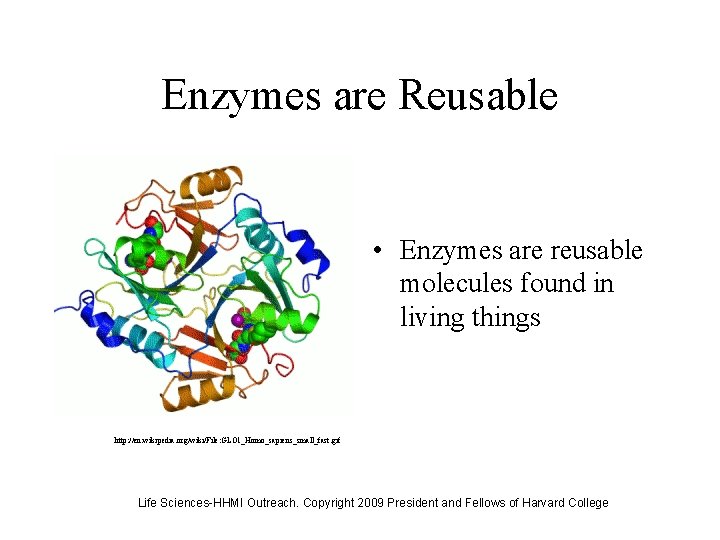
Enzymes are Reusable • Enzymes are reusable molecules found in living things http: //en. wikipedia. org/wiki/File: GLO 1_Homo_sapiens_small_fast. gif Life Sciences-HHMI Outreach. Copyright 2009 President and Fellows of Harvard College
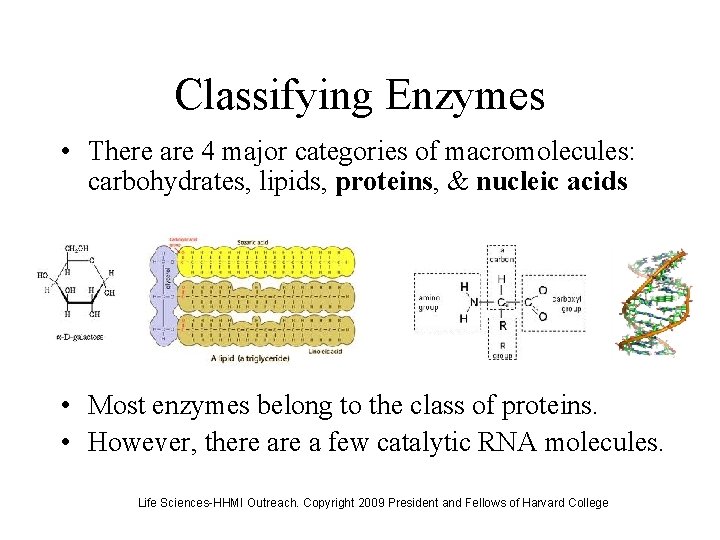
Classifying Enzymes • There are 4 major categories of macromolecules: carbohydrates, lipids, proteins, & nucleic acids • Most enzymes belong to the class of proteins. • However, there a few catalytic RNA molecules. Life Sciences-HHMI Outreach. Copyright 2009 President and Fellows of Harvard College
Naming Enzymes • Take the name of the substrate the enzyme works on and add the suffix -ase • Example: Lactose Lactase – Galactose Galactase – Fructose Fructase – Protein Protease – Lipid Lipase Life Sciences-HHMI Outreach. Copyright 2009 President and Fellows of Harvard College
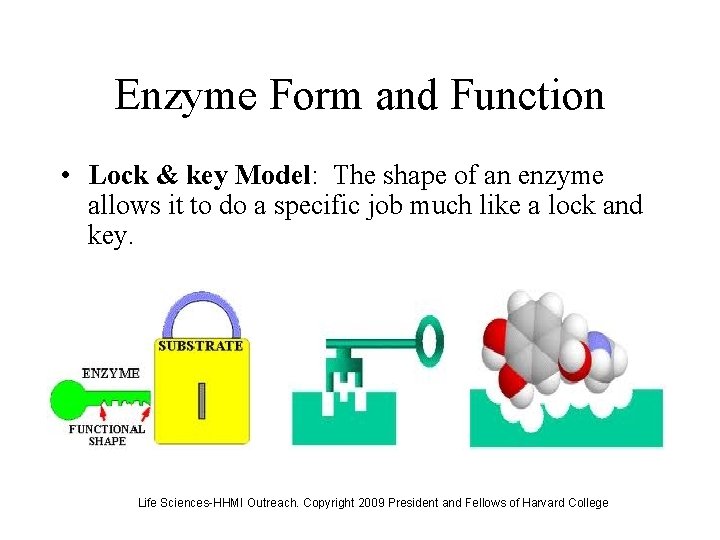
Enzyme Form and Function • Lock & key Model: The shape of an enzyme allows it to do a specific job much like a lock and key. Life Sciences-HHMI Outreach. Copyright 2009 President and Fellows of Harvard College
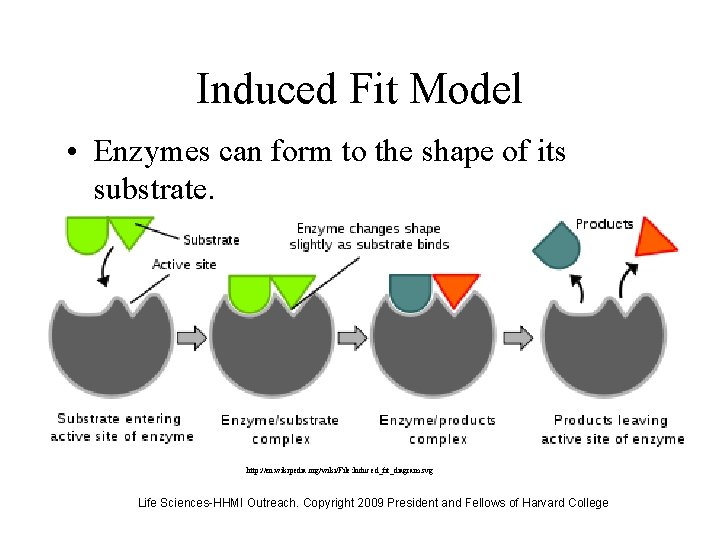
Induced Fit Model • Enzymes can form to the shape of its substrate. http: //en. wikipedia. org/wiki/File: Induced_fit_diagram. svg Life Sciences-HHMI Outreach. Copyright 2009 President and Fellows of Harvard College
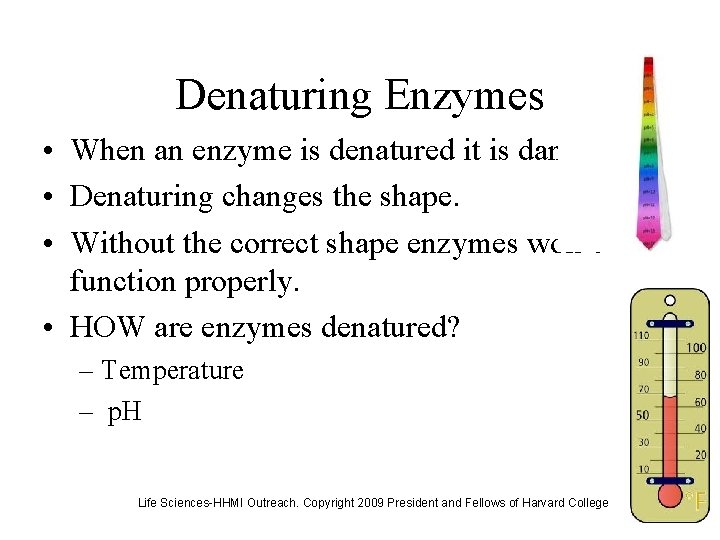
Denaturing Enzymes • When an enzyme is denatured it is damaged. • Denaturing changes the shape. • Without the correct shape enzymes won’t function properly. • HOW are enzymes denatured? – Temperature – p. H Life Sciences-HHMI Outreach. Copyright 2009 President and Fellows of Harvard College
What other factors control the action of enzymes? • • • Temperature Water Content p. H Chemicals Alteration of Substrates Alteration of Products
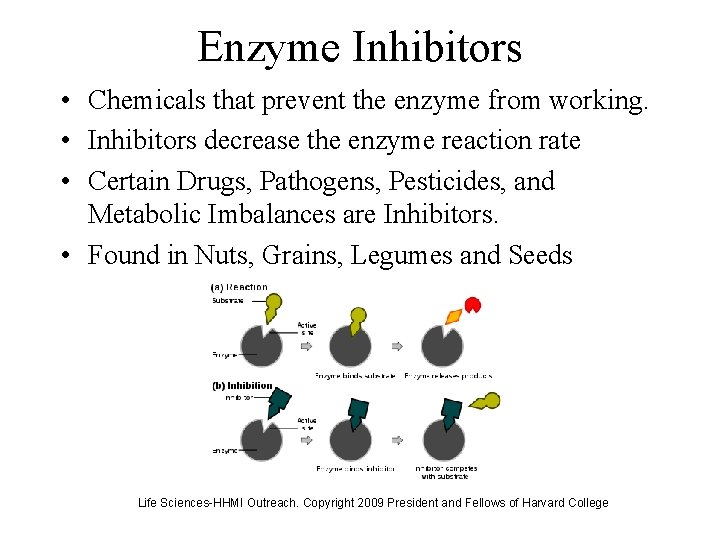
Enzyme Inhibitors • Chemicals that prevent the enzyme from working. • Inhibitors decrease the enzyme reaction rate • Certain Drugs, Pathogens, Pesticides, and Metabolic Imbalances are Inhibitors. • Found in Nuts, Grains, Legumes and Seeds Life Sciences-HHMI Outreach. Copyright 2009 President and Fellows of Harvard College
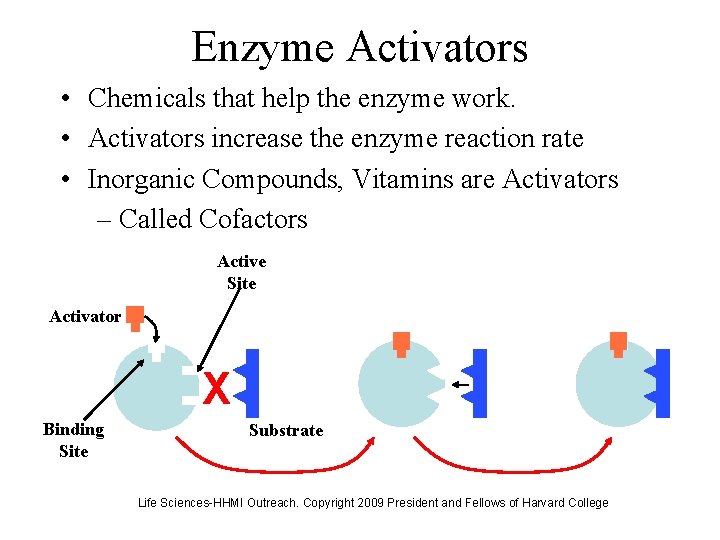
Enzyme Activators • Chemicals that help the enzyme work. • Activators increase the enzyme reaction rate • Inorganic Compounds, Vitamins are Activators – Called Cofactors Active Site Activator X Binding Site Substrate Life Sciences-HHMI Outreach. Copyright 2009 President and Fellows of Harvard College
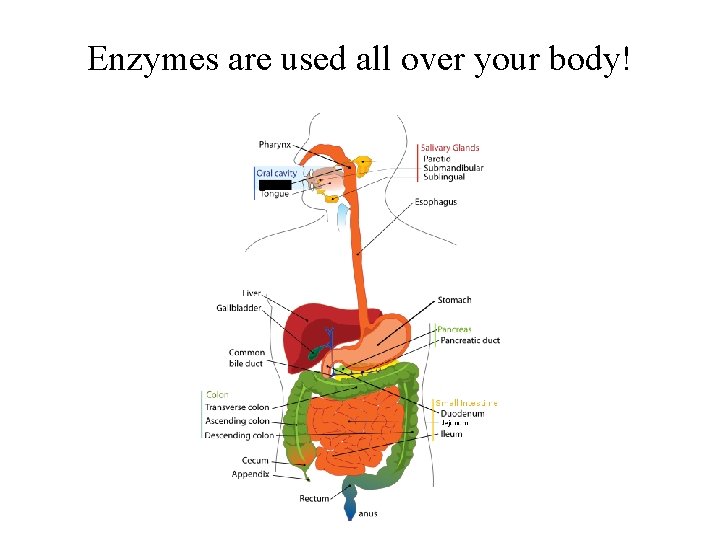
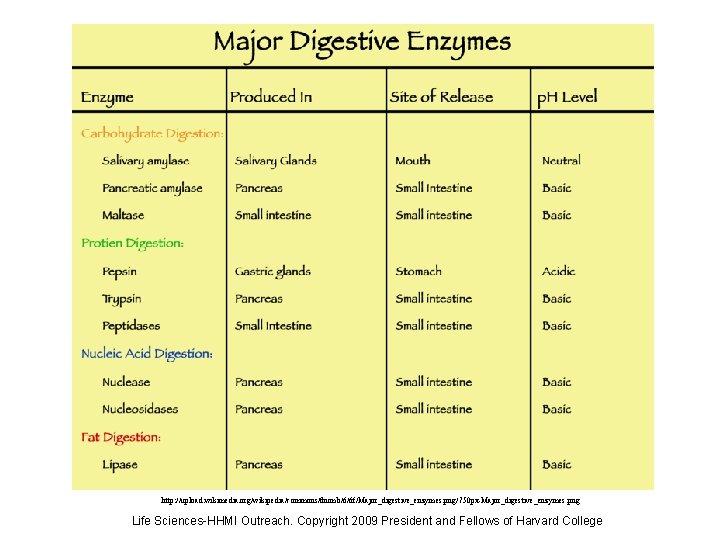
Enzymes are used all over your body!
http: //upload. wikimedia. org/wikipedia/commons/thumb/6/6 f/Major_digestive_enzymes. png/750 px-Major_digestive_enzymes. png Life Sciences-HHMI Outreach. Copyright 2009 President and Fellows of Harvard College
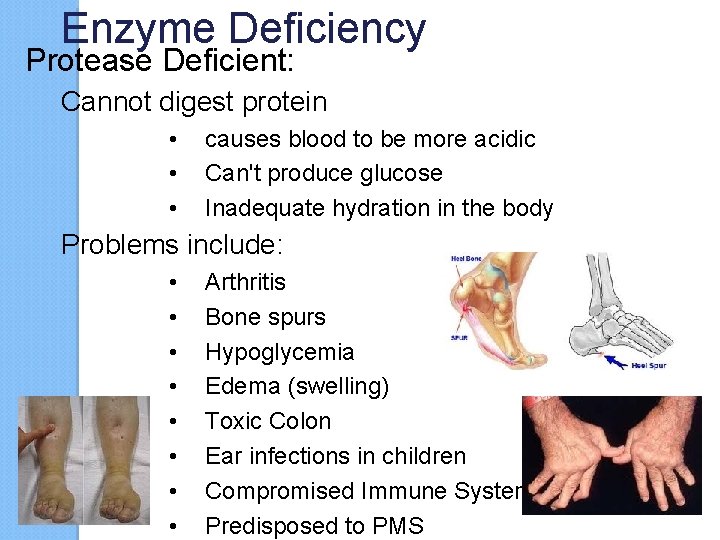
Enzyme Deficiency Protease Deficient: Cannot digest protein • • • causes blood to be more acidic Can't produce glucose Inadequate hydration in the body Problems include: • • Arthritis Bone spurs Hypoglycemia Edema (swelling) Toxic Colon Ear infections in children Compromised Immune System Predisposed to PMS
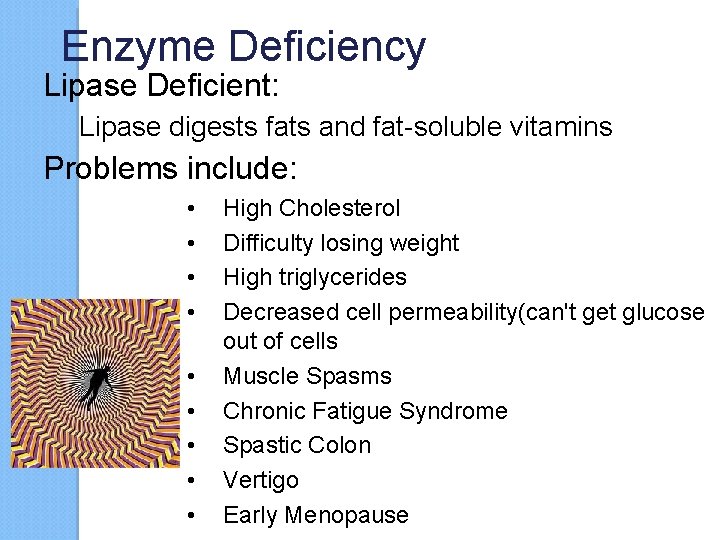
Enzyme Deficiency Lipase Deficient: Lipase digests fats and fat-soluble vitamins Problems include: • • • High Cholesterol Difficulty losing weight High triglycerides Decreased cell permeability(can't get glucose out of cells Muscle Spasms Chronic Fatigue Syndrome Spastic Colon Vertigo Early Menopause
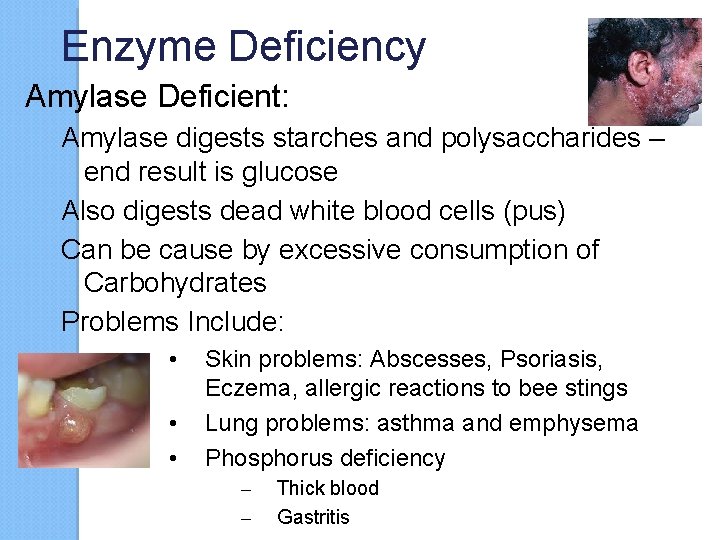
Enzyme Deficiency Amylase Deficient: Amylase digests starches and polysaccharides – end result is glucose Also digests dead white blood cells (pus) Can be cause by excessive consumption of Carbohydrates Problems Include: • • • Skin problems: Abscesses, Psoriasis, Eczema, allergic reactions to bee stings Lung problems: asthma and emphysema Phosphorus deficiency – – Thick blood Gastritis
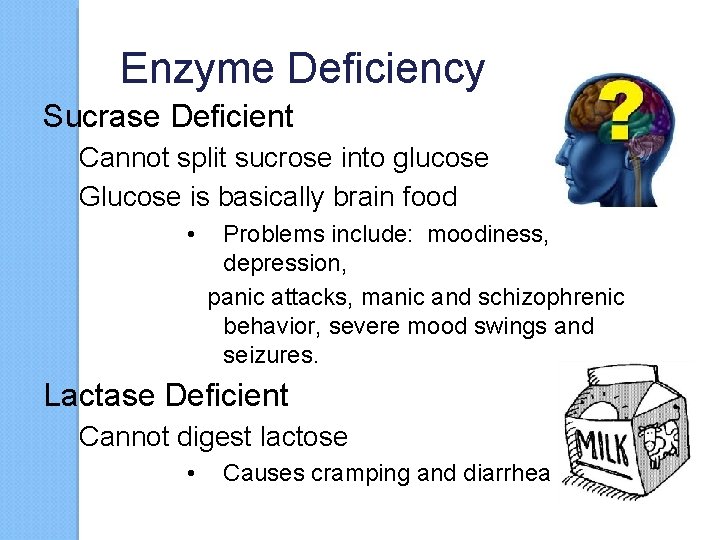
Enzyme Deficiency Sucrase Deficient Cannot split sucrose into glucose Glucose is basically brain food • Problems include: moodiness, depression, panic attacks, manic and schizophrenic behavior, severe mood swings and seizures. Lactase Deficient Cannot digest lactose • Causes cramping and diarrhea
FOOD ENZYMES
Properties of Food Enzymes Control ripening. Cause food spoilage (rotting). Responsible for changes in flavor, color, texture and nutritional properties. • Can be inactivated by heat to extend storage stability of foods. • • •
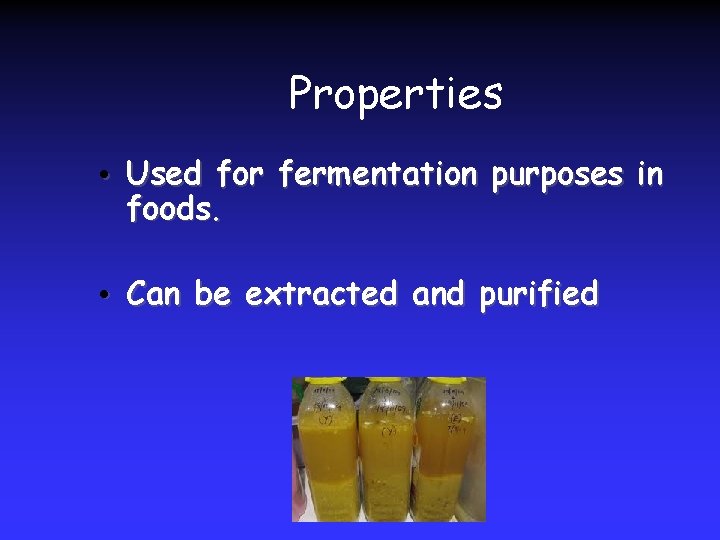
Properties • Used for fermentation purposes in foods. • Can be extracted and purified
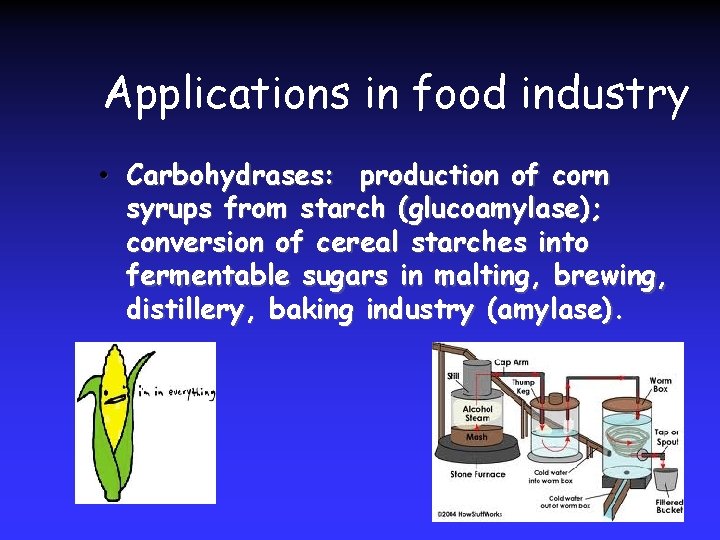
Applications in food industry • Carbohydrases: production of corn syrups from starch (glucoamylase); conversion of cereal starches into fermentable sugars in malting, brewing, distillery, baking industry (amylase).
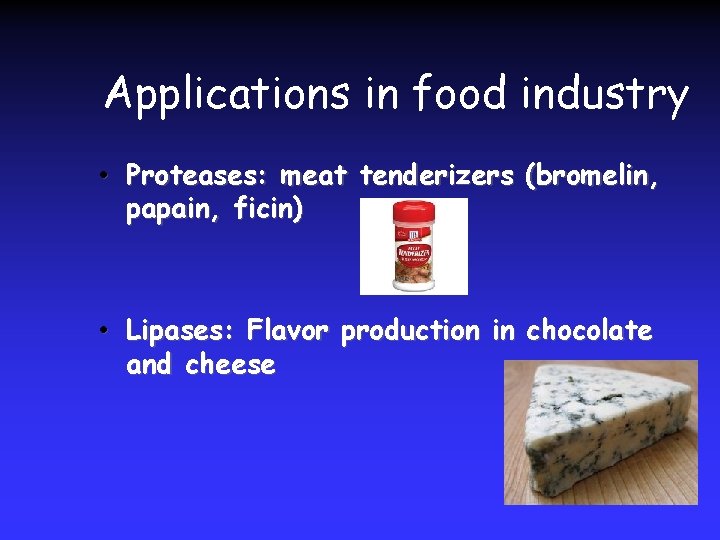
Applications in food industry • Proteases: meat tenderizers (bromelin, papain, ficin) • Lipases: Flavor production in chocolate and cheese
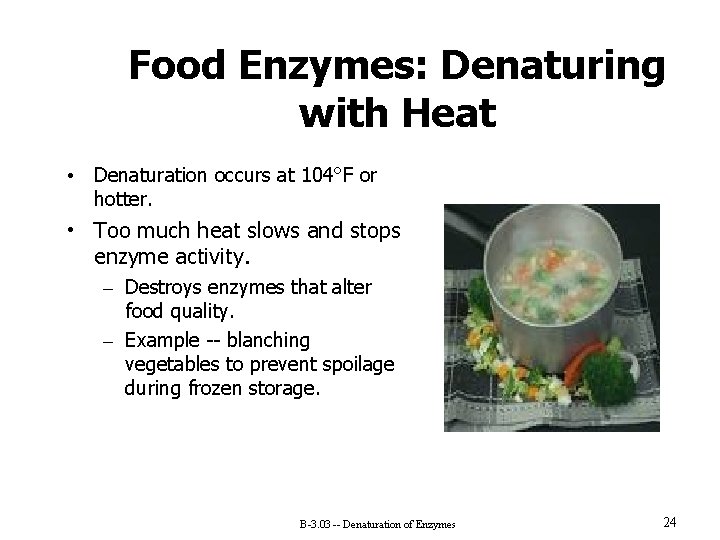
Food Enzymes: Denaturing with Heat • Denaturation occurs at 104°F or hotter. • Too much heat slows and stops enzyme activity. – Destroys enzymes that alter food quality. – Example -- blanching vegetables to prevent spoilage during frozen storage. B-3. 03 -- Denaturation of Enzymes 24
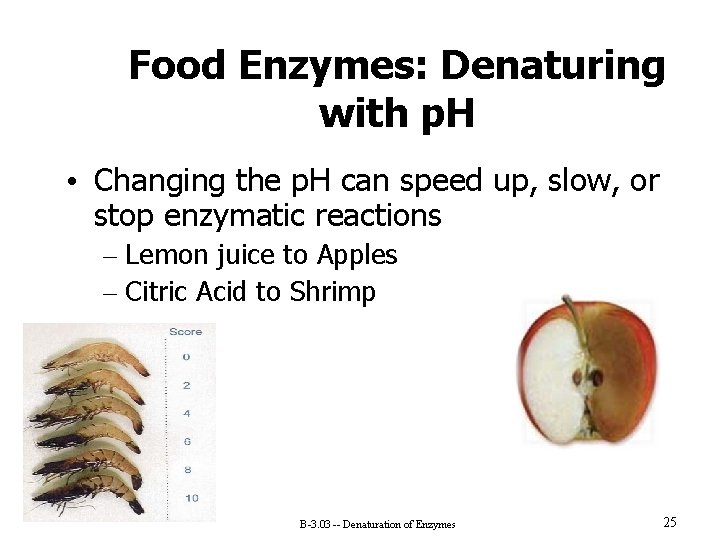
Food Enzymes: Denaturing with p. H • Changing the p. H can speed up, slow, or stop enzymatic reactions – Lemon juice to Apples – Citric Acid to Shrimp B-3. 03 -- Denaturation of Enzymes 25
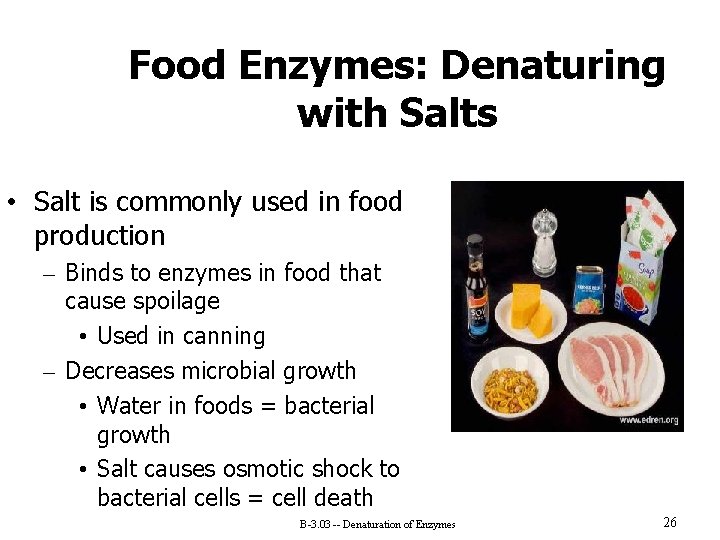
Food Enzymes: Denaturing with Salts • Salt is commonly used in food production – Binds to enzymes in food that cause spoilage • Used in canning – Decreases microbial growth • Water in foods = bacterial growth • Salt causes osmotic shock to bacterial cells = cell death B-3. 03 -- Denaturation of Enzymes 26
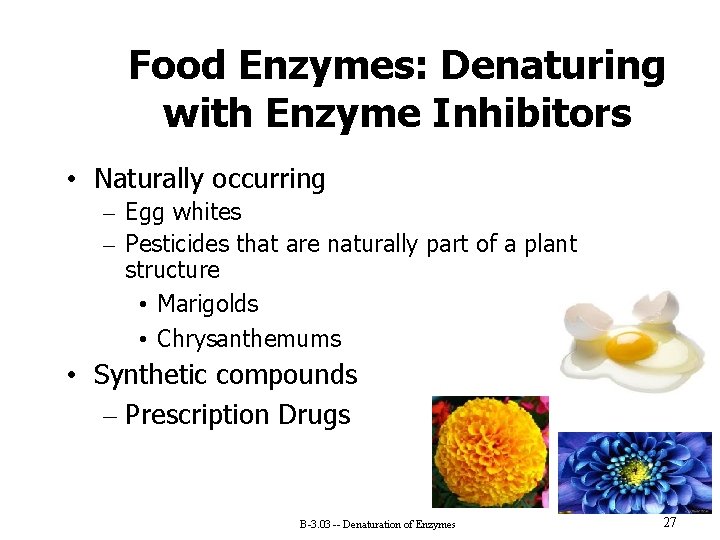
Food Enzymes: Denaturing with Enzyme Inhibitors • Naturally occurring – Egg whites – Pesticides that are naturally part of a plant structure • Marigolds • Chrysanthemums • Synthetic compounds – Prescription Drugs B-3. 03 -- Denaturation of Enzymes 27
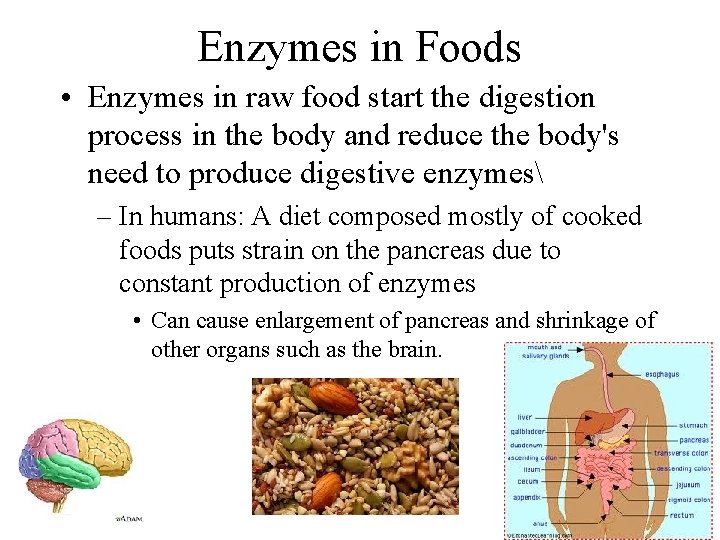
Enzymes in Foods • Enzymes in raw food start the digestion process in the body and reduce the body's need to produce digestive enzymes – In humans: A diet composed mostly of cooked foods puts strain on the pancreas due to constant production of enzymes • Can cause enlargement of pancreas and shrinkage of other organs such as the brain.
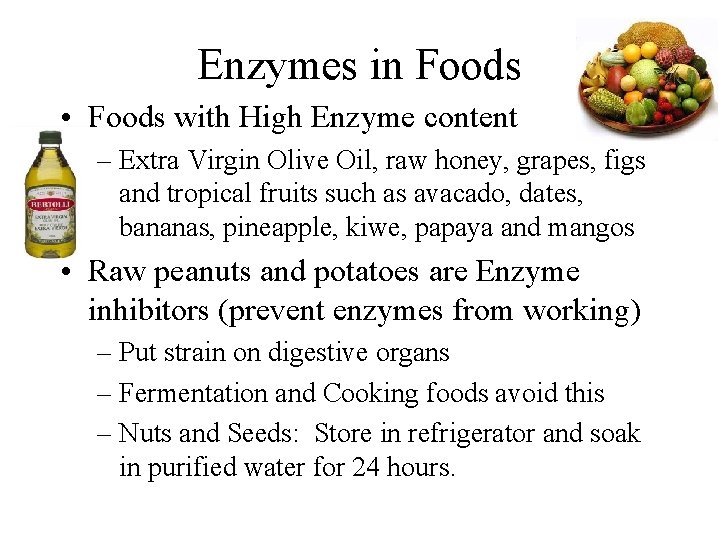
Enzymes in Foods • Foods with High Enzyme content – Extra Virgin Olive Oil, raw honey, grapes, figs and tropical fruits such as avacado, dates, bananas, pineapple, kiwe, papaya and mangos • Raw peanuts and potatoes are Enzyme inhibitors (prevent enzymes from working) – Put strain on digestive organs – Fermentation and Cooking foods avoid this – Nuts and Seeds: Store in refrigerator and soak in purified water for 24 hours.