
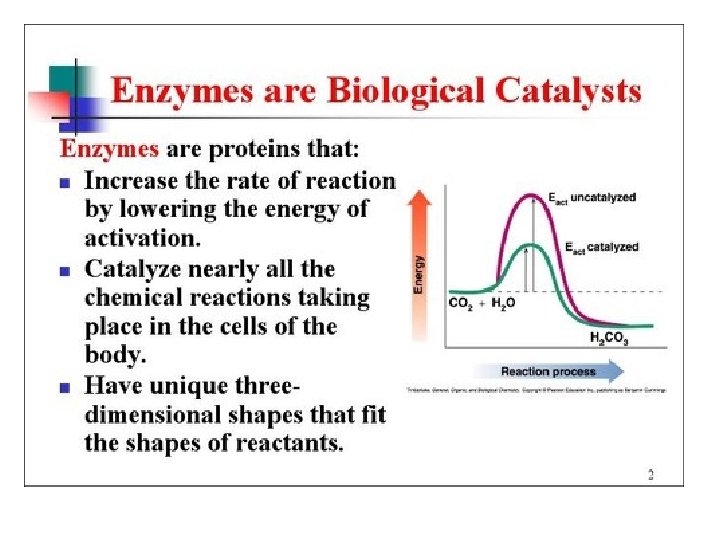
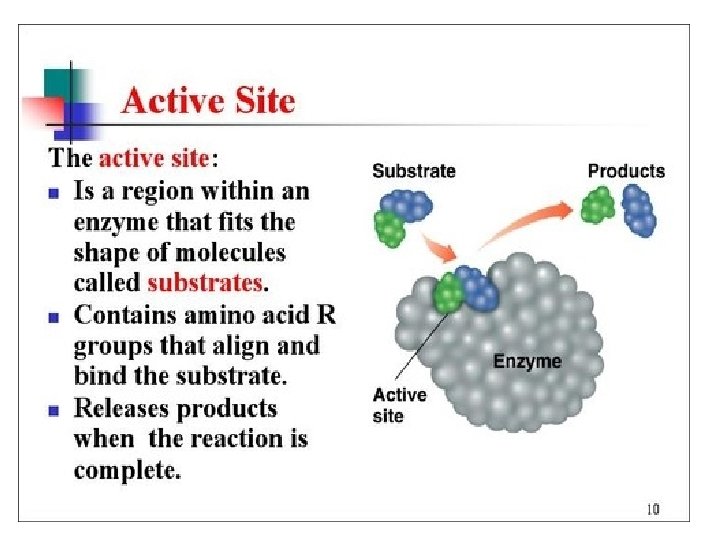
Enzymes Enzyme Active Site Amino acid side chains

- Slides: 29
Enzymes
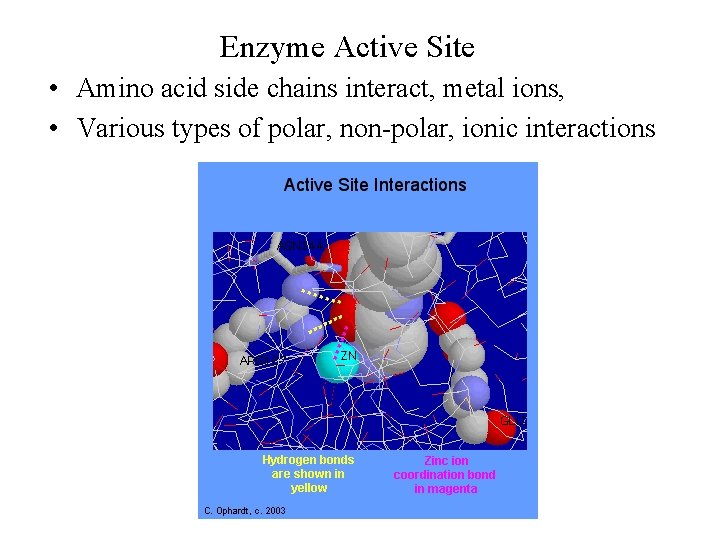
Enzyme Active Site • Amino acid side chains interact, metal ions, • Various types of polar, non-polar, ionic interactions
Enzyme Active Site • Amino acid side chains interact, metal ions, • Various types of polar, non-polar, ionic interactions
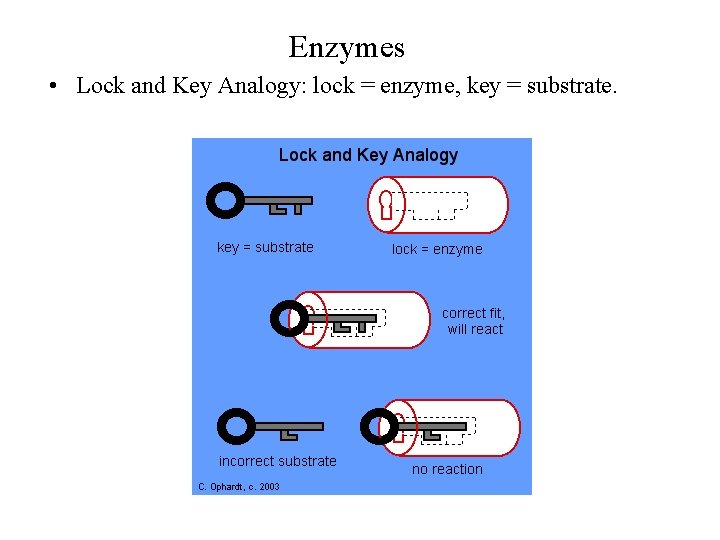
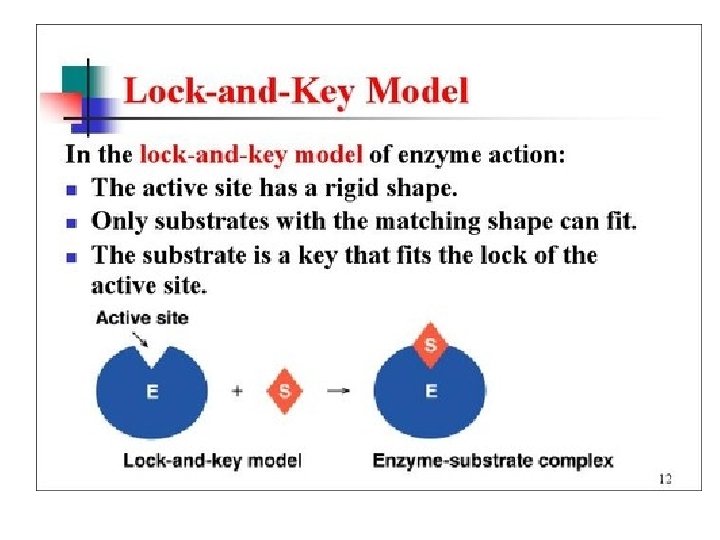
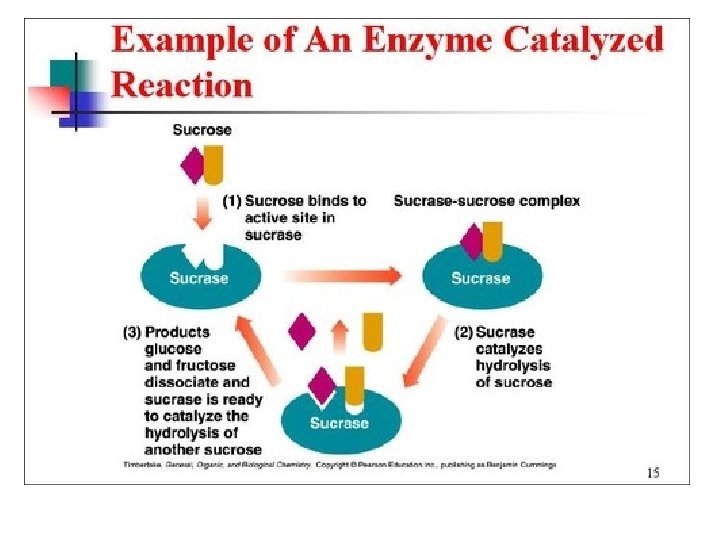
Enzymes • Lock and Key Analogy: lock = enzyme, key = substrate.
Enzymes • Lock and Key Analogy: lock = enzyme, key = substrate.
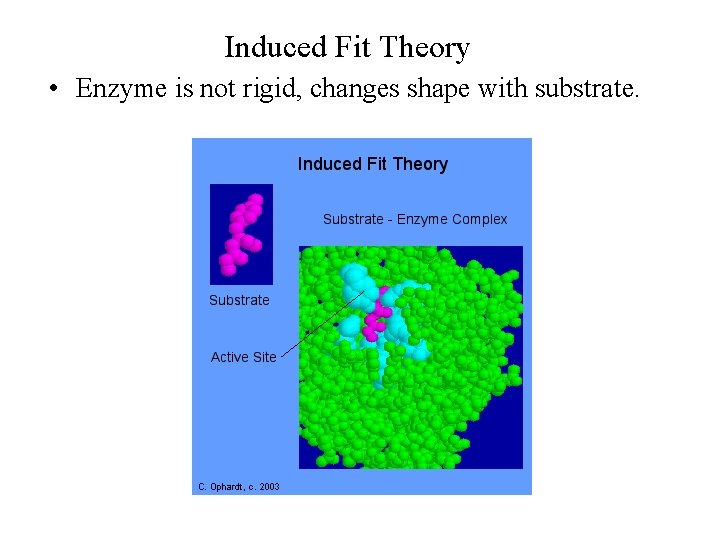
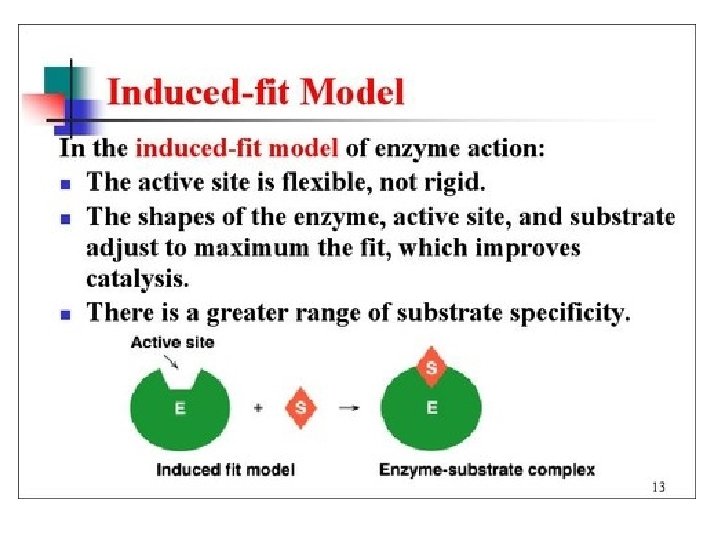
Induced Fit Theory • Enzyme is not rigid, changes shape with substrate.
Induced Fit Theory • Enzyme is not rigid, changes shape with substrate.
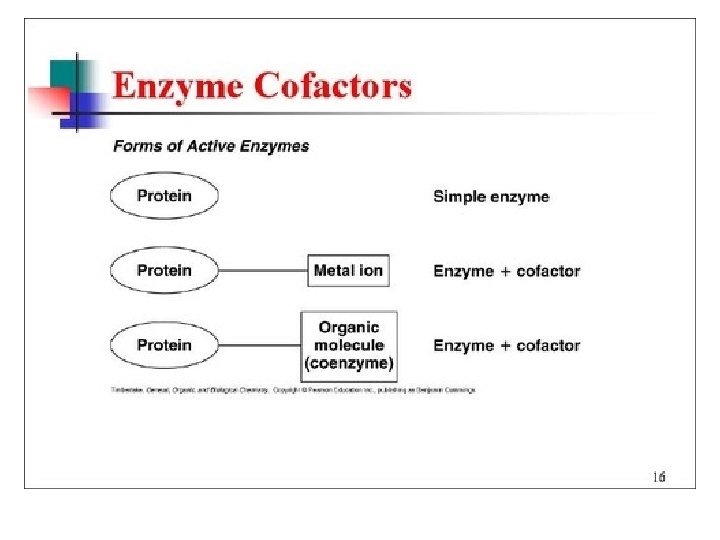
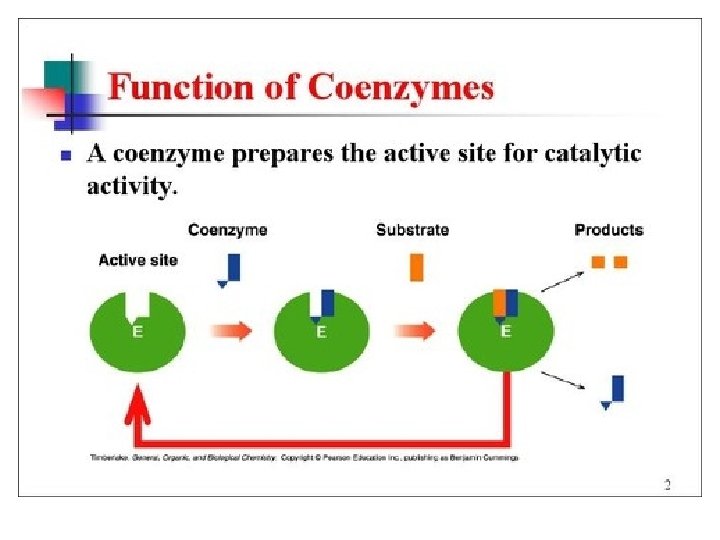
Enzymes - Cofactors • Coenzymes (contain a vitamin) or metal ion
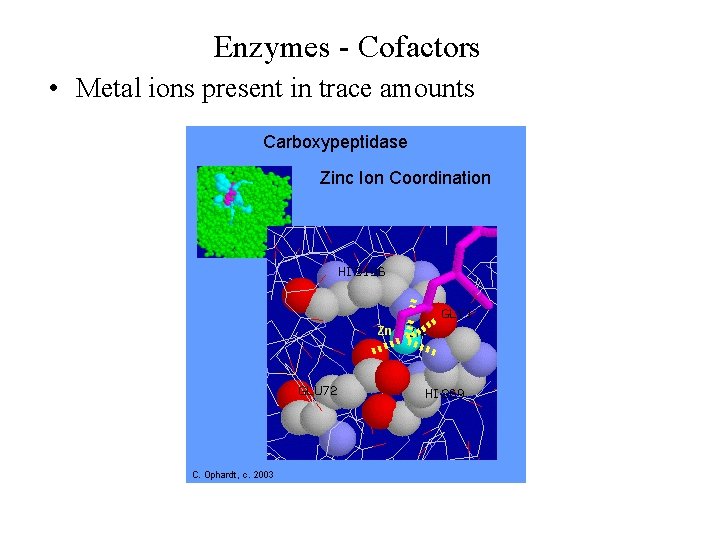
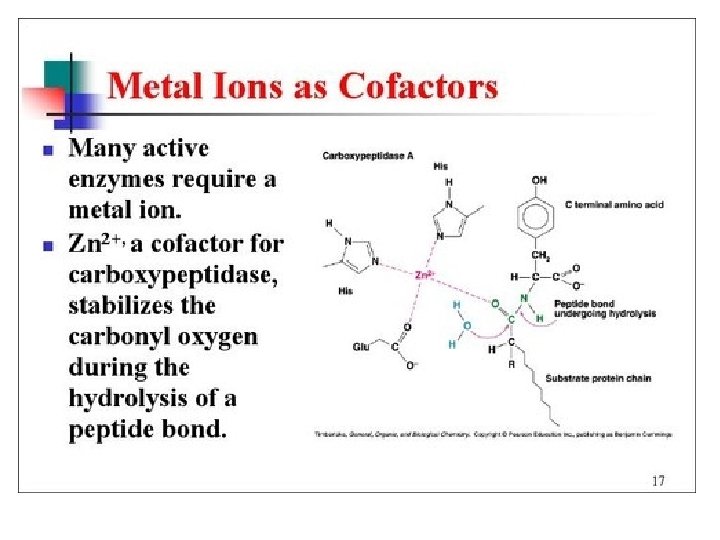
Enzymes - Cofactors • Metal ions present in trace amounts
Enzymes - Cofactors • Metal ions present in trace amounts
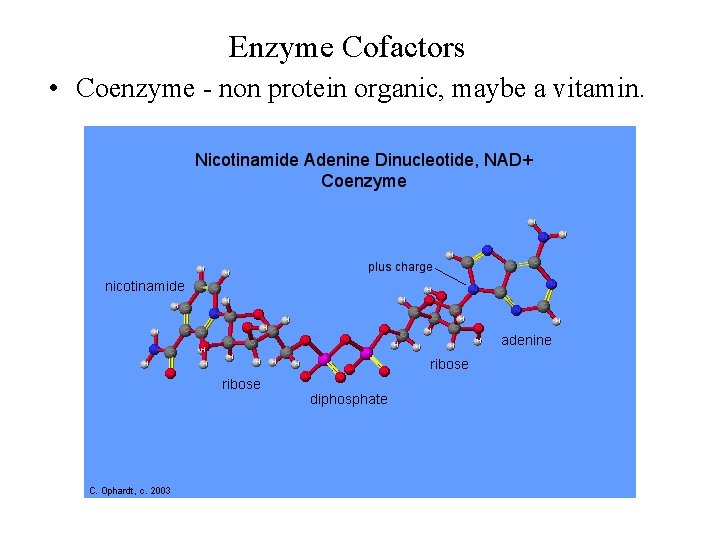
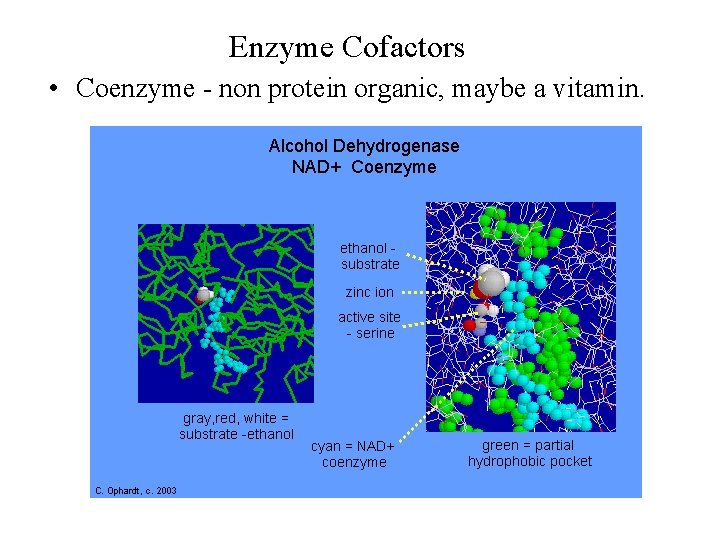
Enzyme Cofactors • Coenzyme - non protein organic, maybe a vitamin.
Enzyme Cofactors • Coenzyme - non protein organic, maybe a vitamin.
Enzyme Cofactors • Coenzyme - non protein organic, maybe a vitamin.
Enzymes
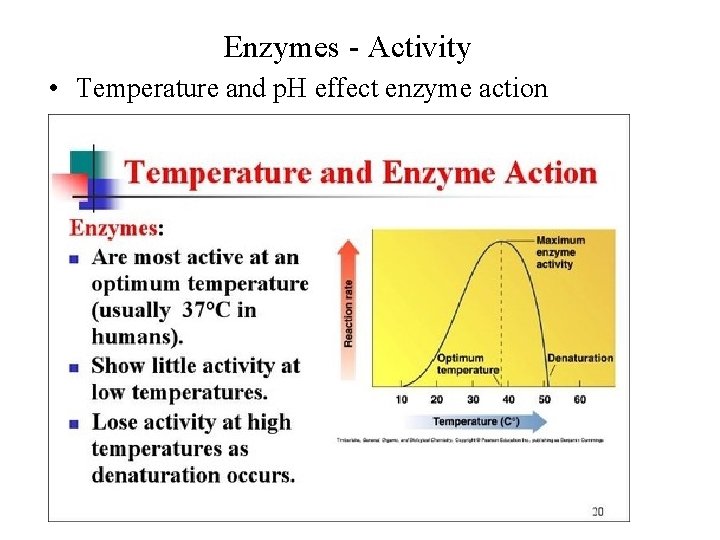
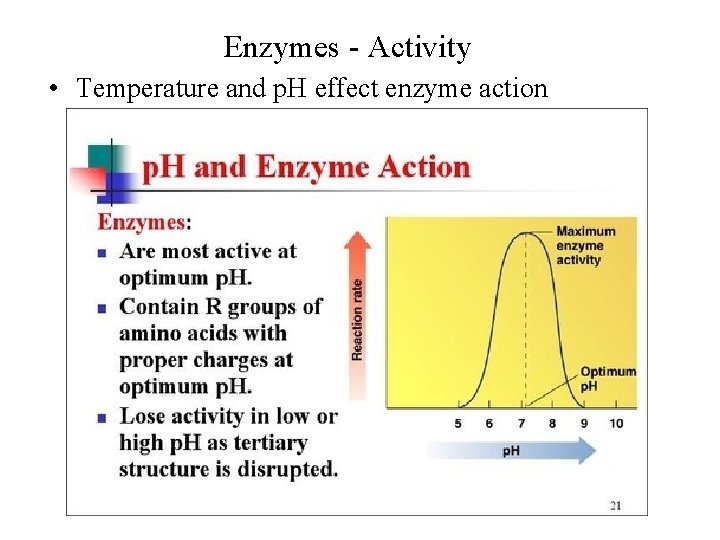
Enzymes - Activity • Temperature and p. H effect enzyme action
Enzymes - Activity • Temperature and p. H effect enzyme action
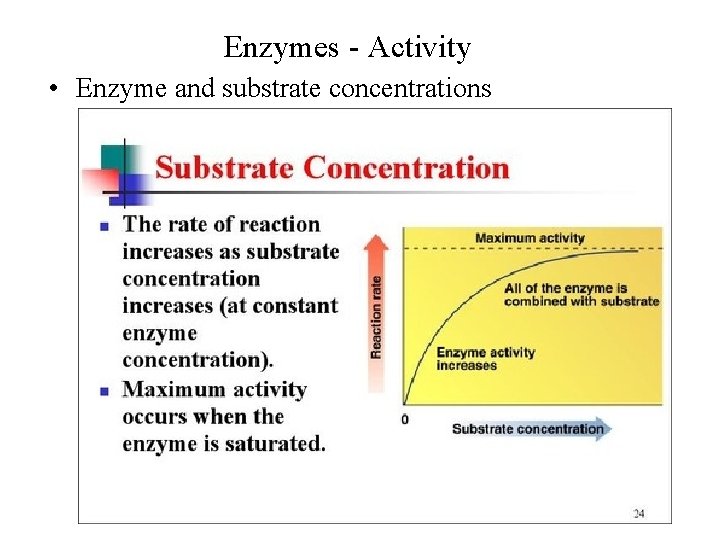
Enzymes - Activity • Enzyme and substrate concentrations
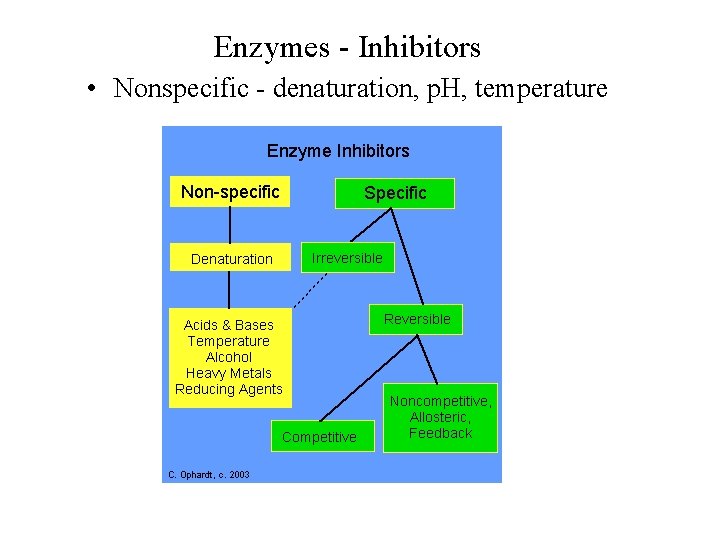
Enzymes - Inhibitors • Nonspecific - denaturation, p. H, temperature
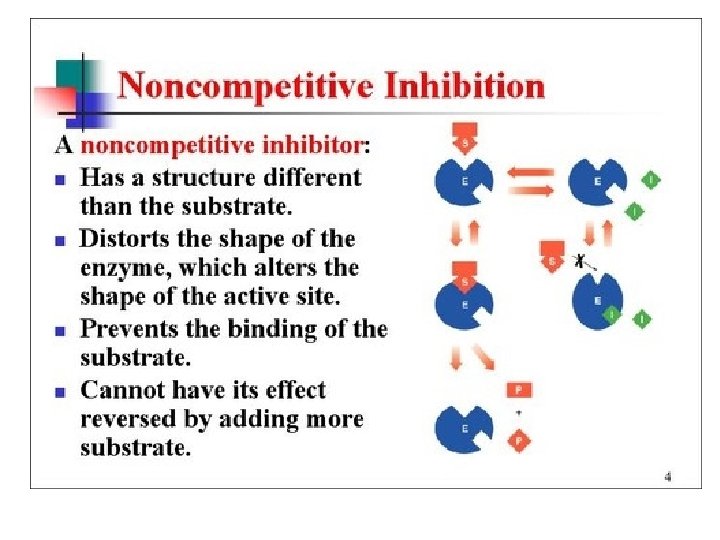
Enzyme Inhibitors • Noncompetitive
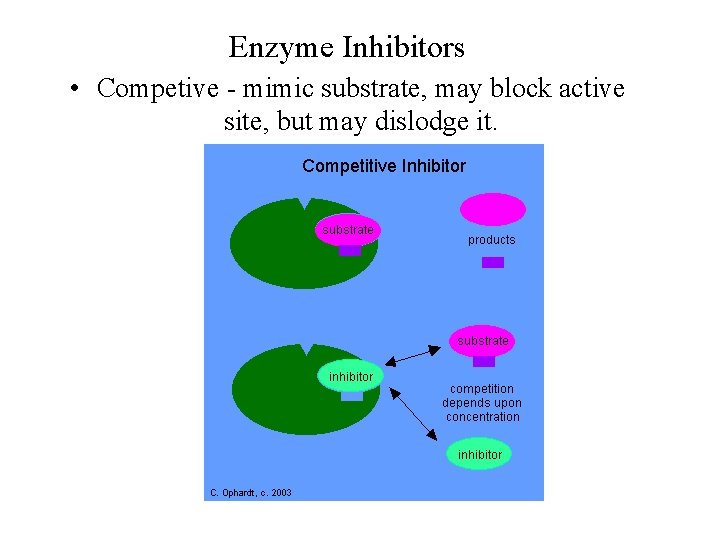
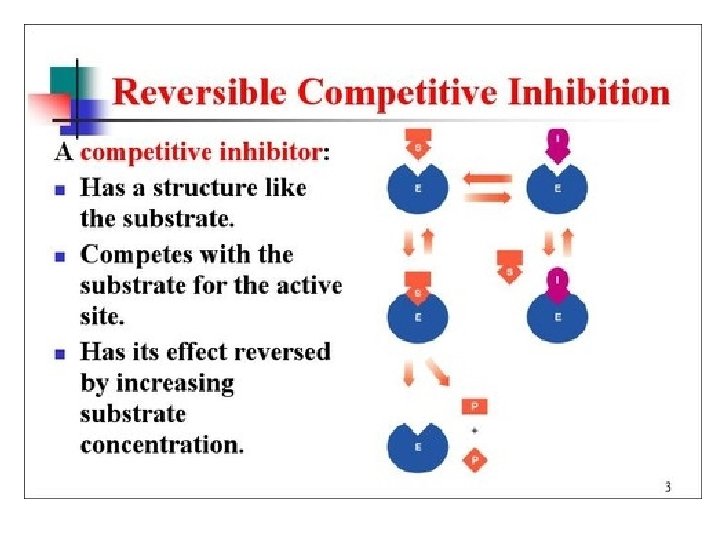
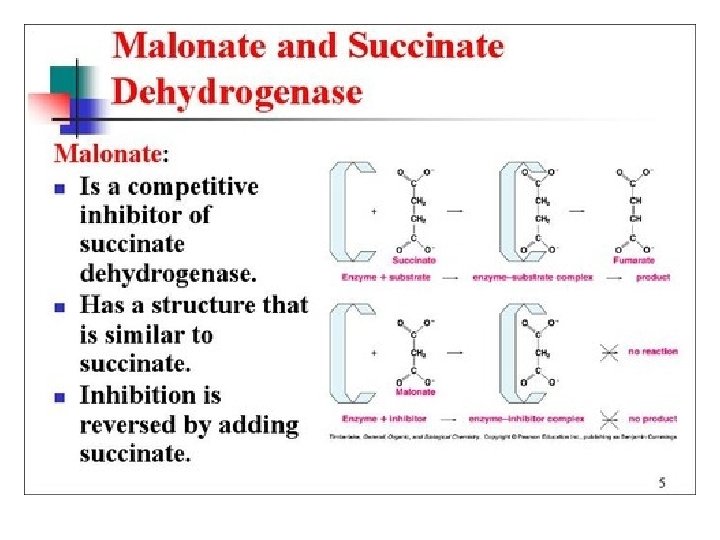
Enzyme Inhibitors • Competive - mimic substrate, may block active site, but may dislodge it.
Enzyme Inhibitors • Competive - mimic substrate, may block active site, but may dislodge it.
Enzyme Inhibitors
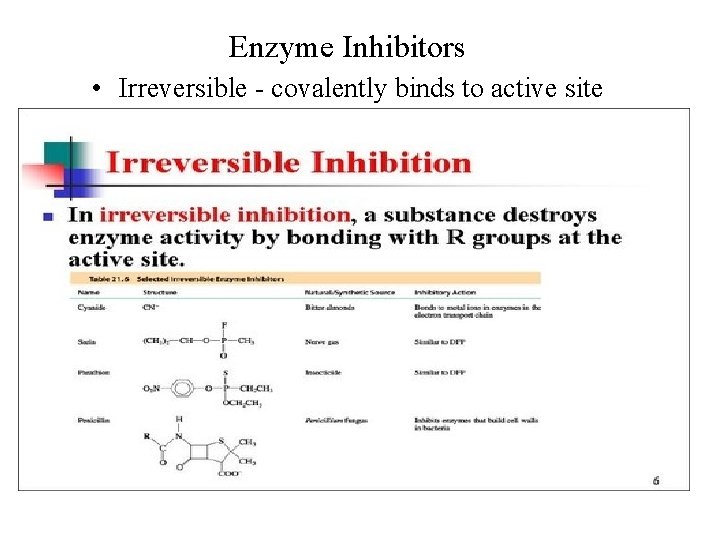
Enzyme Inhibitors • Irreversible - covalently binds to active site
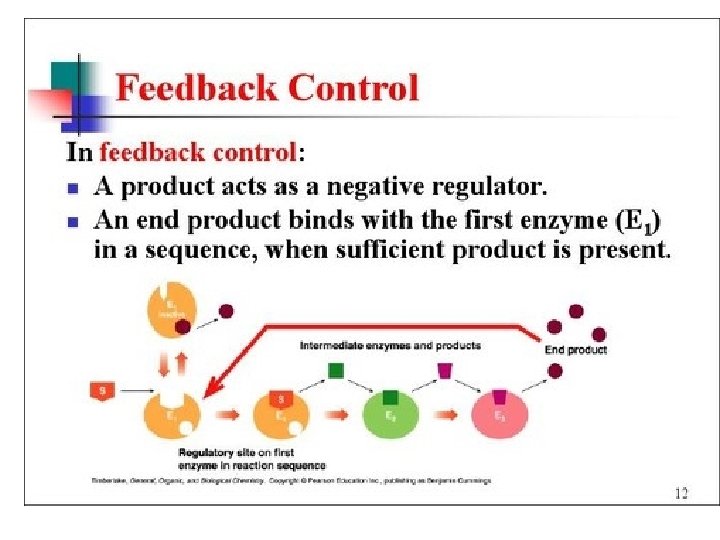
Enzyme Inhibitors • Regulator or feedback - used to control a sequence of reactions - reaction product may block initial enzyme.
Enzyme Inhibitors • Regulator or feedback - used to control a sequence of reactions - reaction product may block initial enzyme.
Enzyme Inhibitors
Enzyme Inhibitors
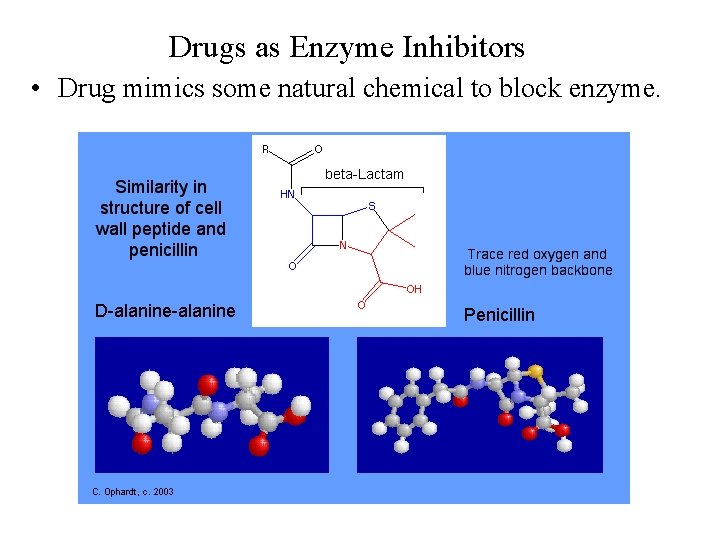
Drugs as Enzyme Inhibitors • Drug mimics some natural chemical to block enzyme.
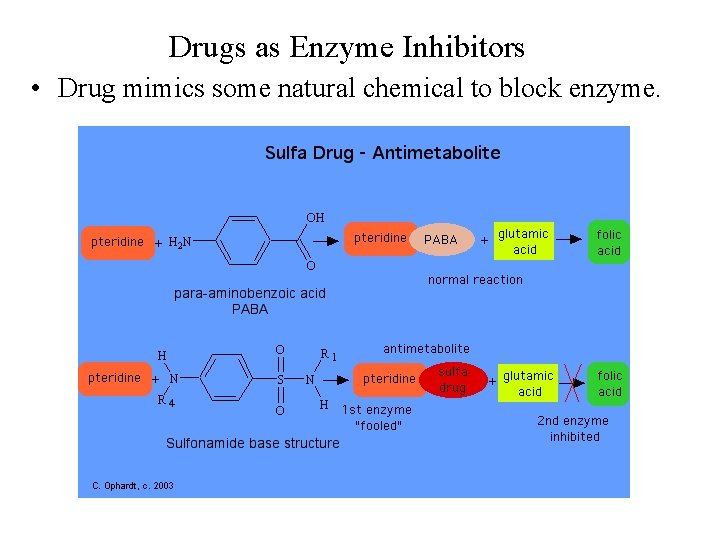
Drugs as Enzyme Inhibitors • Drug mimics some natural chemical to block enzyme.