
Enzymes Biology 9C Enzymes Learning Objectives Identify and
Enzymes Biology 9(C)
Enzymes Learning Objectives • Identify and understand the role of enzymes
Enzymes Catalyst – substance that affects a chemical reaction without being consumed Enzyme – protein or RNA that acts as a biological catalyst • Active site – location on the enzyme where reaction occurs Substrate – substance that an enzyme acts upon Product – substance that is created
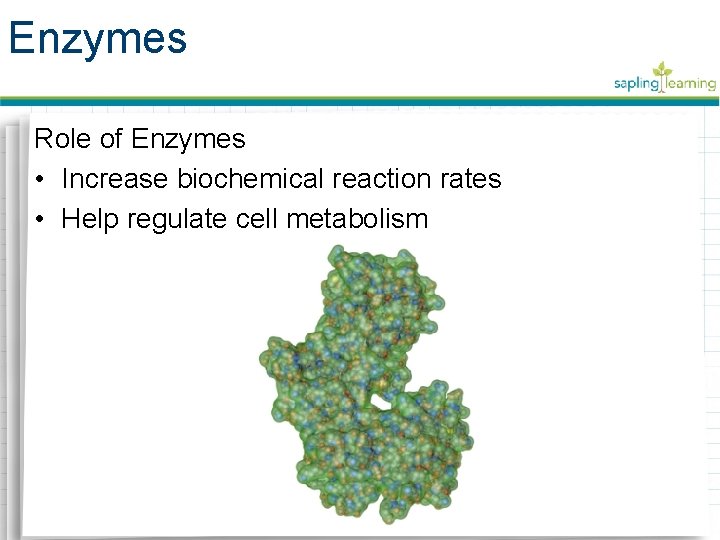
Enzymes Role of Enzymes • Increase biochemical reaction rates • Help regulate cell metabolism
Enzymes Characteristics of Enzymes: • Name usually ends in suffix –ase, often derived from name of substrate – Maltase – enzyme that helps split maltose • Bind to specific substrate(s) • Able to facilitate the reaction of large quantities of substrate • Enable cell reactions to proceed at biological temperatures
Enzymes Characteristics of Enzymes: • Work best at certain temperatures and p. H • Can function inside or outside the cell – Pepsin – produced inside cells of glands in stomach wall, then leaves cells and mixes with food in the stomach
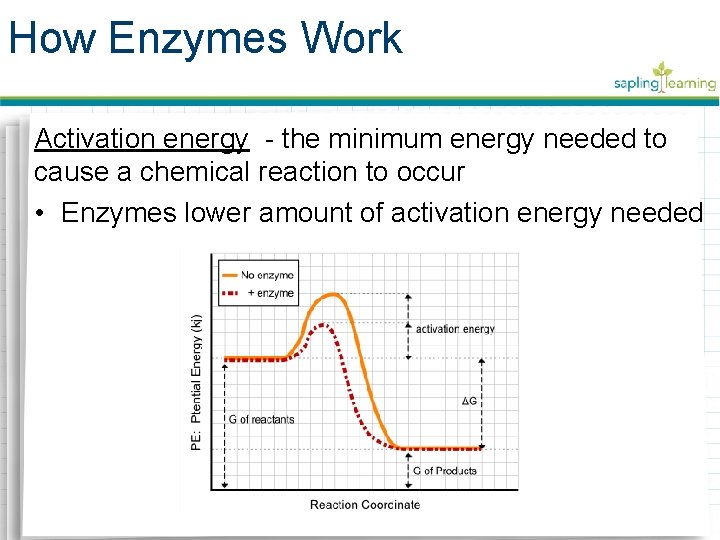
How Enzymes Work Activation energy - the minimum energy needed to cause a chemical reaction to occur • Enzymes lower amount of activation energy needed
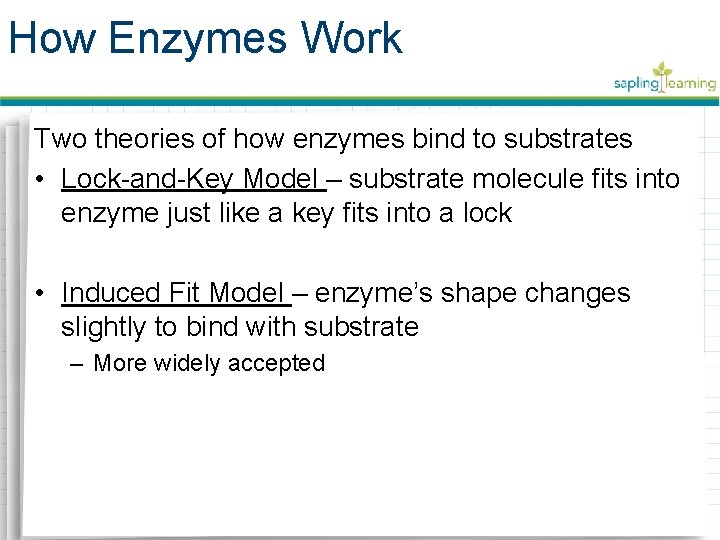
How Enzymes Work Two theories of how enzymes bind to substrates • Lock-and-Key Model – substrate molecule fits into enzyme just like a key fits into a lock • Induced Fit Model – enzyme’s shape changes slightly to bind with substrate – More widely accepted
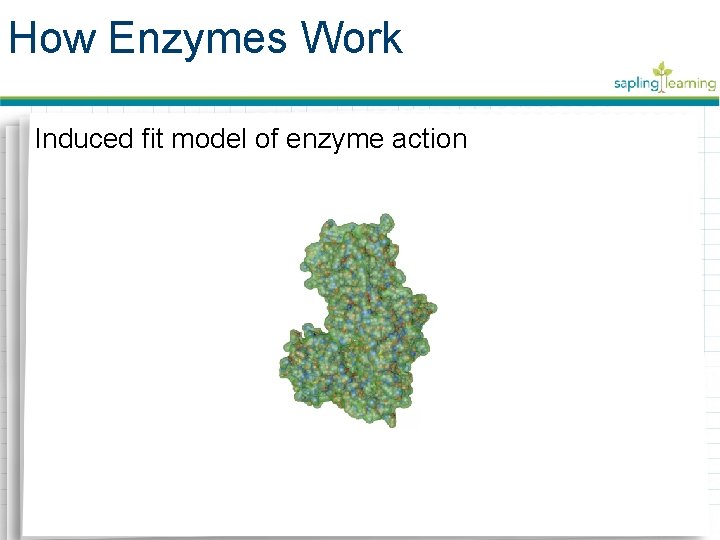
How Enzymes Work Induced fit model of enzyme action
How Enzymes Work • Substrate molecule fits into active site on enzyme – “Enzyme-substrate complex” • Enzyme shape changes slightly to bind to substrate – “Induced fit” • Enzyme catalyzes a chemical reaction in the substrate – Involves breaking or forming chemical bonds • Products are released • Enzyme is ready to bind to another substrate E + S E + P
Enzymes Learning Objectives • Identify and understand the role of enzymes
- Slides: 11