
Enzymes Applications in Food Industries Enzyme Structure Enzyme

- Slides: 14
Enzymes Applications in Food Industries
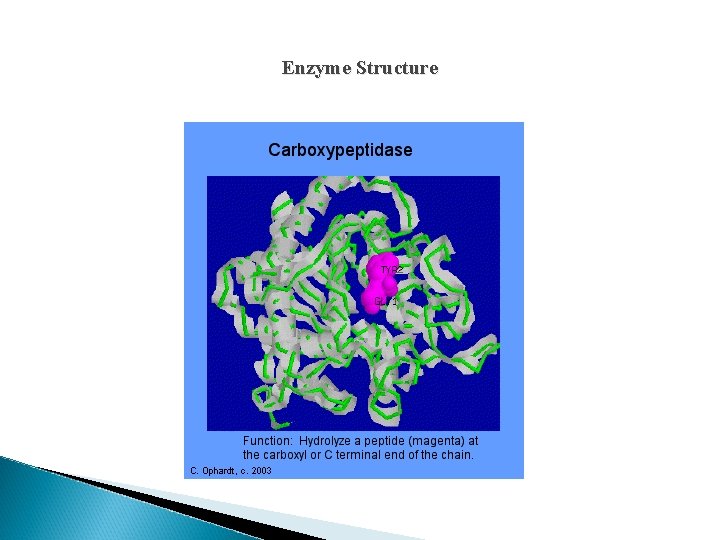
Enzyme Structure
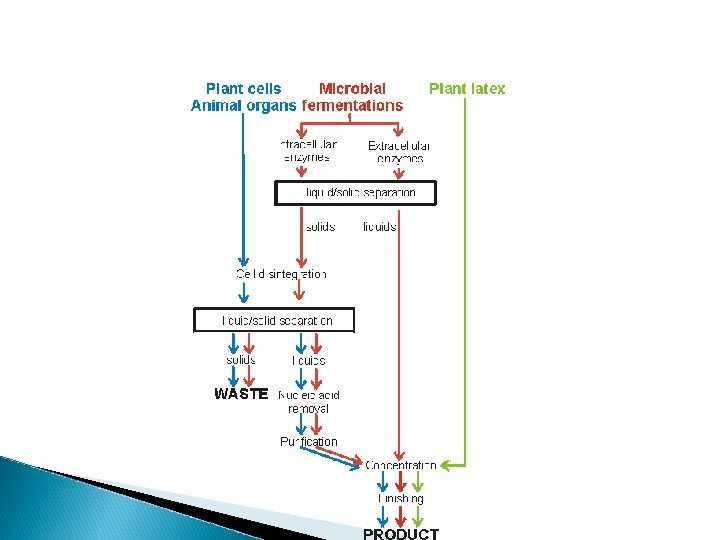
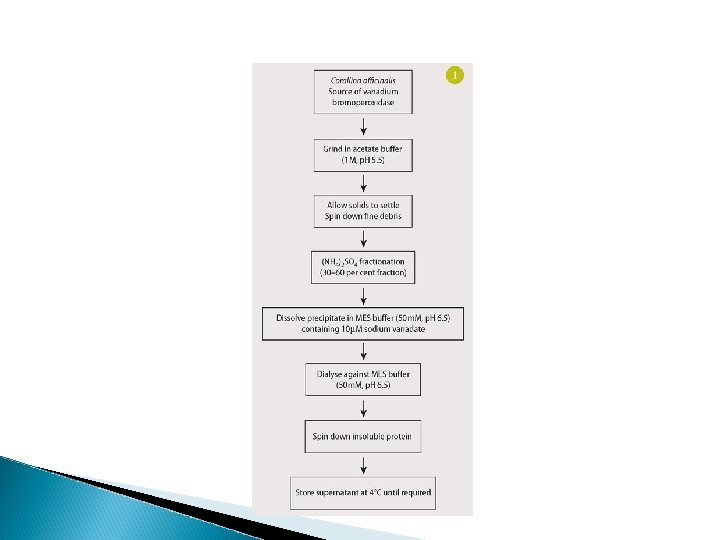
Enzyme Purification procedures Methods of enzyme purification 1. salt precipitation 2. Chromatographic methods i. ion exchange – cationic or anionic separation based on charge; the greater the net charge, the more strong the interaction; elute by increasing ionic strength of buffer or altering p. H ii. gel permeation (size exclusion) chromatography: separation based on size; larger proteins elute first
iii. hydrophobic interaction chromatography: separation based on hydrophobicity of protein surface; elute by decreasing polarity of buffer; more hydrophobic bind more strongly and elute last. iv. affinity chromatography: separation based on specific biological interaction; eg enzyme –substrate recognition; elute with substrate
v. immunoaffinity chromatography: separation based on specificity of antibody recognition of peptide sequence; elute by lowering p. H to 2 -3 to disrupt antibody – peptide interaction. Neutralize quickly to avoid loss of activity.
Assessment of purity SDS polyacrylamide gel electrophoresis enrichment N-group analysis Units of enzyme activity Activity: amount of product produced per unit time (eg. ? mols / sec)
Specific activity: amount of product produced per unit time per mg protein (eg. mmols / sec / mg) Enrichment: SA of fraction / SA of starting material Maximum possible enrichment: 100 / % of total protein represented by protein of interest % purity: actual enrichment / maximum possible enrichment % recovery (yield): total activity of fraction / total starting activity 10
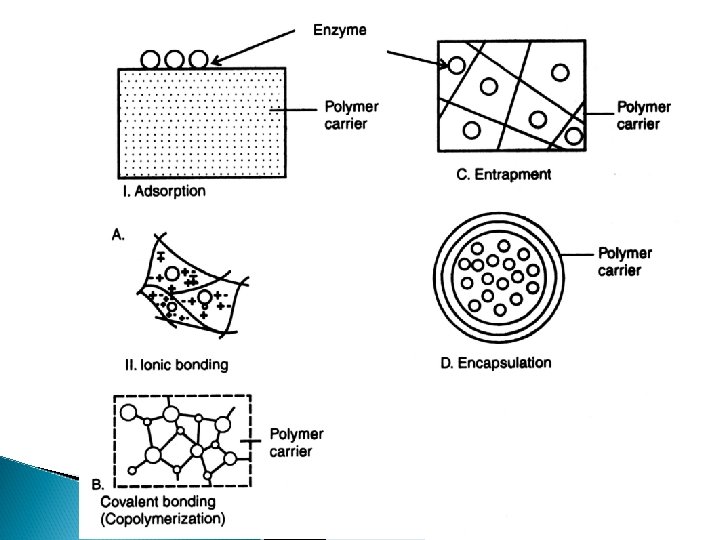
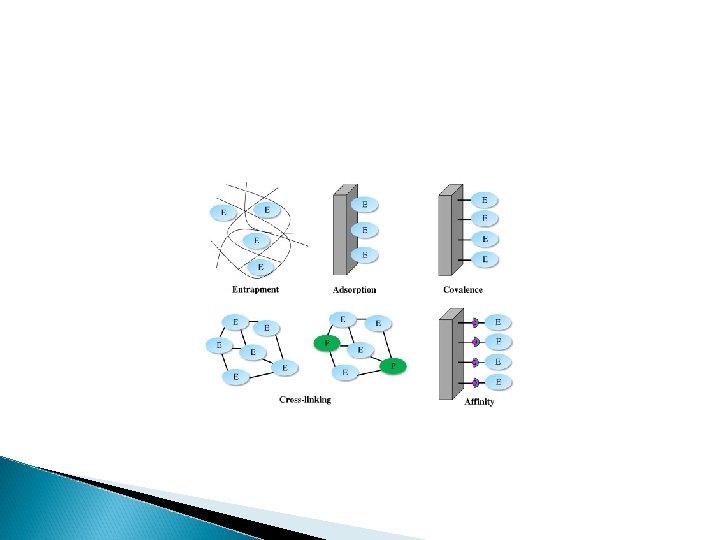
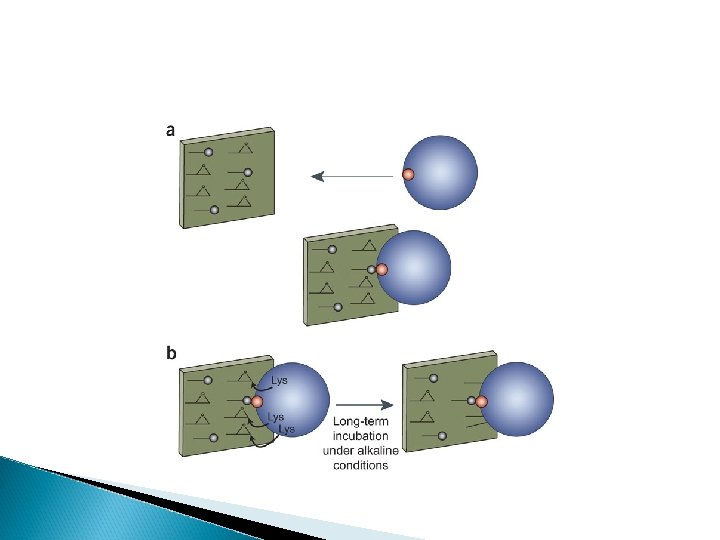
Enzyme Immobilization