
Enzymes and Enzymatic Reactions Introduction Enzymes Catalyst a
![Enzymatic Reactions • Michaelis-Menten constant (Km) = [S] at which reaction rate is one](https://slidetodoc.com/presentation_image_h2/4cafdac377633ccd7986b5c556340506/image-12.jpg "Enzymatic Reactions • Michaelis-Menten constant (Km) = [S] at which reaction rate is one")



- Slides: 27
Enzymes and Enzymatic Reactions Introduction
Enzymes • Catalyst – a substance that affects the rate of a chemical reaction without being consumed or permanently changed in the reaction. • Enzyme – a protein that acts as a biological catalyst
Enzymes • Substrate – substance upon which an enzyme acts • Products – substances produced by an enzymatic reaction
Enzymes
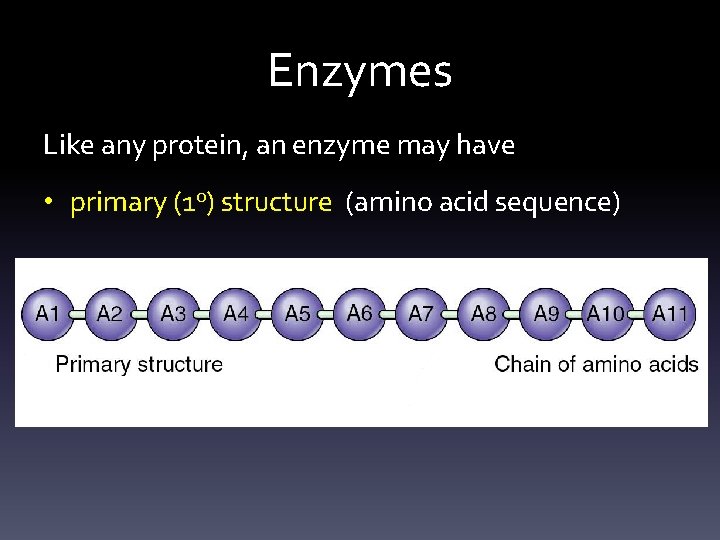
Enzymes Like any protein, an enzyme may have • primary (1 o) structure (amino acid sequence)
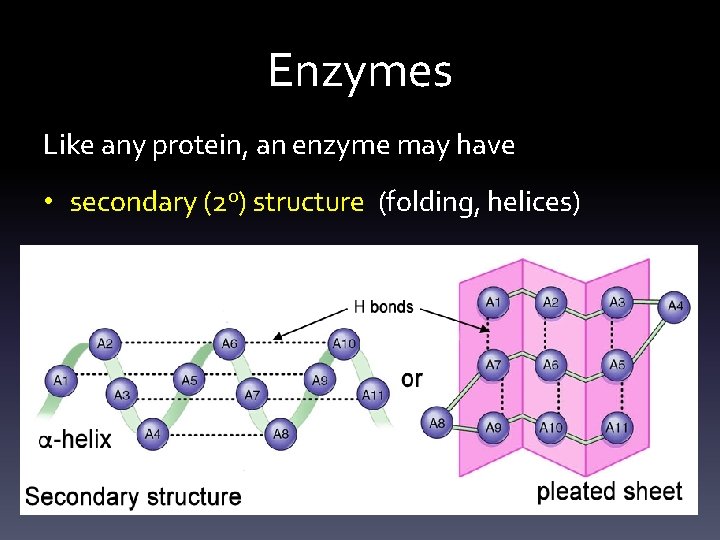
Enzymes Like any protein, an enzyme may have • secondary (2 o) structure (folding, helices)
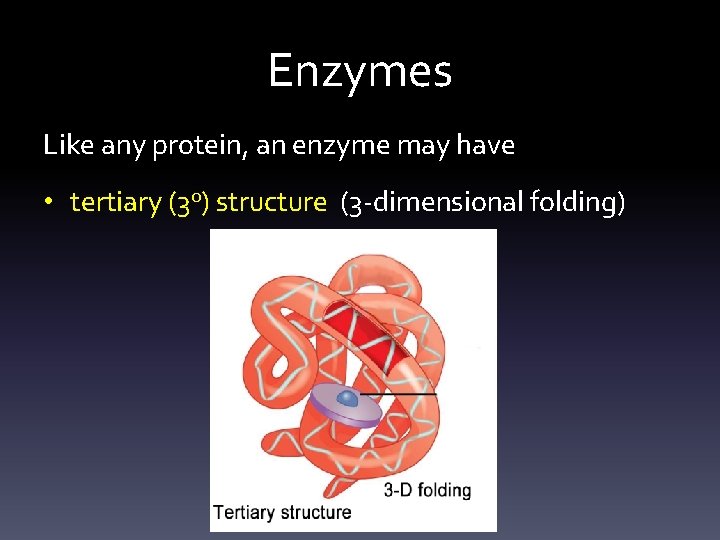
Enzymes Like any protein, an enzyme may have • tertiary (3 o) structure (3 -dimensional folding)
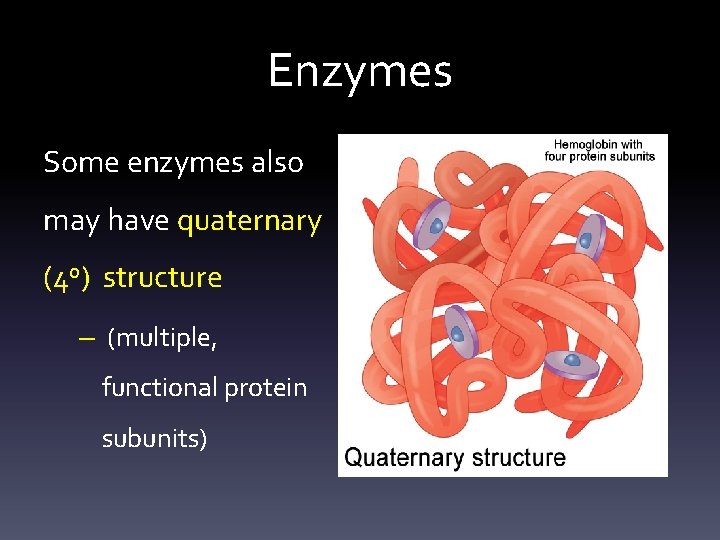
Enzymes Some enzymes also may have quaternary (4 o) structure – (multiple, functional protein subunits)
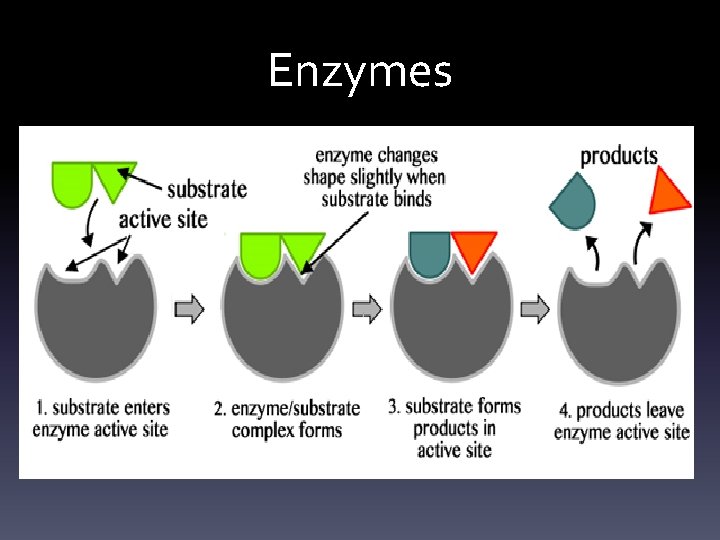
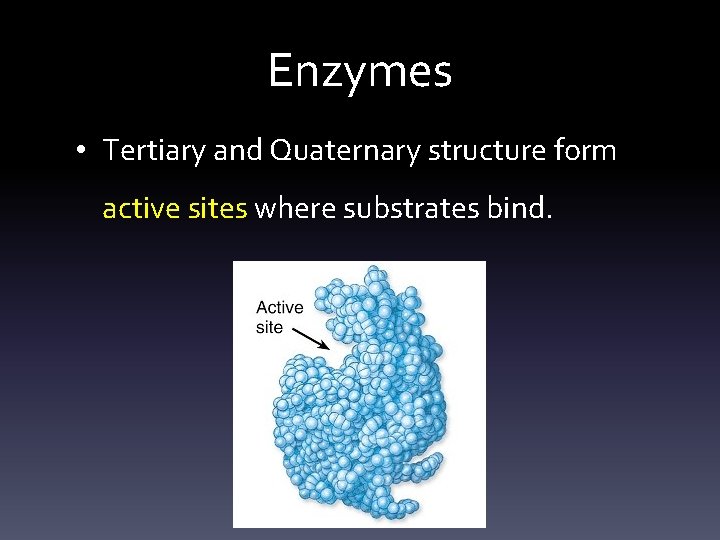
Enzymes • Tertiary and Quaternary structure form active sites where substrates bind.
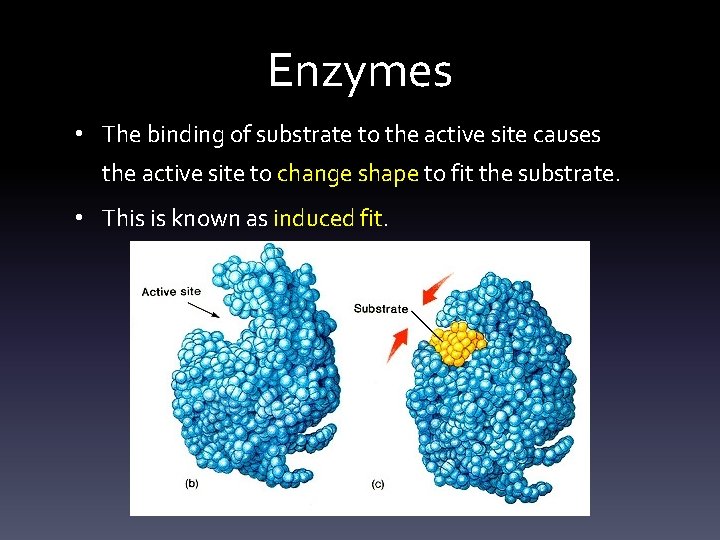
Enzymes • The binding of substrate to the active site causes the active site to change shape to fit the substrate. • This is known as induced fit.
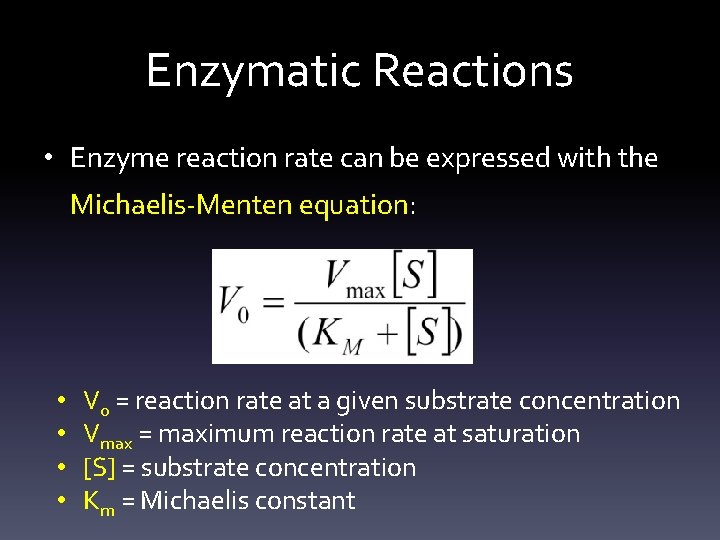
Enzymatic Reactions • Enzyme reaction rate can be expressed with the Michaelis-Menten equation: • • Vo = reaction rate at a given substrate concentration Vmax = maximum reaction rate at saturation [S] = substrate concentration Km = Michaelis constant
Enzymatic Reactions • Michaelis-Menten constant (Km) = [S] at which reaction rate is one half of Vmax
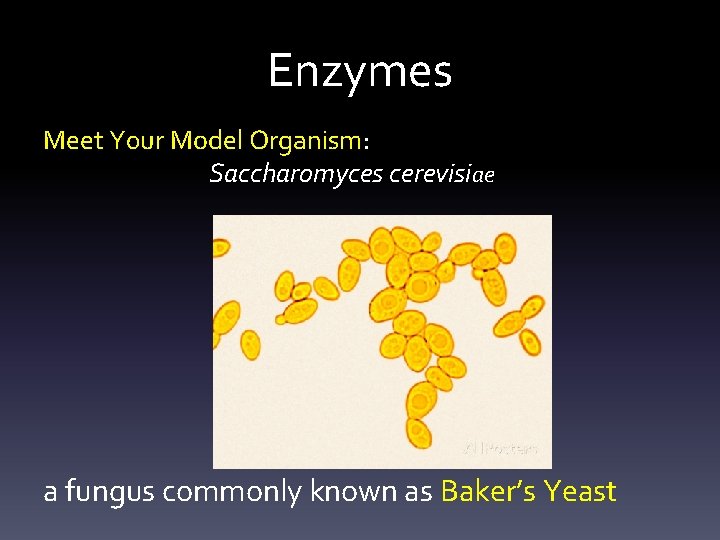
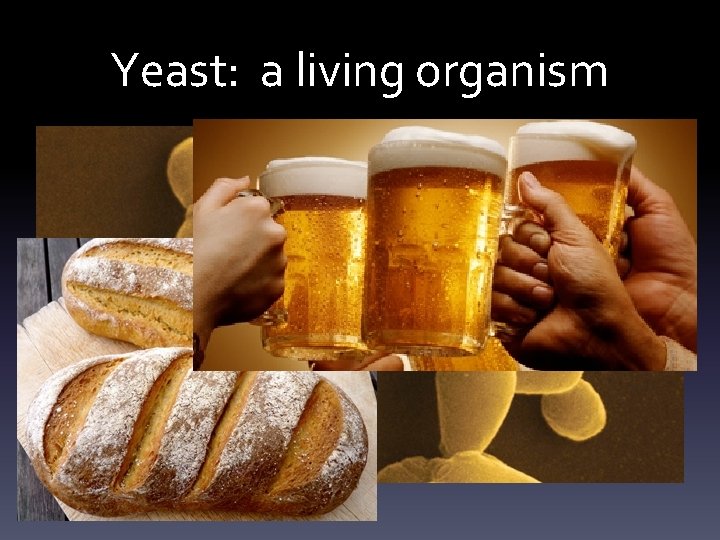
Enzymes Meet Y 0 ur Model Organism: Saccharomyces cerevisiae a fungus commonly known as Baker’s Yeast
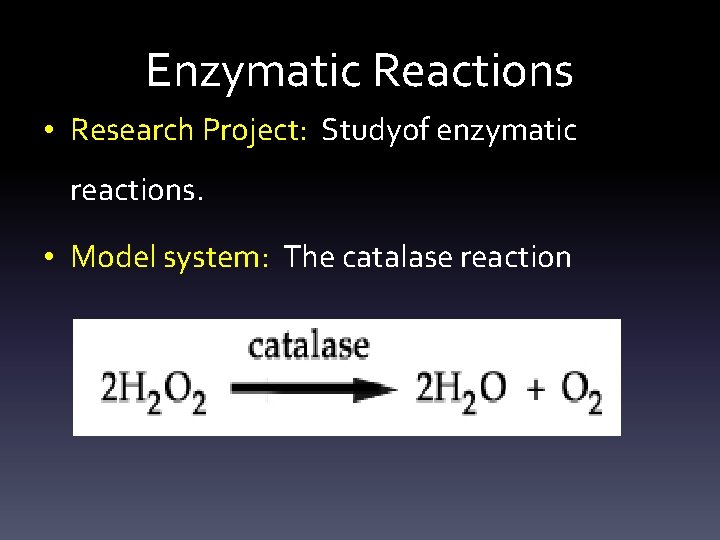
Enzymatic Reactions • Research Project: Studyof enzymatic reactions. • Model system: The catalase reaction
Yeast: a living organism
Observation • You will perform a literature search to learn everything possible about catalase and its enzymatic reaction. • From this, you should be able to determine an observation about catalase.
Question • Your observation should lead you to ask a question about how catalase works.
Overall Hypothesis Once you have a question, you will formulate an overall hypothesis. And this should lead you to • experimental design • experimental hypotheses
Overall Hypothesis For example: Overall hypothesis: Enzyme rate depends on the electrical charges of the enzyme’s active site(s). How might you manipulate the electrical charges of the active site(s) to find out if this is true?
Come up with some ideas. ? ? ?
Overall Hypothesis For example: Let’s choose to manipulate the p. H of the enzyme’s environment? Let’s say you decide to see if the enzyme works equally well at two different p. H levels: p. H 7. 0 vs. p. H 5. 0
Null and Alternative Hypotheses This brings you to your two statistical hypotheses. H 0 – Reaction rates of catalase in a p. H 7. 0 solution vs. catalase in a p. H 5. 0 solution will not differ. Ha – Reaction rates of catalase in a p. H 7. 0 solution vs. catalase in a p. H 5. 0 solution will differ.
Literature Search • Your assignment, due next week, is to do a LITERATURE SEARCH: – general information about the catalase reaction – specific information about reagents that you can use to manipulate the reaction
Reagents For your project, you will have available: – Ascorbic acid/ascorbate – Acetyl salicylic acid – Copper sulfate – Ethanol – Isopropanol – Succinic acid – Salts to make buffers of various p. H
Read and Learn • All of this information is in your lab manual » READ IT.
Today’s Activity: Practice! • Today you will learn how to – Use the Vernier oxygen sensors – Use Logger Lite software to record data – Measure and use various chemical reagents
Protocol Open your online lab syllabus and dowload the lab manual chapters for this week. Ready. Set. Go!