
Enzyme Structure 25122021 What is an enzyme how
- Slides: 10
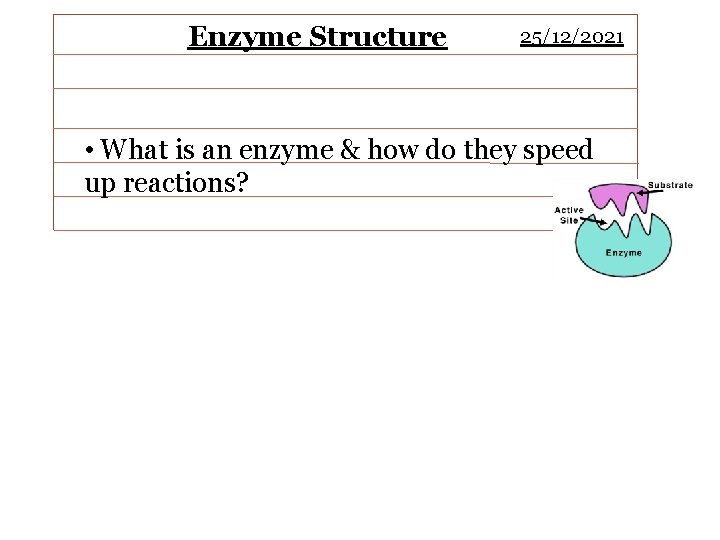
Enzyme Structure 25/12/2021 • What is an enzyme & how do they speed up reactions?
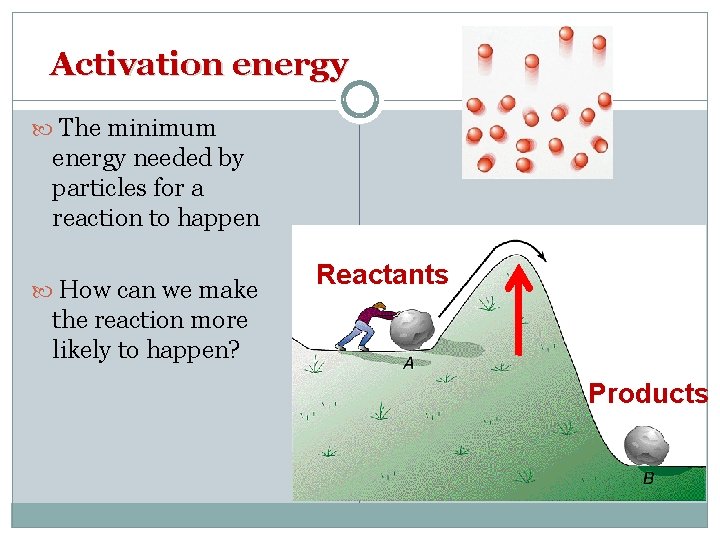
Activation energy The minimum energy needed by particles for a reaction to happen How can we make Reactants the reaction more likely to happen? Products
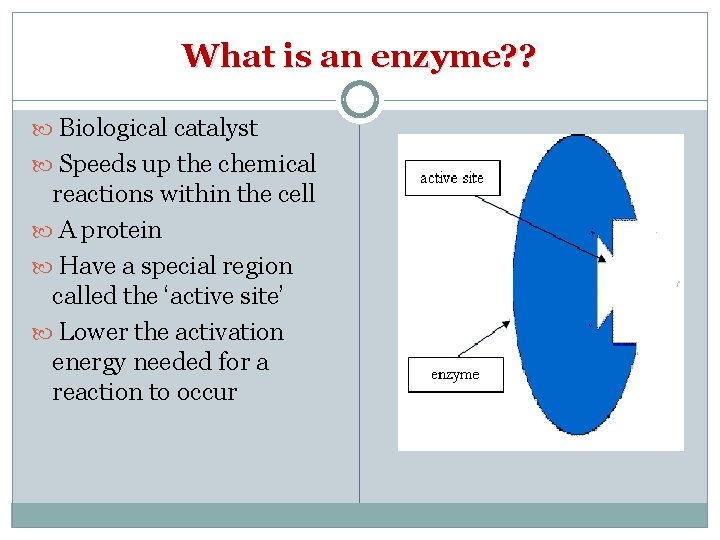
What is an enzyme? ? Biological catalyst Speeds up the chemical reactions within the cell A protein Have a special region called the ‘active site’ Lower the activation energy needed for a reaction to occur
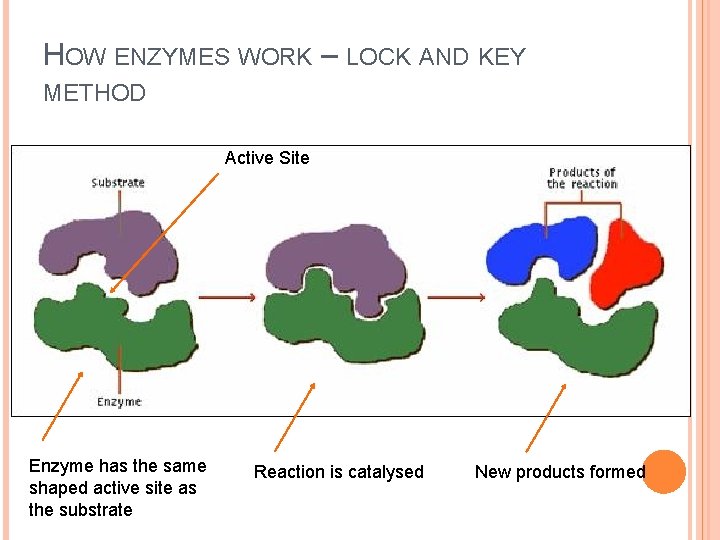
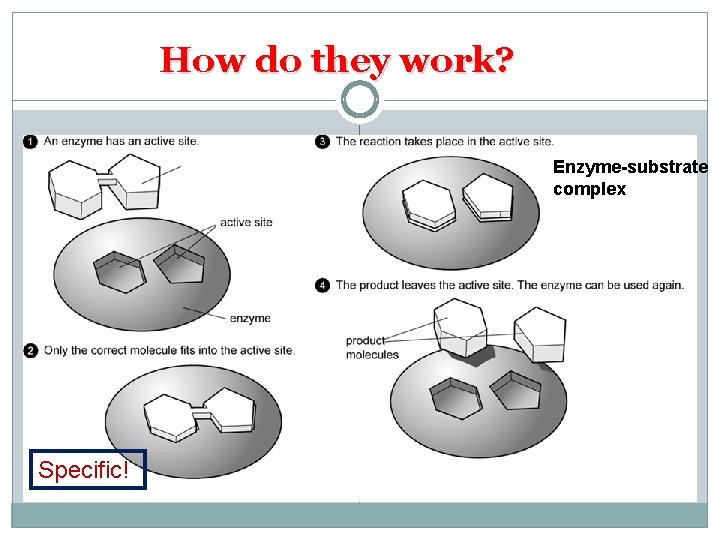
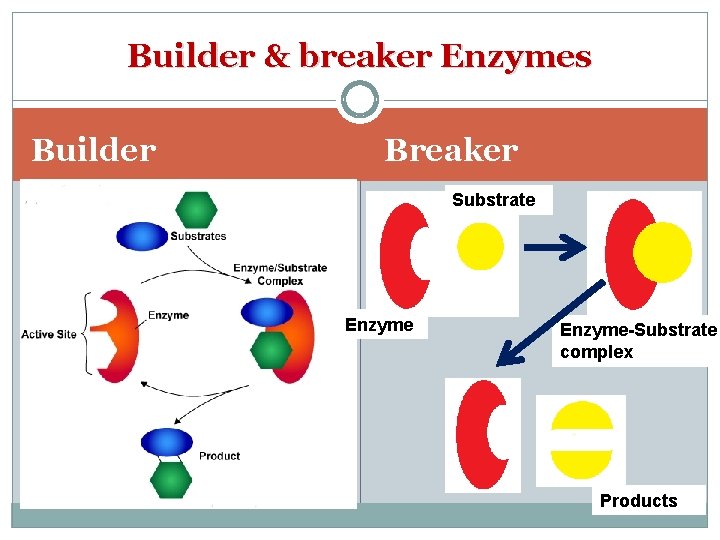
HOW ENZYMES WORK – LOCK AND KEY METHOD Active Site Enzyme has the same shaped active site as the substrate Reaction is catalysed New products formed
How do they work? Enzyme-substrate complex Specific!
ENZYMES LIKE CERTAIN THINGS! They like the right temperature and the right p. H! If it is too hot, cold, acidic and alkali then reactions will be affected.
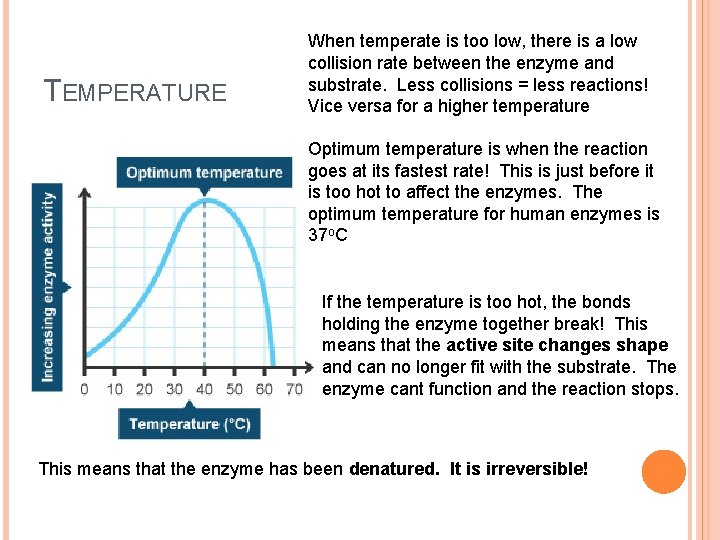
TEMPERATURE When temperate is too low, there is a low collision rate between the enzyme and substrate. Less collisions = less reactions! Vice versa for a higher temperature Optimum temperature is when the reaction goes at its fastest rate! This is just before it is too hot to affect the enzymes. The optimum temperature for human enzymes is 37 o. C If the temperature is too hot, the bonds holding the enzyme together break! This means that the active site changes shape and can no longer fit with the substrate. The enzyme cant function and the reaction stops. This means that the enzyme has been denatured. It is irreversible!
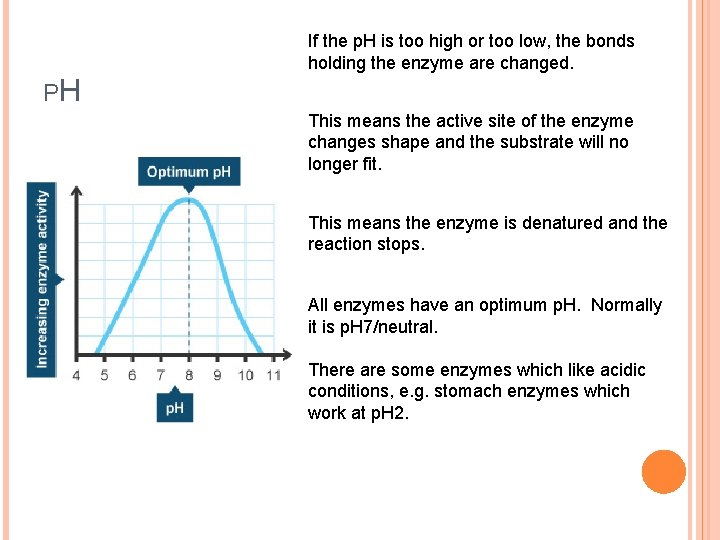
If the p. H is too high or too low, the bonds holding the enzyme are changed. PH This means the active site of the enzyme changes shape and the substrate will no longer fit. This means the enzyme is denatured and the reaction stops. All enzymes have an optimum p. H. Normally it is p. H 7/neutral. There are some enzymes which like acidic conditions, e. g. stomach enzymes which work at p. H 2.
Builder & breaker Enzymes Builder Breaker Substrate Enzyme-Substrate complex Products
Enzyme Cartoon To show that you understand the lock and key model of enzyme activity you must: Write the statements in the correct space on your cartoon strip Draw diagrams to illustrate what is happening at each stage in the Breaker cartoon q The 2 products are released from the enzyme, allowing it to be used over again q. The substrate binds to the enzyme active site forming the enzyme substrate complex q The enzyme causes the reaction to happen q Enzymes have an active site which is complimentary to the shape of the substrate molecule