
ENZYME CATALYSIS LAB AP Lab 1 AP Biology
ENZYME CATALYSIS LAB AP Lab #1/ AP Biology
FIRST…. Let’s review enzymes!
http: //www. stolaf. edu/people/giannini/flashanimat/e nzymes/transition%20 state. swf
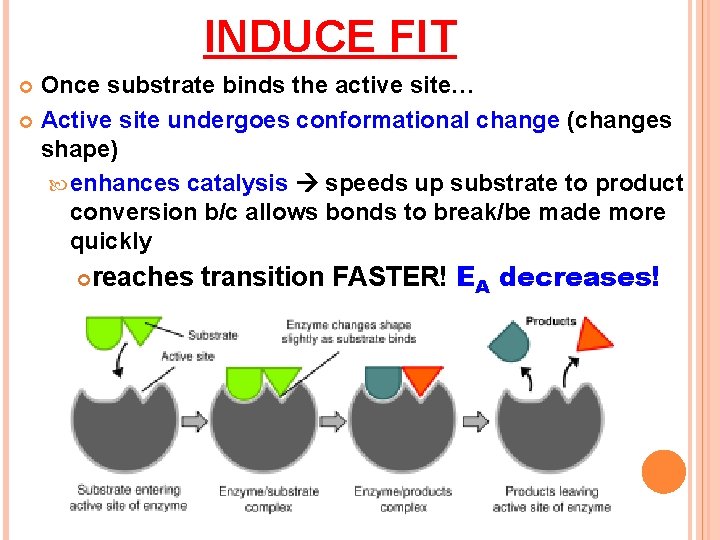
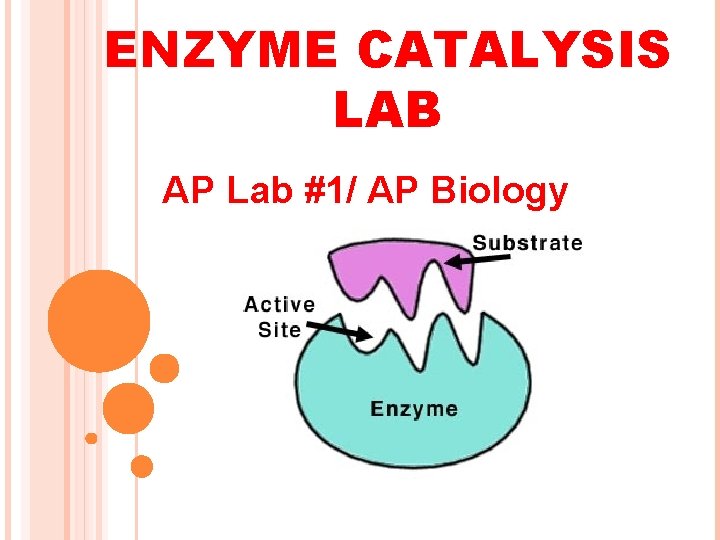
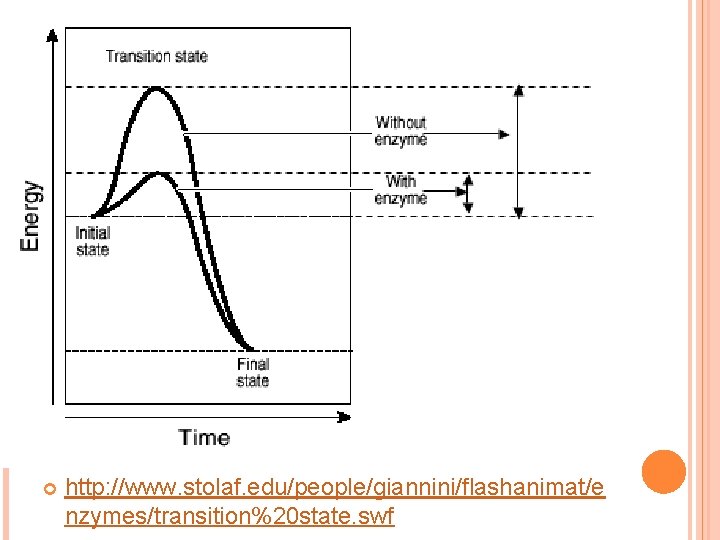
INDUCE FIT Once substrate binds the active site… Active site undergoes conformational change (changes shape) enhances catalysis speeds up substrate to product conversion b/c allows bonds to break/be made more quickly reaches transition FASTER! EA decreases!
ENZYMES ARE RECYCLED Release of products restores enzyme to its ORIGINAL conformation (shape) Enzyme can repeat this reaction over and over, as long as substrate molecules are present and enzyme is not completely denatured!
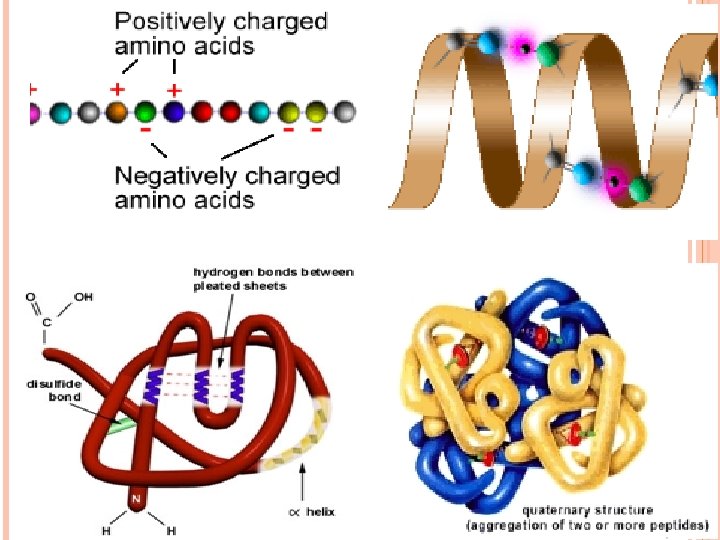
WHAT FACTORS DENATURE PROTEINS? p. H Salt concentration Temperature WHAT OTHER FACTORS AFFECT ENZYME RATE? Substrate or enzyme [ ]
INTRODUCTION TO … AP Lab #1: Enzyme Catalysis
CONCEPTS Understand substrates and products, enzyme structure & denaturation Measure factors affecting enzyme activity Measure rate of O 2 production Experimental design- PART 2 You need to change the rate of reactivity Either increase or decrease the rate BUT the rate CAN’T be zero.
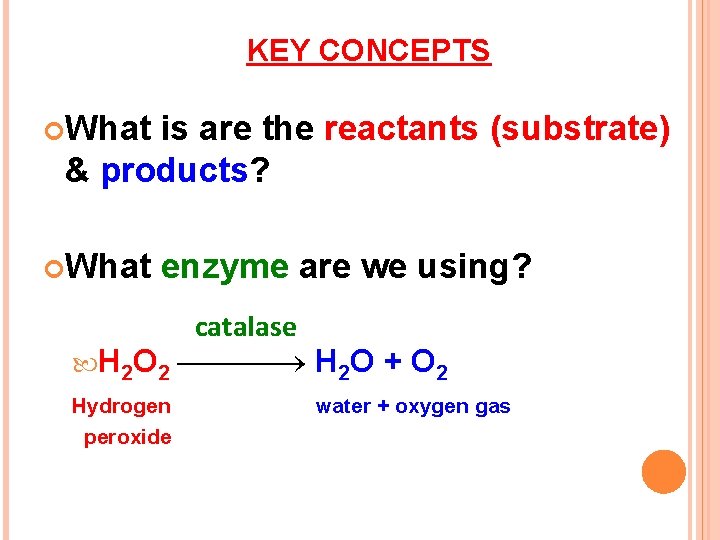
KEY CONCEPTS What is are the reactants (substrate) & products? What enzyme are we using? H 2 O 2 Hydrogen peroxide catalase H 2 O + O 2 water + oxygen gas
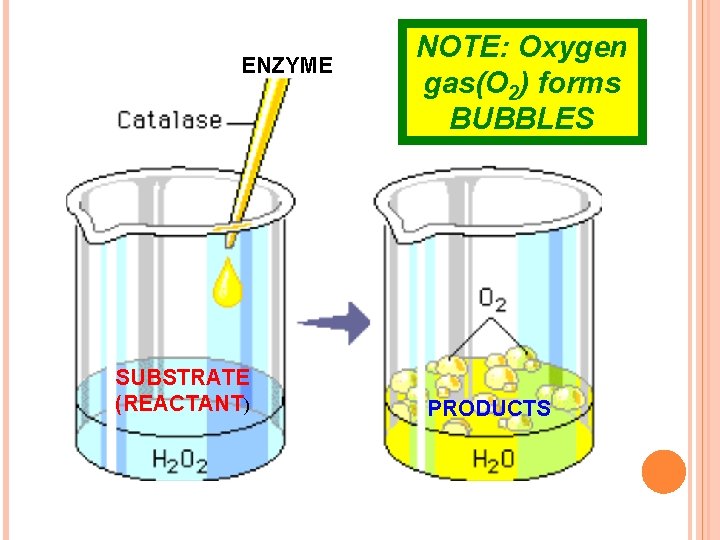
ENZYME SUBSTRATE (REACTANT) NOTE: Oxygen gas(O 2) forms BUBBLES PRODUCTS
WHY DOES H 2 O 2 NEED TO BE BROKEN DOWN? H 2 O 2 is poisonous (TOXIC) to cells; water and O 2 are NOT H 2 O 2 is naturally produced in cells as a waste product of metabolism (ex: cellular respiration) Almost all organisms possess enzymes known collectively as PEROXIDASES (ex: catalase is one of these enzymes). Converts H 2 O 2 into harmless H 2 O & O 2
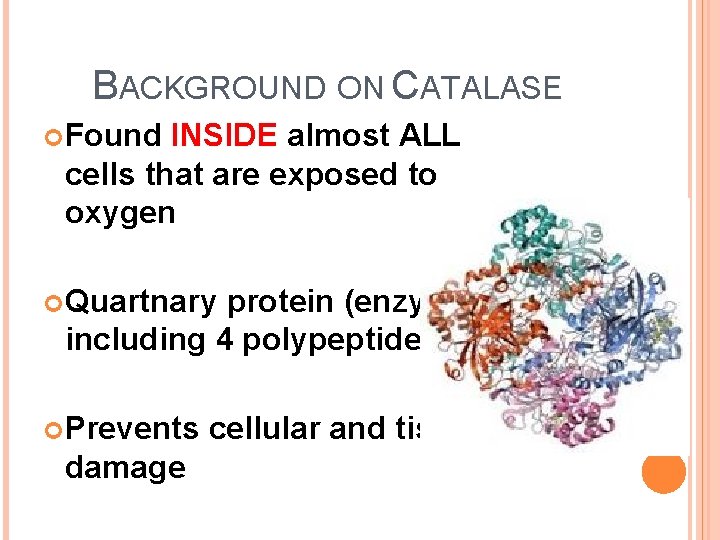
BACKGROUND ON CATALASE Found INSIDE almost ALL cells that are exposed to oxygen Quartnary protein (enzyme) including 4 polypeptides Prevents damage cellular and tissue
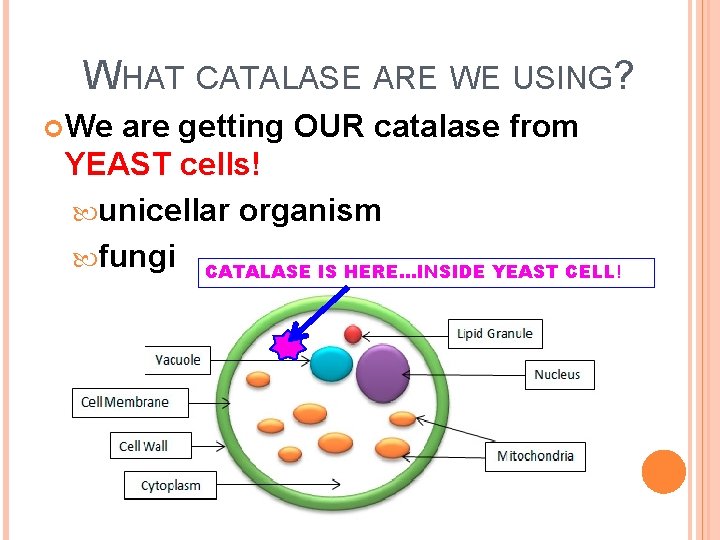
WHAT CATALASE ARE WE USING? We are getting OUR catalase from YEAST cells! unicellar organism fungi CATALASE IS HERE…INSIDE YEAST CELL!
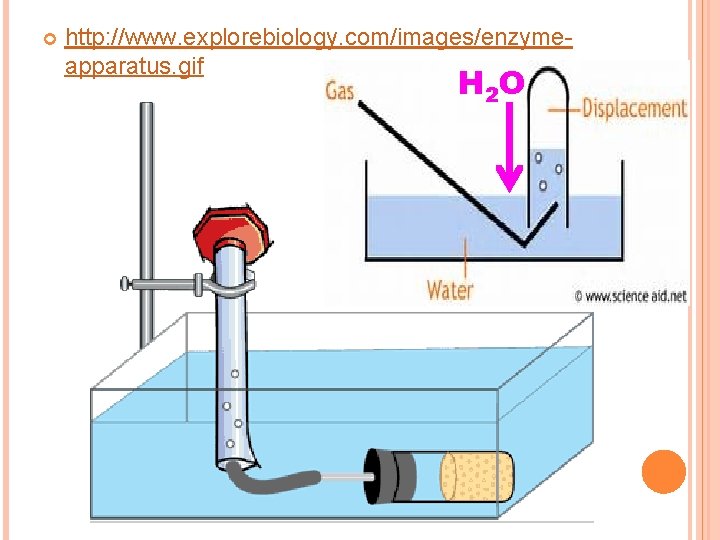
http: //www. explorebiology. com/images/enzymeapparatus. gif H 2 O
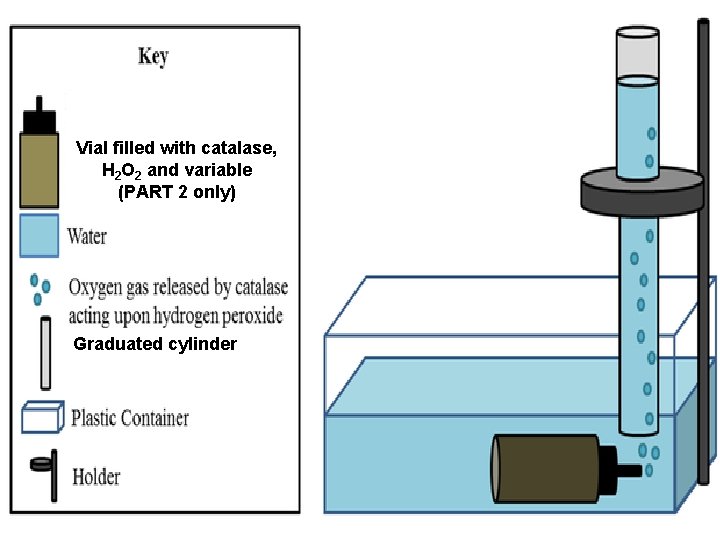
Vial filled with catalase, H 2 O 2 and variable (PART 2 only) Graduated cylinder
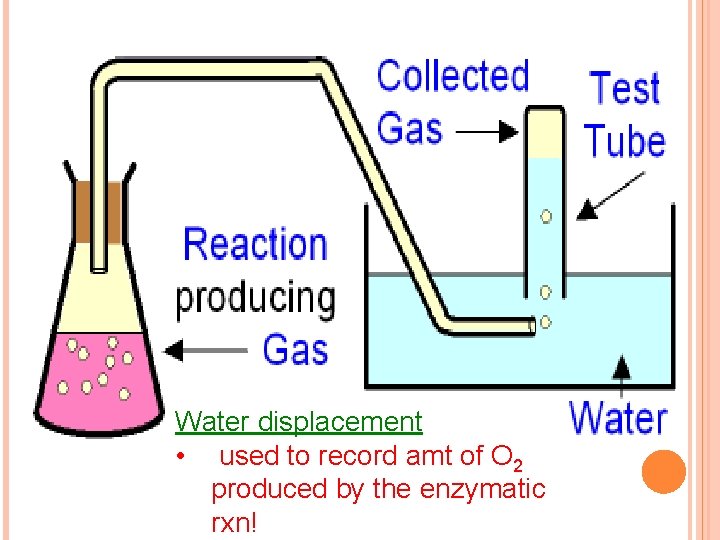
Water displacement • used to record amt of O 2 produced by the enzymatic rxn!
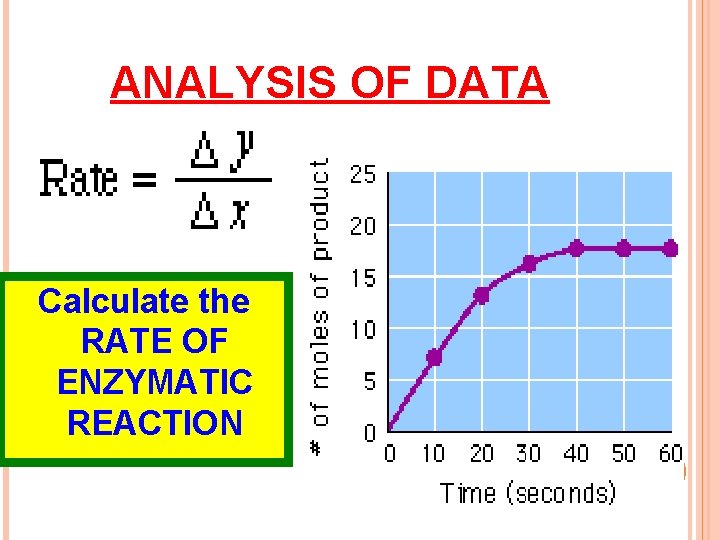
ANALYSIS OF DATA Calculate the RATE OF ENZYMATIC REACTION
SOME REAL-LIFE APPLICATIONS FOR THIS LAB…. 1. 2. Bacterial enzymes and use of disinfectants Many disinfectants, such as chlorine, iodophores, mercurials, silver nitrate, formaldehyde, and ethylene oxide, INACTIVATE bacterial enzymes and block metabolism. Extremes of temperature to control bacteria. High temperatures, such as autoclaving, boiling, and pasteurization denature proteins and STOP functions Cold temperatures, such as refrigeration or freezing, SLOW DOWN or STOP enzyme rxns
- Slides: 19