
Enzyme Activities Kate Andrews Tricia Geraghty Simple activities







- Slides: 34
Enzyme Activities Kate Andrews Tricia Geraghty
Simple activities to support the teaching and learning of enzymes at various levels in the curriculum.
Effervescent Enzymes Background • Hydrogen peroxide - a damaging substance produced by living cells. • Cells produce catalase, an enzyme, to remove hydrogen peroxide.
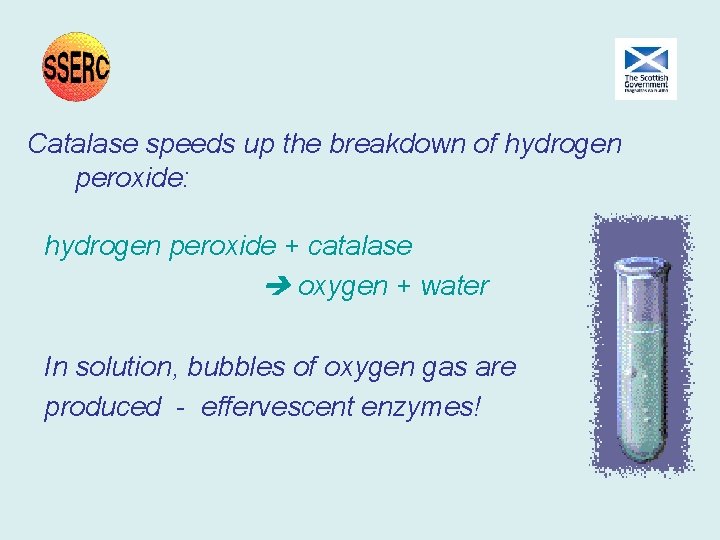
Catalase speeds up the breakdown of hydrogen peroxide: hydrogen peroxide + catalase oxygen + water In solution, bubbles of oxygen gas are produced - effervescent enzymes!
Aims of activity 1 To: • Identify whether catalase is present in both living and non-living substances • Compare catalase activity in a variety of plant and animal tissues
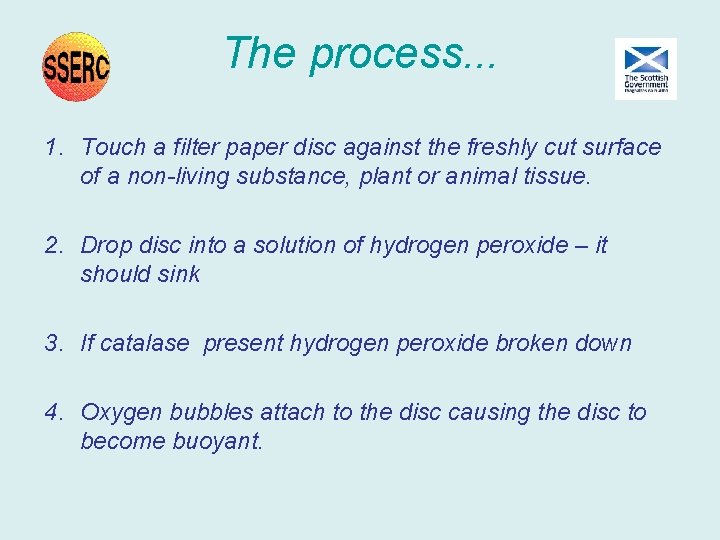
The process. . . 1. Touch a filter paper disc against the freshly cut surface of a non-living substance, plant or animal tissue. 2. Drop disc into a solution of hydrogen peroxide – it should sink 3. If catalase present hydrogen peroxide broken down 4. Oxygen bubbles attach to the disc causing the disc to become buoyant.
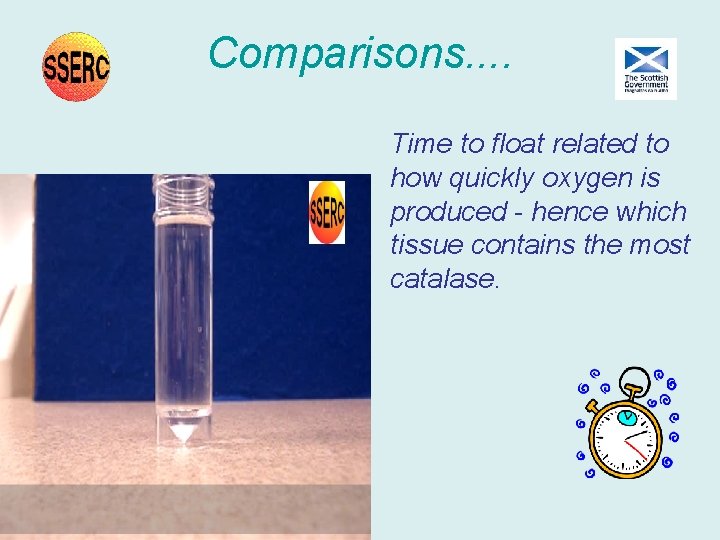
Comparisons. . Time to float related to how quickly oxygen is produced - hence which tissue contains the most catalase.
Work in pairs. Wear eye protection. Carry out activity 1. Note your results.
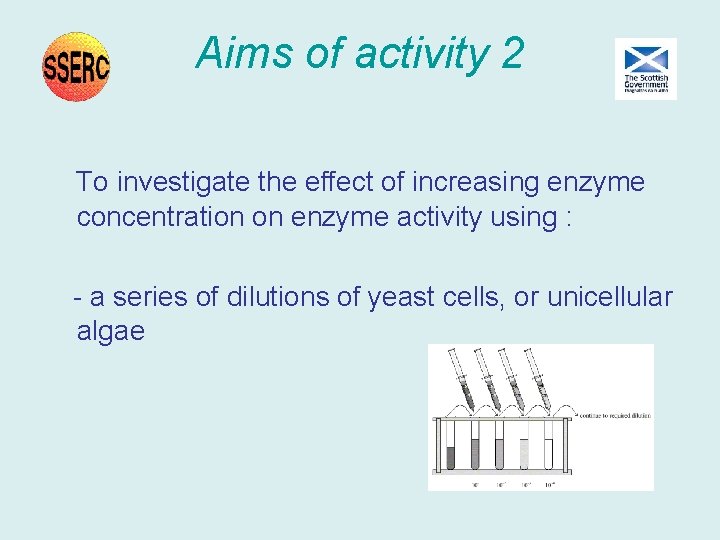
Aims of activity 2 To investigate the effect of increasing enzyme concentration on enzyme activity using : - a series of dilutions of yeast cells, or unicellular algae
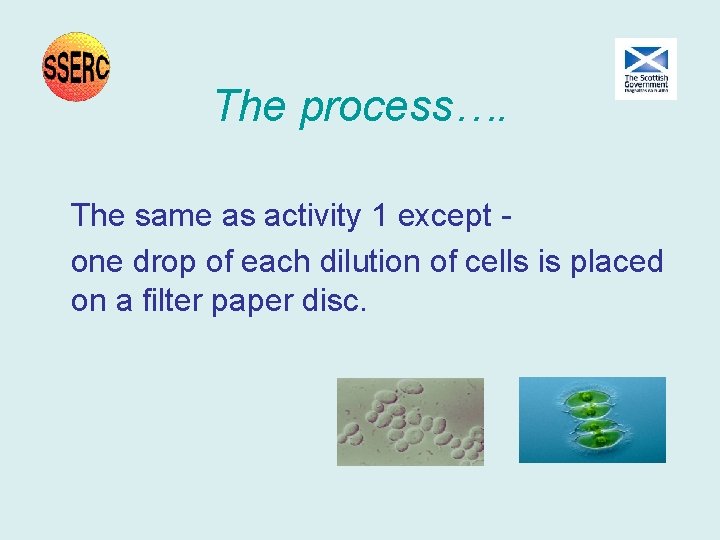
The process…. The same as activity 1 except one drop of each dilution of cells is placed on a filter paper disc.
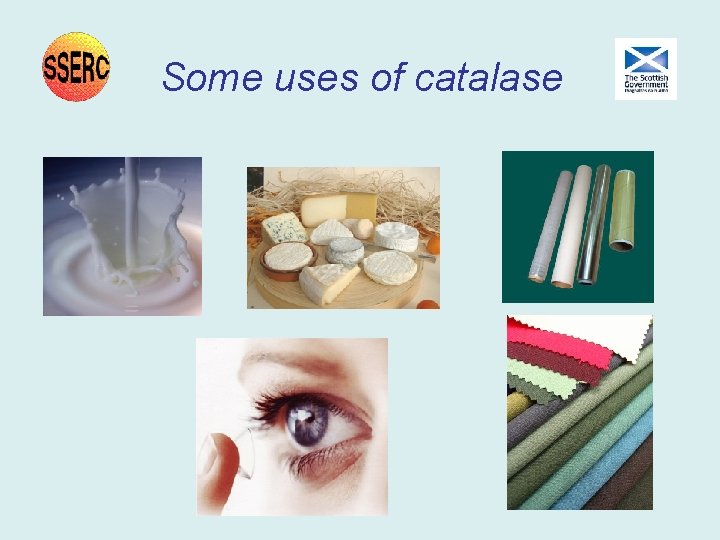
Some uses of catalase
- Protocols adapted from Roger Delpech ‘Microscale Investigations with Catalase’ - Ideas for investigations suitable for Advanced Higher projects. - http: //www. saps. org. uk/attachments/article/293/SAPS%20 Student%20 Sheet%20 -%2024%20%20 Investigations%20 with%20 Catalase. pdf
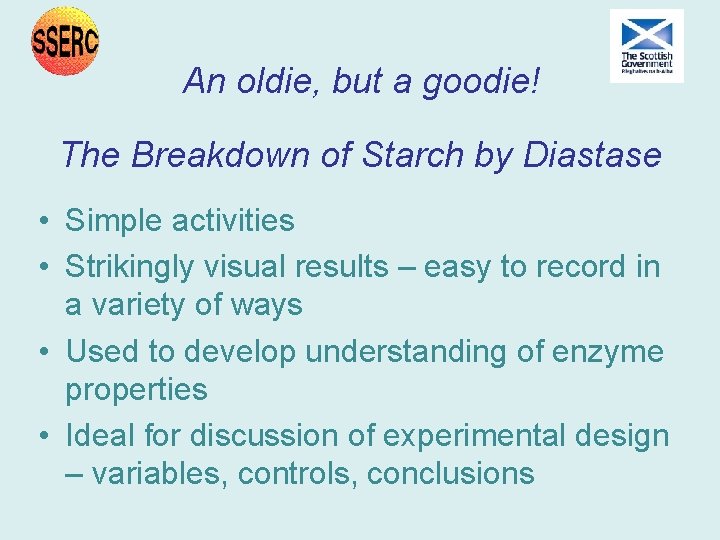
An oldie, but a goodie! The Breakdown of Starch by Diastase • Simple activities • Strikingly visual results – easy to record in a variety of ways • Used to develop understanding of enzyme properties • Ideal for discussion of experimental design – variables, controls, conclusions
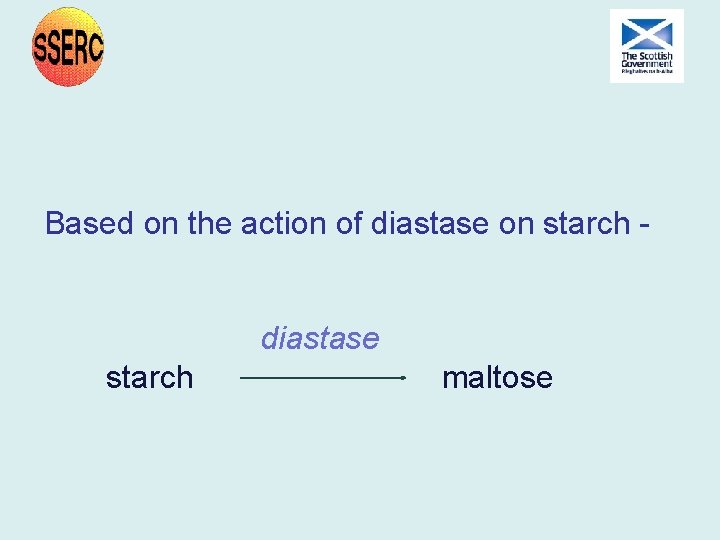
Based on the action of diastase on starch diastase starch maltose
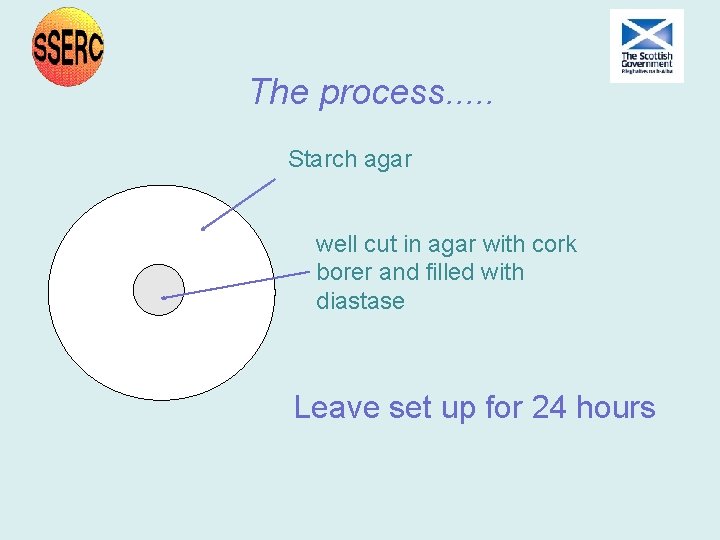
The process. . . Starch agar well cut in agar with cork borer and filled with diastase Leave set up for 24 hours
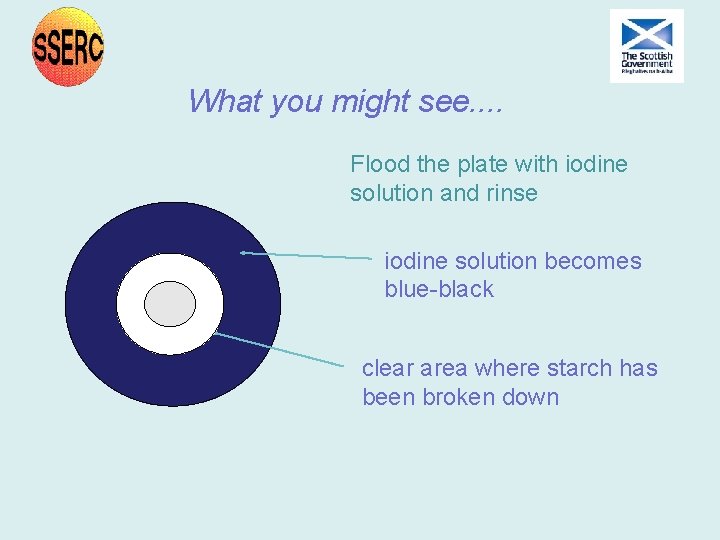
What you might see. . Flood the plate with iodine solution and rinse iodine solution becomes blue-black clear area where starch has been broken down
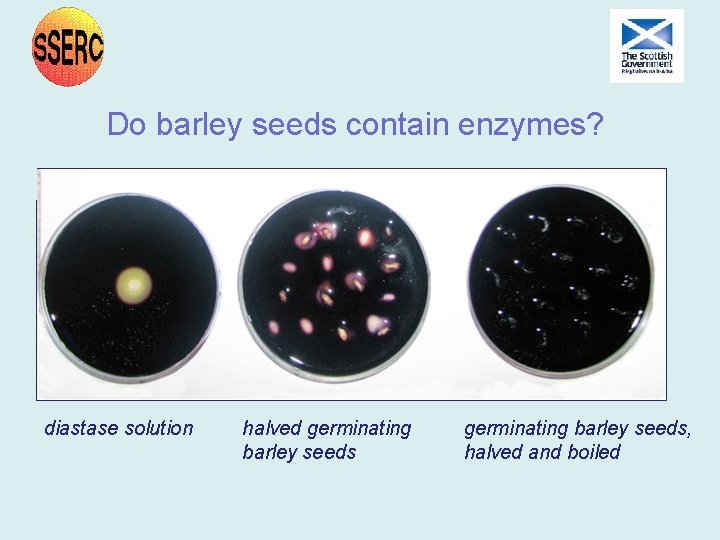
Do barley seeds contain enzymes? diastase solution halved germinating barley seeds, halved and boiled
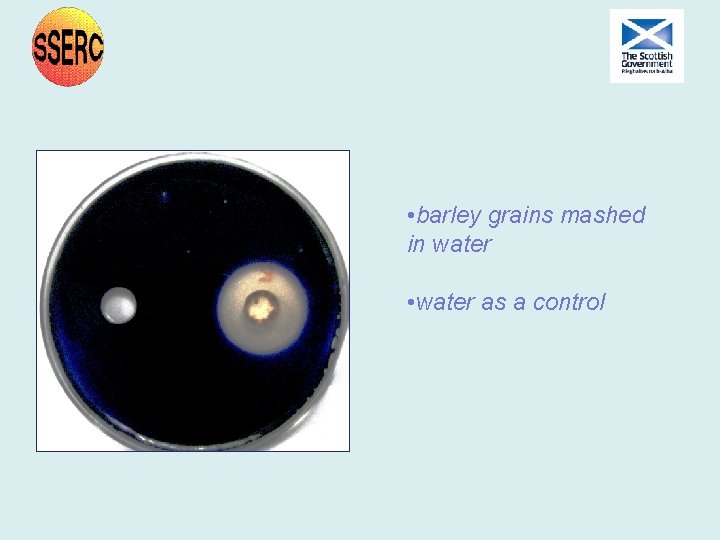
• barley grains mashed in water • water as a control
Set up diastase experiments
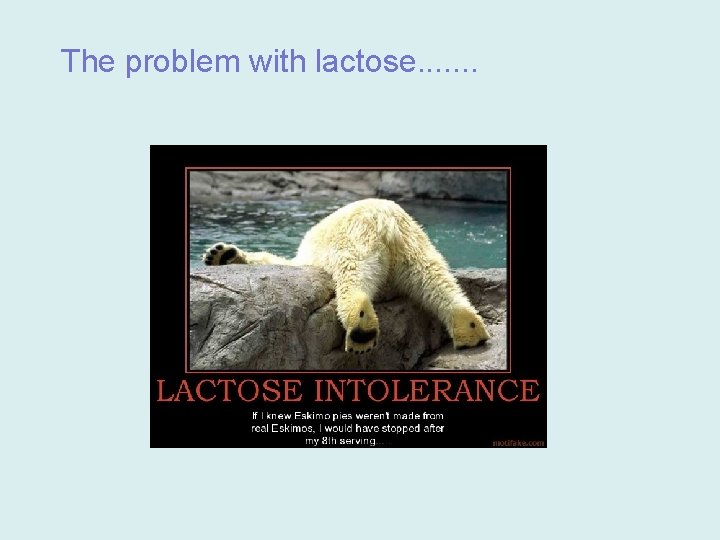
The problem with lactose. . . .
Protocol adapted from an NCBE protocol: Better Milk for Cats, (1995)
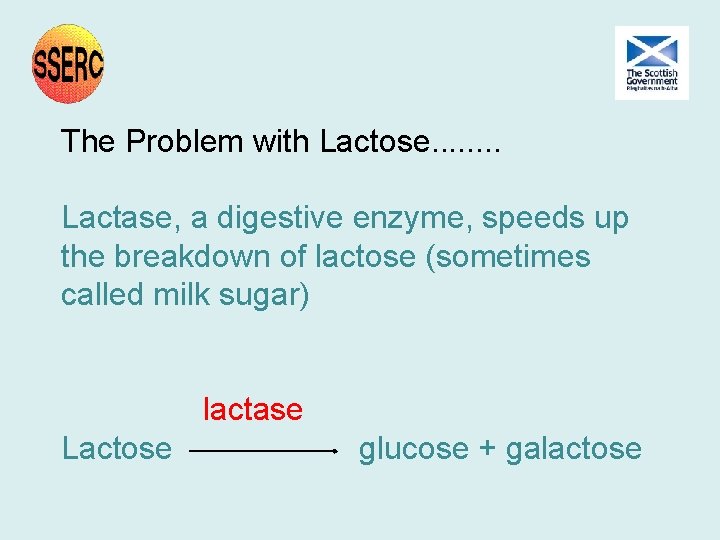
The Problem with Lactose. . . . Lactase, a digestive enzyme, speeds up the breakdown of lactose (sometimes called milk sugar) lactase Lactose glucose + galactose
Aims of the activity To: • To provide a context for developing understanding of enzymes and their uses in industry • To demonstrate a use of ‘immobilised enzymes’ • To provide a context for identifying ‘limitations and improvements. . . ’
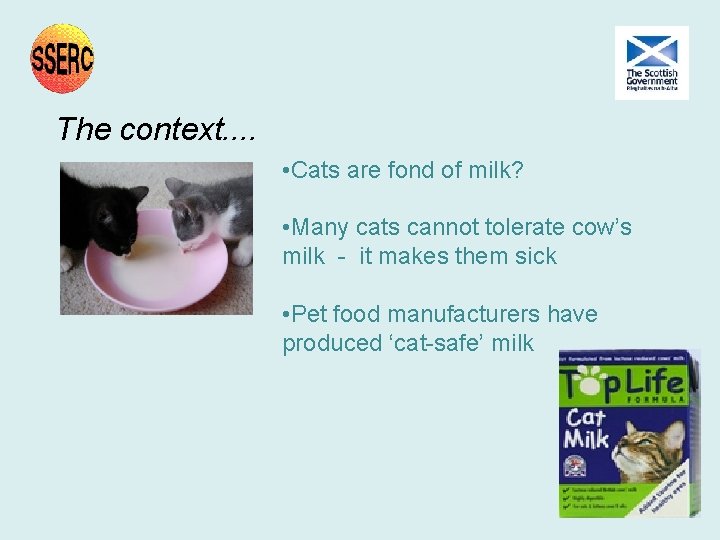
The context. . • Cats are fond of milk? • Many cats cannot tolerate cow’s milk - it makes them sick • Pet food manufacturers have produced ‘cat-safe’ milk
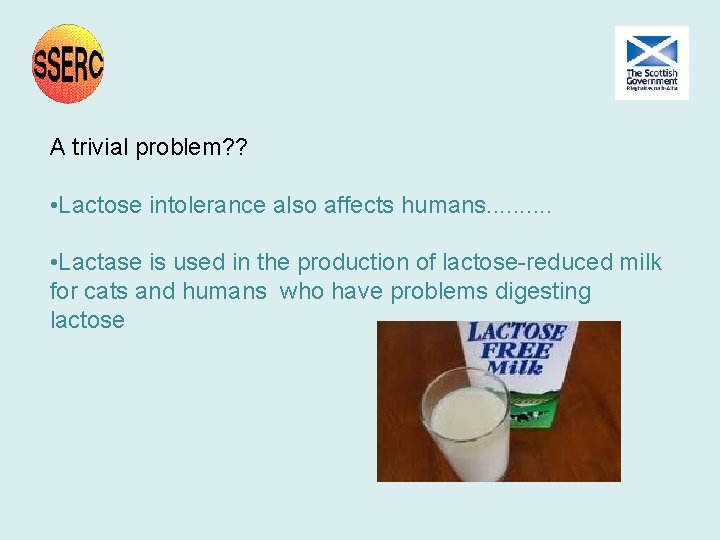
A trivial problem? ? • Lactose intolerance also affects humans. . • Lactase is used in the production of lactose-reduced milk for cats and humans who have problems digesting lactose
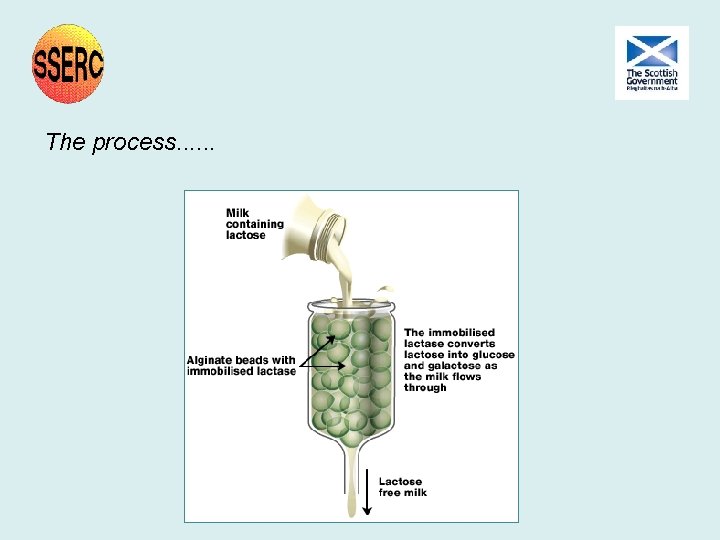
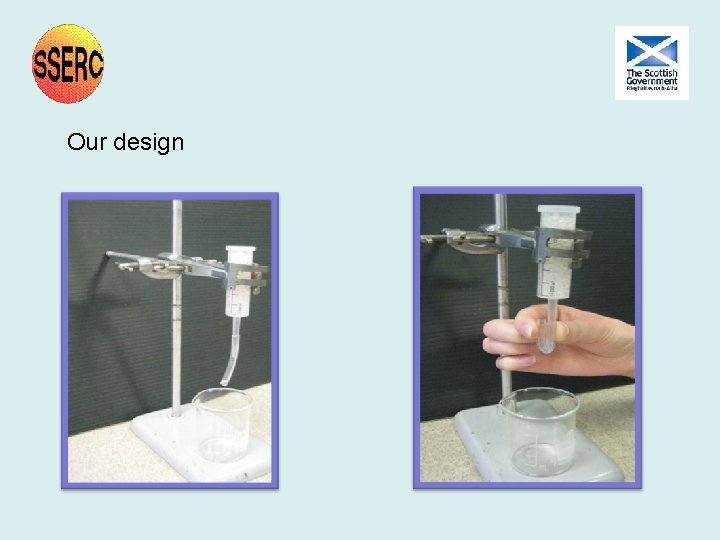
The process Lactose-reduced milk can be produced in two ways: 1. Lactase can be injected into cartons as UHT milk is being packaged 2. Milk can be treated by enzymes which have been ‘immobilised’ on beads of gel
The process. . .
Our design
Further discussion In designing a treatment column for the production of lactose-reduced milk, what factors would a manufacturer have to take into consideration?
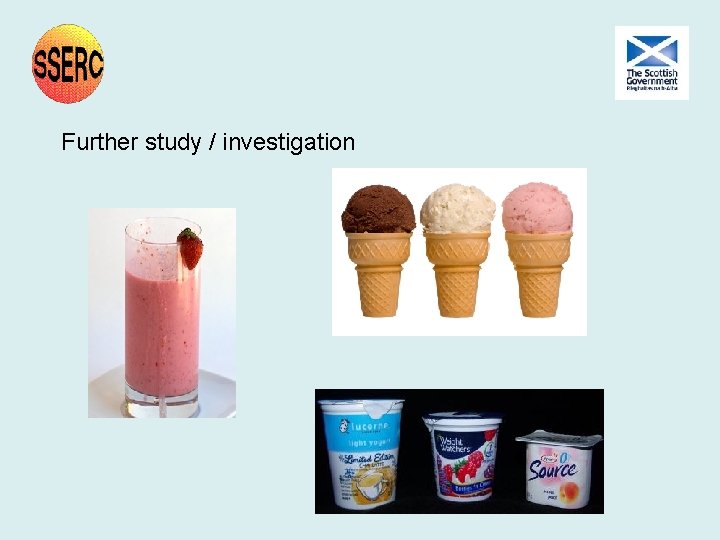
Further study / investigation
Curriculum Links I have taken part in practical activities which involve the use of enzymes and microorganisms to develop my understanding of their properties and their use in industries. SCN 4 -13 b
‘S’ Grade -. . carry out an investigation on the catalase reaction when plant and animal tissues are added to hydrogen peroxide solution. Int 2 -. . demonstrate the breakdown of hydrogen peroxide by heating compared to catalysis with manganese dioxide and catalase. Current ‘H’ Human Biology – Effects of various factors on enzyme activity to include inhibition, substrate and enzyme concentration. Carry out an investigation…. .
Revised Higher Biology and Higher Human Biology Unit 2, Human Biology Unit 1: • Activation energy experiments, comparing heat, manganese dioxide and catalase action on hydrogen peroxide. • Experiments on competitive inhibition. • Experiments on reaction rate with increasing substrate concentration.