
Environmental Toolbox General Awareness Training Module For Soldiers
Environmental Toolbox

General Awareness Training Module For Soldiers, Sailors, Airmen, Marines, and everyone in a base camp 2

Environmental Considerations in Operations (ECOps) Sound environmental management during military operations helps you and your commander accomplish the mission by enhancing force protection and reducing the logistical burden on the force 3
Overview of This Briefing • Your environmental responsibilities • Why environmental considerations matter • Examples of good and bad practices • Handout materials, instructions, education 4
Your Responsibilities • • • Be familiar with policies, standard operating procedures (SOPs), field card instructions, etc. Use resources responsibly; use only what is needed Put your waste into appropriate containers Recycle and reuse when possible Handle hazardous material and waste carefully and use personal protection equipment (PPE) Conduct regular inspections and checks of your equipment and workspace Be prepared to act in case of any environmental incident. Report spills, releases and contamination. Know the procedures! Protect natural resources and cultural property Ask questions if in doubt Everyone has responsibility to protect the environment! 5

Definition Environmental Considerations in Operations are measures or processes put in place to avoid or minimize potentially adverse environmental impacts during military operations. Focus areas addressed in this toolbox*: § § § Solid waste management Hazardous material and hazardous waste management Water and wastewater management Spill prevention and response planning Natural resource and cultural property protection *Note: while energy use is not addressed specifically in this toolbox, it is important for everyone to use energy responsibly! 6
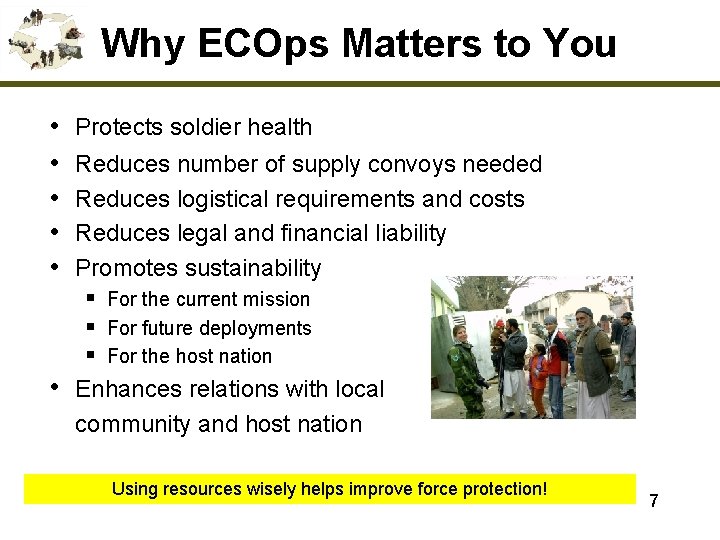
Why ECOps Matters to You • • • Protects soldier health Reduces number of supply convoys needed Reduces logistical requirements and costs Reduces legal and financial liability Promotes sustainability § For the current mission § For future deployments § For the host nation Enhances relations with local community and host nation Using resources wisely helps improve force protection! 7

ECOps in the Life Cycle of Military Operations Lessons Learned Planning Pre-deployment Postdeployment Re-deployment Rotation Deployment 8 8
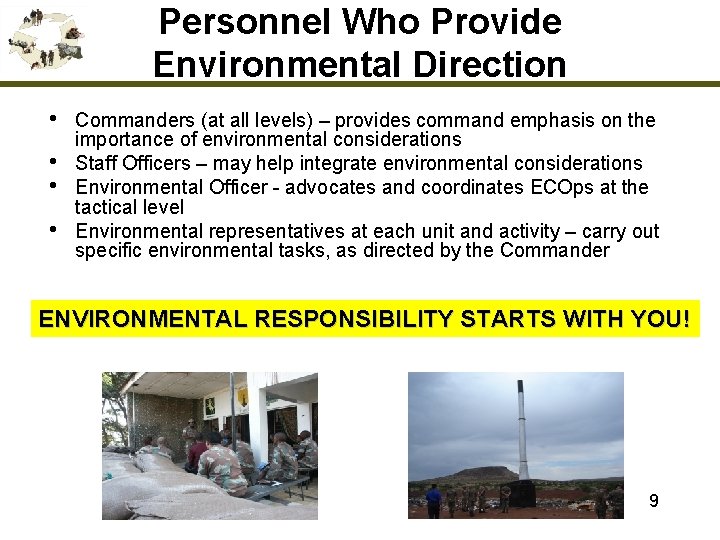
Personnel Who Provide Environmental Direction • • Commanders (at all levels) – provides command emphasis on the importance of environmental considerations Staff Officers – may help integrate environmental considerations Environmental Officer - advocates and coordinates ECOps at the tactical level Environmental representatives at each unit and activity – carry out specific environmental tasks, as directed by the Commander ENVIRONMENTAL RESPONSIBILITY STARTS WITH YOU! 9
Good and Bad Examples The following slides show a number of pictures of both good and bad environmental practices, from camp setup to handling different kinds of wastes to protecting natural and cultural resources 10

Bad Hazardous Waste Storage Drums not labeled, materials not segregated, no secondary containment, no covered storage No secondary containment; leakage has contaminated soil Uses secondary containment, but it is too small and not durable. Canisters improperly stored 11
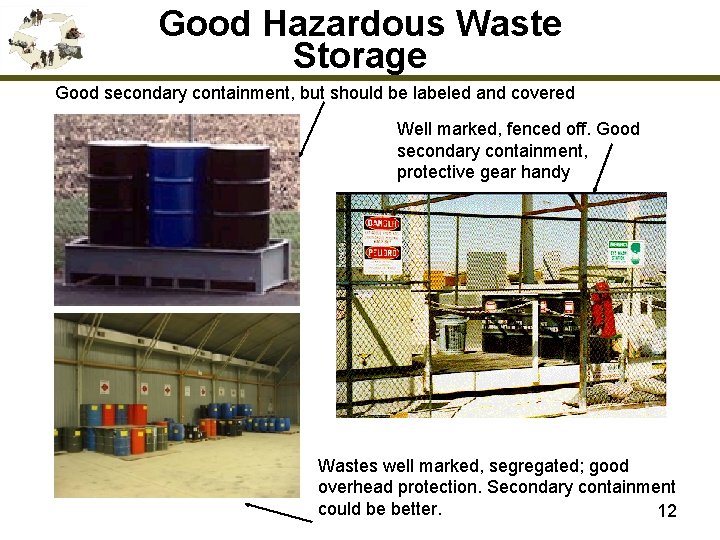
Good Hazardous Waste Storage Good secondary containment, but should be labeled and covered Well marked, fenced off. Good secondary containment, protective gear handy Wastes well marked, segregated; good overhead protection. Secondary containment could be better. 12
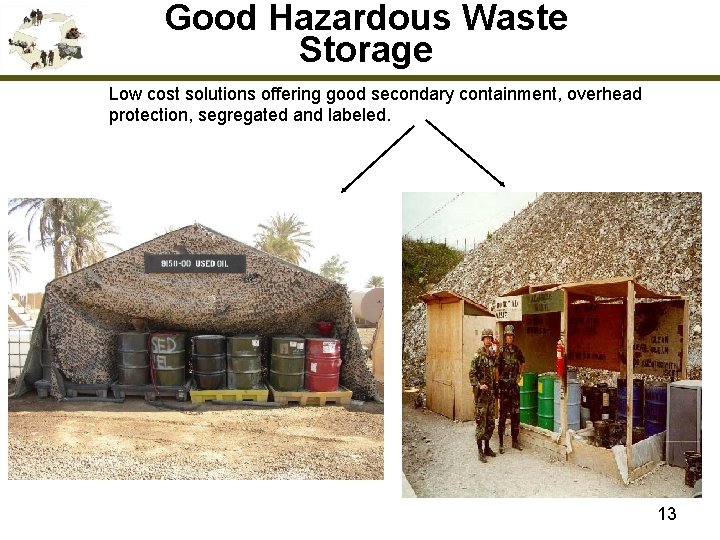
Good Hazardous Waste Storage Low cost solutions offering good secondary containment, overhead protection, segregated and labeled. 13
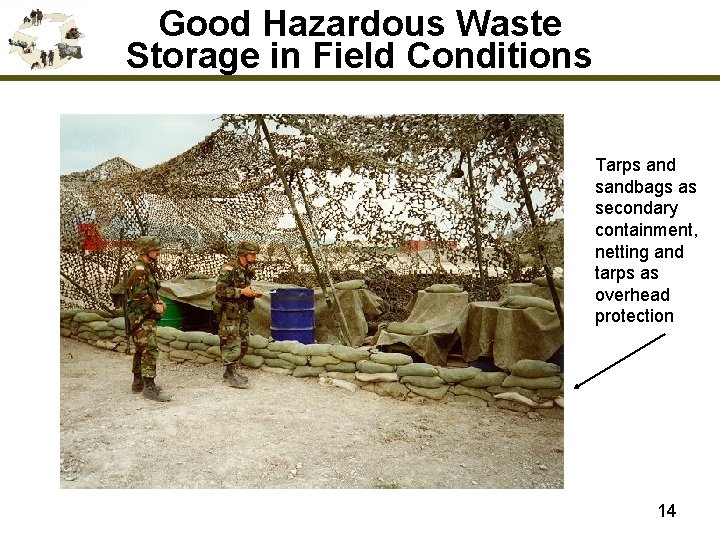
Good Hazardous Waste Storage in Field Conditions Tarps and sandbags as secondary containment, netting and tarps as overhead protection 14
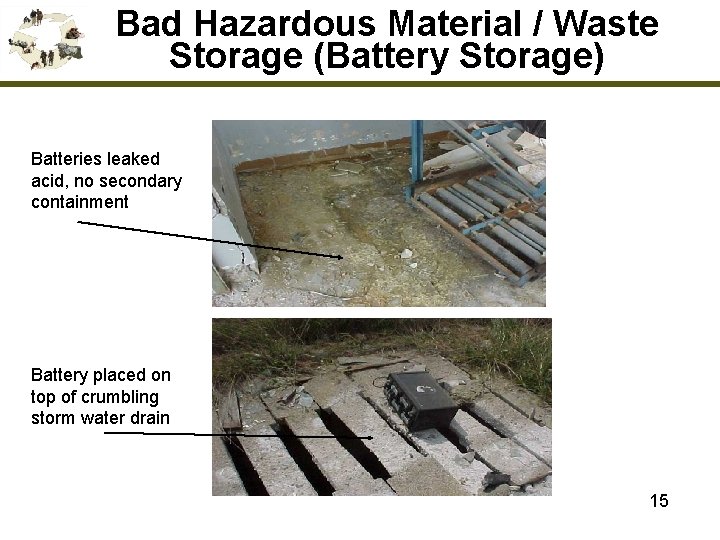
Bad Hazardous Material / Waste Storage (Battery Storage) Batteries leaked acid, no secondary containment Battery placed on top of crumbling storm water drain 15
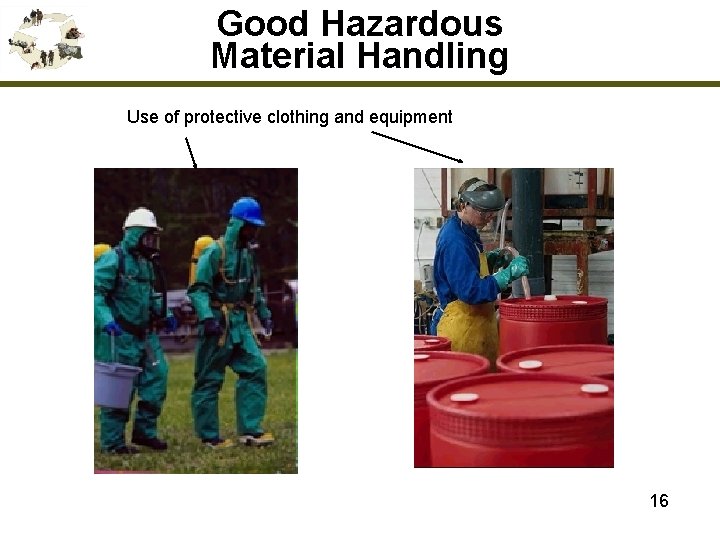
Good Hazardous Material Handling Use of protective clothing and equipment 16
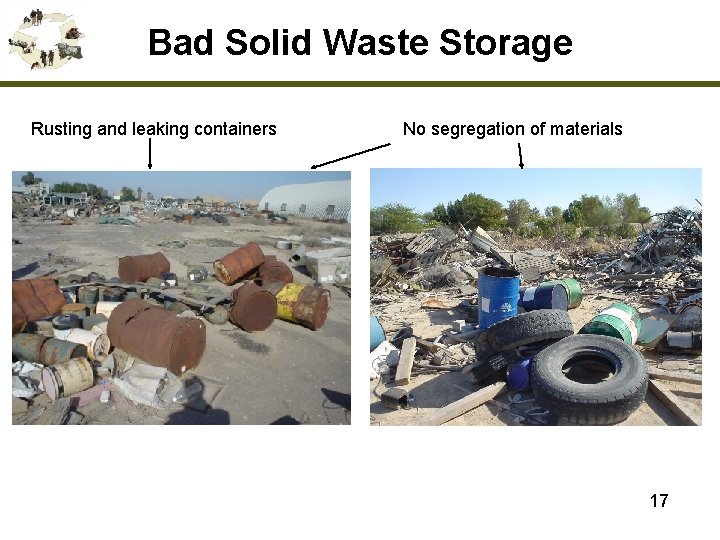
Bad Solid Waste Storage Rusting and leaking containers No segregation of materials 17
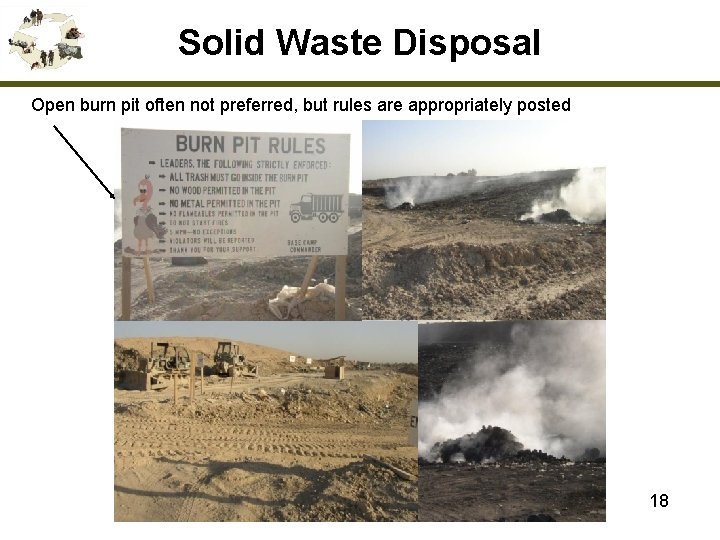
Solid Waste Disposal Open burn pit often not preferred, but rules are appropriately posted 18 18
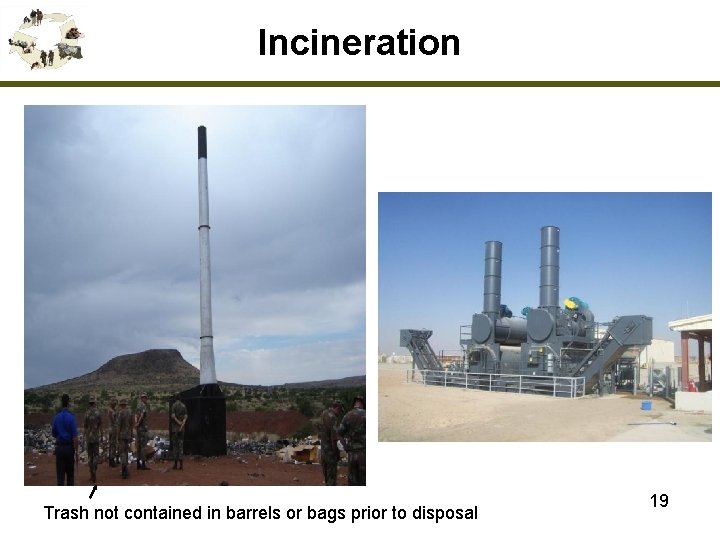
Incineration Trash not contained in barrels or bags prior to disposal 19
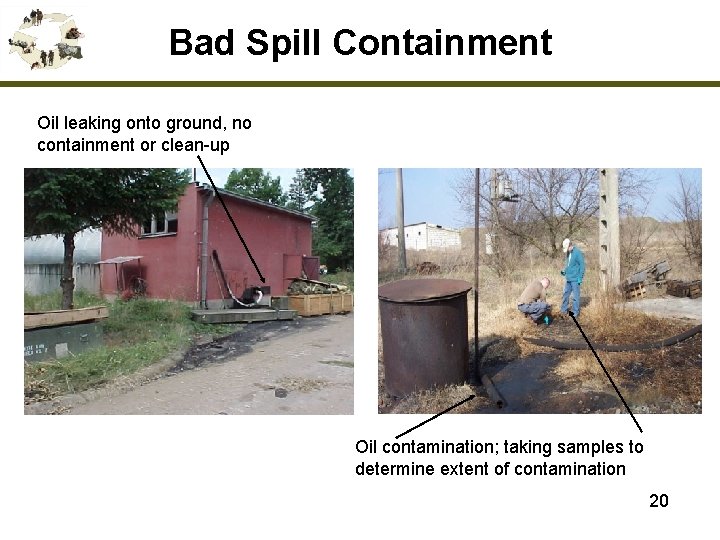
Bad Spill Containment Oil leaking onto ground, no containment or clean-up Oil contamination; taking samples to determine extent of contamination 20
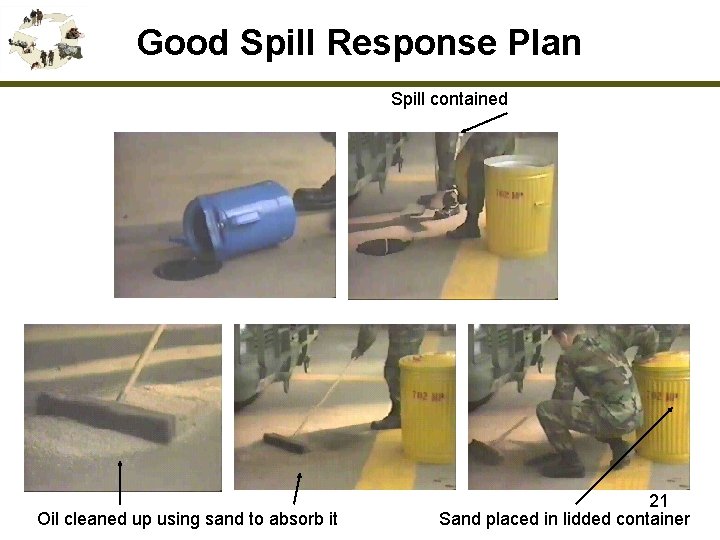
Good Spill Response Plan Spill contained Oil cleaned up using sand to absorb it 21 Sand placed in lidded container
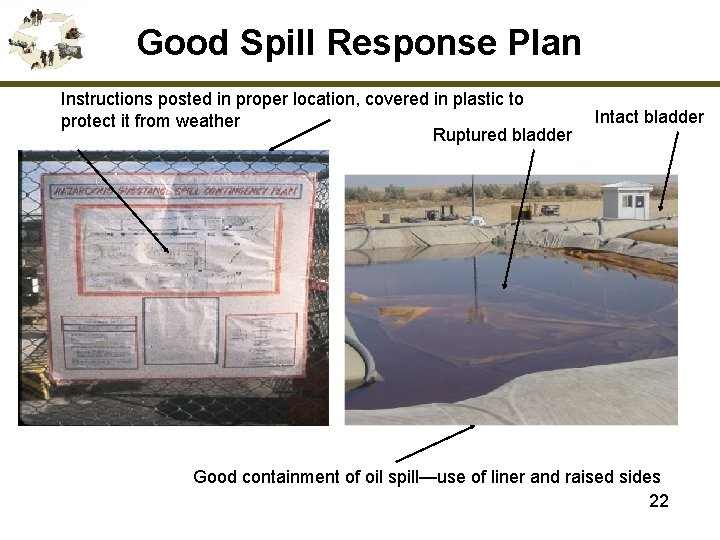
Good Spill Response Plan Instructions posted in proper location, covered in plastic to protect it from weather Ruptured bladder Intact bladder Good containment of oil spill—use of liner and raised sides 22
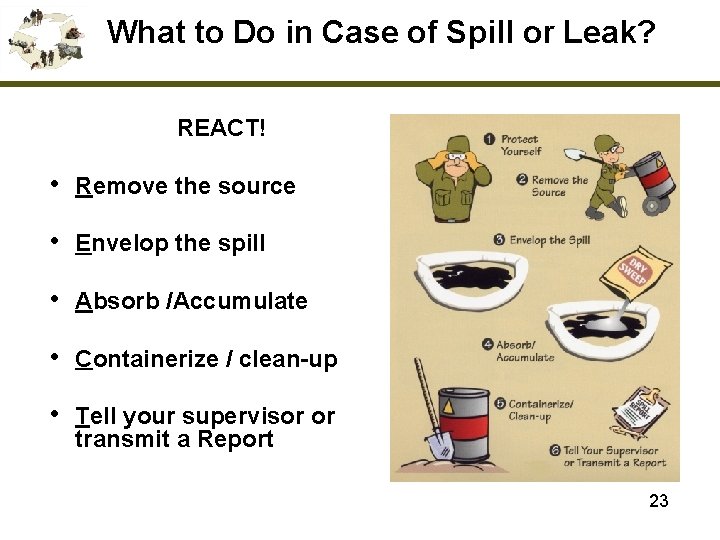
What to Do in Case of Spill or Leak? REACT! • Remove the source • Envelop the spill • Absorb /Accumulate • Containerize / clean-up • Tell your supervisor or transmit a Report 23
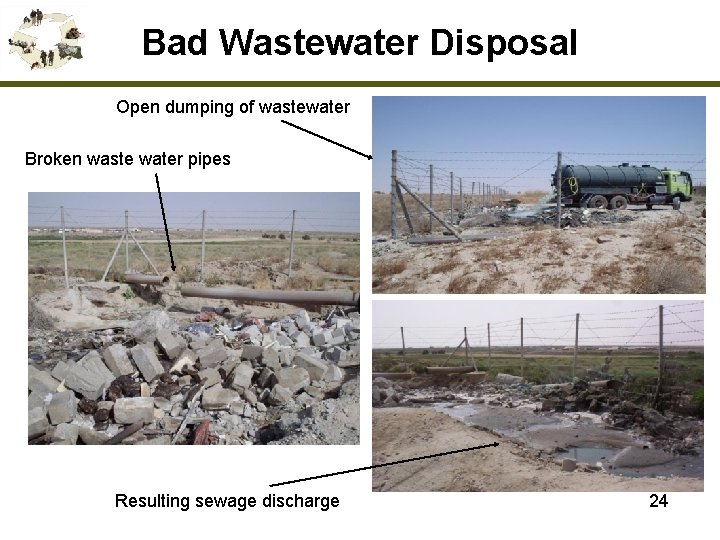
Bad Wastewater Disposal Open dumping of wastewater Broken waste water pipes Resulting sewage discharge 24
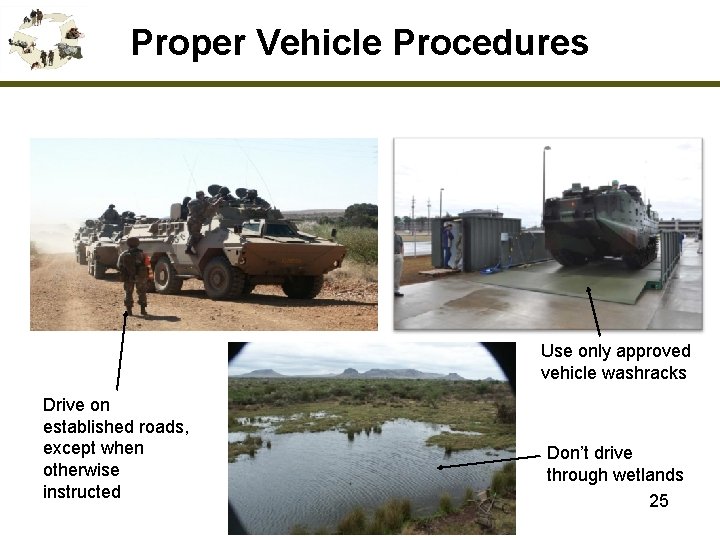
Proper Vehicle Procedures Use only approved vehicle washracks Drive on established roads, except when otherwise instructed Don’t drive through wetlands 25
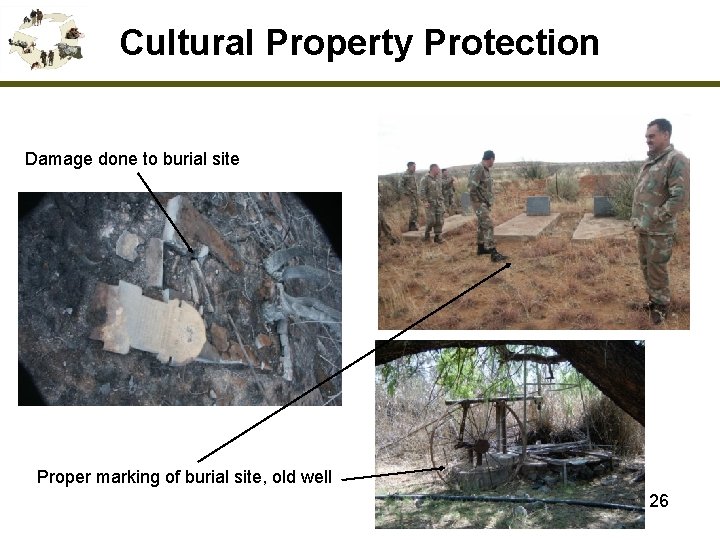
Cultural Property Protection Damage done to burial site Proper marking of burial site, old well 26 26
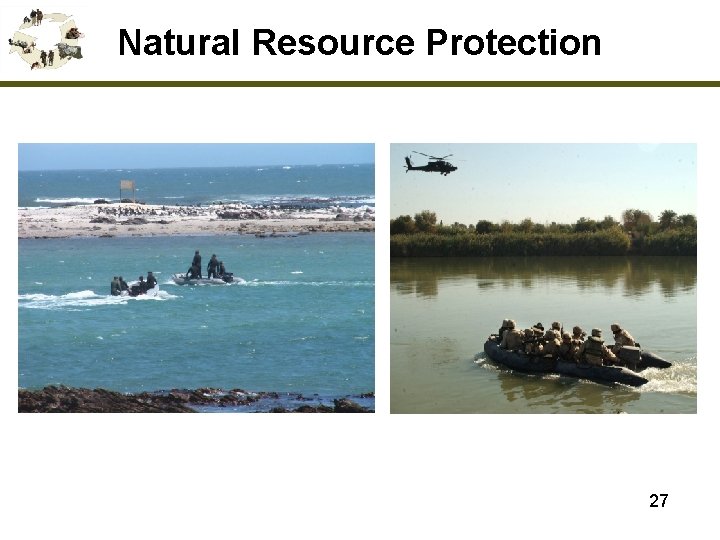
Natural Resource Protection 27

Handout Material, Instructions, Education 28

Conclusion • Your actions and awareness about environmental considerations during the military operation will ensure your safety and health, proper execution of the mission, protection of the environment, and the wise use of resources • If you have concerns, comments or suggestions, be sure to let the appropriate people know 29
- Slides: 29