
Environmental Systems Lecture 2 This lecture will help
- Slides: 70
Environmental Systems Lecture 2
This lecture will help you understand: • • Environmental systems Ecosystems and their services How living and nonliving entities interact Landscape ecology, GIS, and ecological modeling • The water, carbon, nitrogen, and phosphorus cycles • Human impacts on biogeochemical cycles
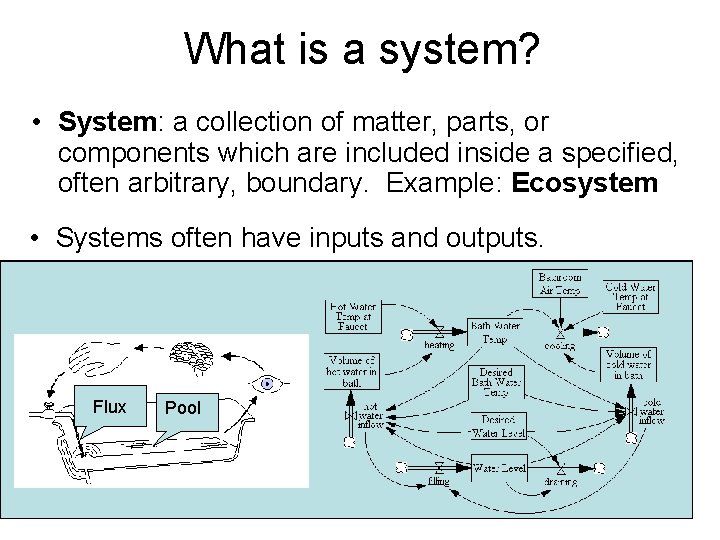
What is a system? • System: a collection of matter, parts, or components which are included inside a specified, often arbitrary, boundary. Example: Ecosystem • Systems often have inputs and outputs. • For dynamic systems, by definition, one or more aspects of the system change with time. – Example of a simple dynamic system: bathtub or your ‘bank’ account. Flux Pool • The boundary of a dynamic system is chosen for convenient conceptual separation for the system
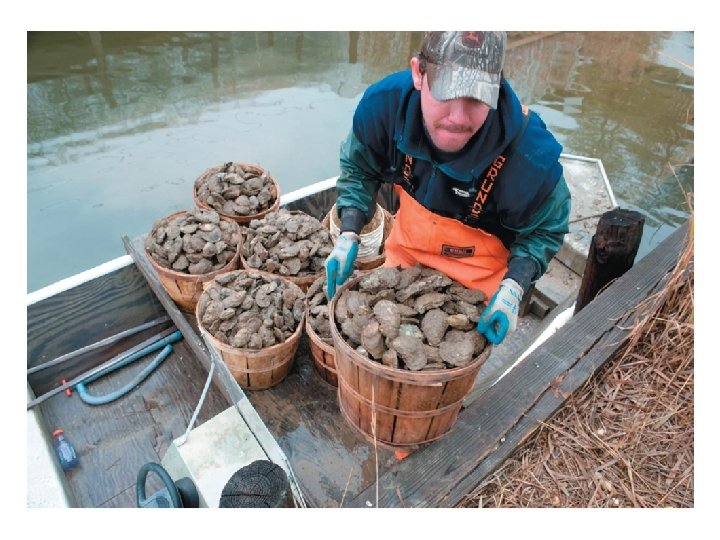
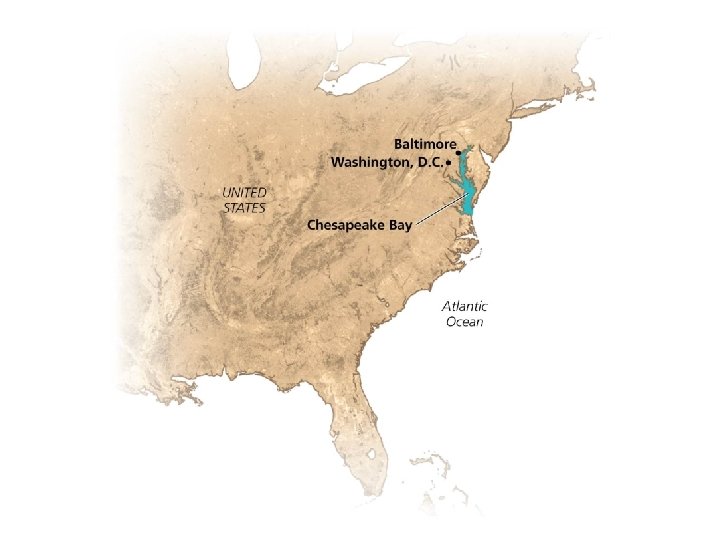
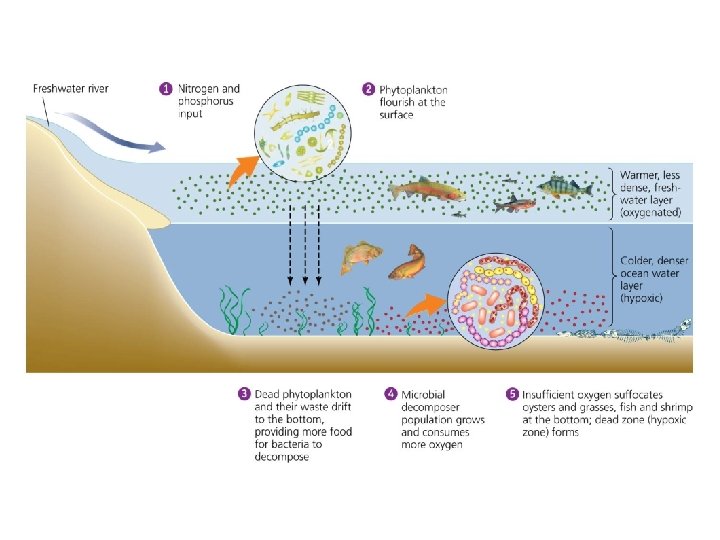
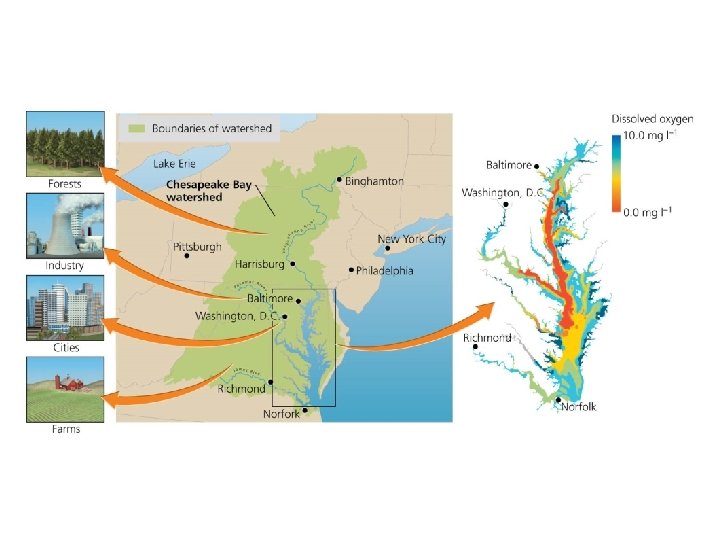
Central Case Study: The Vanishing Oysters of the Chesapeake Bay • Chesapeake Bay used to be the world’s largest oyster fishery – By 2010, output reduced to 1% of historical levels • Numerous causes of the decline: – Overharvesting – Habitat destruction – Disease • More recently, nutrient addition (nitrogen and phosphorus) from fertilizer, fossil fuel emissions, storm water runoff – Hypoxia = low concentrations of oxygen in water
Earth’s Environmental Systems • Our planet’s environment consists of complex networks of interlinked systems – Matter and molecules – Organisms, populations, interacting species – Nonliving entities (rocks, air, water, etc. ) • A systems approach assesses questions holistically – Helps address complex, multifaceted issues – But systems can show behavior that is hard to understand predict
Systems involve feedback loops • System = a network of relationships among parts, elements, or components – They interact with and influence one another – They exchange energy, matter, or information • Systems receive inputs of energy, matter, or information – They process these inputs and produce outputs – Feedback loop = a circular process in which a system’s output serves as input to that same system – Negative and positive feedback loops do not mean bad and good
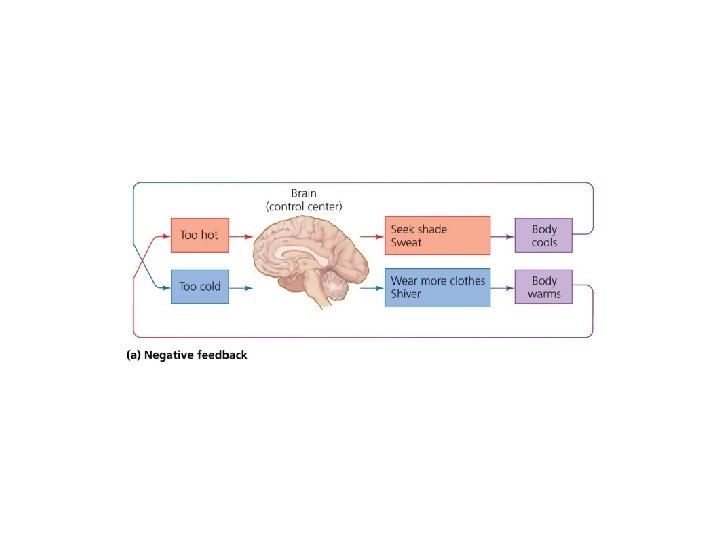
Systems involve feedback loops • Negative feedback loop = system changes and moves in one direction; that movement acts as an output, and as an input back into the system; the input then moves the system in the other direction • Input and output neutralize one another – Stabilizes the system – Example: body temperature • Most systems in nature
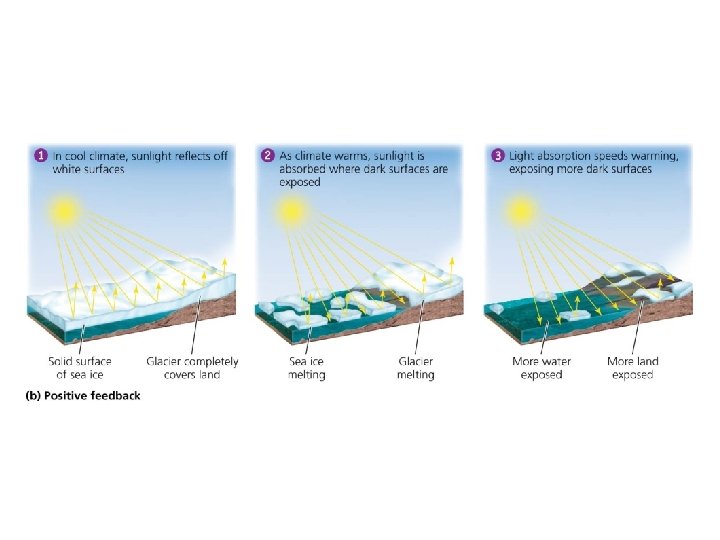
Systems involve feedback loops • Positive feedback loop = system output causes the system to change in the same way and drives it further toward one extreme or another – Exponential population growth, spread of cancer, melting sea ice • Rare in nature – But is common in natural systems altered by humans
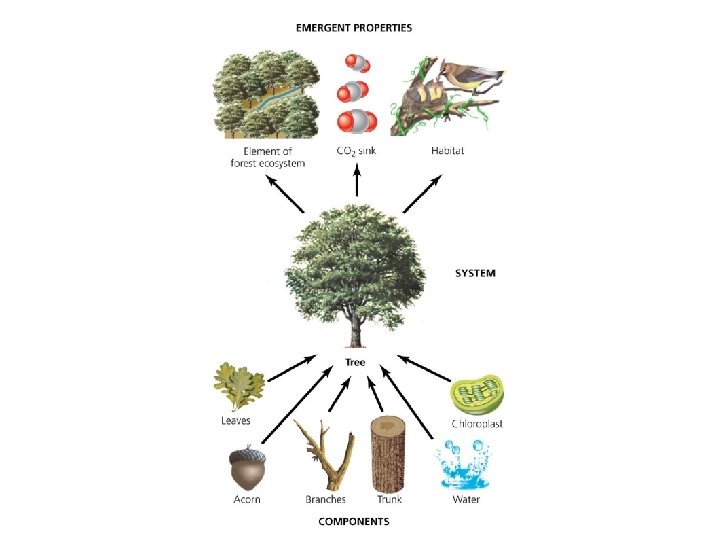
Systems show several defining properties • Dynamic equilibrium = when system processes move in opposing directions; balancing their effects • Homeostasis = when a system maintains constant (stable) internal conditions • Emergent properties = system characteristics that are not evident in the components alone – The whole is more than the sum of the parts It is hard to fully understand systems; they connect to other systems and do not have sharp boundaries
Environmental systems interact • Environmental systems often interact and can profoundly impact each other • The Chesapeake Bay is fed by river systems and the surrounding farms, cities, and forests – Runoff = precipitation that flows over land enters waterways – Airshed = the geographic area that produces air pollutants that are likely to end up in a waterway – Both move nutrients from land to rivers to the Bay • Defining the boundaries of a system depends on the questions being asked
Environmental systems interact • Addition of excess nutrients to a water body leads to: – Blooms of algae – Increased production of organic matter that dies and sinks – Decomposition and loss of dissolved oxygen
Environmental systems interact • Inputs to the Chesapeake Bay from adjacent systems cause eutrophication and loss of oxygen (hypoxia)
We may perceive Earth’s systems in various ways • Categorizing environmental systems helps make Earth’s dazzling complexity comprehensible • The Earth can be divided into structural spheres – – Lithosphere = rock and sediment Atmosphere = the air surrounding our planet Hydrosphere = liquid, solid, or vapor water Biosphere = the planet’s living organisms and the abiotic (nonliving) portions of the environment • Boundaries overlap, so the systems interact
Ecosystems • Ecosystem = all organisms and nonliving entities that occur and interact in a particular area at the same time – It includes abiotic and biotic components • Focuses on movement of energy and matter – Energy flows through an ecosystem – Matter is cycled among the ecosystem components
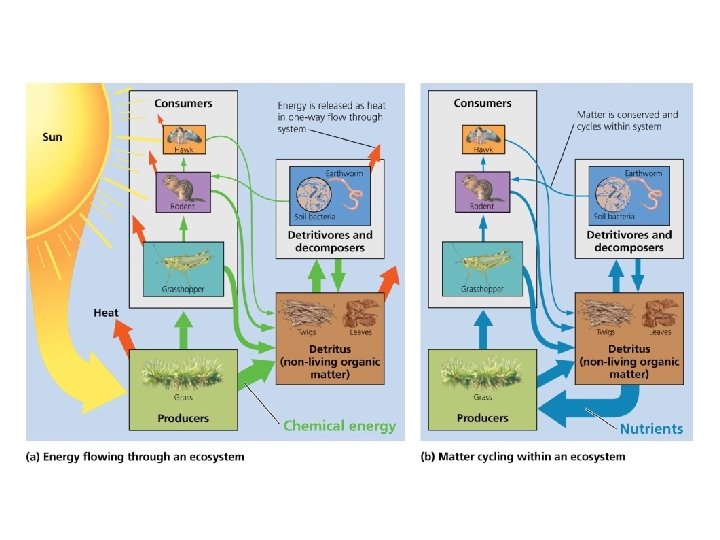
Ecosystems are systems of interacting living and nonliving entities • Energy from the sun flows in one direction, arriving as radiation and leaving as heat • Matter is recycled within ecosystem, through food-web relationships and decomposition
Energy is converted to biomass • Primary production = conversion of solar energy to chemical energy in sugars by autotrophs • Gross primary production (GPP) = total amount of energy captured by autotrophs • Net primary production (NPP) = energy remaining after respiration—used to generate biomass – Available for consumption by heterotrophs • Secondary production = biomass generated by heterotrophs from consuming autotrophs • Productivity = rate at which ecosystems generate biomass
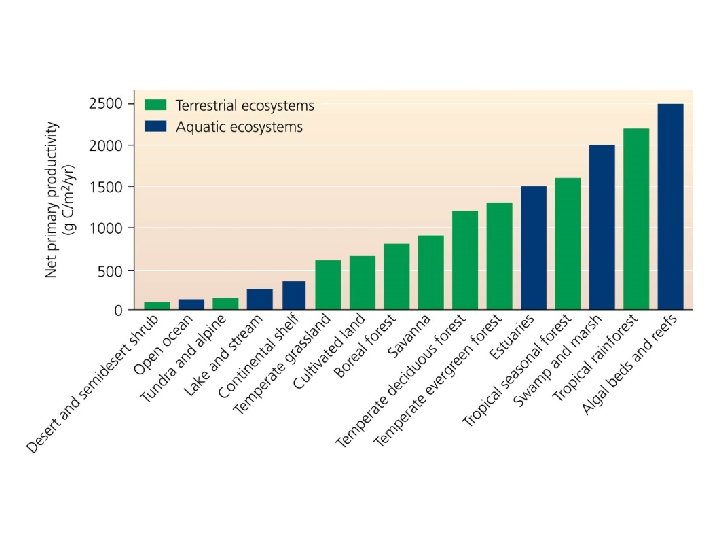
Energy is converted to biomass • Ecosystems differ in net primary productivity – High net primary productivity = ecosystems whose plants rapidly convert solar energy to biomass
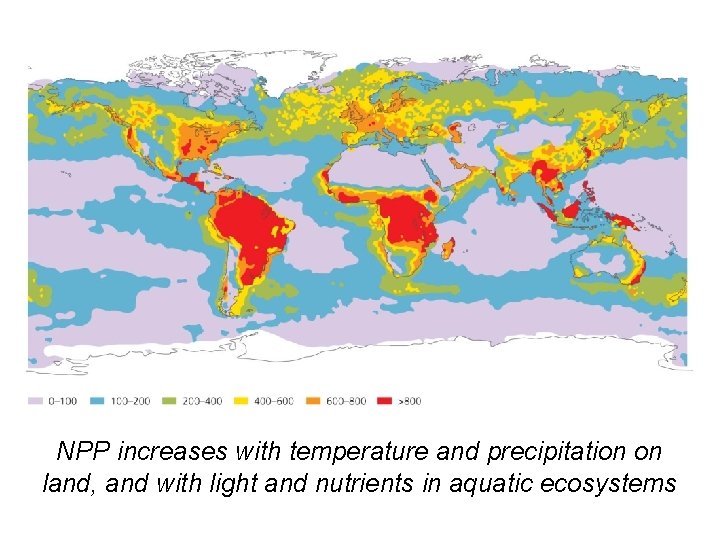
NPP increases with temperature and precipitation on land, and with light and nutrients in aquatic ecosystems
Nutrients influence productivity • Nutrients = elements and compounds required for survival that are consumed by organisms • Macronutrients = nutrients required in larger amounts – Nitrogen, carbon, phosphorus • Micronutrients = nutrients needed in smaller amounts • Nutrients stimulate plant production – Nitrogen and phosphorus are often limiting for plant and algal growth; oceans are limited by nitrogen; freshwater by phosphorus
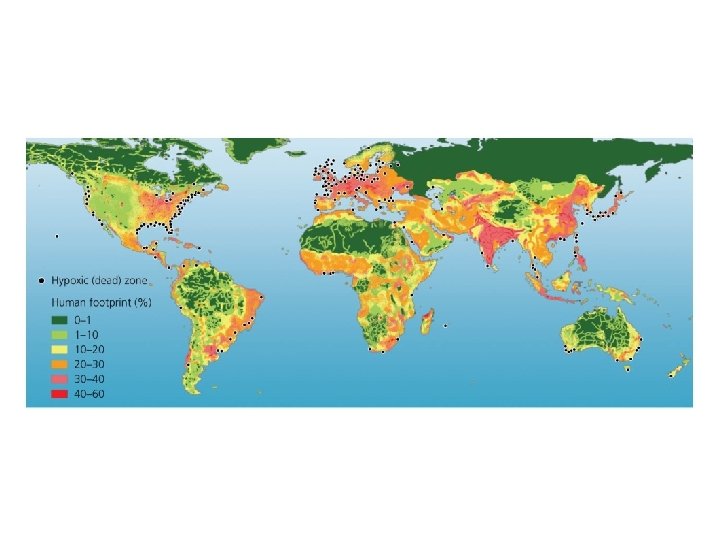
Nutrients influence productivity • Over 500 hypoxic dead zones occur globally – Most are off the coasts of Europe and the U. S. – Mostly due to farm, city, and industrial pollution – Some are seasonal; others are permanent • Fisheries and ecosystems are devastated – Causes over $2 billion/year in lost harvests
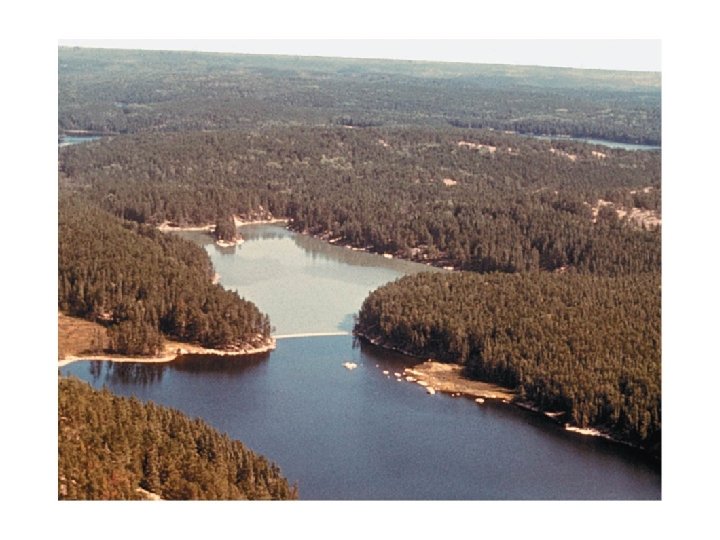
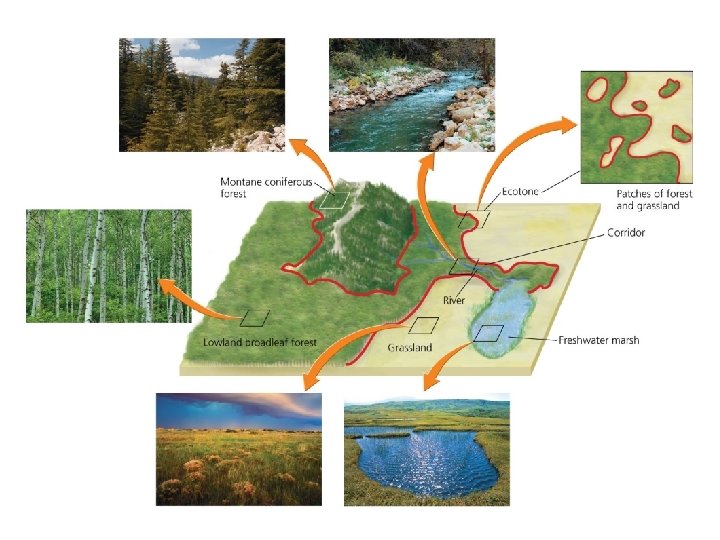
Ecosystems interact with one another • Ecosystems vary greatly in size – For example, from a puddle of water to a bay • The term “ecosystem” is most often applied to self-contained systems of moderate geographic extent • Adjacent ecosystems may share components and interact – For example, rain water from a forest moves nutrients into a lake • Ecotones = transitional zones between two ecosystems – Elements of each ecosystem mix
Landscape ecologists study geographic patterns • Landscape ecology = studies how interacting ecosystems affect the abundance, distribution, and interaction of organisms • Patches = separate areas of similar habitat – Are spread spatially in complex patterns (a mosaic)
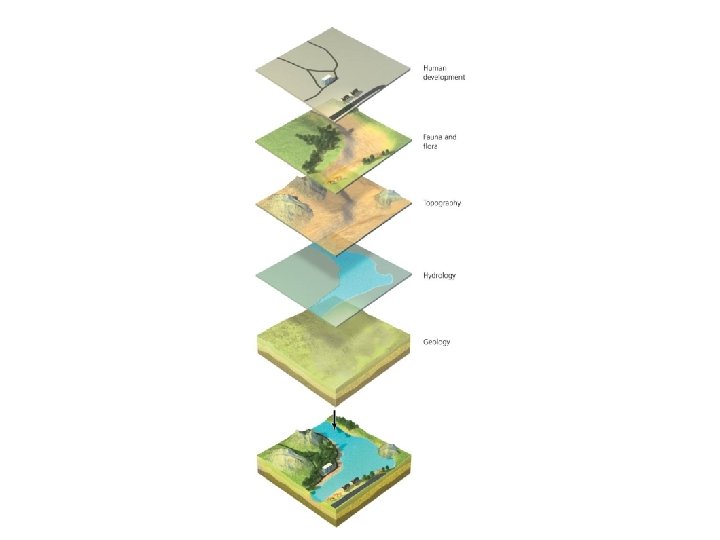
Remote sensing helps us apply landscape ecology • Remote sensing allows scientists to take a landscape perspective • Geographic information system (GIS) = computer software used in landscape ecology research – Analyzes how elements of a landscape arranged – Divides landscape into layers – Helps in planning and land-use decisions
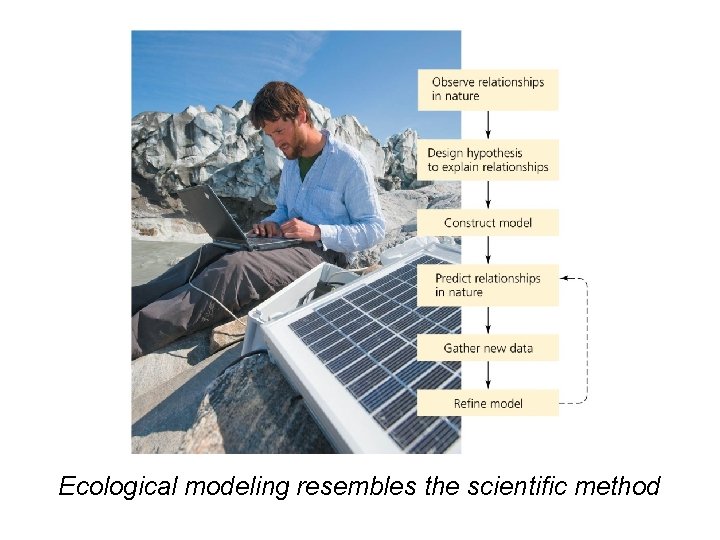
Modeling helps ecologists understand systems • Model = a simplified representation of a complex natural process – Helps us understand the process and make predictions • Ecological modeling = constructs and tests models to explain and predict how ecological systems work • Researchers gather data and form a hypothesis about relationships – Models predict how the system will behave – New data refine and increase the model’s accuracy
Ecological modeling resembles the scientific method
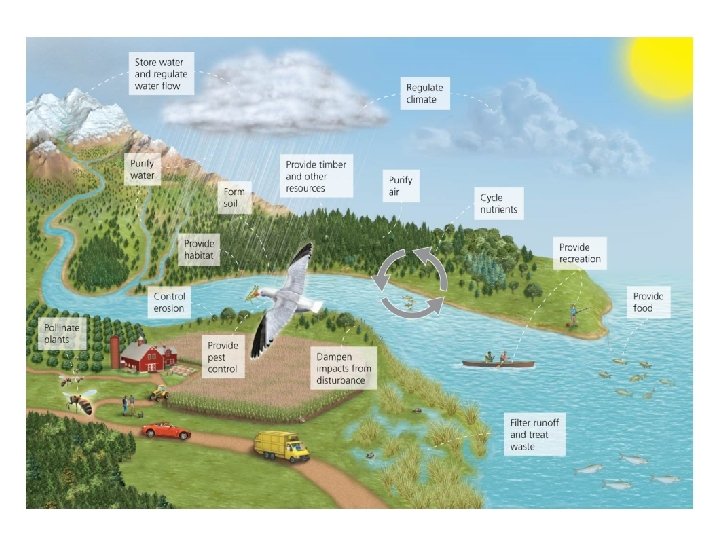
Ecosystems services sustain our world • Human society depends on healthy, functioning ecosystems – They provide goods and services we need to survive • Ecosystem services are provided by the planet’s systems – – Soil formation, water and air purification, pollination Breakdown of some pollutants and waste Quality of life issues (inspiration, spiritual renewal) Nutrient cycling
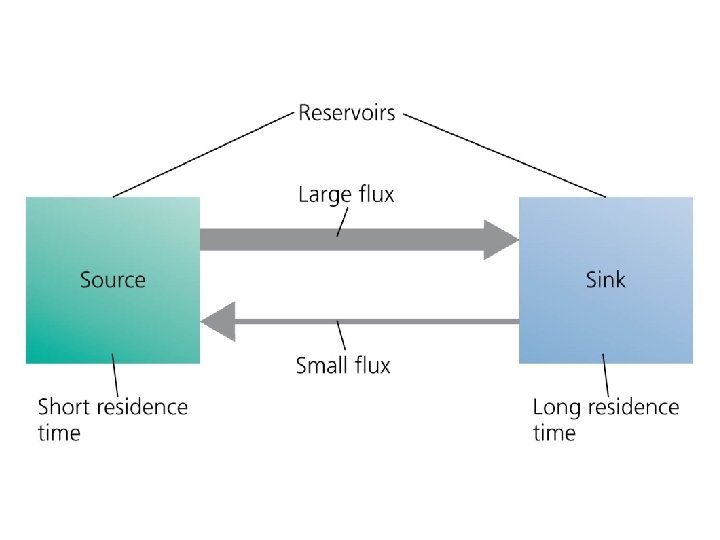
Nutrients circulate through ecosystems in biogeochemical cycles • Matter is continually circulated in ecosystems • Nutrient (biogeochemical) cycles = the movement of nutrients through ecosystems – May move through the atmosphere, hydrosphere, lithosphere, and biosphere • Pools (reservoirs) = where nutrients reside for varying amounts of time (the residence time) • Flux = the rate at which materials move between pools – Can change over time – Is influenced by human activities
Nutrients circulate through ecosystems in biogeochemical cycles • Source = a pool that releases more nutrients than it accepts • Sink = a pool that accepts more nutrients than it releases
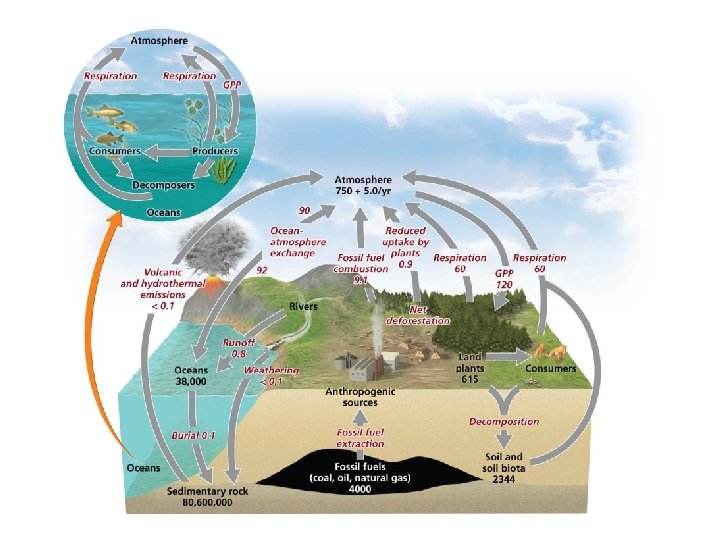
The carbon cycle circulates a vital organic nutrient • Carbon is found in carbohydrates, fats, proteins, bones, cartilage, and shells • Carbon cycle = describes the route of carbon atoms through the environment • Photosynthesis by plants, algae, and cyanobacteria – Removes carbon dioxide from air and water – Produces oxygen and carbohydrates – Plants are a major reservoir of carbon • Respiration returns carbon to the air and oceans – Plants, consumers, and decomposers
Sediment storage of carbon and The oceans • Decomposition returns carbon to the sediment – The largest reservoir of carbon – May be trapped for hundreds of millions of years • Aquatic organisms die and settle in the sediment – Older layers are buried deeply and undergo high pressure – Ultimately, it may be converted into fossil fuels • Oceans are the second largest reservoir of carbon – Compounds enter the oceans from runoff from land, detritus from marine organisms – Carbon dioxide is dissolved directly into the water from the atmosphere, making the water more acidic
We are shifting carbon from the lithosphere to the atmosphere • Burning fossil fuels moves carbon from the ground to the air • Cutting forests and burning fields move carbon from vegetation to the air • Today’s atmospheric carbon dioxide reservoir is the largest in the past 800, 000 years – It is the driving force behind climate change • Uncertainties remain—there is a missing carbon sink: 1– 2 billion metric tons of carbon are unaccounted for – It may be taken up by plants or soils of northern temperate and boreal forests
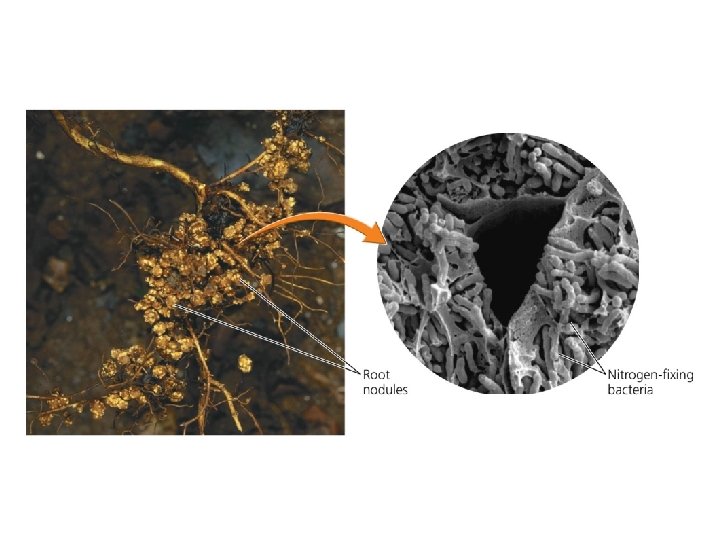
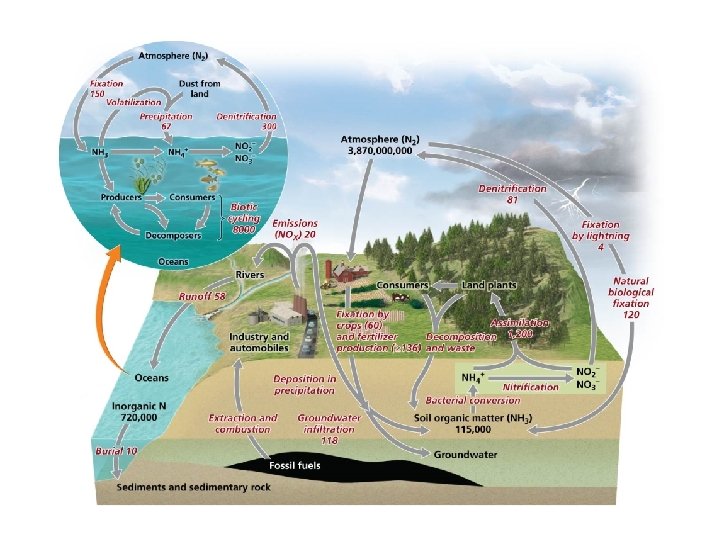
The nitrogen cycle involves specialized bacteria • Nitrogen comprises 78% of our atmosphere – It is contained in proteins, DNA, and RNA • Nitrogen cycle = describes the routes that nitrogen atoms take through the environment – Nitrogen gas cannot be used by most organisms • Nitrogen fixation = lightning or nitrogen-fixing bacteria combine (fix) nitrogen with hydrogen to form ammonium, which can be used by plants
Nitrification and denitrification • Nitrification = process by which bacteria convert ammonium ions, first into nitrite ions, then into nitrate ions – Plants can take up nitrate most easily • Animals obtain nitrogen by eating plants or other animals • Decomposers get nitrogen from dead and decaying plants or other animals, releasing ammonium ions to nitrifying bacteria
Nitrification and denitrification • Denitrifying bacteria = bacteria that convert nitrates in soil or water to gaseous nitrogen, releasing it back into the atmosphere and completing the nitrogen cycle
We have greatly influenced the nitrogen cycle • Nitrogen fixation was a crop production bottleneck = the limiting factor in crop production • Haber-Bosch process = production of fertilizers by combining nitrogen and hydrogen to synthesize ammonia – Humans overcame the bottleneck on crop productivity
We have greatly influenced the nitrogen cycle • Overuse of fertilizers has negative side effects: – Increases the flux of nitrogen from the atmosphere to the land – Causes eutrophication in estuaries and coastal ecosystems and fisheries – Washes essential nutrients out of the soil • Burning fossil fuels adds nitrogen compounds to the atmosphere that contribute to acid precipitation
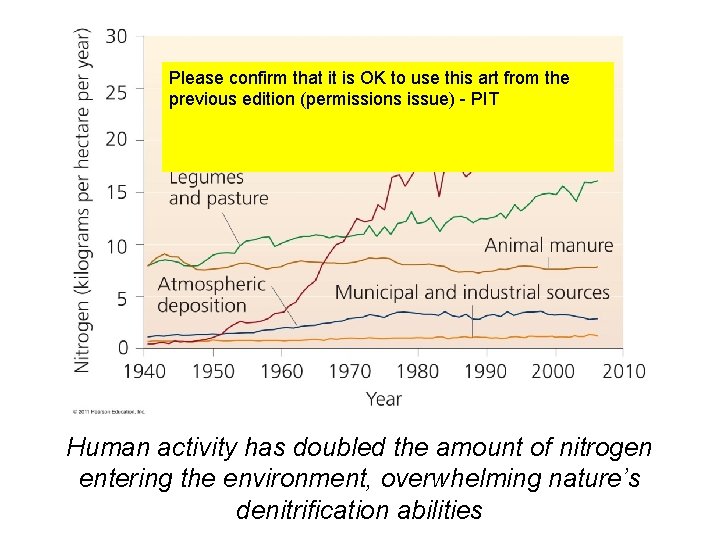
Please confirm that it is OK to use this art from the previous edition (permissions issue) - PIT Human activity has doubled the amount of nitrogen entering the environment, overwhelming nature’s denitrification abilities
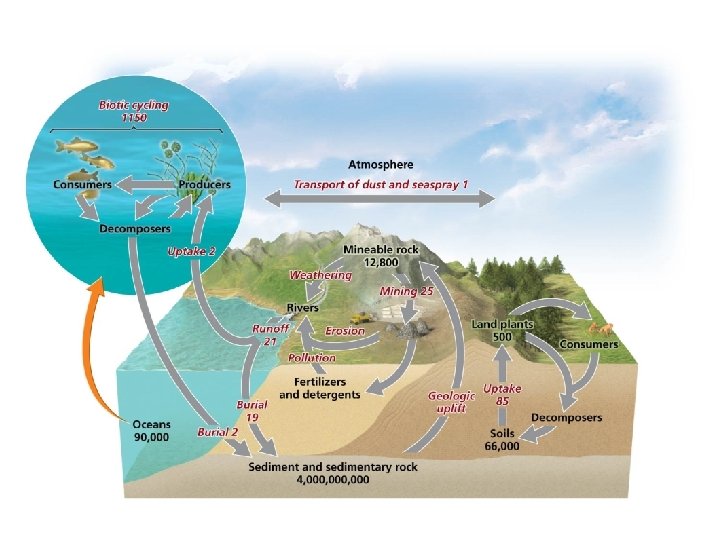
The phosphorus cycle circulates a limited nutrient • Phosphorus (P) is a key component of cell membranes, DNA, RNA, ATP, and ADP • Phosphorus cycle = describes the routes that phosphorus atoms take through the environment • Most phosphorus is within rocks – It is released by weathering – There is no significant atmospheric component • There is naturally low environmental concentrations – Phosphorus can be a limiting factor for plant growth
We influence the phosphorus cycle • Humans add phosphorus to fertilizers to promote crop growth • Runoff from farm fields and lawns contains phosphorus – Increases phytoplankton growth – Results in eutrophication and hypoxia • Wastewater discharge also releases phosphorus – Detergents have traditionally contained high levels of phosphates
Tackling nutrient enrichment requires diverse approaches • We rely on synthetic fertilizers and fossil fuels – Nutrient enrichment will be an issue we must address • There a number of ways to control nutrient pollution – Reduce fertilizer use on farms and lawns – Apply fertilizer at times that minimize runoff – Plant vegetation “buffers” around streams – Restore wetlands and create artificial ones – Improve sewage treatment technologies – Reduce fossil fuel combustion • These approaches have varying costs
Other biogeochemical cycles • Sediment cycle • Iodine cycle • Sulfur cycle
Medical Geology “If you want to learn about the health of a population, look at the air they breathe, the water they drink, and the places where they live. ” ― Hippocrates, 5 th Century BC
Medical Geology Deals with the geologic factors that have a bearing on human, animal and plant health “Is the scientific discipline that examines the impacts that geologic materials and processes have on human and ecosystem health. ” (Bunnell, 2004) Medical geology deals with the cause of the disease not its cure ____________________ [Bunnell, J. E; 2204, Medical Geolgoy: Emerging Discipline on the Ecosystem-Human Health Interface. Eco. Health, V. 1, p. 15 -18]
Medical Geology Impetus from geochemical research after WW II Geochemical data triggered interest of geologists and health care professionals to study possible relation between geochemical nature of an area and incidence of disease Earlier, during the 1930 s and subsequent period, animal and plant scientists made much progress in studying health impact caused by excess or deficiency of trace elements in animals and plants
Trace Elements and Health Well Studied Trace Elements 1. Fluorine 2. Iodine 3. Selenium 4. Arsenic
Iodine Sources: Sources alcohol, iodized table salt, seafood, kelp & other seaweed (raw or processed in items like ice cream) Benefits: Benefits helps metabolize fats, produce energy, and keep thyroid glands healthy Hazards: Hazards too little can result in hypothyroidism, causing weight gain, lack of energy, reduced mental focus, and in some cases goiter. Globally 2. 11 million people suffer from goiter (WHO, 1990)
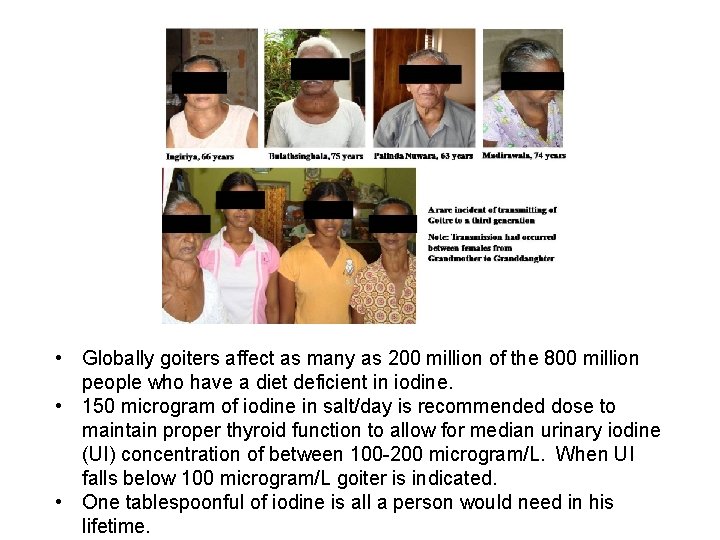
• Globally goiters affect as many as 200 million of the 800 million people who have a diet deficient in iodine. • 150 microgram of iodine in salt/day is recommended dose to maintain proper thyroid function to allow for median urinary iodine (UI) concentration of between 100 -200 microgram/L. When UI falls below 100 microgram/L goiter is indicated. • One tablespoonful of iodine is all a person would need in his lifetime.
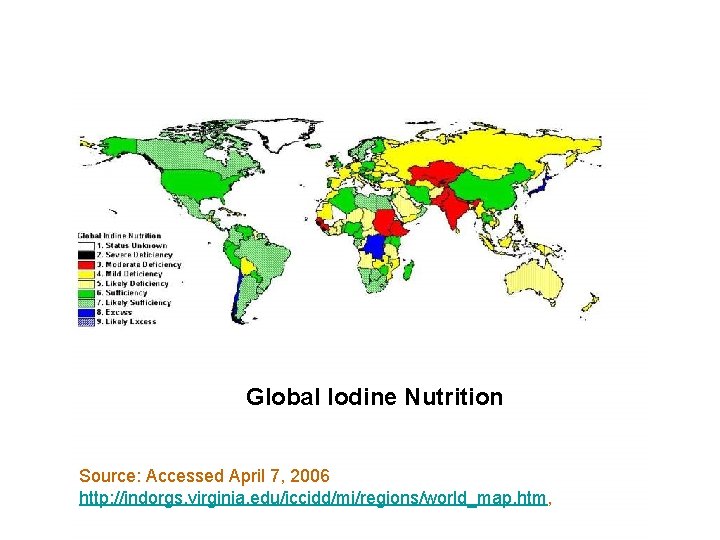
Global Iodine Nutrition Source: Accessed April 7, 2006 http: //indorgs. virginia. edu/iccidd/mi/regions/world_map. htm,
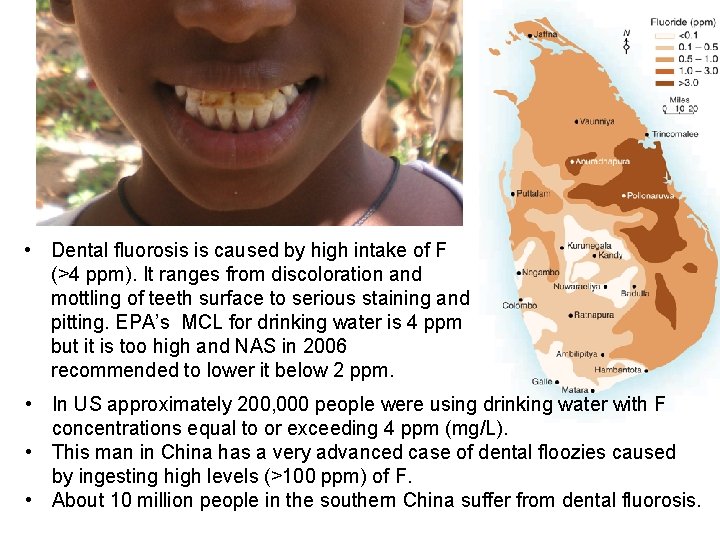
Fluorine Sources: Sources drinking water, seafood, teas. Regularly added to drinking water and toothpaste for its proven ability to reduce the formation of dental cavities by up to 70% Benefits: Benefits required to maintain strong bones and teeth Hazards: Hazards excessive amounts can result in mottled teeth, too little can cause osteoporosis
• Dental fluorosis is caused by high intake of F (>4 ppm). It ranges from discoloration and mottling of teeth surface to serious staining and pitting. EPA’s MCL for drinking water is 4 ppm but it is too high and NAS in 2006 recommended to lower it below 2 ppm. • In US approximately 200, 000 people were using drinking water with F concentrations equal to or exceeding 4 ppm (mg/L). • This man in China has a very advanced case of dental floozies caused by ingesting high levels (>100 ppm) of F. • About 10 million people in the southern China suffer from dental fluorosis.
Assignment • Assess one biogeochemical cycle from Carbon, Nitrogen, Phosphorus, Sediment cycle, Iodine cycle or Sulfur cycle and discuss the influence of Sri Lankan’s impact to it • Presentation of 8 minutes • Report of 4 pages maximum – 1. 5 line spacing – 12 pt Times New Roman