
Environmental stress model of community organization Relative importance
- Slides: 15
Environmental stress model of community organization
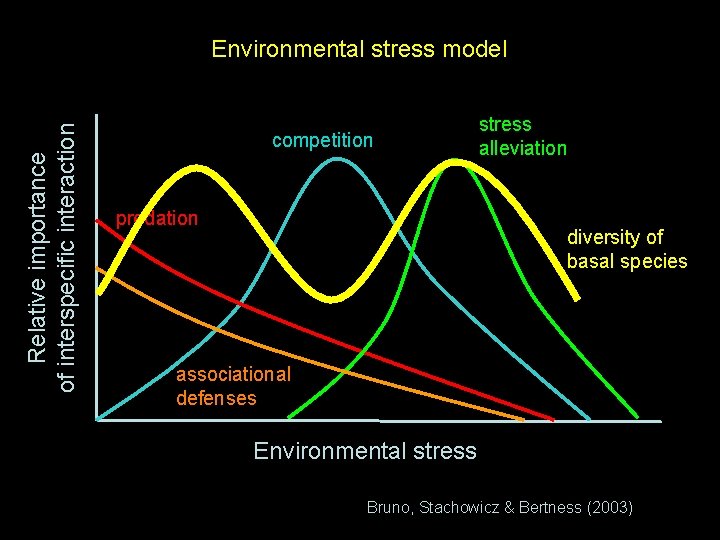
Relative importance of interspecific interaction Environmental stress model competition predation stress alleviation diversity of basal species associational defenses Environmental stress Bruno, Stachowicz & Bertness (2003)
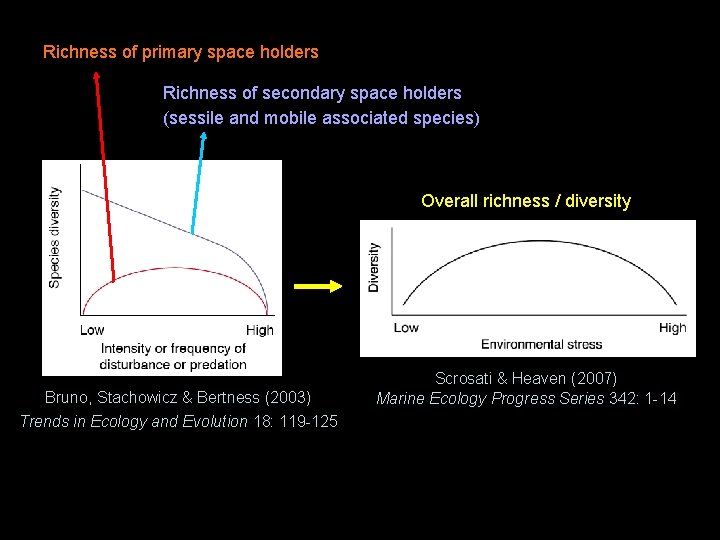
Richness of primary space holders Richness of secondary space holders (sessile and mobile associated species) Overall richness / diversity Bruno, Stachowicz & Bertness (2003) Trends in Ecology and Evolution 18: 119 -125 Scrosati & Heaven (2007) Marine Ecology Progress Series 342: 1 -14
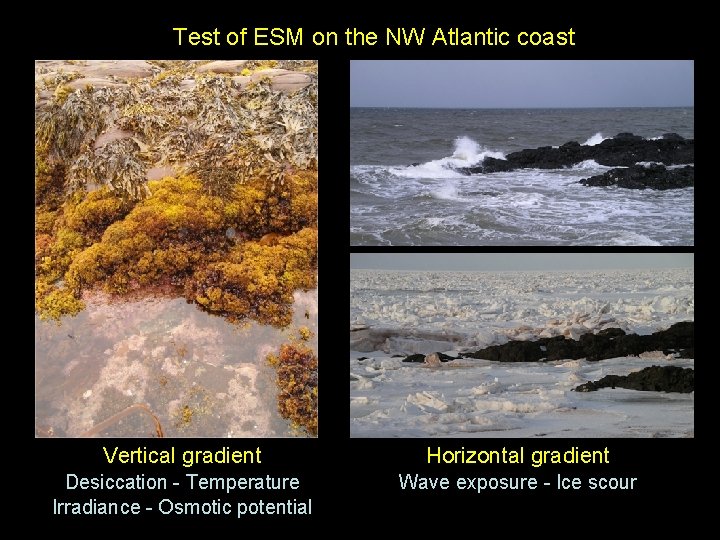
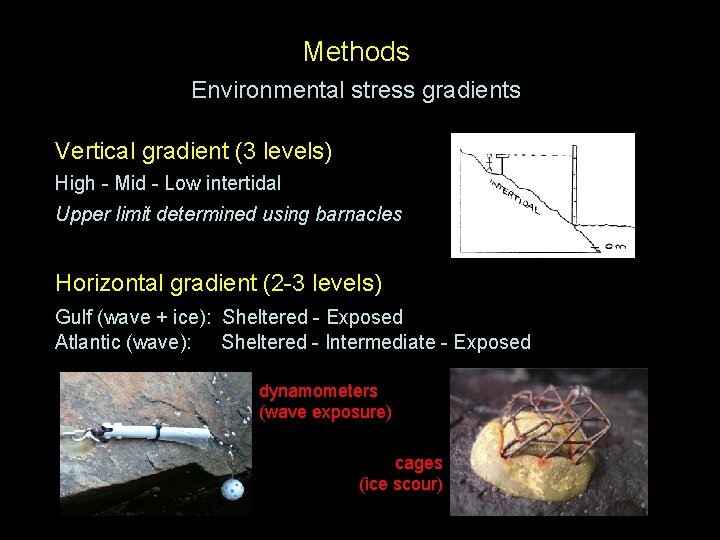
Test of ESM on the NW Atlantic coast Vertical gradient Horizontal gradient Desiccation - Temperature Irradiance - Osmotic potential Wave exposure - Ice scour
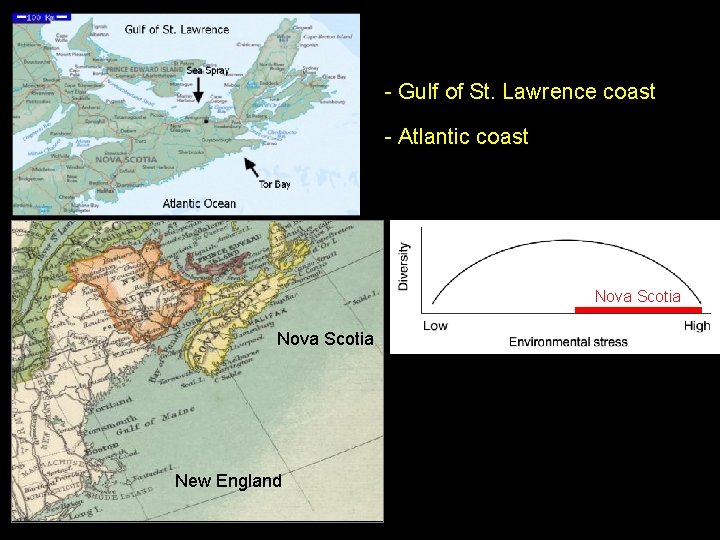
- Gulf of St. Lawrence coast - Atlantic coast Nova Scotia New England
Methods Environmental stress gradients Vertical gradient (3 levels) High - Mid - Low intertidal Upper limit determined using barnacles Horizontal gradient (2 -3 levels) Gulf (wave + ice): Sheltered - Exposed Atlantic (wave): Sheltered - Intermediate - Exposed dynamometers (wave exposure) cages (ice scour)
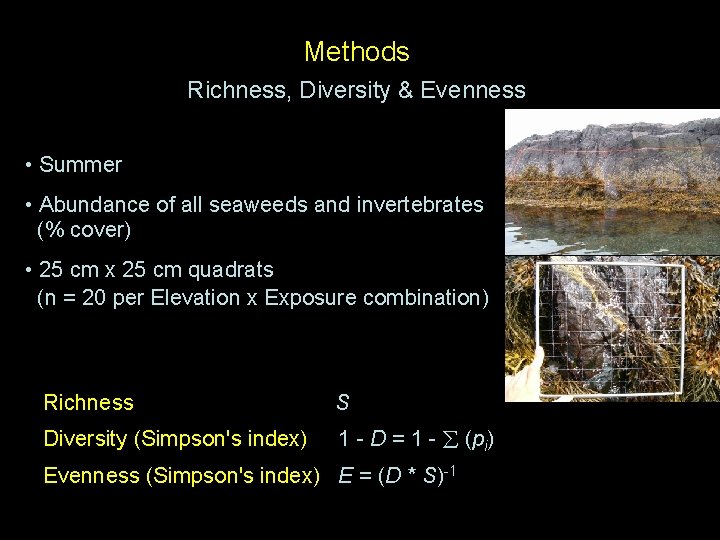
Methods Richness, Diversity & Evenness • Summer • Abundance of all seaweeds and invertebrates (% cover) • 25 cm x 25 cm quadrats (n = 20 per Elevation x Exposure combination) Richness Sr of species Diversity (Simpson's index) 1 - D = 1 - (pi) Evenness (Simpson's index) E = (D * S)-1
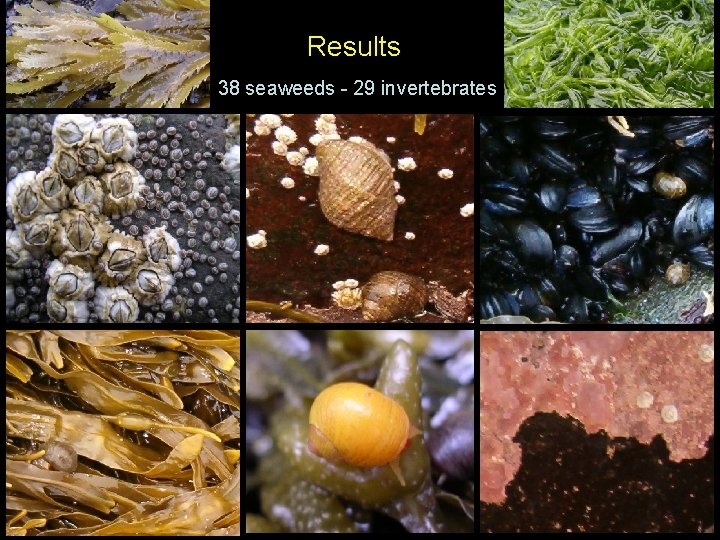
Results 38 seaweeds - 29 invertebrates
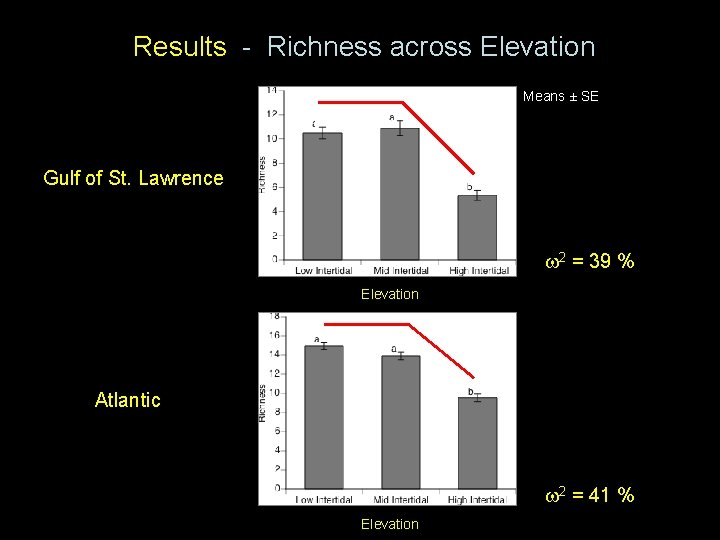
Results - Richness across Elevation Means ± SE Gulf of St. Lawrence 2 = 39 % Elevation Atlantic 2 = 41 % Elevation
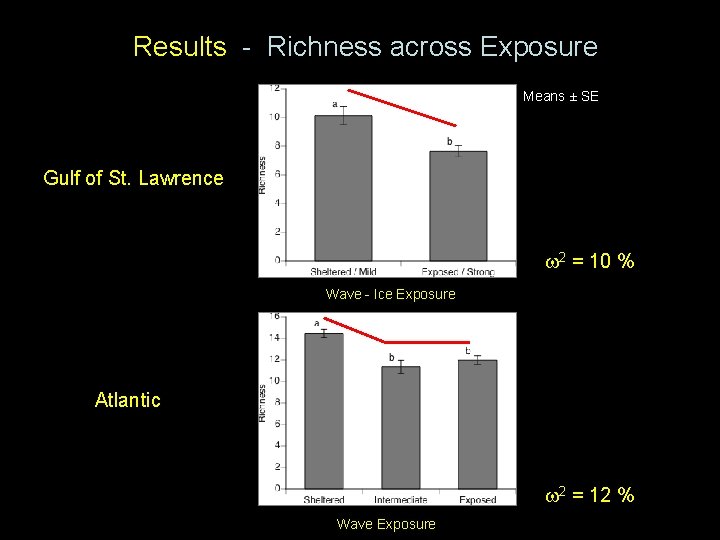
Results - Richness across Exposure Means ± SE Gulf of St. Lawrence 2 = 10 % Wave - Ice Exposure Atlantic 2 = 12 % Wave Exposure
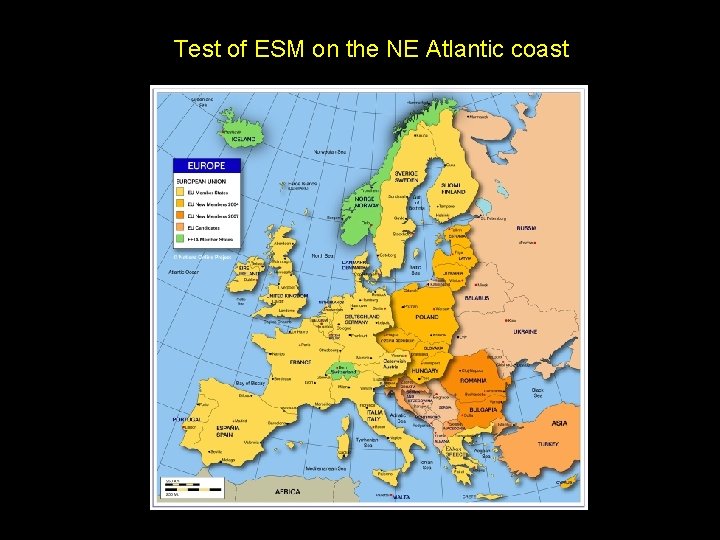
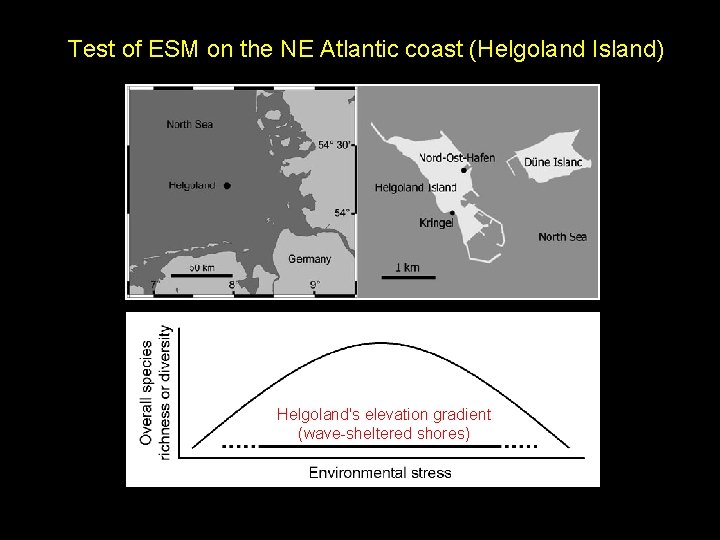
Test of ESM on the NE Atlantic coast
Test of ESM on the NE Atlantic coast (Helgoland Island) Helgoland's elevation gradient (wave-sheltered shores)
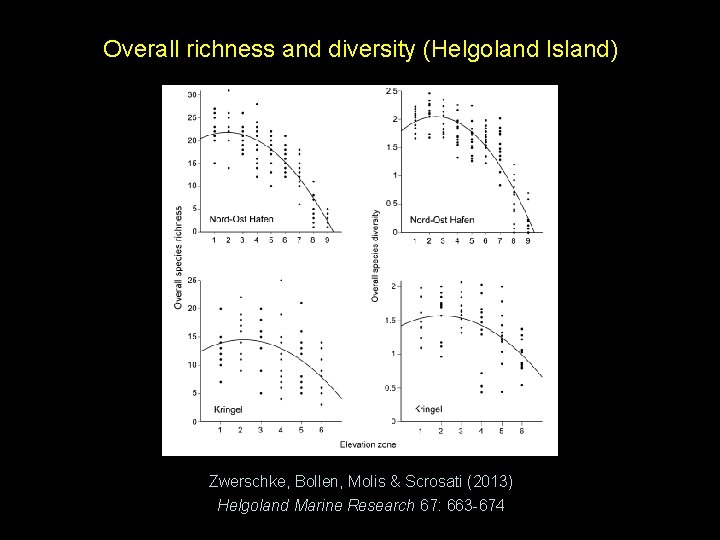
Overall richness and diversity (Helgoland Island) Zwerschke, Bollen, Molis & Scrosati (2013) Helgoland Marine Research 67: 663 -674
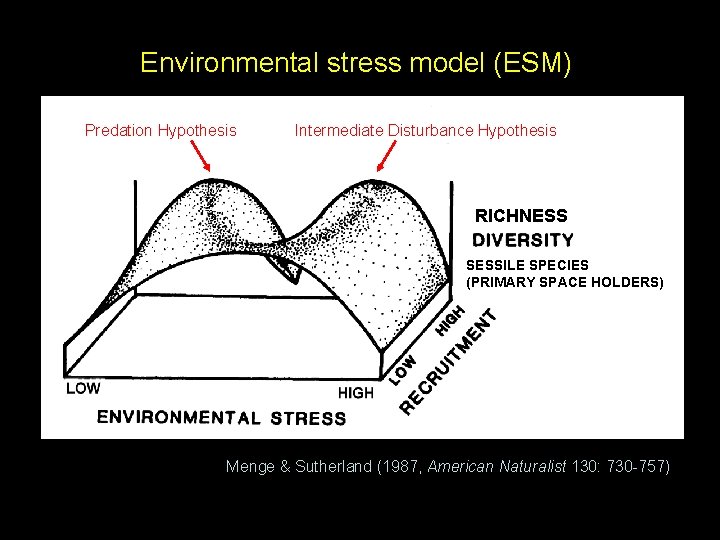
Environmental stress model (ESM) Predation Hypothesis Intermediate Disturbance Hypothesis RICHNESS SESSILE SPECIES (PRIMARY SPACE HOLDERS) Menge & Sutherland (1987, American Naturalist 130: 730 -757)