
Environmental Science Unit 1 C Energy in an














- Slides: 54
Environmental Science Unit 1 C Energy in an ecosystem
1 st Law of Thermodynamics Two laws of physics are important in the study of energy flow through ecosystems. 1 ST law of thermodynamics: energy cannot be created or destroyed; it can only be changed from one form to another. EX: Solar energy ---> absorbed by plants --- > converted to stored chemical energy
2 nd Law of Thermodynamics 2 ND law of thermodynamics: whenever energy is transformed, there is a loss of energy through the release of heat. Occurs when energy is transferred between trophic levels = food web. When one animal feeds off another ---> loss of heat (energy) in the process. More and more energy is lost as one moves up through trophic levels. (10% rule) Additional loss of energy occurs during respiration & movement
Cycling of materials through ecosystems Hydrologic Cycle Carbon Cycle Nitrogen Cycle Phosphorus Cycle https: //vimeo. com/7508571 Water video
Hydrologic Cycle Water never leaves Earth Constantly being cycled -atmosphere, ocean, and land water cycle- driven by energy from the sun. Crucial to the existence of life on our planet.
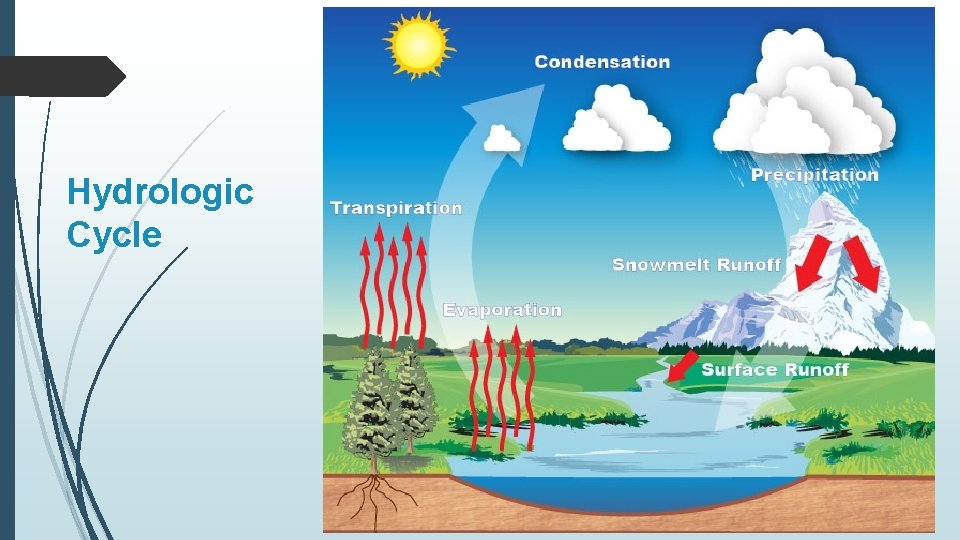
Hydrologic Cycle
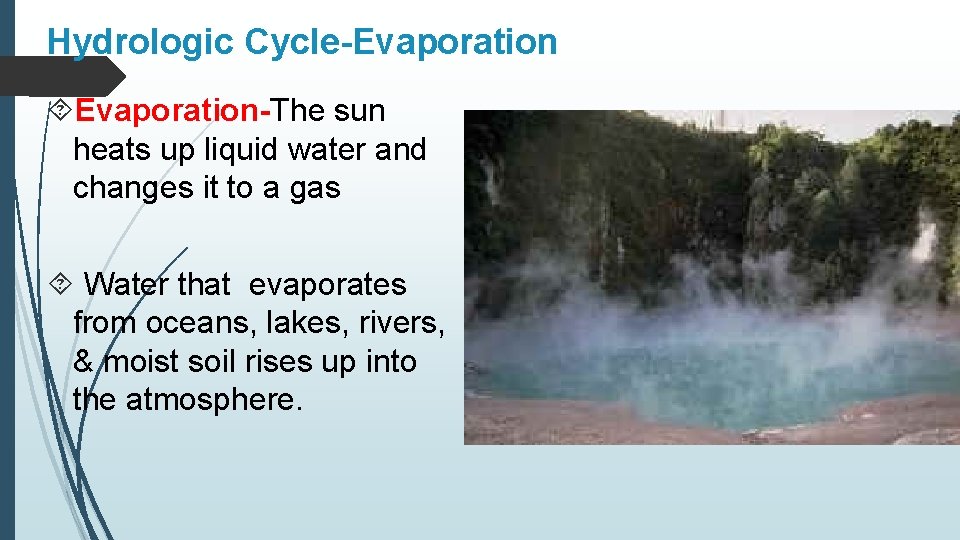
Hydrologic Cycle-Evaporation-The sun heats up liquid water and changes it to a gas Water that evaporates from oceans, lakes, rivers, & moist soil rises up into the atmosphere.
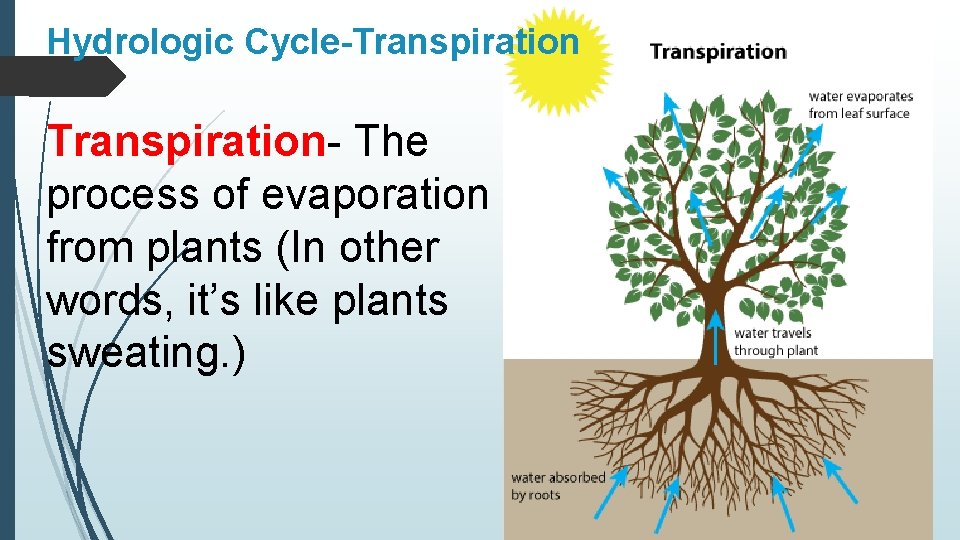
Hydrologic Cycle-Transpiration- The process of evaporation from plants (In other words, it’s like plants sweating. )
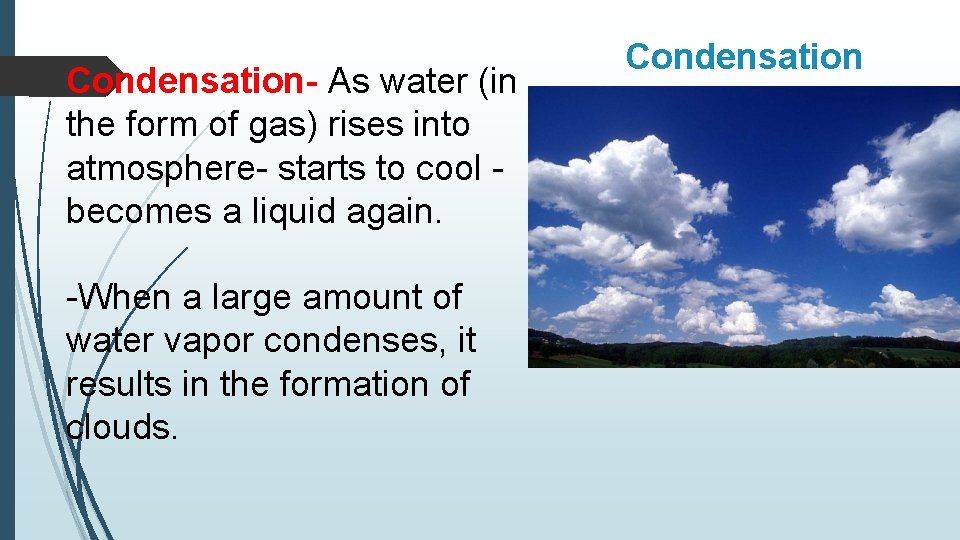
Condensation- As water (in the form of gas) rises into atmosphere- starts to cool becomes a liquid again. -When a large amount of water vapor condenses, it results in the formation of clouds. Condensation
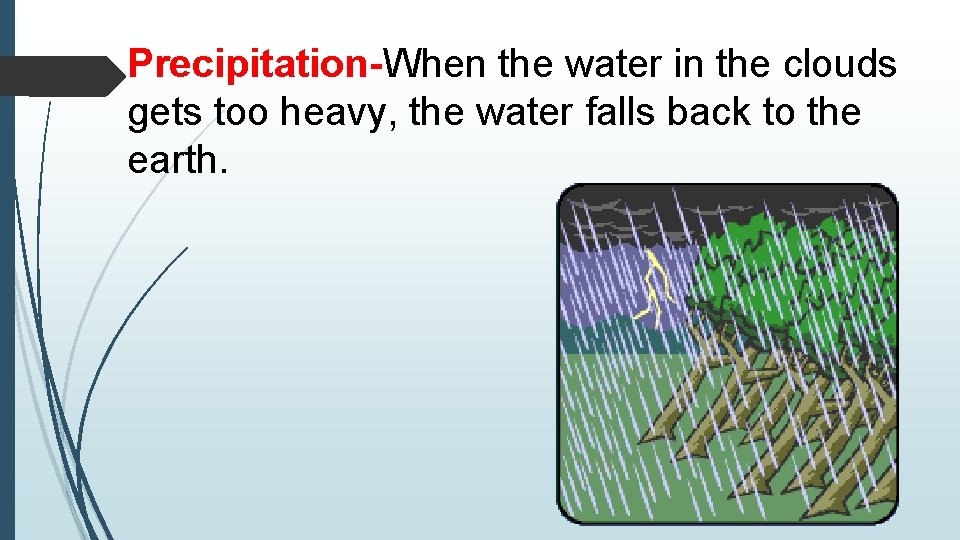
Precipitation-When the water in the clouds gets too heavy, the water falls back to the earth.
Groundwater- When rain falls on the land, some of the water is absorbed into the ground forming pockets of water.
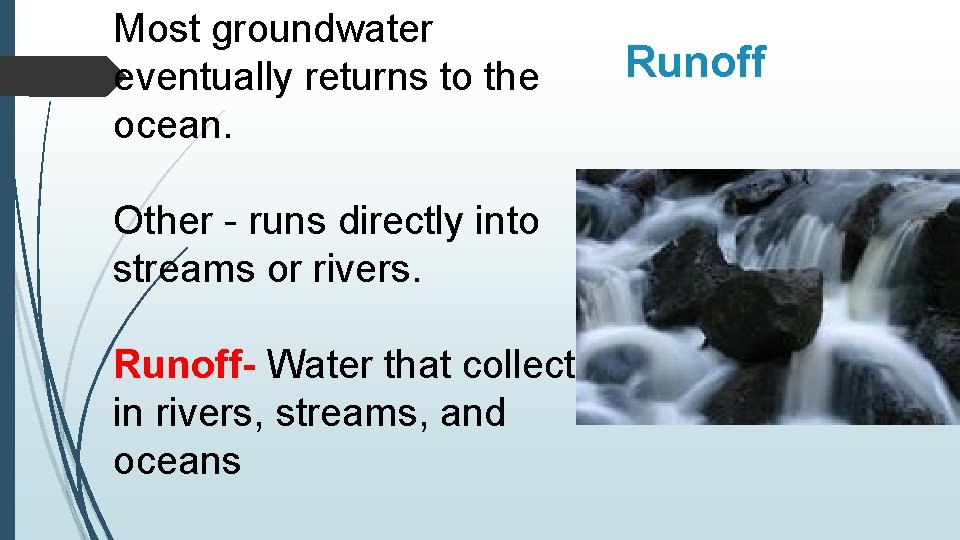
Most groundwater eventually returns to the ocean. Other - runs directly into streams or rivers. Runoff- Water that collects in rivers, streams, and oceans Runoff
https: //www. youtube. com/watch? v=al-do-HGu. Ik Water cycle
Carbon Cycle-Introduced Crash Course-Carbon Cycle Video
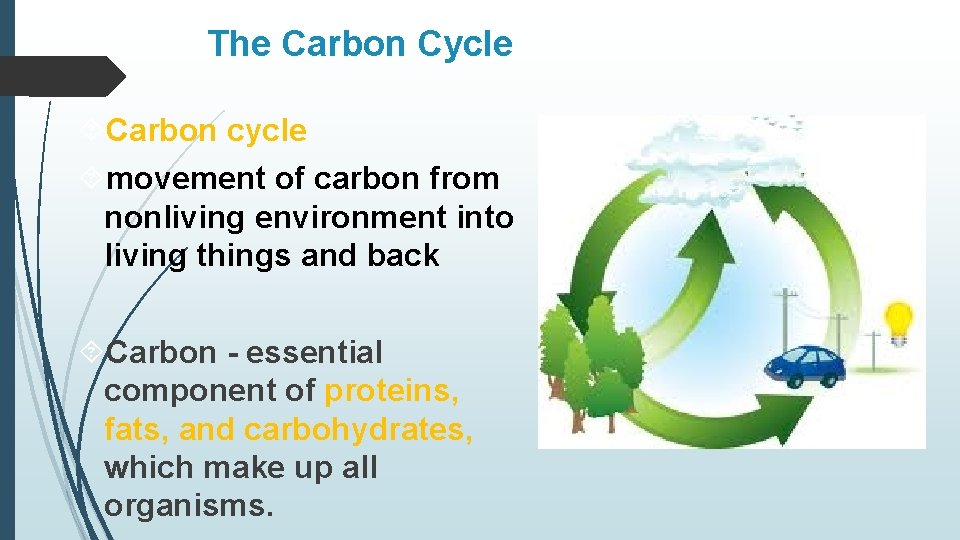
The Carbon Cycle Carbon cycle movement of carbon from nonliving environment into living things and back Carbon - essential component of proteins, fats, and carbohydrates, which make up all organisms.
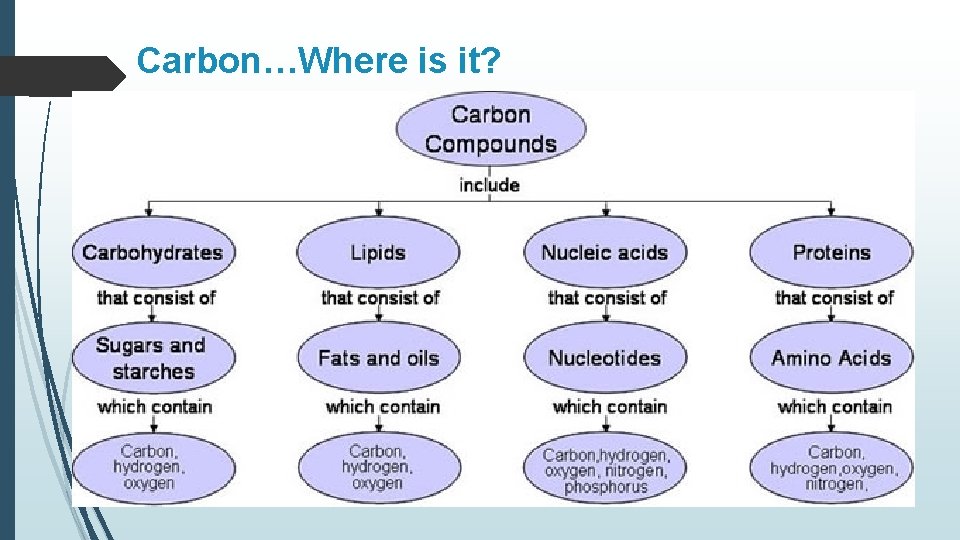
Carbon…Where is it?
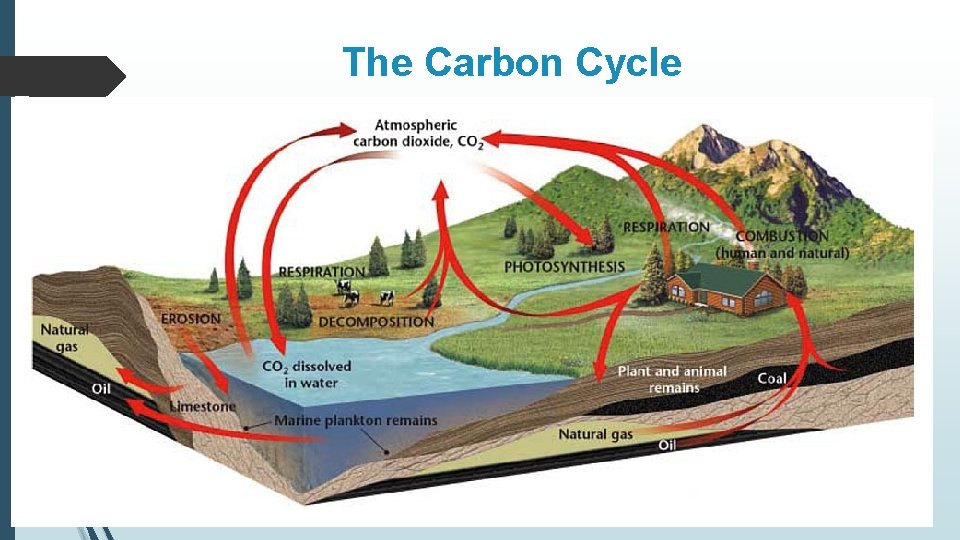
The Carbon Cycle
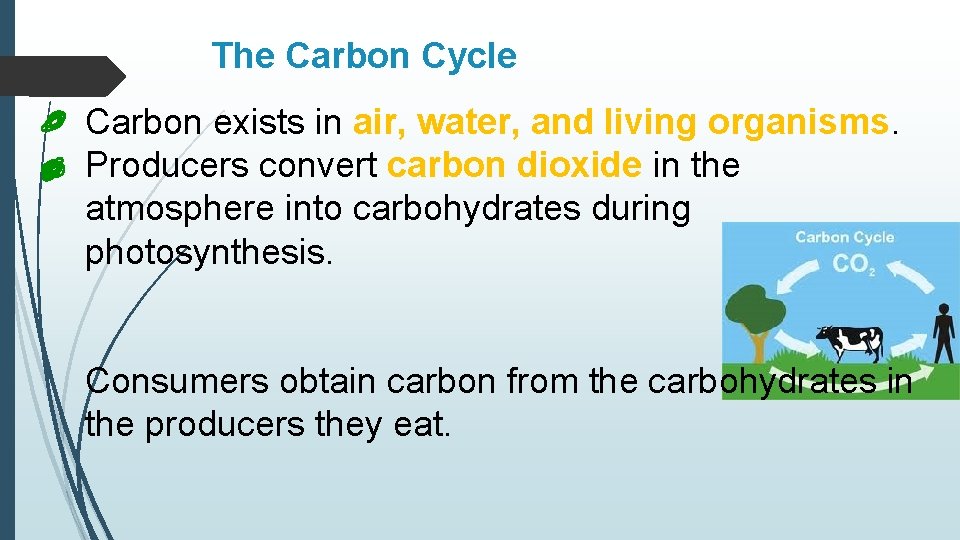
The Carbon Cycle Carbon exists in air, water, and living organisms. Producers convert carbon dioxide in the atmosphere into carbohydrates during photosynthesis. Consumers obtain carbon from the carbohydrates in the producers they eat.
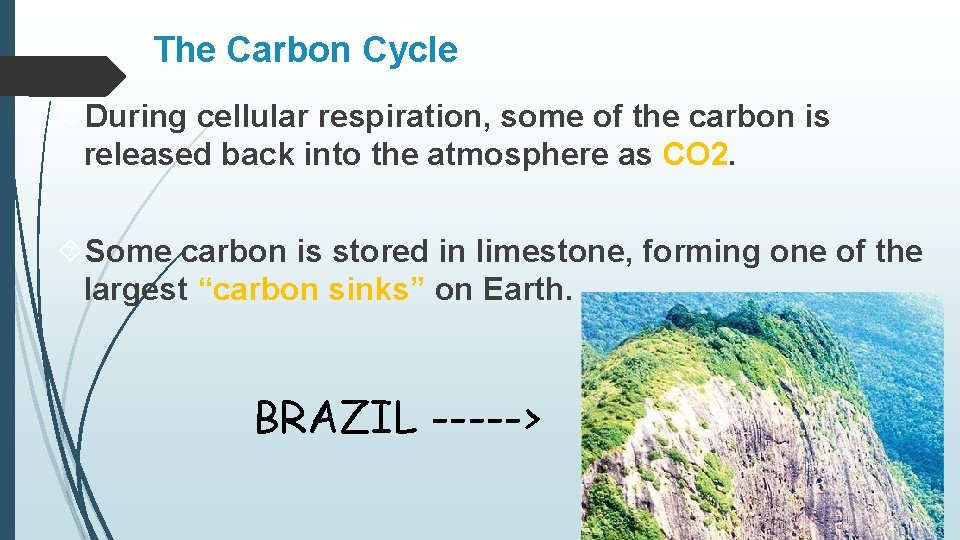
The Carbon Cycle During cellular respiration, some of the carbon is released back into the atmosphere as CO 2. Some carbon is stored in limestone, forming one of the largest “carbon sinks” on Earth. BRAZIL ----->
Carbon stored in organisms as fat, oils, or other molecules released into soil or air when the organisms dies. C molecules - form deposits of coal, oil, or natural gas = fossil fuels Fossil fuels store carbon left over from bodies of organisms that dies millions of years ago.
How Humans Affect the Carbon Cycle Humans burn fossil fuels, releasing carbon into the atmosphere. The carbon returns to the atmosphere as CO 2 Too much CO 2 !!!
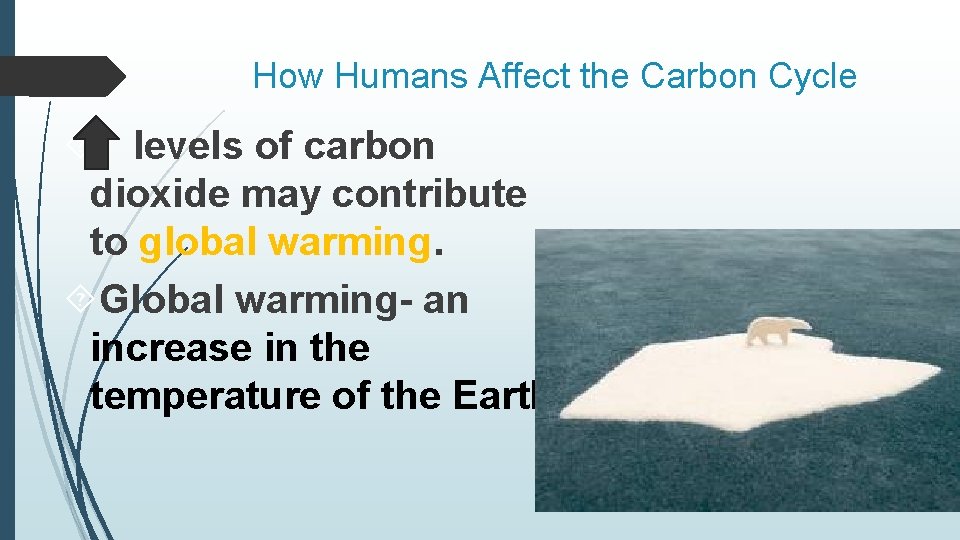
How Humans Affect the Carbon Cycle levels of carbon dioxide may contribute to global warming. Global warming- an increase in the temperature of the Earth.
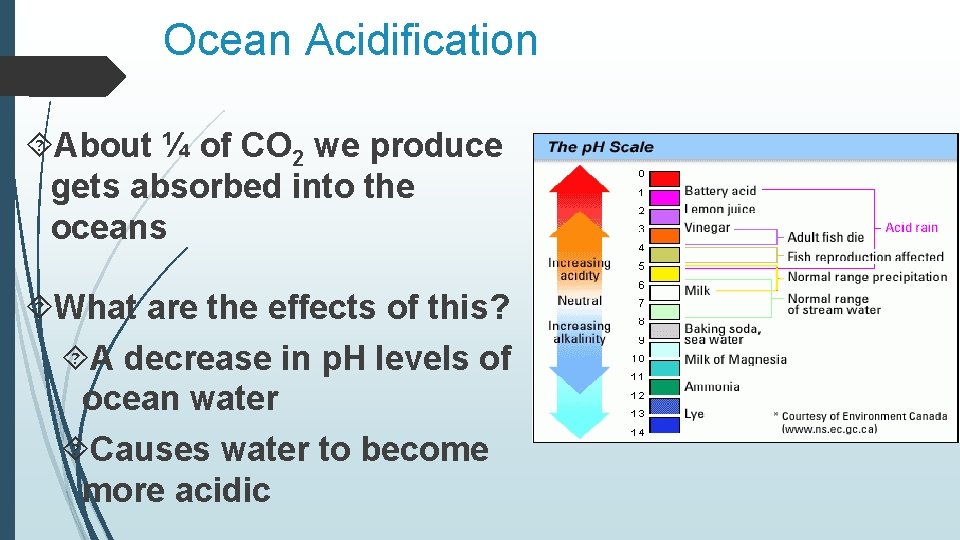
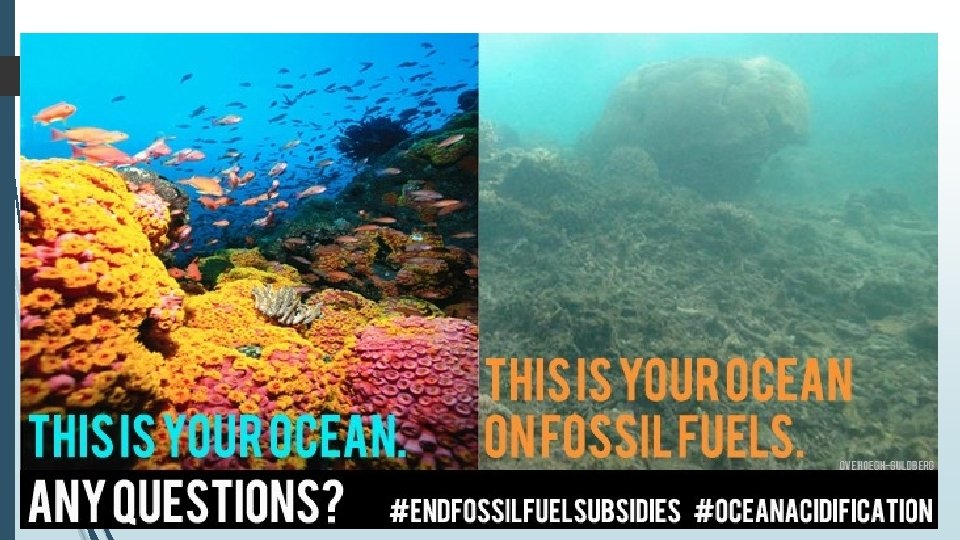
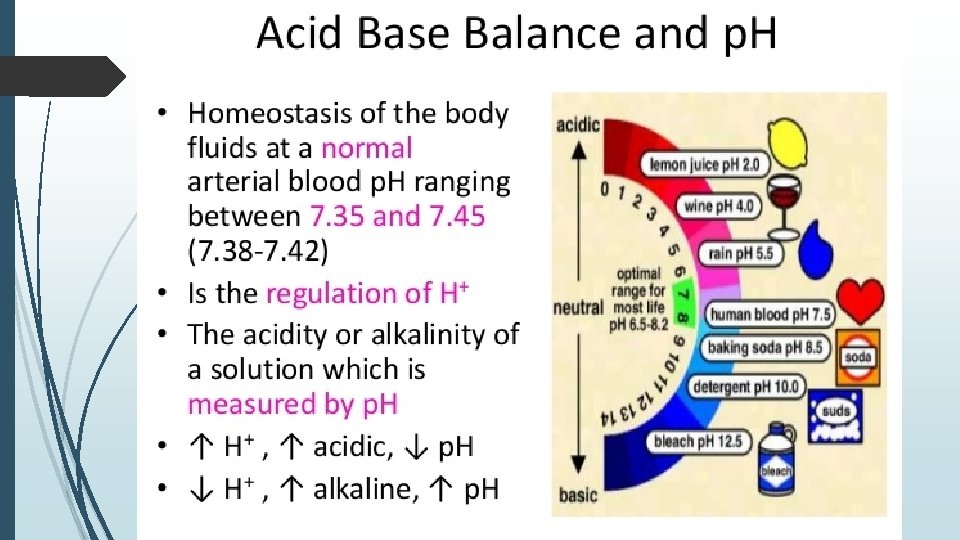
Ocean Acidification About ¼ of CO 2 we produce gets absorbed into the oceans What are the effects of this? A decrease in p. H levels of ocean water Causes water to become more acidic
Ocean Acidification Impacts Photosynthesizing algae & sea grass Fishing industries Marine Life Coral Reefs
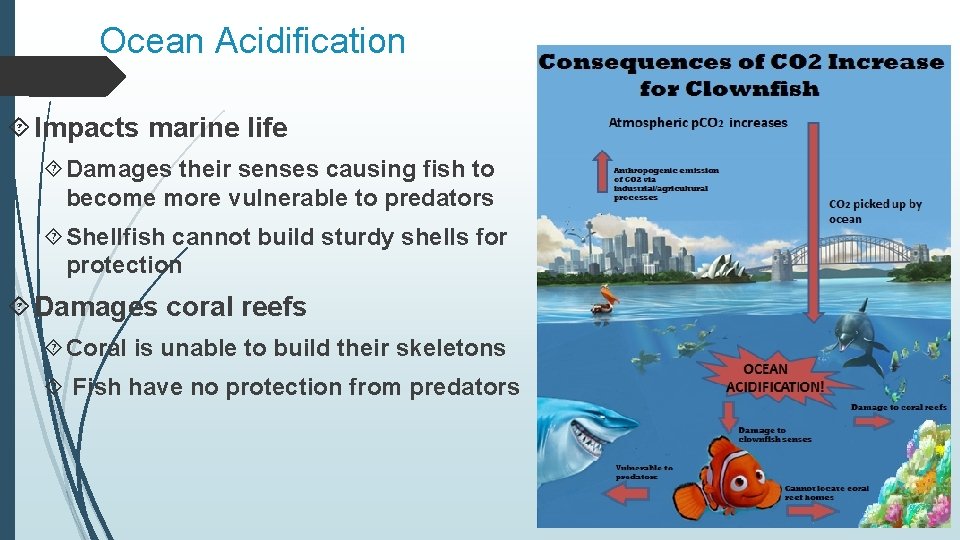
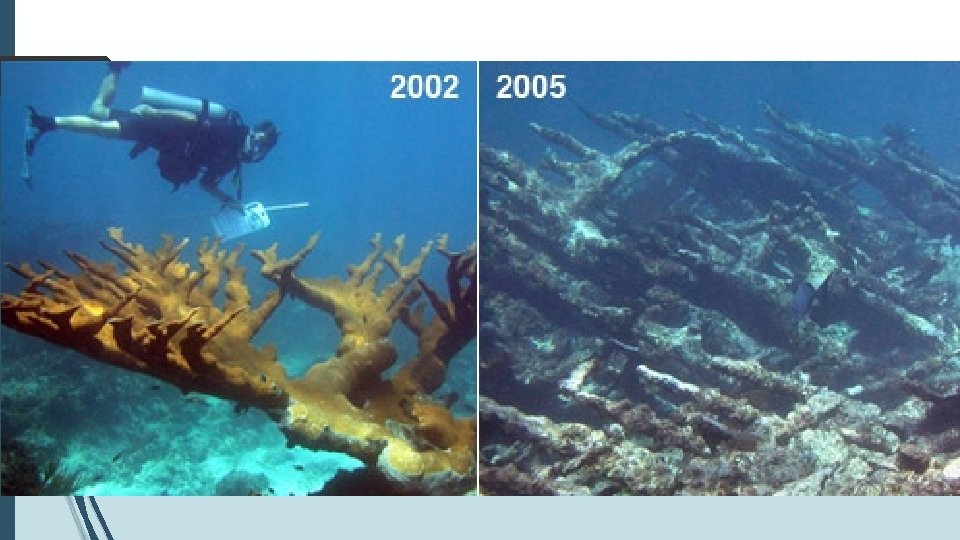
Ocean Acidification Impacts marine life Damages their senses causing fish to become more vulnerable to predators Shellfish cannot build sturdy shells for protection Damages coral reefs Coral is unable to build their skeletons Fish have no protection from predators
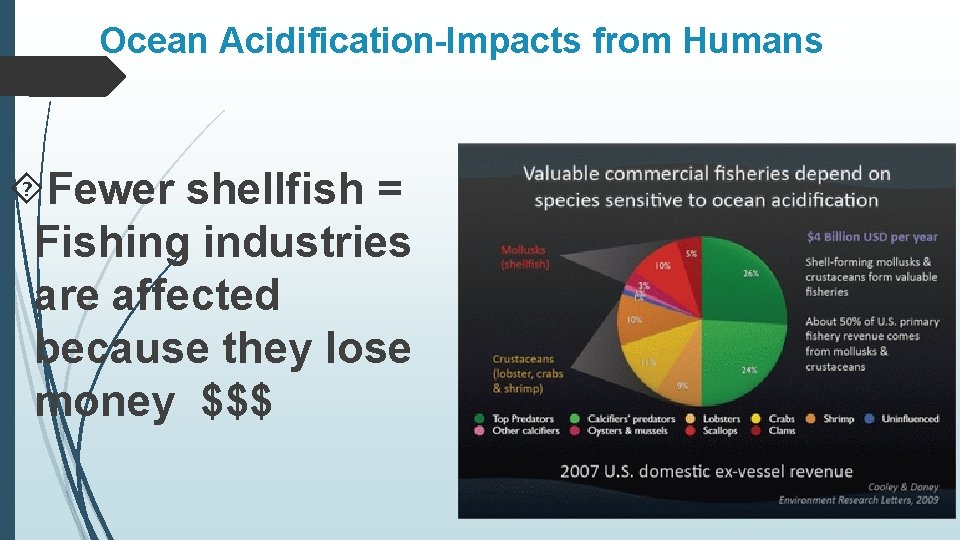
Ocean Acidification-Impacts from Humans Fewer shellfish = Fishing industries are affected because they lose money $$$
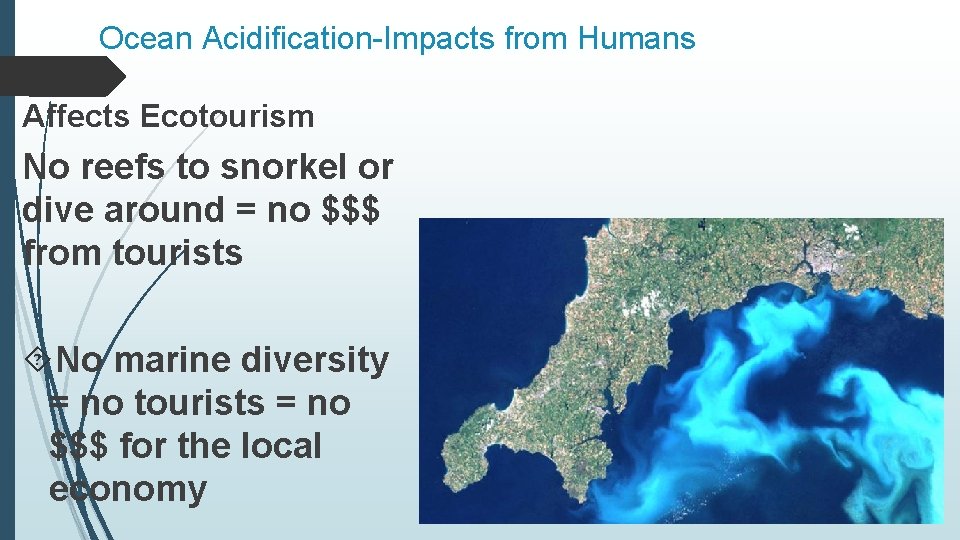
Ocean Acidification-Impacts from Humans Affects Ecotourism No reefs to snorkel or dive around = no $$$ from tourists No marine diversity = no tourists = no $$$ for the local economy
Norton the Nucleus Explains the Carbon Cycle Explained https: //www. youtube. com/watch? v=x. FE 9 oc_p. Kg https: //www. youtube. com/watch? v=d 70 i. Dx. Btnas Best
Complete Carbon cycle coloring sheet Answer the questions for the water cycle on a separate sheet of paper.
Nitrogen Cycle
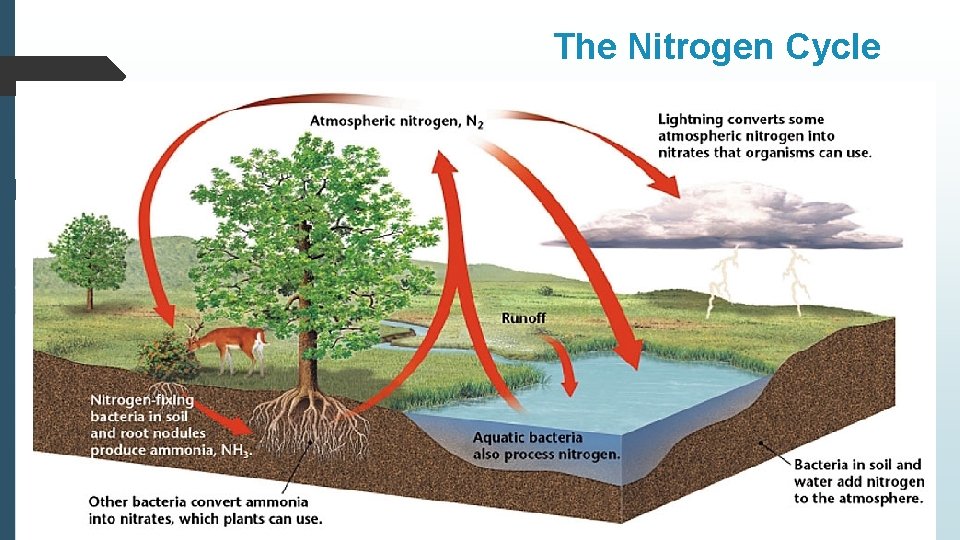
The Nitrogen Cycle the process where nitrogen circulates among the air, soil, water, plants, & animals in an ecosystem. All organisms need nitrogen to build proteins - used to build new cells. Nitrogen makes up 78% of the gases in the atmosphere.
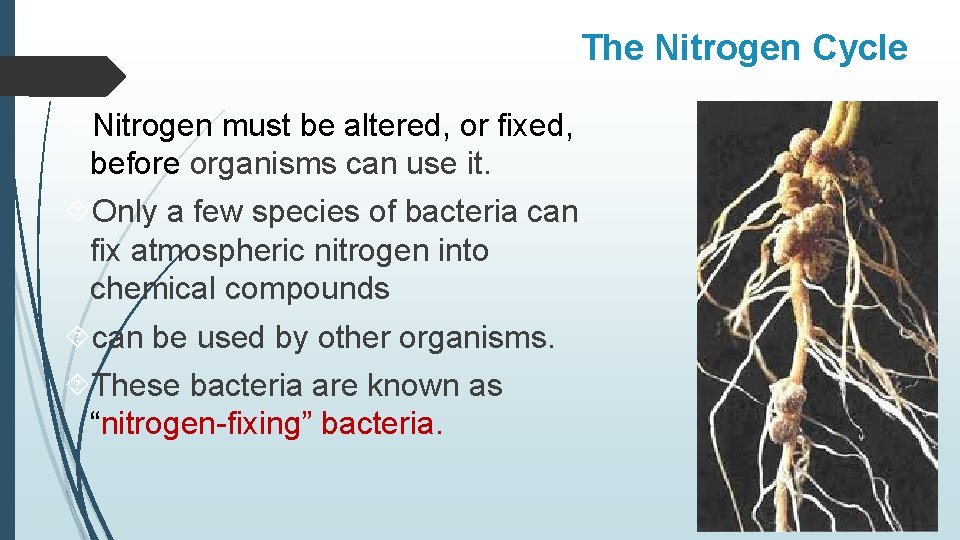
The Nitrogen Cycle Nitrogen must be altered, or fixed, before organisms can use it. Only a few species of bacteria can fix atmospheric nitrogen into chemical compounds can be used by other organisms. These bacteria are known as “nitrogen-fixing” bacteria.
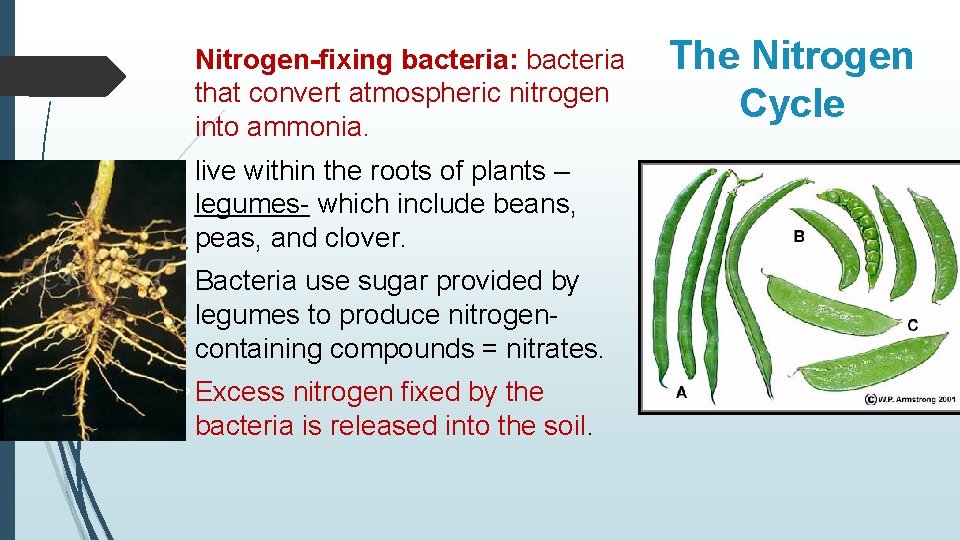
Nitrogen-fixing bacteria: bacteria that convert atmospheric nitrogen into ammonia. live within the roots of plants – legumes- which include beans, peas, and clover. Bacteria use sugar provided by legumes to produce nitrogencontaining compounds = nitrates. Excess nitrogen fixed by the bacteria is released into the soil. The Nitrogen Cycle
The Nitrogen Cycle
Decomposers and the Nitrogen Cycle Nitrogen stored within the bodies of living things is returned to the nitrogen cycle once those organisms die. Decomposers break down decaying plants & animals. Decomposers break down plant and animal wastes. Decomposers return nitrogen to the soil bacteria transform a small amount of N into N gas this returns to the atmosphere to complete the nitrogen cycle.
Nitrogen cycle https: //www. youtube. com/watch? v=Za. FVf. Hftzp. I&t=128 s
Phosphorus Cycle https: //www. youtube. com/watch? v=le. Hy-Y_8 n. Rs
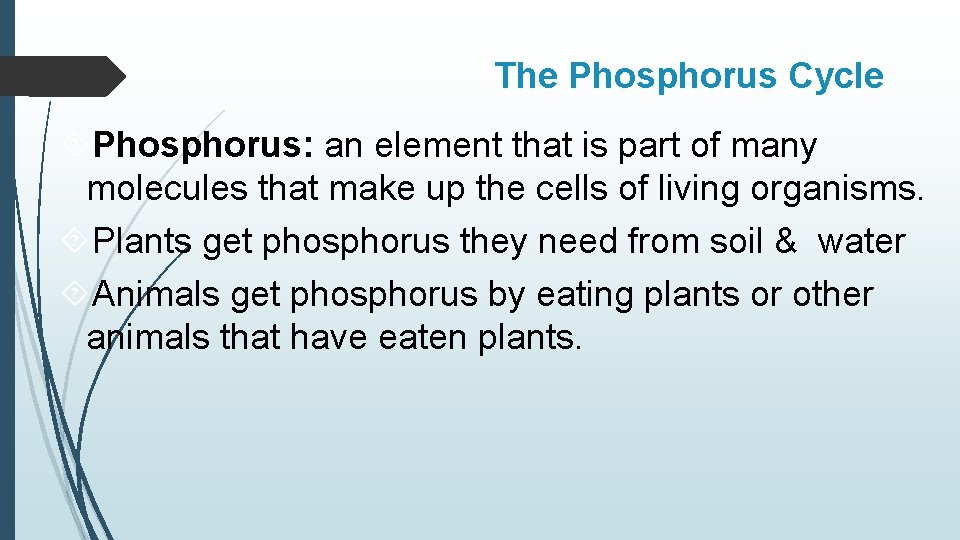
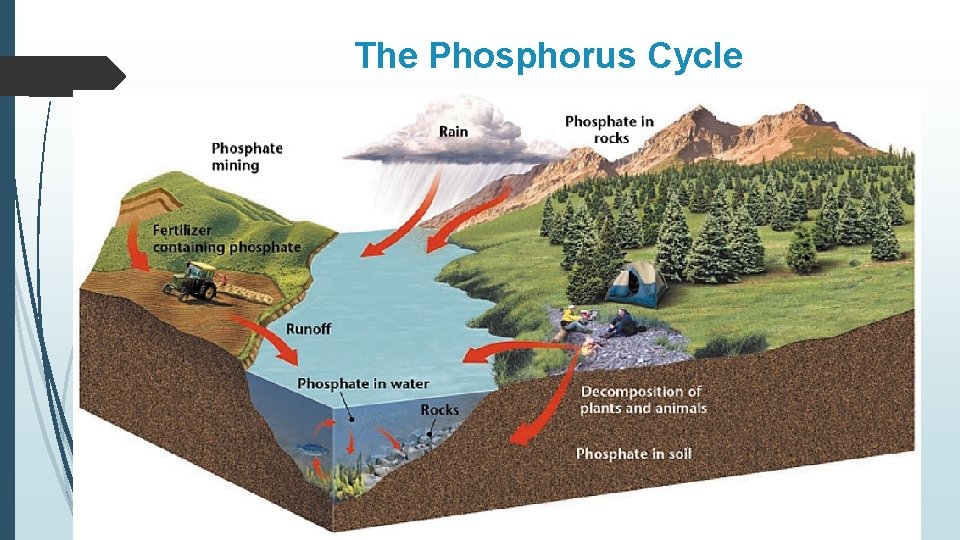
The Phosphorus Cycle Phosphorus: an element that is part of many molecules that make up the cells of living organisms. Plants get phosphorus they need from soil & water Animals get phosphorus by eating plants or other animals that have eaten plants.
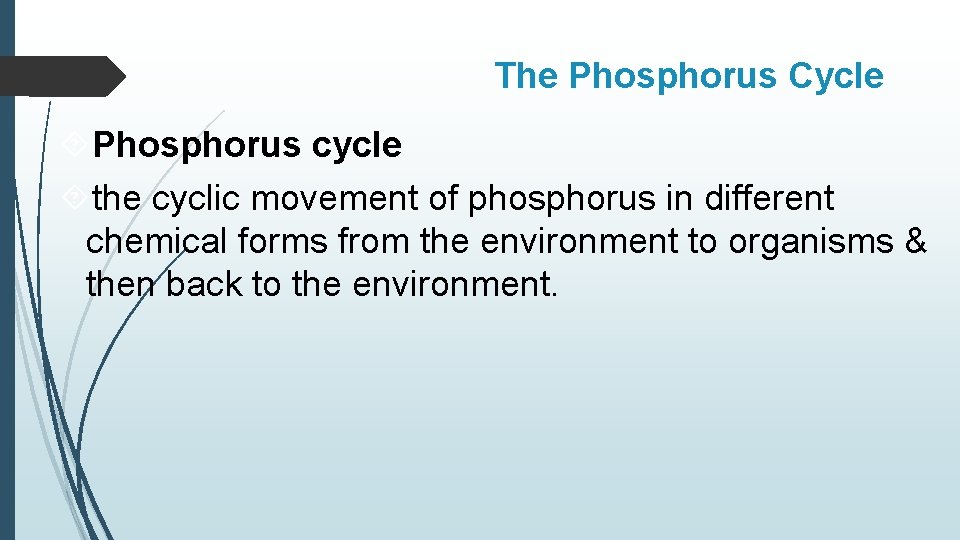
The Phosphorus Cycle Phosphorus cycle the cyclic movement of phosphorus in different chemical forms from the environment to organisms & then back to the environment.
The Phosphorus Cycle
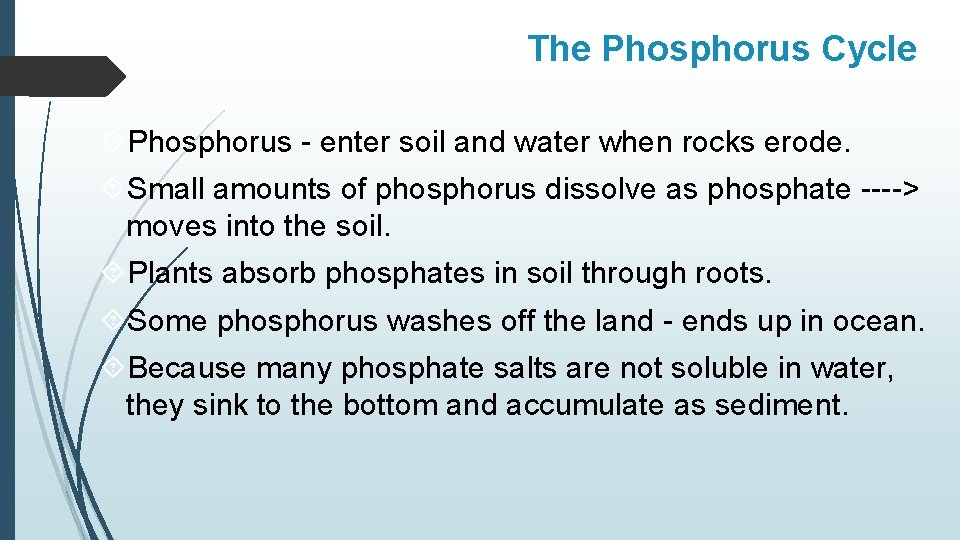
The Phosphorus Cycle Phosphorus - enter soil and water when rocks erode. Small amounts of phosphorus dissolve as phosphate ----> moves into the soil. Plants absorb phosphates in soil through roots. Some phosphorus washes off the land - ends up in ocean. Because many phosphate salts are not soluble in water, they sink to the bottom and accumulate as sediment.
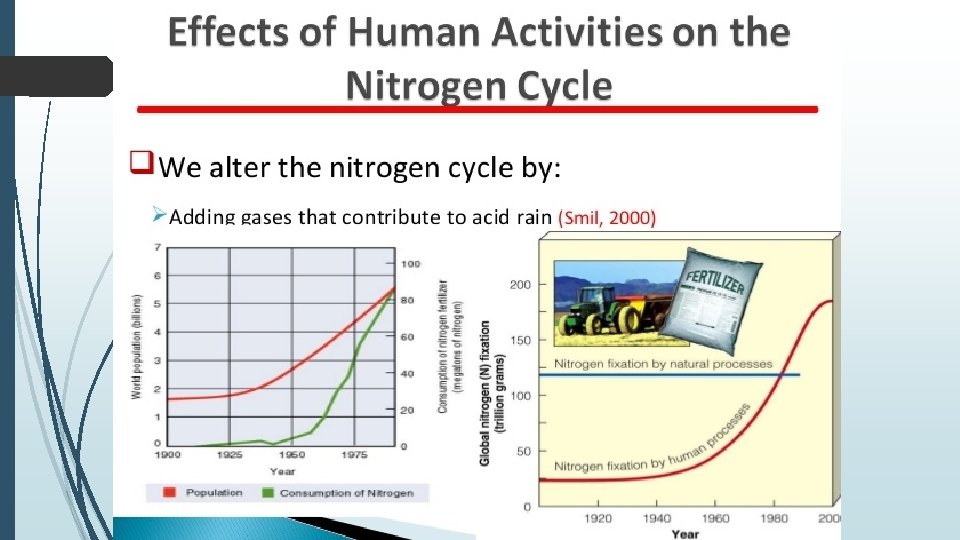
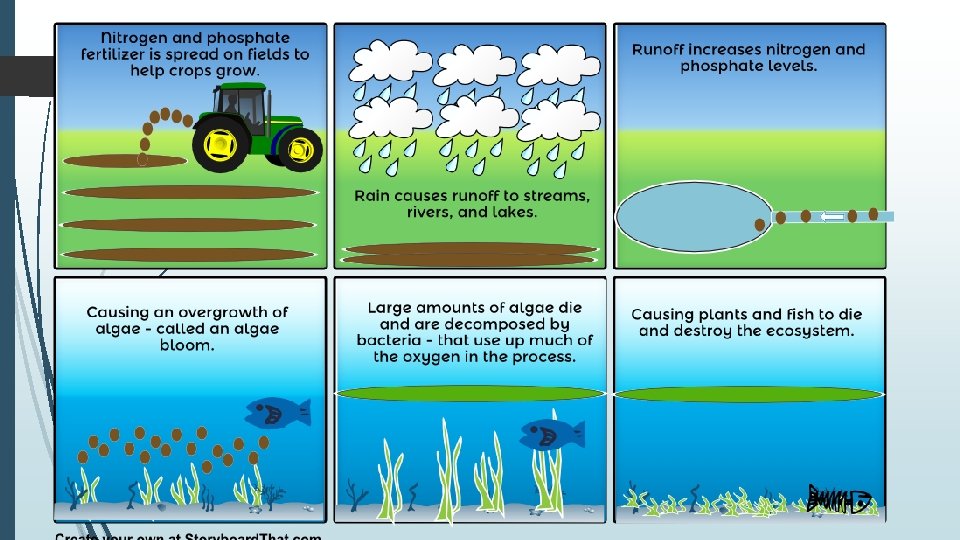
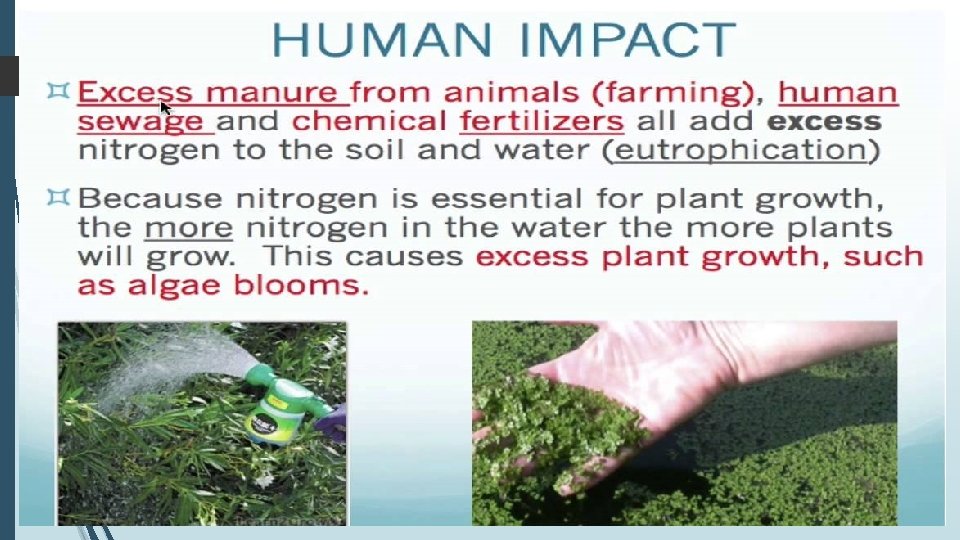
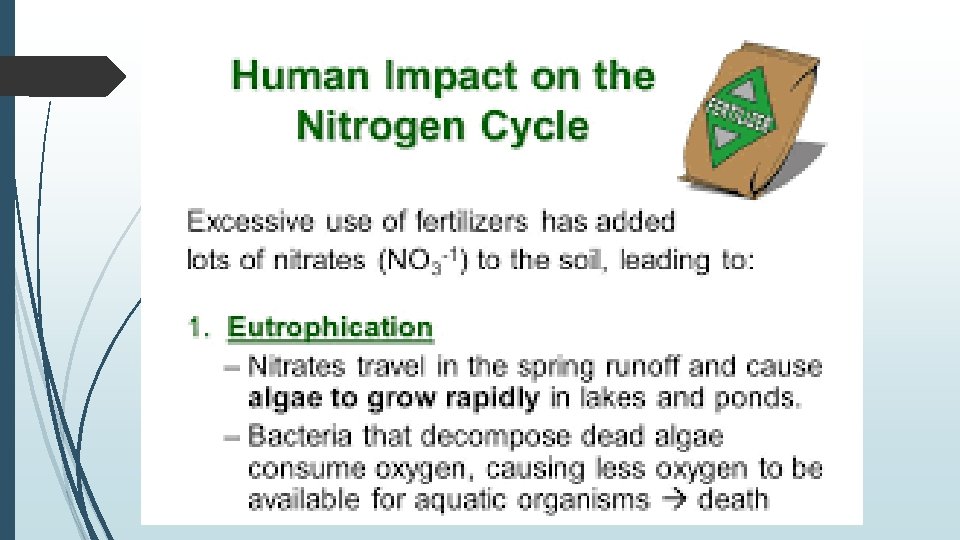
Fertilizers and the Nitrogen and Phosphorus Cycles Fertilizers – Used to stimulate & maximize plant growth, contain both nitrogen and phosphorus. Excessive amounts of fertilizer can enter terrestrial and aquatic ecosystems through runoff. Excess nitrogen and phosphorus can cause rapid growth of algae, algal bloom. Excess algae can deplete an aquatic ecosystem of important nutrients such as oxygen, which fish & other aquatic organisms depend.
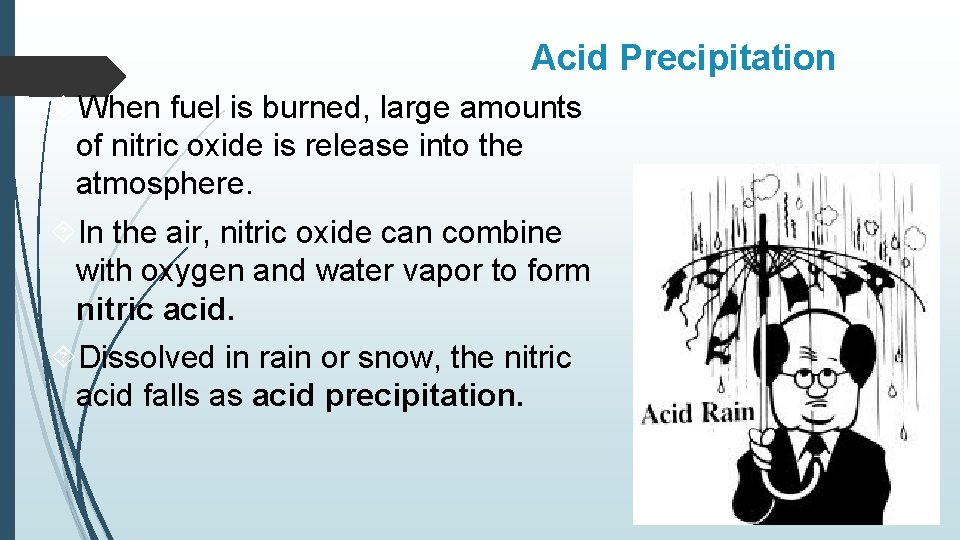
Acid Precipitation When fuel is burned, large amounts of nitric oxide is release into the atmosphere. In the air, nitric oxide can combine with oxygen and water vapor to form nitric acid. Dissolved in rain or snow, the nitric acid falls as acid precipitation.
Acid Rain Explained