
Environmental Science Education What do we want students
![IRD Team at MSU Janet Batzli - Plant Biology [U of Wisconsin] Doug Luckie](https://slidetodoc.com/presentation_image_h2/7d44cf10d193d04cba0261f213c32180/image-35.jpg "IRD Team at MSU Janet Batzli - Plant Biology [U of Wisconsin] Doug Luckie")

- Slides: 43
Environmental Science Education What do we want students to know and be able to do? What evidence will we accept? Diane Ebert-May Department of Plant Biology Michigan State University ebertmay@msu. edu http: //first 2. org
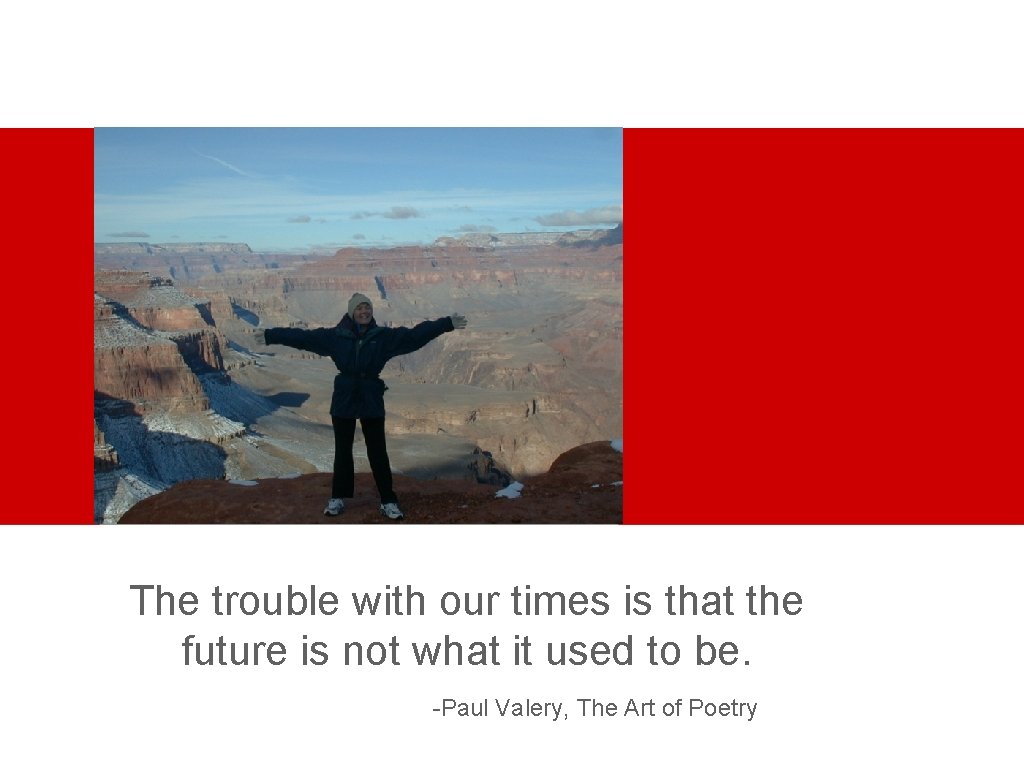
The trouble with our times is that the future is not what it used to be. -Paul Valery, The Art of Poetry
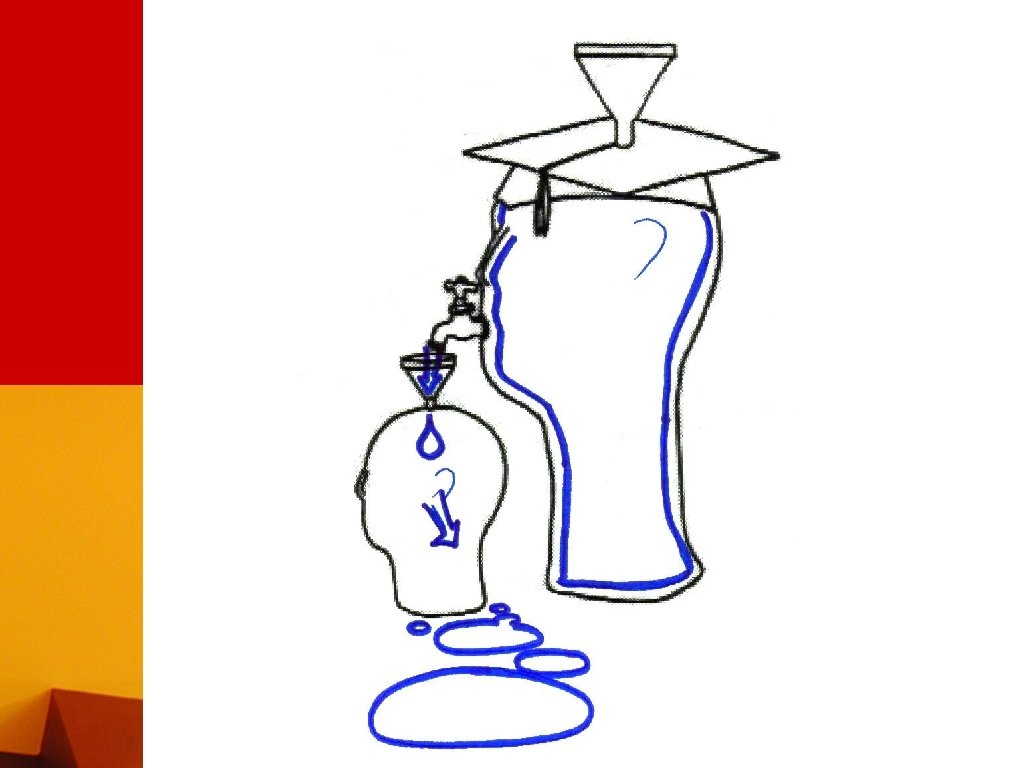
Question 1 Please respond on a scale of 1 -5: 1=strongly agree; 2=agree; 3=neutral; 4= disagree; 5=strongly disagree Students learn science best by doing science.
Question 2 Please respond on a scale of 1 -5: 1=strongly agree; 2=agree; 3=neutral; 4= disagree; 5=strongly disagree Science should be taught as it is practiced.
Question 3 Please respond on a scale if 0 -100 in increments of 10: How important is it to use multiple kinds of data to assess student learning?
Question 4 Please respond on a scale of 0 - 100 in increments of 10: How often do you use data to make instructional decisions?
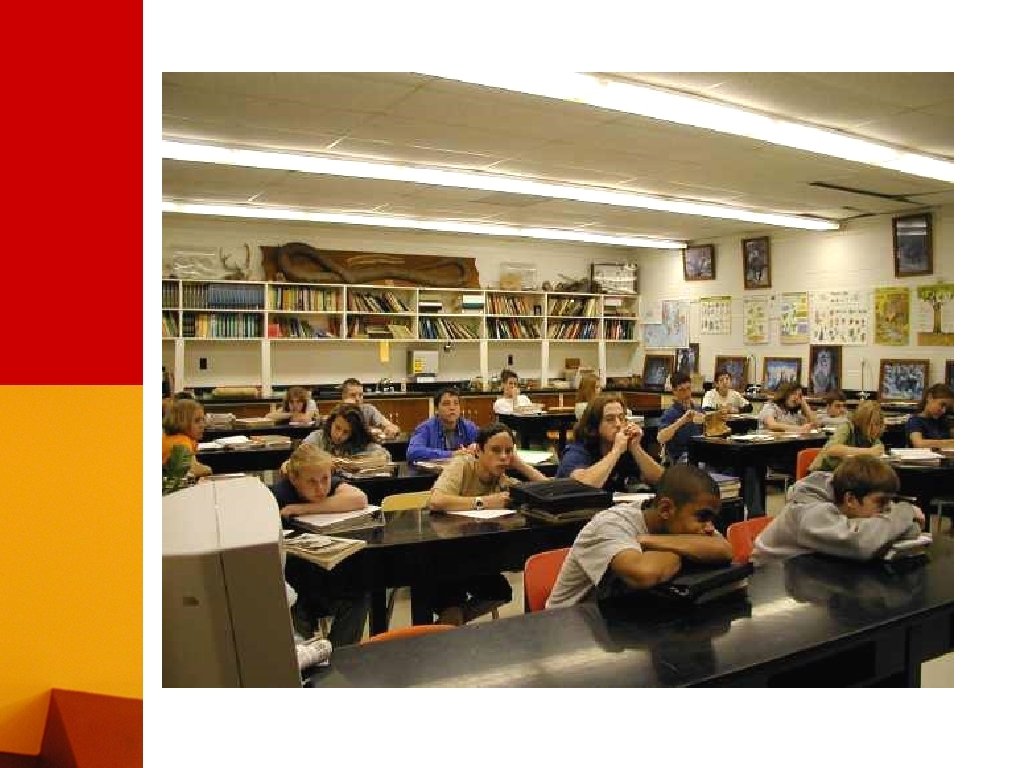
Question 5 Please respond on a scale of 1 -5: 1=strongly agree; 2=agree; 3=neutral; 4= disagree; 5=strongly disagree Large (+200) introductory science lectures are active learning environments.
Question 6 Please respond on a scale of 1 -5: 1=strongly agree; 2=agree; 3=neutral; 4= disagree; 5=strongly disagree Curriculum development begins with determining student learning goals and designing assessments.
Question 1 Please respond on a scale of 1 -5: 1=strongly agree; 2=agree; 3=neutral; 4= disagree; 5=strongly disagree Students learn science best by doing science.
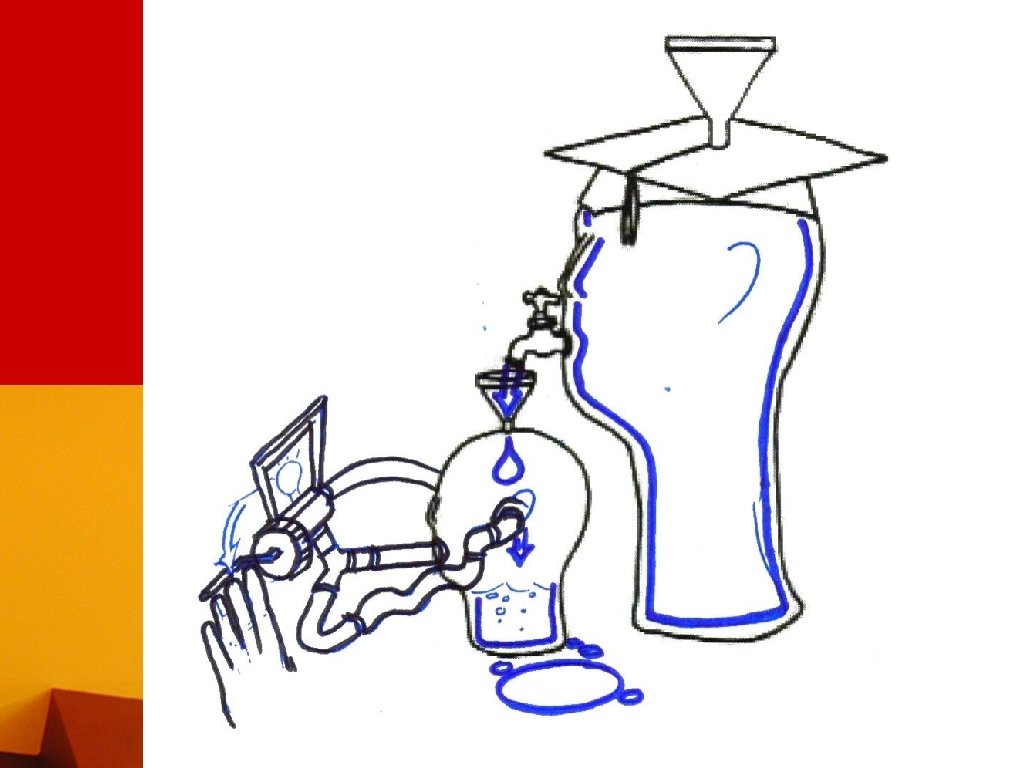
Question 2 Please respond on a scale of 1 -5: 1=strongly agree; 2=agree; 3=neutral; 4= disagree; 5=strongly disagree Science should be taught as it is practiced.
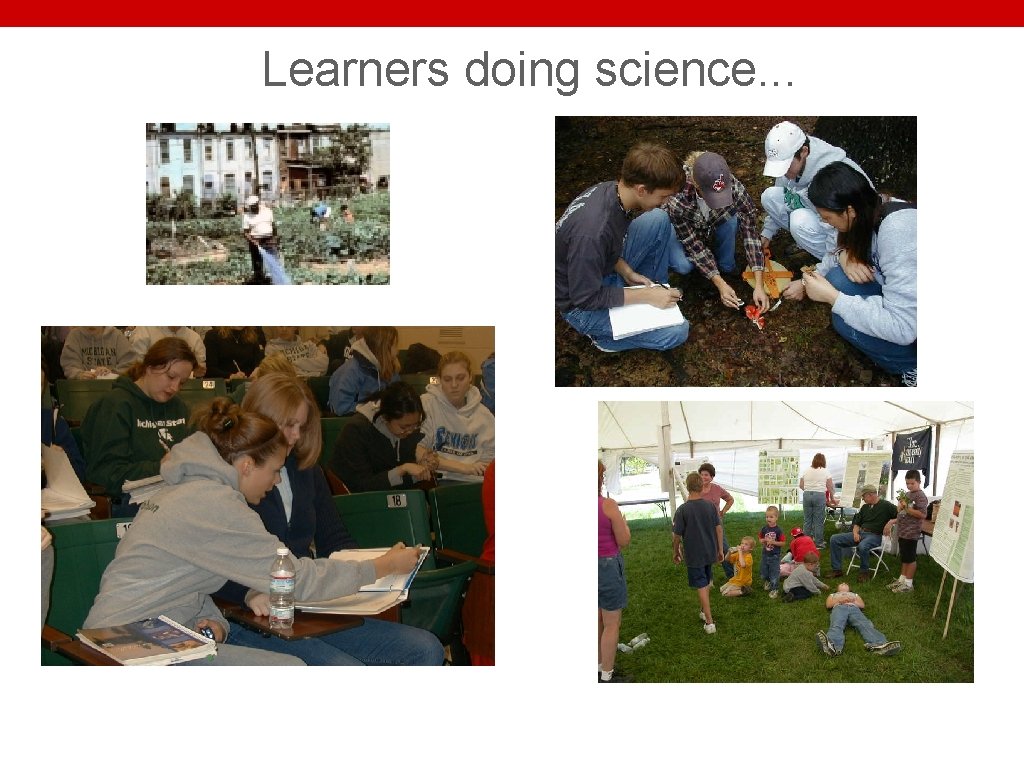
Learners doing science. . .
Question 3 Please respond on a scale if 0 -100 in increments of 10: How important is it to use multiple kinds of data to assess student learning?
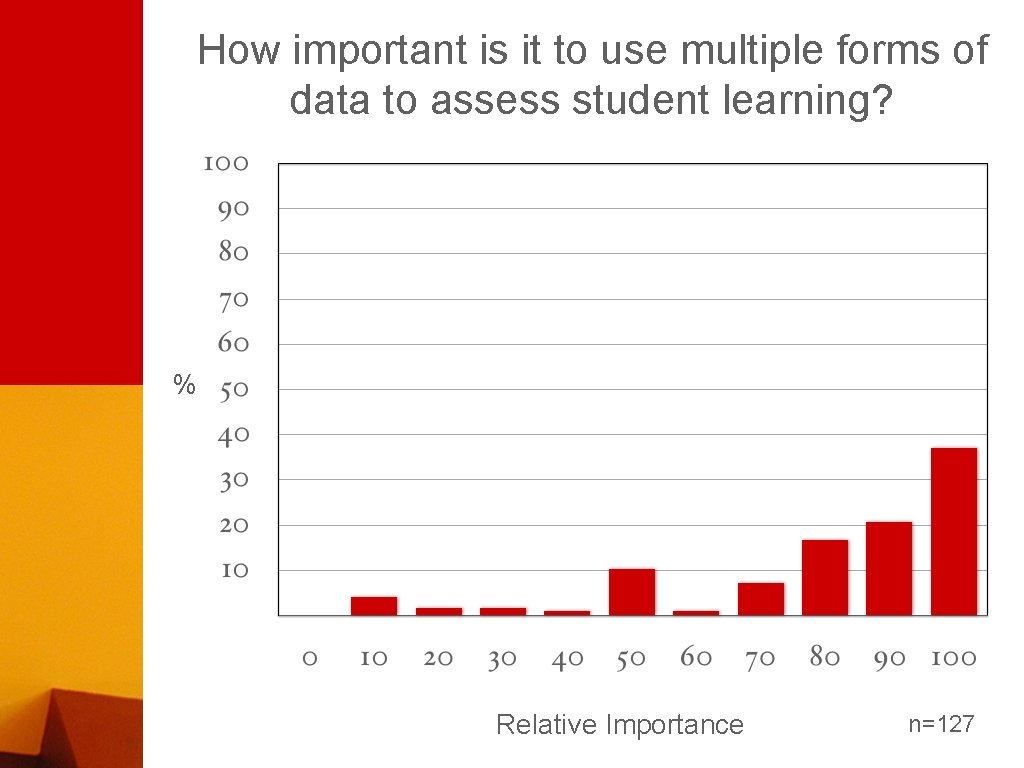
How important is it to use multiple forms of data to assess student learning? % Relative Importance n=127
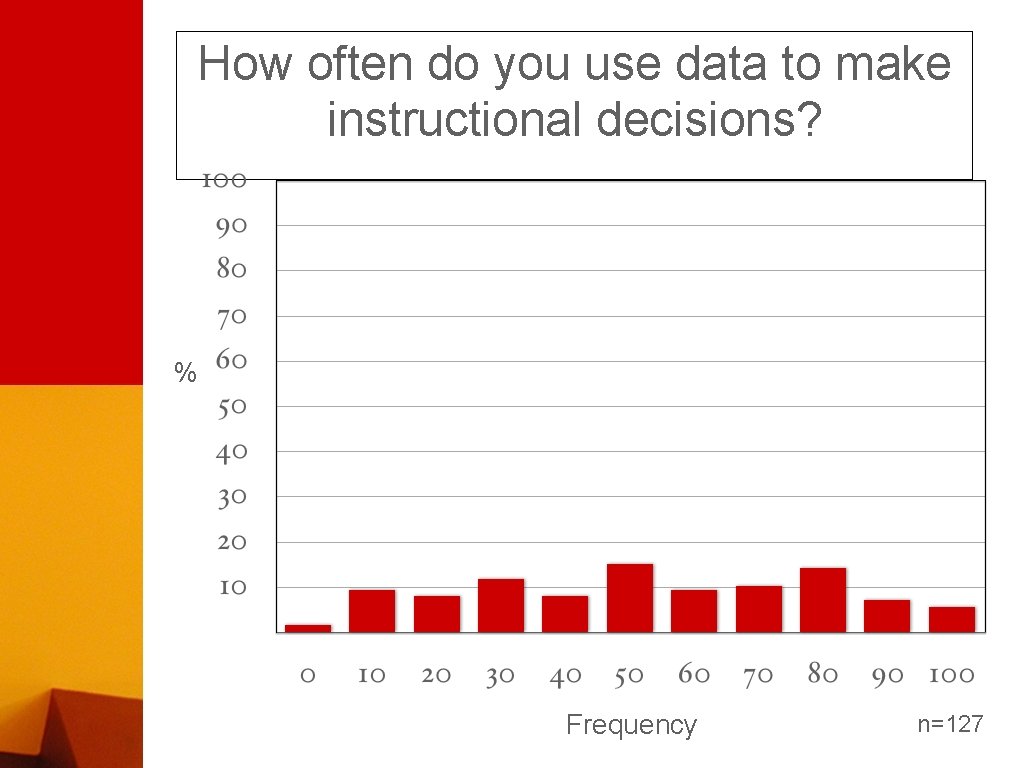
Question 4 Please respond on a scale of 0 - 100 in increments of 10: How often do you use data to make instructional decisions?
How often do you use data to make instructional decisions? % Frequency n=127
Question 5 Please respond on a scale of 1 -5: 1=strongly agree; 2=agree; 3=neutral; 4= disagree; 5=strongly disagree Large (+200) introductory science/engr lectures are active learning environments.
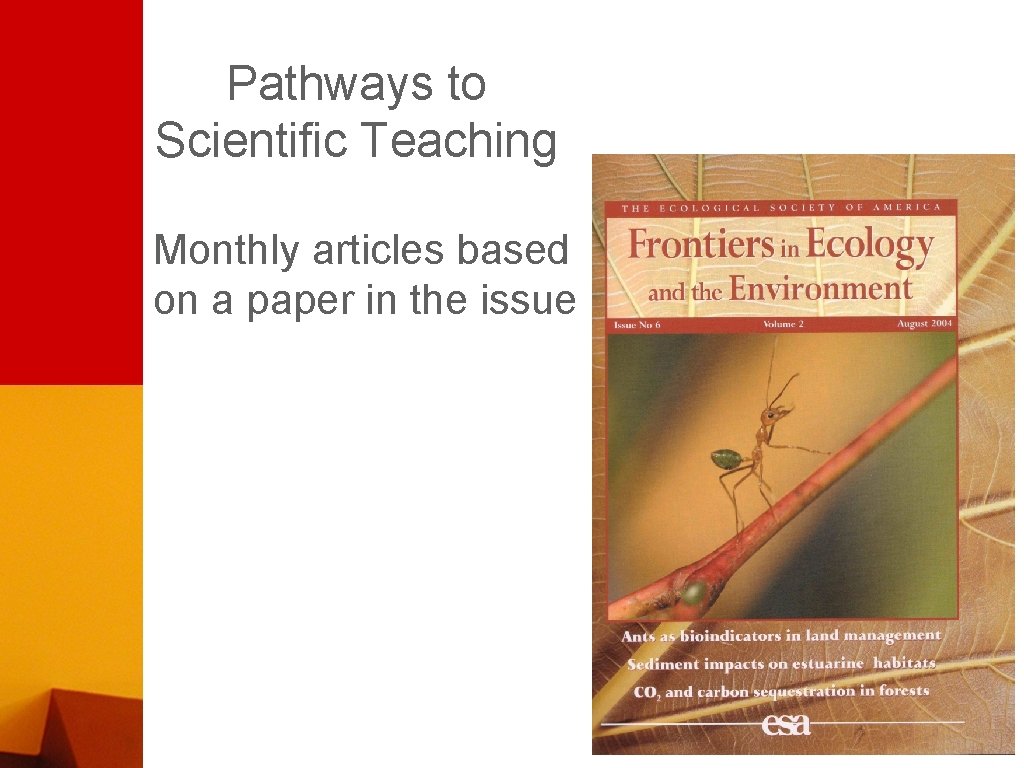
Pathways to Scientific Teaching Monthly articles based on a paper in the issue
Question 7 True or False? Assessing student learning in science parallels what scientists do as researchers.
Parallel: ask questions 1. Description: -What is happening? 2. Cause: -Does ‘x’ (teaching strategy) affect ‘y’ (understanding)? 3. Process or mechanism: -Why or how does ‘x’ cause ‘y’?
Parallel: collect data We collect data to find out what our students know. Data helps us understand student thinking about concepts and content. We use data to guide decisions about course/curriculum/innovative instruction
Parallel: analyze data Quantitative data - statistical analysis Qualitative data break into manageable units and define coding categories search for patterns, quantify interpret and synthesize Valid and repeatable measures
Parallel: peer review Ideas and results are peer reviewed - formally and/or informally.
What is assessment? Data collection with the purpose of answering questions about… students’ understanding students’ attitudes students’ skills instructional design and implementation curricular reform (at multiple grainsizes)
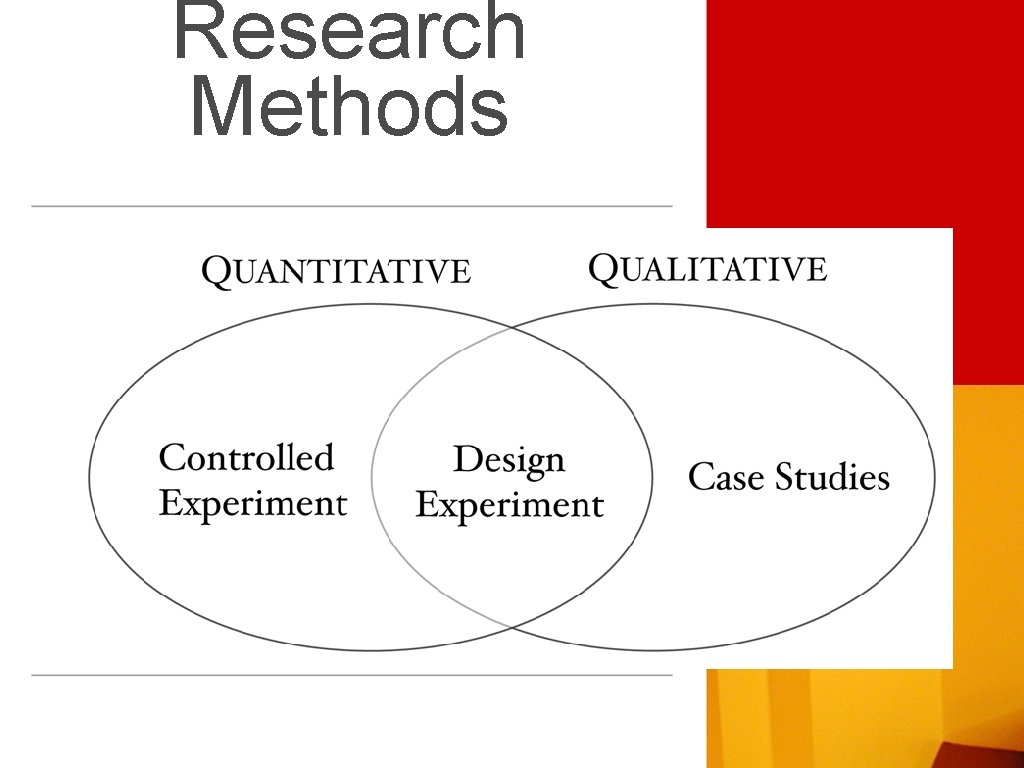
Research Methods
Why do assessment? Improve student learning and development. Provides students and faculty substantive feedback about student understanding. Challenge to use disciplinary research strategies to assess learning.
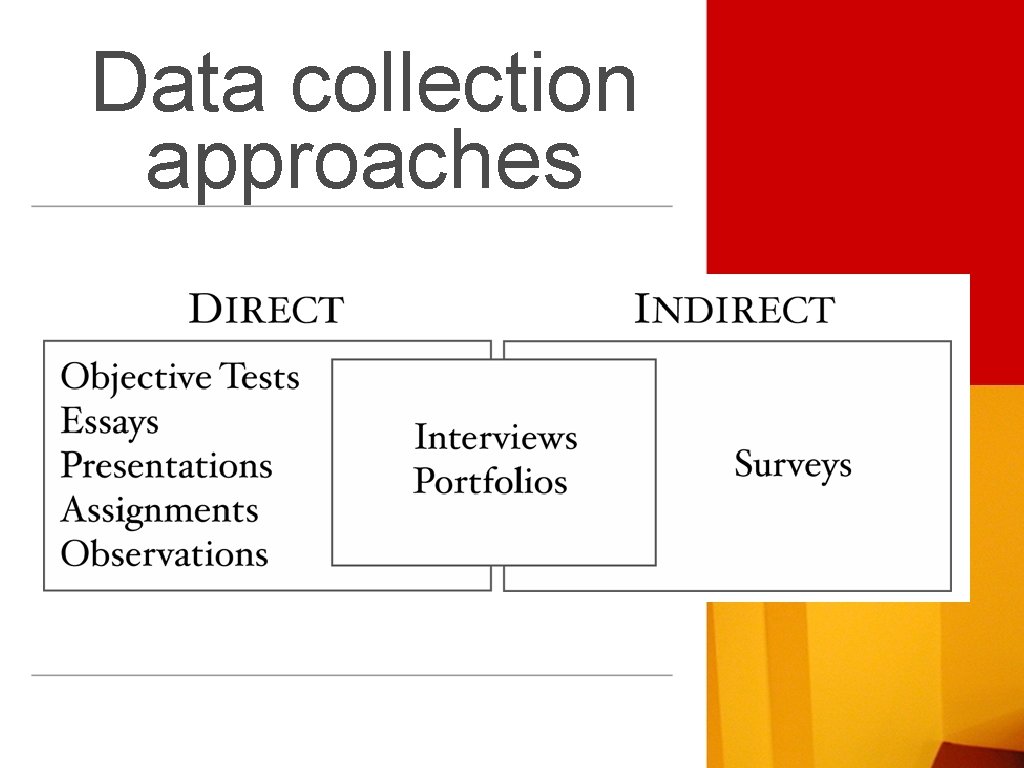
Data collection approaches
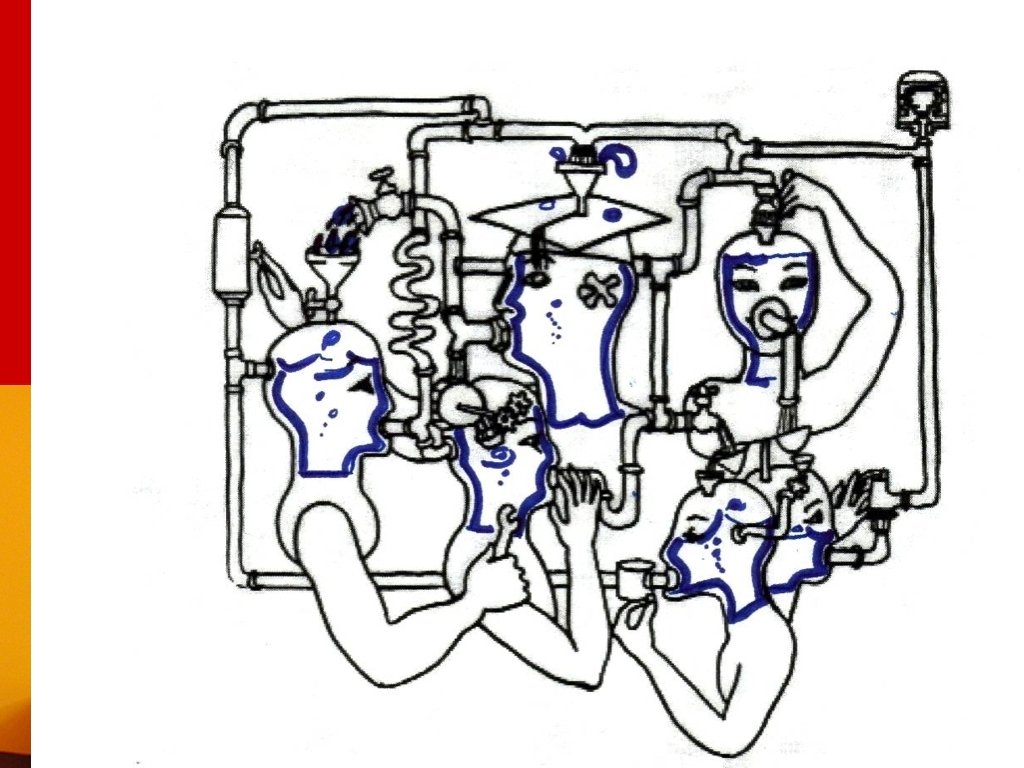
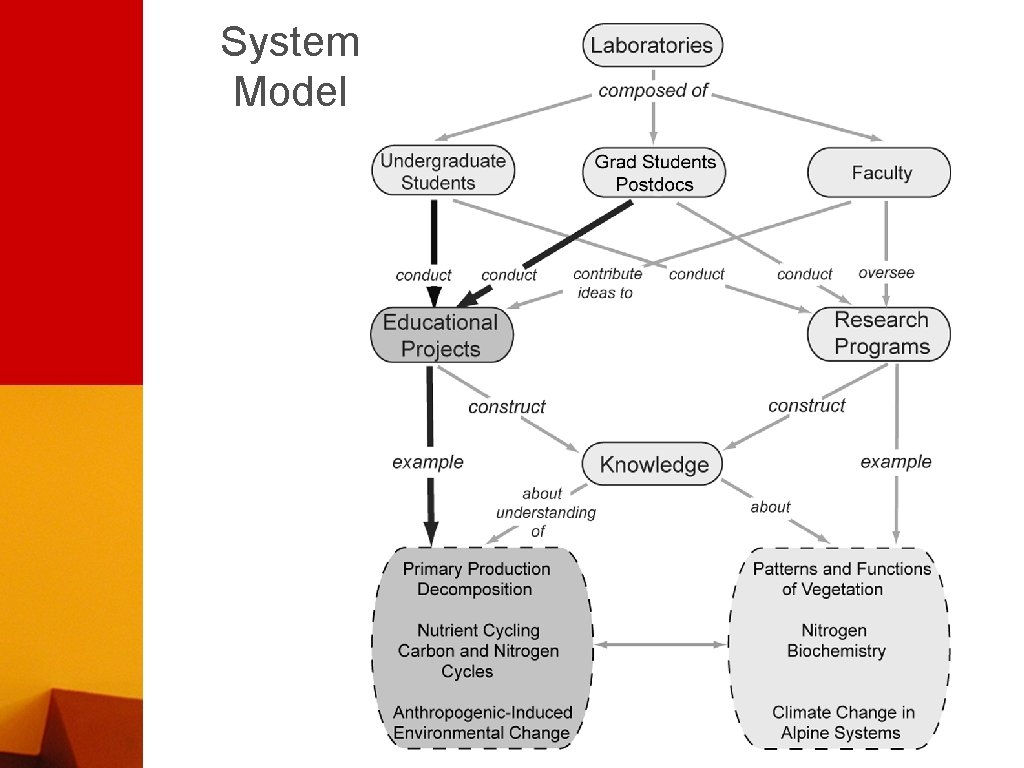
System Model
IRD Team at MSU Janet Batzli - Plant Biology [U of Wisconsin] Doug Luckie - Physiology Scott Harrison - Microbiology (grad student) Tammy Long - Plant Biology Rett Weber - Plant Biology (postdoc) Deb Linton - Plant Biology (postdoc) Heejun Lim - Chemistry Education Duncan Sibley - Geology Lina Patino - Geology *National Science Foundation
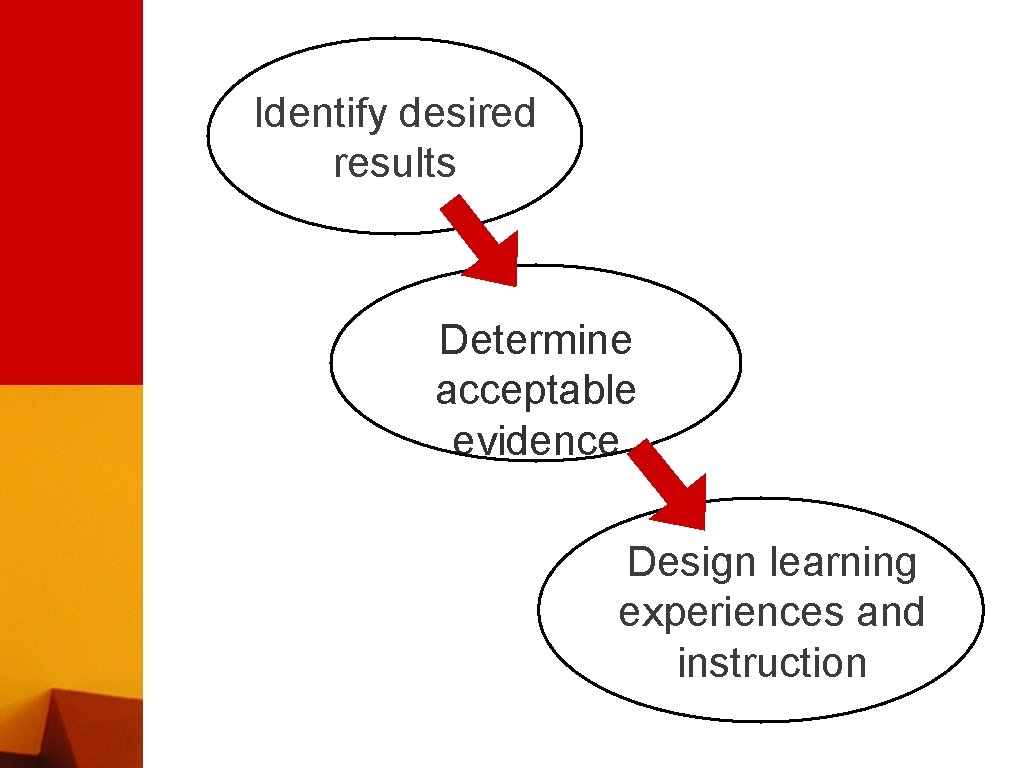
Identify desired results Determine acceptable evidence Design learning experiences and instruction
Private Universe
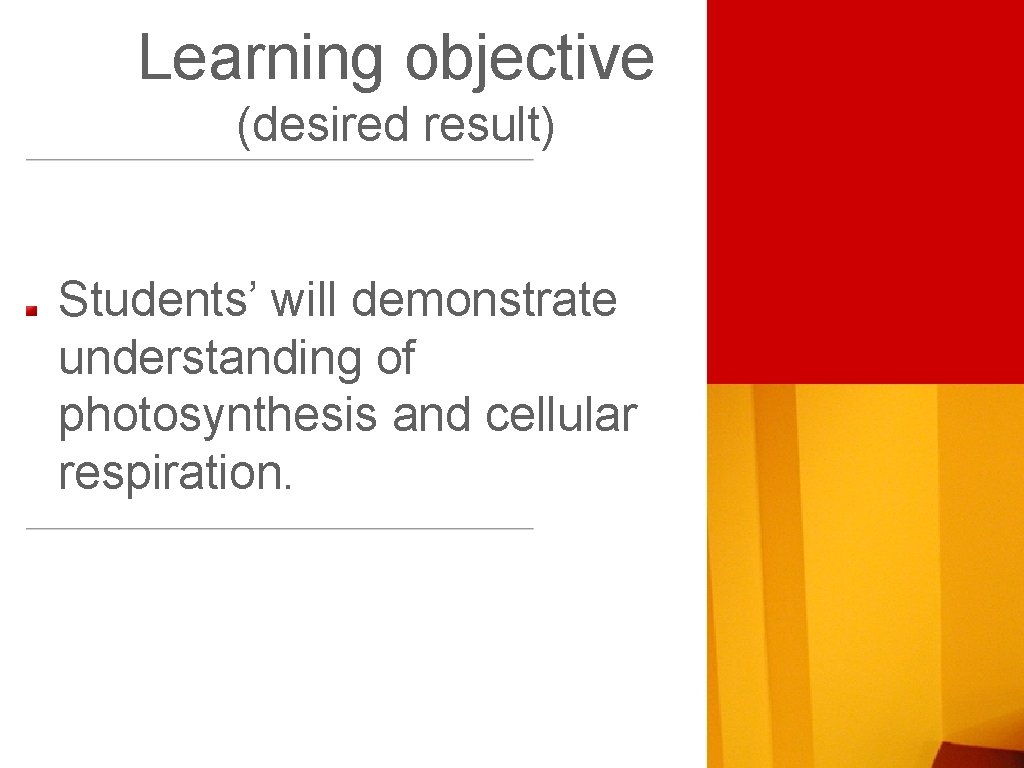
Learning objective (desired result) Students’ will demonstrate understanding of photosynthesis and cellular respiration.
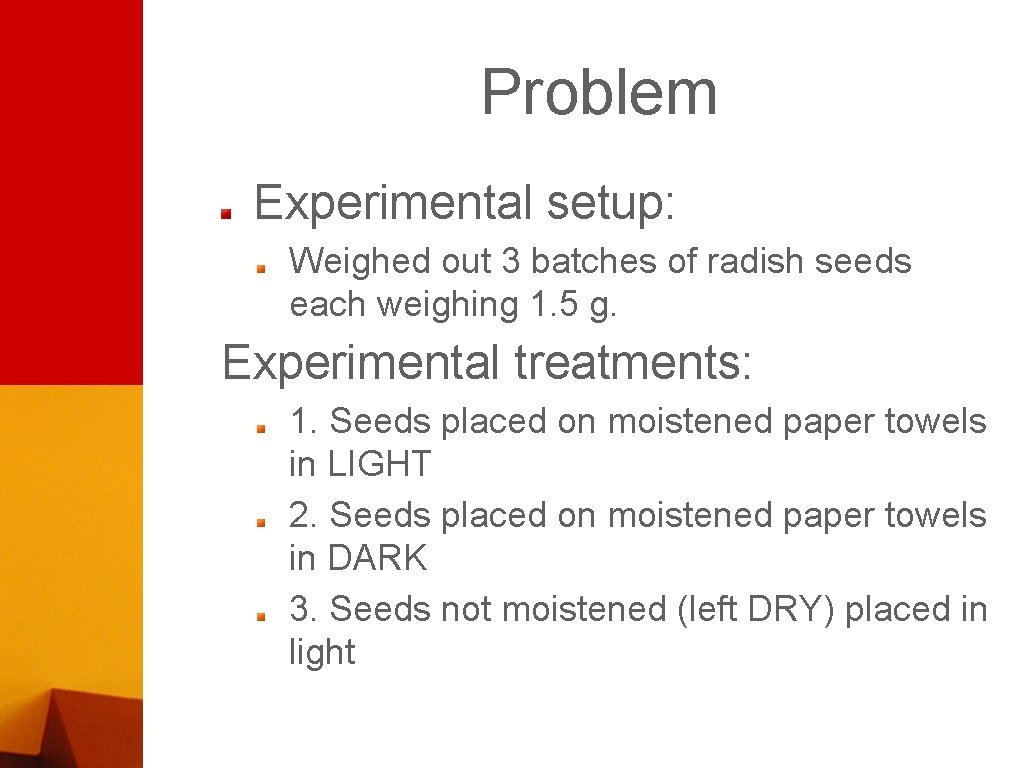
Problem Experimental setup: Weighed out 3 batches of radish seeds each weighing 1. 5 g. Experimental treatments: 1. Seeds placed on moistened paper towels in LIGHT 2. Seeds placed on moistened paper towels in DARK 3. Seeds not moistened (left DRY) placed in light
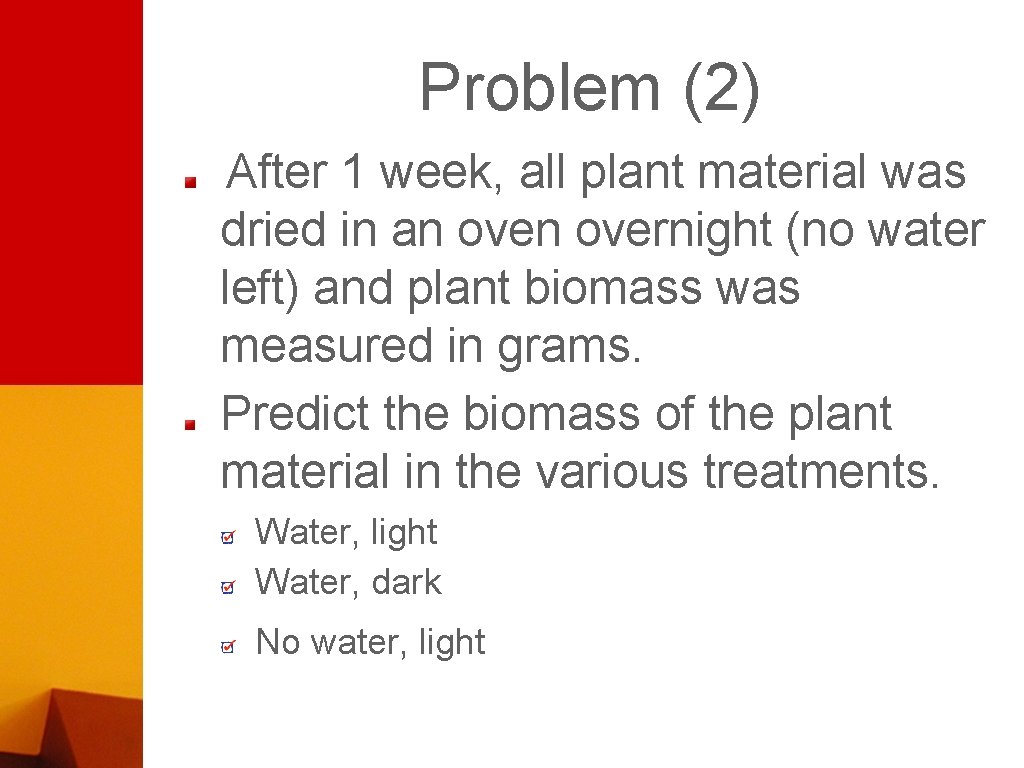
Problem (2) After 1 week, all plant material was dried in an overnight (no water left) and plant biomass was measured in grams. Predict the biomass of the plant material in the various treatments. Water, light Water, dark No water, light
Results: Mass of Radish Seeds/Seedlings 1. 46 g 1. 63 g 1. 20 g Write an explanation about the results. Explain the results. Write individually on carbonless paper.
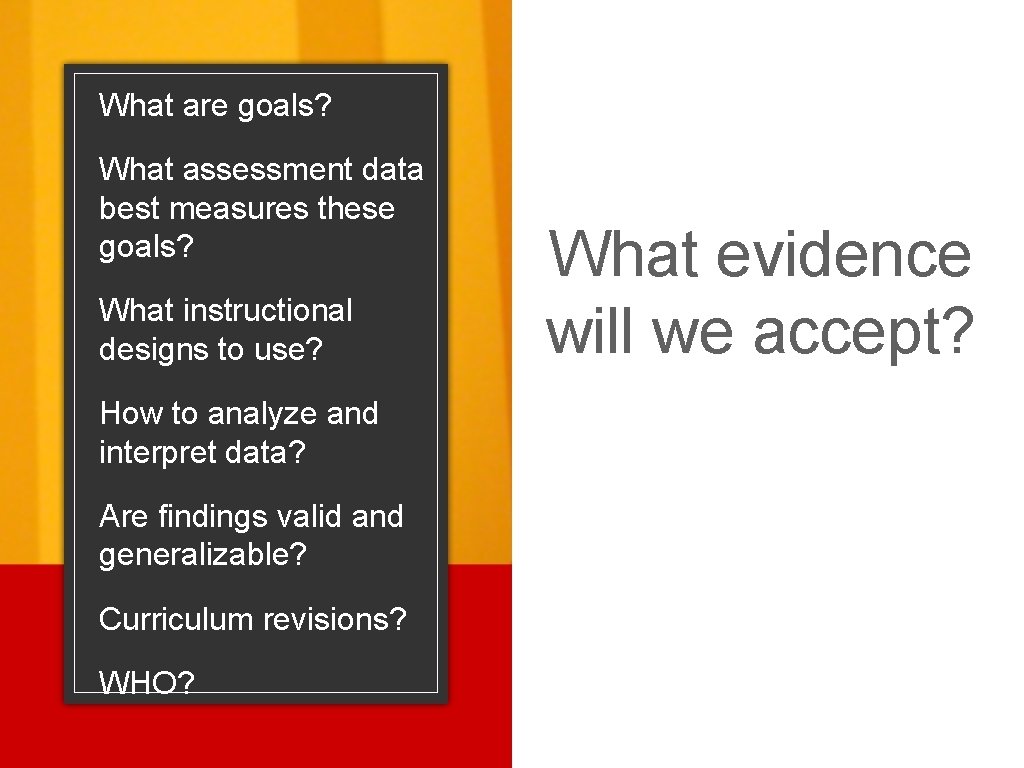
What are goals? What assessment data best measures these goals? What instructional designs to use? How to analyze and interpret data? Are findings valid and generalizable? Curriculum revisions? WHO? What evidence will we accept?