
Environmental Science Do Now 10 25 17 Directions

- Slides: 33
Environmental Science Do Now 10 -25 -17 Directions: Take your Do Now sheet out and define the following terms. • Population density • Density-dependent • Natality • Mortality • Birth rate 11/29/2020 Populations. ppt 1
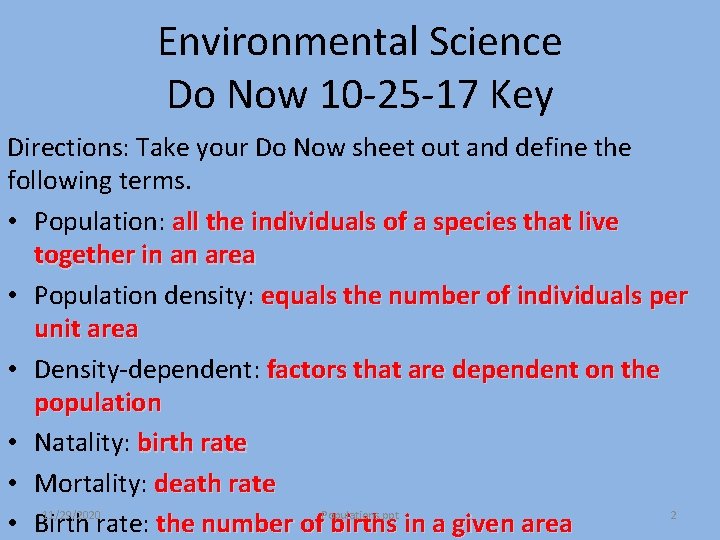
Environmental Science Do Now 10 -25 -17 Key Directions: Take your Do Now sheet out and define the following terms. • Population: all the individuals of a species that live together in an area • Population density: equals the number of individuals per unit area • Density-dependent: factors that are dependent on the population • Natality: birth rate • Mortality: death rate 11/29/2020 Populations. ppt 2 • Birth rate: the number of births in a given area
Homework • Complete page 2 of the “Population Distribution” POGIL (If you were here yesterday, you should have completed and turned in page 1. ) 11/29/2020 Populations. ppt 3
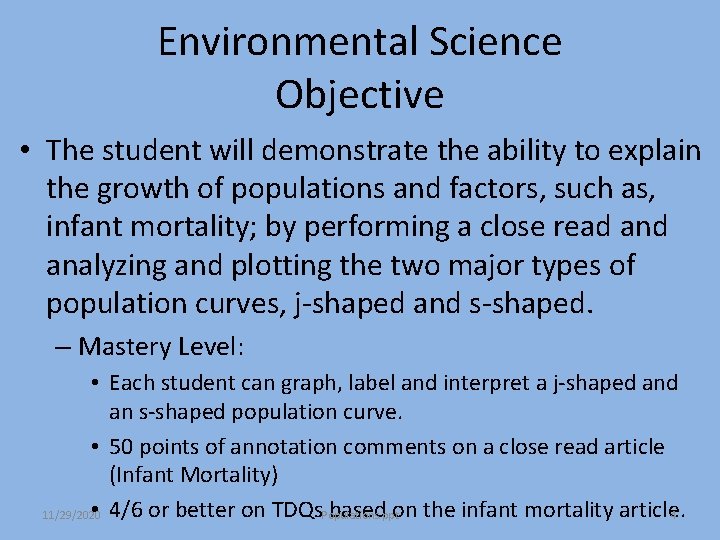
Environmental Science Objective • The student will demonstrate the ability to explain the growth of populations and factors, such as, infant mortality; by performing a close read analyzing and plotting the two major types of population curves, j-shaped and s-shaped. – Mastery Level: • Each student can graph, label and interpret a j-shaped an s-shaped population curve. • 50 points of annotation comments on a close read article (Infant Mortality) • 4/6 or better on TDQs based on the infant mortality article. 11/29/2020 Populations. ppt 4
Engage • Students will watch a You. Tube video called “Infant Mortality in the United States is Surprisingly High” • • Guide Question: What factors play a role in America’s infant mortality rate? • • Source: https: //www. youtube. com/watch? v=5 To. Jbh. LEbd. M 11/29/2020 Populations. ppt 5
Explore • Students will perform a close read on the article titled “Population Growth Patterns”. As the students read the article, they will annotate it using the symbols posted in the classroom. Students will also write textual comments in the margins of the article. Each annotation symbol is worth 2. 5 points and each textual comment is worth 5 points. The goal is for each student to earn 50 points worth of annotations. Students will answer 5 text-dependent questions that are based on the article. • • Source: https: //www. ck 12. org/biology/population-growthpatterns/lesson/Population-Growth-Patterns-BIO/ 11/29/2020 Populations. ppt 6
Vocabulary Words – Populations Population growth curve Logistic Growth Curve Exponential Growth Curve Sigmoid Population (Scurve)[logistic growth curve] • J-shaped Population curve [exponential growth] • Carrying Capacity • • 11/29/2020 • Lag phase • Exponential growth phase • Stationary phase/Plateau phase • Death phase • Overshoot • Birth rate • Resources • Transitional phase • Limiting factors Populations. ppt 7
Unit IV: POPULATIONS • Mr. Richards • October 24, 2017 11/29/2020 Populations. ppt 8
• Population: all the individuals of a species that live together in an area • Demography: the statistical study of populations, make predictions about how a population will change 11/29/2020 Populations. ppt 9
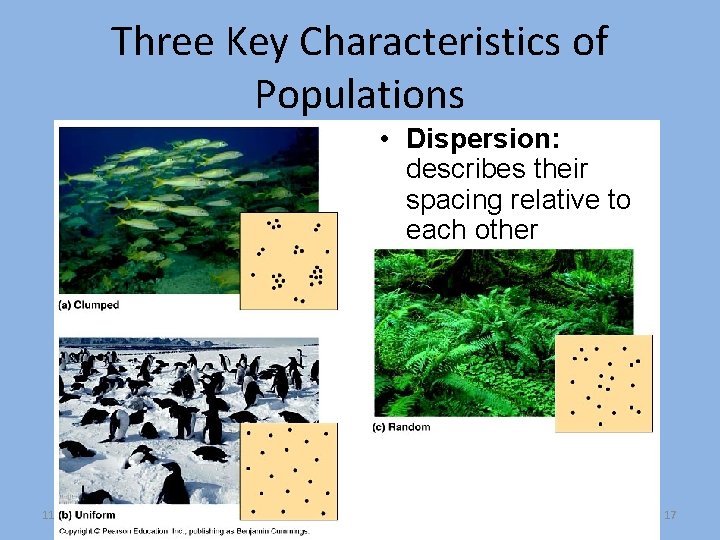
Three Key Characteristics of Populations • Size, number of individuals (N) • Density (N/ area) • Dispersion, – Random, uniform, clumped, • (appropriate scale) 11/29/2020 Populations. ppt 10
Three Key Characteristics of Populations • 1. Size: number of individuals in an area – Characterized by (N) Growth Rate: Birth Rate (natality) - Death Rate (mortality) (How many individuals are born vs. how many die) 11/29/2020 Populations. ppt 11
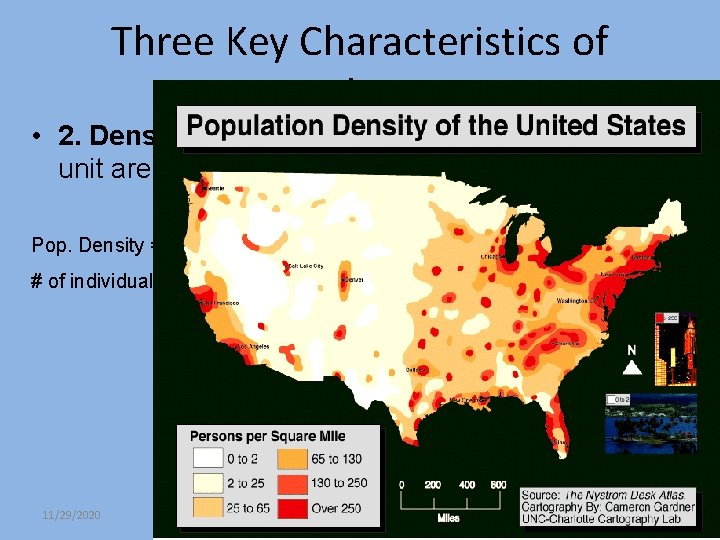
Three Key Characteristics of Populations • 2. Density: measurement of population per unit area or unit volume Pop. Density = # of individuals ÷ unit of space 11/29/2020 Populations. ppt 12
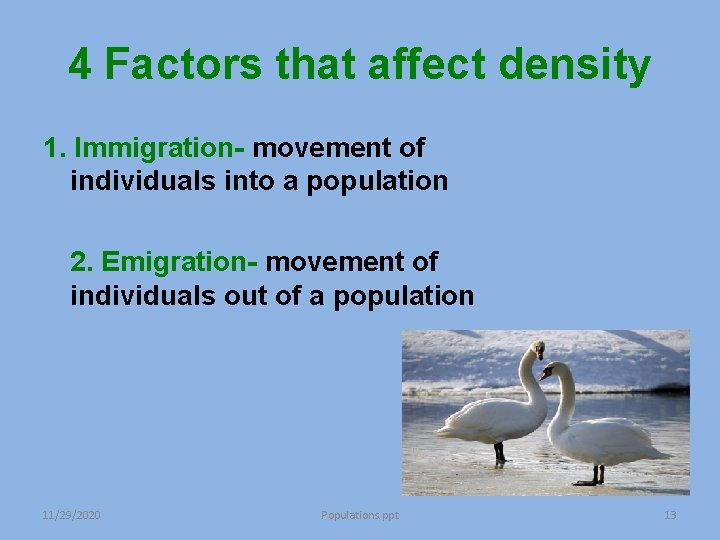
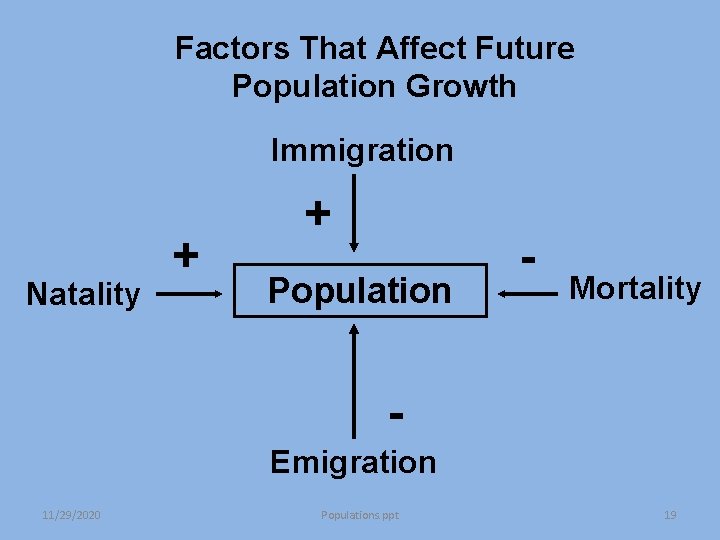
4 Factors that affect density 1. Immigration- movement of individuals into a population 2. Emigration- movement of individuals out of a population 11/29/2020 Populations. ppt 13
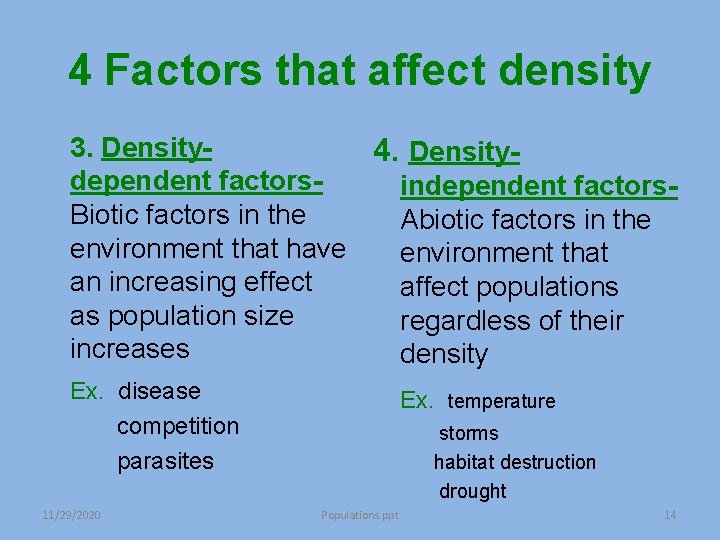
4 Factors that affect density 3. Density 4. Densitydependent factors- independent factors. Biotic factors in the Abiotic factors in the environment that have environment that an increasing effect affect populations as population size regardless of their increases density Ex. disease competition parasites 11/29/2020 Ex. temperature storms habitat destruction drought Populations. ppt 14
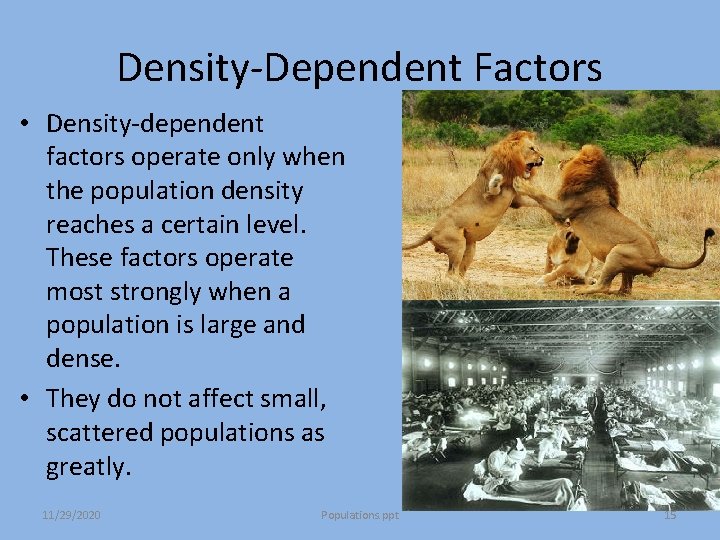
Density-Dependent Factors • Density-dependent factors operate only when the population density reaches a certain level. These factors operate most strongly when a population is large and dense. • They do not affect small, scattered populations as greatly. 11/29/2020 Populations. ppt 15
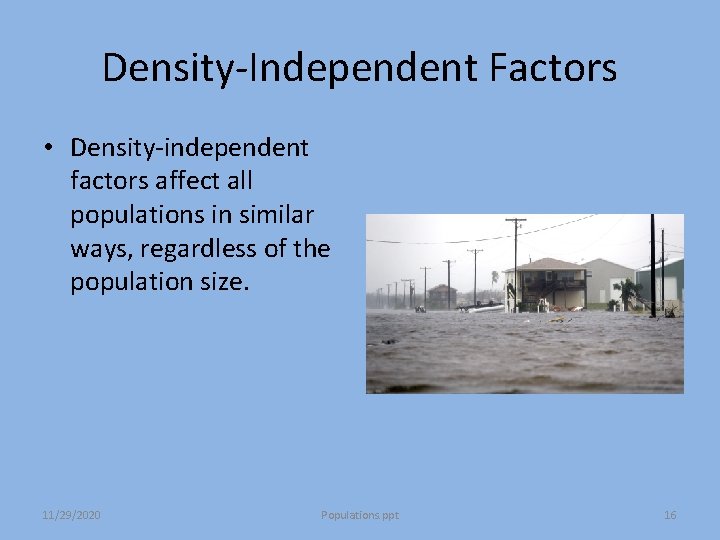
Density-Independent Factors • Density-independent factors affect all populations in similar ways, regardless of the population size. 11/29/2020 Populations. ppt 16
Three Key Characteristics of Populations • Dispersion: describes their spacing relative to each other 11/29/2020 Populations. ppt 17
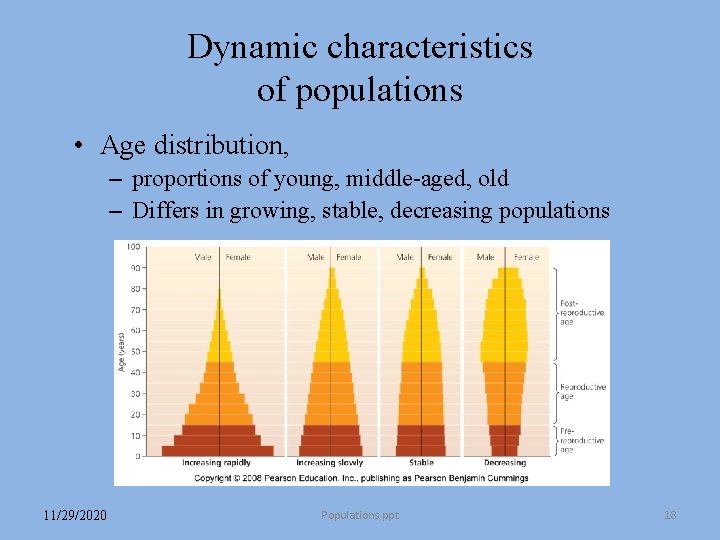
Dynamic characteristics of populations • Age distribution, – proportions of young, middle-aged, old – Differs in growing, stable, decreasing populations 11/29/2020 Populations. ppt 18
Factors That Affect Future Population Growth Immigration Natality + + Population - Mortality Emigration 11/29/2020 Populations. ppt 19
Changes in populations • Growth – Expansion of species’ populations may lead to evolution of new species • Decline – Shrinking species’ populations may lead to extinction • Small populations • Narrowly specialized species 11/29/2020 Populations. ppt 20
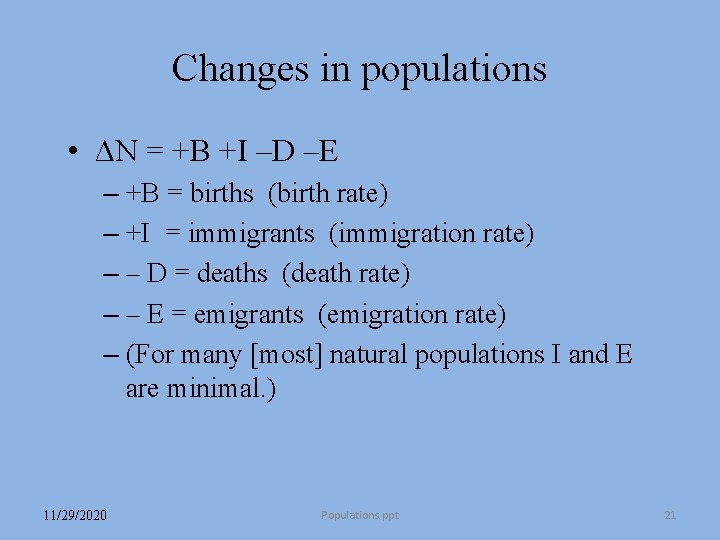
Changes in populations • ΔN = +B +I –D –E – +B = births (birth rate) – +I = immigrants (immigration rate) – – D = deaths (death rate) – – E = emigrants (emigration rate) – (For many [most] natural populations I and E are minimal. ) 11/29/2020 Populations. ppt 21
Other factors that affect population growth Limiting factor- any biotic or abiotic factor that restricts the existence of organisms in a specific environment. – EX. - Amount of water Amount of food Temperature 11/29/2020 Populations. ppt 22
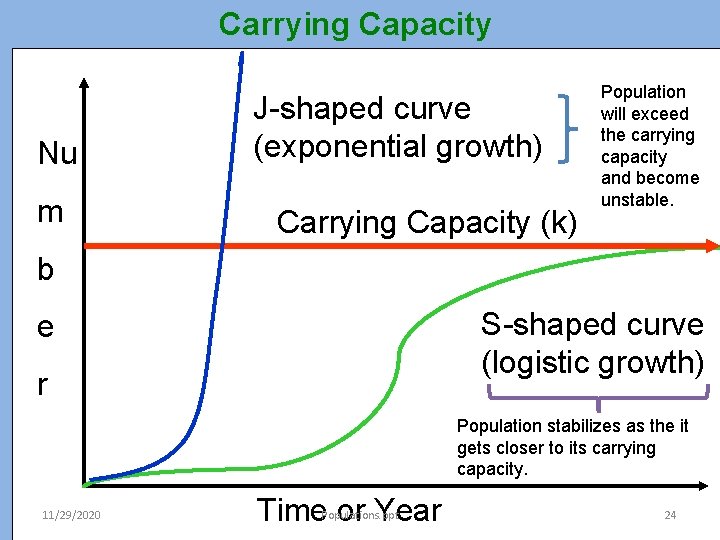
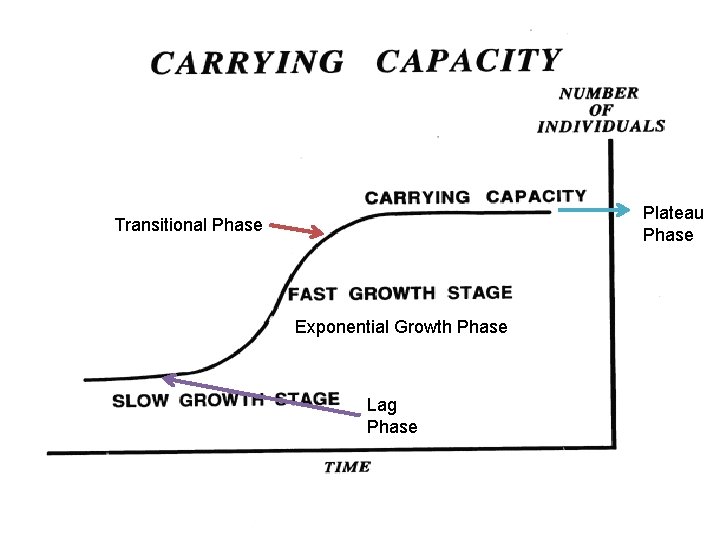
Other factors that affect population growth • Carrying Capacity- the maximum population size that can be supported by the available resources • 11/29/2020 There can only be as many organisms as the environmental resources can support Populations. ppt 23
Carrying Capacity Nu m J-shaped curve (exponential growth) Carrying Capacity (k) Population will exceed the carrying capacity and become unstable. b S-shaped curve (logistic growth) e r Population stabilizes as the it gets closer to its carrying capacity. 11/29/2020 Time or Year Populations. ppt 24
Plateau Phase Transitional Phase Exponential Growth Phase Lag Phase 11/29/2020 Populations. ppt 25
Logistic model • Logistic model works, to a point. – Real organisms have time lags for growth, time to develop eggs, flowers, etc. • seasonality, longevity – Real populations may exceed carrying capacity. • Easter Island • Pribloff Reindeer • Kaibab Deer 11/29/2020 Populations. ppt 26
Easter Island • Discovered by Polynesians ~ A. D. 1000 • Population grew to several thousand – Used trees for canoes to hunt dolphins – Used wood for cooking – Also ate birds, eggs, vegetables • Resources (trees) depleted – No canoes, no dolphins – Warfare over land, food resources • Population fell to ~ 100 when discovered by Dutch, Easter Sunday 1722. 11/29/2020 Populations. ppt 27
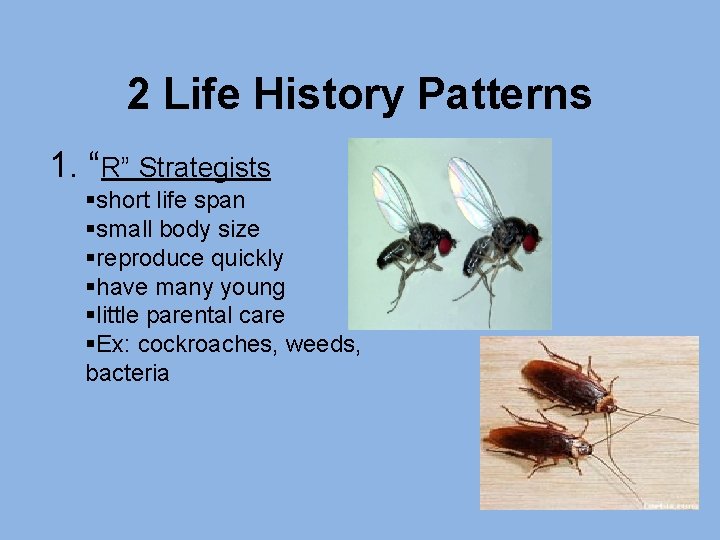
2 Life History Patterns 1. “R” Strategists §short life span §small body size §reproduce quickly §have many young §little parental care §Ex: cockroaches, weeds, bacteria
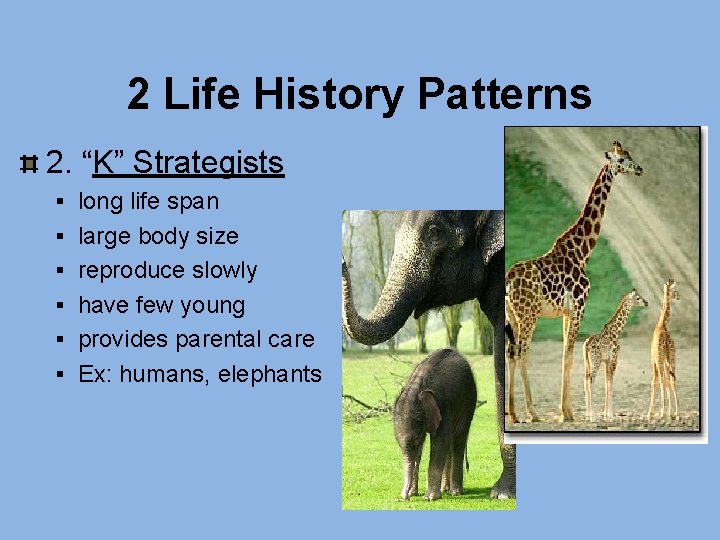
2 Life History Patterns 2. “K” Strategists § long life span § large body size § reproduce slowly § have few young § provides parental care § Ex: humans, elephants
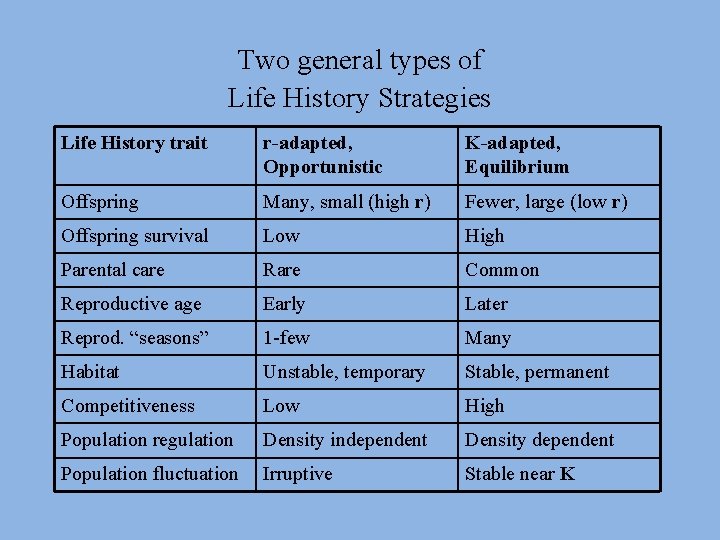
Two general types of Life History Strategies Life History trait r-adapted, Opportunistic K-adapted, Equilibrium Offspring Many, small (high r) Fewer, large (low r) Offspring survival Low High Parental care Rare Common Reproductive age Early Later Reprod. “seasons” 1 -few Many Habitat Unstable, temporary Stable, permanent Competitiveness Low High Population regulation Density independent Density dependent Population fluctuation Irruptive Stable near K
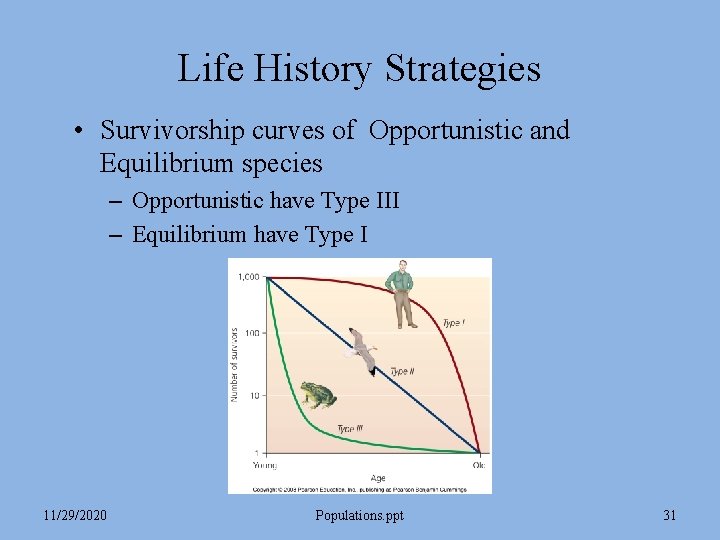
Life History Strategies • Survivorship curves of Opportunistic and Equilibrium species – Opportunistic have Type III – Equilibrium have Type I 11/29/2020 Populations. ppt 31
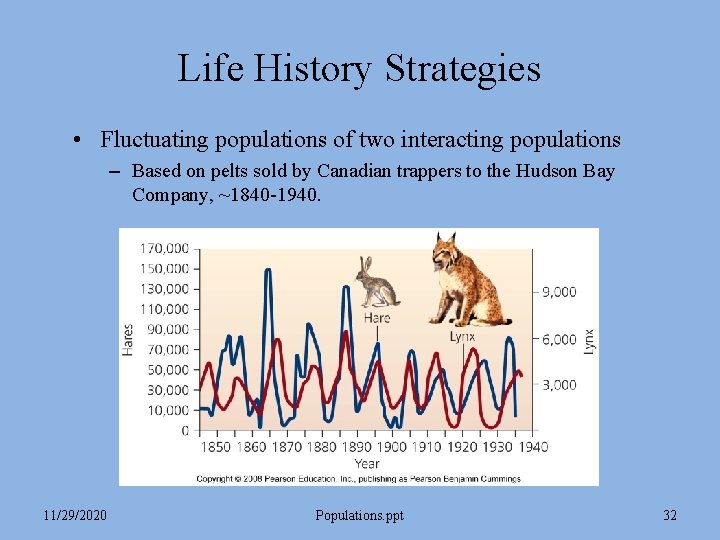
Life History Strategies • Fluctuating populations of two interacting populations – Based on pelts sold by Canadian trappers to the Hudson Bay Company, ~1840 -1940. 11/29/2020 Populations. ppt 32
Extend/Evaluate • Population Growth Activity Part A. Human Population Growth and analysis questions 1 -9. – Graph the data – Answer the analysis questions 1 -9 that follow. 11/29/2020 Populations. ppt 33