
Environmental Science Do Now 10 17 17 Do



- Slides: 26
Environmental Science Do Now 10 -17 -17 Do Now: Take your Do Now sheet out, your notes on climate to answer each question. 1) What is the difference between weather and climate? 2) What are the 6 climate conditions that determine a location’s climate? 3) Why does the Earth have 4 seasons? 4) Convection cells have an impact on a location’s ___________.
Environmental Science Do Now 10 -17 -17 Key Do Now: Take your Do Now sheet out, your notes on climate to answer each question. 1) What is the difference between weather and climate? Weather is a location’s day-to-day atmospheric conditions; climate is a locations average weather over recorded time. 2) What are the 6 climate conditions that determine a location’s climate? Latitude, proximity to water, proximity to mountains, altitude, currents and prevailing winds are the 6 climate conditions that determine a location’s climate. 3) Why does the Earth have 4 seasons? We have 4 seasons because the Earth is on a 23. 5 degree tilt. 4) Convection cells have an impact on a location’s precipitation
Reminders • Thurs. , 10/19 and Fri. , 10/20/17 – School is closed for Teacher Professional Development. • Homecoming/Spirit Week – 10/23 through 10/28/17 – Pep Rally – Football Game – Dance • 1 st Quarter ends on Thursday, November 9, 2017 (15 school days)
Homework - Copy • Compare and contrast the climatograms for the tropical rainforest, tundra and desert. How are they similar and how are they different? • To be collected TODAY: TODAY Use today’s notes to explain how wind patterns and latitudes determine the types of climates found throughout the world.
Objective • Students will know the meaning of climate, the factors that influence the Earth’s climates and the prevailing climates of each major type of biome by taking notes, watching a You. Tube video and analyzing climatograms. • Skill Maintenance: Students will review the major climate, plant life and animal life in terrestrial and aquatic biomes by playing team Kahoot. • Mastery Levels: – Analysis of climatograms of the major biomes (6/8 or better). – Baltimore Climatogram (3/4 or better) – Biomes Review Kahoot (15/20 or better)
Vocabulary Words • • Monsoon Climate Precipitation Temperature Climatogram Latitude Altitude/Elevation Currents • Equator • Convection • Orographic Precipitation • Leeward side • Arid • Prevailing • Westerlies
Engage • Students will watch a You. Tube video called “Climogram” • Source: https: //www. youtube. com/watch? v=PKx. Uq -O_DUM
Explore • Students will read the article on the “Global Climate Change”. • Source: https: //www. youtube. c om/watch? v=PKx. Uq. O_DUM • Students will practice analyzing climatograms of the major biomes – Precipitation per month – Temperature per month – Average precipitation per year
Explore Students will practice analyzing climatograms of the major biomes’ • Which climatogram has the most consistent temperature throughout the year? • Which climatogram represents the driest biome? • When is the tropical savanna the wettest? • When is the Chaparral the warmest? • What is the average amount of precipitation per year for the temperate grassland biome in Wichita, Kansas? • What is the average temperature in the temperate deciduous forest biome in Stuttgart, Germany? • What is the average temperature in the tundra biome in Reykjavik, Iceland? • What is the average amount of precipitation per year for the Taiga biome in Edmonton, Canada?
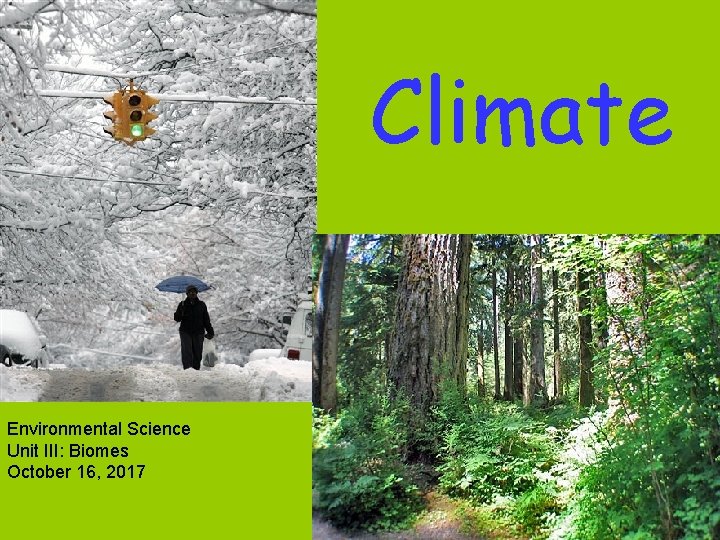
Climate Environmental Science Unit III: Biomes October 16, 2017
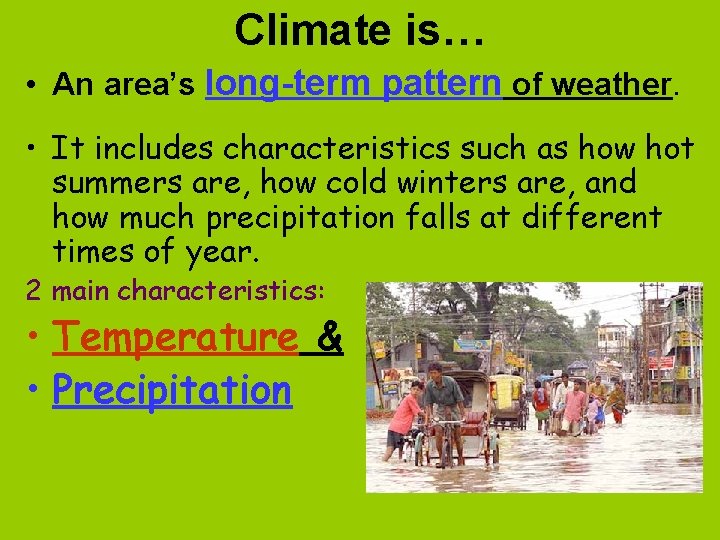
Climate is… • An area’s long-term pattern of weather. • It includes characteristics such as how hot summers are, how cold winters are, and how much precipitation falls at different times of year. 2 main characteristics: • Temperature & • Precipitation
Climate Controls • Climate depends on a set of conditions called climate controls. These include: 1. Latitude: how much solar radiation a location receives. 2. Proximity to water 3. Altitude/Elevation 4. Proximity to mountains 5. Ocean currents 6. Prevailing Winds
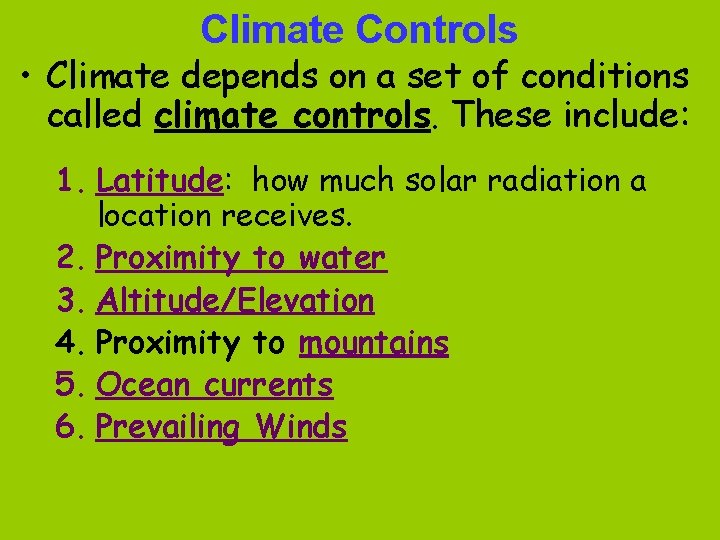
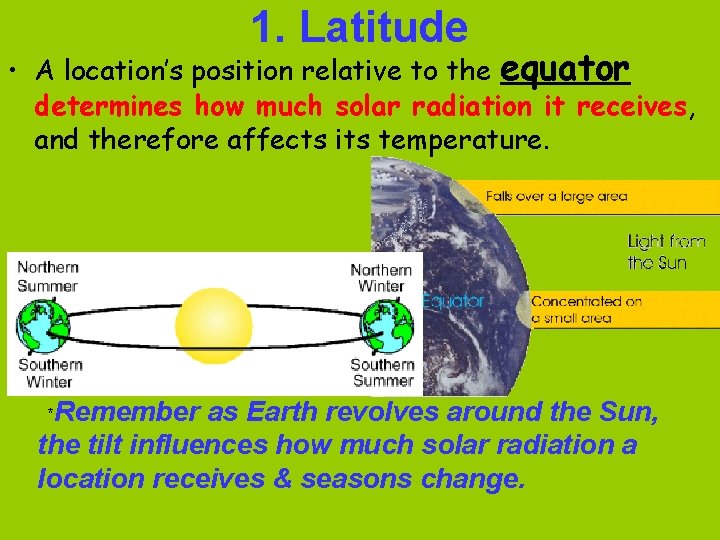
1. Latitude • A location’s position relative to the equator determines how much solar radiation it receives, and therefore affects its temperature. *Remember as Earth revolves around the Sun, the tilt influences how much solar radiation a location receives & seasons change.
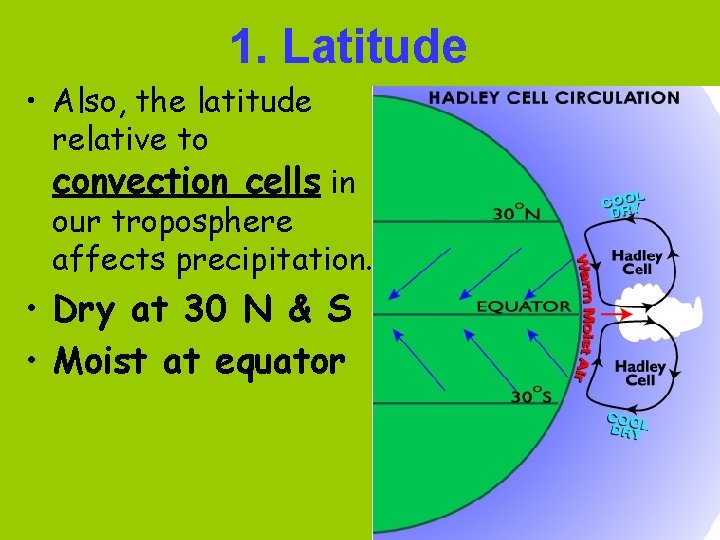
1. Latitude • Also, the latitude relative to convection cells in our troposphere affects precipitation. • Dry at 30 N & S • Moist at equator
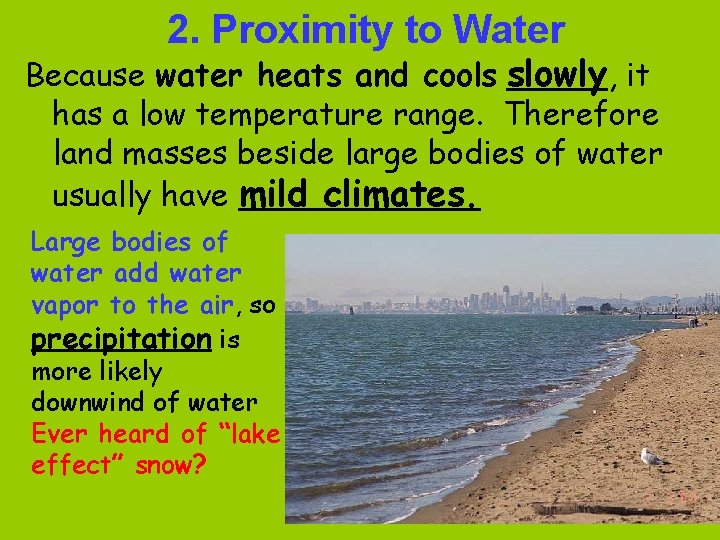
2. Proximity to Water Because water heats and cools slowly, it has a low temperature range. Therefore land masses beside large bodies of water usually have mild climates. Large bodies of water add water vapor to the air, so precipitation is more likely downwind of water Ever heard of “lake effect” snow?
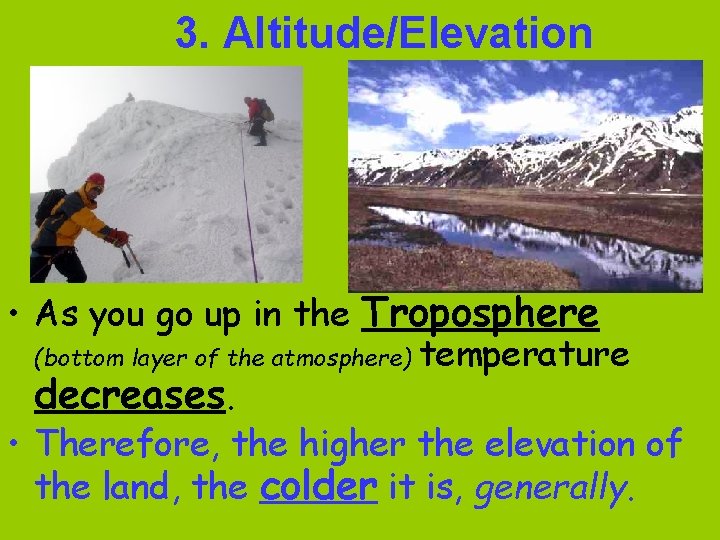
3. Altitude/Elevation • As you go up in the Troposphere (bottom layer of the atmosphere) temperature decreases. • Therefore, the higher the elevation of the land, the colder it is, generally.
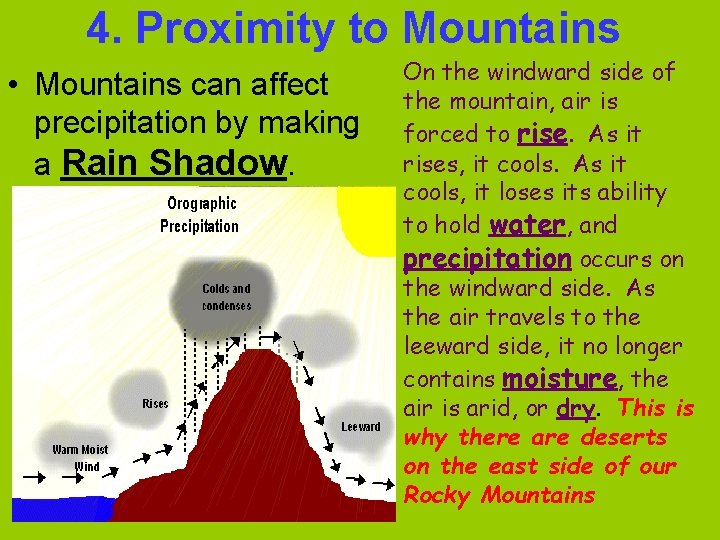
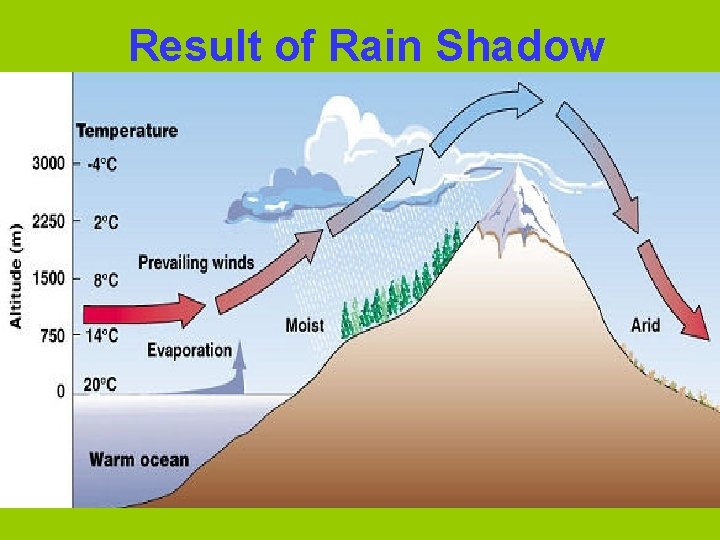
4. Proximity to Mountains • Mountains can affect precipitation by making a Rain Shadow. On the windward side of the mountain, air is forced to rise. As it rises, it cools. As it cools, it loses its ability to hold water, and precipitation occurs on the windward side. As the air travels to the leeward side, it no longer contains moisture, the air is arid, or dry. This is why there are deserts on the east side of our Rocky Mountains
Result of Rain Shadow
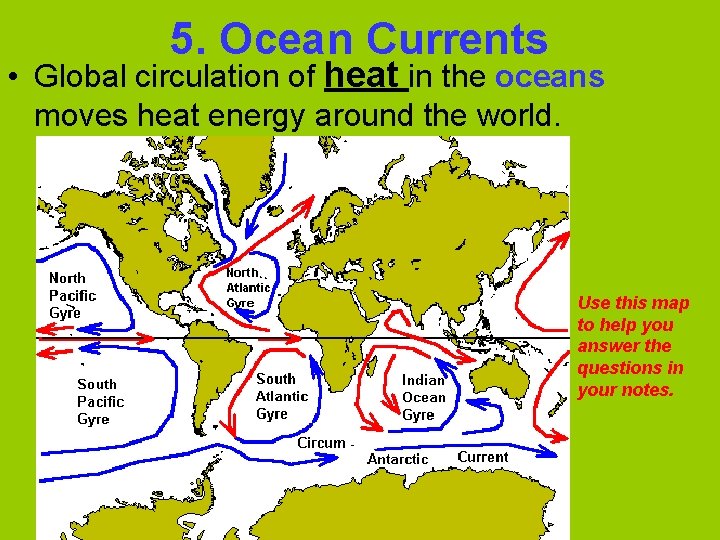
5. Ocean Currents • Global circulation of heat in the oceans moves heat energy around the world. Use this map to help you answer the questions in your notes.
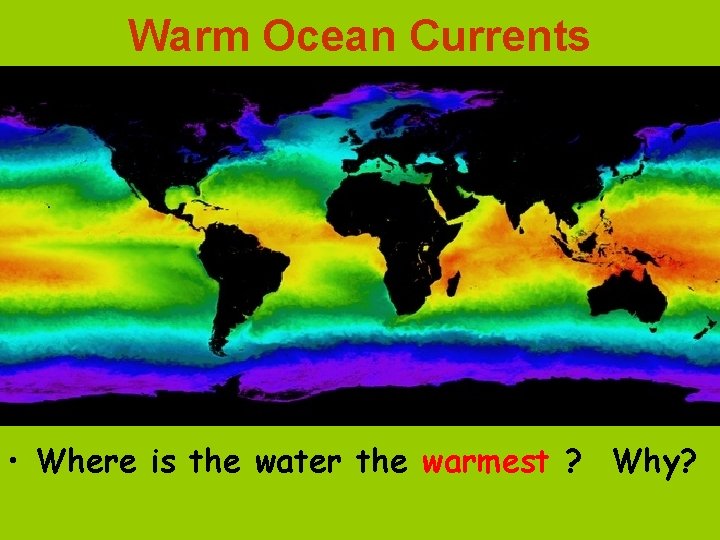
Warm Ocean Currents • Where is the water the warmest ? Why?
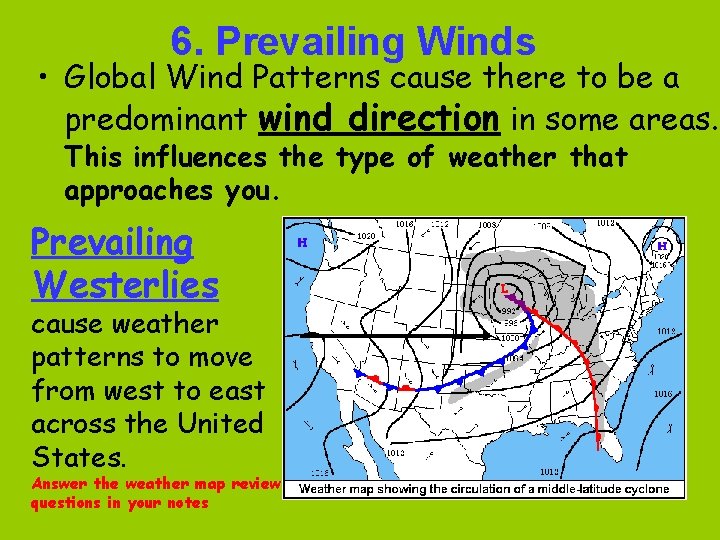
6. Prevailing Winds • Global Wind Patterns cause there to be a predominant wind direction in some areas. This influences the type of weather that approaches you. Prevailing Westerlies cause weather patterns to move from west to east across the United States. Answer the weather map review questions in your notes
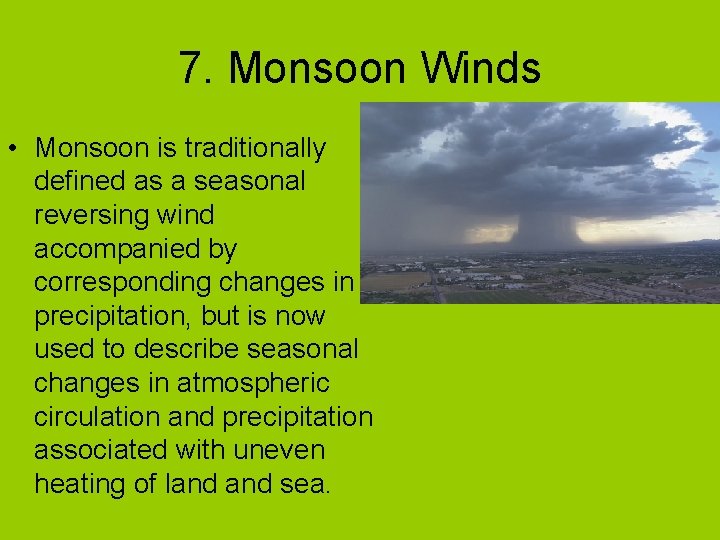
7. Monsoon Winds • Monsoon is traditionally defined as a seasonal reversing wind accompanied by corresponding changes in precipitation, but is now used to describe seasonal changes in atmospheric circulation and precipitation associated with uneven heating of land sea.
Questions 1. Which factors affect our climate in Baltimore? 2. England has the same latitude as Canada. The climate of England is similar to our climate here. Why isn’t it cold and snowy like Canada? 3. Why is Nevada a desert? 4. Why does Buffalo, NY get so much snow?
Questions • Which factors affect our climate in Baltimore? Latitude, Altitude, Proximity to mountains, Prevailing winds • England has the same latitude as Canada. The climate of England is similar to our climate here. Why isn’t it cold and snowy like Canada? Proximity to water (Ocean), and prevailing winds (Westerlies) • Why is Nevada a desert? Due to the Rain Shadow, and it’s 30º North latitude • Why does Buffalo, NY get so much snow? Proximity to water (Evaporation from the Great Lakes), and prevailing Westerlies, and Altitude
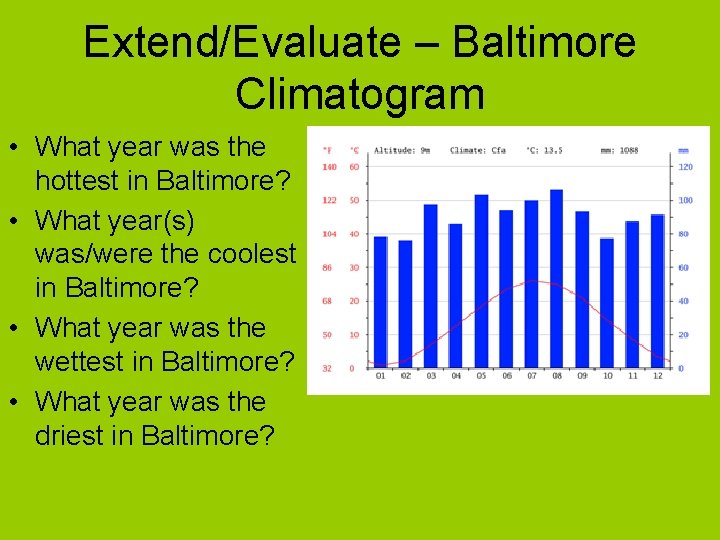
Extend/Evaluate – Baltimore Climatogram • What year was the hottest in Baltimore? • What year(s) was/were the coolest in Baltimore? • What year was the wettest in Baltimore? • What year was the driest in Baltimore?
Biomes Team Kahoot EVALUATE/SKILL MAINTENANCE