
Environmental Science Chapter 15 Food and Agriculture 15



- Slides: 61
Environmental Science: Chapter 15 Food and Agriculture
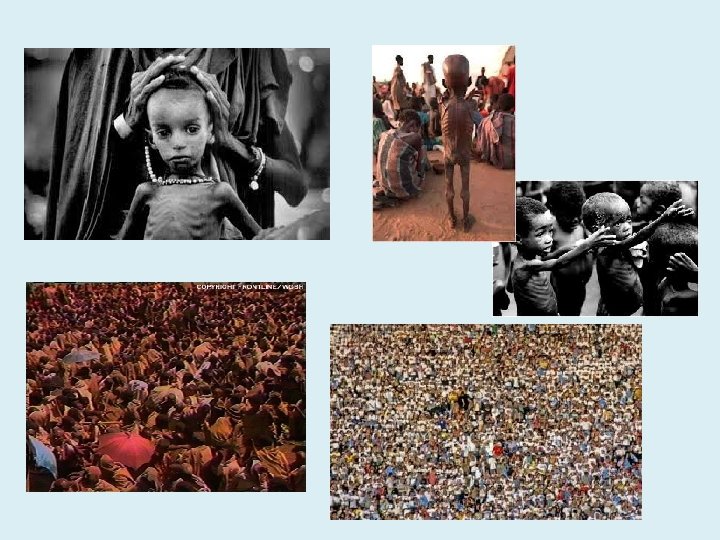
15. 1 Feeding the World • 1985 the lack of rain, loss of soil, and war caused the crops to fail in Ethiopia • Famine is widespread starvation caused by shortage of food. • By 2050 farmers will need to feed about 9 million people (50% more than today)
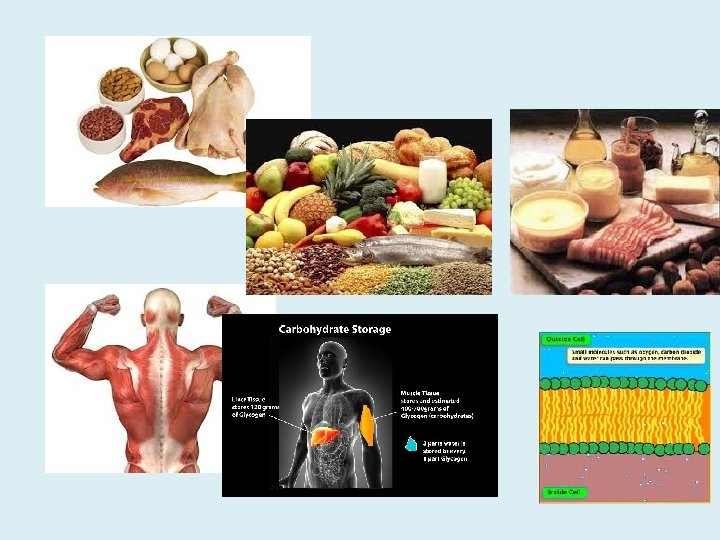
A. Humans and Nutrition • Humans use food as a source of energy and as source of materials for building and maintaining body tissues. • Energy in food is expressed in Calories (Cal) • Major nutrients we get from food are carbohydrates, proteins, and lipids • Malnutrition is a condition that occurs when people do not consume enough Calories or don’t eat a sufficient variety of foods. • Example: protein-energy malnutrition is when humans don’t consume enough essential amino acids, vitamins, and minerals.
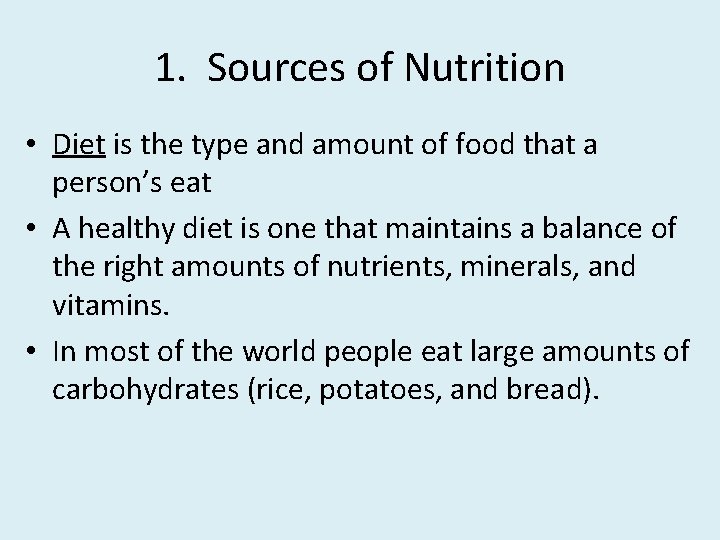
1. Sources of Nutrition • Diet is the type and amount of food that a person’s eat • A healthy diet is one that maintains a balance of the right amounts of nutrients, minerals, and vitamins. • In most of the world people eat large amounts of carbohydrates (rice, potatoes, and bread).
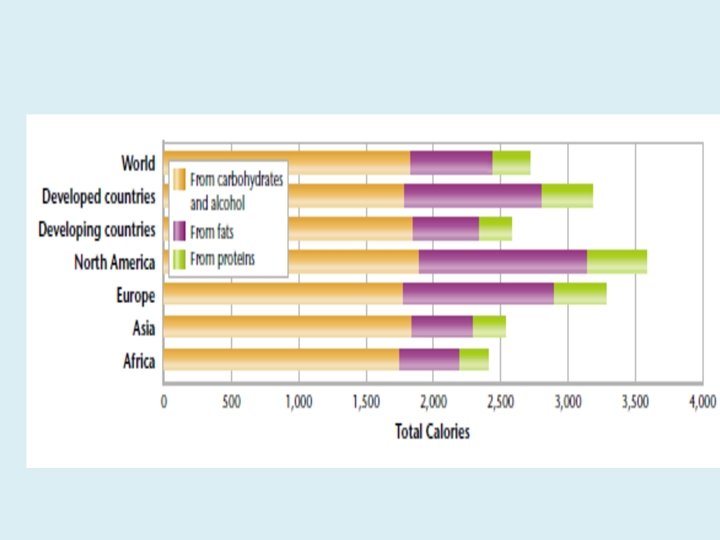
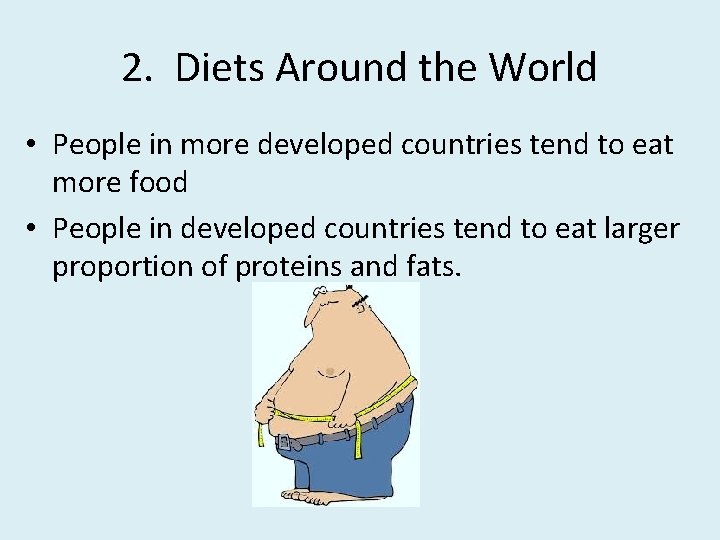
2. Diets Around the World • People in more developed countries tend to eat more food • People in developed countries tend to eat larger proportion of proteins and fats.
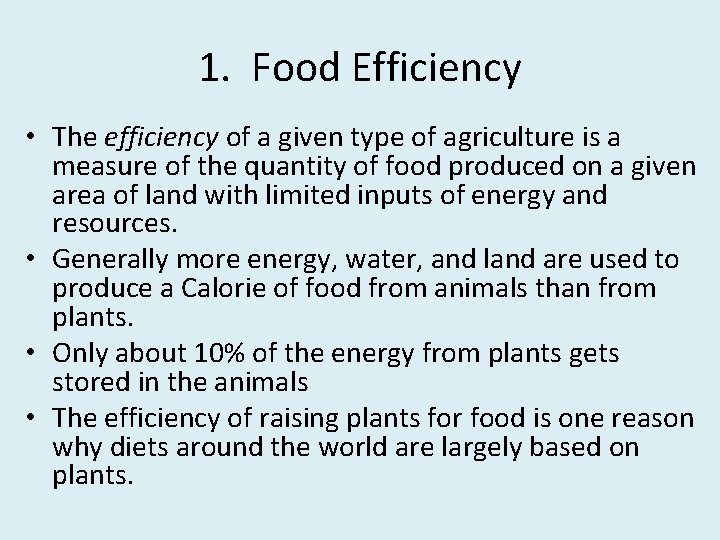
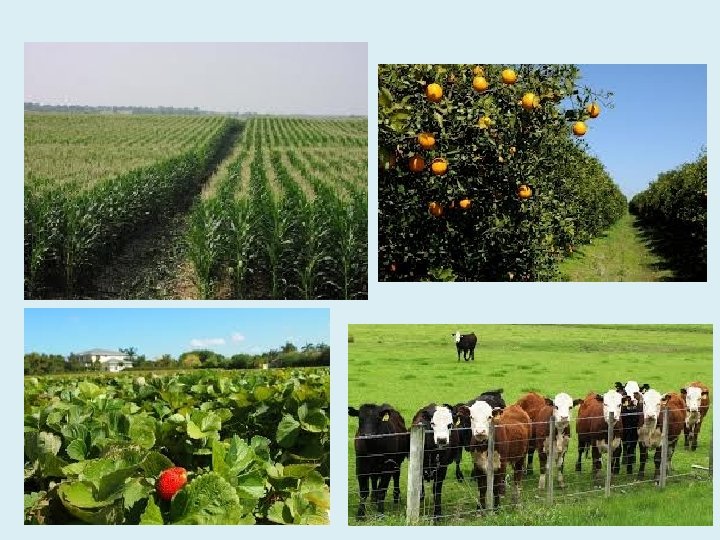
1. Food Efficiency • The efficiency of a given type of agriculture is a measure of the quantity of food produced on a given area of land with limited inputs of energy and resources. • Generally more energy, water, and land are used to produce a Calorie of food from animals than from plants. • Only about 10% of the energy from plants gets stored in the animals • The efficiency of raising plants for food is one reason why diets around the world are largely based on plants.
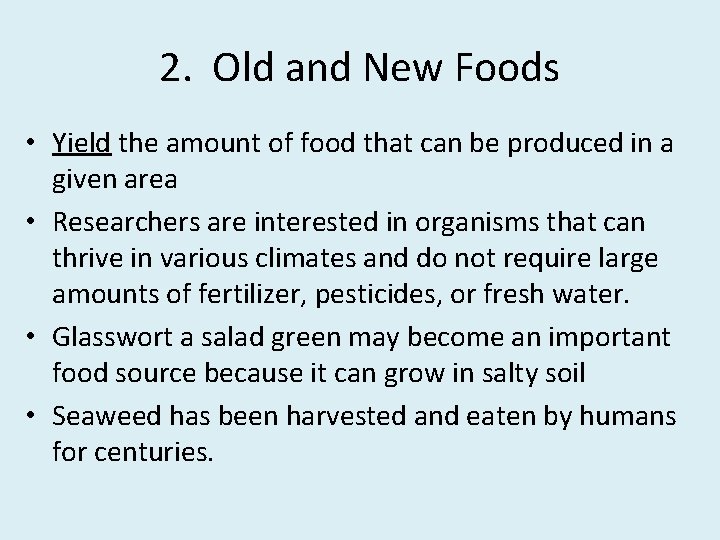
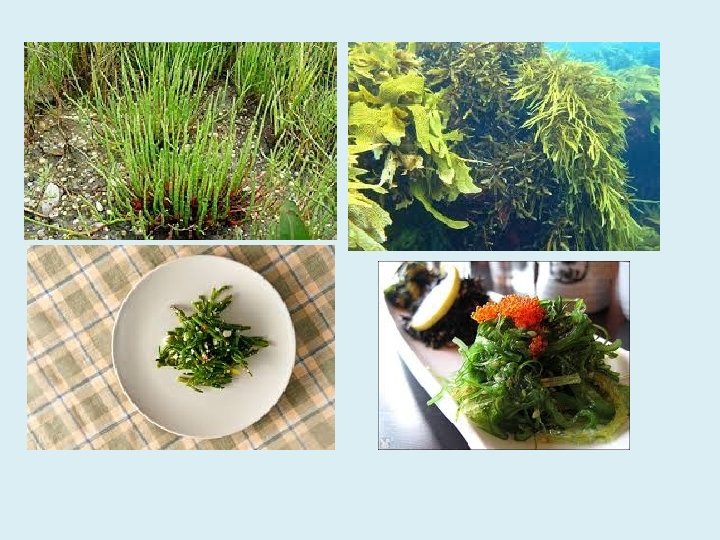
2. Old and New Foods • Yield the amount of food that can be produced in a given area • Researchers are interested in organisms that can thrive in various climates and do not require large amounts of fertilizer, pesticides, or fresh water. • Glasswort a salad green may become an important food source because it can grow in salty soil • Seaweed has been harvested and eaten by humans for centuries.
C. World Food Problems • Many consume about a third of our calories from animals, not grain 1. Poverty • Malnutrition today is almost entirely a result of poverty • The world’s hungry are nearly all farm workers and subsistence farmers (farmers who grow only enough food for local use) • Most of the world hungry live in extreme poverty (income of less than $1. 00/day) • The world’s hungry live mainly in Africa, Asia and mountains of South America.
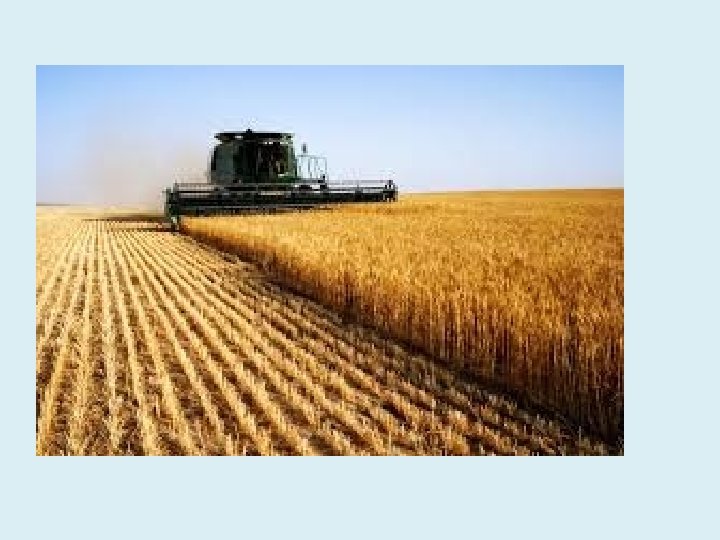
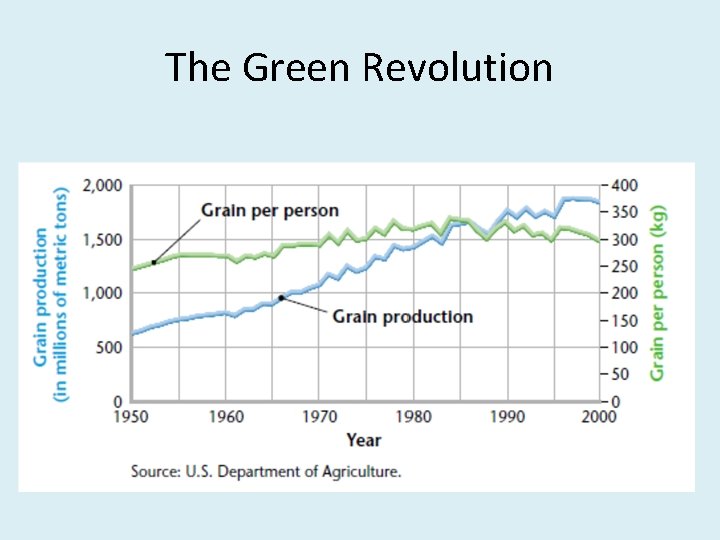
2. More Income and More Food • The number of people living in extreme poverty has declined by ½ billion since 1980. • Grain production has increased but it has not grown as fast as the world’s population. • Increasing the productivity of subsistence farmers will go a long way in producing more grain and abolishing poverty.
D. The Green Revolution • The Green Revolution (1950 -1970) is when Mexico increased wheat production eight-fold and India doubled its production of rice without increasing the area of farmland used. • New varieties produce large yields if they are supplied with enough water, fertilizer and pesticides. • Most of the increase in production came from large farms • Research today is devoted to developing plants that produce high yields on poor soil using little water. • Distributing the seeds and technology to scattered rural farms remains a problem
The Green Revolution
Stop here and complete the active reading worksheet for 15. 1
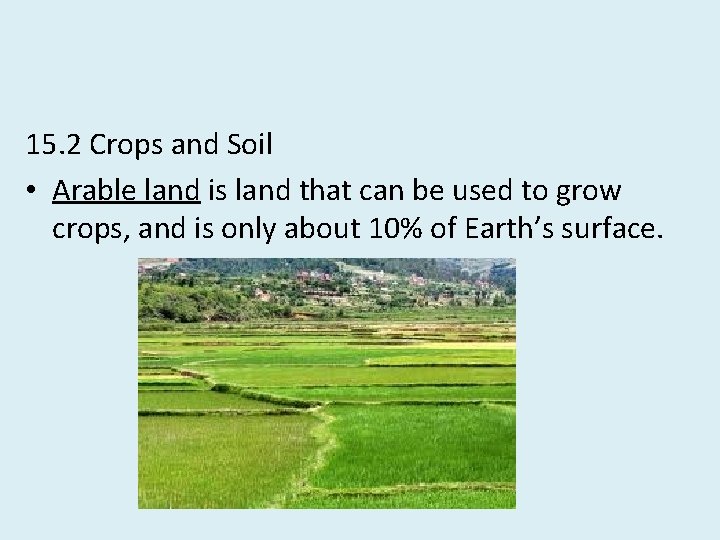
15. 2 Crops and Soil • Arable land is land that can be used to grow crops, and is only about 10% of Earth’s surface.
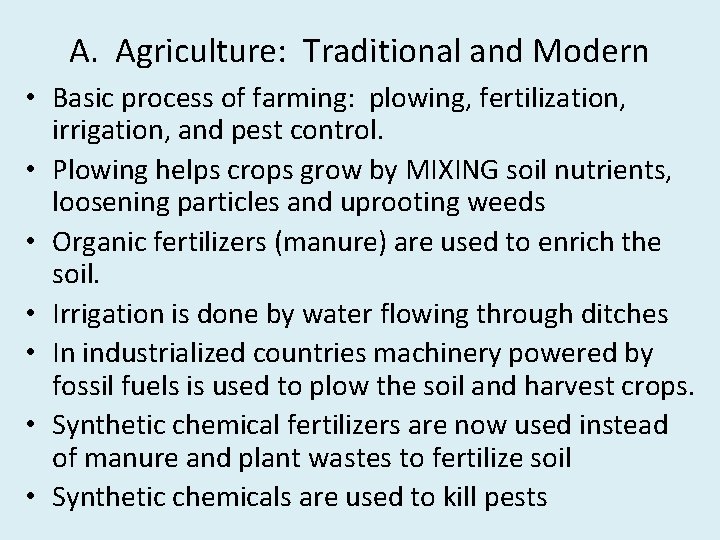
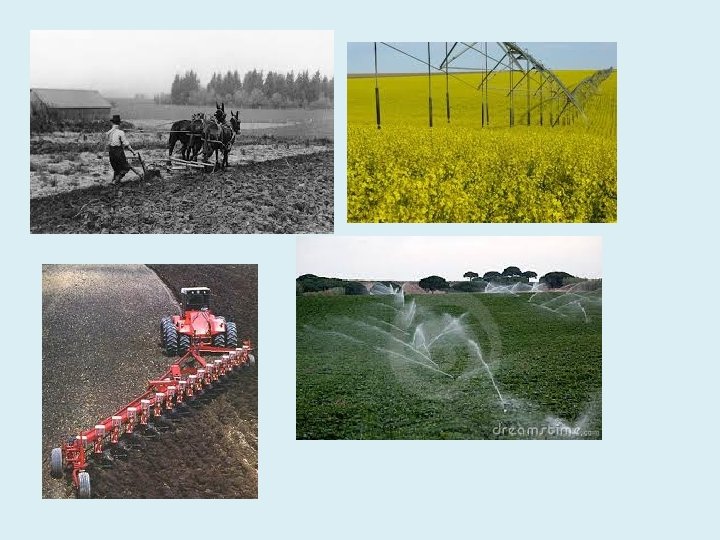
A. Agriculture: Traditional and Modern • Basic process of farming: plowing, fertilization, irrigation, and pest control. • Plowing helps crops grow by MIXING soil nutrients, loosening particles and uprooting weeds • Organic fertilizers (manure) are used to enrich the soil. • Irrigation is done by water flowing through ditches • In industrialized countries machinery powered by fossil fuels is used to plow the soil and harvest crops. • Synthetic chemical fertilizers are now used instead of manure and plant wastes to fertilize soil • Synthetic chemicals are used to kill pests
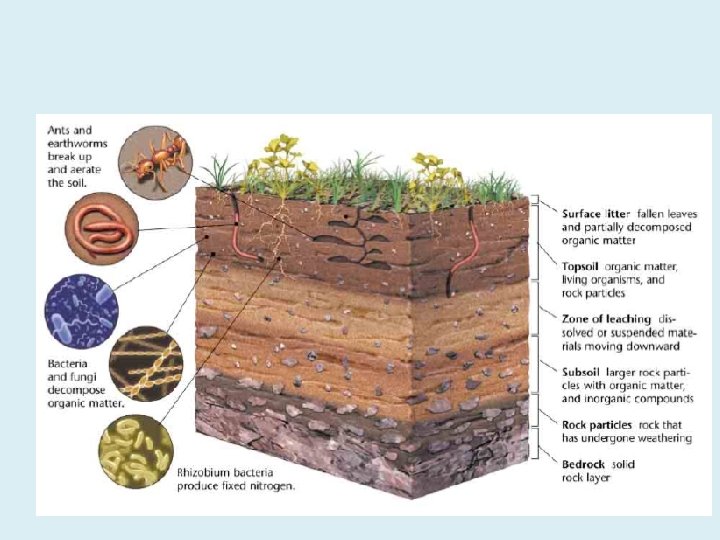
B. Fertile Soil: The Living Earth • Fertile soil is soil that can support the growth of healthy plants. • Plant roots grow in topsoil (the surface layer of soil) which is usually richer in organic matter. • Fertile topsoil is composed of living organisms, rock particles, water, air and organic matter. • Most soil forms when rock is broken down into smaller and smaller fragments.
• Chemical weathering happens when the minerals in the rock react chemically with substances to form new materials • Rock particles supply minerals nutrients to the soil • Fungi and bacteria decompose dead plants and organic debris and add more nutrients to the soil • Earthworms, insects, and small animals help plants grow by breaking up the soil and allowing air and water into it.
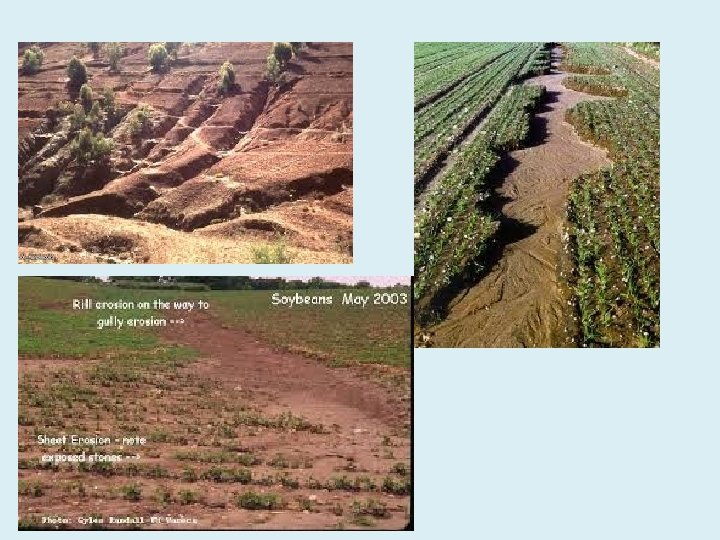
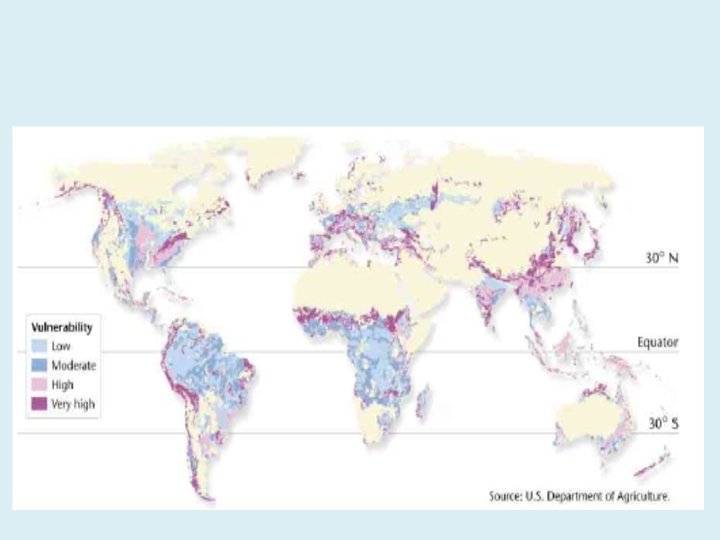
C. Soil Erosion: A Global Problem • Erosion is the movement of rock and soil by wind and water. • Eroded soil washes in to nearby rivers or is blown away in clouds of dust. • ½ of original topsoil in US has been lost to erosion • Most farming methods increase the rate of soil erosion
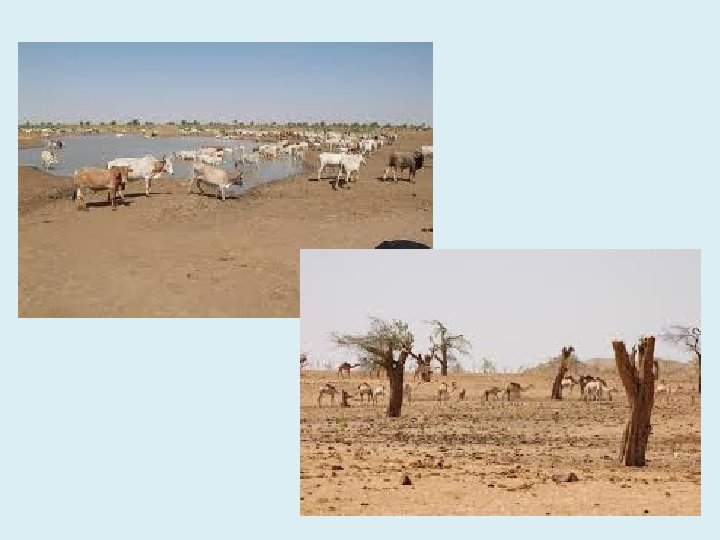
D. Land degradation • Land Degradation happens when human activity or natural processes damage the land so that it can no longer support the local ecosystem. • Desertification is the process by which land in arid or semiarid areas becomes more desert like. • Desertification has happened in the Sahel region of northern Africa. • The population in the region has grown and the land is being farmed, grazed and deforested faster than it can regenerate. • Because of overgrazing the land has few plants to hold the topsoil in place and large areas have become desert.
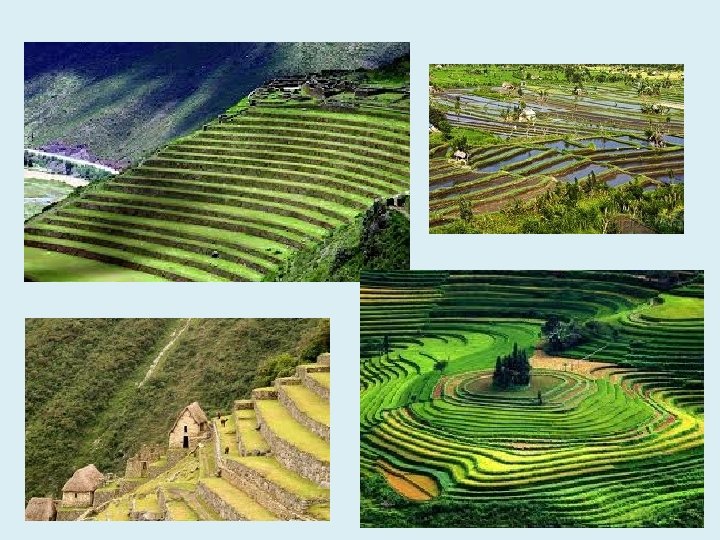
E. Soil Conservation • Soil usually erodes downhill and may soil conservation methods are designed to prevent downhill erosion. • Example: building soil-retaining terraces, or contour plowing (plowing across the slope of a hill) • Drip irrigation ca conserve soil • No-till farming a crop is harvested without turning over the soil. Seeds of next crop are planted amount the remains of the previous crop
F. Enriching the Soil • Soil is enriched by adding organic matter (manure or leaves) • As the organic matter decomposes it adds nutrients to the soil • Inorganic fertilizers can be used (they contain nitrogen, phosphorus, and potassium) • Compost is partly decomposed organic material. • Compost can be added to soil to enrich it.
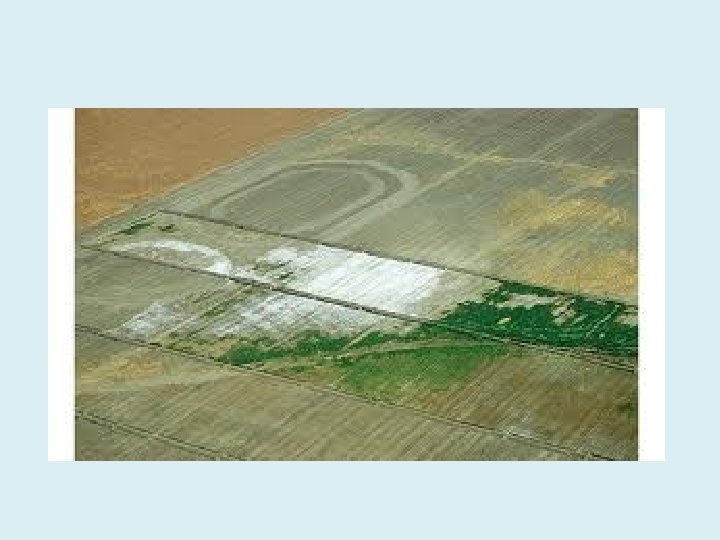
G. Salinization • Salinization is the accumulation of salts in the soil • Salinization is a problem in places with low rainfall and naturally salty soil • Eventually soil may become so salty that plants cannot grow • Salinization can be slowed if irrigation canals are lined or if soil is watered heavily
H. Pest control • Insects eat about 13% of all crops in North America • Worldwide pests destroy 33% of world’s potential food harvest • A pest is any organism that occurs where it is not wanted and in large enough numbers to cause economic damage. • Wild plants have more protection from pests that crop plants
I. Pesticides • Pesticides are chemicals used to kill insects, weeds, or other crop pests. • Pesticide were so effective that farmer relied on them to protect their crops form pests • Pesticide can harm beneficial pants, insects, wildlife, and people
1. Pesticide Resistance • Spraying crops with large amounts of pesticides cause pest to evolve resistance. • Resistance is the ability to survive exposure to a particular pesticide. • 500 insects have developed resistance to pesticide since 1940
2. Human Health Concerns • Pesticides are designed to kill organisms and may be dangerous to humans • Cancer rates among children in areas where large amounts of pesticide are used are higher than the national average • People who apply pesticide need to follow safety guidelines to protect their selves
3. Pollution and Persistence • Persistent pesticides do not break down rapidly into harmless chemicals when they enter the environment. • They can accumulate in the soil and water • In US many have been banned, example DDT
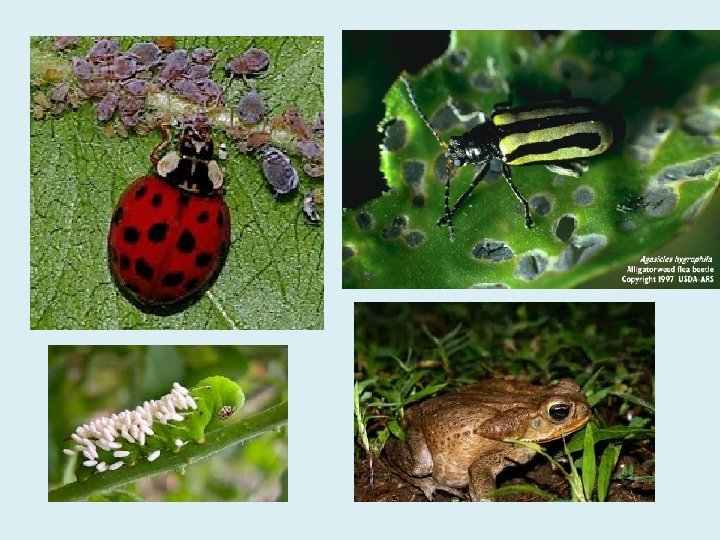
J. Biological Pest Control • Biological pest control is the use of living organisms to control pests. • Every pest has natural enemies and these enemies can be used for pest control • Example: using the American beetle to control cactus growth in India
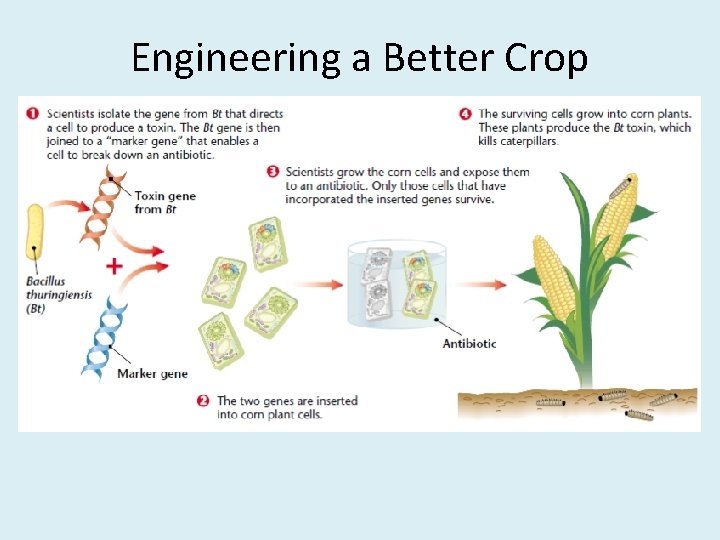
1. Pathogens • Pathogens are organisms that cause disease and can be used to control pests. • Bt (bacillus thuringienis)is a bacterium used to kill the caterpillars of moths and butterflies 2. Plant Defenses • Plants have been bred to have defenses against pests. • Examples of plant defenses include chemical compounds that repel pests and tougher skin (a physical barrier)
3. Chemicals from Plants • The use of a plants’ defensive chemicals as pest control • Example: chemicals found in chrysanthemum plants are sold as home pesticides • Are biodegradable and less harmful to humans and pets
4. Disrupting Insect Breeding • Growth regulator is a chemical that interferes with some stage of a pest’s life cycle. • Flee pills use this to keep flea’s eggs from developing into adult fleas • Pheromones chemicals produced by one organism that affect the behavior of another organism. • Farmers can use pheromones to interfere with the mating of moths
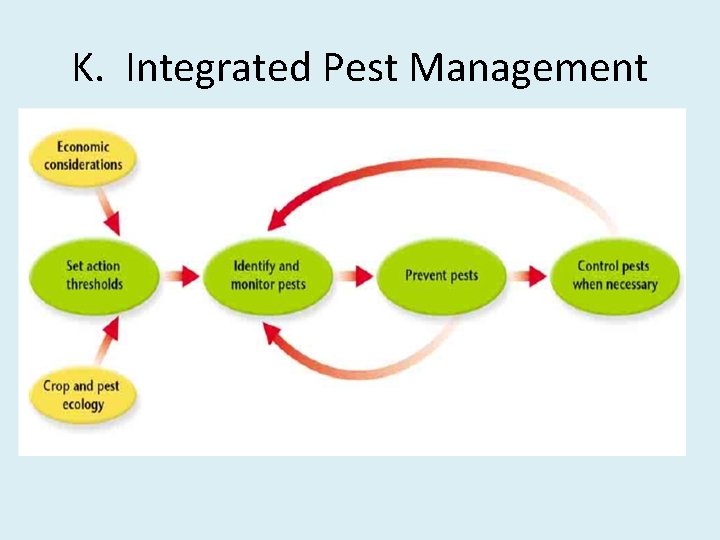
K. Integrated Pest Management • Integrated pest management is a modern method of controlling pests on crops • A different management program is developed for each crops • When pest damage is found a program to control the pest is created
K. Integrated Pest Management
L. Engineering a Better Crop • Farmers select the plants that have the tastiest produce and the least pest damage. • These seeds are saved and used for planting the next crops • Genetic engineering is where genetic material in living cells is modified for medical or industrial use. • Scientists use genetic engineering to transfer desirable traits • Genetically modified plants are the plants that result from genetic engineering
Engineering a Better Crop
1. Implications of Genetic Engineering • In US we eat and use genetically engineered agricultural products every day. • Many products have not been fully tested for their environmental impacts M. Sustainable agriculture • Sustainable agriculture is farming that conserves natural resources and helps keep the land productive indefinitely. • This minimized the use of energy, water, pesticides, and fertilizers.
Stop here and complete the 15. 2 active reading worksheet
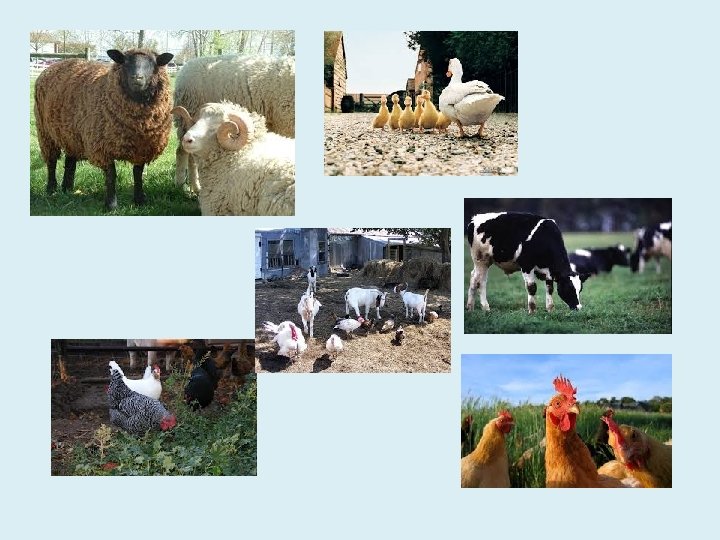
15. 3 Animals and Agriculture • Total energy needed to grow plants for food is much less than the energy needed to raise animals as food. • Most animal proteins contain more essential amino acids than proteins found and plants. • Domesticated means that animals are bred and managed for human use. • Include chicken, sheep cattle, honey bees, silk worms, fish and shellfish.
A. Food from Water 1. Overharvesting • Overharvesting is catching or removing from a population more organisms than the population can replace. • Many governments have created no-fishing zones so fish populations can recover
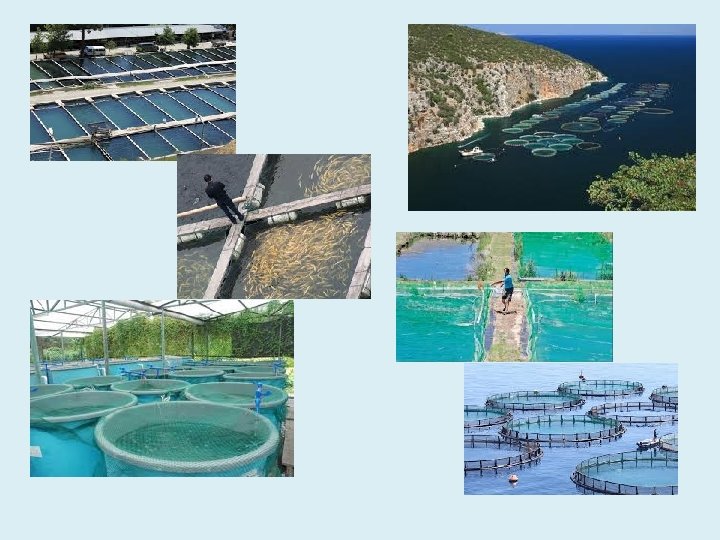
2. Aquaculture • Fish and other aquatic organisms provide up to 20% of animal protein • Aquaculture is the raising of aquatic organisms for human use or consumption • Most common method is known as a fish farms, fish grow to maturity in the ponds and then are harvested. • Another method is ranch where fish are raised until they reach a certain age. • 23% of seafood now comes from aquaculture • Can cause some problems because used of water depletes local water supplies • And large amount of waste can be a source of pollution.
B. Livestock • Livestock are domesticated animals that are raised to be used on a farm or ran cot to be sold for a profit. • Large livestock operations produce most of the meat that is consumed in developed countries • In developing countries live stock are used for leather, wool, eggs, meat and used to pull cars and plows.
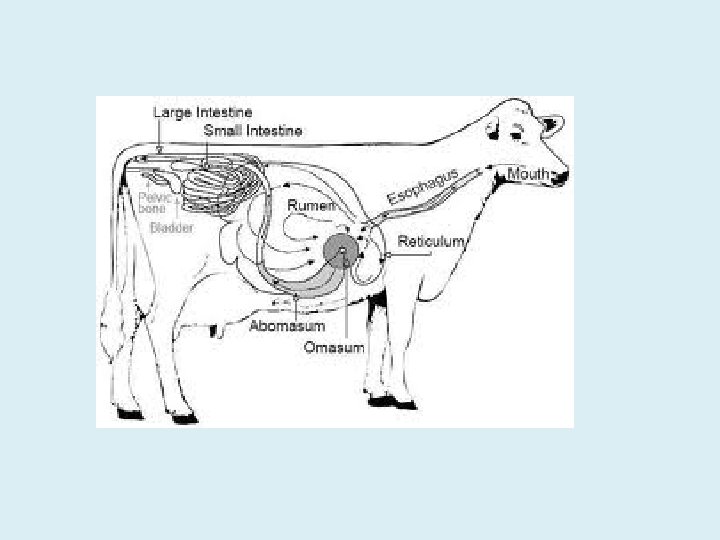
1. Ruminants • Ruminants are cud-chewing mammals that have three or four chambered stomachs (cattle, sheep and goats). • have microorganisms in their intestines to help digest plant materials that humans cannot digest. • When humans eat ruminants we are using them to convert plant material (grass stems and shrubs) into food that we can digest.
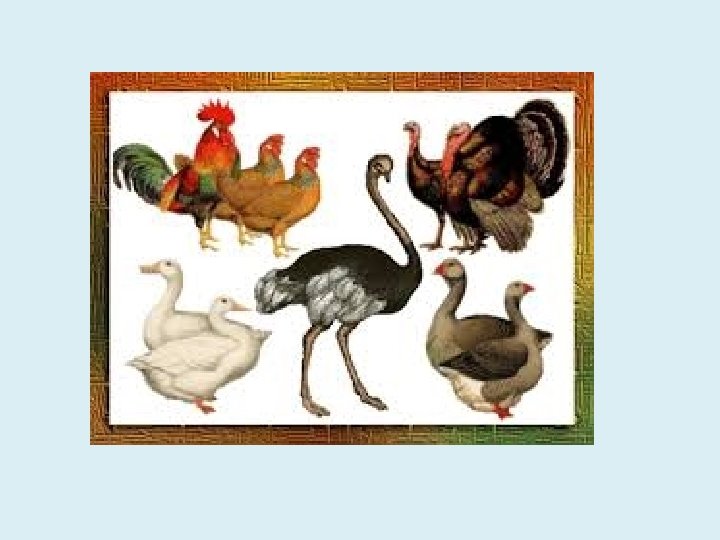
2. Poultry • Since 1961 the population of chickens worldwide has increased by 320%. • Poultry are domesticated birds raised for meats and eggs. • In developed contrived chickens and turkeys are usually raised in factory farms. • Ducks are important in china and produce ducks, silk, rice, and fish
Stop here and complete 15. 3 active reading worksheet.