
Environmental Sanitation COMPONENTS OF ENVIRNOMENTAL SANITATION l l
![WATER SANITATION -CHEMICAL QUALITY CHEMICAL Arsenic Barium Cadmium Chromium Cyanide Lead Selenium Silver CONCENTRATION[mg/L]](https://slidetodoc.com/presentation_image/280d6de5301e19538f3f5fe7b5f61c5a/image-6.jpg "WATER SANITATION -CHEMICAL QUALITY CHEMICAL Arsenic Barium Cadmium Chromium Cyanide Lead Selenium Silver CONCENTRATION[mg/L]")
![VERMIN CONTROL [RODENT AND INSECTS] l Types – Physical or mechanical – Chemical –](https://slidetodoc.com/presentation_image/280d6de5301e19538f3f5fe7b5f61c5a/image-24.jpg "VERMIN CONTROL [RODENT AND INSECTS] l Types – Physical or mechanical – Chemical –")
![HOUSING SANITATION l Characteristics of an acceptable house…[cont]… – Noise: should not be more](https://slidetodoc.com/presentation_image/280d6de5301e19538f3f5fe7b5f61c5a/image-26.jpg "HOUSING SANITATION l Characteristics of an acceptable house…[cont]… – Noise: should not be more")
- Slides: 26
Environmental Sanitation
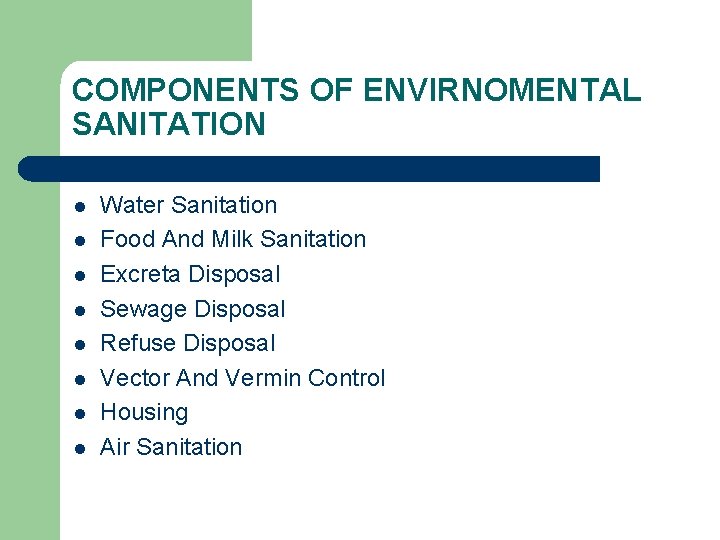
COMPONENTS OF ENVIRNOMENTAL SANITATION l l l l Water Sanitation Food And Milk Sanitation Excreta Disposal Sewage Disposal Refuse Disposal Vector And Vermin Control Housing Air Sanitation
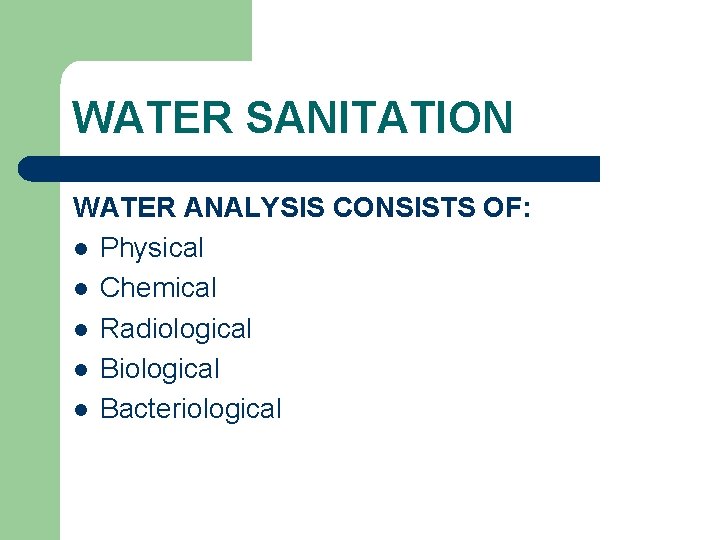
WATER SANITATION WATER ANALYSIS CONSISTS OF: l Physical l Chemical l Radiological l Bacteriological
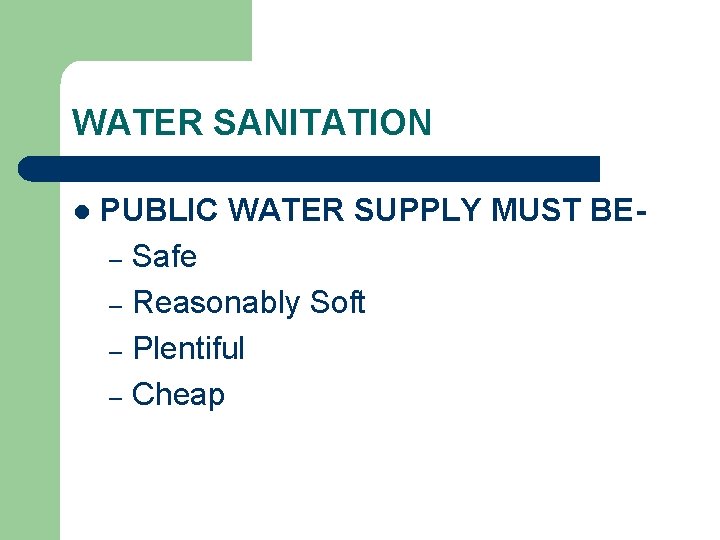
WATER SANITATION l PUBLIC WATER SUPPLY MUST BE– Safe – Reasonably Soft – Plentiful – Cheap
WATER SANITATION l HOUSEHOLD TREATMENT OF WATER – – – Boiling, i. e. , Beyond 2 minutes Chlorination- 1 -5 ppm Iodine treatment- 10 drops per gallon Filtration Aeration
WATER SANITATION -CHEMICAL QUALITY CHEMICAL Arsenic Barium Cadmium Chromium Cyanide Lead Selenium Silver CONCENTRATION[mg/L] 0. 2 1. 0 0. 01 0. 05
FOOD AND MILK SANITATION l The GOLDEN RULE of food sanitation is: “Keep it cold or hot, and keep it covered”
FOOD SANITATION l 3 ENEMIES OF FOOD STORAGE: – – – High temperature High humidity Contamination by strong odors
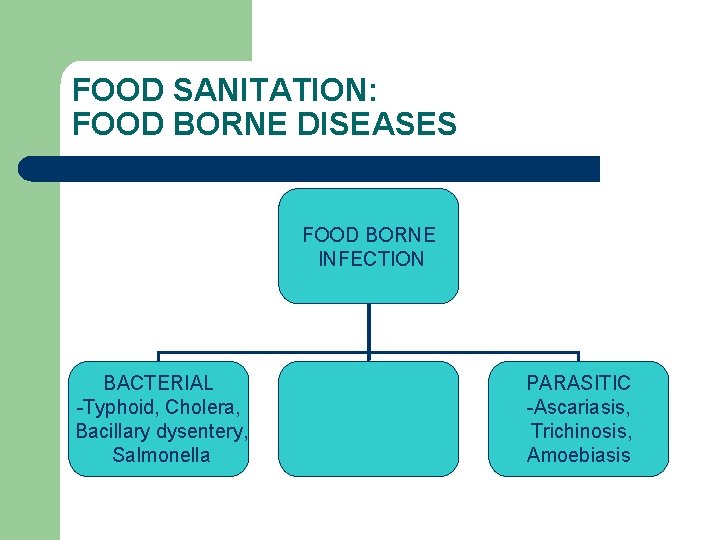
FOOD SANITATION: FOOD BORNE DISEASES FOOD BORNE INFECTION BACTERIAL -Typhoid, Cholera, Bacillary dysentery, Salmonella PARASITIC -Ascariasis, Trichinosis, Amoebiasis
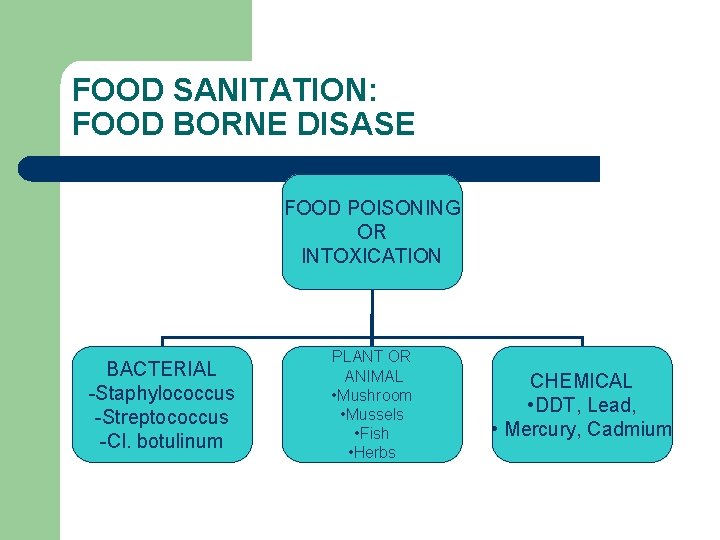
FOOD SANITATION: FOOD BORNE DISASE FOOD POISONING OR INTOXICATION BACTERIAL -Staphylococcus -Streptococcus -Cl. botulinum PLANT OR ANIMAL • Mushroom • Mussels • Fish • Herbs CHEMICAL • DDT, Lead, • Mercury, Cadmium
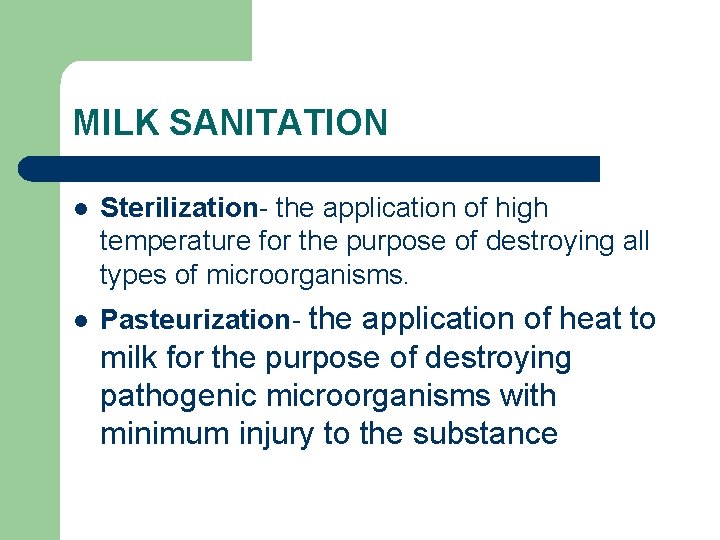
MILK SANITATION l Sterilization- the application of high temperature for the purpose of destroying all types of microorganisms. l Pasteurization- the application of heat to milk for the purpose of destroying pathogenic microorganisms with minimum injury to the substance
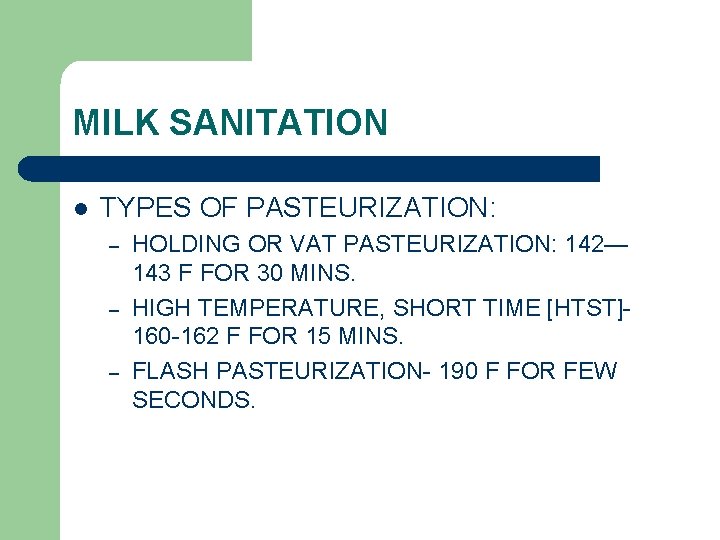
MILK SANITATION l TYPES OF PASTEURIZATION: – – – HOLDING OR VAT PASTEURIZATION: 142— 143 F FOR 30 MINS. HIGH TEMPERATURE, SHORT TIME [HTST]160 -162 F FOR 15 MINS. FLASH PASTEURIZATION- 190 F FOR FEW SECONDS.
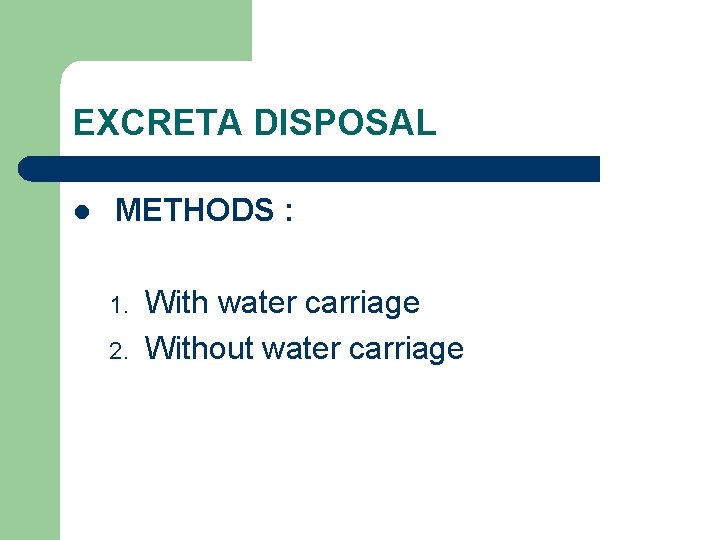
EXCRETA DISPOSAL l METHODS : 1. 2. With water carriage Without water carriage
REFUSE/WASTE DISPOSAL l Refuse is a general term applied to solid and semi solid waste materials other than human excreta
REFUSE DISPOSAL l Public Health Reasons For Proper Disposal Of Wastes – – Breeding Place For Insects And Rats Gives Out Foul Smell “Eye Sore” Fire Hazard
REFUSE DISPOSAL l Types of refuse – – Garbage: left-over vegetables, animal and fish material from kitchens and food establishments. Rubbish: waste material such as bottles, broken glass, tin cans, waste papers, discarded porcelainware, pieces of metal, wrapping papers etc.
REFUSE DISPOSAL l TYPE of refuse: . . con’t. . – ashes: left-over from burning of wood and coal. – dead animals/ carcasses – stable manure – street sweeping: dust, manure, leaves, cigarette butts, waste paper and other materials that are swept from the streets
REFUSE DISPOSAL l types of refuse. . con’t. . – night soil: human waste wrapped and thrown into sidewalks and streets – yard cuttings: leaves, branches, grass
REFUSE DISPOSAL l Characteristics of containers – Small enough to be easily carried – Sufficient in number – Provided with tight-fitting covers – Made of sturdy material – Steady – Placed in an accessible location
REFUSE DISPOSAL l COMMUNITY REFUSE DISPOSAL METHODS: – – – DUMPING ON LAND SANITARY LANDFILL COMPOSTING INCINERATION REDUCTION AND SALVAGE
REFUSE DISPOSAL l Refuse disposal methods for households – Burial – Burning – Feeding to animals – Composting – Grinding and disposal to sewer
REFUSE DISPOSAL REFUSE COLLECTION: 3. It is necessary to cover the refuse in the vehicles during transportation to final disposal sites to prevent flies, minimize odors or remove traveling “eye sores”. 4. It is important to have adequate and properly maintained collection carts, trucks and other vehicles to eliminate collection delays and complaints from residents. l
REFUSE DISPOSAL Refuse collection…con’t. . 5. The route to the final disposal should be as direct as possible from the point of origin. It should preferably not pass busy streets. 6. It is preferable to have collection done at night l
VERMIN CONTROL [RODENT AND INSECTS] l Types – Physical or mechanical – Chemical – Biological – Environmental – Educational
HOUSING SANITATION l Characteristics of an acceptable house – Adequate space: at least 50 sq. Ft. /Person for bedroom – Adequate lighting: at least 100 ft. Candles for reading – Adequate water supply: 15 -20 gallons per capita per day …. . Cont….
HOUSING SANITATION l Characteristics of an acceptable house…[cont]… – Noise: should not be more than 30 decibels – Adequate heat and ventilation – Equipped with sanitary toilet, food storage and proper refuse disposal