
Environmental Problems Their Causes and Sustainability What is
Environmental Problems, Their Causes and Sustainability
What is Environmental Science? Natural Sciences • Ecology • Biology • Chemistry • Geology Social Sciences • Economics • Politics • Ethics
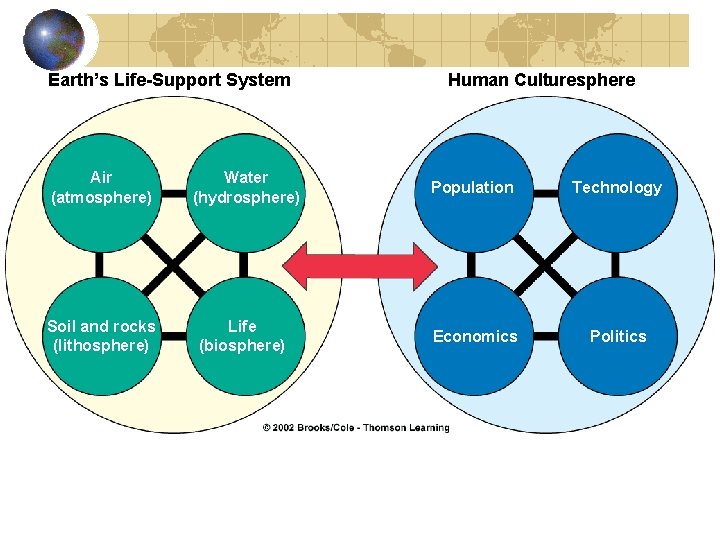
Earth’s Life-Support System Human Culturesphere Air (atmosphere) Water (hydrosphere) Population Technology Soil and rocks (lithosphere) Life (biosphere) Economics Politics
Sustainability Satisfies basic needs of people Food Water Air Shelter Doesn’t deplete natural resources

© 2004 Brooks/Cole – Thomson Learning Social Economic Environmental Traditional decision making
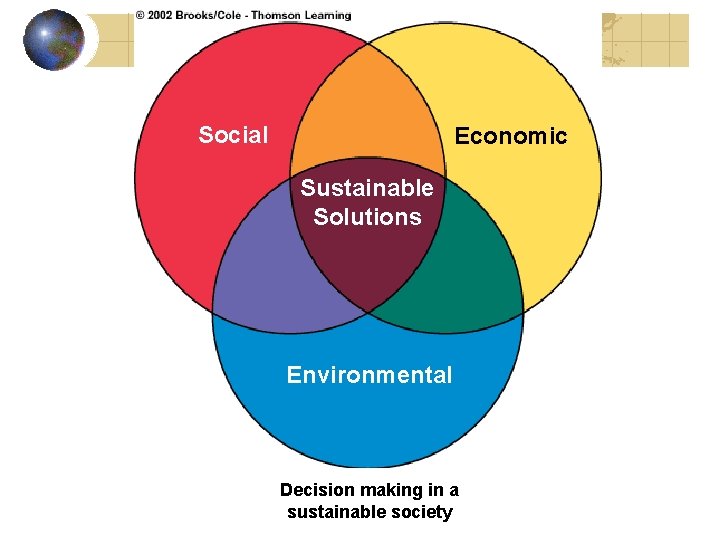
Social Economic Sustainable Solutions Environmental Decision making in a sustainable society
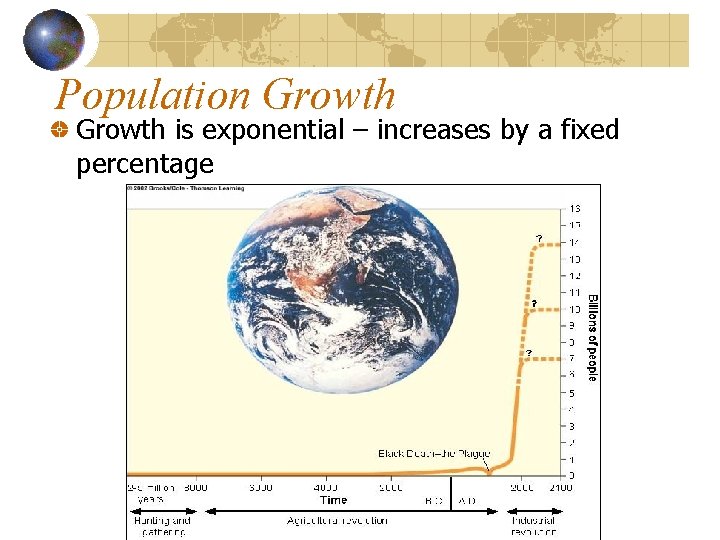
Population Growth is exponential – increases by a fixed percentage
Death rates drop – better health care, increased sanitation Birth rates remain the same Can measure growth in doubling time – number of years it takes a population to double Use rule of 70: 70/percentage growth rate = doubling time World population: 7, 018, 000 US population: 313, 000
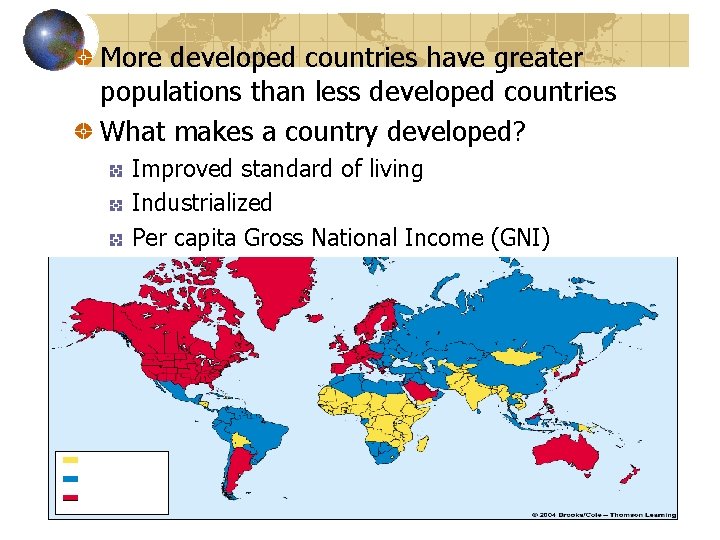
More developed countries have greater populations than less developed countries What makes a country developed? Improved standard of living Industrialized Per capita Gross National Income (GNI)
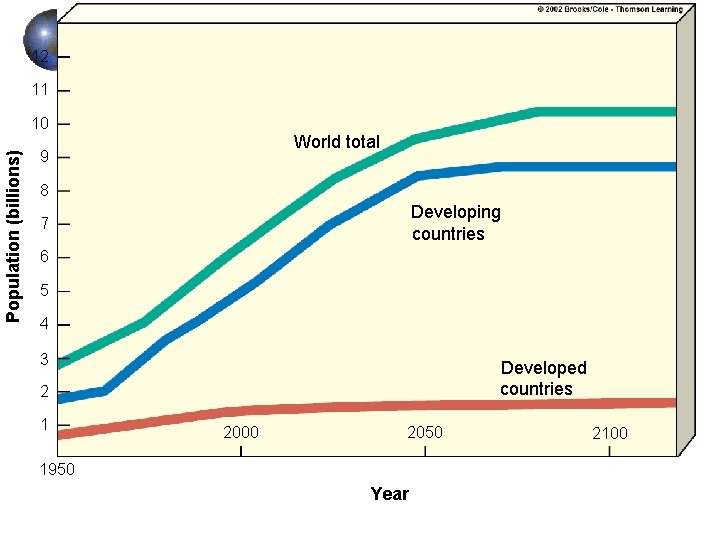
12 11 Population (billions) 10 World total 9 8 Developing countries 7 6 5 4 3 Developed countries 2 1 2000 2050 1950 Year 2100
Good news about developed countries Life expectancy is rising Infant mortality rate has dropped Food production is outpacing population growth Increase in safe drinking water Less raw materials = more goods Air and water pollutant levels are dropping
Not-so-good news about developing countries Life expectancy 11 yrs less Infant mortality is 8 x higher Poverty (1 of 4 have income of $370) Burning fossil fuels global warming Natural resources are being depleted Air and water pollutant levels too high
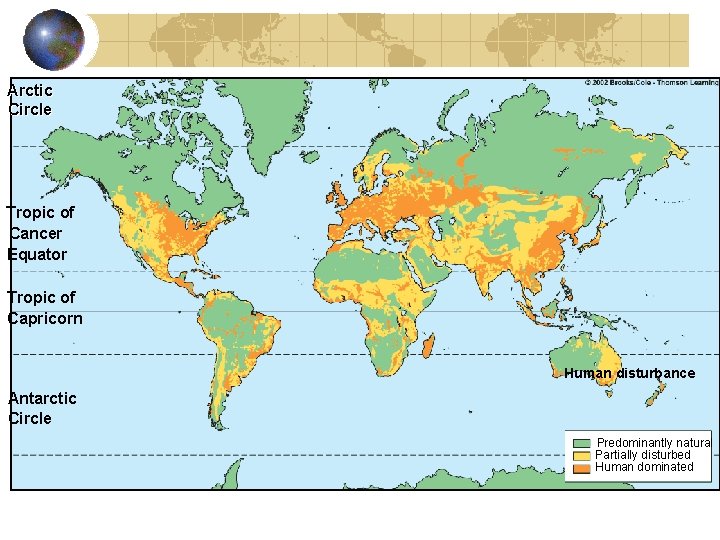
Arctic Circle Tropic of Cancer Equator Tropic of Capricorn Human disturbance Antarctic Circle Predominantly natural Partially disturbed Human dominated
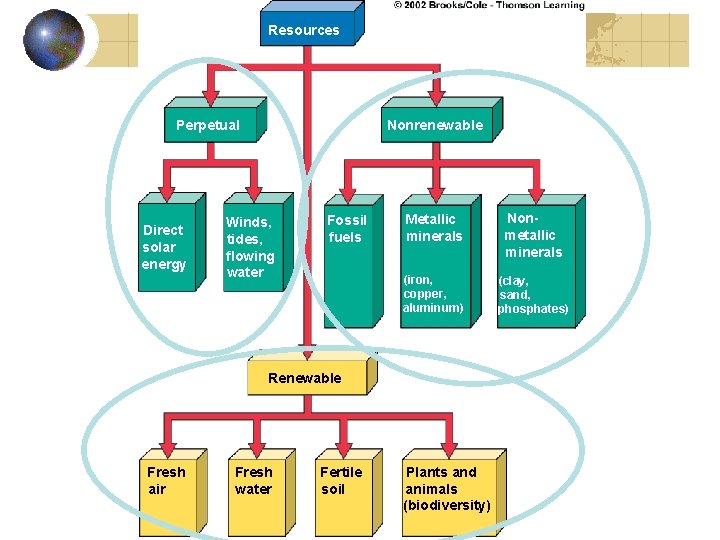
Resources Perpetual Direct solar energy Nonrenewable Winds, tides, flowing water Fossil fuels Metallic minerals Nonmetallic minerals (iron, copper, aluminum) (clay, sand, phosphates) Renewable Fresh air Fresh water Fertile soil Plants and animals (biodiversity)
Ecological Footprint The amount of land needed to produce the resources needed by an average person in a country.
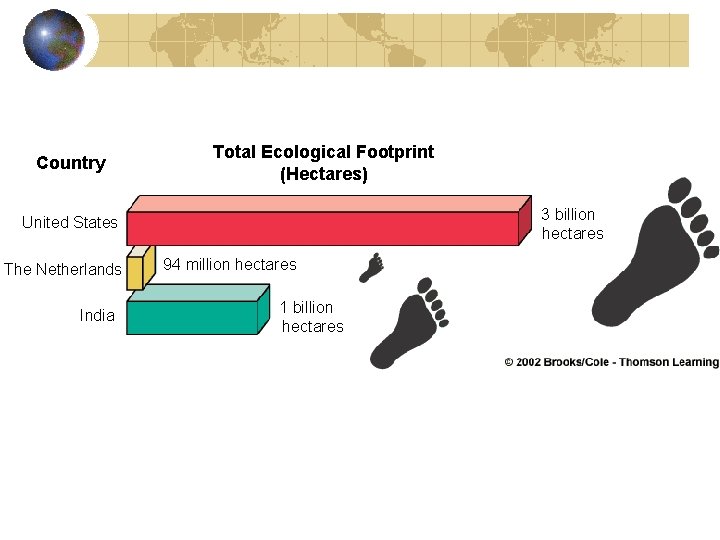
Country Total Ecological Footprint (Hectares) 3 billion hectares United States The Netherlands India 94 million hectares 1 billion hectares
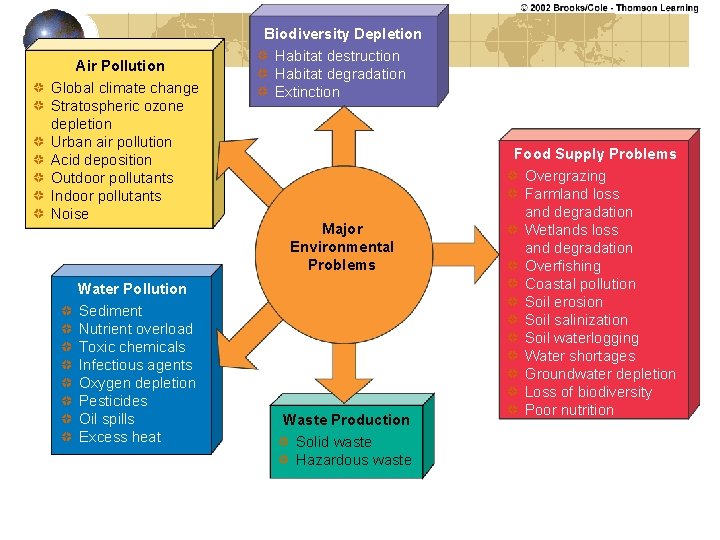
Air Pollution Global climate change Stratospheric ozone depletion Urban air pollution Acid deposition Outdoor pollutants Indoor pollutants Noise Water Pollution Sediment Nutrient overload Toxic chemicals Infectious agents Oxygen depletion Pesticides Oil spills Excess heat Biodiversity Depletion Habitat destruction Habitat degradation Extinction Major Environmental Problems Waste Production Solid waste Hazardous waste Food Supply Problems Overgrazing Farmland loss and degradation Wetlands loss and degradation Overfishing Coastal pollution Soil erosion Soil salinization Soil waterlogging Water shortages Groundwater depletion Loss of biodiversity Poor nutrition
Pollution Any addition to air, water, soil, or food that threatens the health, survival, or activities of living organisms Can be natural or caused by humans Point source: come from single, identifiable sources Nonpoint sources: dispersed sources that are difficult to identify
Pollutants cause: Disruption of life-support systems for living things Damage to wildlife, human health, property Unpleasant noise, taste, sounds, smells Prevent or clean-up!
Rapid population growth Unsustainable resource use Poverty Not including the environmental costs of economic goods and services in their market prices Trying to manage and simplify nature with too little knowledge about how it works
- Slides: 20