
Environmental Problems Their Causes and Sustainability GSI Unit
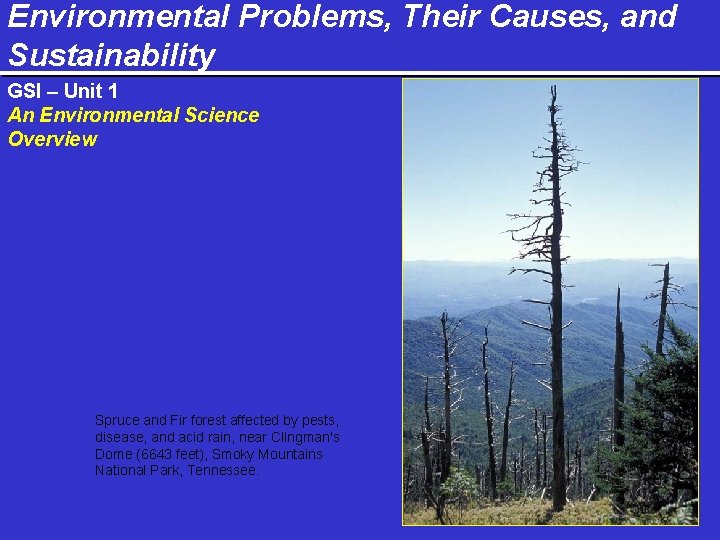
Environmental Problems, Their Causes, and Sustainability GSI – Unit 1 An Environmental Science Overview Spruce and Fir forest affected by pests, disease, and acid rain, near Clingman's Dome (6643 feet), Smoky Mountains National Park, Tennessee.
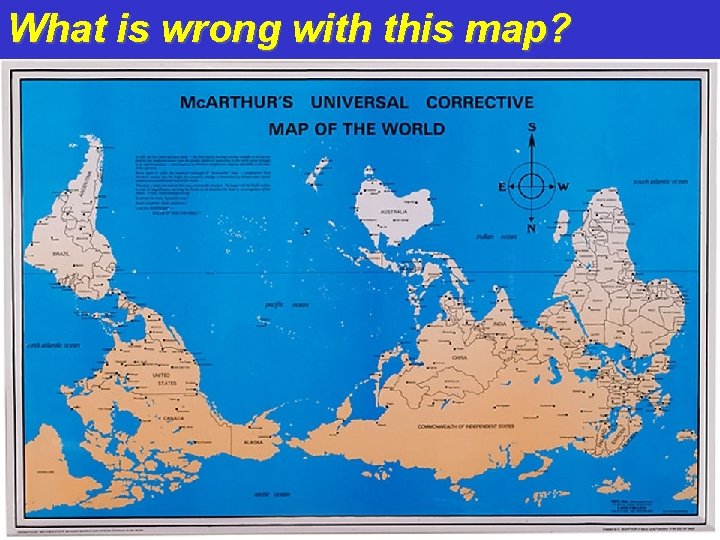
What is wrong with this map?
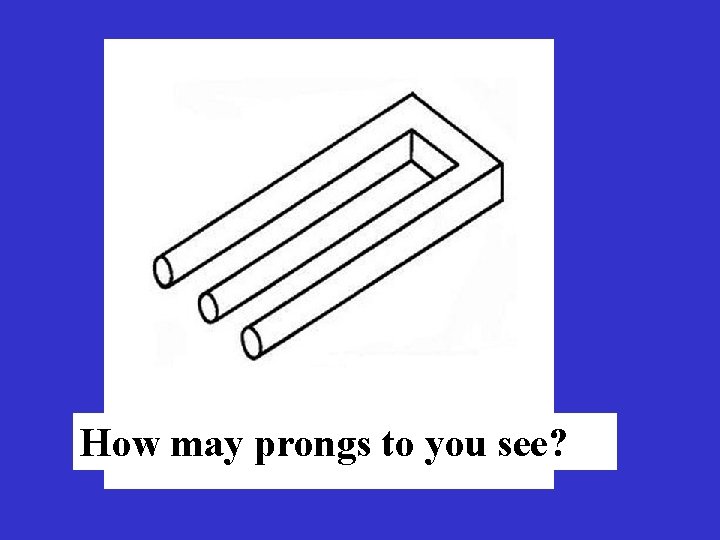
How may prongs to you see?

What do you see?
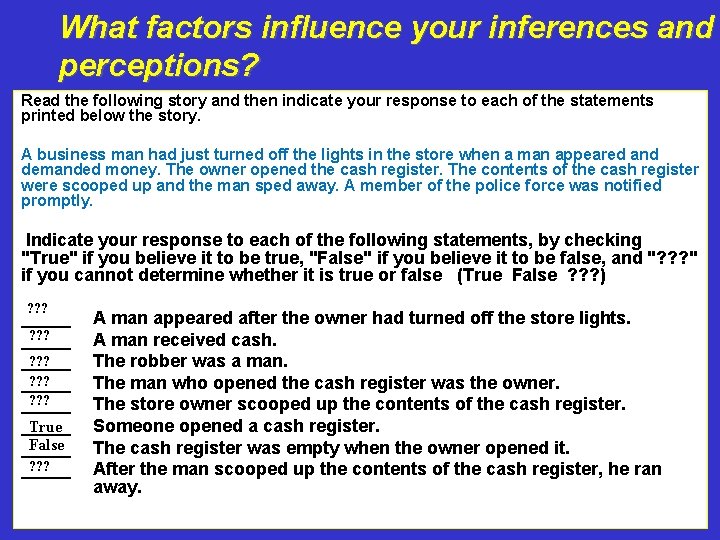
What factors influence your inferences and perceptions? Read the following story and then indicate your response to each of the statements printed below the story. A business man had just turned off the lights in the store when a man appeared and demanded money. The owner opened the cash register. The contents of the cash register were scooped up and the man sped away. A member of the police force was notified promptly. Indicate your response to each of the following statements, by checking "True" if you believe it to be true, "False" if you believe it to be false, and "? ? ? " if you cannot determine whether it is true or false (True False ? ? ? ) ? ? ? _____ ? ? ? _____ True _____ False _____ ? ? ? _____ A man appeared after the owner had turned off the store lights. A man received cash. The robber was a man. The man who opened the cash register was the owner. The store owner scooped up the contents of the cash register. Someone opened a cash register. The cash register was empty when the owner opened it. After the man scooped up the contents of the cash register, he ran away.
Find Out Survey 10 people (at least two adults) and ask the following questions: 1. What do you think is our greatest environmental concern? Why? 2. Where did you learn about this concern? Share your results Friday
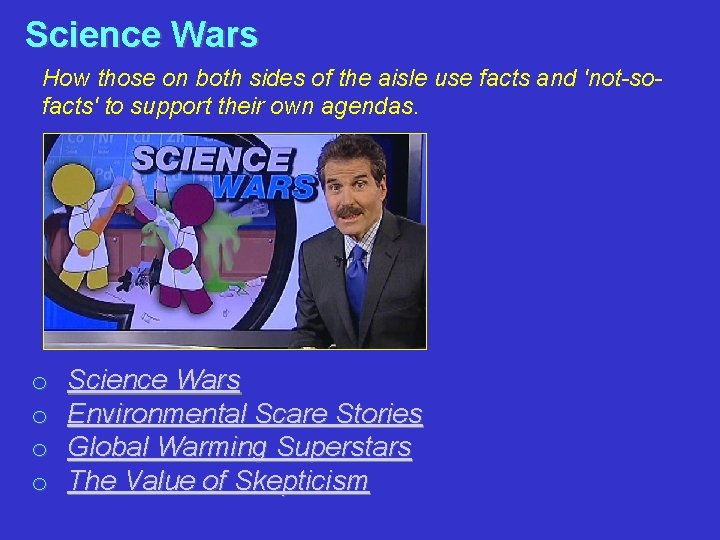
Science Wars How those on both sides of the aisle use facts and 'not-sofacts' to support their own agendas. o o Science Wars Environmental Scare Stories Global Warming Superstars The Value of Skepticism
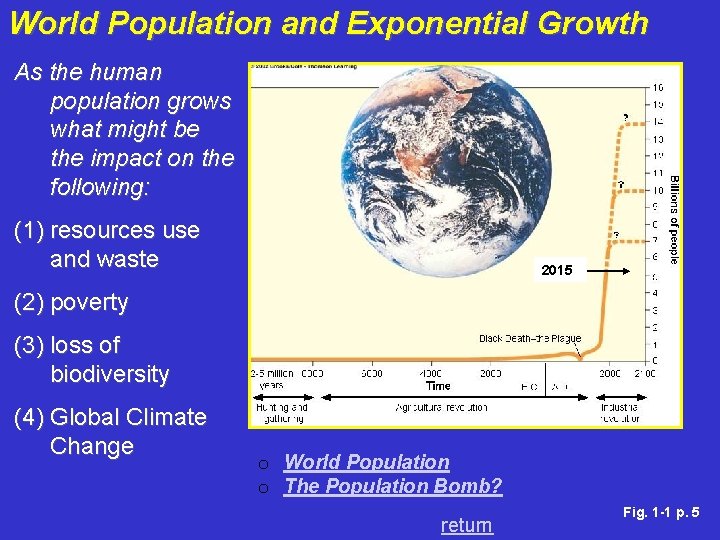
World Population and Exponential Growth As the human population grows what might be the impact on the following: (1) resources use and waste 2015 (2) poverty (3) loss of biodiversity (4) Global Climate Change o World Population o The Population Bomb? return Fig. 1 -1 p. 5
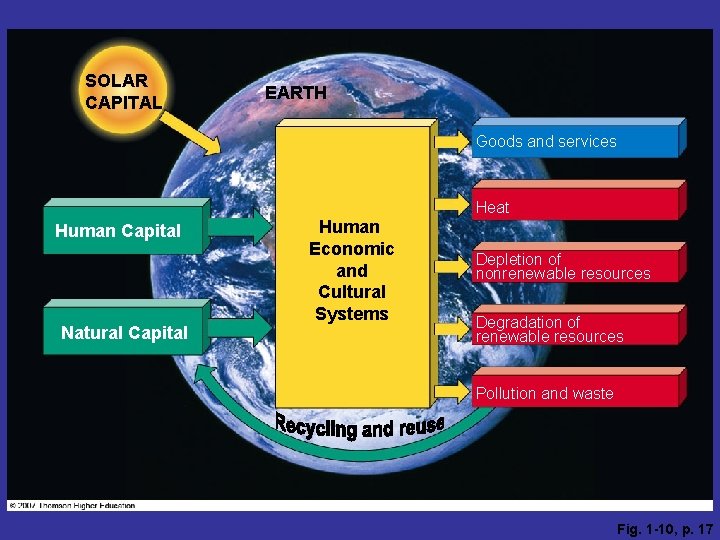
SOLAR CAPITAL EARTH Goods and services Heat Human Capital Natural Capital Human Economic and Cultural Systems Depletion of nonrenewable resources Degradation of renewable resources Pollution and waste Fig. 1 -10, p. 17
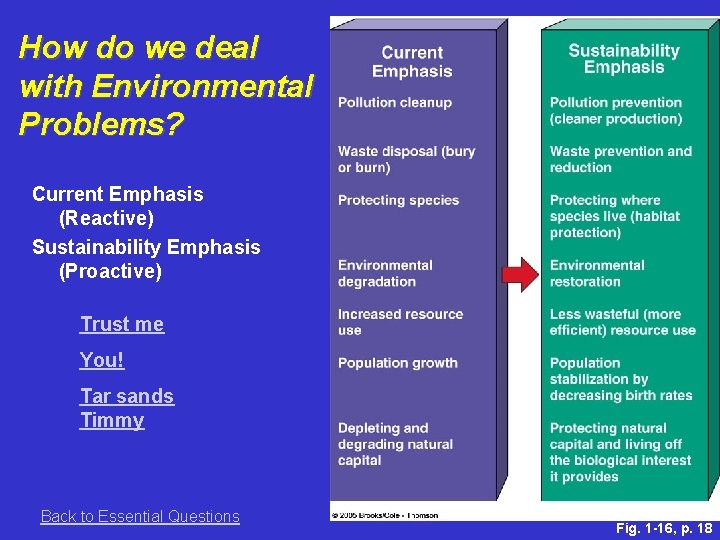
How do we deal with Environmental Problems? Current Emphasis (Reactive) Sustainability Emphasis (Proactive) Trust me You! Tar sands Timmy Back to Essential Questions Fig. 1 -16, p. 18
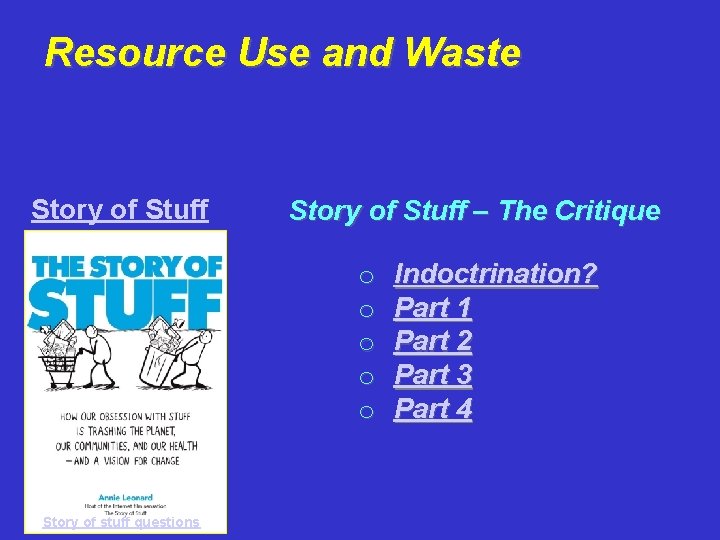
Resource Use and Waste Story of Stuff – The Critique o o o Story of stuff questions Indoctrination? Part 1 Part 2 Part 3 Part 4
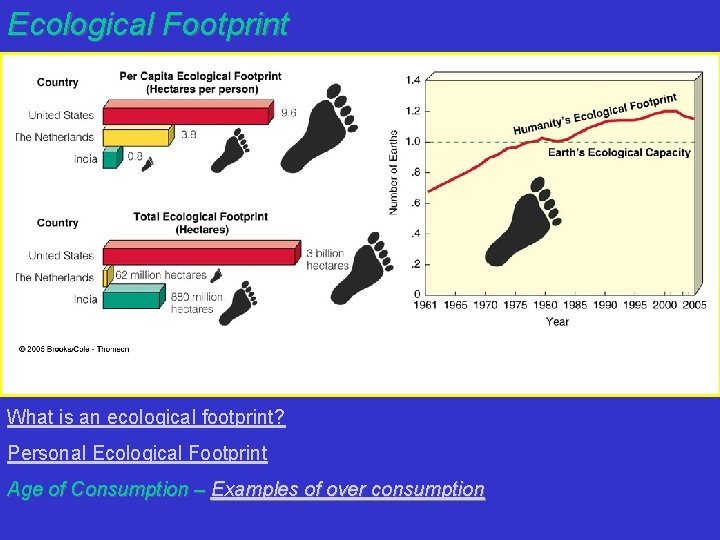
Ecological Footprint What is an ecological footprint? Personal Ecological Footprint Age of Consumption – Examples of over consumption
Living on interest vs. Living on principal Living on Interest (Sustainably) Imagine you win $1, 000 in the lottery Invest the capital (1 million) at 10% interest. You will have a sustainable income of $100, 000 per year. Without depleting your capital (1 million) Living on Principal If you spent $200, 000 per year, your 1 million would be gone early in the 7 th year If you spent $110, 000 per year, you would be bankrupt early in the 18 th year. How would you prefer to live? How do we live now? return
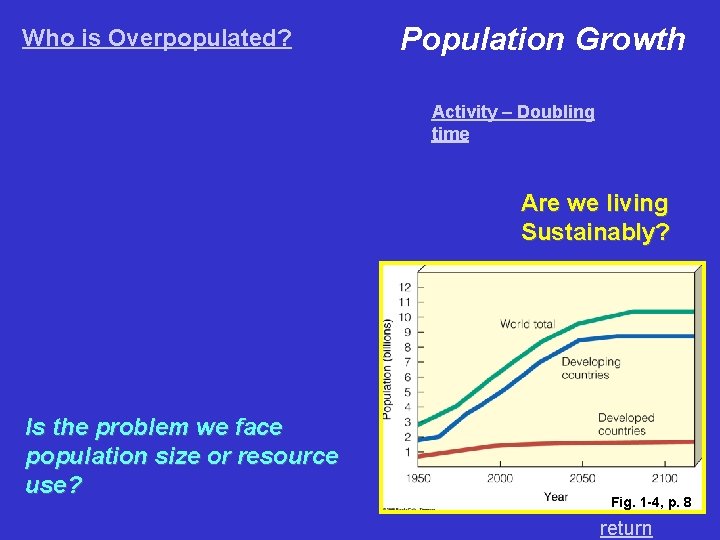
Who is Overpopulated? Population Growth Activity – Doubling time Are we living Sustainably? Is the problem we face population size or resource use? Fig. 1 -4, p. 8 return

What are Our Greatest Environmental Problems? Ø Ø Ø Ø Disease Overpopulation Water Shortages Climate Changes Biodiversity Loss Poverty Malnutrition “The Big Five” Endangered Planet 1990 Planet in Peril 2007
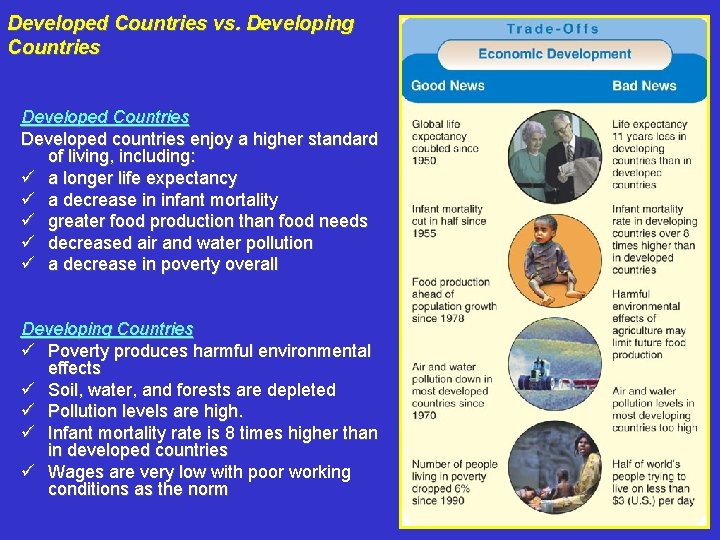
Developed Countries vs. Developing Countries Developed countries enjoy a higher standard of living, including: ü a longer life expectancy ü a decrease in infant mortality ü greater food production than food needs ü decreased air and water pollution ü a decrease in poverty overall Developing Countries ü Poverty produces harmful environmental effects ü Soil, water, and forests are depleted ü Pollution levels are high. ü Infant mortality rate is 8 times higher than in developed countries ü Wages are very low with poor working conditions as the norm
Globalization leads to a world socially, economically, and environmentally more interconnected Technology, international trade, and human mobility allow people to interact with others Environmentally sustainable development rewards sustainable activities and discourages harmful activities Where are your shoes made? Why? Where is your computer made? Where does your food come from? If we stopped buying Chinese products what would happen to China’s economy? How would that impact the United States? How does a global economy impact cultural diversity? Back to Essential Questions o Globalization Part 1 o Globalization Part 2
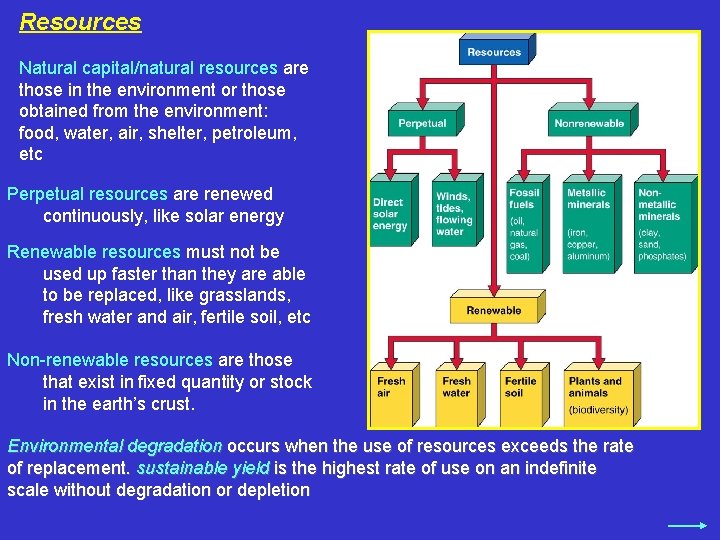
Resources Natural capital/natural resources are those in the environment or those obtained from the environment: food, water, air, shelter, petroleum, etc Perpetual resources are renewed continuously, like solar energy Renewable resources must not be used up faster than they are able to be replaced, like grasslands, fresh water and air, fertile soil, etc Non-renewable resources are those that exist in fixed quantity or stock in the earth’s crust. Environmental degradation occurs when the use of resources exceeds the rate of replacement. sustainable yield is the highest rate of use on an indefinite scale without degradation or depletion
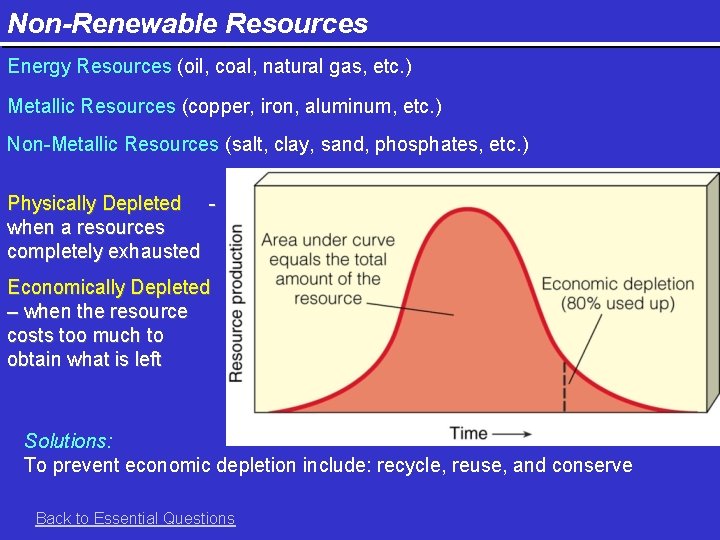
Non-Renewable Resources Energy Resources (oil, coal, natural gas, etc. ) Metallic Resources (copper, iron, aluminum, etc. ) Non-Metallic Resources (salt, clay, sand, phosphates, etc. ) Physically Depleted when a resources completely exhausted Economically Depleted – when the resource costs too much to obtain what is left Solutions: To prevent economic depletion include: recycle, reuse, and conserve Back to Essential Questions
What is pollution? Pollutants are chemicals at high enough levels in the environment to harm people or other living organisms Where do pollutants come from, and what are their harmful effects? Pollutants may enter the environment naturally (for example, volcanic eruptions) or through human activities such as burning coal; pollution tends to occur in or near urban and industrial areas Sources: Point sources of pollutants are single, identifiable sources, such as automobiles or industrial plants. They are easier to identify and control than non-point sources Non-point sources are dispersed, such as pesticides in the air and water runoff. They are difficult to identify. Pesticides sprayed into the air may be carried from their source. Fertilizer runoff enters streams away from the source. Effects of Pollution: ü They can disrupt or degrade life-support systems of any organism ü They damage human health, wildlife, and property ü They can produce nuisances in noise, smells, tastes, and sights
Dealing With Pollution Ø Prevention (Input Control) reduces or eliminates the production of pollutants Three factors determine the severity of a pollutant’s harmful effects: chemical nature, concentration, and persistence. Pollutants are classified into four categories based on persistence: degradable, biodegradable, slowly degradable, and non-degradable Persistent is how long a pollutant stays in the air , water or soil. Nonpersistent (degradable) Nondegradable – does not breakdown in the environment Cleanup (Output Control) cleans up or dilutes pollutants after they have been produced ü It is a temporary bandage without long-term pollution control technology (like the catalytic converter) ü The pollutant is removed but may cause pollution in another place (for example, burning garbage/burying it) ü It is expensive to reduce pollution to an acceptable level. Prevention is less expensive in the long run
Tragedy of the Commons Describes the overuse or degradation of freely available resources such as ocean pollution, abuse of national parks, air pollution, etc. No one individual owns these free-access resources o Tragedy of the Commons – Overview o John Stossel – Tragedy of the Commons ü ü ü Limiting access to these resources is one possible way to protect them Reducing the population might also allow these resources to be used below estimated sustainable yields Converting free-access resources to private ownership is another possible means to protect them Private owners may not actually protect the resources Global resources such as oceans, air, and migratory birds cannot be divided up and made private property
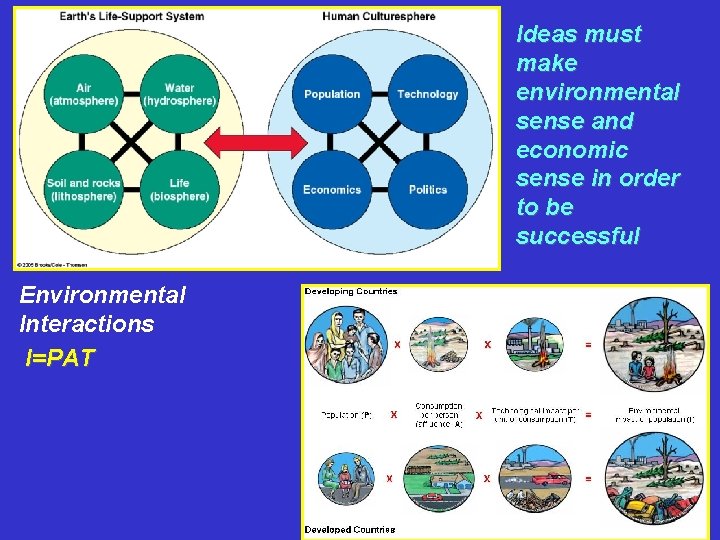
Fig. 1 -14 p. 15 Environmental Interactions I=PAT Ideas must make environmental sense and economic sense in order to be successful
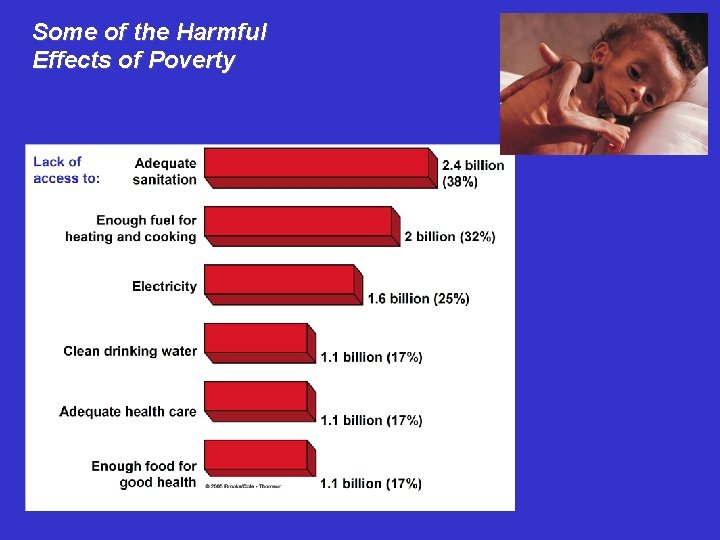
Some of the Harmful Effects of Poverty
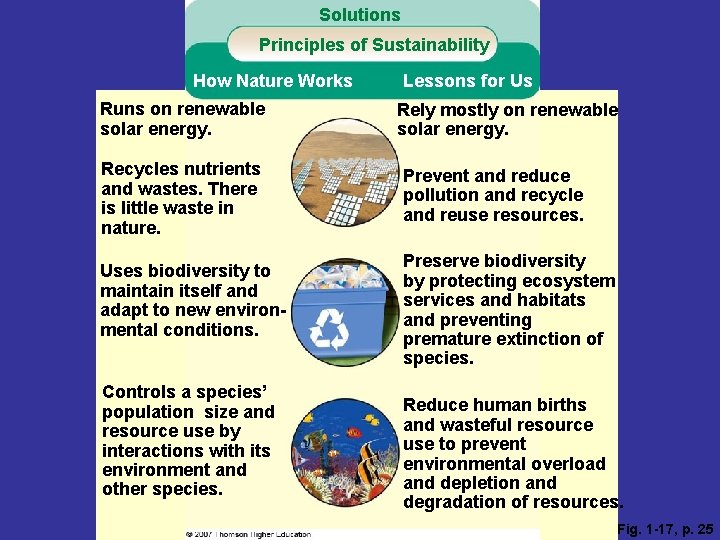
Solutions Principles of Sustainability How Nature Works Runs on renewable solar energy. Recycles nutrients and wastes. There is little waste in nature. Uses biodiversity to maintain itself and adapt to new environmental conditions. Controls a species’ population size and resource use by interactions with its environment and other species. Lessons for Us Rely mostly on renewable solar energy. Prevent and reduce pollution and recycle and reuse resources. Preserve biodiversity by protecting ecosystem services and habitats and preventing premature extinction of species. Reduce human births and wasteful resource use to prevent environmental overload and depletion and degradation of resources. Fig. 1 -17, p. 25
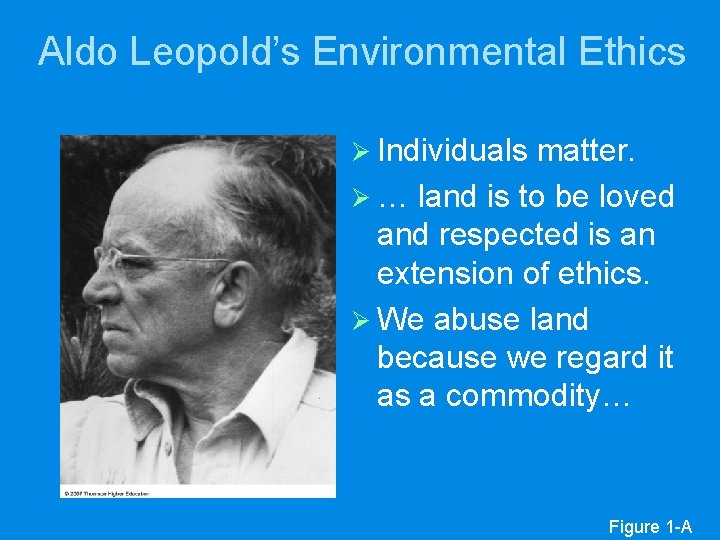
Aldo Leopold’s Environmental Ethics Ø Individuals matter. Ø … land is to be loved and respected is an extension of ethics. Ø We abuse land because we regard it as a commodity… Figure 1 -A
- Slides: 26