
Environmental Problems Their Causes and Sustainability Chapter 1
Environmental Problems, Their Causes, and Sustainability Chapter 1
Core Case Study: Living in an Exponential Age § Impact of human exponential growth on • Loss of animal and plant species • Loss of resources

Exponential Growth
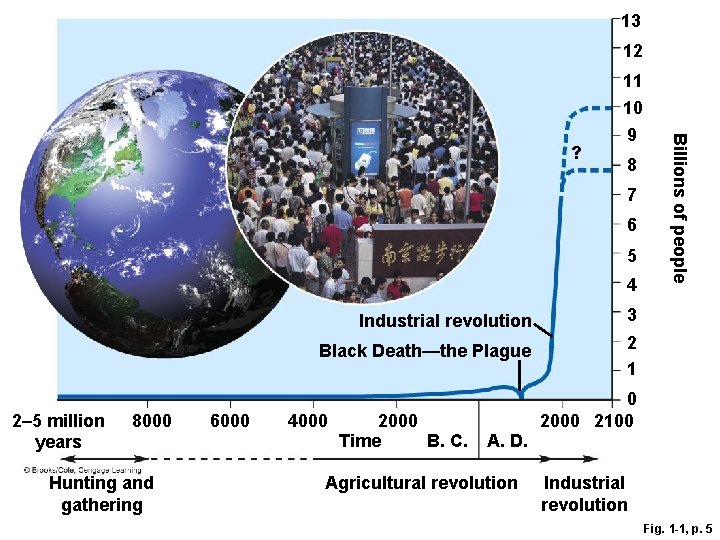
13 12 11 8 7 6 5 4 2– 5 million years 8000 Hunting and gathering 6000 Industrial revolution 3 Black Death—the Plague 2 1 4000 2000 Time B. C. Billions of people ? 10 9 0 2000 2100 A. D. Agricultural revolution Industrial revolution Fig. 1 -1, p. 5
1 -1 What Is an Environmentally Sustainable Society? § Concept 1 -1 A Our lives and economies depend on energy from the sun (solar capital) and on natural resources and natural services (natural capital) provided by the earth. § Concept 1 -1 B Living sustainability means living off the earth’s natural income without depleting or degrading the natural capital that supplies it.
Environmental Science Is a Study of Connections in Nature (1) § Interdisciplinary science connecting information and ideas from • Natural sciences, with an emphasis on ecology • Social sciences • Humanities
Environmental Science Is a Study of Connections in Nature (2) § How nature works § How the environment affects us § How we affect the environment § How to deal with environmental problems § How to live more sustainably

Major Fields of Study Related to Environmental Science
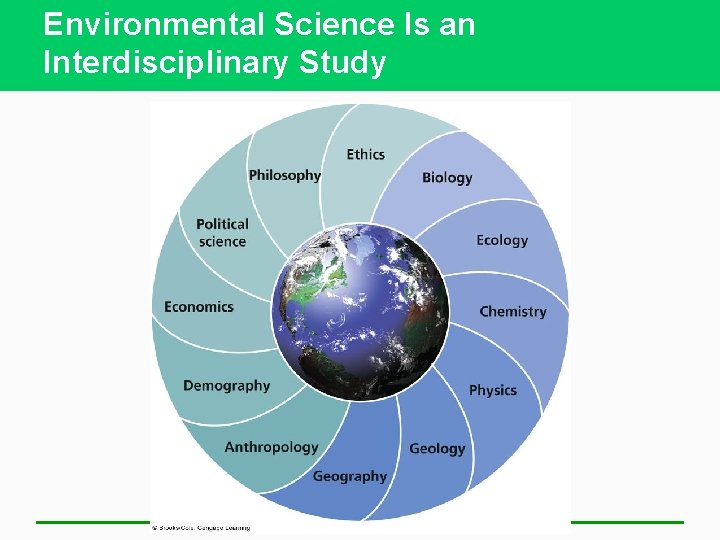
Environmental Science Is an Interdisciplinary Study
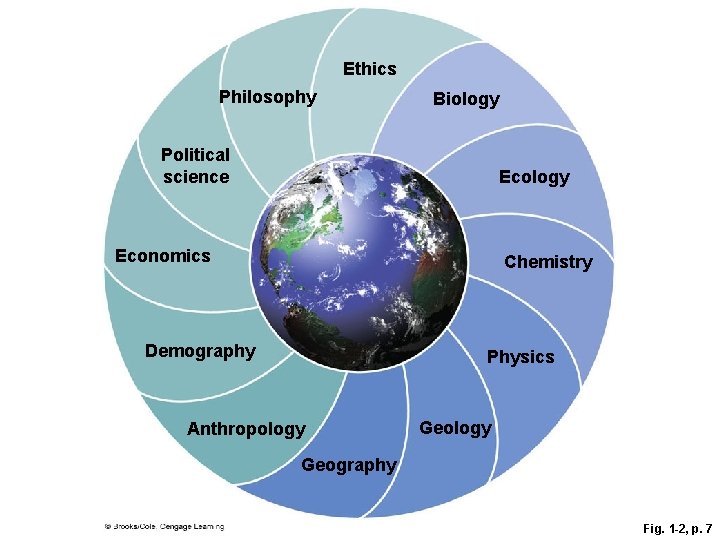
Ethics Philosophy Biology Political science Ecology Economics Chemistry Demography Physics Anthropology Geography Fig. 1 -2, p. 7
Sustainability Is the Central Theme of This Book § Natural capital: supported by solar capital • Natural resources • Natural services • E. g. , nutrient cycling § Degradation of natural capital through human activities § Scientific solutions

Natural Capital = Natural Resources + Natural Services
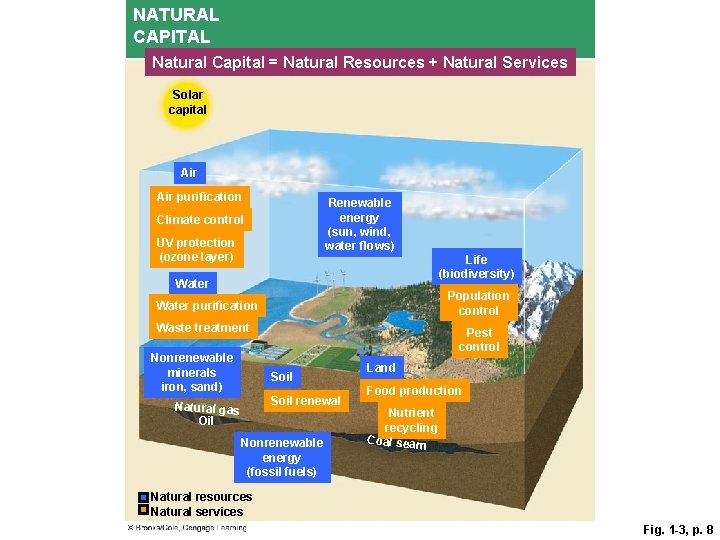
NATURAL CAPITAL Natural Capital = Natural Resources + Natural Services Solar capital Air purification Renewable energy (sun, wind, water flows) Climate control UV protection (ozone layer) Water Population control Water purification Waste treatment Nonrenewable minerals iron, sand) Pest control Soil renewal Natural gas Oil Life (biodiversity) Nonrenewable energy (fossil fuels) Land Food production Nutrient recycling Coal seam Natural resources Natural services Fig. 1 -3, p. 8
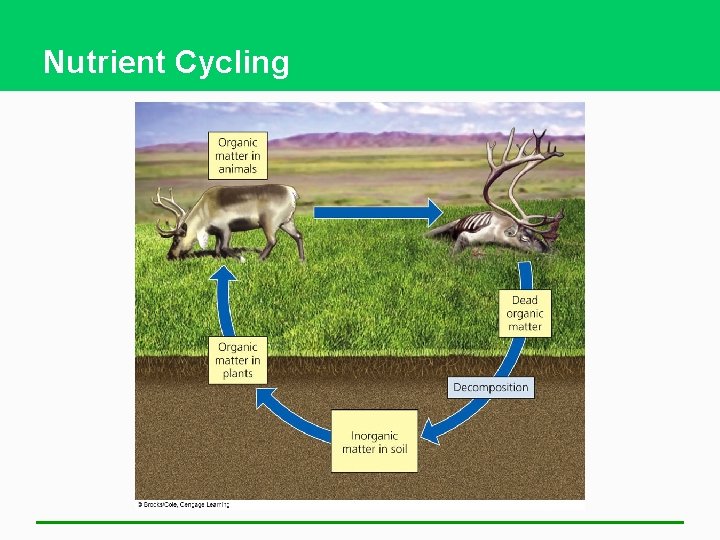
Nutrient Cycling

Organic matter in animals Dead organic matter Organic matter in plants Decomposition Inorganic matter in soil Fig. 1 -4, p. 9
Environmentally Sustainable Societies Protect Natural Capital and Live off Its Income § Live off natural income § Human activity and its affect on the earth’s natural capital
1 -2 How Can Environmentally Sustainable Societies Grow Economically? § Concept 1 -2 Societies can become more environmentally sustainable through economic development dedicated to improving the quality of life for everyone without degrading the earth's life support systems.
There Is a Wide Economic Gap between Rich and Poor Countries § Country’s economic growth: measured by gross domestic product (GDP) § Changes in economic growth: measured by per capita GDP § Purchasing power parity (PPP) plus GDP are combined for per capita GDP PPP § Compare developed with developing countries
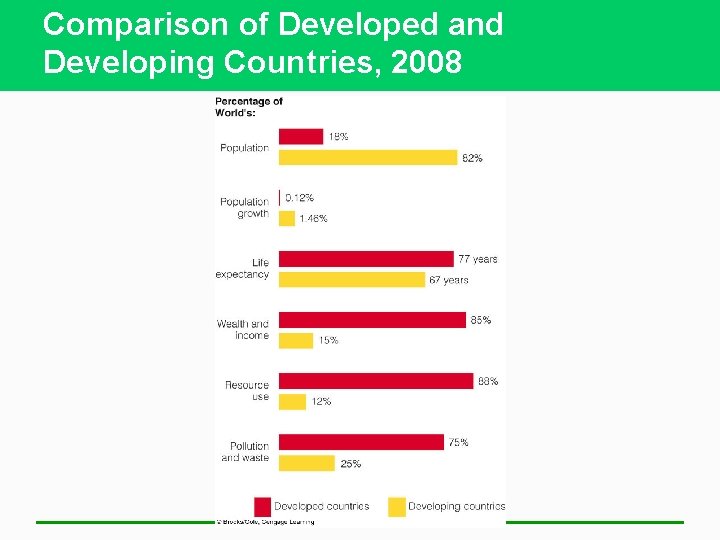
Comparison of Developed and Developing Countries, 2008
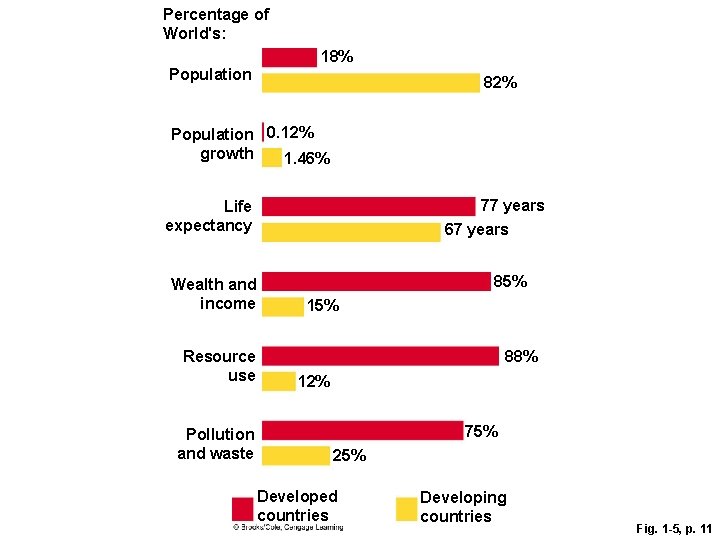
Percentage of World's: 18% Population 82% Population 0. 12% growth 1. 46% 77 years 67 years Life expectancy Wealth and income Resource use Pollution and waste 85% 15% 88% 12% 75% 25% Developed countries Developing countries Fig. 1 -5, p. 11
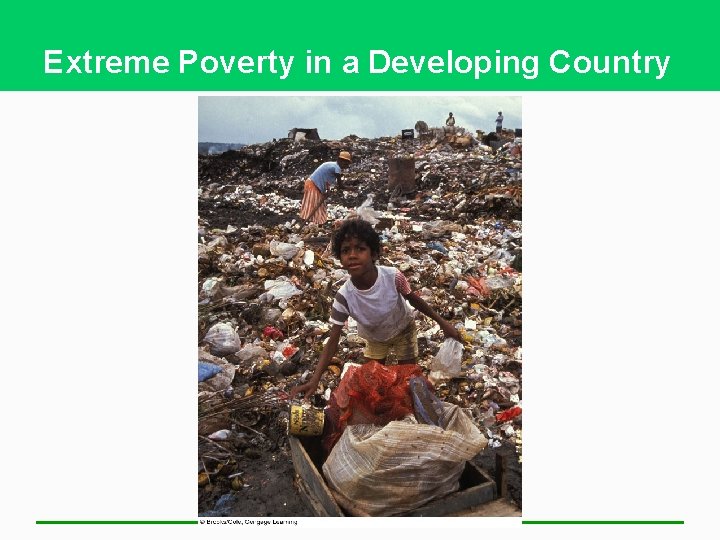
Extreme Poverty in a Developing Country
1 -3 How Are Our Ecological Footprints Affecting the Earth? § Concept 1 -3 As our ecological footprints grow, we are depleting and degrading more of the earth’s natural capital.
Some Sources Are Renewable (1) § Resource • Directly available for use • Not directly available for use § Perpetual resource • Solar energy

Some Sources Are Renewable (2) § Renewable resource • E. g. , forests, grasslands, fresh air, fertile soil § Sustainable yield § Environmental degradation
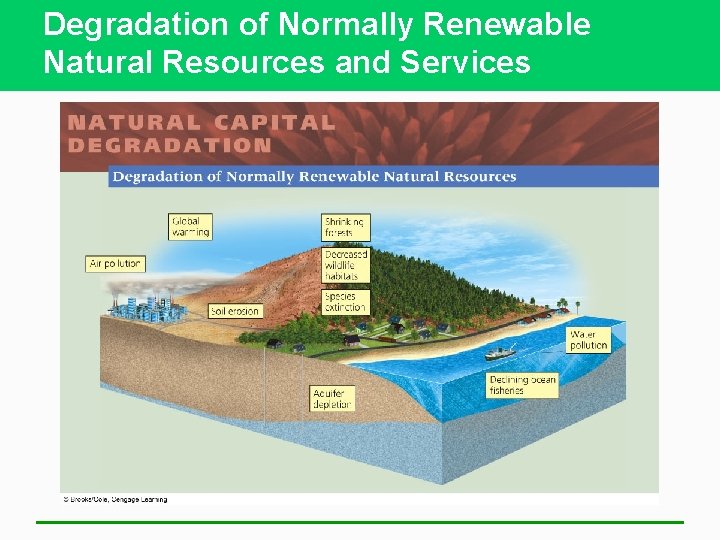
Degradation of Normally Renewable Natural Resources and Services
Overexploiting Shared Renewable Resources: Tragedy of the Commons § Three types of property or resource rights • Private property • Common property • Open access renewable resources § Tragedy of the commons • Solutions
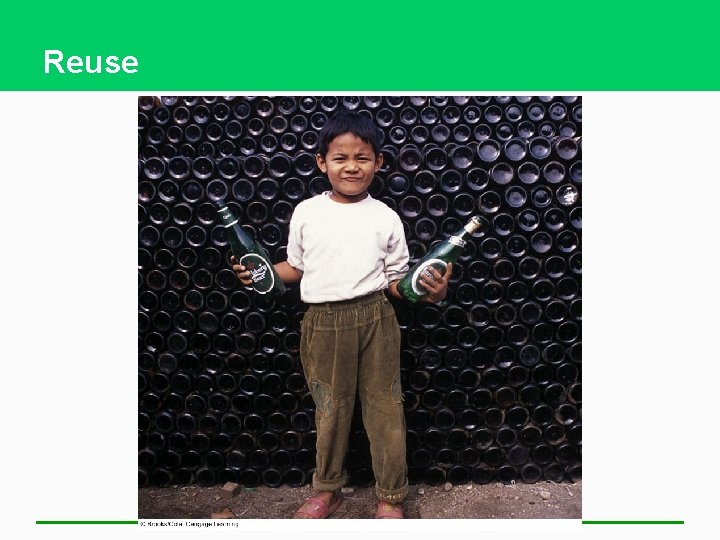
Some Resources Are Not Renewable § Nonrenewable resources • Energy resources • Metallic mineral resources • Nonmetallic mineral resources § Reuse § Recycle
Reuse
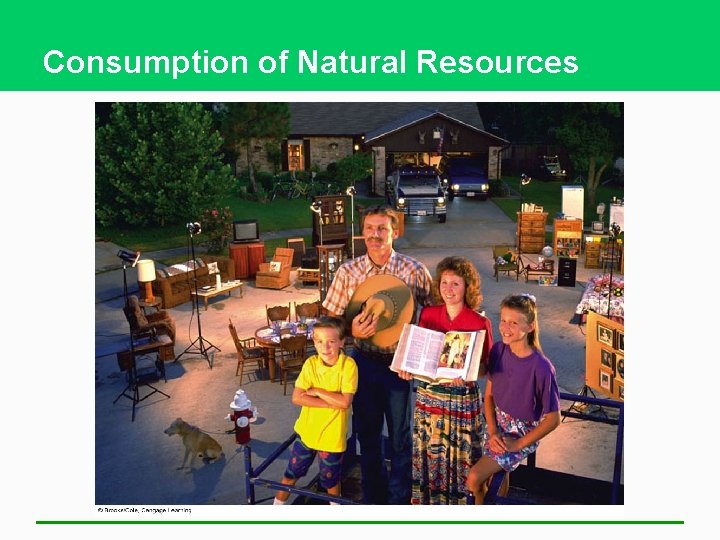
Consumption of Natural Resources
Consumption of Natural Resources
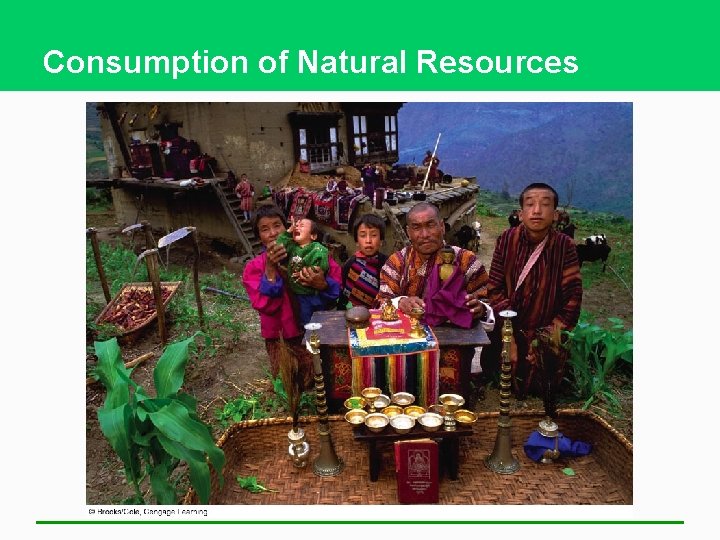
Our Ecological Footprints Are Growing § Ecological footprint concept • Biological capacity • Ecological footprint
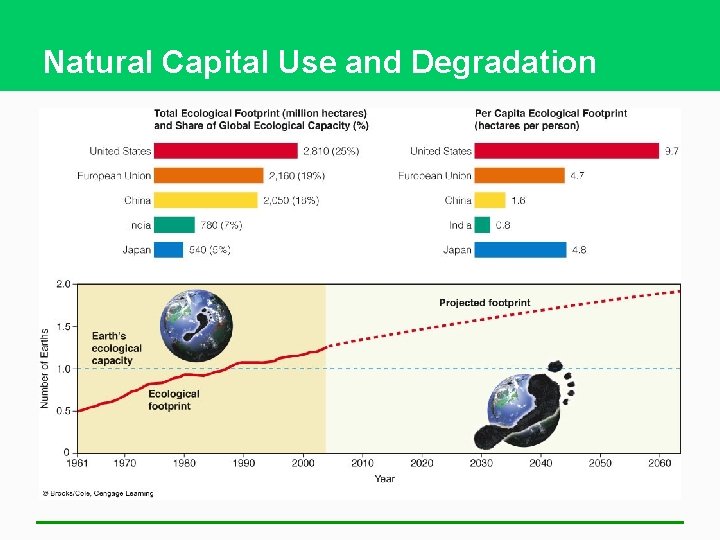
Natural Capital Use and Degradation
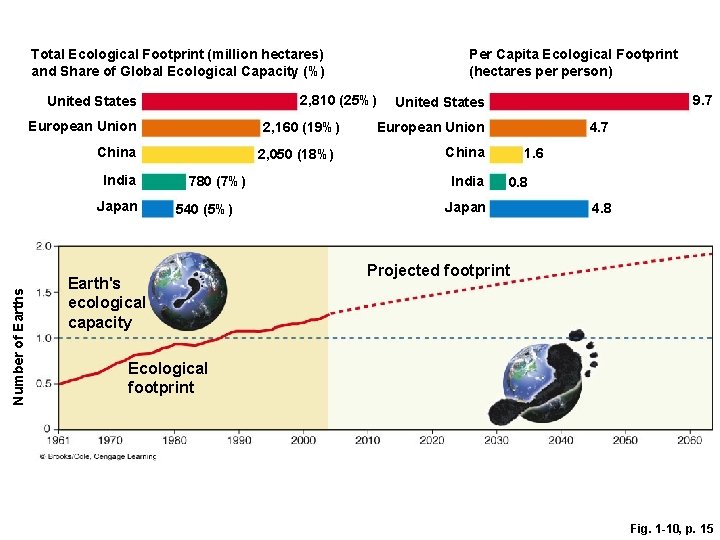
Total Ecological Footprint (million hectares) and Share of Global Ecological Capacity (%) 2, 810 (25%) United States European Union 2, 160 (19%) China India Number of Earths Japan Per Capita Ecological Footprint (hectares person) 2, 050 (18%) 780 (7%) 540 (5%) Earth's ecological capacity 9. 7 United States European Union 4. 7 China India 1. 6 0. 8 Japan 4. 8 Projected footprint Ecological footprint Fig. 1 -10, p. 15
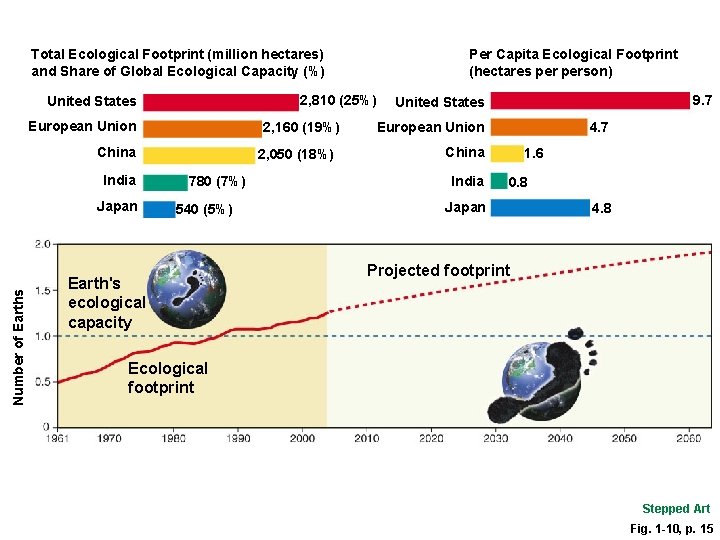
Total Ecological Footprint (million hectares) and Share of Global Ecological Capacity (%) 2, 810 (25%) United States European Union 2, 160 (19%) China India Number of Earths Japan Per Capita Ecological Footprint (hectares person) 2, 050 (18%) 780 (7%) 540 (5%) Earth's ecological capacity 9. 7 United States European Union 4. 7 China India 1. 6 0. 8 Japan 4. 8 Projected footprint Ecological footprint Stepped Art Fig. 1 -10, p. 15
Case Study: China’s New Affluent Consumers (1) § Leading consumer of various foods and goods • Wheat, rice, and meat • Coal, fertilizers, steel, and cement § Second largest consumer of oil
Case Study: China’s New Affluent Consumers (2) § Two-thirds of the most polluted cities are in China § Projections, by 2020 • Largest consumer and producer of cars • World’s leading economy in terms of GDP PPP
Cultural Changes Have Increased Our Ecological Footprints § 12, 000 years ago: hunters and gatherers § Three major cultural events • Agricultural revolution • Industrial-medical revolution • Information-globalization revolution
1 -4 What Is Pollution and What Can We Do about It? § Concept 1 -4 Preventing pollution is more effective and less costly than cleaning up pollution.
Pollution Comes from a Number of Sources § Sources of pollution • Point • E. g. , smokestack • Nonpoint • E. g. , pesticides blown into the air § Main type of pollutants • Biodegradable • Nondegradable § Unwanted effects of pollution

Point-Source Air Pollution
We Can Clean Up Pollution or Prevent It § Pollution cleanup (output pollution control) § Pollution prevention (input pollution control)
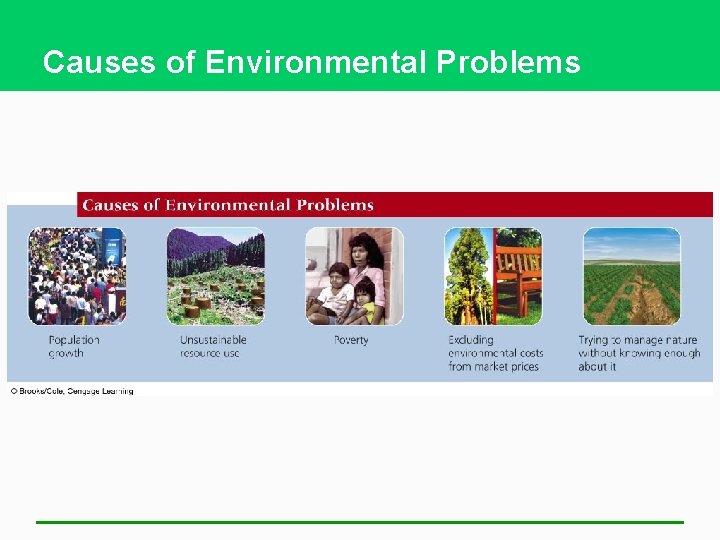
1 -5 Why Do We Have Environmental Problems? (1) § Concept 1 -5 A Major causes of environmental problems are population growth, wasteful and unsustainable resource use, poverty, exclusion of environmental costs of resource use from the market prices of goods and services, and attempts to manage nature with insufficient knowledge.
1 -5 Why Do We Have Environmental Problems? (2) § Concept 1 -5 B People with different environmental worldviews often disagree about the seriousness of environmental problems and what we should do about them.
Experts Have Identified Five Basic Causes of Environmental Problems § Population growth § Wasteful and unsustainable resource use § Poverty § Failure to include the harmful environmental costs of goods and services in their market prices § Insufficient knowledge of how nature works
Causes of Environmental Problems
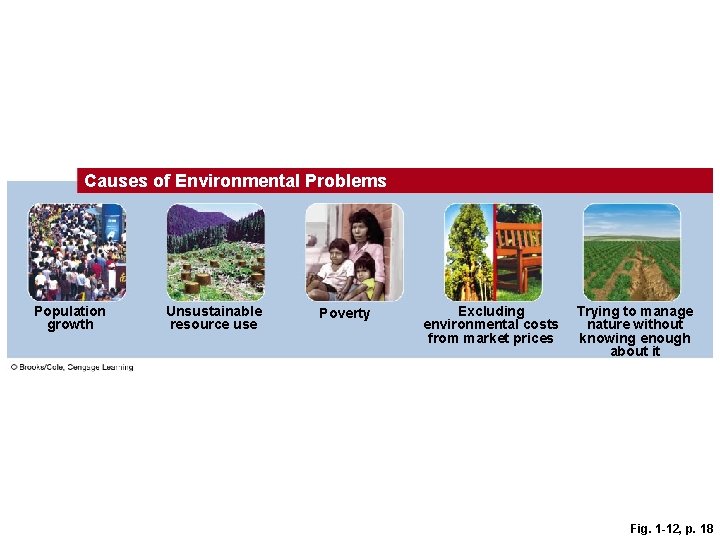
Causes of Environmental Problems Population growth Unsustainable resource use Poverty Excluding environmental costs from market prices Trying to manage nature without knowing enough about it Fig. 1 -12, p. 18
Causes of Environmental Problems Population growth Unsustainable resource use Poverty Excluding environmental costs from market prices Trying to manage nature without knowing enough about it Stepped Art Fig. 1 -12, p. 18
Poverty Has Harmful Environmental and Health Effects § Population growth affected § Malnutrition § Premature death § Limited access to adequate sanitation facilities and clean water
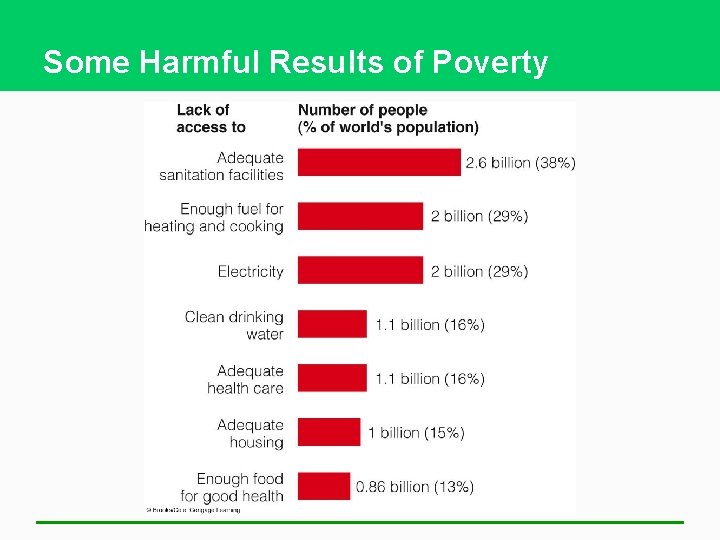
Some Harmful Results of Poverty
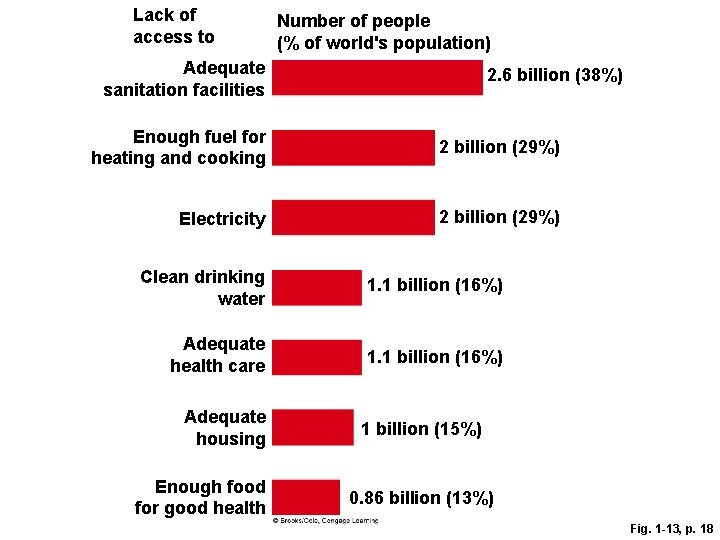
Lack of access to Number of people (% of world's population) Adequate sanitation facilities 2. 6 billion (38%) Enough fuel for heating and cooking 2 billion (29%) Electricity 2 billion (29%) Clean drinking water 1. 1 billion (16%) Adequate health care 1. 1 billion (16%) Adequate housing Enough food for good health 1 billion (15%) 0. 86 billion (13%) Fig. 1 -13, p. 18
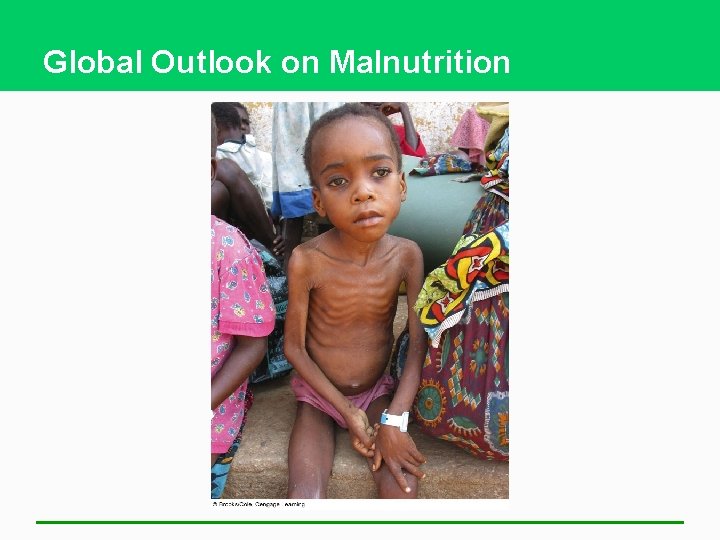
Global Outlook on Malnutrition

Affluence Has Harmful and Beneficial Environmental Effects § Harmful environmental impact due to • High levels of consumption • Unnecessary waste of resources § Affluence can provide funding for • Developing technologies to reduce • Pollution • Environmental degradation • Resource waste
Prices Do Not Include the Value of Natural Capital § Companies do not pay the environmental cost of resource use § Goods and services do not include the harmful environmental costs § Companies receive tax breaks and subsidies § Economy may be stimulated but there may be a degradation of natural capital
Different Views about Environmental Problems and Their Solutions § Environmental Worldview including environmental ethics • Planetary management worldview • Stewardship worldview • Environmental wisdom worldview

We Can Learn to Make Informed Environmental Decisions § Scientific research § Identify problem and multiple solutions § Consider human values
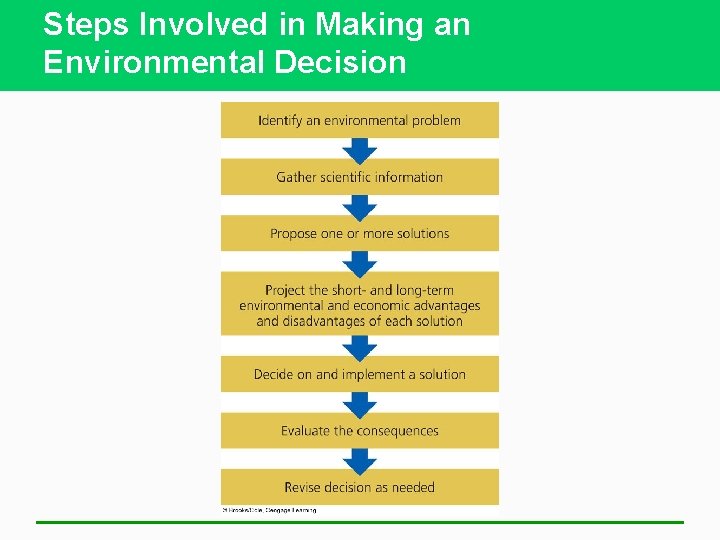
Steps Involved in Making an Environmental Decision
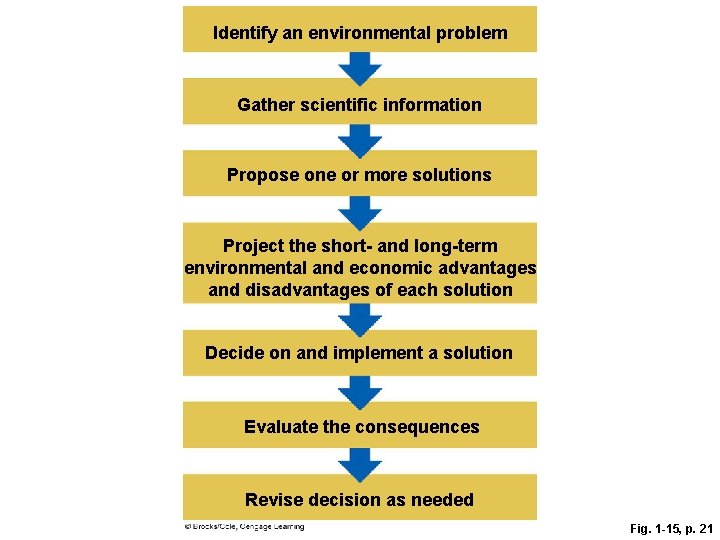
Identify an environmental problem Gather scientific information Propose one or more solutions Project the short- and long-term environmental and economic advantages and disadvantages of each solution Decide on and implement a solution Evaluate the consequences Revise decision as needed Fig. 1 -15, p. 21
We Can Work Together to Solve Environmental Problems § Social capital • Encourages • Openness and communication • Cooperation • Hope • Discourages • Close-mindedness • Polarization • Confrontation and fear
Case Study: The Environmental Transformation of Chattanooga, TN § Environmental success story: example of building their social capital § 1960: most polluted city in the U. S. § 1984: Vision 2000 § 1995: most goals met § 1993: Revision 2000
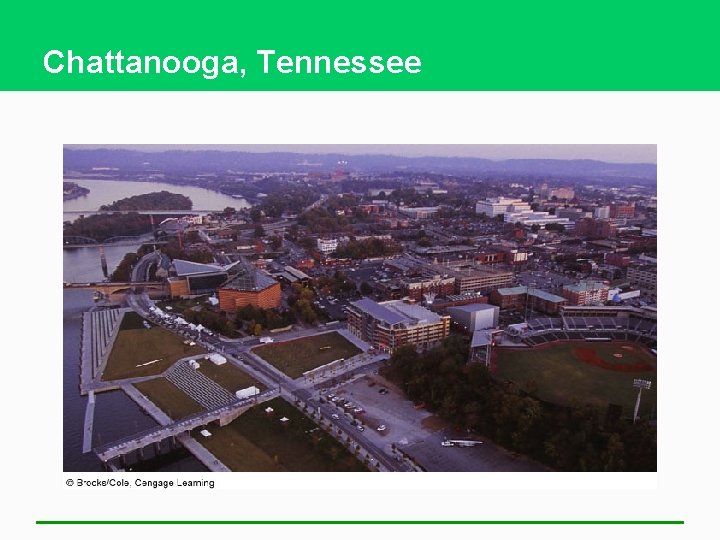
Chattanooga, Tennessee
Individuals Matter: Aldo Leopold § 5– 10% of the population can bring about major social change § Anthropologist Margaret Mead § Aldo Leopold: environmental ethics • A leader of the conservation and environmental movements of the 20 th century • Land ethic • Wrote: A Sand County Almanac
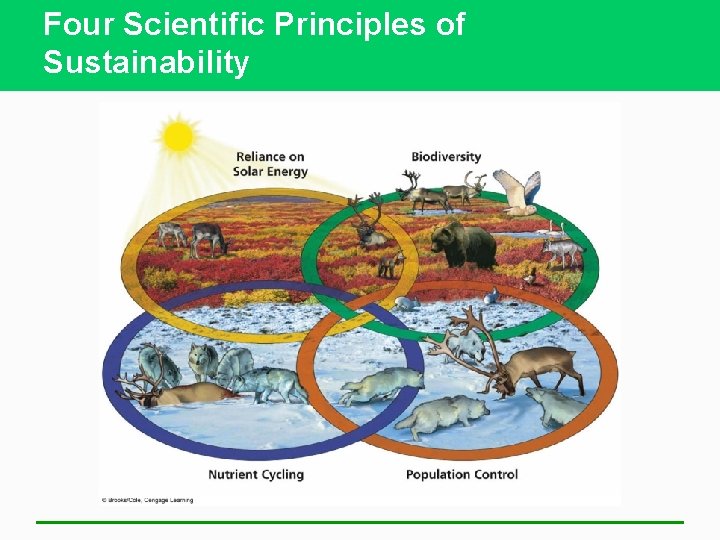
1 -6 What Are Four Scientific Principles of Sustainability? § Concept 1 - 6 Nature has sustained itself for billions of years by using solar energy, biodiversity, population control, and nutrient cycling—lessons from nature that we can apply to our lifestyles and economies.
Studying Nature Reveals Four Scientific Principles of Sustainability § Reliance on solar energy § Biodiversity § Population control § Nutrient cycling
Four Scientific Principles of Sustainability
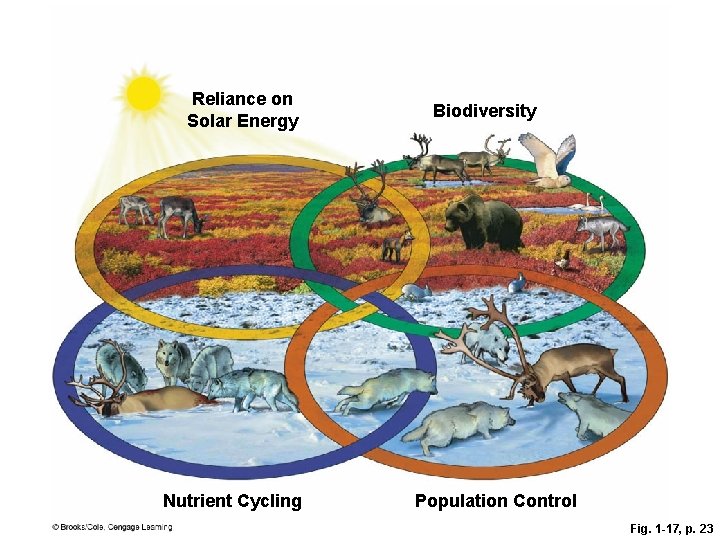
Reliance on Solar Energy Nutrient Cycling Biodiversity Population Control Fig. 1 -17, p. 23
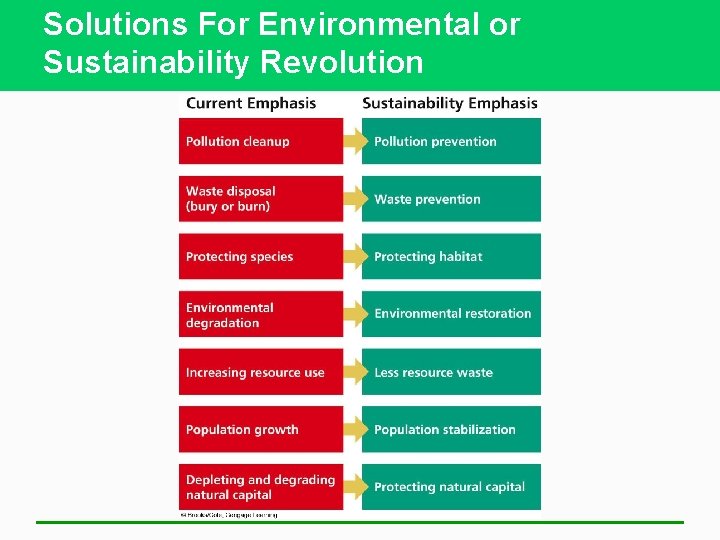
Solutions For Environmental or Sustainability Revolution

Current Emphasis Sustainability Emphasis Pollution cleanup Pollution prevention Waste disposal (bury or burn) Waste prevention Protecting species Protecting habitat Environmental degradation Environmental restoration Increasing resource use Less resource waste Population growth Population stabilization Depleting and degrading natural capital Protecting natural capital Fig. 1 -18, p. 24
- Slides: 67