
Environmental Prevention The Basics of Substance Abuse Prevention
Environmental Prevention The Basics of Substance Abuse Prevention and Beyond January 20, 2012 Los Angeles County, CA Angela Da Re CARS Consultant 1
FOUNDATIONS OF SUBSTANCE ABUSE PREVENTION 2
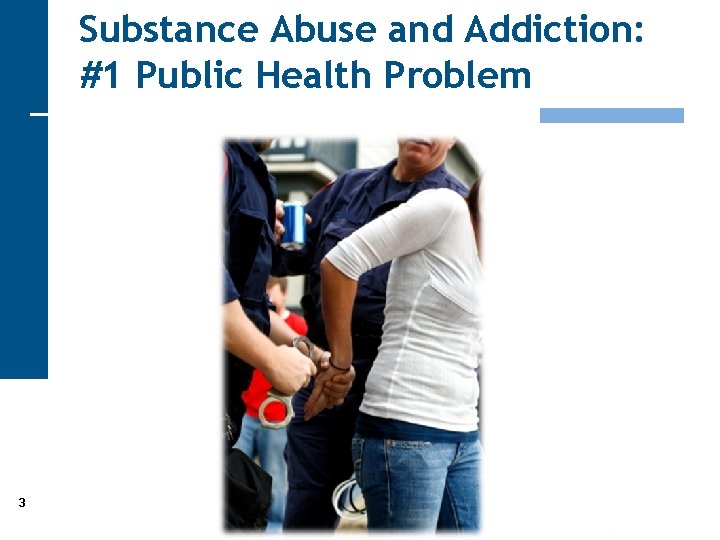
Substance Abuse and Addiction: #1 Public Health Problem 3
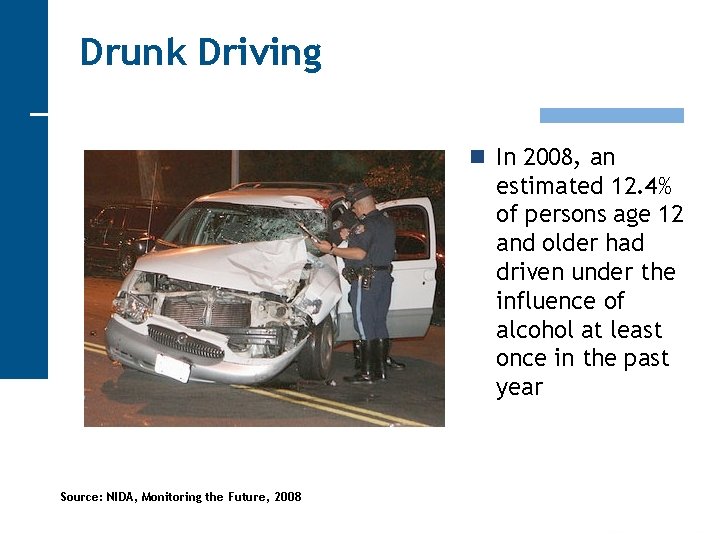
Drunk Driving n In 2008, an estimated 12. 4% of persons age 12 and older had driven under the influence of alcohol at least once in the past year Source: NIDA, Monitoring the Future, 2008
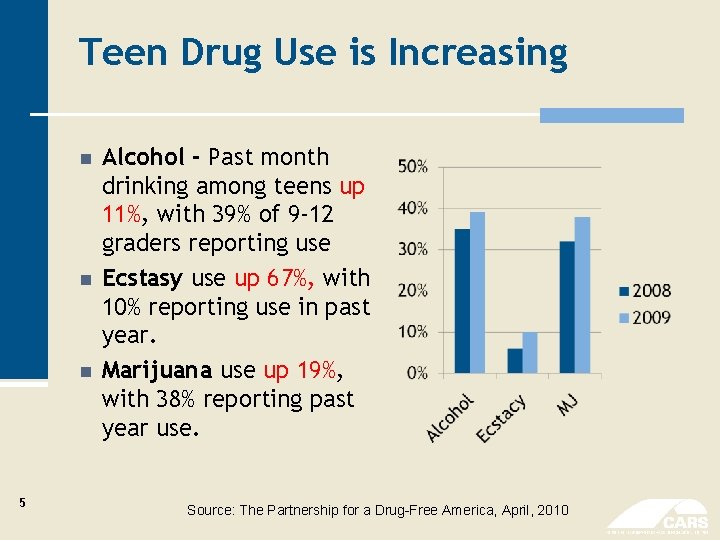
Teen Drug Use is Increasing n n n 5 Alcohol - Past month drinking among teens up 11%, with 39% of 9 -12 graders reporting use Ecstasy use up 67%, with 10% reporting use in past year. Marijuana use up 19%, with 38% reporting past year use. Source: The Partnership for a Drug-Free America, April, 2010
Early Use Increases Risk Drinking before age 15: n Increases risk of developing alcohol-use disorders (AUD) as an adult (2008) 6 Source: National Institute on Alcohol Abuse and Alcoholism
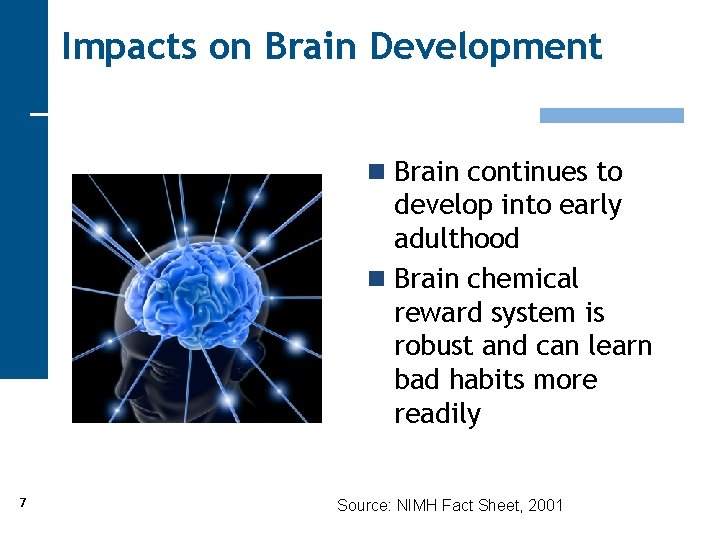
Impacts on Brain Development n Brain continues to develop into early adulthood n Brain chemical reward system is robust and can learn bad habits more readily 7 Source: NIMH Fact Sheet, 2001
What is Prevention? 8
Prevention Defined The role of prevention is to create healthy communities where people enjoy a quality life: n Healthy environments at work and in school n Supportive communities and neighborhoods n Connections with families and friends n Drug and crime-free 9 Source: Center for Substance Abuse Prevention, SAMHSA
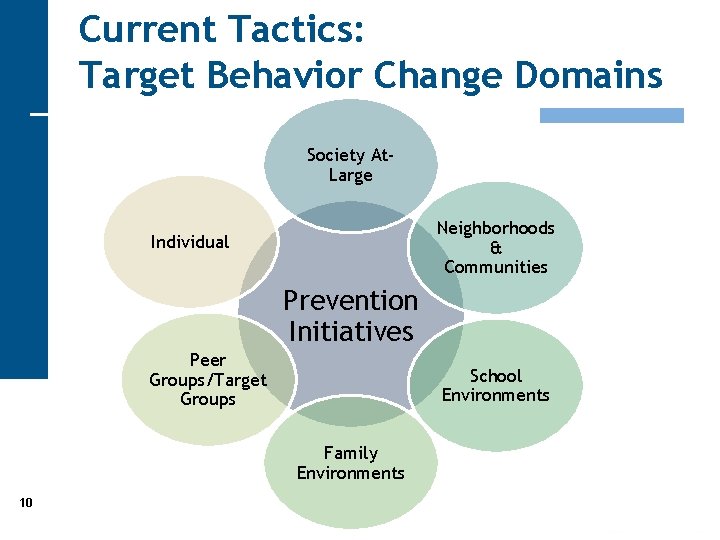
Current Tactics: Target Behavior Change Domains Society At. Large Neighborhoods & Communities Individual Prevention Initiatives Peer Groups/Target Groups School Environments Family Environments 10
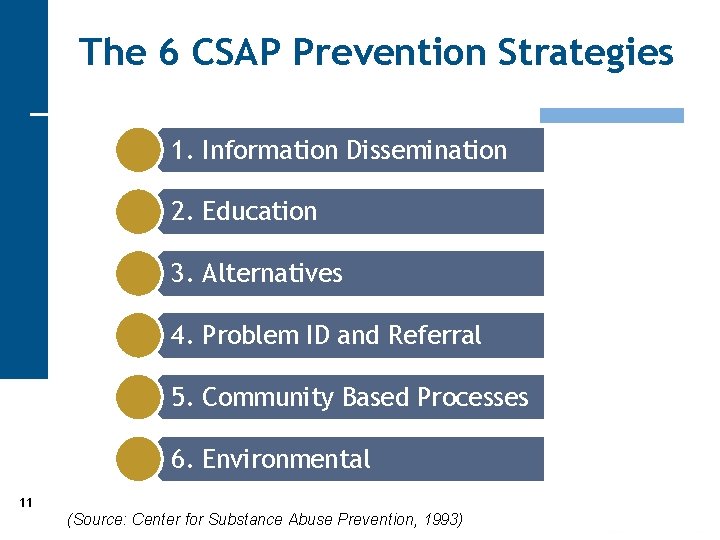
The 6 CSAP Prevention Strategies 1. Information Dissemination 2. Education 3. Alternatives 4. Problem ID and Referral 5. Community Based Processes 6. Environmental 11 (Source: Center for Substance Abuse Prevention, 1993)
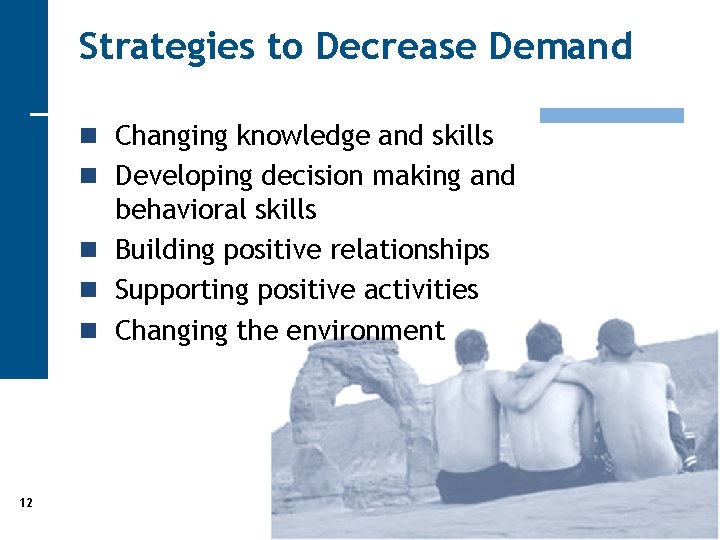
Strategies to Decrease Demand n Changing knowledge and skills n Developing decision making and behavioral skills n Building positive relationships n Supporting positive activities n Changing the environment 12
Foundations for Environmental Prevention 1. Understanding the Public Health Model 2. What is Environmental Prevention? 3. Strategies in Environmental Prevention 13
UNDERSTANDING THE PUBLIC HEALTH MODEL 14
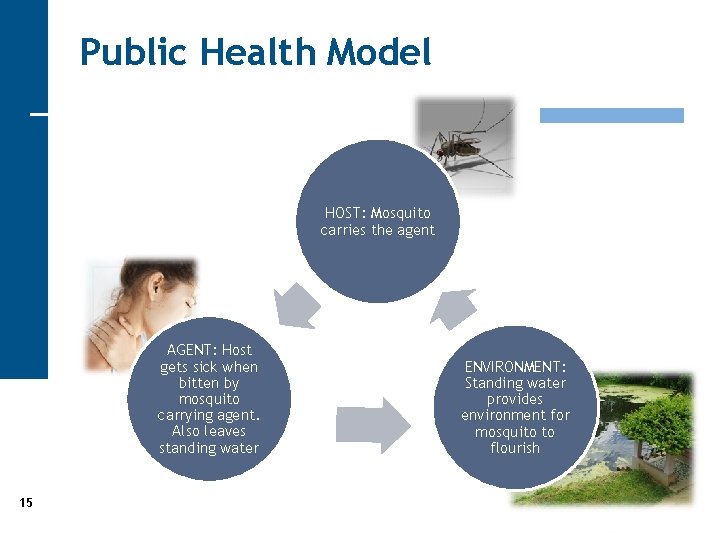
Public Health Model HOST: Mosquito carries the agent AGENT: Host gets sick when bitten by mosquito carrying agent. Also leaves standing water 15 ENVIRONMENT: Standing water provides environment for mosquito to flourish
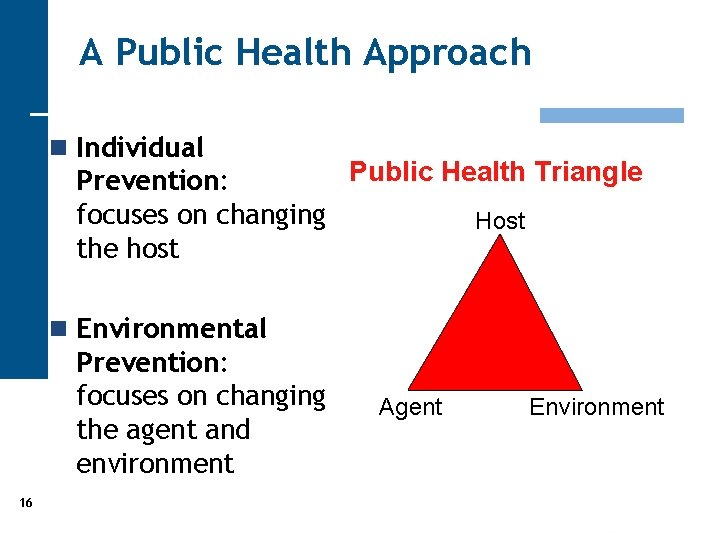
A Public Health Approach n Individual Public Health Triangle Prevention: focuses on changing Host the host n Environmental Prevention: focuses on changing the agent and environment 16 Agent Environment
WHAT IS ENVIRONMENTAL PREVENTION? 17
Environmental Prevention Change aspects of the environment that contribute to the use of alcohol and other drugs Limit access to substances n Change social norms n Change public laws, policies and practices n 18
Examples: n Changing how alcohol is sold and advertised n When and where alcohol is available 19
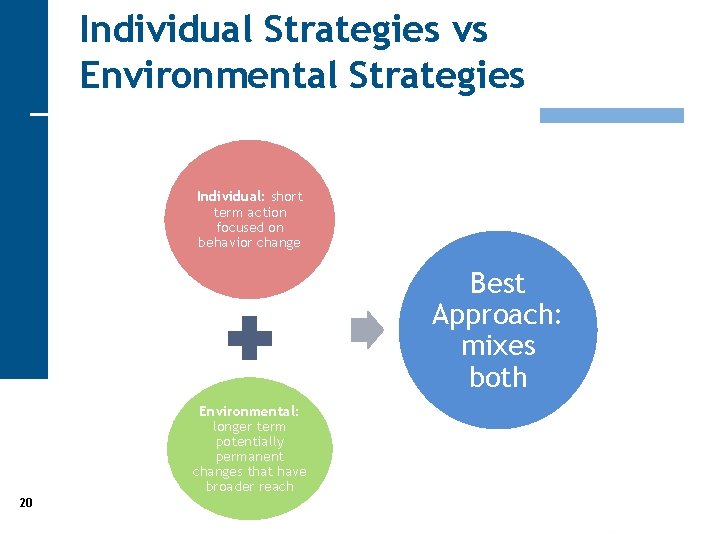
Individual Strategies vs Environmental Strategies Individual: short term action focused on behavior change Best Approach: mixes both Environmental: longer term potentially permanent changes that have broader reach 20
WHY FOCUS ON CHANGING THE ENVIRONMENT? 21
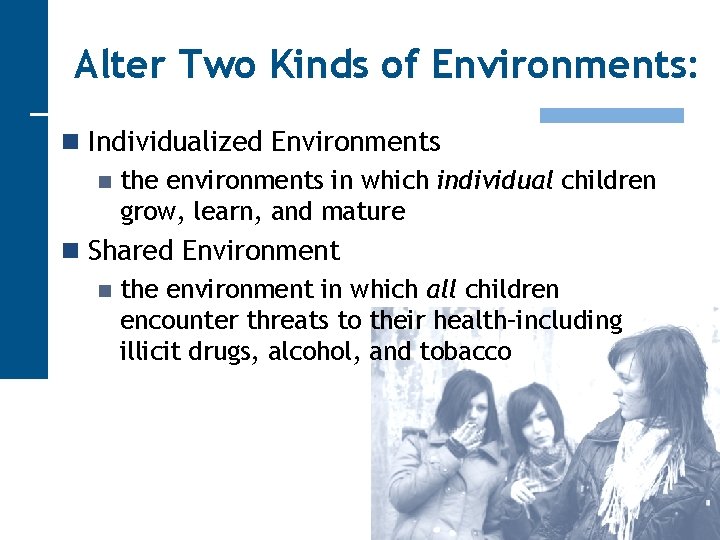
Alter Two Kinds of Environments: n Individualized Environments n the environments in which individual children grow, learn, and mature n Shared Environment n the environment in which all children encounter threats to their health–including illicit drugs, alcohol, and tobacco
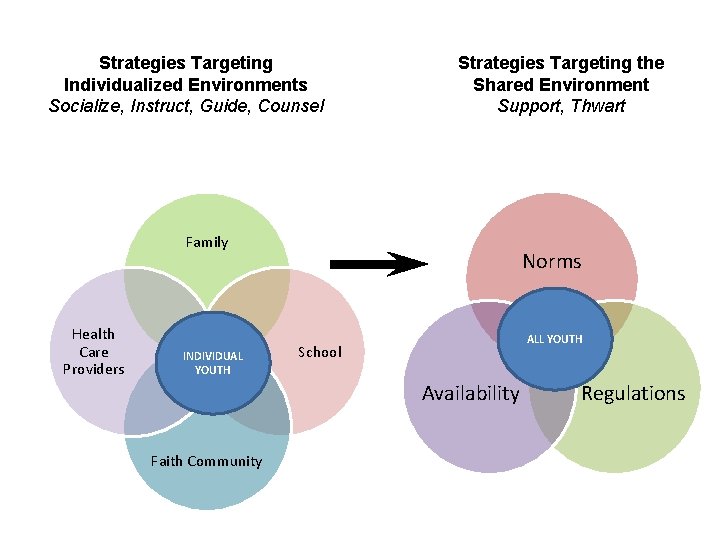
Strategies Targeting Individualized Environments Socialize, Instruct, Guide, Counsel Strategies Targeting the Shared Environment Support, Thwart Family Health Care Providers INDIVIDUAL YOUTH Norms ALL YOUTH School Availability Faith Community Regulations
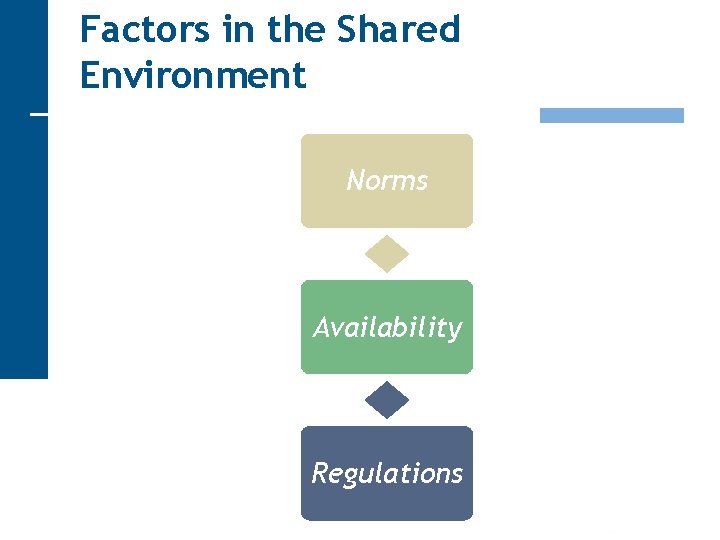
Factors in the Shared Environment Norms Availability Regulations
Norms n Basic orientations concerning the “rightness or wrongness, ” acceptability or unacceptability, and/or deviance of specific behaviors for a specific group of individuals n The basis for a variety of specific attitudes that support or undermine the particular prevention strategies we may wish to implement
Availability n The inverse of the sum of resources (time, energy, money) that must be expended to obtain a commodity (alcohol, marijuana, cigarettes) n The more resources required to get something, the lower the availability
Regulations n Formalized laws, rules, policies that serve to control availability and codify norms and that specify sanctions for violations n May be instituted by governments, public agencies (e. g. , police departments, school systems), or private organizations (e. g. , HMOs, hospitality establishments, convenience stores)
The Likelihood of Undesirable Behavior is Decreased When: n There exist regulations that discourage the behavior n Community norms disapprove of the behavior n The commodities needed to engage in the behavior are not easily available
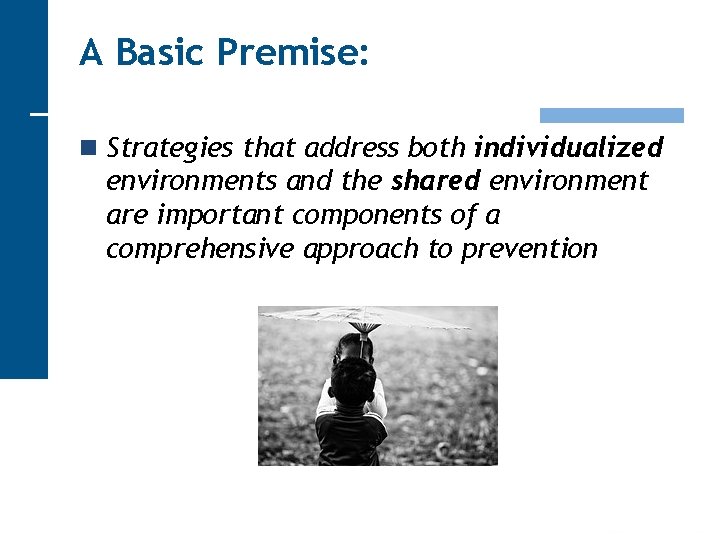
A Basic Premise: n Strategies that address both individualized environments and the shared environment are important components of a comprehensive approach to prevention
Why Focus on Changing the Environment? n Speed n Efficiency n Community response 30
Shared Environment Strategies Speed n Produce more rapid results than do strategies aimed at individual environments n E. g. , Enforcement of the minimum alcohol purchase age or increases in alcohol prices (manipulations of availability) can produce more or less immediate reductions in youth alcohol use n Pre-school programs to increase academic readiness and pro-social orientation may take many years to show results n
Shared Environment Strategies Efficiency n Efficient because they affect every member of a target population n For Example: n Removing dealers from street corners and training convenience store clerks to check IDs reduces the availability of illicit drugs and tobacco for all neighborhood youth
Shared Environment Strategies Community Response Many communities lack a coordinated approach addressing the shared environment, one that complements their individualized strategies. An environmental approach brings a community focus and response to these individual strategies.
ENVIRONMENTAL PREVENTION IN ACTION 34
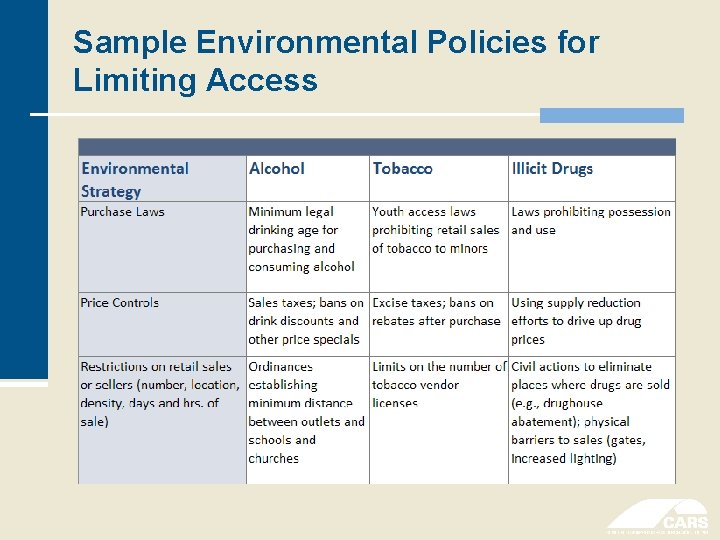
Sample Environmental Policies for Limiting Access
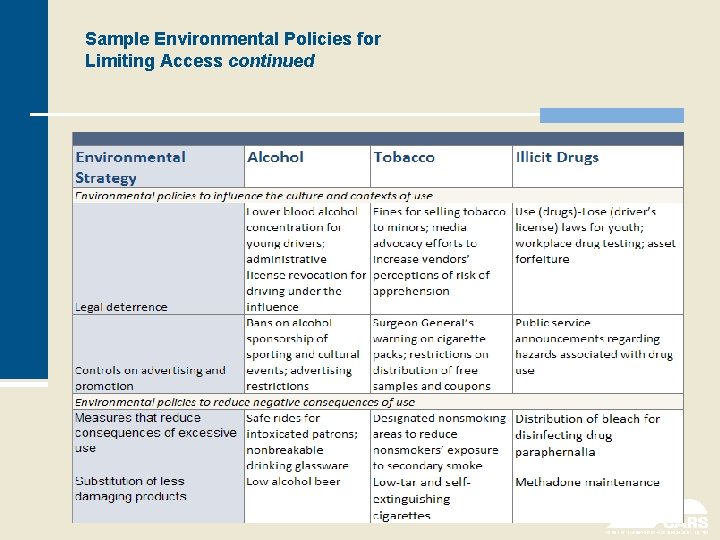
Sample Environmental Policies for Limiting Access continued
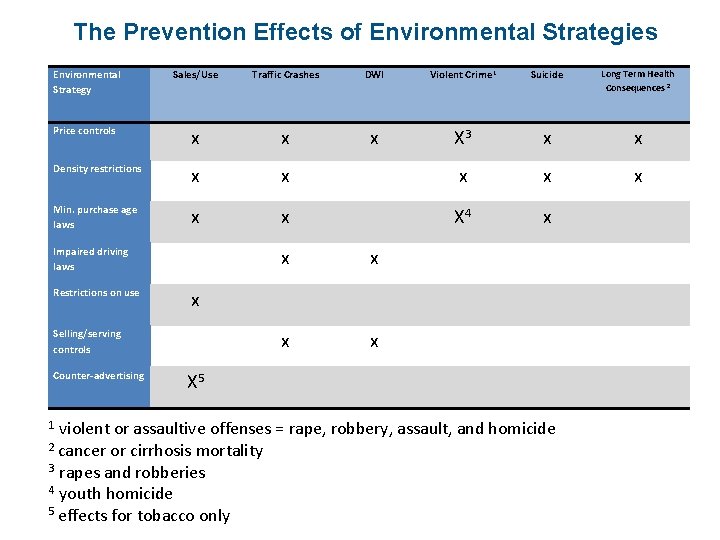
The Prevention Effects of Environmental Strategies Environmental Strategy Sales/Use Traffic Crashes DWI Violent Crime 1 Suicide Long Term Health Consequences 2 Price controls x x x X 3 x x Density restrictions x x x Min. purchase age laws x x X 4 x Impaired driving laws Restrictions on use x x Selling/serving controls Counter-advertising x X 5 violent or assaultive offenses = rape, robbery, assault, and homicide 2 cancer or cirrhosis mortality 3 rapes and robberies 4 youth homicide 5 effects for tobacco only 1
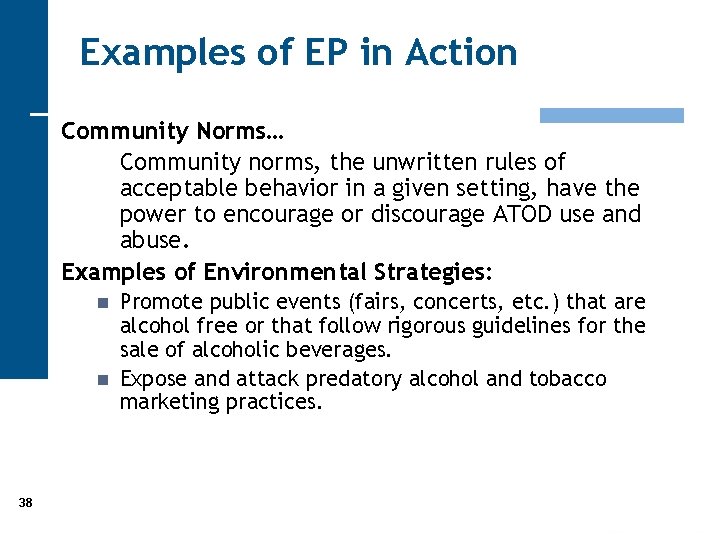
Examples of EP in Action Community Norms… Community norms, the unwritten rules of acceptable behavior in a given setting, have the power to encourage or discourage ATOD use and abuse. Examples of Environmental Strategies: n n 38 Promote public events (fairs, concerts, etc. ) that are alcohol free or that follow rigorous guidelines for the sale of alcoholic beverages. Expose and attack predatory alcohol and tobacco marketing practices.
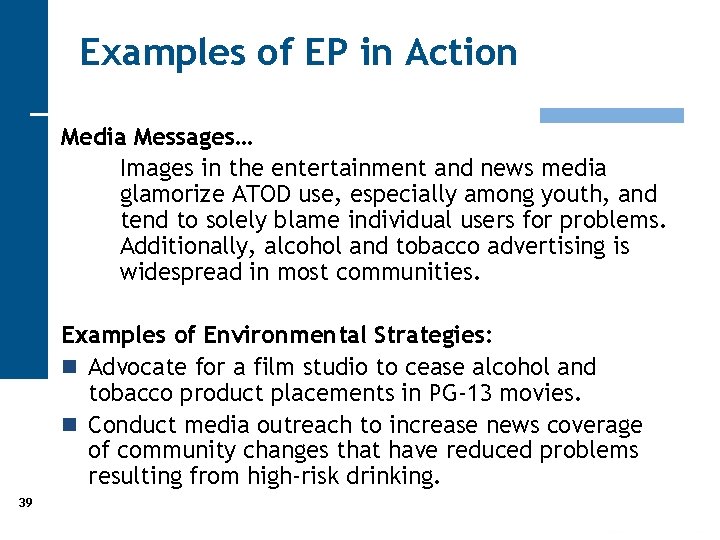
Examples of EP in Action Media Messages… Images in the entertainment and news media glamorize ATOD use, especially among youth, and tend to solely blame individual users for problems. Additionally, alcohol and tobacco advertising is widespread in most communities. Examples of Environmental Strategies: n Advocate for a film studio to cease alcohol and tobacco product placements in PG-13 movies. n Conduct media outreach to increase news coverage of community changes that have reduced problems resulting from high-risk drinking. 39
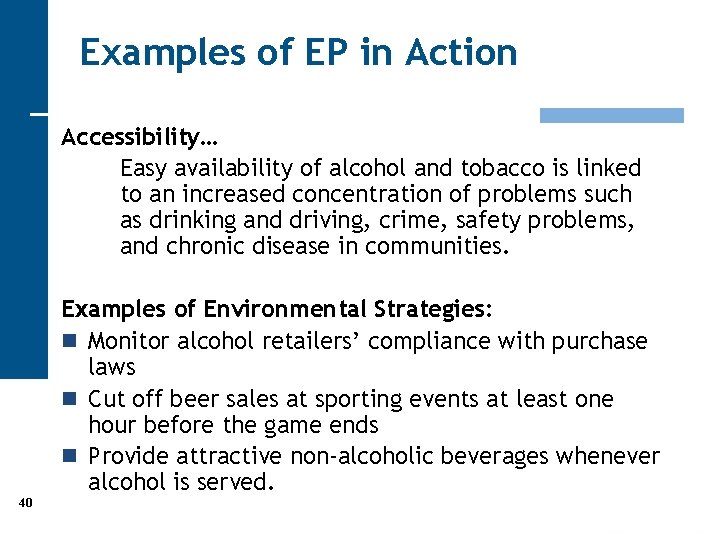
Examples of EP in Action Accessibility… Easy availability of alcohol and tobacco is linked to an increased concentration of problems such as drinking and driving, crime, safety problems, and chronic disease in communities. Examples of Environmental Strategies: n Monitor alcohol retailers’ compliance with purchase laws n Cut off beer sales at sporting events at least one hour before the game ends n Provide attractive non-alcoholic beverages whenever alcohol is served. 40
Examples of EP in Action Policies and Regulations… Policies and regulations, whether of the public sector (states, counties, cities, school districts) or private sector (businesses, social clubs), shape how ATOD is sold, promoted and consumed. Examples of Environmental Strategies: n Establish local zoning ordinances that restrict the number of alcohol, tobacco and head shop outlets in a neighborhood or city n Increase state excise tax on alcohol and tobacco products n Drinking Age laws 41
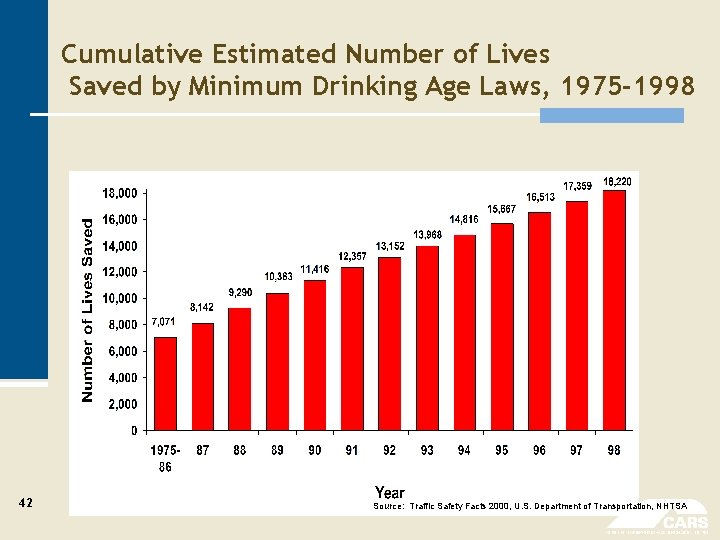
Cumulative Estimated Number of Lives Saved by Minimum Drinking Age Laws, 1975 -1998 42 Source: Traffic Safety Facts 2000, U. S. Department of Transportation, NHTSA
Environmental Prevention in Action Environmental Prevention is not an attempt to bring back Prohibition by completely outlawing alcohol and tobacco… 43
Environmental Prevention in Action …Rather, this approach attempts to put a balance back in our public policies that have traditionally favored--and continue to favor--the alcohol and tobacco industries over the health and welfare of our communities, particularly young people. -Bonnie Benard, Prevention Resource Center 44
Environmental Prevention is an Approach Environmental Prevention is an approach with a series of strategies that are grounded in the community… 45
Environmental Prevention is an Approach …that Utilizes: n n 46 Data Community Organizing Action Policies
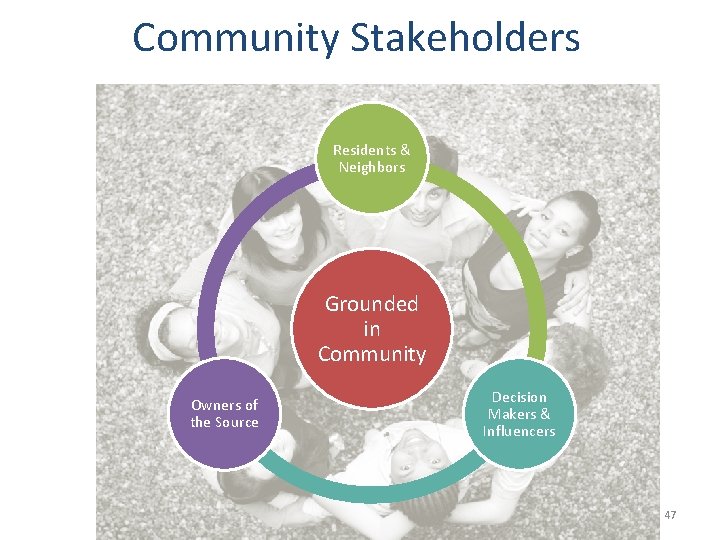
Community Stakeholders Residents & Neighbors Grounded in Community Owners of the Source Decision Makers & Influencers 47
How Coalitions Mobilize Community Mobilization: Working with individuals, groups and institutions in a community, over time, in many different ways to inspire, encourage and support them in making positive changes in their lives ultimately causing a change in community norms. 48
ENVIRONMENTAL PREVENTION PLANNING TO BEGIN 49
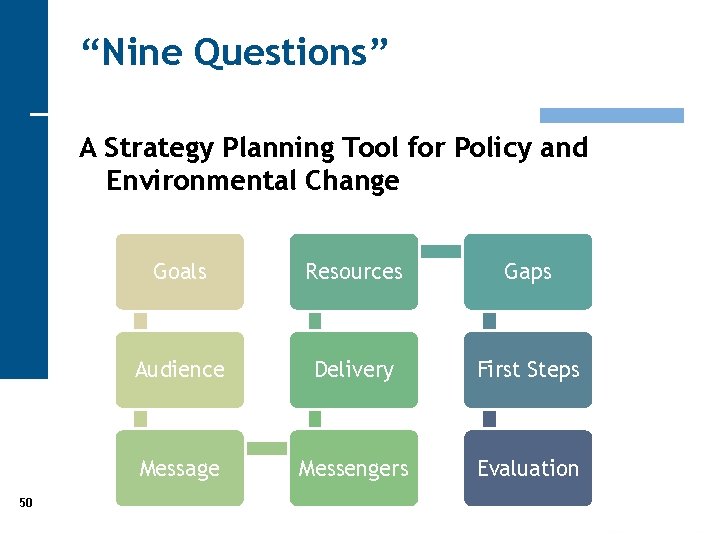
“Nine Questions” A Strategy Planning Tool for Policy and Environmental Change 50 Goals Resources Gaps Audience Delivery First Steps Message Messengers Evaluation
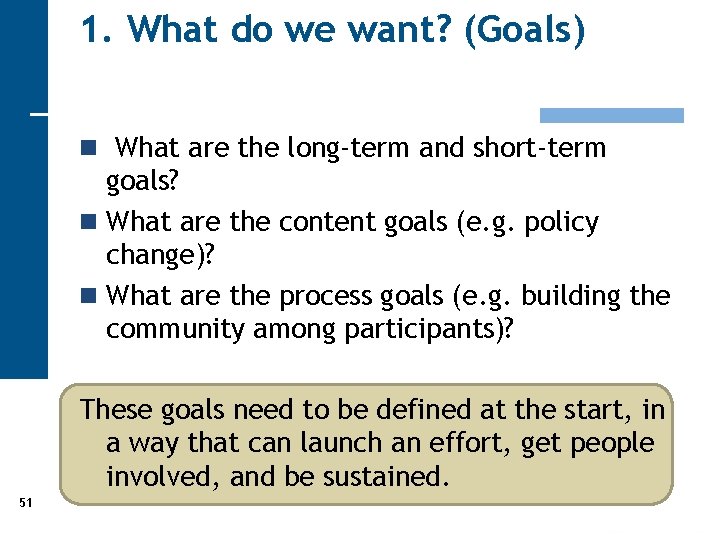
1. What do we want? (Goals) n What are the long-term and short-term goals? n What are the content goals (e. g. policy change)? n What are the process goals (e. g. building the community among participants)? These goals need to be defined at the start, in a way that can launch an effort, get people involved, and be sustained. 51
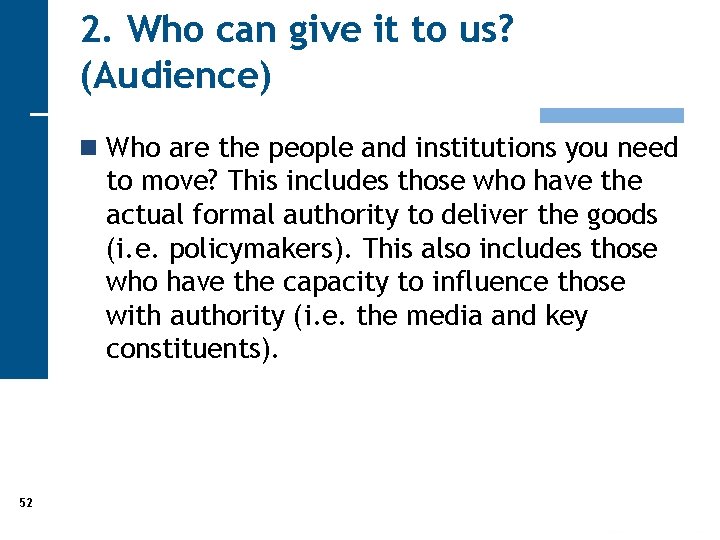
2. Who can give it to us? (Audience) n Who are the people and institutions you need to move? This includes those who have the actual formal authority to deliver the goods (i. e. policymakers). This also includes those who have the capacity to influence those with authority (i. e. the media and key constituents). 52
3. What do they need to hear? (Message) n Craft and frame a set of messages that will be persuasive to the different audiences. Although the messages must be rooted in the same basic truth, they also need to be tailored differently for different audiences. In most cases, policy or environmental change messages will have two basic components: an appeal to what is right and an appeal to the audience’s self-interest. 53
4. Who do they need to hear it from? (Messengers) n The same message has a different impact depending on who communicates it. Who are the most credible messengers for the different audiences? What do we need to do to equip these messengers, both in terms of information and to increase their comfort level as advocates? 54
5. How can we get them to hear it? (Delivery) n There are numerous ways for advocates to deliver the message. The most effective varies from situation to situation. The key is to evaluate and apply them appropriately. 55
6. What have we got? (Resources) n Take careful stock of the resources that already exists or need to be built on. Take a look at staff, information, alliances and other people’s capacity. You don’t need to start from scratch. 56
7. What needs to be developed? (Gaps) n What resources are you missing? Identify what pieces are missing and who can help fill the gaps. 57
8. Where do we begin? (First Steps) n Look at short-term goals or projects that would bring people together. Create something achievable that lays the groundwork for the next step. 58
9. Is it working? (Evaluation) n Strategy needs to be evaluated at the beginning, middle and end of the campaign. It’s important to discard any elements that don’t work once they are put into practice. 59
A Final Thought… If at first you DO succeed - try to hide your astonishment. ~Author Unknown 60
Handout from CADCA Community Anti-Drug Coalitions of America n www. cadca. org/files/Beyond_the_Basics_En vironmental. Strategies. pdf 61
Contact Information Angela Da Re Dare. email@gmail. com Center for Applied Research Solutions (CARS) 923 College Avenue Santa Rosa, CA 95404 (707) 568 -3800 bthorsen@cars-rp. org 62 www. ca-cpi. org
- Slides: 62