
ENVIRONMENTAL POLLUTION The unfavourable changes in physical chemical
ENVIRONMENTAL POLLUTION • The unfavourable changes in physical , chemical and biological characteristics of surroundings that is air, water, soil due to several human activities that causes harmful effect on our life or that of other desirable species and cultural assets. • POLLUTANTS: The materials which cause pollution of the environment. • Examples : Gaseous pollutants, metallic contaminants, pesticides, toxic organic and inorganic compounds, carcinogens, mutagens , teratogens, radioactive substances.
SOURCES AND CAUSES OF ENVIRONMENT 1. Industrial activity 2. Dumping solid waste 3. Vehicles 4. Rapid urbanisation and industrialization 5. Population overgrowth 6. Combustion of fossil fuels 7. Agricultural waste
TYPES OF POLLUTANT • NATURAL DISPOSAL– 1. Non biodegradable-example DDT( Dichloro diphenyl trichloro ethane) 2. Biodegradable-examples smoke, smog , dust particles, metal like iron, lead, zinc etc. EXISTENCE – 1. Qualitative –Naturally do not occur in nature but passed through human activities. Examples DDT, pesticides. 2. Quantitative—components whose concentration reaches beyond a threshold volume, then they act as pollutants. Examples –concentration of Co 2, CO, No 2 in the atmosphere released by means of fires from different industries.
• PRIMARY POLLUTANT– Substances which persists in form in which they are directly added to the environment from some identifiable sources. Eg. DDT • SECONDARY POLLUTANT– Caused due to interaction among primary pollutants. Examples PAN (Peroxy acetyl nitrate), ozone, sulpherdi oxide etc. • INDOOR POLLUTANT: Mosquito repellants, pesticides, paints, varnishes, cigaratte, smoke etc. • OUTDOOR POLLUTANT: Automobile, mining, and industrial pollutants
AIR POLLUTION • The process by which some natural phenomenon or human activities increase the amount of solid waste or concentration of gases other than oxygen in the air which are harmful to man and his environment. • TYPES OF AIR POLLUTANT: 1. Gaseous pollutants- Important gaseous pollutants are carbon di oxide, carbon mono oxide, oxides of nitrogen, sulphur, hydrogen sulphide, hydrocarbons, ozone and other oxidant. • 2. Particulate pollutants- Air borne particulate materials consists of both solid and liquid particles. They vary in size, ranging from 0. 01 micron to 20 micron. Particles with least diameter are present in aerosols.
AIR POLLUTION • SOURCES OF AIR POLLUTION 1. Point sources- These are sources which cause direct release of air pollutants. Examples: The emission of gases from industry through a chimney. 2. Non point sources-These are sources which release substances which are capable of undergoing chemical reactions in the atmosphere to generate air pollutants. 3. Man made or anthropogenic sources- These are sources which generate air pollutant by human activities.
AIR POLLUTION CLASSIFICATION OF AIR POLLUTANT- 1. GASEOUS AIR POLLUTANT– Sulphur di oxide, nitrogen oxides, carbon mono oxides, carbon di oxides. 2. PARTICULATE AIR POLLUTANT- Dust, mist, fumes, smoke, aerosols, fog, fly ash soot, smog etc. 3. PRIMARY AIR POLLUTANT- Directly emitted from the sources like carbon di oxide, sulphur di oxides, smoke etc. 4. SECONDARY AIR POLLUTANT- Formed by chemical reactions among primary pollutants and chemical species present in atmosphere. 5. INDOOR AIR POLLUTANT- Mosquito repellant, pesticides, paints, glues, varnishes, cigaratte, smoke etc.
DIFFERENT TYPES OF AIR POLLUTANTS AND THEIR CONSEQUENCES Carbon monoxides– Sources: 1. Forest Fire 2. Agricultural burning 3. Incomplete combustion of fossil fuels 4. Tobacco smoking 5. Automobile exhausts. Effects: 1. Reduce oxygen carrying capacity by forming car boxy haemoglobin compounds. 2. Decrease in vision and causes cardio vascular disorder
• Carbon dioxides: Sources- 1. Fossil fuel combustion • 2. Jet plane use oxygen and release carbon dioxide. • 3. Burning Effects- 1. causes headache and nausea. 2. Effects on climate, increase global temperature. • Sulphur dioxide- Sources- 1. Combustion of coal and petroleum products • 2. sulphuric acid plants • 3. metallurgical operations
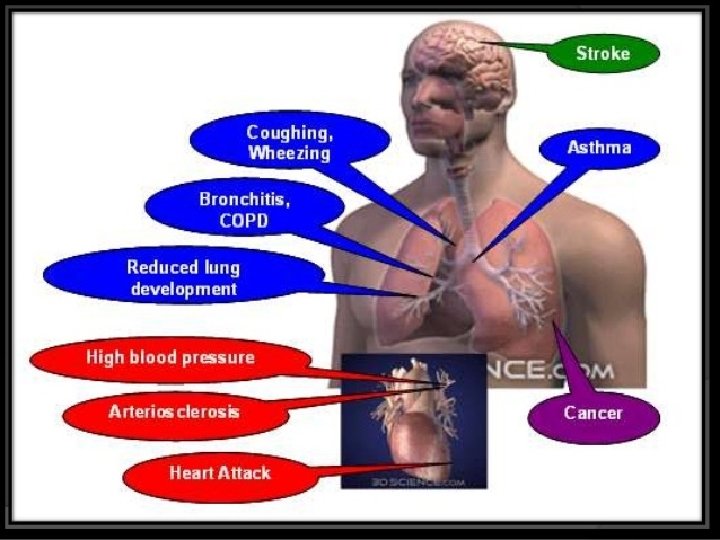
• Effects of sulphur dioxides- 1. Irritation of throat and eyes • 2. Suffocation • 3. Asthma • 4. Chronic bronchitis • Oxides of nitrogen: Sources- 1. Nitric acid plants • 2. Automobile exhausts • 3. Explosives • 4. Fertilizer industries
• Effects- 1. Headache • • 2. Respiratory irritation 3. impairment of lung defences 4. corrosion of teeth 5. loss of appetite Mercury Sources- 1. Mining and refining of mercury 2. industries linked with manufacture of medical products Effect- 1. Inhalation of mercury vapours cause toxic effects 2. Highly toxic organo mercurical may cause damage of brain and nervous system.
• LEAD Sources- 1. Automobile emission, electroplating waste, plumbing, lead paint industry, printing etc. Effects- Liver and kidney damages, mental retardation in children, abnormalities in fertility and pregnancy, gastrointestinal damage. Particulates matter OR Suspended Particulates matter - Mixture of solid particles and liquid droplets suspended in the air having the diameter size of 0. 0002 micrometers to 500 micrometers. TYPES-A. Coarse particles- Diameter size greater than 2. 5 micrometers and less than 10 micrometers B. Fine particles- less than 2. 5 micrometer.
• Sources of particulate matter- 1. volcanoes, 2. Blowing of dust and soil by wind, 3. Forest and grassland fire, 3. fly ash from smelters and mining operations, 4. Smoke from incomplete combustion. • Effects- 1. Chronic respiratory disease 2. Bronchitis, 3. Asthma increase, 4. Birth defects, 5. Lung cancer, 6. Asbestosis • Fly Ash- When coal burns it gives rise to a wide range of particulate matter mainly the metal oxides.
• Smog- Smog is the combination of various gases with water vapour and fine particles. Smoke particles get trapped in the fog giving it a yellow or black colour. It is dangerous for plants, animals, human beings and materials. • There are two different types of smog- Photochemical Smog- This smog is produced when sunlight acts upon motor vehicle exhaust gases such as nitrogen oxides and volatile organic compounds. Ozone, aldehydes, peroxyacetyl nitrates and volatile organic compounds are the main components of photochemicalsmog.
• Effects of photochemical smog- Ozone which is the main components of photochemical smog causes sore throats, inflammation, discharges in nasal passage. • In plants ozone attacks plants mainly citrus fruits, potatoes, legumes, soybeans etc. • 2. London smog- When sulphur is emitted in large amount and air contains high liquid water contents, then London smog is formed. In 1952, 4000 deaths cause in London due to yellow fog.
CONTROL OF AIR POLLUTION • DEVICE TO CONTROL AIR POLLUTION 1. CATALYTIC CONVERTER- These are used in almost all of the vehicle to decrease air pollution. These convert pollutants into less harmful product. Carbon monoxide, nitrogen oxides, volatile organic compounds are converted to nitrogen, carbon di oxide and water. 2. GRAVITY SETTLING CHAMBER- It is the least efficient one. Gas containing particulate matter enters into the chamber by the inlet. Particulate matter is separated from the gas inside the chamber. But they are not suitable for particles less than 60 microns.
• ELECTROSTATIC PRECIPITATOR- It is the most efficient method among all these methods and it can separated very small sized particulates. • CYCLONE SEPARATORS • FABRIC FILTER. • WET SCUBBER etc
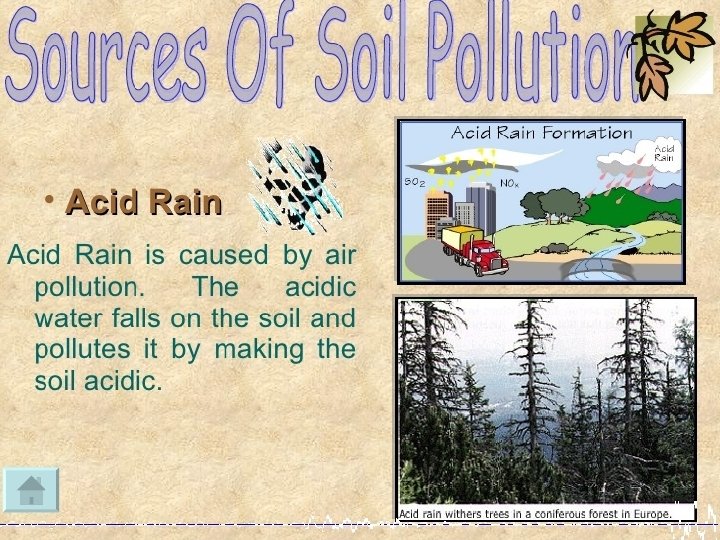
WATER POLLUTION • Water pollution is defined as presence of any foreign substance or energy in water in such concentration and for such duration that tends to degrade the quality of water so that humans, animals or any other organism cannot enjoy the beneficial qualities of water but the use constitutes a hazards. • SOURCES OF WATER POLLUTION • 1. Point sources- Example-Municipal and industrial • 2. Non point sources-Mining runoff and acid rain.
• ANOTHER SOURCES OF WATER POLLUTION • 1. Municipal pollution- Domestic sewage which includes the discharges from toilets, wash room, kitchens, institutions, commercial and industrial buildings etc. • 2. Agricultural pollution- Waste from agricultural practices like plant nutrients, insecticides, pesticides etc are also introduced into water. • 3. Mining Pollution- Fines or tailing from ore washing are disposed off in water suspensions, which are ultimately transferred to the natural stream and which, thus, get polluted. • 4. Industrial pollution- Most of rivers and fresh water streams are seriously polluted due to industrial effluents. These contain both organic and inorganic hazardous materials and non biodegradable one too.
ORIGIN AND EFFECTS OF DIFFERENT WATER POLLUTANT • PATHOGEN--- disease causing agent like protozoa, viruses, helminth. SOURCE 1. Sewage discharge 2. Waste water from industries 3. Meat processing EFFECTS--1. Cholera, Typhoid, Dysentery, Polio, Giardiasis, Hepatitis.
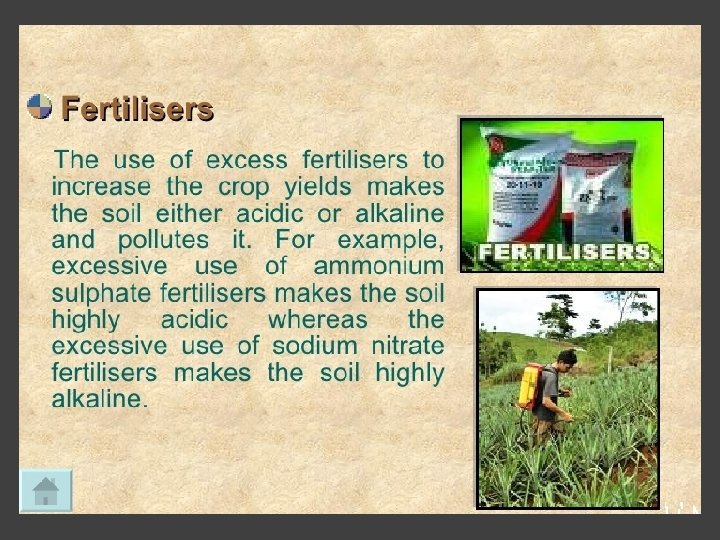
• NUTRIENT---Chemical elements and compounds which are needed for growth of living things. Nitrogen, phosphorus, carbon, sulphur , calcium, potassium etc are examples of nutrient. • SOURCES– 1. agricultural runoff 2. Waste water from fertilizer industries. 3. Sewage disposal EFFECTS– Eutrophication-Nutrients can increase the growth of algae and other organic matter. Leads to algal bloom. The dissolved oxygen of water is used up by them. Many fish and other animals are killed due to lack of dissolved oxygen. This disturb the nitrogen and phosphorus cycle.
• HEAVY METALS– SOURCES • 1. Mining and processing of ores. 2. Mine drainage and leaching of mining wastes. 3. power plants 4. weapons production industries. Effects. Mercury Nitrates– Causes minamata disease ( Japan 1952), Blue baby syndrome in infants. Chromosomal damage. Lead- Dyslexia disease Nausea, vomoting, loss of appetite anaemia, damage to liver, kidney, brain cells, mental retardation, increase blood pressure, loss of muscle elastricity.
• Arsenic-Black foot disease causes diarrhoea. • Cadmium-Itai disease. Deformities in skeletal system, heart diseases, high blood pressure, Anaemia, brittle bone, severe pain in bones and joints. • Fluoride—Knock knee disease. A condition of having the knees turned inward. • Zinc– Cramps, renal damage. • Copper –Uraemia • Chromium– Gastrointestinal ulcers, disorders developed in the nervous system.
CONTROL OF WATER POLLUTION • Waste water Treatment process- Waste water treatment operates in following four sequences. . • 1. Pre treatment—Large solid like plastics, sticks, rags can be easily removed during this treatment. • 2. Primary treatment—In this steps grinder, separators can be used. It uses screening process, communitor, grit chambers etc. Metals , rocks are caught in this process. • 3 Secondary treatment- Secondary treatment process mainly involves the biological treatment process. Micro organisms degrade the biological content of the sewage. Following are the commonly used methods for secondary treatment processes. . 1. Trickling filter. 2. Rotating Biological Contactor 3. Activated sludge 4. Oxidation Pond.
• Activated Sludge- This method uses the suspended growth of microorganisms to remove biological oxygen demand suspended solids in water. • Oxidation pond- they are used to receive waste water that has been already passed through a stabilization pond or primary settling tanks. • Tertiary treatment
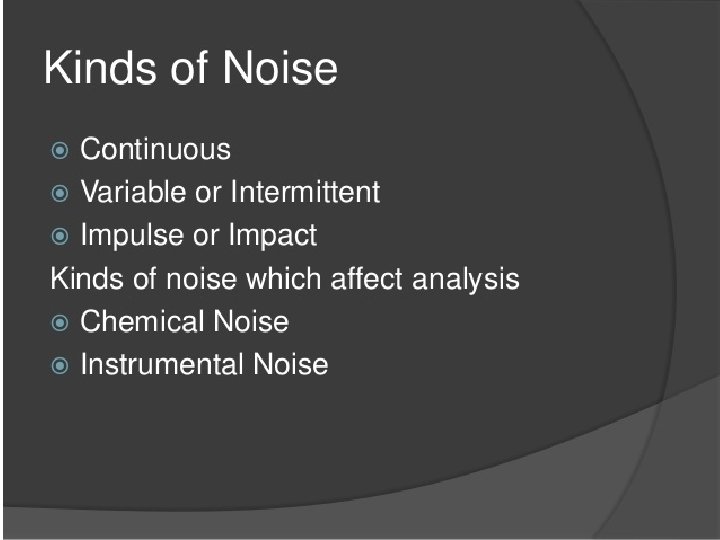
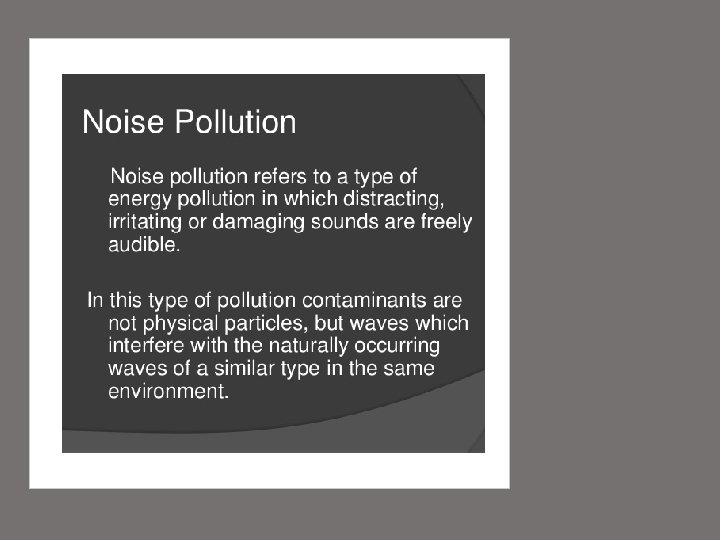
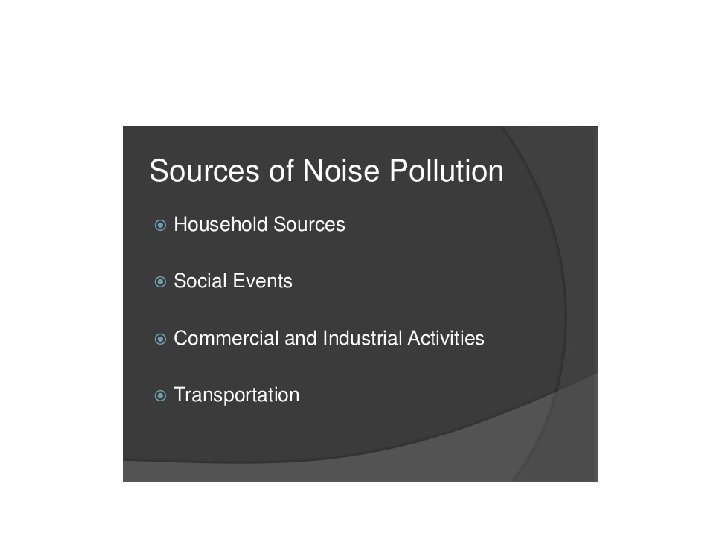
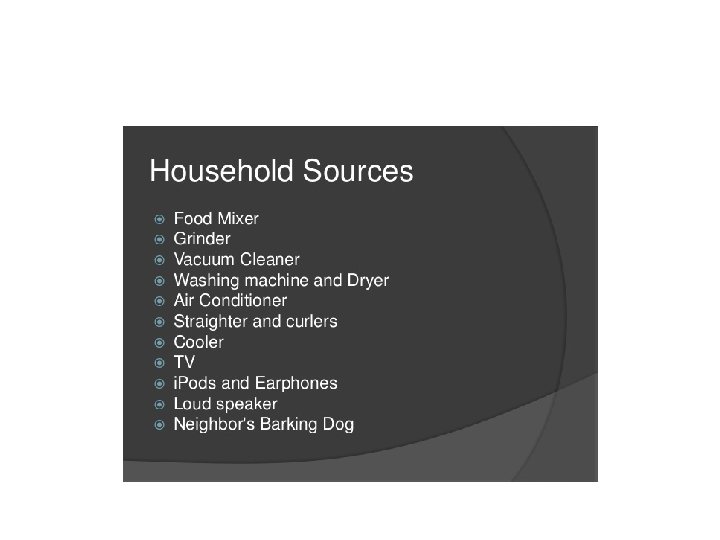
NOISE POLLUTION • Vibrations transmitted through an elastic medium like air, water, soil with frequencies in the approximate range of 20 to 20, 000 hertz capable of being detected by ears is known as sounds. • The word noise comes from Latin word nausea meaning sea sickness. • Noise pollution is defined as environmental noise or an unwanted sound that is annoying , distracting, physically harmful. • Decibel is used as a measure of sound intensity level.
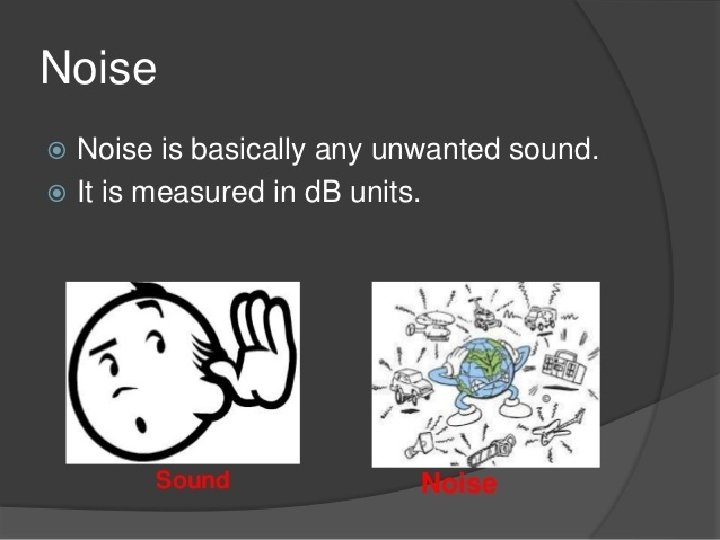
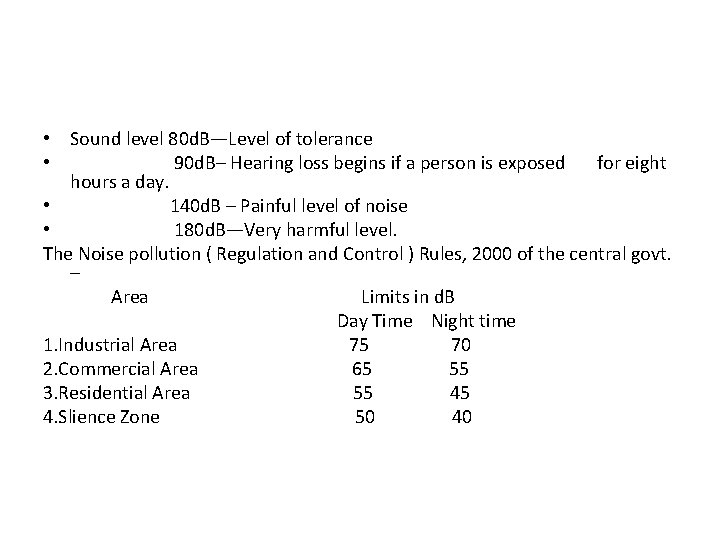
• Sound level 80 d. B—Level of tolerance • 90 d. B– Hearing loss begins if a person is exposed for eight hours a day. • 140 d. B – Painful level of noise • 180 d. B—Very harmful level. The Noise pollution ( Regulation and Control ) Rules, 2000 of the central govt. – Area Limits in d. B Day Time Night time 1. Industrial Area 75 70 2. Commercial Area 65 55 3. Residential Area 55 45 4. Slience Zone 50 40

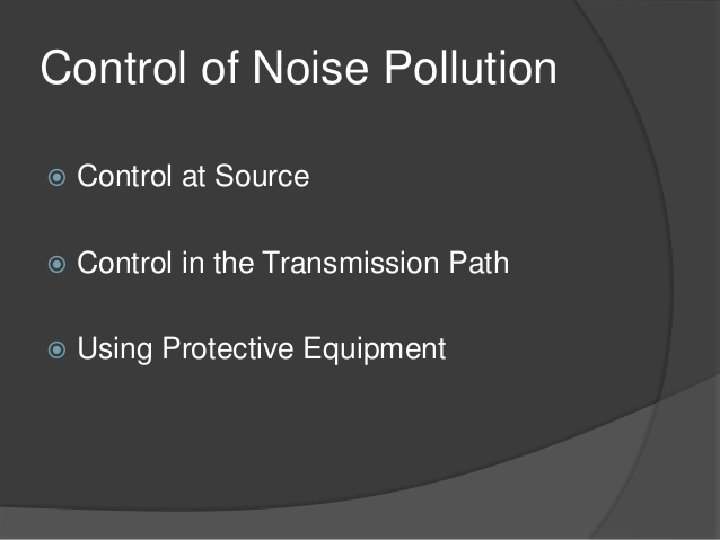
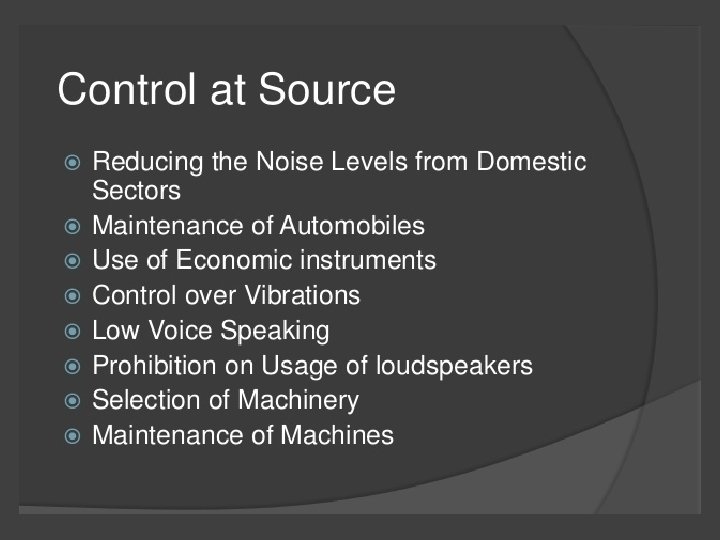

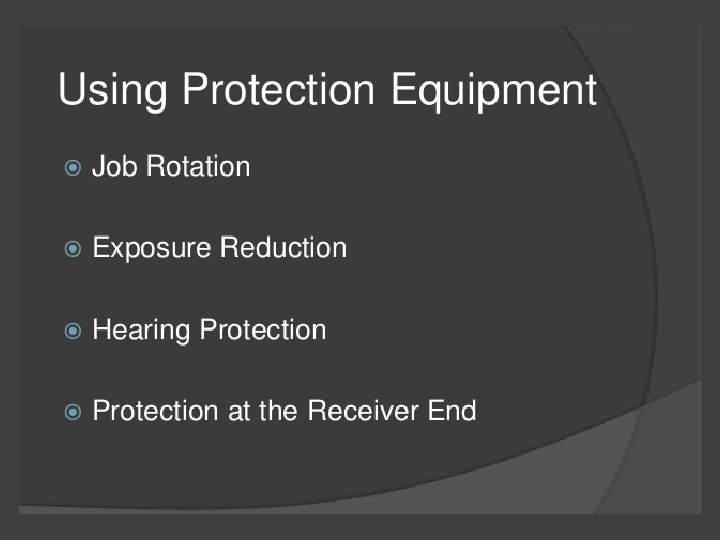
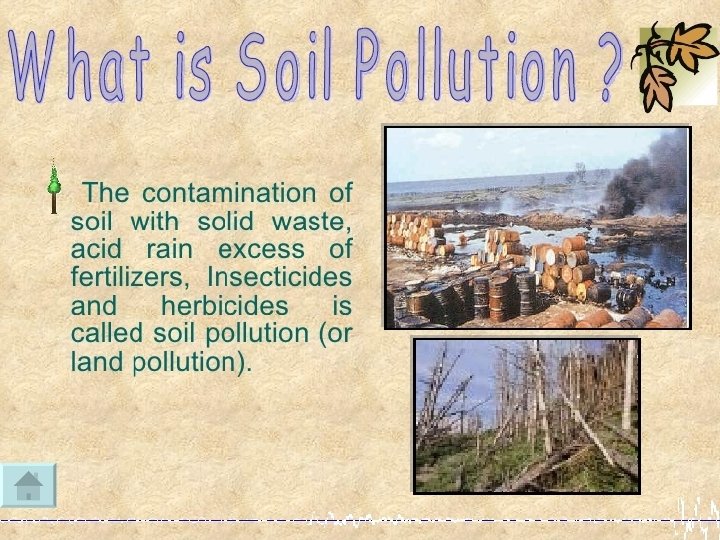
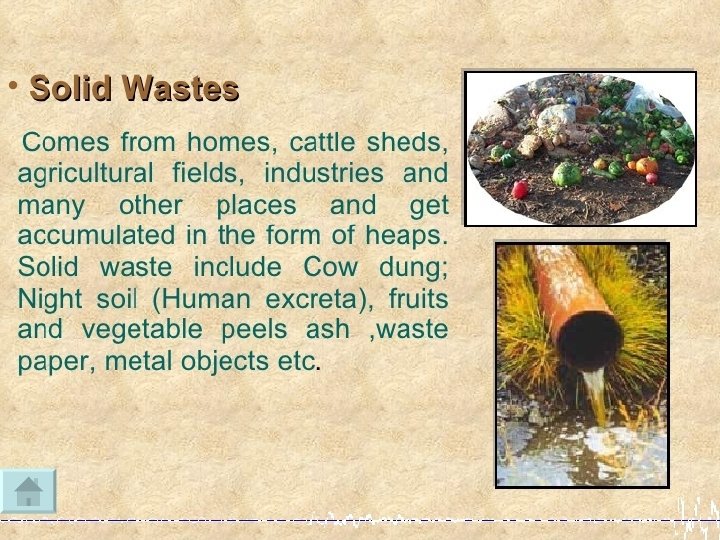
SOIL OR LAND POLLUTION

- Slides: 66