
Environmental Influences Chapter 4 Human Interrelationship with Environment
- Slides: 35
Environmental Influences Chapter 4
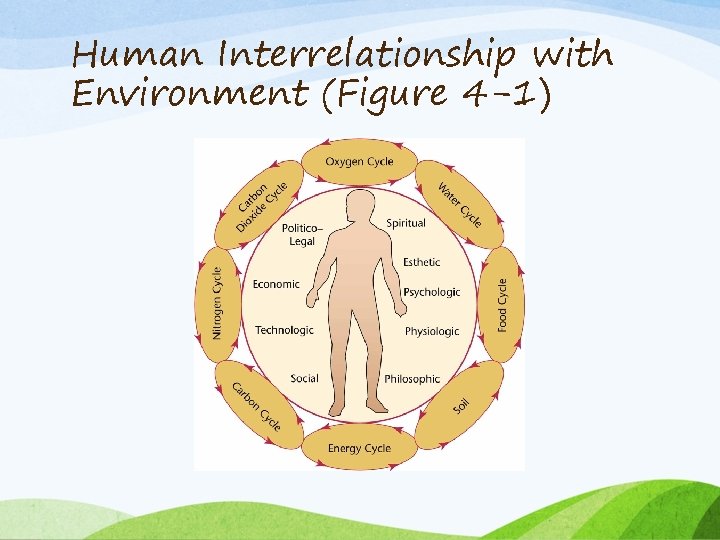
Human Interrelationship with Environment (Figure 4 -1)
Pollution Air Water Soil Food Surface
• One form of pollution can affect another • Soil pollution can affect water when there is runoff • Air pollutants can cause soil pollution when they fall to earth as particles or are dissolved in rain
Air Pollution • Causes • Excessive use of greenhouse gases • Effects • Increase in greenhouse gases • Depletion of upper atmosphere ozone layer • Presence of photochemical ozone at ground level • Industrial chemical releases • Presence of acid deposition
Photochemical Ozone • Most harmful to very young, very old, or persons with respiratory or cardiac diseases • Also creates respiratory difficulty in healthy people working or exercising outdoors • Causes bronchitis, emphysema, asthma, scarring of lung tissue, cardiac diseases • Environmental Protection Agency created Air Quality Index to measure air quality Radon • Serious indoor pollutant caused by natural decay of uranium in soil and rocks • Causes respiratory difficulty and lung cancer within 2 to 5 years after exposure • Educate clients that doit-yourself tests can be purchased for a qualified tester can be hired
Nitrogen Oxide • Found in aerosols, gas stoves, and tobacco smoke • Used as anesthetic • Effects • Irritation to eyes, nose, throat, and respiratory tract mucosa • Respiratory infections • Decreased lung capacity • Educate clients to check combustion equipment Greenhouse Gases • Increased heat-trapping capability of gases • Problems with increased heat • Diseases caused by insects and pests • Heat strokes and heat -related deaths • Myocardial infarction • Respiratory diseases • Bronchitis • Asthma
Asbestos • Mineral fiber added to products in 1970 s • Effects • Respiratory difficulty and diseases • Asbestosis • Lung cancer • Mesothelioma • Educate clients about what to do with asbestos Biological Contaminants • Examples include bacteria, mold, viruses, animal dander, dust, mites, pollen • Effects • Allergic reactions on skin • Respiratory difficulty • Specific allergies • Asthma • Educate client • Good housekeeping and maintenance • Adequate ventilation and moisture control
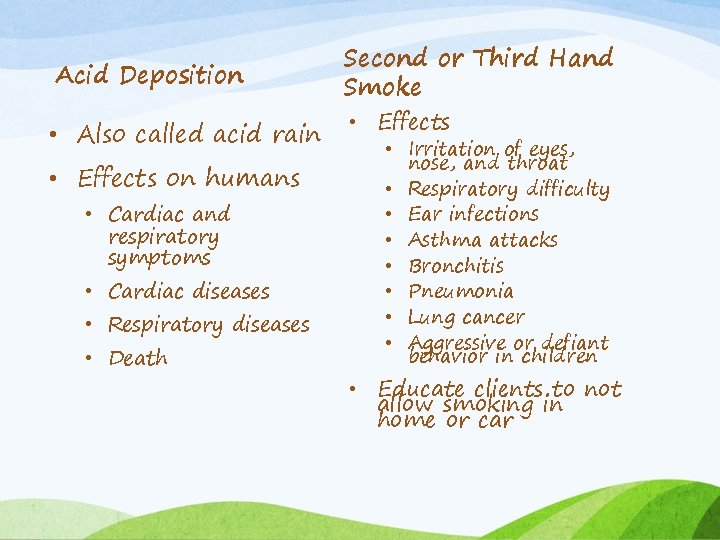
Acid Deposition • Also called acid rain • Effects on humans • Cardiac and respiratory symptoms • Cardiac diseases • Respiratory diseases • Death Second or Third Hand Smoke • Effects • Irritation of eyes, nose, and throat • Respiratory difficulty • Ear infections • Asthma attacks • Bronchitis • Pneumonia • Lung cancer • Aggressive or defiant behavior in children • Educate clients to not allow smoking in home or car
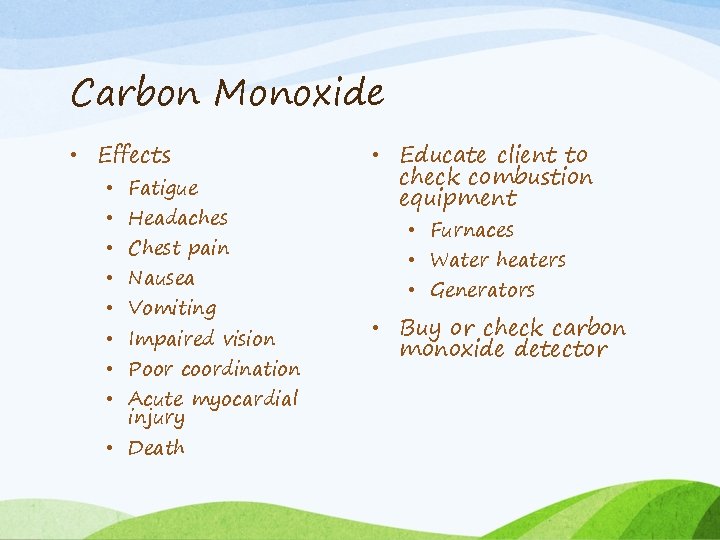
Carbon Monoxide • Effects • Fatigue • Headaches • Chest pain • Nausea • Vomiting • Impaired vision • Poor coordination • Acute myocardial injury • Death • Educate client to check combustion equipment • Furnaces • Water heaters • Generators • Buy or check carbon monoxide detector
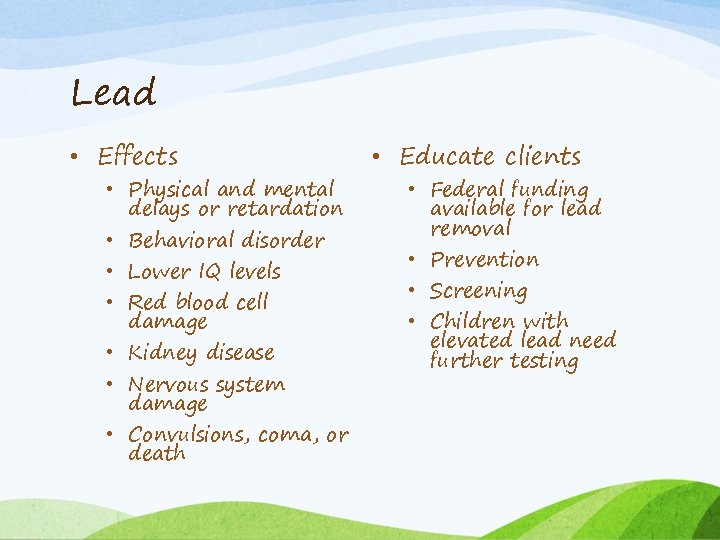
Lead • Effects • Physical and mental delays or retardation • Behavioral disorder • Lower IQ levels • Red blood cell damage • Kidney disease • Nervous system damage • Convulsions, coma, or death • Educate clients • Federal funding available for lead removal • Prevention • Screening • Children with elevated lead need further testing
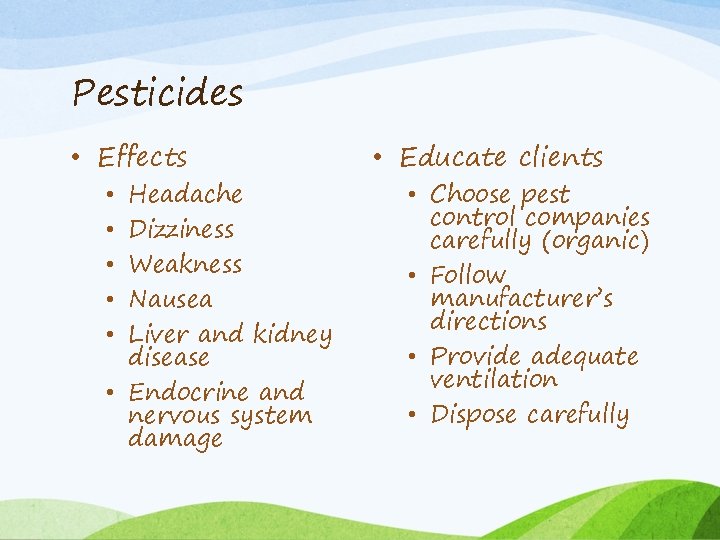
Pesticides • Effects Headache Dizziness Weakness Nausea Liver and kidney disease • Endocrine and nervous system damage • • • Educate clients • Choose pest control companies carefully (organic) • Follow manufacturer’s directions • Provide adequate ventilation • Dispose carefully
Volatile Organic Compounds • Effects • Eye, nose, and throat irritation • Headache and dizziness • Memory impairment • Liver, kidney, and nervous system damage • Educate clients • Discard unneeded chemicals • Provide adequate ventilation • Minimize exposure to methylene chloride, benzene, and perchloreothylene
Formaldehyde • Effects • Watery eyes • Burning sensation in eyes and throat • Nausea • Respiratory difficulty • Wheezing • Coughing • Allergic reactions • Asthma attacks • Lung cancer • Educate clients • Use exterior-grade pressed wood products • Avoid formaldehyde products • Use air conditioners and dehumidifiers • Provide adequate ventilation
Respiratory Particles • Examples include soot, dust, and ash • Effects • Eye, nose, and throat irritation • Respiratory infections and bronchitis • Lung cancer • Educate clients • Adequate ventilation • Perform proper maintenance on heating and air conditioning and fireplaces
Water Pollution • Two origins • Point sources • Nonpoint sources • Sources • Municipal • Industrial • Agricultural
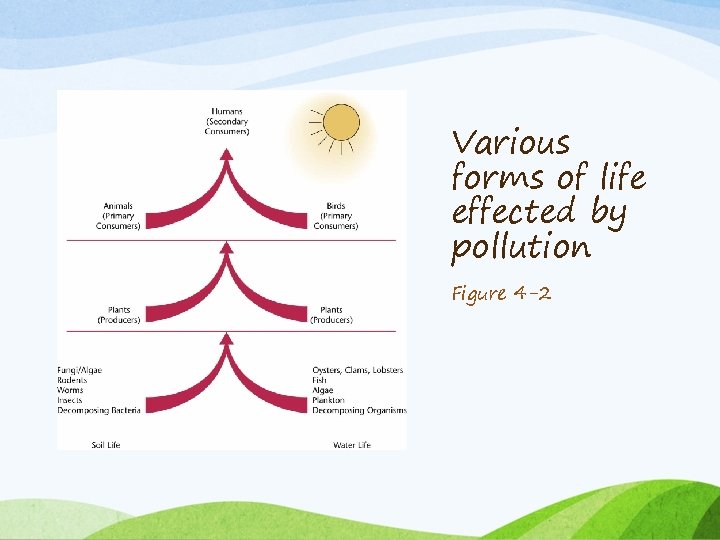
Various forms of life effected by pollution Figure 4 -2
Soil Pollution • Causes • Air pollutants • Industrial wastes • Fertilizers • Toxic materials from sewage plants • Heavy metals • Landfills containing chemicals or contaminated wastes
Noise Pollution • Causes • Urban development • Road, air, and rail transport • Industrial noise • Neighborhood noise • Recreational noise • Effects • Headaches • Minor illness or accidents • Reliance on sedatives and sleeping pills • General fatigue • Noise-induced hearing loss (NIHL)
Food Pollution • Causes • Additives • Pesticides • Hormones • Antibiotics • Arsenics • Mercury • Other toxins • Possible Effects • Yellow 5: hyperactivity in children • Antibiotics in animals: human resistance to antibiotics • Mercury: learning problems or retardation in children; damage to developing fetuses
Food Borne Illnesses • Examples • Campylobacter • Salmonella • E. Coli • Calicivirus • Shigellosis • Hepatitis A • Symptoms • Fever • Diarrhea • Abdominal cramps • Vomiting
Surface Pollution • Refers to dangers of open dumps • Nonhazardous wastes can still be harmful • Hazardous wastes • Paints • Cleaners • Oils • Batteries • Pesticides • EPA aims to protect health and environment
Legislation Federal Government Work Environment
Federal Government • Acts • Occupational Safety and Health Act of 1970 • Coal Mine Health and Safety Act of 1969 • Toxic Substances Control Act of 1976 • Occupational Safety and Health Administration • Setting and enforcing standards • Provides training, outreach, and education
In the workplace • Educate about Healthy People 2010 • Assess workplace hazards • Advocate for enforcement of preventative measures for known hazards and continued environmental research • Support professional or societal organizations that advocate safety and a healthy environment
Workplace Hazards • Threats • Physical, chemical, and biological • Emotional stress, noise, lighting, comfort, or ergonomic stressors • Air pollution • Fumes from disinfectants, surgical smoke or laser plume • cause respiratory symptoms, burning and watery eyes, nausea, and viral contamination and regrowth
Reducing Pollution Strategies Professional Responsibilities
Strategies • Properly disposing of agents that can affect water, soil, and surface • Supporting legislation to protect environment • Staying abreast of information from agencies such as EPA • Following directions on items such as food • Staying aware of potential hazards in local environment and taking action
Professional Responsibilities • Help to control pollution worldwide through conservative solutions • Work with professional organizations • Establish environmental task forces • Restructure national and state organizations to better address environment • Educate clients about environmental pollutants
Bioterrorism
Hazardous Materials (HAZMAT) • Materials disseminated through inhalation, skin absorption, or ingestion • Examples • Blister agents • Biotoxins • Blood agents • Nerve agents • Toxic alcohols Explosive Agents • 70% of all terrorist attacks in the U. S. • Common blast injuries • Liquid in lungs moves into gas area of the alveoli and causes hemorrhage • Implosion, compression, and decompression causes rupture of tympanic membranes • Blast waves can drive fluids from their spaces, causing pulmonary hemorrhage
Biologic Agents • Category A: most devastating • Examples: smallpox, anthrax, plague • Category B: lower mortality potential • Example: Q fever, ricin toxin, salmonella • Category C: not believed to be present risk • Example: yellow fever, multi-drug resistant tuberculosis Radiologic/Nuclear Agents • Alpha particles are the least penetrating • Beta particles can penetrate skin • Gamma particles can pass through the human body and be absorbed by tissues
Disaster Plans
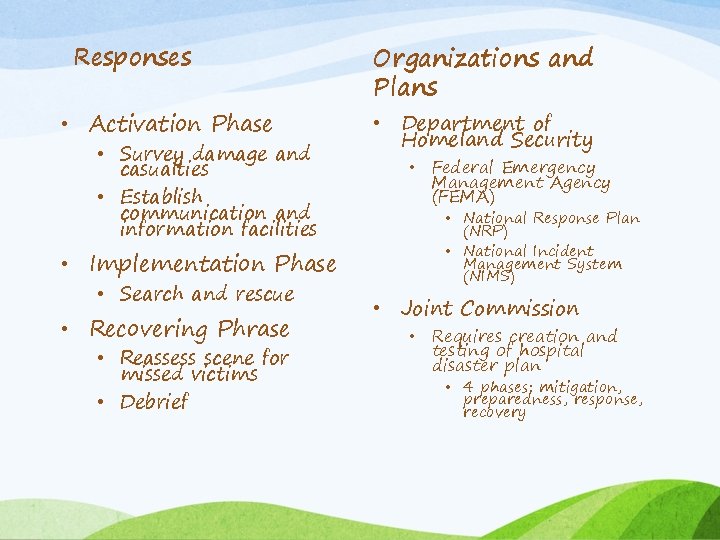
Responses • Activation Phase • Survey damage and casualties • Establish communication and information facilities • Implementation Phase • Search and rescue • Recovering Phrase • Reassess scene for missed victims • Debrief Organizations and Plans • Department of Homeland Security • Federal Emergency Management Agency (FEMA) • National Response Plan (NRP) • National Incident Management System (NIMS) • Joint Commission • Requires creation and testing of hospital disaster plan • 4 phases: mitigation, preparedness, response, recovery
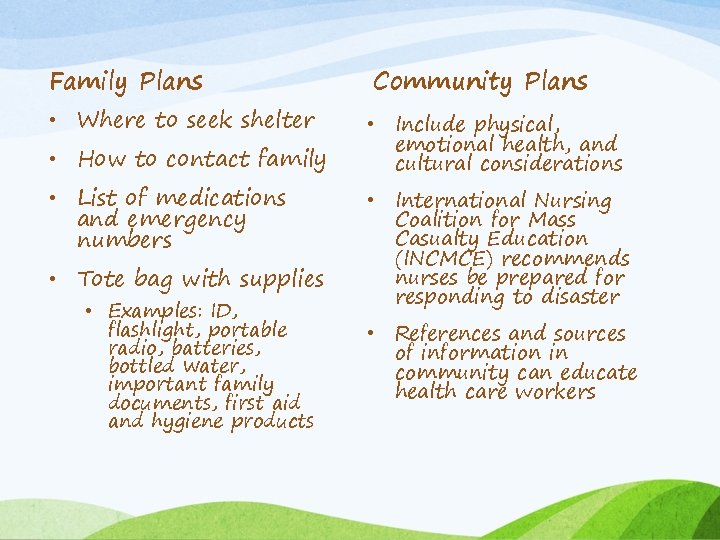
Family Plans Community Plans • How to contact family • Include physical, emotional health, and cultural considerations • Where to seek shelter • List of medications and emergency numbers • Tote bag with supplies • Examples: ID, flashlight, portable radio, batteries, bottled water, important family documents, first aid and hygiene products • International Nursing Coalition for Mass Casualty Education (INCMCE) recommends nurses be prepared for responding to disaster • References and sources of information in community can educate health care workers