
Environmental Health Air Quality Index AQI n AQI



- Slides: 13
Environmental Health
Air Quality Index (AQI) n AQI: developed by the EPA is an index for reporting daily air quality ¨ Range From: 0 -500 ¨ Air Quality: good to hazardous ¨ Color Code: green to maroon
To Reduce Air Pollution… 1. 2. Reduce car use: walk, bike, take public transportation or carpool. Conserve Energy: turn off lights when not in use, set the air conditioner at a higher temperature and put on extra layers instead of turning up the heat
Indoor Air Pollution n SBS- (sick building pollution): refers to a situation where occupants of a building experience health problems ¨ Symptoms: headache, itchy & irritated eyes, throat & nose; dizziness & nausea; fatigue, inability to concentrate & sensitivity to odors. n n Lead Exposure- especially in children cause damage to the kidneys, liver, brain & nerves. Asbestos- linked to lung cancer
Protecting Land & Water 1. Recycle materials whenever possible to reduce the amount of waste going to the landfills. Dispose of all materials properly- oil paints, paint solvents & batteries should not be put in the trash. a. Don’t pour household chemicals or motor oil down the drain or onto the ground, take these to collection sites. 2. 3. Follow directions when using chemicals such as cleaning products, fertilizers & pesticides—don’t overuse them. Reduce water usage– repair leaky faucets and follow recommendations for landscape watering.
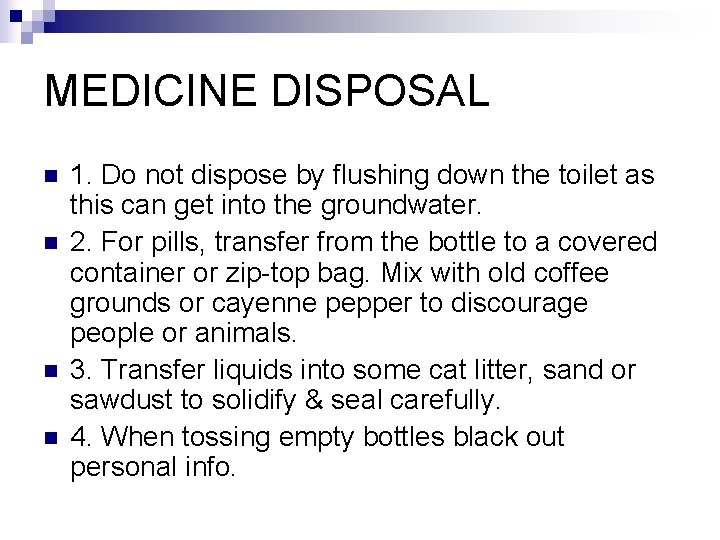
MEDICINE DISPOSAL n n 1. Do not dispose by flushing down the toilet as this can get into the groundwater. 2. For pills, transfer from the bottle to a covered container or zip-top bag. Mix with old coffee grounds or cayenne pepper to discourage people or animals. 3. Transfer liquids into some cat litter, sand or sawdust to solidify & seal carefully. 4. When tossing empty bottles black out personal info.
BOZEMAN’S SOLID WASTE DIVISION n Bozeman. net/waste/solid-waste. aspx Gallatin Local Water Quality District n Click on “Education: Brochures & Fact Sheets” gallatin. mt. gov/Public_Documents/gallatin comt_wqd-pages/lwqd n
Noise Pollution n The harmful & unwanted sound of sufficient intensity to damage hearing. ¨ Hearing impairment rarely leads to total deafness, however the hearing loss is permanent. n Decibel: unit used to express the relative intensity of loudness of sound. Normal conversation is 65 decibels ¨ Exposure to noise levels of 85 decibels and above can result in temporary hearing loss often accompanied by ringing in the ears
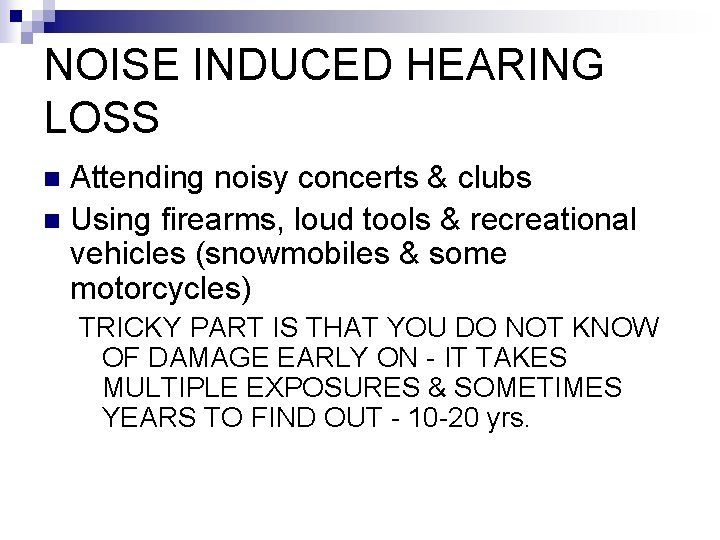
NOISE INDUCED HEARING LOSS Attending noisy concerts & clubs n Using firearms, loud tools & recreational vehicles (snowmobiles & some motorcycles) n TRICKY PART IS THAT YOU DO NOT KNOW OF DAMAGE EARLY ON - IT TAKES MULTIPLE EXPOSURES & SOMETIMES YEARS TO FIND OUT - 10 -20 yrs.
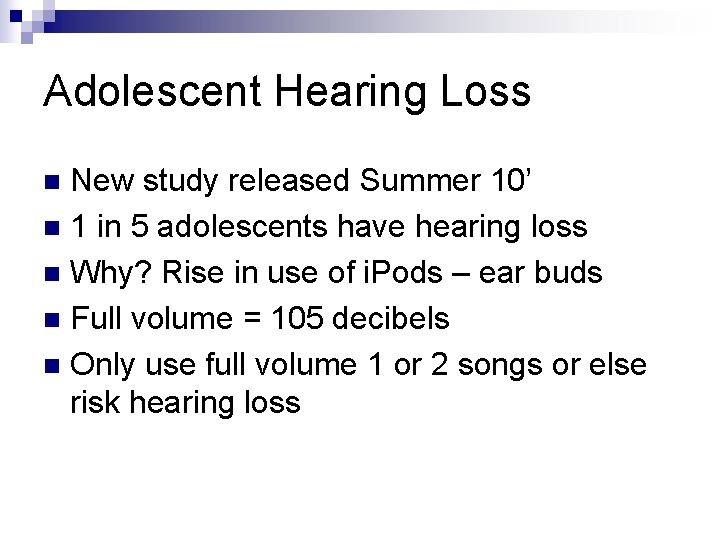
Adolescent Hearing Loss New study released Summer 10’ n 1 in 5 adolescents have hearing loss n Why? Rise in use of i. Pods – ear buds n Full volume = 105 decibels n Only use full volume 1 or 2 songs or else risk hearing loss n
SIGN OF HEARING LOSS n Leaving a loud venue with ringing ears after resting ears they might recover partially but with repeated exposure comes more damage to the hair cells in the inner ear -the key to good hearing.
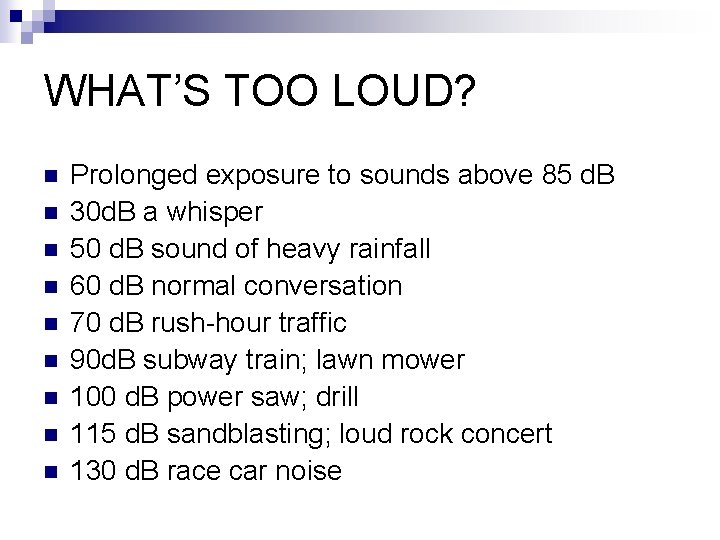
WHAT’S TOO LOUD? n n n n n Prolonged exposure to sounds above 85 d. B 30 d. B a whisper 50 d. B sound of heavy rainfall 60 d. B normal conversation 70 d. B rush-hour traffic 90 d. B subway train; lawn mower 100 d. B power saw; drill 115 d. B sandblasting; loud rock concert 130 d. B race car noise
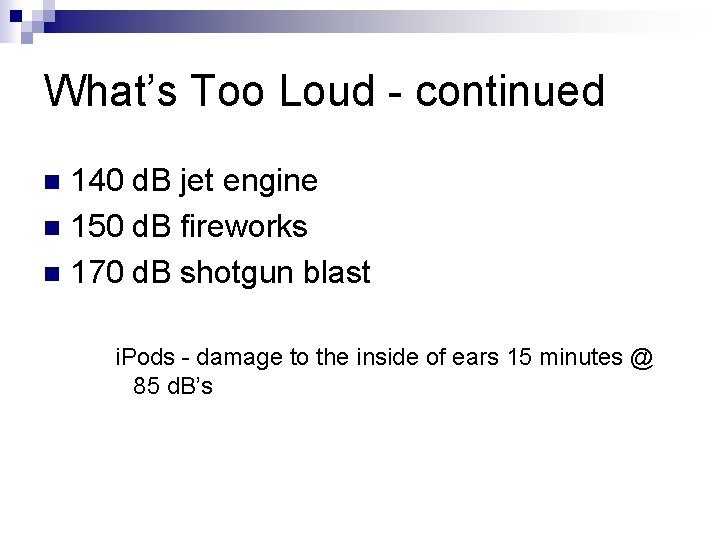
What’s Too Loud - continued 140 d. B jet engine n 150 d. B fireworks n 170 d. B shotgun blast n i. Pods - damage to the inside of ears 15 minutes @ 85 d. B’s