
Environmental Geomechanics A Recent Development in Geotechnical Engineering

- Slides: 20
Environmental Geomechanics: A Recent Development in Geotechnical Engineering DR. D. N. SINGH PROFESSOR Geotechnical Engineering Division Department of Civil Engineering I. I. T. BOMBAY dns@civil. iitb. ac. in
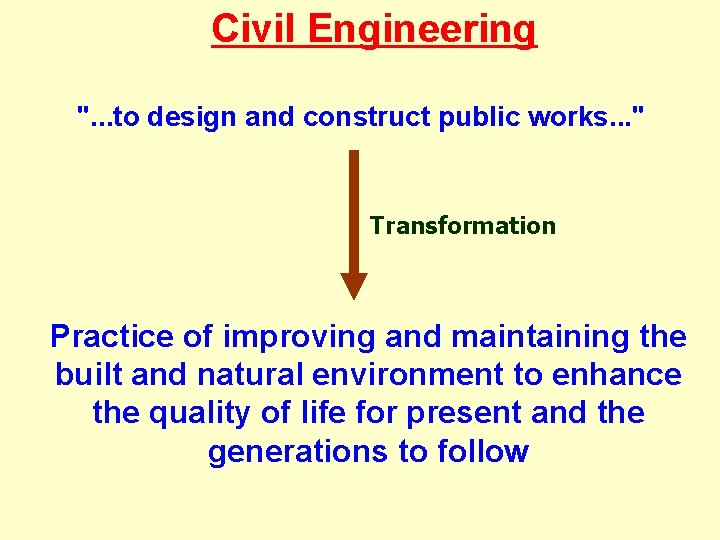
Civil Engineering ". . . to design and construct public works. . . " Transformation Practice of improving and maintaining the built and natural environment to enhance the quality of life for present and the generations to follow
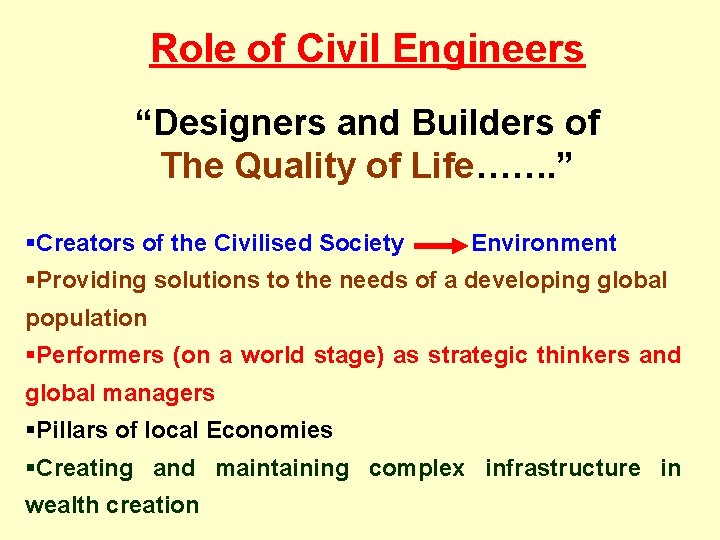
Role of Civil Engineers “Designers and Builders of The Quality of Life……. ” §Creators of the Civilised Society Environment §Providing solutions to the needs of a developing global population §Performers (on a world stage) as strategic thinkers and global managers §Pillars of local Economies §Creating and maintaining complex infrastructure in wealth creation
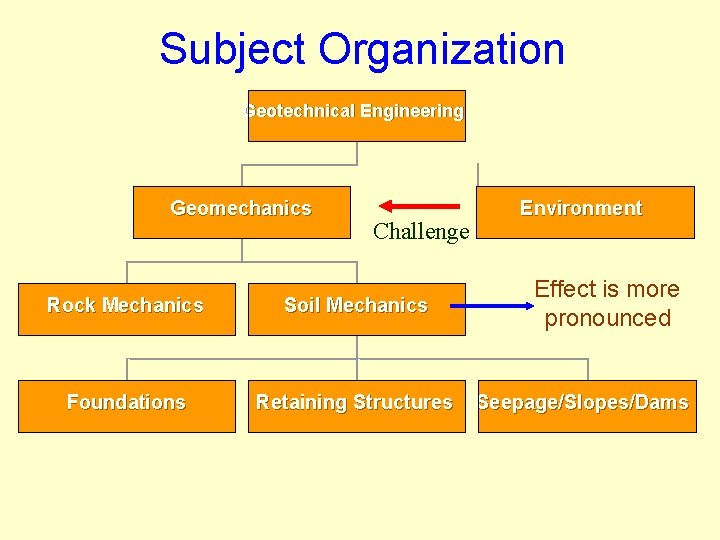
Subject Organization Geotechnical Engineering Geomechanics Challenge Rock Mechanics Soil Mechanics Foundations Retaining Structures Environment Effect is more pronounced Seepage/Slopes/Dams
Environmental Geomechanics Genesis Population Explosion Industrialization Sluggish and “Don’t bother approach” Ignorance Human Greed Is a Philosophy put in practice to deal with under-ground “environment” & Problems associated with it Combination/Blend of Geotechnical Engg. and Environmental Engg.
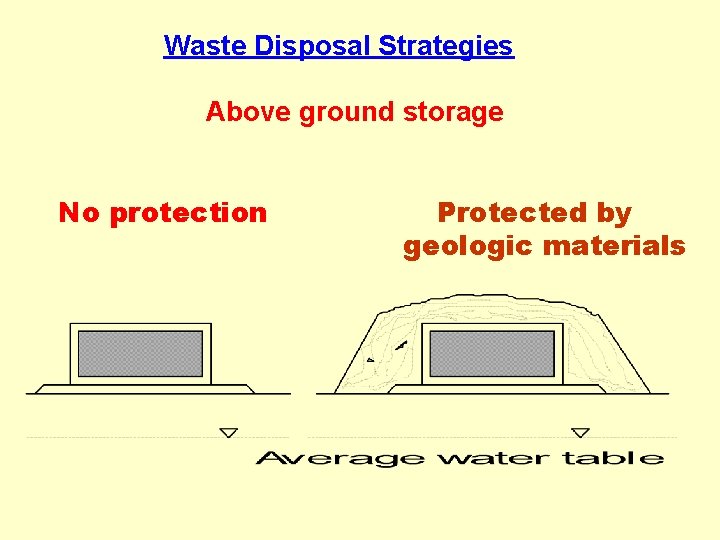
Waste Disposal Strategies Above ground storage No protection Protected by geologic materials
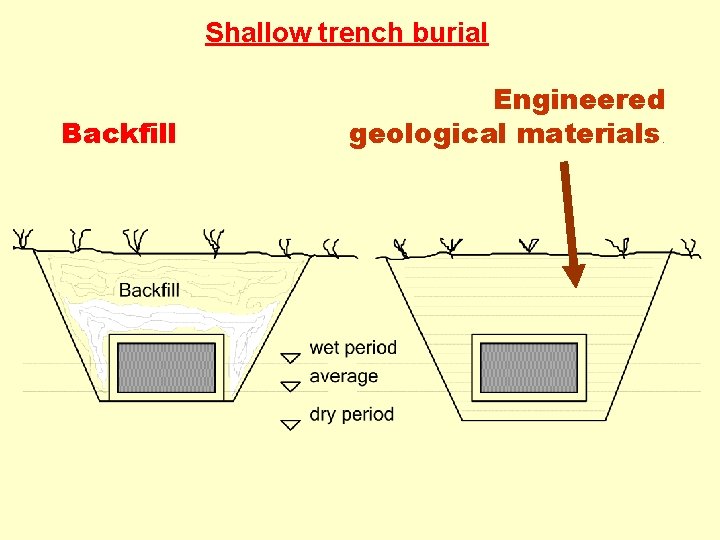
Shallow trench burial Backfill Engineered geological materials.
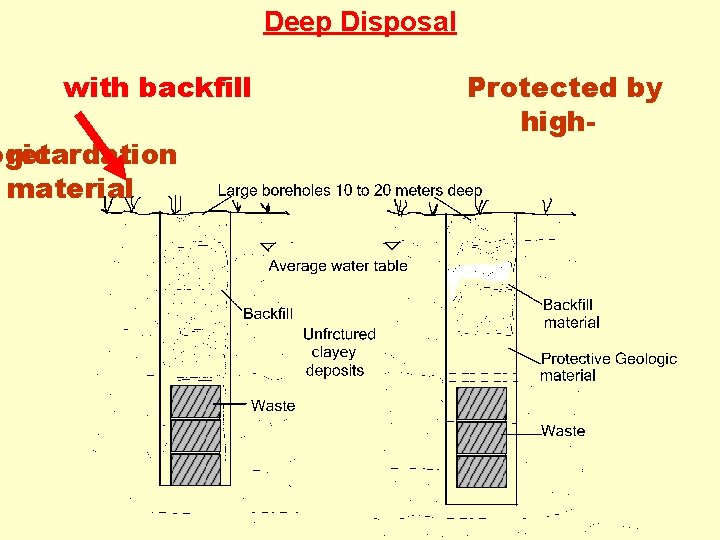
Deep Disposal with backfill ogic retardation material Protected by high-
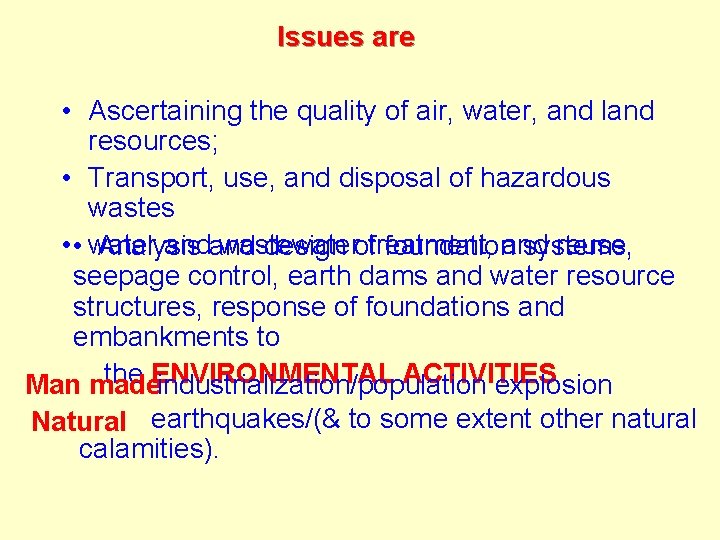
Issues are • Ascertaining the quality of air, water, and land resources; • Transport, use, and disposal of hazardous wastes • • water and wastewater treatment, and reuse. Analysis and design of foundation systems, seepage control, earth dams and water resource structures, response of foundations and embankments to ACTIVITIES Man the ENVIRONMENTAL madeindustrialization/population explosion Natural earthquakes/(& to some extent other natural calamities).
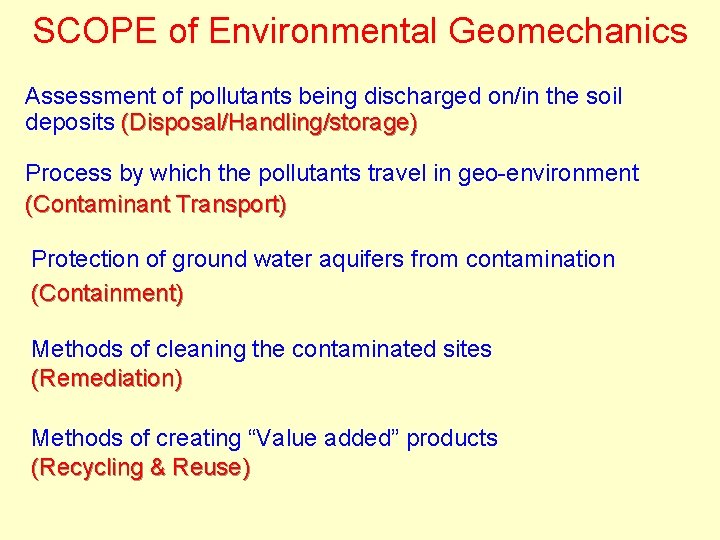
SCOPE of Environmental Geomechanics Assessment of pollutants being discharged on/in the soil deposits (Disposal/Handling/storage) Process by which the pollutants travel in geo-environment (Contaminant Transport) Protection of ground water aquifers from contamination (Containment) Methods of cleaning the contaminated sites (Remediation) Methods of creating “Value added” products (Recycling & Reuse)
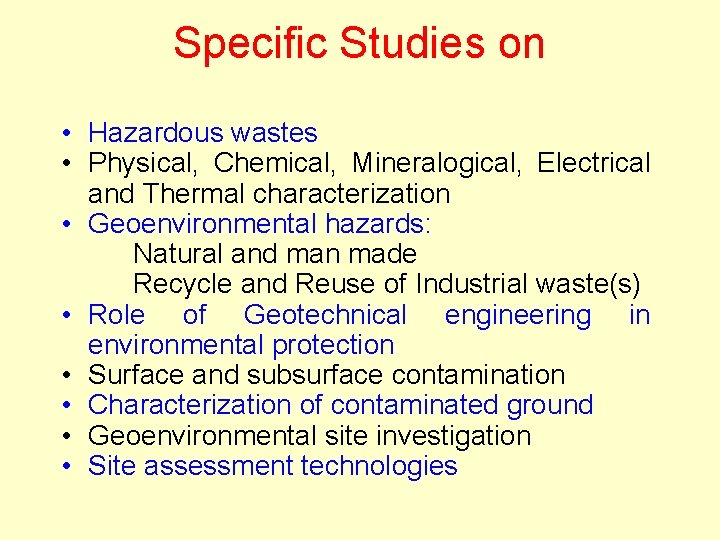
Specific Studies on • Hazardous wastes • Physical, Chemical, Mineralogical, Electrical and Thermal characterization • Geoenvironmental hazards: Natural and man made Recycle and Reuse of Industrial waste(s) • Role of Geotechnical engineering in environmental protection • Surface and subsurface contamination • Characterization of contaminated ground • Geoenvironmental site investigation • Site assessment technologies
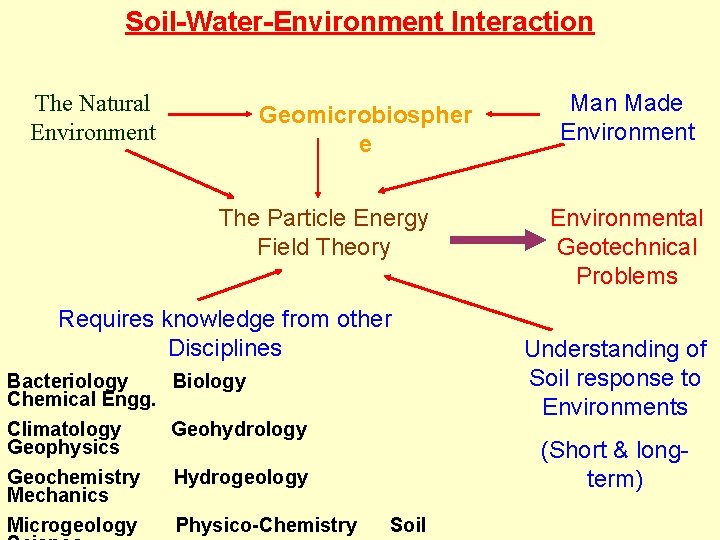
Soil-Water-Environment Interaction The Natural Environment Geomicrobiospher e The Particle Energy Field Theory Man Made Environmental Geotechnical Problems Requires knowledge from other Disciplines Bacteriology Biology Chemical Engg. Climatology Geophysics Geochemistry Mechanics Microgeology Geohydrology (Short & longterm) Hydrogeology Physico-Chemistry Understanding of Soil response to Environments Soil
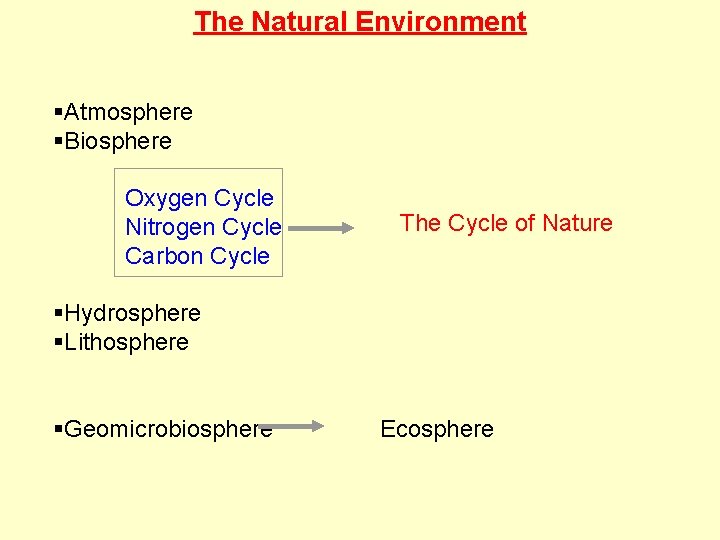
The Natural Environment §Atmosphere §Biosphere Oxygen Cycle Nitrogen Cycle Carbon Cycle The Cycle of Nature §Hydrosphere §Lithosphere §Geomicrobiosphere Ecosphere
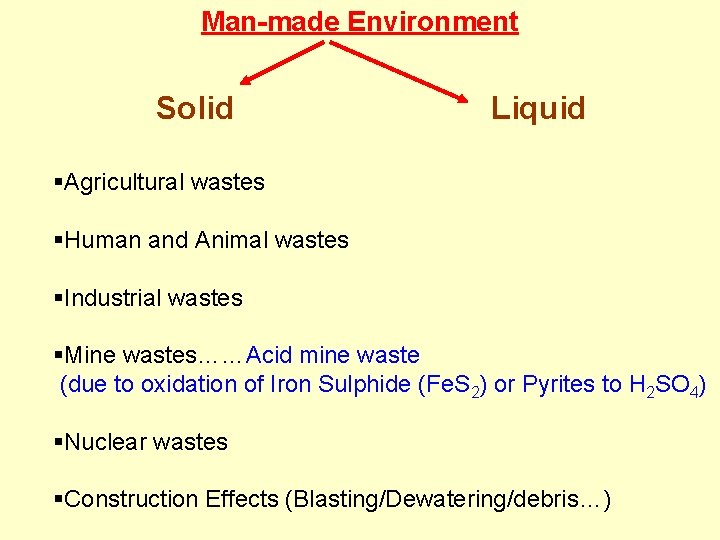
Man-made Environment Solid Liquid §Agricultural wastes §Human and Animal wastes §Industrial wastes §Mine wastes……Acid mine waste (due to oxidation of Iron Sulphide (Fe. S 2) or Pyrites to H 2 SO 4) §Nuclear wastes §Construction Effects (Blasting/Dewatering/debris…)
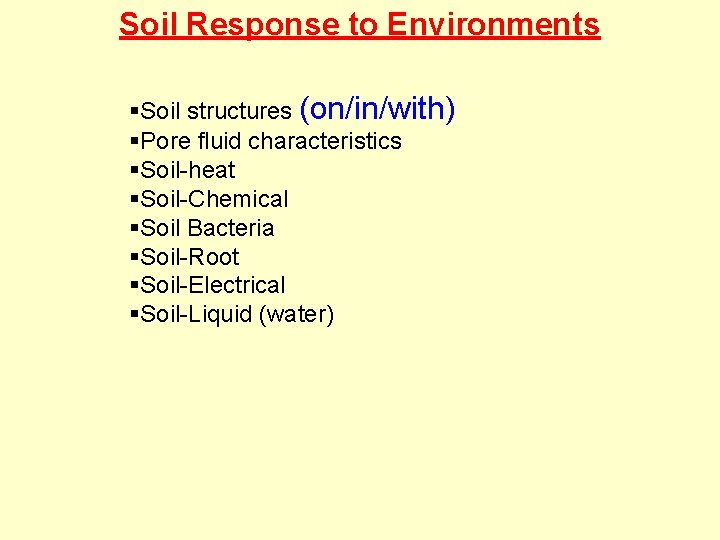
Soil Response to Environments §Soil structures (on/in/with) §Pore fluid characteristics §Soil-heat §Soil-Chemical §Soil Bacteria §Soil-Root §Soil-Electrical §Soil-Liquid (water)
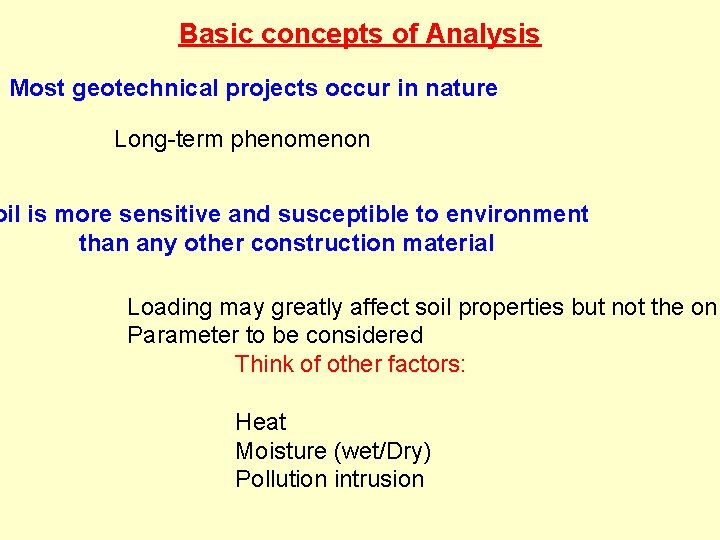
Basic concepts of Analysis Most geotechnical projects occur in nature Long-term phenomenon oil is more sensitive and susceptible to environment than any other construction material Loading may greatly affect soil properties but not the onl Parameter to be considered Think of other factors: Heat Moisture (wet/Dry) Pollution intrusion
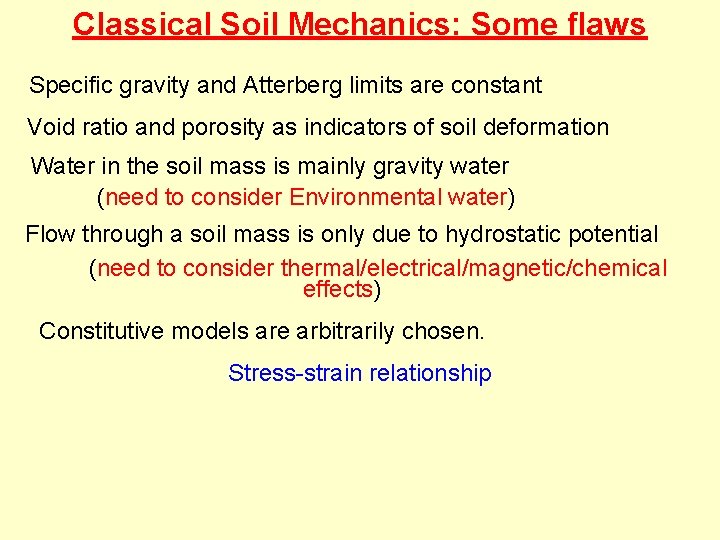
Classical Soil Mechanics: Some flaws Specific gravity and Atterberg limits are constant Void ratio and porosity as indicators of soil deformation Water in the soil mass is mainly gravity water (need to consider Environmental water) Flow through a soil mass is only due to hydrostatic potential (need to consider thermal/electrical/magnetic/chemical effects) Constitutive models are arbitrarily chosen. Stress-strain relationship
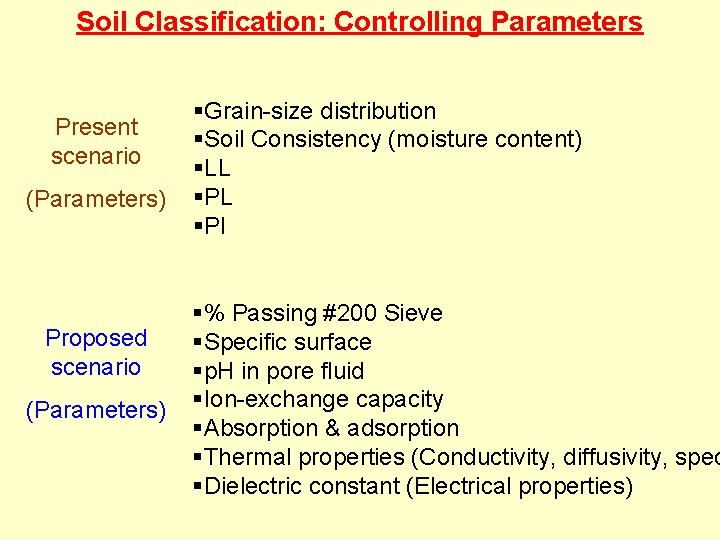
Soil Classification: Controlling Parameters Present scenario (Parameters) Proposed scenario (Parameters) §Grain-size distribution §Soil Consistency (moisture content) §LL §PI §% Passing #200 Sieve §Specific surface §p. H in pore fluid §Ion-exchange capacity §Absorption & adsorption §Thermal properties (Conductivity, diffusivity, spec §Dielectric constant (Electrical properties)
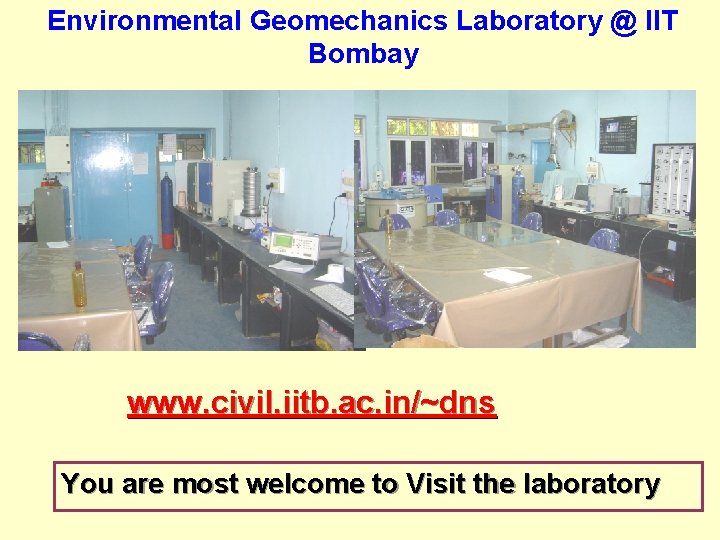
Environmental Geomechanics Laboratory @ IIT Bombay www. civil. iitb. ac. in/~dns You are most welcome to Visit the laboratory