
Environmental factors in prevention of alcohol use by
Environmental factors in prevention of alcohol use by young people in Sub-Saharan Africa Neo K. Morojele, Ph. D University of Johannesburg South African Medical Research Council University of Cape Town University of the Witwatersrand
Overview • The nature and extent of alcohol use • Why prevention of alcohol use and misuse among adolescents and young adults matters • Environmental/community risk and protective factors • Implications for prevention of alcohol use by young people • Final comment
Prevalence of alcohol use
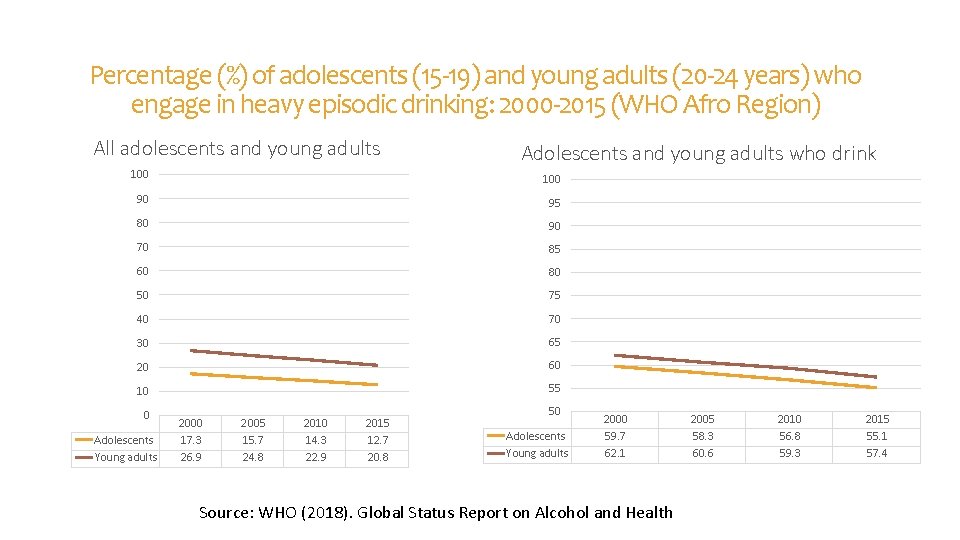
Percentage (%) of adolescents (15 -19) and young adults (20 -24 years) who engage in heavy episodic drinking: 2000 -2015 (WHO Afro Region) All adolescents and young adults Adolescents and young adults who drink 100 90 95 80 90 70 85 60 80 50 75 40 70 30 65 20 60 10 55 0 Adolescents Young adults 2000 17. 3 26. 9 2005 15. 7 24. 8 2010 14. 3 22. 9 2015 12. 7 20. 8 50 Adolescents Young adults 2000 59. 7 62. 1 Source: WHO (2018). Global Status Report on Alcohol and Health 2005 58. 3 60. 6 2010 56. 8 59. 3 2015 55. 1 57. 4
Why prevention matters Numerous short-term and long-term consequences: • Health: Non-communicable and infectious diseases • Social/behavioural: Sexual risk behaviour; interpersonal violence; self-harm; injuries • Academic: School drop-out/failure • Alcohol Use Disorders (AUDs) • Other mental health problems
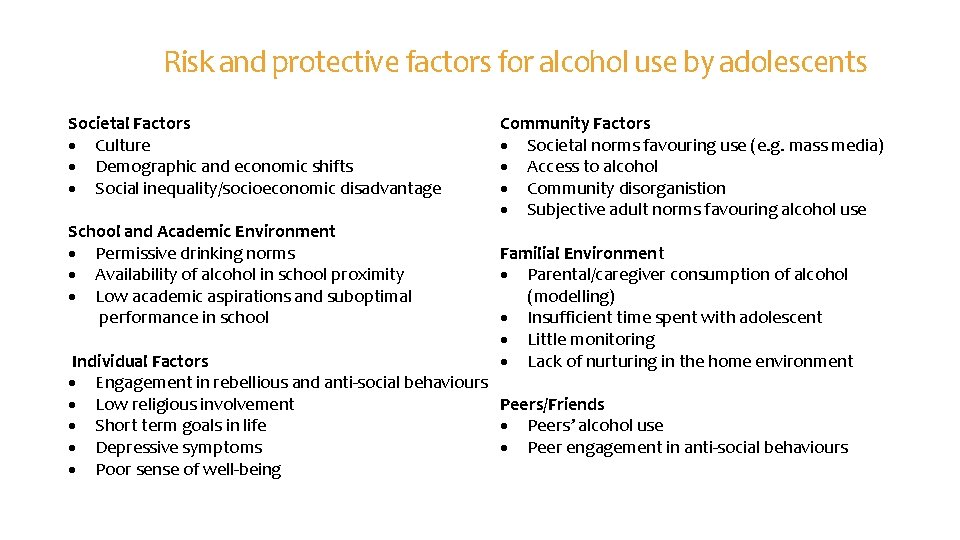
Risk and protective factors for alcohol use by adolescents Societal Factors Culture Demographic and economic shifts Social inequality/socioeconomic disadvantage School and Academic Environment Permissive drinking norms Availability of alcohol in school proximity Low academic aspirations and suboptimal performance in school Community Factors Societal norms favouring use (e. g. mass media) Access to alcohol Community disorganistion Subjective adult norms favouring alcohol use Familial Environment Parental/caregiver consumption of alcohol (modelling) Insufficient time spent with adolescent Little monitoring Lack of nurturing in the home environment Individual Factors Engagement in rebellious and anti-social behaviours Low religious involvement Peers/Friends Short term goals in life Peers’ alcohol use Depressive symptoms Peer engagement in anti-social behaviours Poor sense of well-being
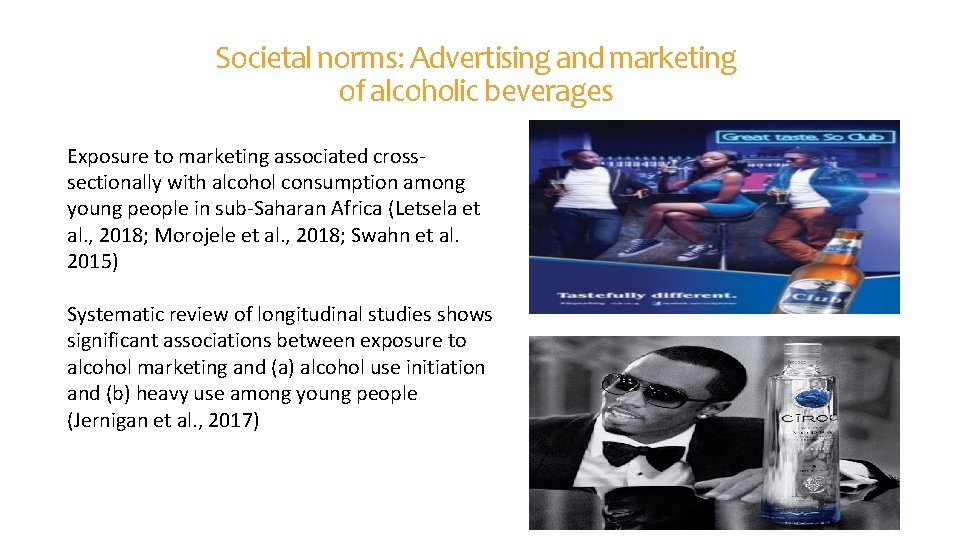
Societal norms: Advertising and marketing of alcoholic beverages Exposure to marketing associated crosssectionally with alcohol consumption among young people in sub-Saharan Africa (Letsela et al. , 2018; Morojele et al. , 2018; Swahn et al. 2015) Systematic review of longitudinal studies shows significant associations between exposure to alcohol marketing and (a) alcohol use initiation and (b) heavy use among young people (Jernigan et al. , 2017)
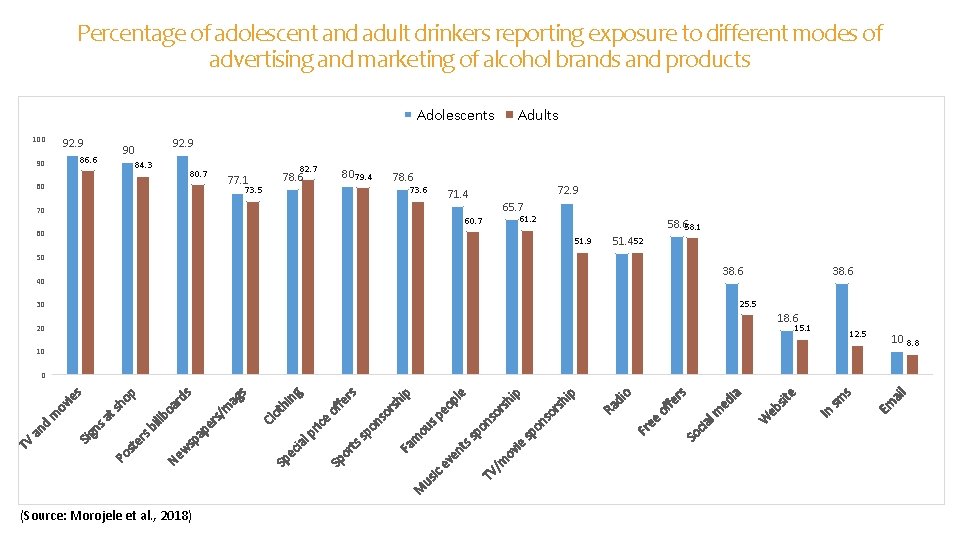
Percentage of adolescent and adult drinkers reporting exposure to different modes of advertising and marketing of alcohol brands and products Adolescents 100 92. 9 90 86. 6 90 Adults 84. 3 80. 7 80 82. 7 80 79. 4 78. 6 77. 1 73. 5 78. 6 73. 6 72. 9 71. 4 70 65. 7 61. 2 60. 7 58. 658. 1 60 51. 9 51. 452 50 38. 6 40 38. 6 25. 5 30 18. 6 15. 1 20 12. 5 10 10 8. 8 TV /m ail Em s sm In sit e W eb ia ed So cia fe of ee Fr lm rs o di Ra p so rs hi on ov ie sp on so r sp ts en ev us ic M (Source: Morojele et al. , 2018) sh ip e pl eo sp ou m Fa sp ts or Sp ial pr on ice so r of sh fe ip rs ng hi ot ec pe pa ws Ne Cl rs /m oa illb sb er Po st Sp ag s rd s p sh o at Sig ns TV an d m ov ie s 0
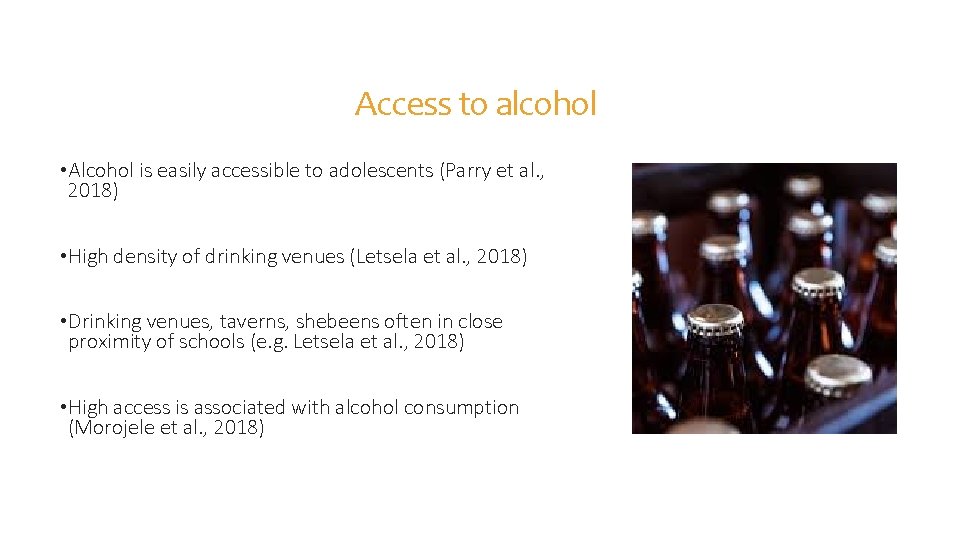
Access to alcohol • Alcohol is easily accessible to adolescents (Parry et al. , 2018) • High density of drinking venues (Letsela et al. , 2018) • Drinking venues, taverns, shebeens often in close proximity of schools (e. g. Letsela et al. , 2018) • High access is associated with alcohol consumption (Morojele et al. , 2018)
Community risk factors • Exposure to community drunkenness (Parry et al. , 2004) • Exposure to violence/crime (Francis et al. , 2019) • Lacking a sense of belonging to one’s community/low neighbourhood cohesion (Morojele et al. , 2018)
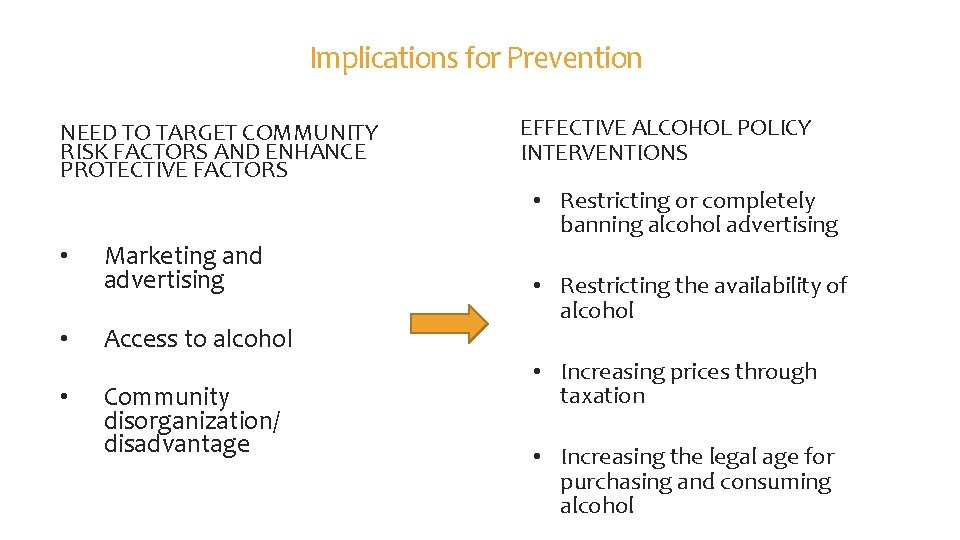
Implications for Prevention NEED TO TARGET COMMUNITY RISK FACTORS AND ENHANCE PROTECTIVE FACTORS EFFECTIVE ALCOHOL POLICY INTERVENTIONS • Restricting or completely banning alcohol advertising • • • Marketing and advertising Access to alcohol Community disorganization/ disadvantage • Restricting the availability of alcohol • Increasing prices through taxation • Increasing the legal age for purchasing and consuming alcohol
Final Comment • Advertising and marketing, easy access to alcohol and community disadvantage are key community risk factors for alcohol use among young people • Effective interventions are needed to address community risk factors • There is a need for further research • To identify challenges associated with the implementation of effective policy interventions • To identify and evaluate the effectiveness of additional context-specific interventions for addressing alcohol use in sub-Saharan Africa
- Slides: 12