
Environmental Factors and Fish Ecology Environmental factors affecting
- Slides: 28
Environmental Factors and Fish Ecology
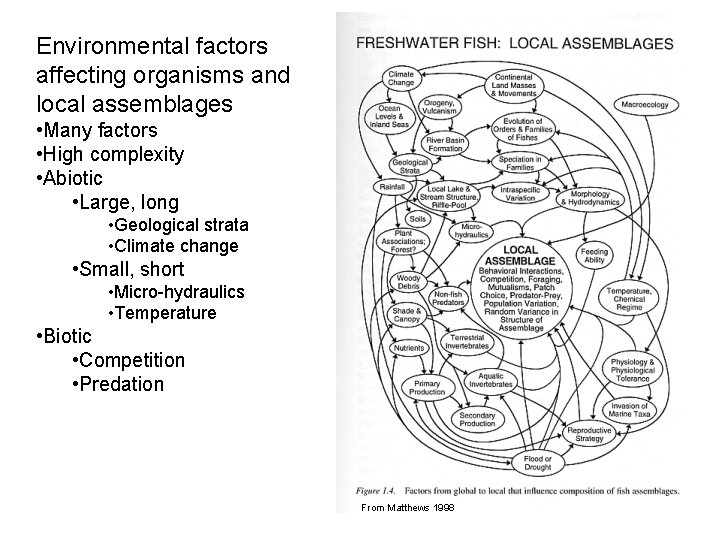
Environmental factors affecting organisms and local assemblages • Many factors • High complexity • Abiotic • Large, long • Geological strata • Climate change • Small, short • Micro-hydraulics • Temperature • Biotic • Competition • Predation From Matthews 1998
Important Abiotic Environmental Variables Affecting Organisms in Streams • • Current velocity/Discharge Substrate Temperature Dissolved oxygen Relationships between environmental variables can be very important
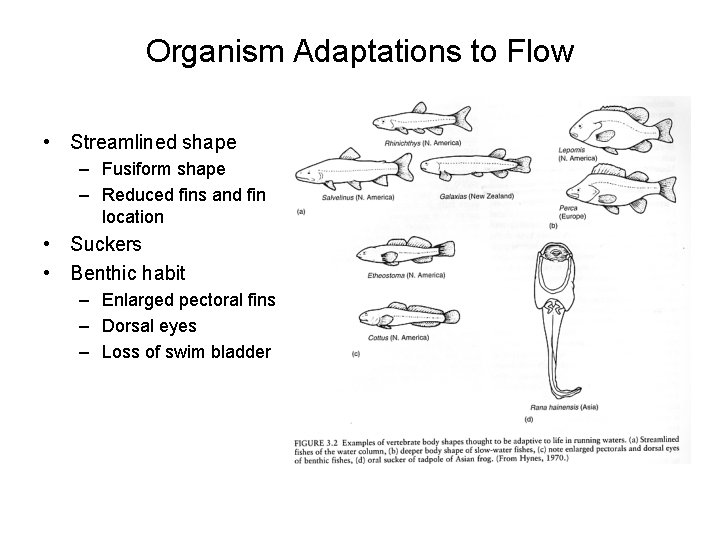
Organism Adaptations to Flow • Streamlined shape – Fusiform shape – Reduced fins and fin location • Suckers • Benthic habit – Enlarged pectoral fins – Dorsal eyes – Loss of swim bladder
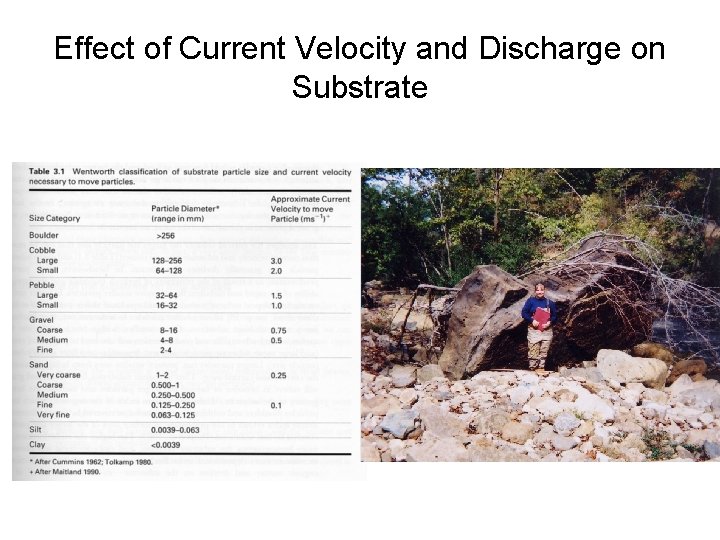
Effect of Current Velocity and Discharge on Substrate
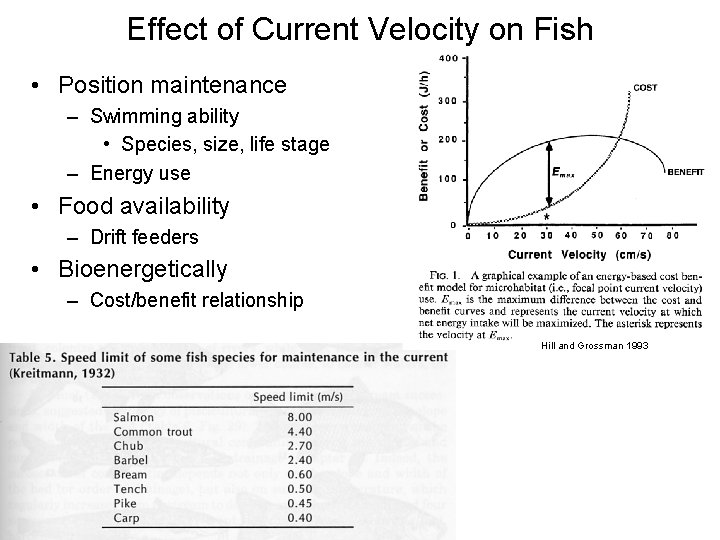
Effect of Current Velocity on Fish • Position maintenance – Swimming ability • Species, size, life stage – Energy use • Food availability – Drift feeders • Bioenergetically – Cost/benefit relationship Hill and Grossman 1993
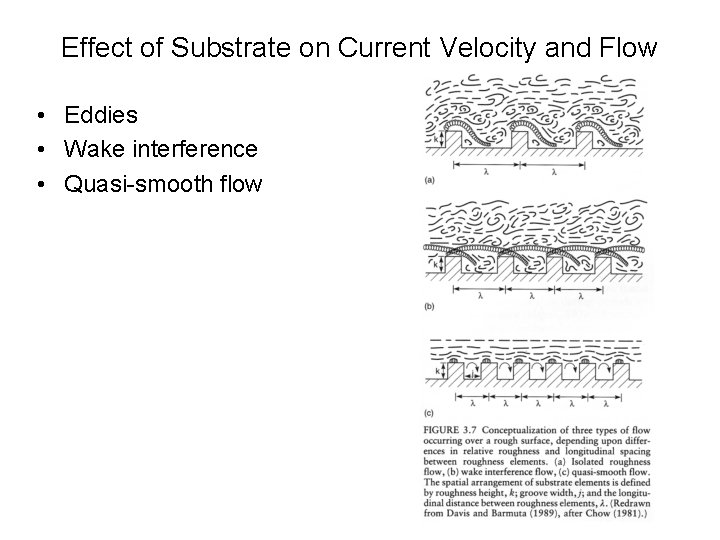
Effect of Substrate on Current Velocity and Flow • Eddies • Wake interference • Quasi-smooth flow
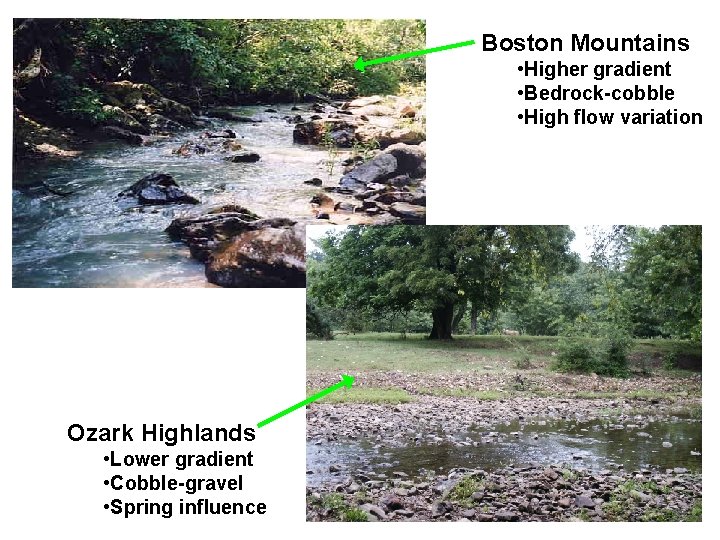
Boston Mountains • Higher gradient • Bedrock-cobble • High flow variation Ozark Highlands • Lower gradient • Cobble-gravel • Spring influence
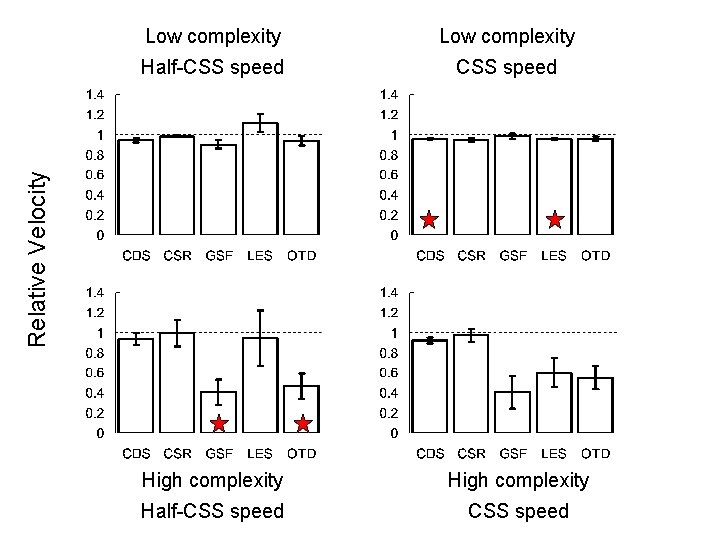
Research Questions • Does fish morphology predict fish swimming ability and refuge use?
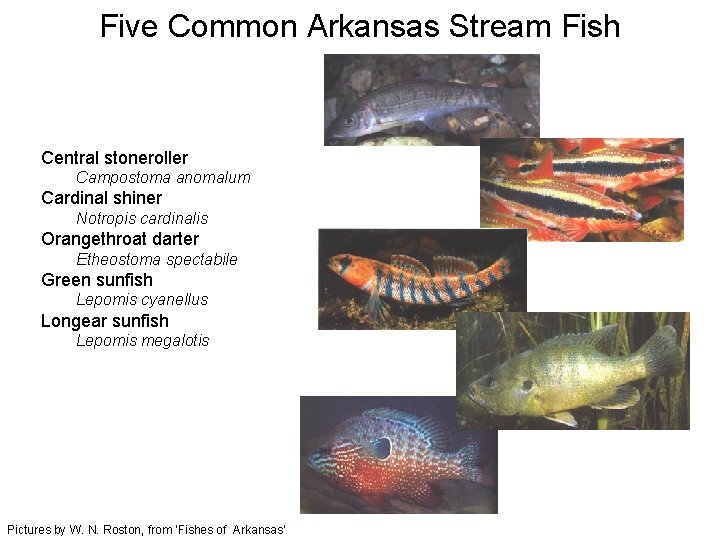
Five Common Arkansas Stream Fish Central stoneroller Campostoma anomalum Cardinal shiner Notropis cardinalis Orangethroat darter Etheostoma spectabile Green sunfish Lepomis cyanellus Longear sunfish Lepomis megalotis Pictures by W. N. Roston, from ‘Fishes of Arkansas’
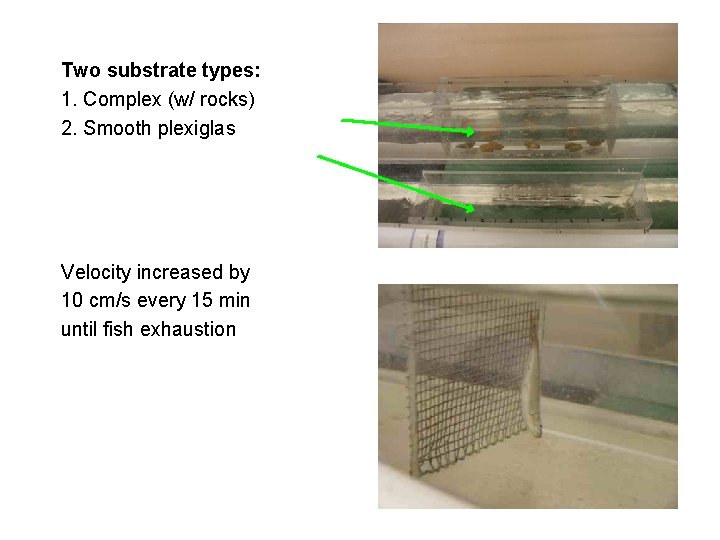
Two substrate types: 1. Complex (w/ rocks) 2. Smooth plexiglas Velocity increased by 10 cm/s every 15 min until fish exhaustion
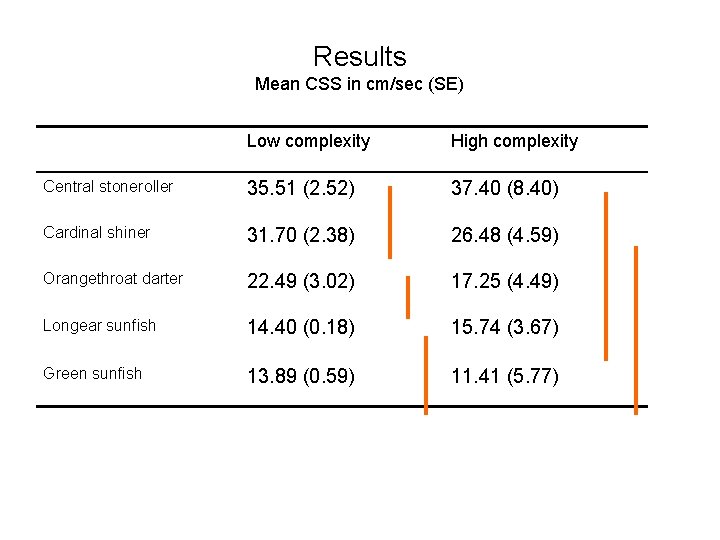
Results Mean CSS in cm/sec (SE) Low complexity High complexity Central stoneroller 35. 51 (2. 52) 37. 40 (8. 40) Cardinal shiner 31. 70 (2. 38) 26. 48 (4. 59) Orangethroat darter 22. 49 (3. 02) 17. 25 (4. 49) Longear sunfish 14. 40 (0. 18) 15. 74 (3. 67) Green sunfish 13. 89 (0. 59) 11. 41 (5. 77)
Low complexity Half-CSS speed Relative Velocity Low complexity High complexity Half-CSS speed
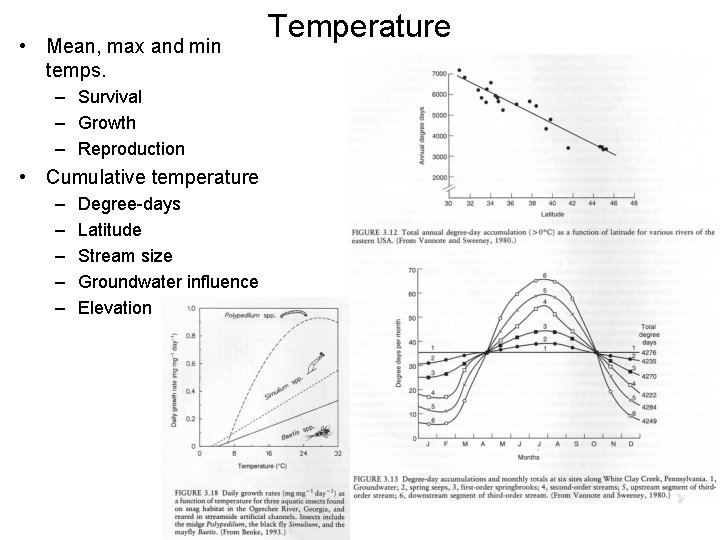
• Mean, max and min temps. – Survival – Growth – Reproduction • Cumulative temperature – – – Degree-days Latitude Stream size Groundwater influence Elevation Temperature
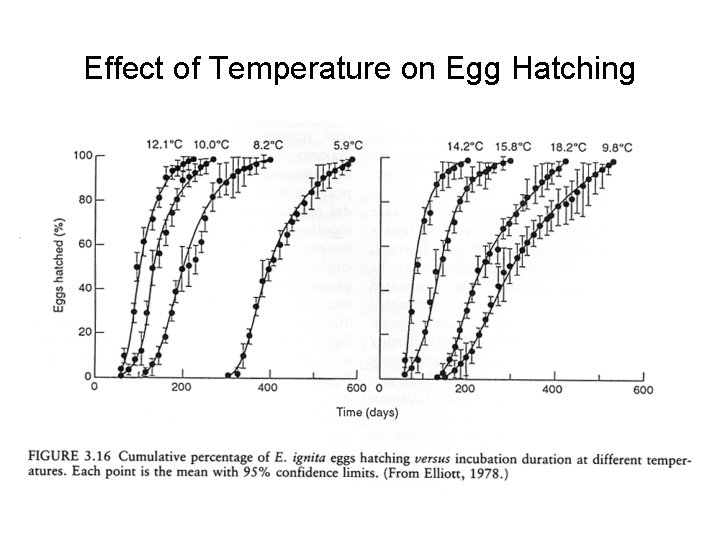
Effect of Temperature on Egg Hatching
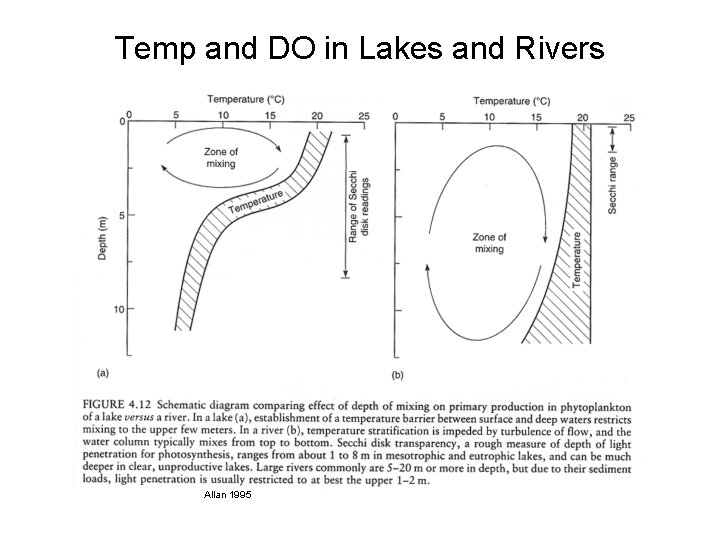
Temp and DO in Lakes and Rivers Allan 1995
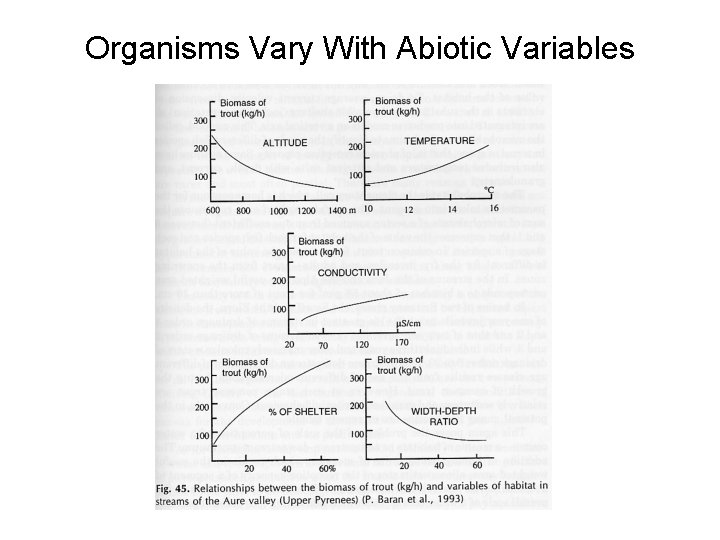
Organisms Vary With Abiotic Variables
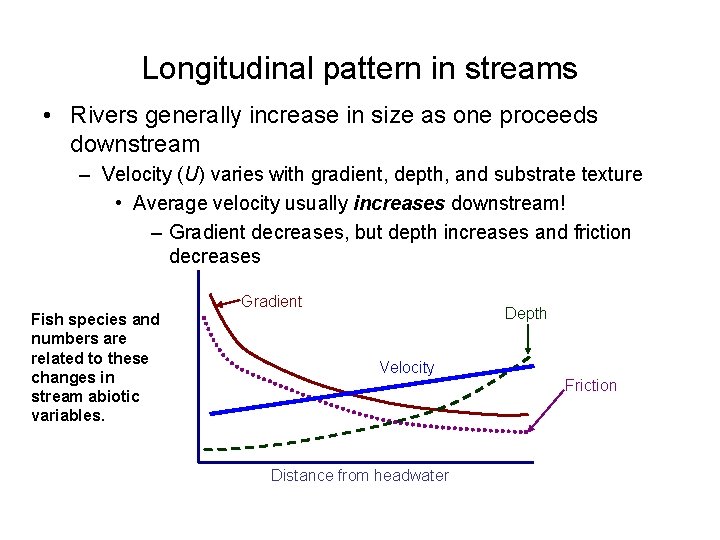
Longitudinal pattern in streams • Rivers generally increase in size as one proceeds downstream – Velocity (U) varies with gradient, depth, and substrate texture • Average velocity usually increases downstream! – Gradient decreases, but depth increases and friction decreases Gradient Fish species and numbers are related to these changes in stream abiotic variables. Depth Velocity Friction Distance from headwater
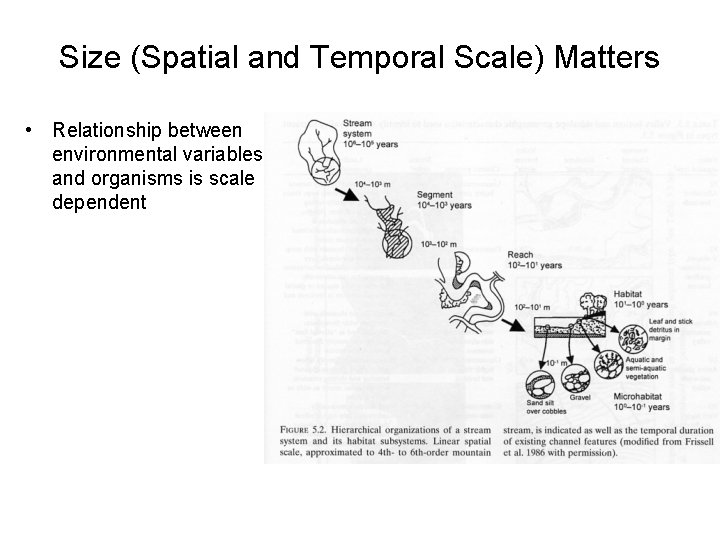
Size (Spatial and Temporal Scale) Matters • Relationship between environmental variables and organisms is scale dependent
Questions • How do crayfish species-environmental relationships change with spatial scale? • How do lotic crayfish species relationships change with spatial scale?
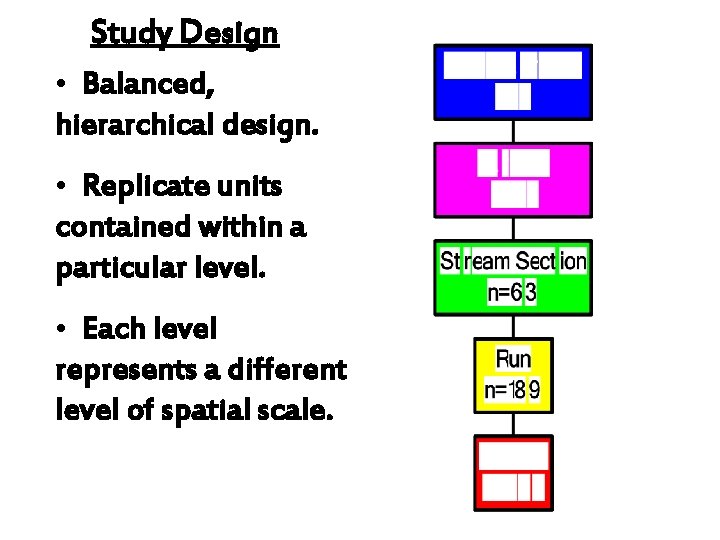
Study Design • Balanced, hierarchical design. • Replicate units contained within a particular level. • Each level represents a different level of spatial scale.
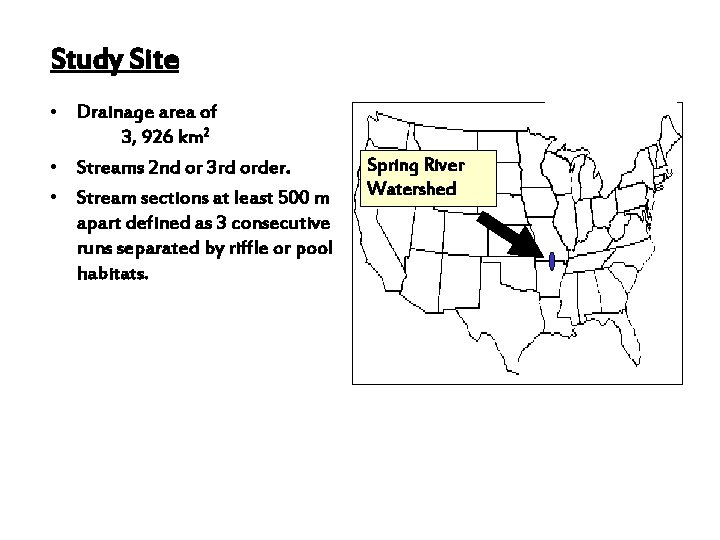
Study Site • Drainage area of 3, 926 km 2 • Streams 2 nd or 3 rd order. • Stream sections at least 500 m apart defined as 3 consecutive runs separated by riffle or pool habitats. Spring River Watershed
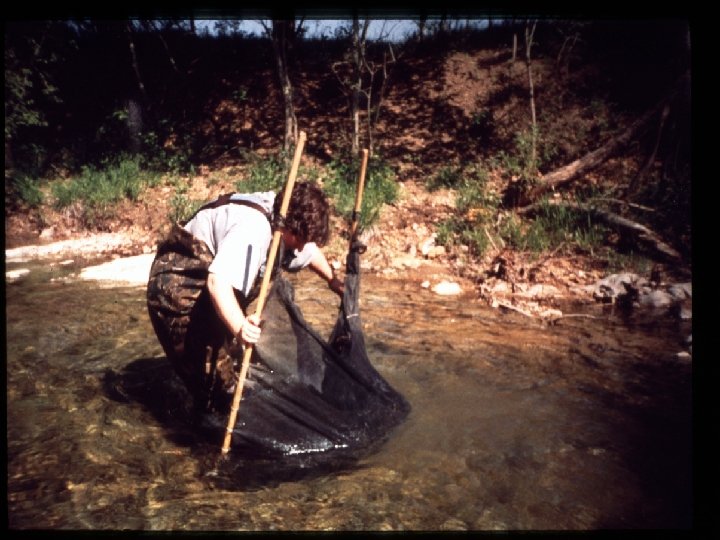
Field Methods • Measurements of substrate composition, stream width, current velocity, and depth measured at each sample location. • Water temperature, p. H, and conductivity measured in each stream section. • Crayfish collected identified to species, sexed, and carapace length measured.
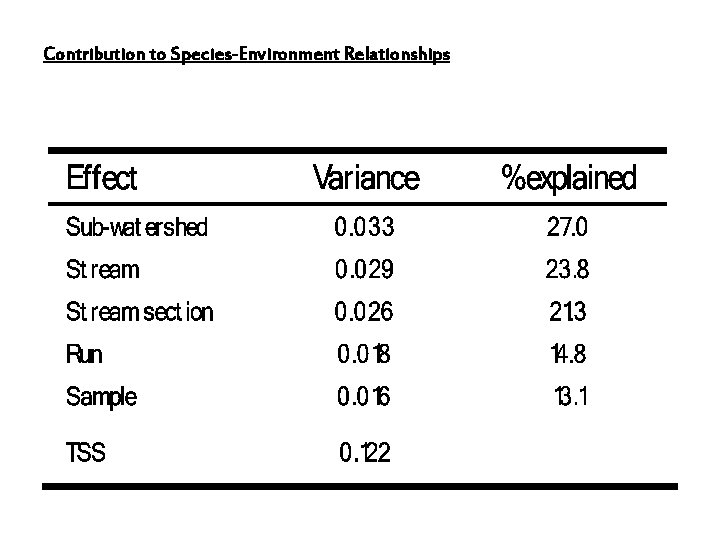
Contribution to Species-Environment Relationships
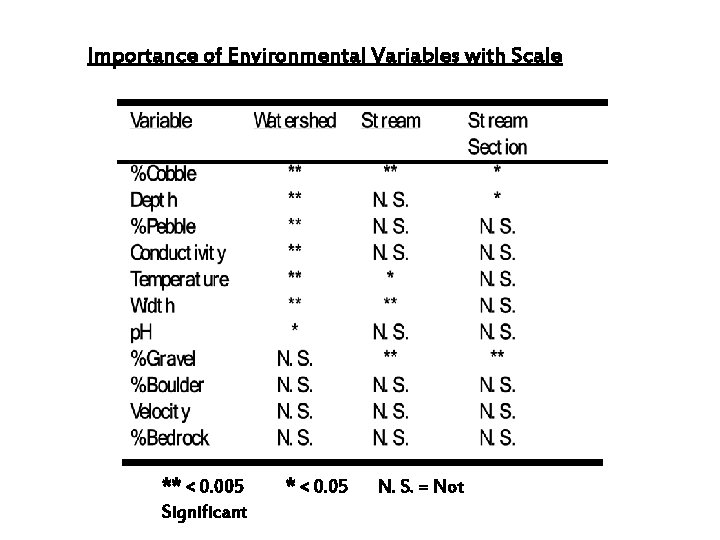
Importance of Environmental Variables with Scale ** < 0. 005 Significant * < 0. 05 N. S. = Not
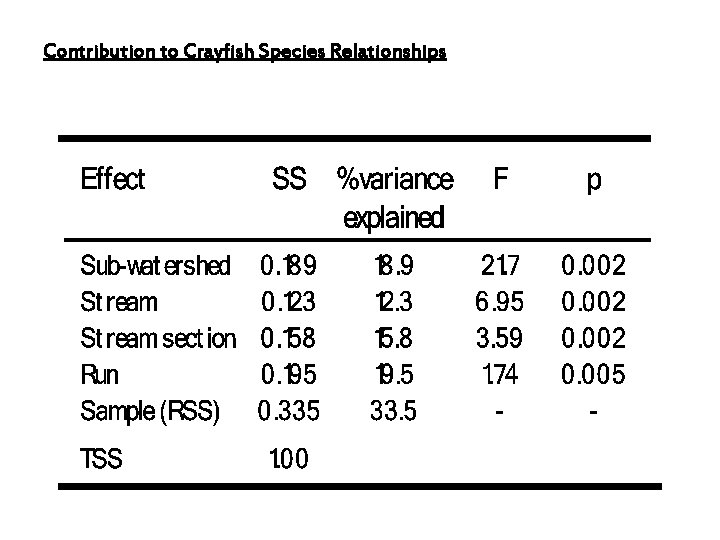
Contribution to Crayfish Species Relationships
Conclusions • Importance of environmental variables differed among levels of scale. • Largest scale (sub-watersheds) explained most variation in speciesenvironmental relationships (27. 0%) and this decreased with decreasing spatial scale. • Greatest amount of variation in crayfish species relationships explained (33. 5%) attributed to differences at the microhabitat (sample) level.