
ENVIRONMENTAL DIVERSITY RESOURCES HAZARDS of Latin America Subtitle


ENVIRONMENTAL DIVERSITY, RESOURCES, HAZARDS of Latin America Subtitle
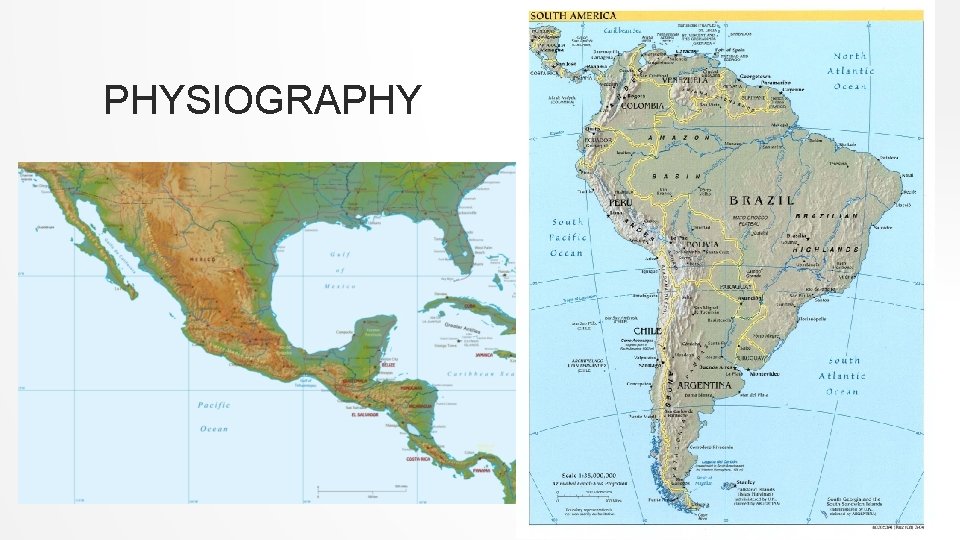
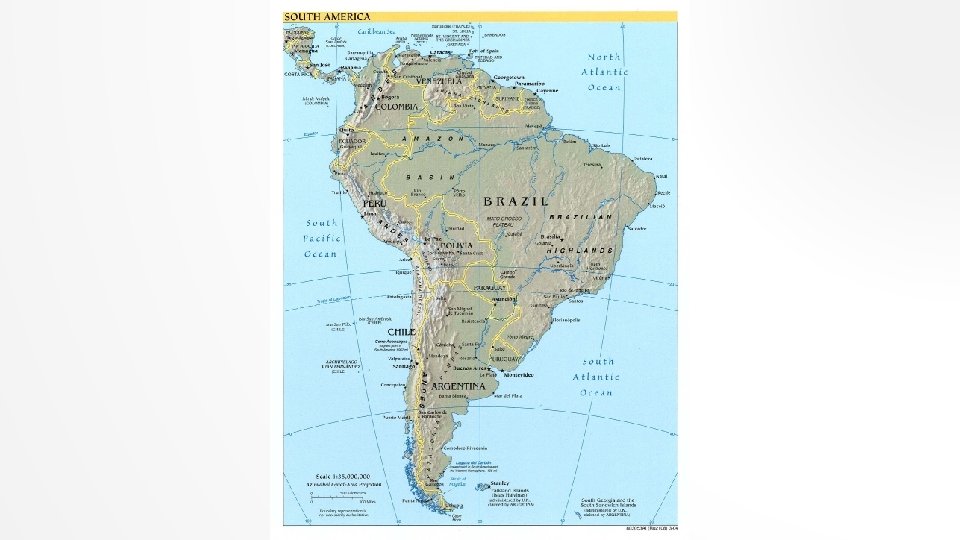
PHYSIOGRAPHY
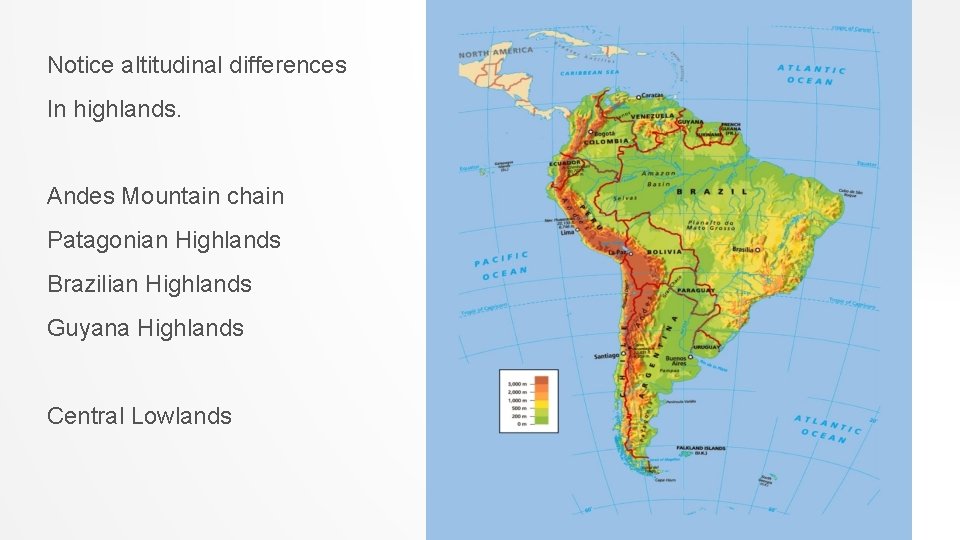
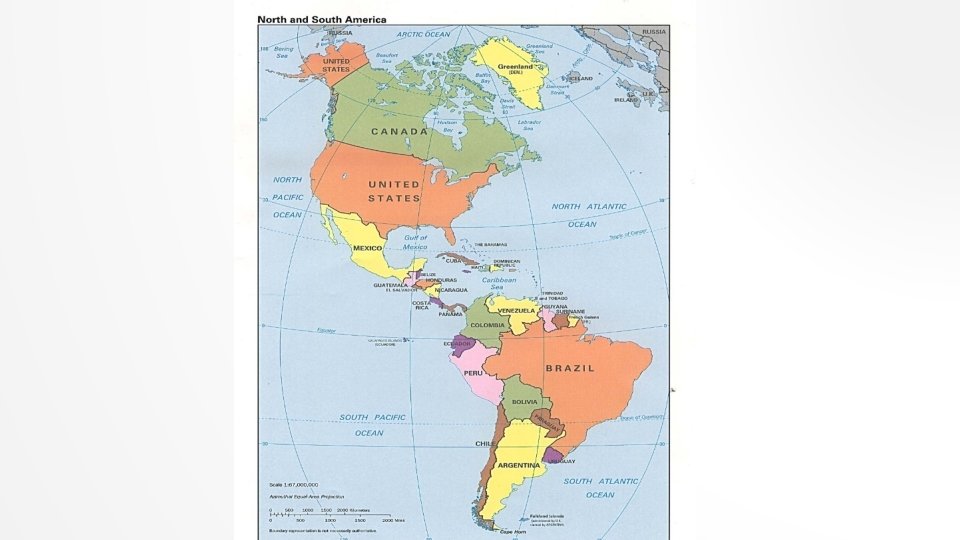
Notice altitudinal differences In highlands. Andes Mountain chain Patagonian Highlands Brazilian Highlands Guyana Highlands Central Lowlands
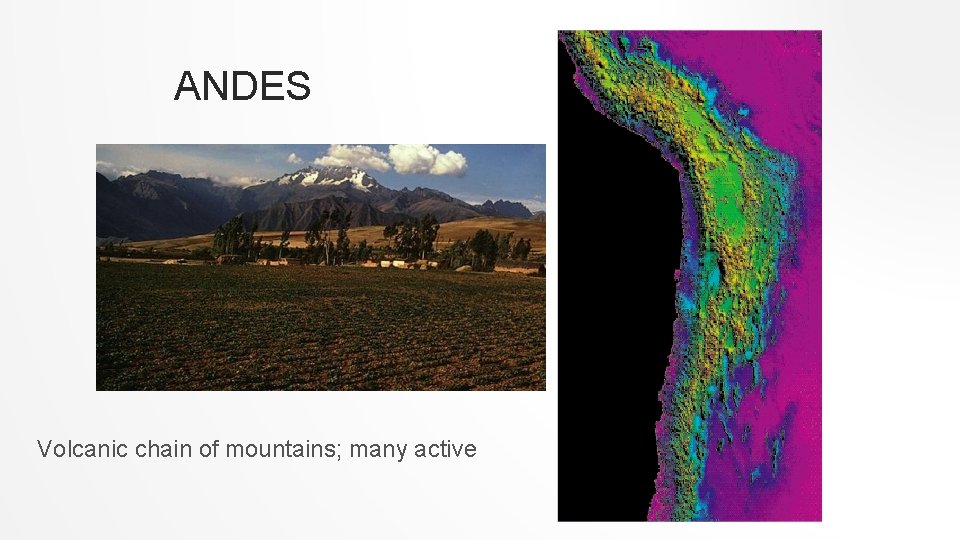
ANDES Volcanic chain of mountains; many active
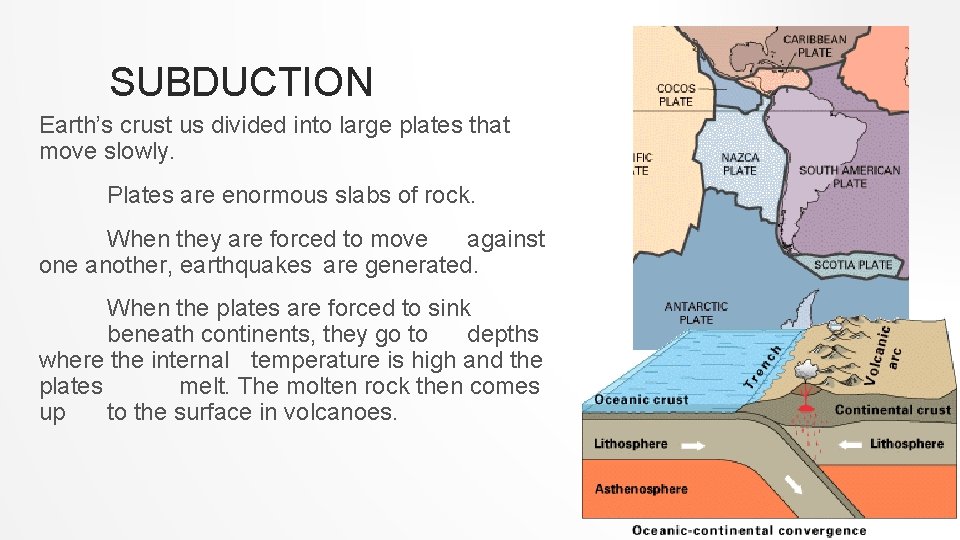
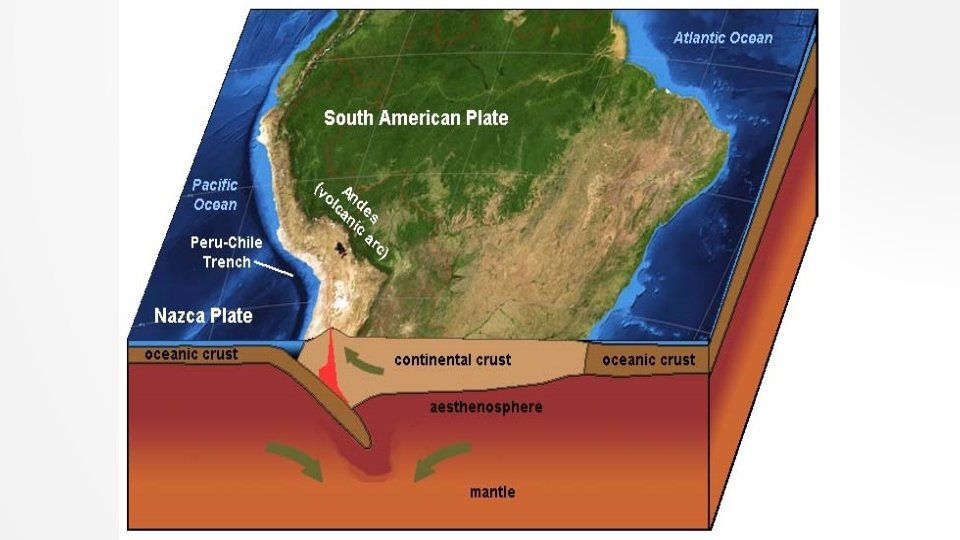
SUBDUCTION Earth’s crust us divided into large plates that move slowly. Plates are enormous slabs of rock. When they are forced to move against one another, earthquakes are generated. When the plates are forced to sink beneath continents, they go to depths where the internal temperature is high and the plates melt. The molten rock then comes up to the surface in volcanoes.

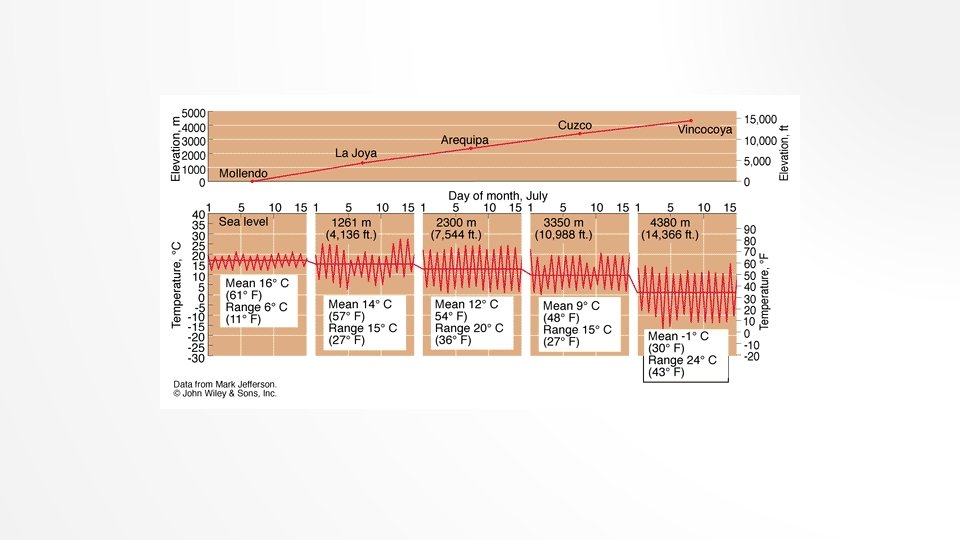
ALTITUDINAL ZONATION Temperature drops 3. 5 degrees (F) for every 1000 ft gain in elevation In each elevation zone, Climate, vegetation, agriculture, lifestyles vary.
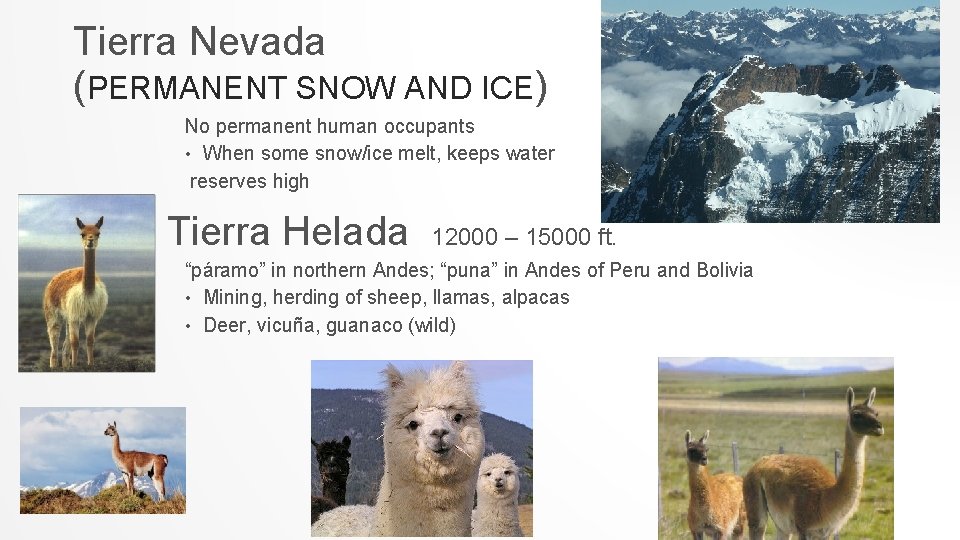
Tierra Nevada (PERMANENT SNOW AND ICE) No permanent human occupants • When some snow/ice melt, keeps water reserves high Tierra Helada 12000 – 15000 ft. “páramo” in northern Andes; “puna” in Andes of Peru and Bolivia • Mining, herding of sheep, llamas, alpacas • Deer, vicuña, guanaco (wild)
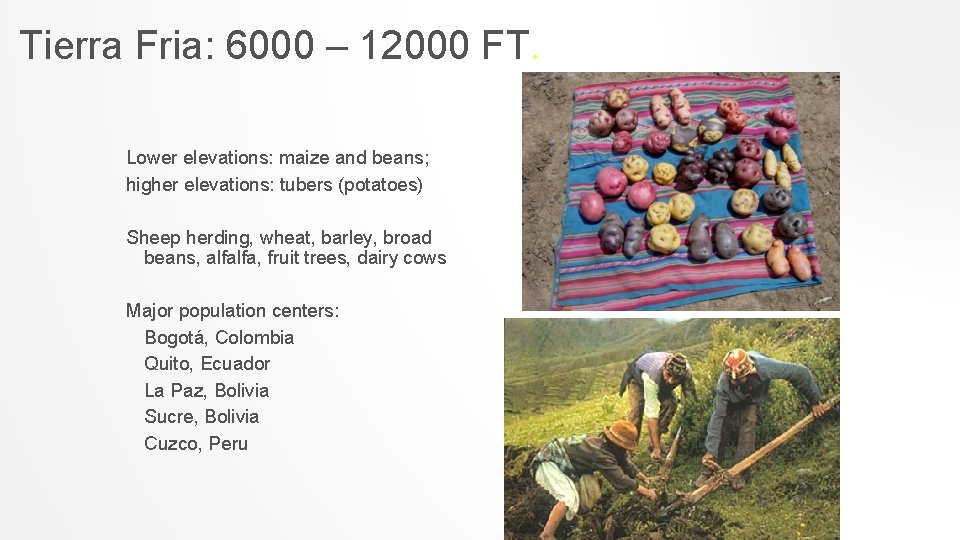
Tierra Fria: 6000 – 12000 FT. Lower elevations: maize and beans; higher elevations: tubers (potatoes) Sheep herding, wheat, barley, broad beans, alfalfa, fruit trees, dairy cows Major population centers: Bogotá, Colombia Quito, Ecuador La Paz, Bolivia Sucre, Bolivia Cuzco, Peru
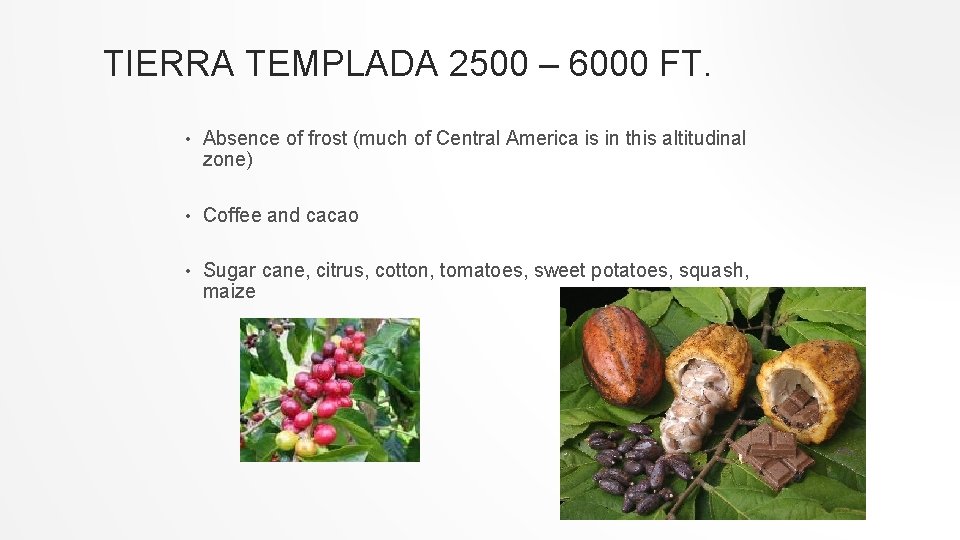
TIERRA TEMPLADA 2500 – 6000 FT. • Absence of frost (much of Central America is in this altitudinal zone) • Coffee and cacao • Sugar cane, citrus, cotton, tomatoes, sweet potatoes, squash, maize
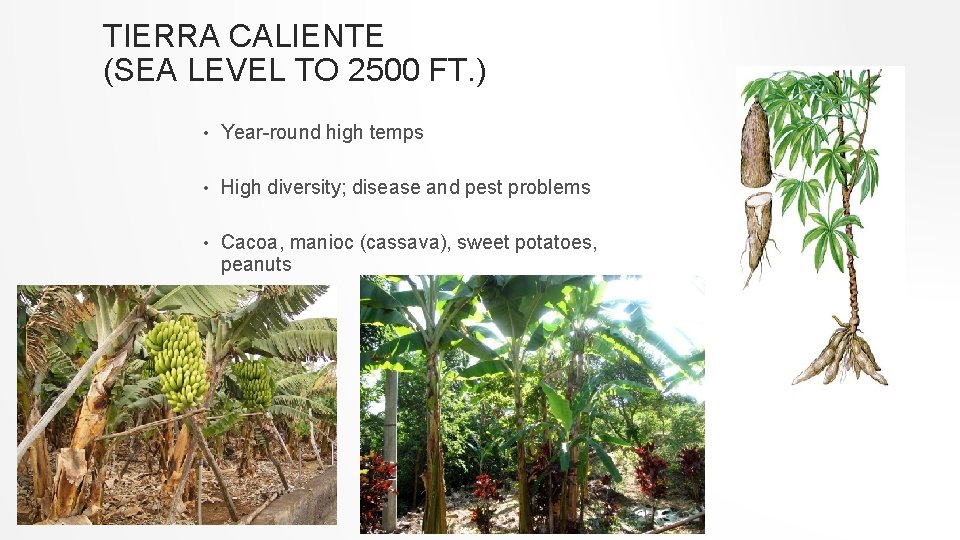
TIERRA CALIENTE (SEA LEVEL TO 2500 FT. ) • Year-round high temps • High diversity; disease and pest problems • Cacoa, manioc (cassava), sweet potatoes, peanuts
CLIMATE CHANGE IN ANDES • Slides • Glaciers (important source of meltwater for pastures and drinking) are receding • Tierra Helada is getting smaller • Used for llama; now grain is growing there • Rainfall patterns are changing • Potato Park
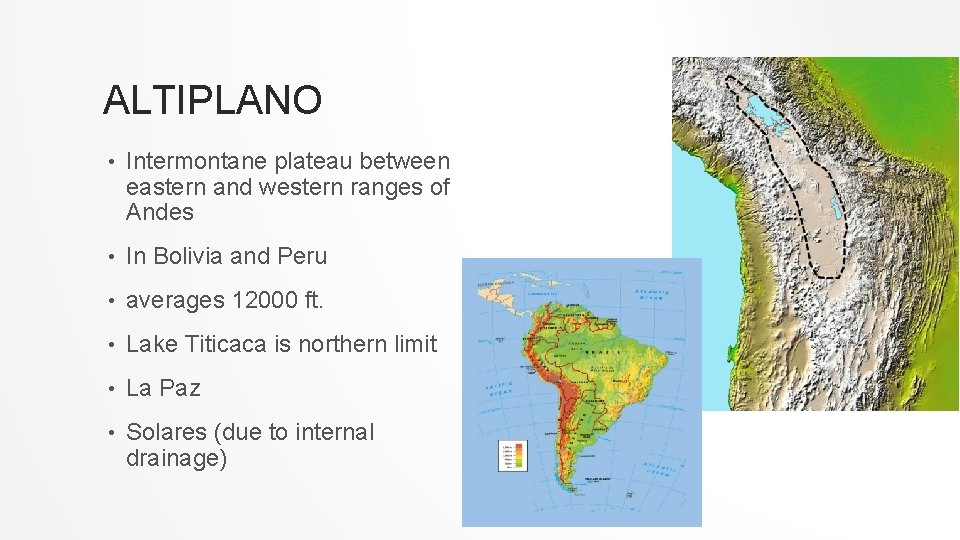
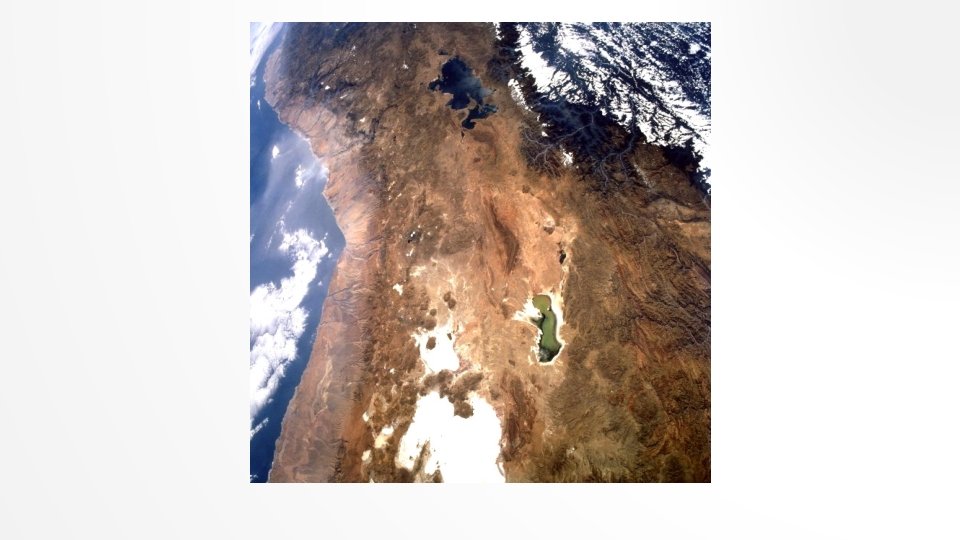
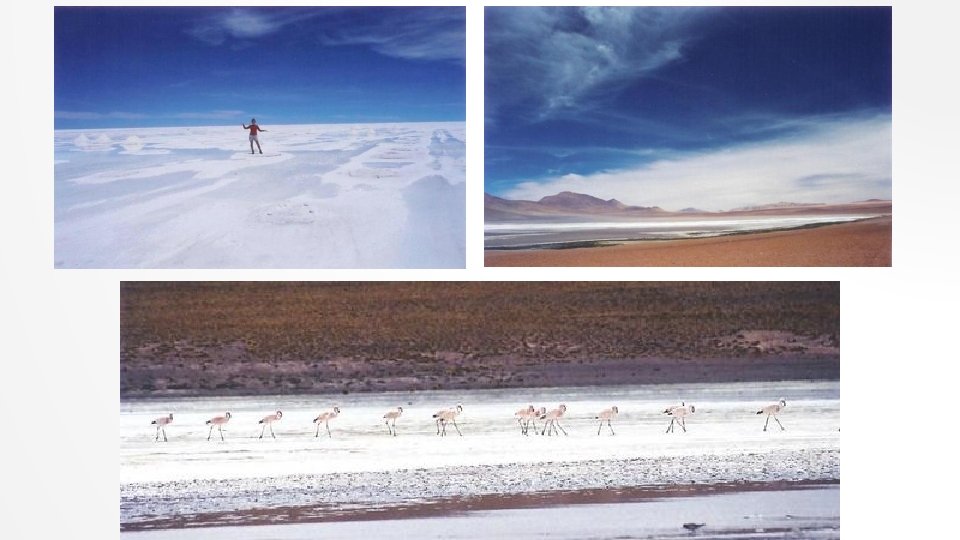
ALTIPLANO • Intermontane plateau between eastern and western ranges of Andes • In Bolivia and Peru • averages 12000 ft. • Lake Titicaca is northern limit • La Paz • Solares (due to internal drainage)
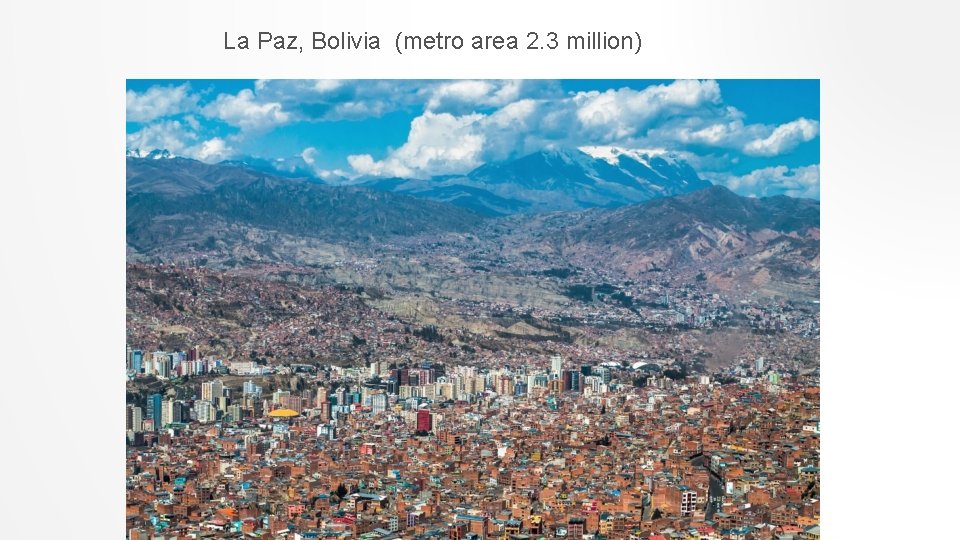
La Paz, Bolivia (metro area 2. 3 million)
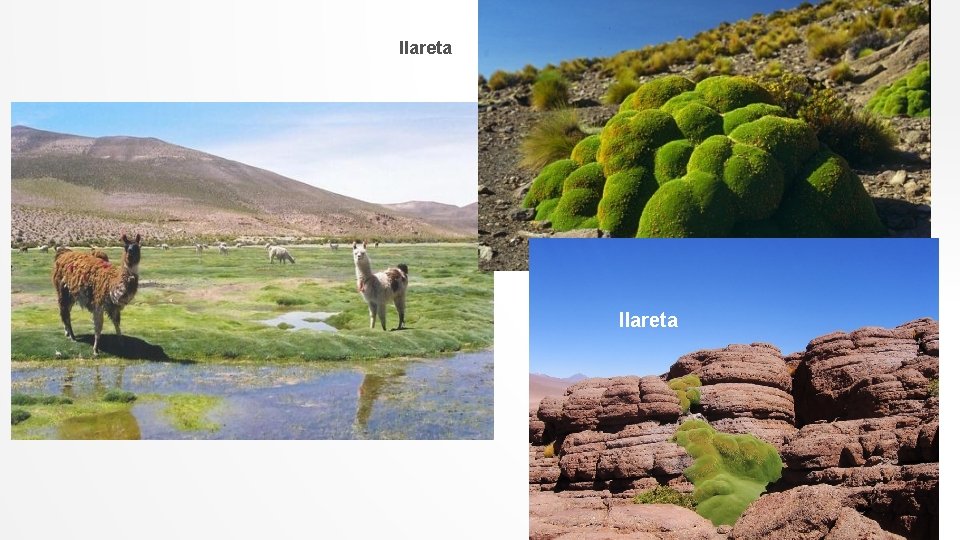
llareta
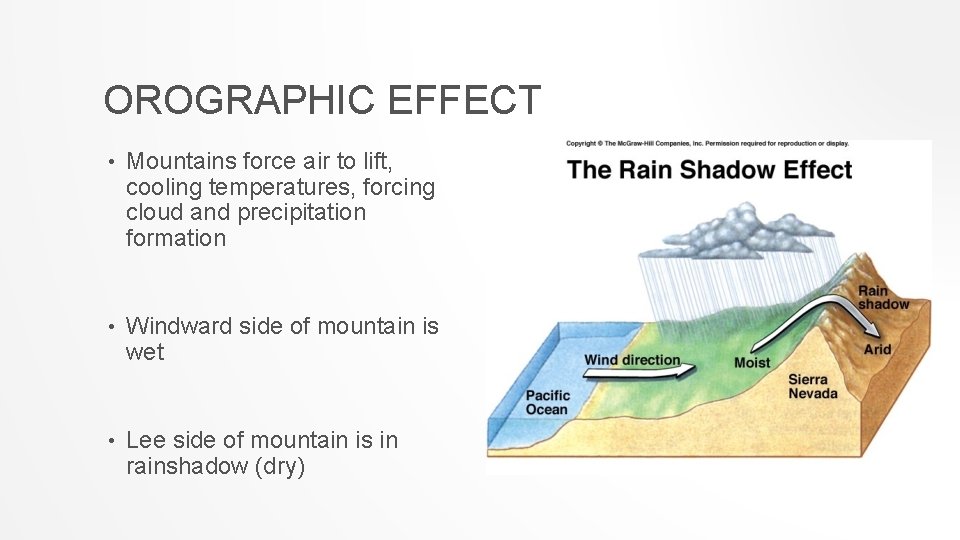
OROGRAPHIC EFFECT • Mountains force air to lift, cooling temperatures, forcing cloud and precipitation formation • Windward side of mountain is wet • Lee side of mountain is in rainshadow (dry)
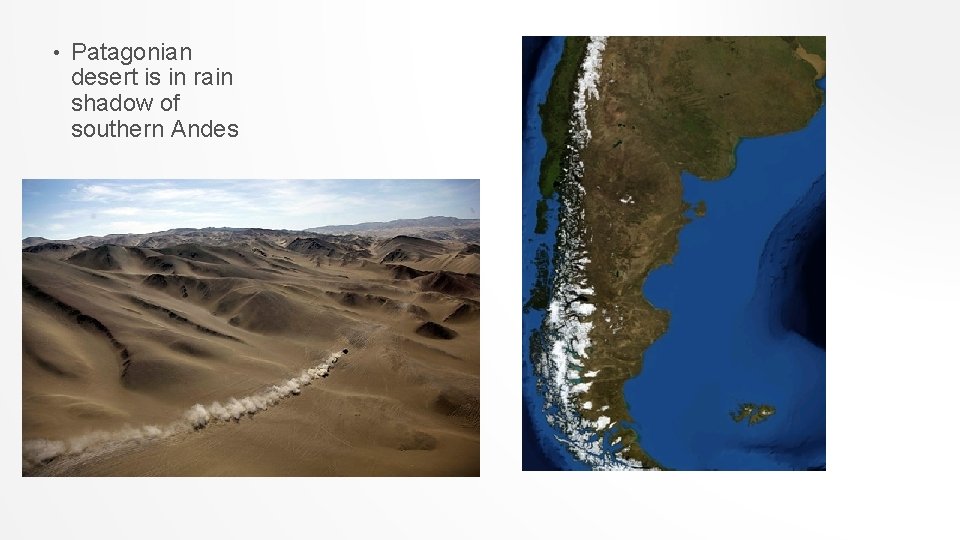
• Patagonian desert is in rain shadow of southern Andes
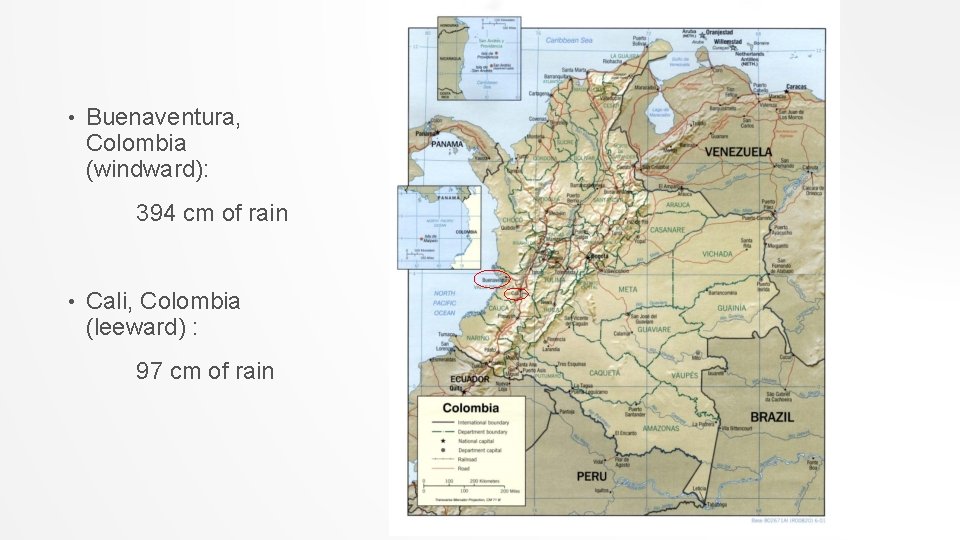
• Buenaventura, Colombia (windward): 394 cm of rain • Cali, Colombia (leeward) : 97 cm of rain

• Puerto Rico Windward side : San Juan : • 60 “ annually • • Leeward side : Ponce: 36 “ WIND
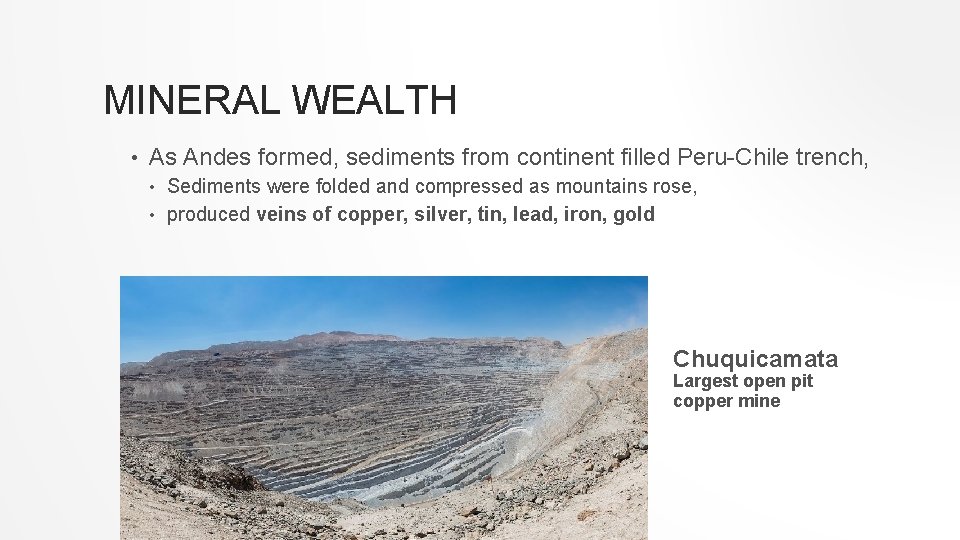
MINERAL WEALTH • As Andes formed, sediments from continent filled Peru-Chile trench, Sediments were folded and compressed as mountains rose, • produced veins of copper, silver, tin, lead, iron, gold • Chuquicamata Largest open pit copper mine
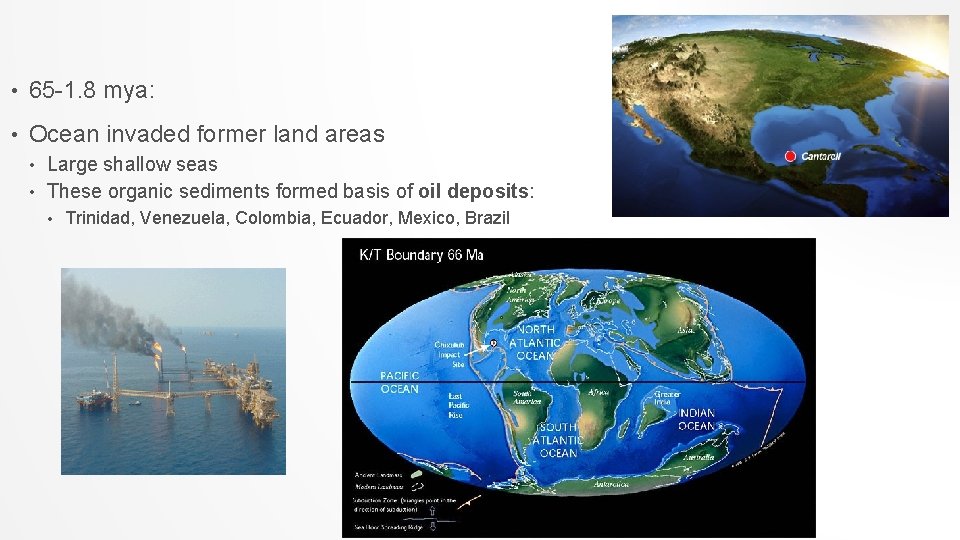
• 65 -1. 8 mya: • Ocean invaded former land areas Large shallow seas • These organic sediments formed basis of oil deposits: • • Trinidad, Venezuela, Colombia, Ecuador, Mexico, Brazil
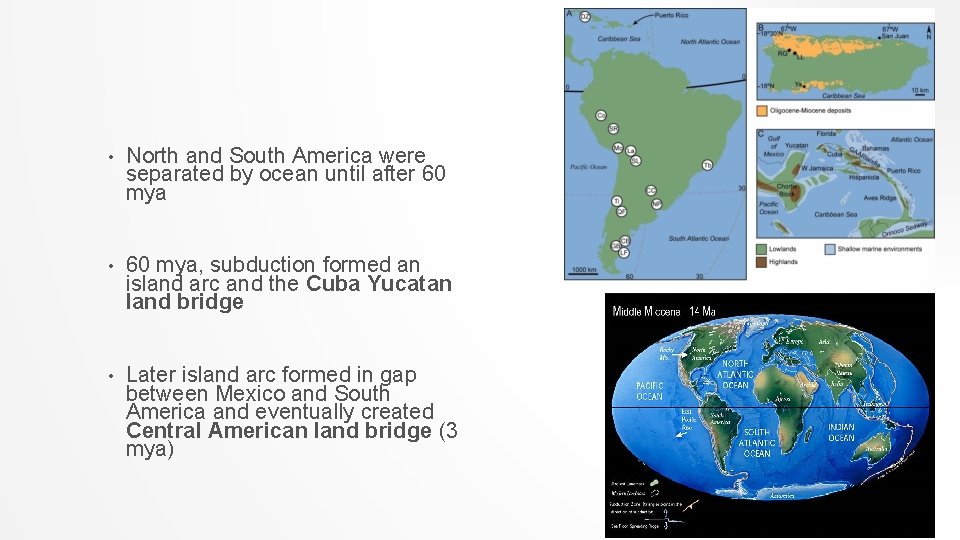
• North and South America were separated by ocean until after 60 mya • 60 mya, subduction formed an island arc and the Cuba Yucatan land bridge • Later island arc formed in gap between Mexico and South America and eventually created Central American land bridge (3 mya)

“GREAT EXCHANGE” OF FLORA AND FAUNA
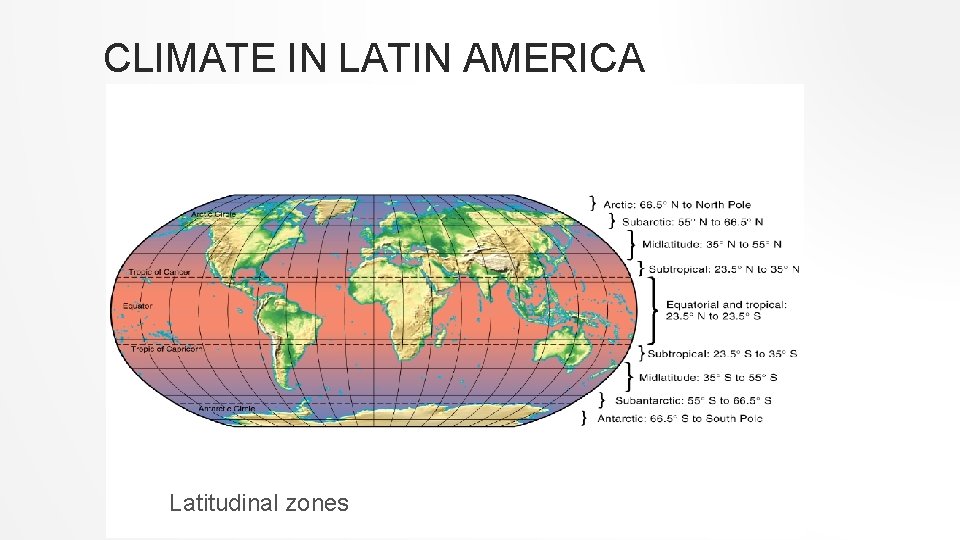
CLIMATE IN LATIN AMERICA Latitudinal zones
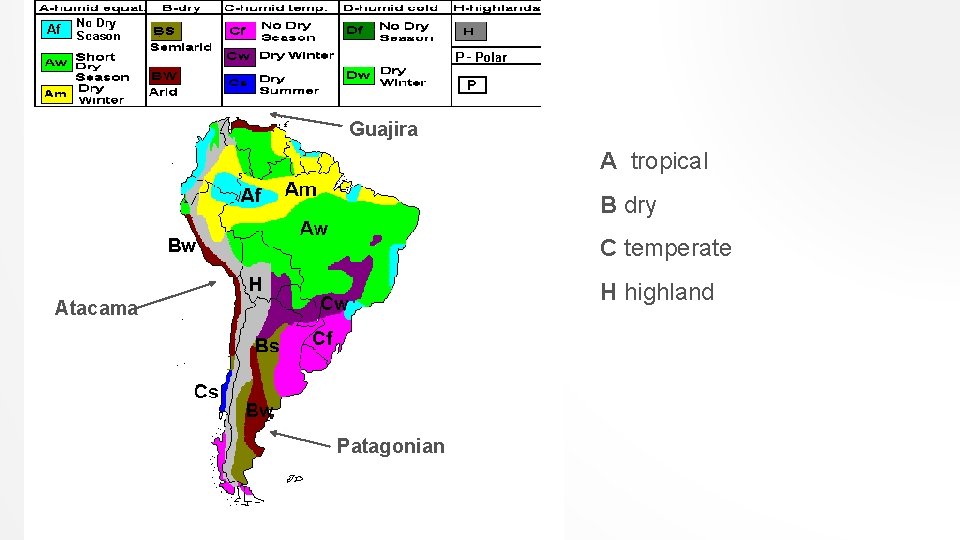
Guajira A tropical B dry C temperate H highland Atacama Patagonian
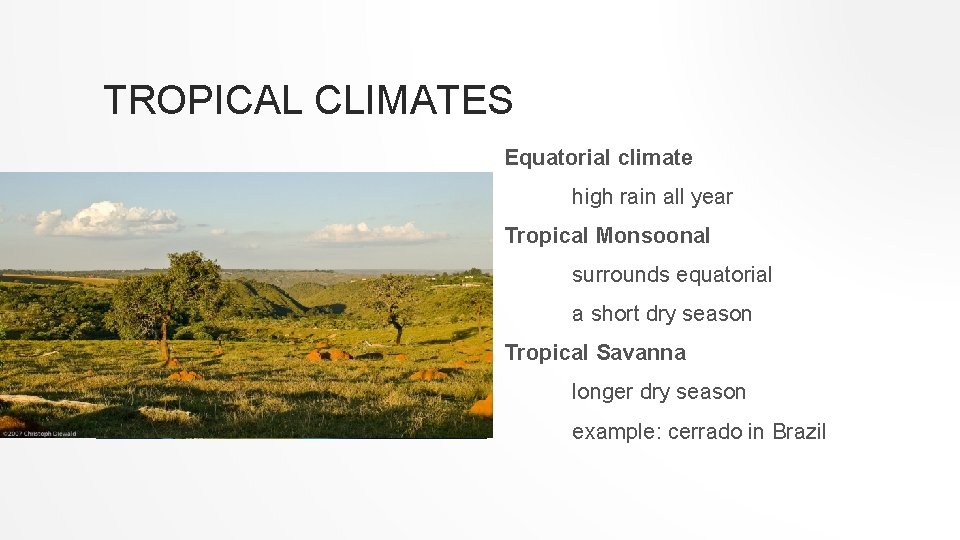
TROPICAL CLIMATES Equatorial climate high rain all year Tropical Monsoonal surrounds equatorial a short dry season Tropical Savanna longer dry season example: cerrado in Brazil
2 ENVIRONMENTAL CONCERNS IN TROPICAL SOUTH AMERICA : 1. Deforestation Extremely high biodiversity of tropical rain forest: Layered canopy • Microhabitats • Nutrients in biomass; sensitive to disturbance • • Carbon cycling • Regional hydrologic cycle • Destruction of indigenous cultures 2. Endangered cerrado
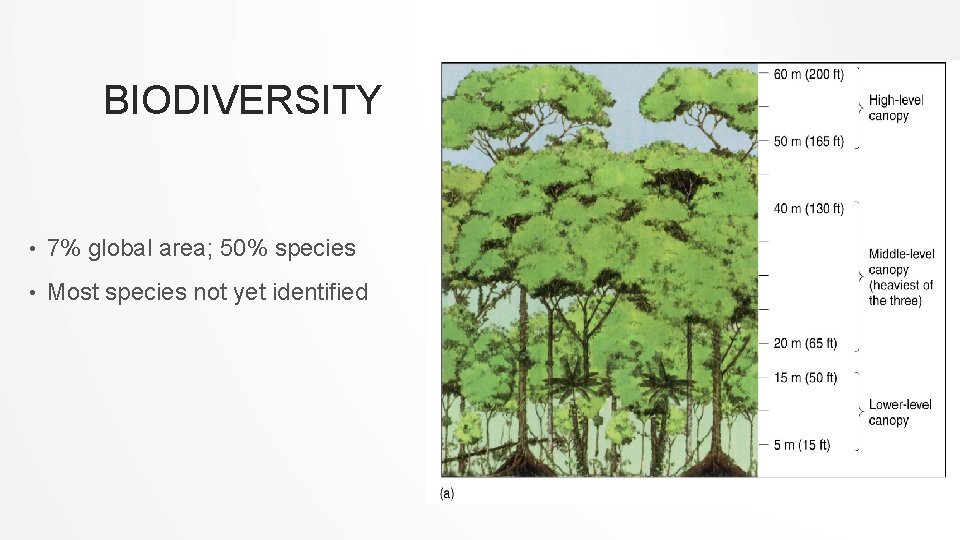
BIODIVERSITY • 7% global area; 50% species • Most species not yet identified
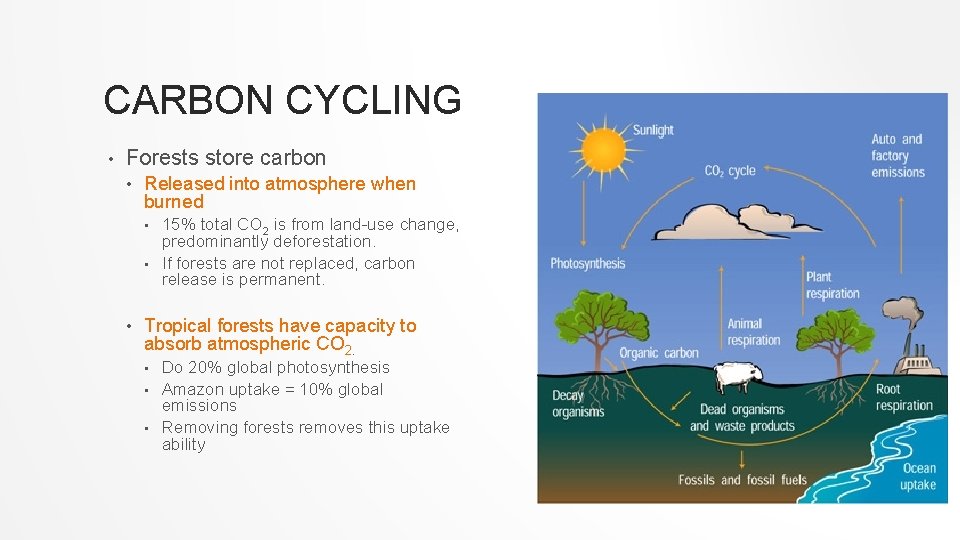
CARBON CYCLING • Forests store carbon • Released into atmosphere when burned 15% total CO 2 is from land-use change, predominantly deforestation. • If forests are not replaced, carbon release is permanent. • • Tropical forests have capacity to absorb atmospheric CO 2. Do 20% global photosynthesis • Amazon uptake = 10% global emissions • Removing forests removes this uptake ability •
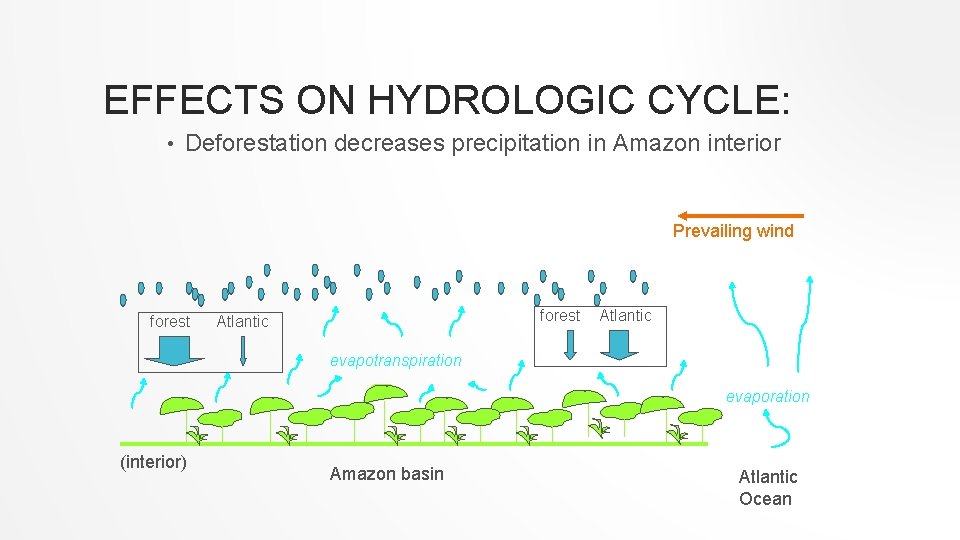
EFFECTS ON HYDROLOGIC CYCLE: • Deforestation decreases precipitation in Amazon interior Prevailing wind forest Atlantic evapotranspiration evaporation (interior) Amazon basin Atlantic Ocean
- Slides: 36