
Environmental Cleaning Tool Kit Cleaning Basics Module 1
Environmental Cleaning Tool Kit Cleaning Basics Module 1
AORN Environmental Cleaning Toolkit

Objectives Upon completion of this module, participants will be able to - define standard precautions; - describe how often cleaning should occur, and; describe appropriate cleaning methods; explain the chain of infection; state high-touch objects in the perioperative environment; state the recommended chemicals, tools, and equipment used for cleaning.
Cleaning Precautions • The Occupational Safety and Health Administration (OSHA) regulates the bloodborne pathogens standard to protect all health care workers from exposure to germs that can be spread in blood and body fluids • Team members must wear protection during cleaning in the perioperative area to avoid coming in contact with any potentially infectious substance - this is called standard precautions
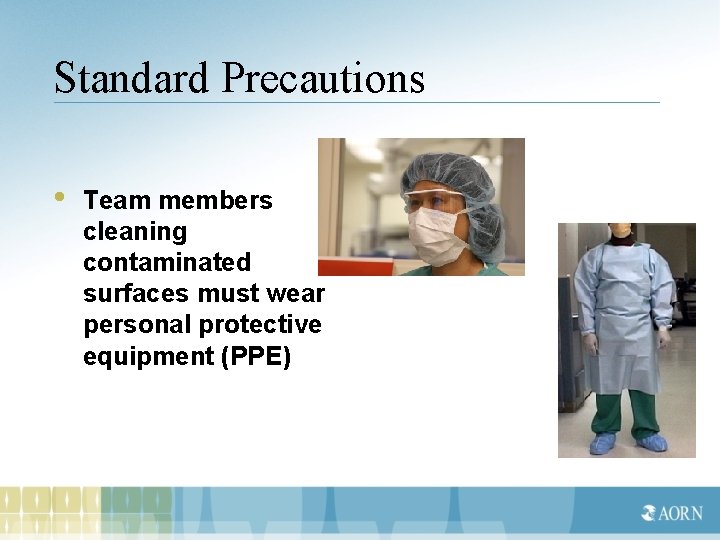
Standard Precautions • Team members cleaning contaminated surfaces must wear personal protective equipment (PPE)
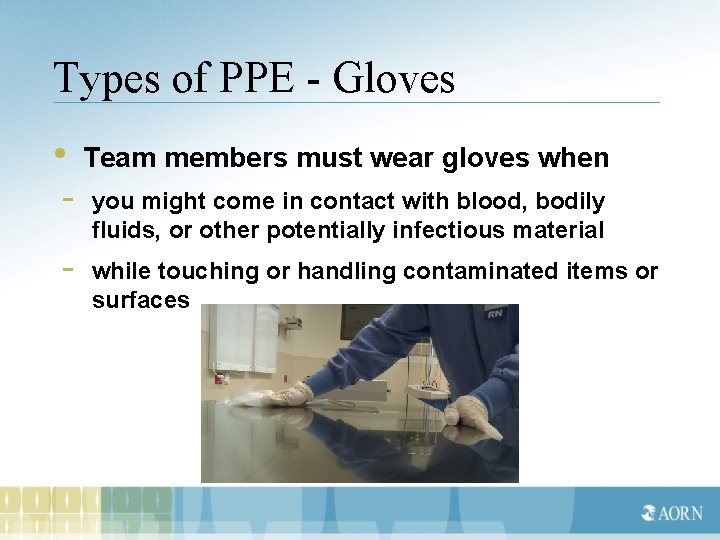
Types of PPE - Gloves • Team members must wear gloves when - you might come in contact with blood, bodily fluids, or other potentially infectious material - while touching or handling contaminated items or surfaces
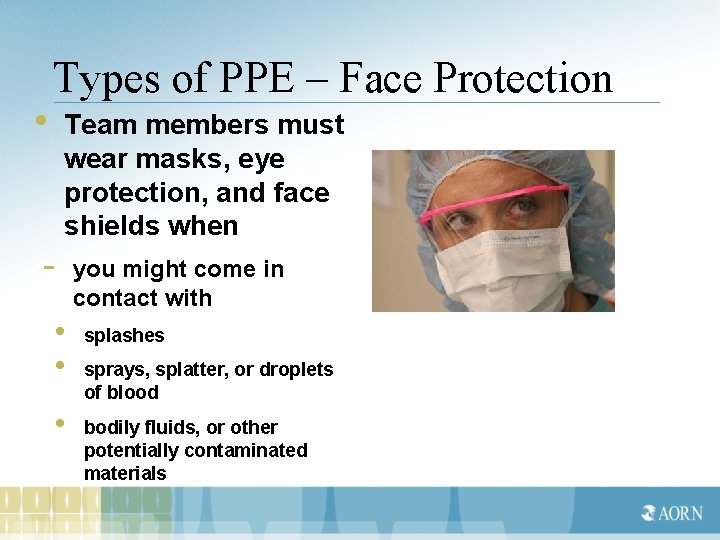
• Types of PPE – Face Protection Team members must wear masks, eye protection, and face shields when • • • you might come in contact with splashes sprays, splatter, or droplets of blood bodily fluids, or other potentially contaminated materials
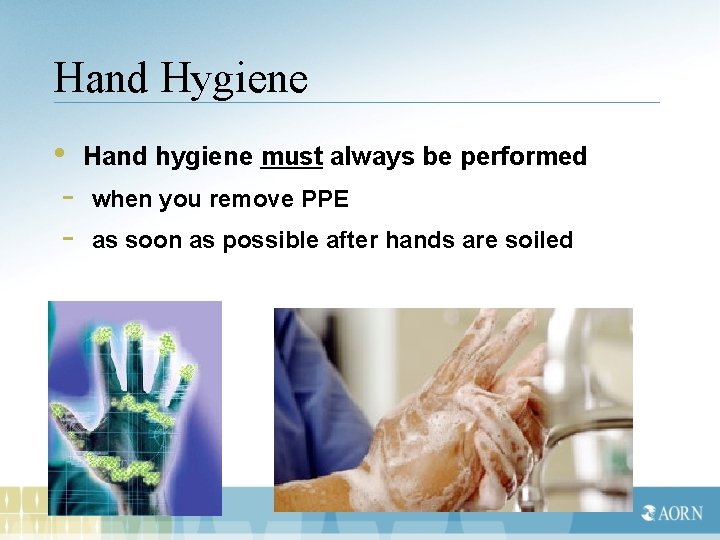
Hand Hygiene • Hand hygiene must always be performed - when you remove PPE - as soon as possible after hands are soiled
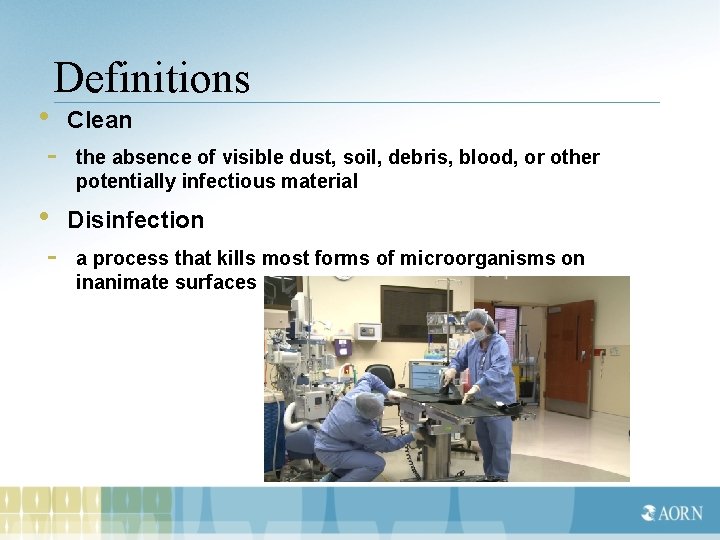
• Definitions - • - Clean the absence of visible dust, soil, debris, blood, or other potentially infectious material Disinfection a process that kills most forms of microorganisms on inanimate surfaces
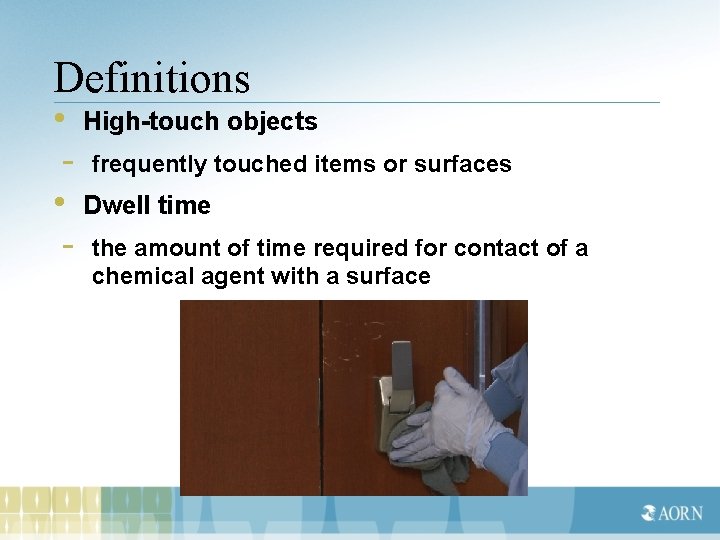
Definitions • High-touch objects - frequently touched items or surfaces • Dwell time - the amount of time required for contact of a chemical agent with a surface
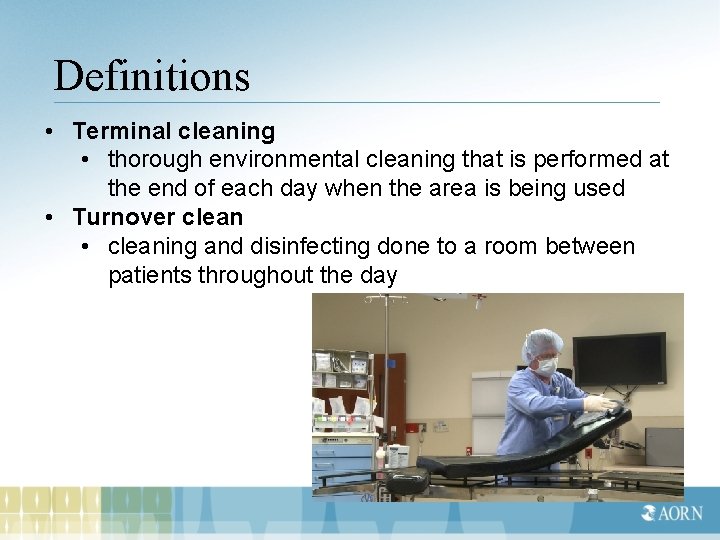
Definitions • Terminal cleaning • thorough environmental cleaning that is performed at the end of each day when the area is being used • Turnover clean • cleaning and disinfecting done to a room between patients throughout the day
Why is cleaning important? • There is a high risk for spreading germs in the perioperative environment - common equipment used on every patient - patient is at higher risk for infection because of surgery team members touch the patient, touch equipment, then touch the patient again
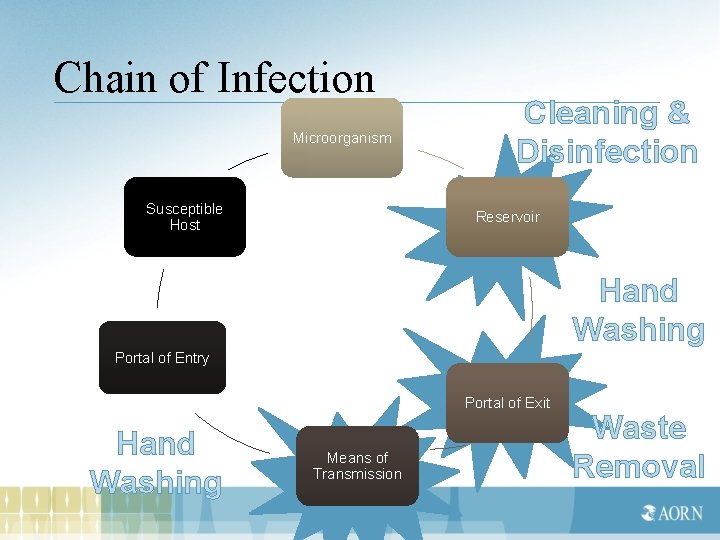
Chain of Infection Microorganism Susceptible Host Cleaning & Disinfection Reservoir Hand Washing Portal of Entry Portal of Exit Hand Washing Means of Transmission Waste Removal
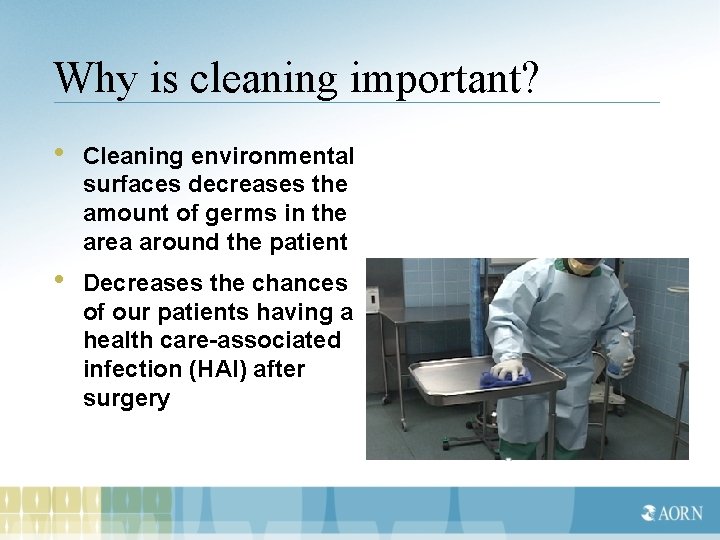
Why is cleaning important? • Cleaning environmental surfaces decreases the amount of germs in the area around the patient • Decreases the chances of our patients having a health care-associated infection (HAI) after surgery
How often should we clean? • Always follow your health care facility’s policy regarding frequency of cleaning patient rooms - terminally clean all patient rooms terminally daily if being used - clean every room between patients, especially high-touch objects - damp dust horizontal surfaces at the beginning of the day
Cleaning Schedule • • • Areas and equipment that are not terminally cleaned daily will be cleaned according to your facility’s schedule (weekly or monthly) ventilation ducts clean and soiled utility rooms sterile storage areas sterilizers lounges refrigerators Always follow your facility’s specific policy for cleaning these areas Document your cleaning on your facility’s cleaning log
Types of Environmental Cleaning • • • Terminal cleaning Damp dusting Turnover cleaning
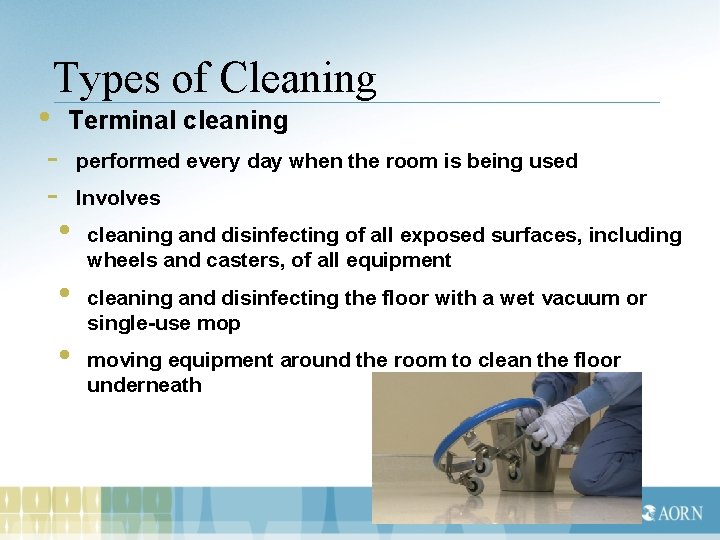
• Types of Cleaning - Terminal cleaning performed every day when the room is being used • • • Involves cleaning and disinfecting of all exposed surfaces, including wheels and casters, of all equipment cleaning and disinfecting the floor with a wet vacuum or single-use mop moving equipment around the room to clean the floor underneath
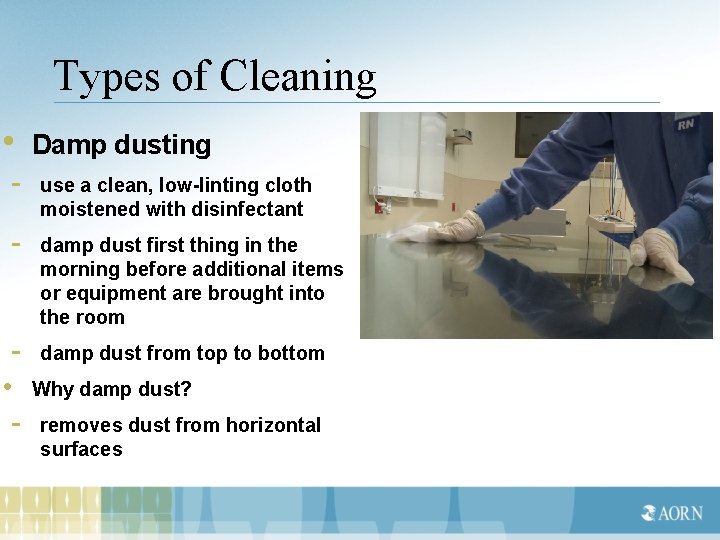
Types of Cleaning • Damp dusting - use a clean, low-linting cloth moistened with disinfectant - damp dust first thing in the morning before additional items or equipment are brought into the room - damp dust from top to bottom • - Why damp dust? removes dust from horizontal surfaces
Types of Cleaning • Turnover cleaning - patient rooms must be cleaned after each patient - high-touch objects and equipment - contamination of items that are frequently touched can lead to contaminated hands for health care personnel
High Touch Objects • High-touch objects are - anesthesia machine, carts, and equipment - call lights - IV poles and pumps - OR bed - over-bed tables - patient beds - patient monitors - reusable table straps (safety straps) - television remote controls
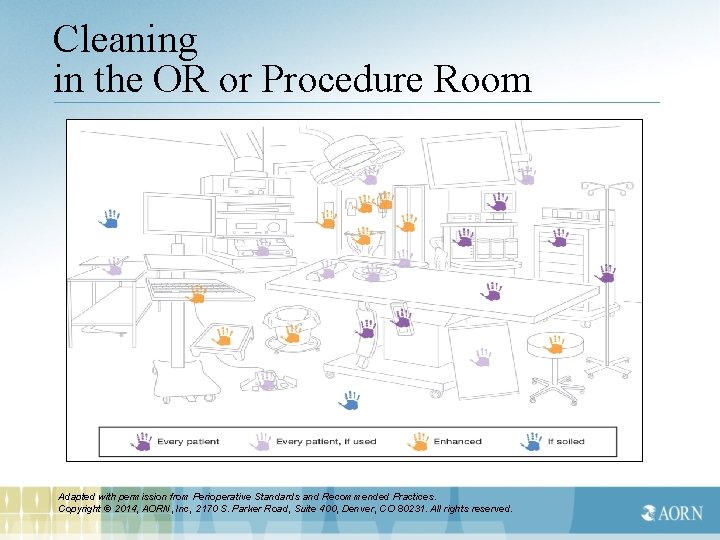
Cleaning in the OR or Procedure Room Adapted with permission from Perioperative Standards and Recommended Practices. Copyright © 2014, AORN, Inc, 2170 S. Parker Road, Suite 400, Denver, CO 80231. All rights reserved.
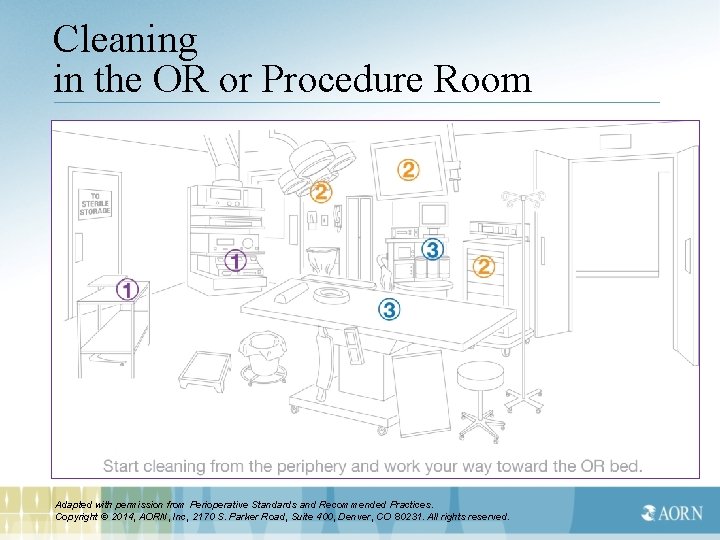
Cleaning in the OR or Procedure Room Adapted with permission from Perioperative Standards and Recommended Practices. Copyright © 2014, AORN, Inc, 2170 S. Parker Road, Suite 400, Denver, CO 80231. All rights reserved.
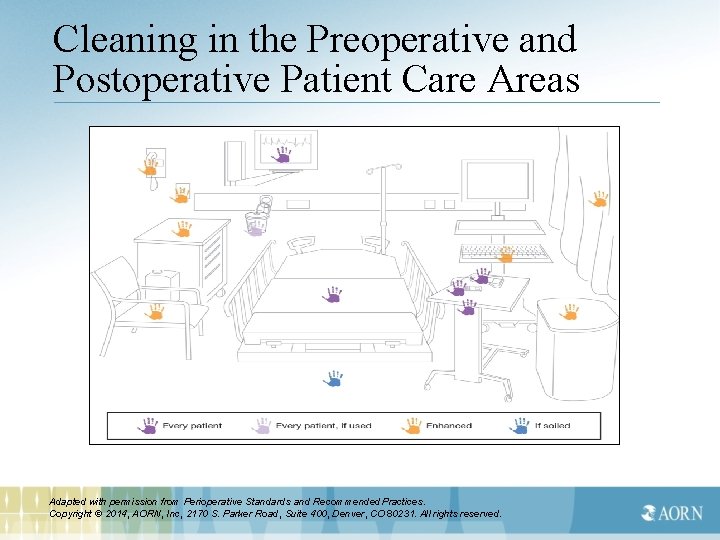
Cleaning in the Preoperative and Postoperative Patient Care Areas Adapted with permission from Perioperative Standards and Recommended Practices. Copyright © 2014, AORN, Inc, 2170 S. Parker Road, Suite 400, Denver, CO 80231. All rights reserved.
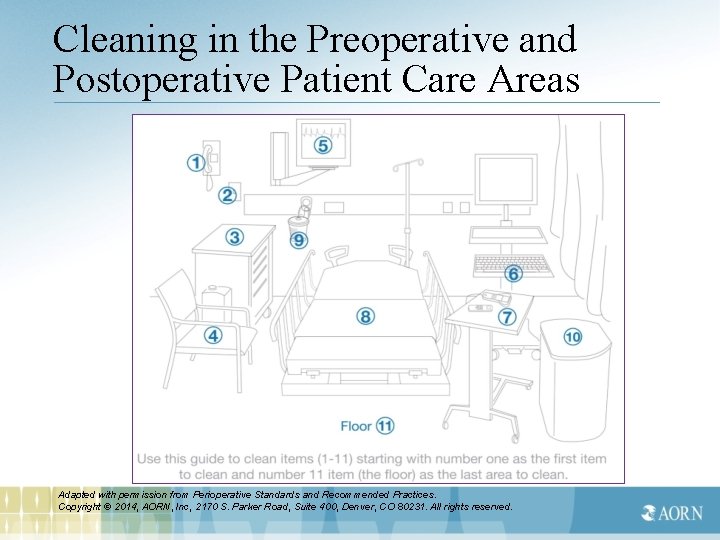
Cleaning in the Preoperative and Postoperative Patient Care Areas Adapted with permission from Perioperative Standards and Recommended Practices. Copyright © 2014, AORN, Inc, 2170 S. Parker Road, Suite 400, Denver, CO 80231. All rights reserved.

Cleaning in Sterile Storage Areas
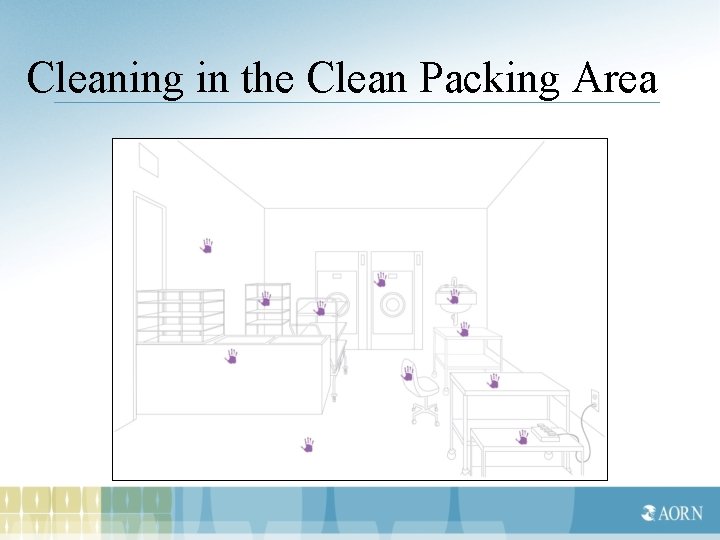
Cleaning in the Clean Packing Area
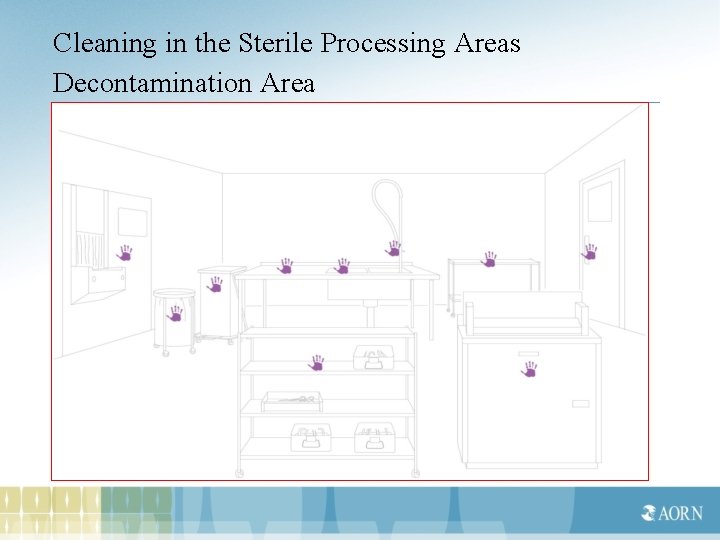
Cleaning in the Sterile Processing Areas Decontamination Area
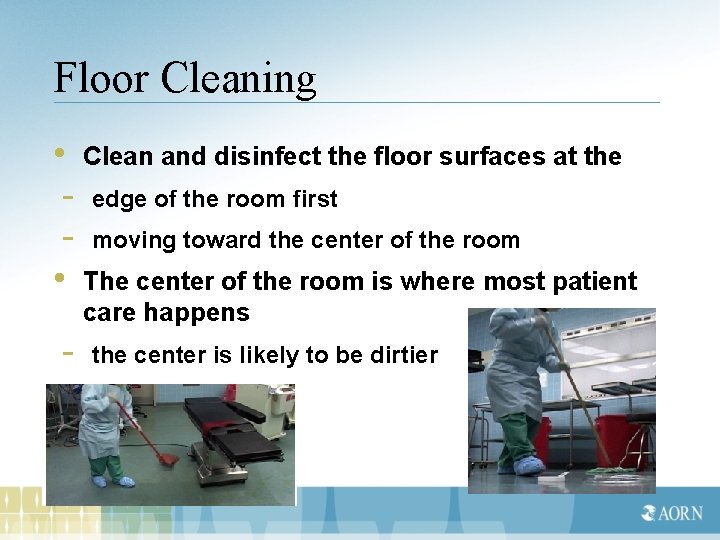
Floor Cleaning • Clean and disinfect the floor surfaces at the - edge of the room first - moving toward the center of the room • The center of the room is where most patient care happens - the center is likely to be dirtier
Cleaning Chemicals • Always follow - your facility’s policy when using cleaning and disinfecting chemicals in your facility - the manufacturer’s instructions for use
Cleaning Chemicals • You will need to know and be able to tell others - if the chemical is approved for use at your facility - what the “dwell time” is for the product - how to mix the product (if needed) - how long the chemical can be used before needing to be replaced - how to label the chemical
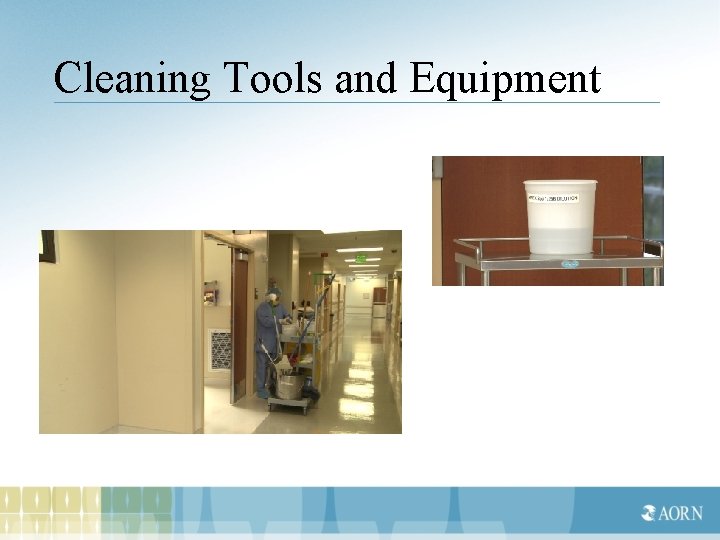
Cleaning Tools and Equipment • The tools and equipment you will use to clean your facility may vary based on what your facility provides - reusable or single-use mops - microfiber cloths - single-use wipes • Do not use spray bottles for cleaning surfaces - they could cause germs to go into the air
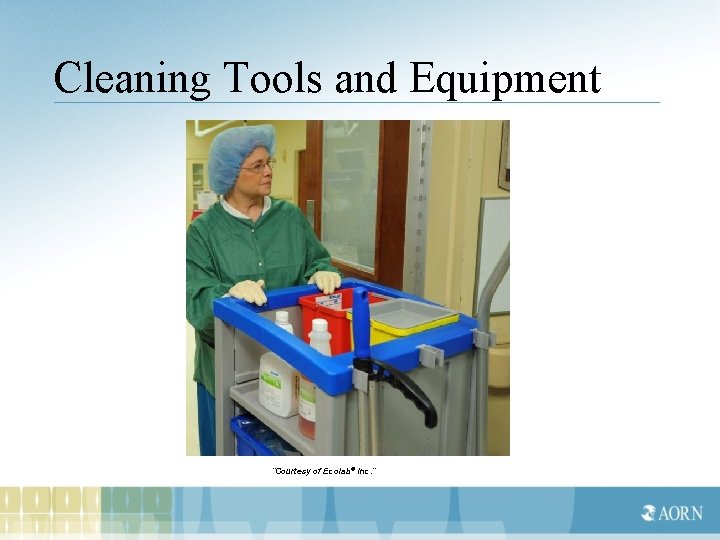
Cleaning Tools and Equipment “Courtesy of Ecolab® Inc. ”
Cleaning Tools and Equipment
Resources Association for the Healthcare Environment of the American Hospital Association. Practice Guidance for Healthcare Environmental Cleaning. 2 nd ed. Chicago, IL: American Hospital Association; 2012. Guideline for environmental cleaning. In: Guidelines for Perioperative Practice. Denver, CO: AORN, Inc; 2016: 7 -28. Sehulster LM, Chinn RYW, Arduino MJ, et al. Guidelines for Environmental Infection Control in Health-Care Facilities. Chicago IL; American Society for Healthcare Engineering/American Hospital Association; 2004. http: //www. cdc. gov/hicpac/pdf/guidelines/eic_in_hcf_03. pdf Accessed March 23, 2016.
- Slides: 35