
Environmental Change Institute Energy and Climate Change Nick

- Slides: 16
Environmental Change Institute Energy and Climate Change Nick Eyre, Oxford Citizens Assembly, 29 th September 2019
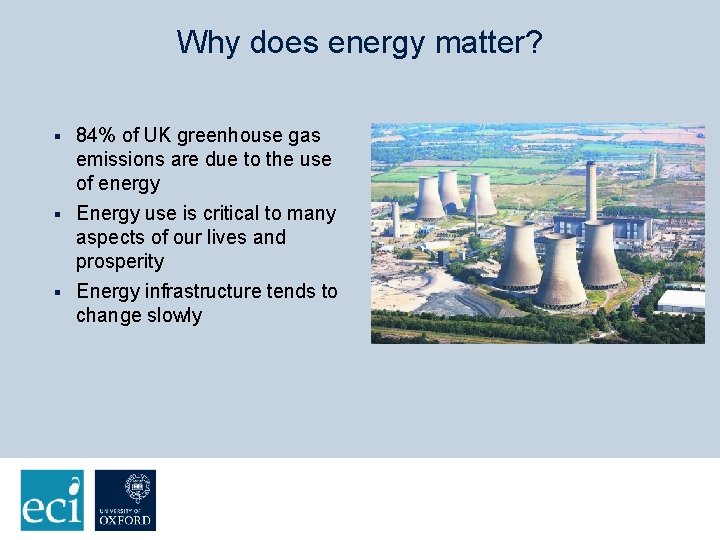
Why does energy matter? 84% of UK greenhouse gas emissions are due to the use of energy § Energy use is critical to many aspects of our lives and prosperity § Energy infrastructure tends to change slowly §
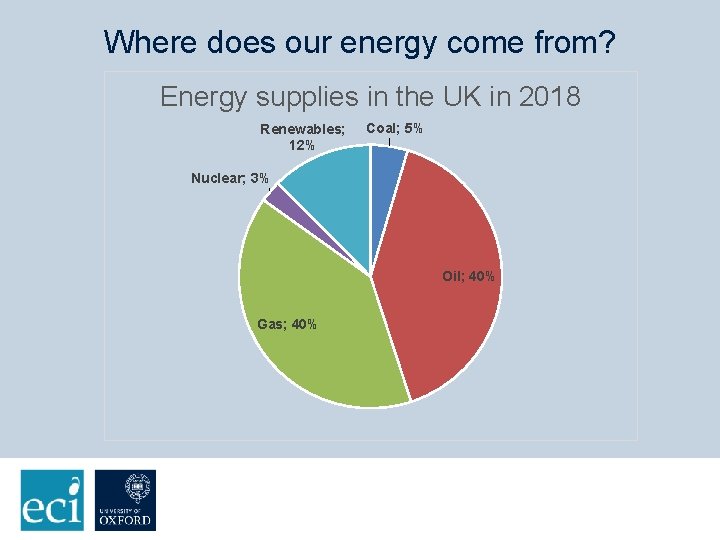
Where does our energy come from? Energy supplies in the UK in 2018 Renewables; 12% Coal; 5% Nuclear; 3% Oil; 40% Gas; 40%
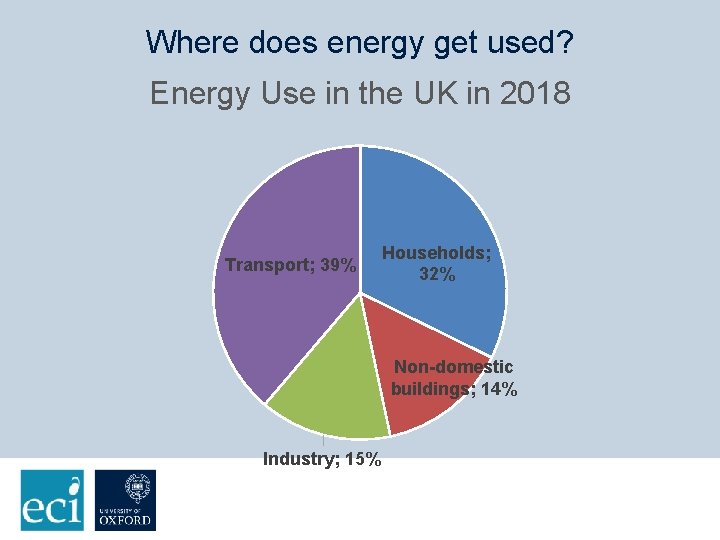
Where does energy get used? Energy Use in the UK in 2018 Transport; 39% Households; 32% Non-domestic buildings; 14% Industry; 15%
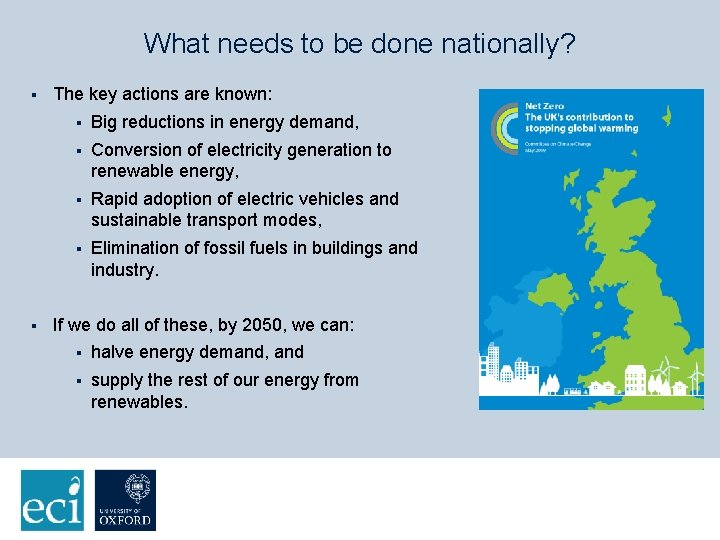
What needs to be done nationally? § § The key actions are known: § Big reductions in energy demand, § Conversion of electricity generation to renewable energy, § Rapid adoption of electric vehicles and sustainable transport modes, § Elimination of fossil fuels in buildings and industry. If we do all of these, by 2050, we can: § halve energy demand, and § supply the rest of our energy from renewables.
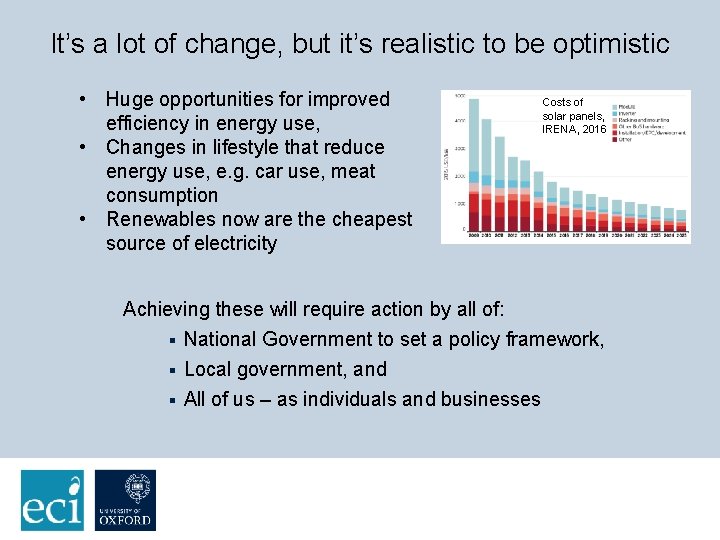
It’s a lot of change, but it’s realistic to be optimistic • Huge opportunities for improved efficiency in energy use, • Changes in lifestyle that reduce energy use, e. g. car use, meat consumption • Renewables now are the cheapest source of electricity Costs of solar panels, IRENA, 2016 Achieving these will require action by all of: § National Government to set a policy framework, Local government, and § All of us – as individuals and businesses §
What does this imply locally? § Our calculations for 2030 imply: § Zero carbon new buildings and 4000 major renovations annually. § Growth of public transport and cycling. Most new vehicles low carbon § Electricity: 30 -fold increase in renewable electricity generation. § Clean local energy is a big economic opportunity, as energy is currently a £ 1 billion cost to the Oxfordshire economy.
How do we transform our energy system to ensure it comes from renewable energy? Solar energy is the best local resource for electricity, with some wind and biomass § Half of the solar potential by 2030 is on roofs, half in fields. § Decarbonising heating is more challenging. It needs both building efficiency improvement and zero carbon energy supply. § Zero carbon supply could be electricity or ‘green gas’: the choice depends on infrastructure change. § §
Nick Eyre Nick. eyre@ouce. ox. ac. uk
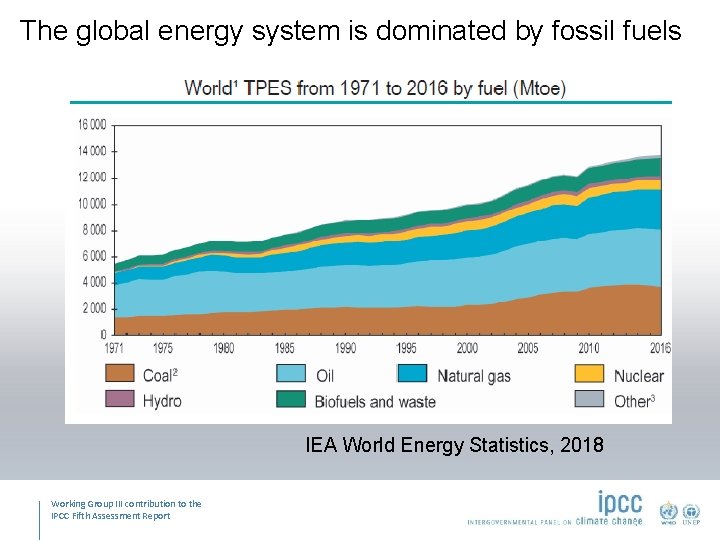
The global energy system is dominated by fossil fuels IEA World Energy Statistics, 2018 Working Group III contribution to the IPCC Fifth Assessment Report
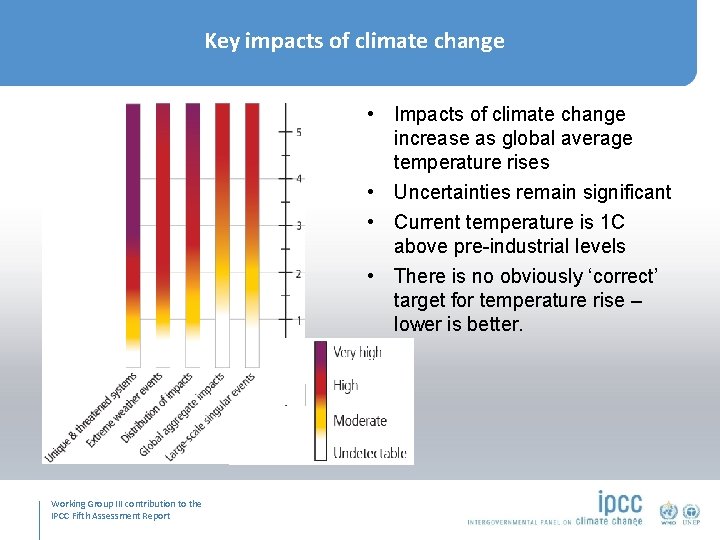
Key impacts of climate change • Impacts of climate change increase as global average temperature rises • Uncertainties remain significant • Current temperature is 1 C above pre-industrial levels • There is no obviously ‘correct’ target for temperature rise – lower is better. Working Group III contribution to the IPCC Fifth Assessment Report
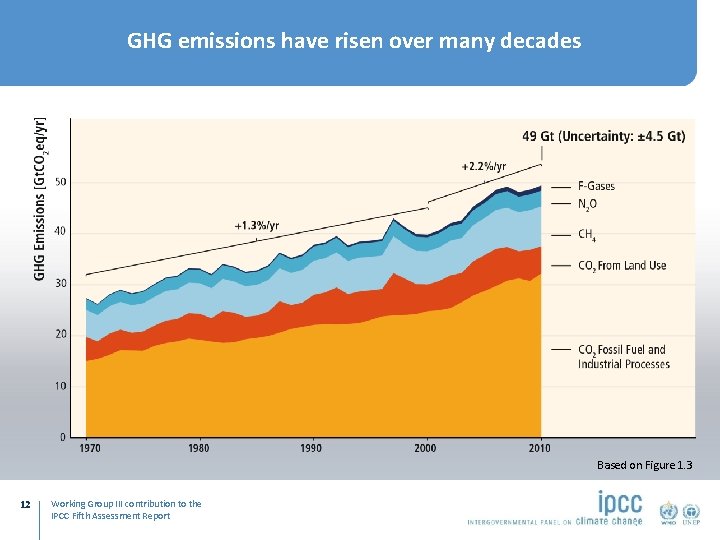
GHG emissions have risen over many decades Based on Figure 1. 3 12 Working Group III contribution to the IPCC Fifth Assessment Report
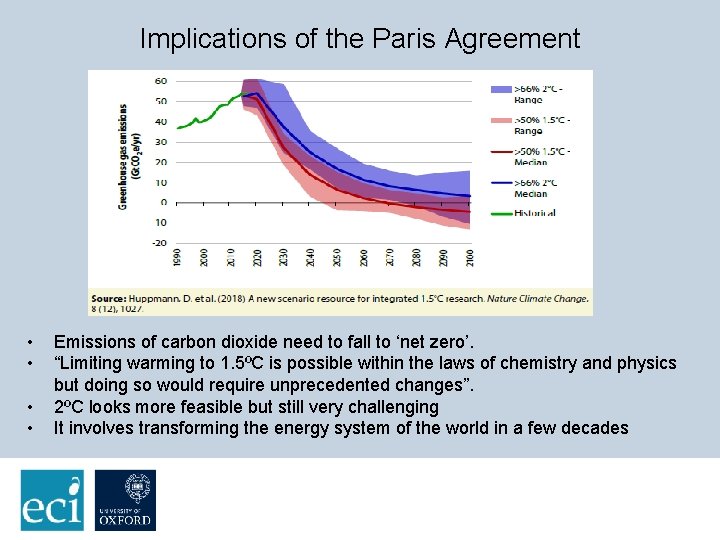
Implications of the Paris Agreement • • Emissions of carbon dioxide need to fall to ‘net zero’. “Limiting warming to 1. 5ºC is possible within the laws of chemistry and physics but doing so would require unprecedented changes”. 2ºC looks more feasible but still very challenging It involves transforming the energy system of the world in a few decades
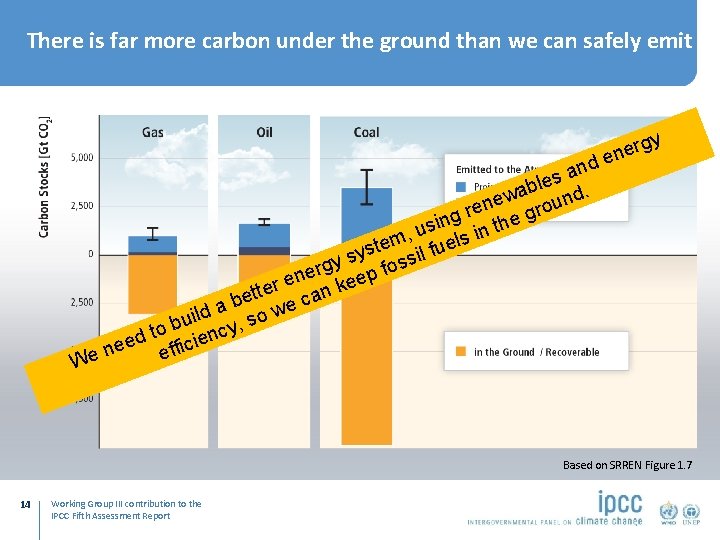
There is far more carbon under the ground than we can safely emit d n a les. b a ew round n e r g eg n i h t s , u ls in m e st sil fue y s rgy p fos e n r e n kee e t t ca be e a ild , so w u b y o c t n d e nee effici e W gy r e en Based on SRREN Figure 1. 7 14 Working Group III contribution to the IPCC Fifth Assessment Report
There are reasons to be cautious Rising emissions in many countries • Huge unmet need for energy services in developing countries • Many sectors of the economy are difficult sectors to decarbonise, notably aviation, shipping, agriculture, industrial processes, space heating • Some controversial proposed solutions, especially “negative emissions technologies”. •
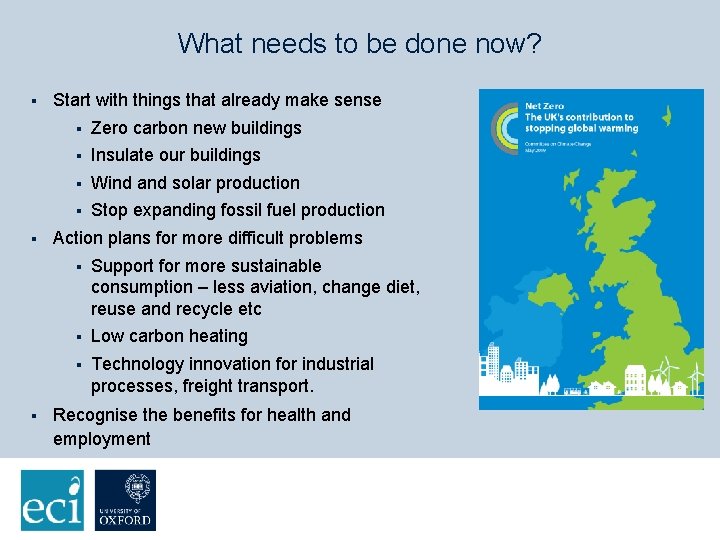
What needs to be done now? § § § Start with things that already make sense § Zero carbon new buildings § Insulate our buildings § Wind and solar production § Stop expanding fossil fuel production Action plans for more difficult problems § Support for more sustainable consumption – less aviation, change diet, reuse and recycle etc § Low carbon heating § Technology innovation for industrial processes, freight transport. Recognise the benefits for health and employment