
Environmental and Sustainability Issues Why is sustainability important
Environmental and Sustainability Issues
Why is sustainability important? �Currently we’re consuming the Earth’s resources such as oil, coal, timber and metal ores at an alarming rate. �We’re unable to replace these resources at the rate in which we’re consuming them. �Consuming these resources produces CO 2 emissions which contribute to global warming. �The waste of these products in landfills also creates environmental hazards.
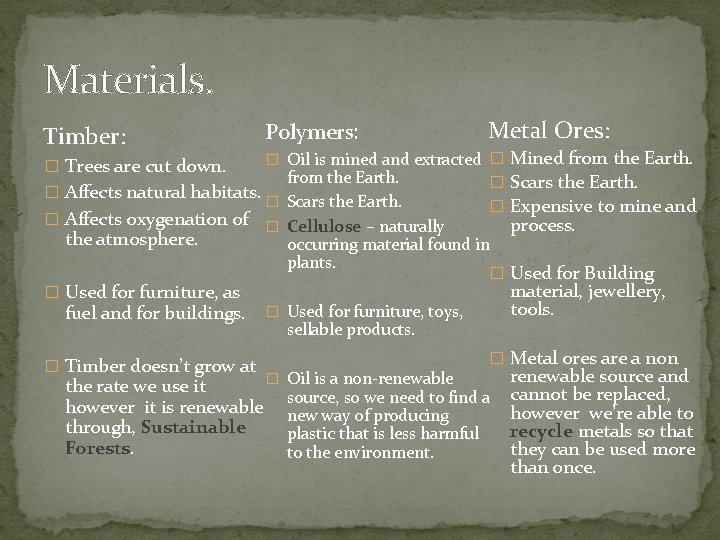
Materials. Timber: � Trees are cut down. Polymers: Metal Ores: Mined from the Earth. � Scars the Earth. � Expensive to mine and process. � Oil is mined and extracted � from the Earth. � Affects natural habitats. � Scars the Earth. � Affects oxygenation of � Cellulose – naturally the atmosphere. occurring material found in plants. � Used for Building material, jewellery, � Used for furniture, as tools. fuel and for buildings. � Used for furniture, toys, sellable products. � Timber doesn’t grow at � the rate we use it however it is renewable through, Sustainable Forests. � Metal ores are a non Oil is a non-renewable source, so we need to find a new way of producing plastic that is less harmful to the environment. renewable source and cannot be replaced, however we’re able to recycle metals so that they can be used more than once.
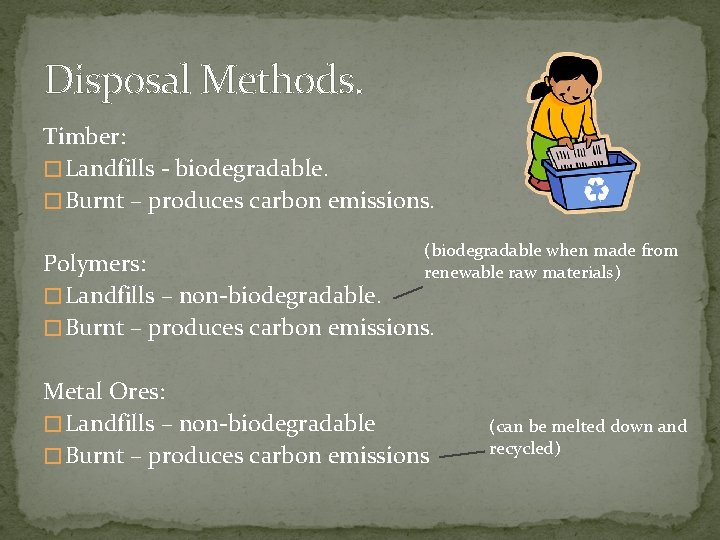
Disposal Methods. Timber: � Landfills - biodegradable. � Burnt – produces carbon emissions. (biodegradable when made from Polymers: renewable raw materials) � Landfills – non-biodegradable. � Burnt – produces carbon emissions. Metal Ores: � Landfills – non-biodegradable � Burnt – produces carbon emissions (can be melted down and recycled)
The 3 R’s! Reduce! Reuse! Recycle! Reduce: � Reduce the amount of materials and energy used in manufacturing, and the amount of energy the product produced uses. Reuse: � Ensure the materials and components of a product can be used again in a new product. � E. g. printer cartridges can be refilled, coffee machine and vacuum filters can be cleaned. Recycle: � Take the a product and ensure they can be separated, cleaned and used as part of a new product. � E. g. Sustaining the use of materials by using 10% of recycled material with 90% of new material. This also contributes the reduction of materials produced and used.
- Slides: 5