
Environmental and Exploration Geophysics II The Convolutional Model
- Slides: 9
Environmental and Exploration Geophysics II The Convolutional Model and Seismic Resolution (continued) tom. h. wilson tom. wilson@mail. wvu. edu Department of Geology and Geography West Virginia University Morgantown, WV Tom Wilson, Department of Geology and Geography
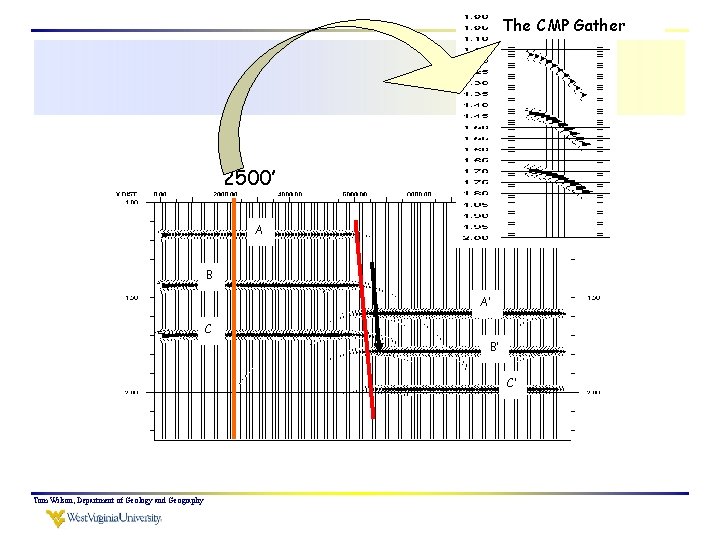
The CMP Gather 2500’ A B A’ C B’ C’ Figure 2 of problem handout Tom Wilson, Department of Geology and Geography
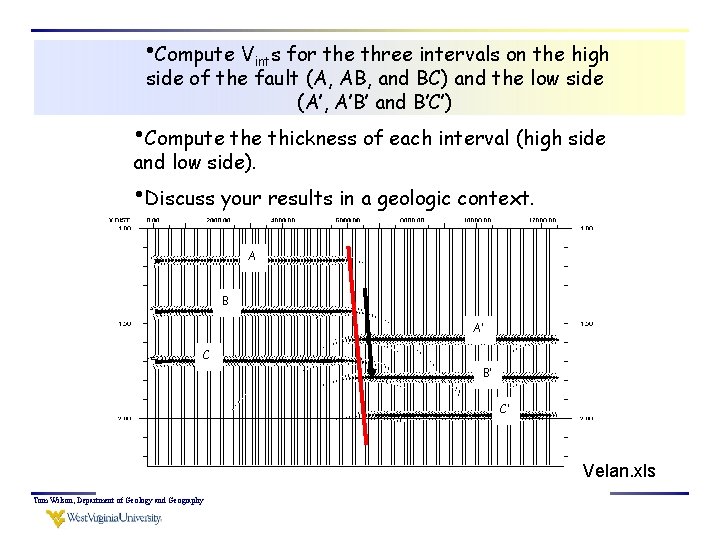
• Compute Vints for the three intervals on the high side of the fault (A, AB, and BC) and the low side (A’, A’B’ and B’C’) • Compute thickness of each interval (high side and low side). • Discuss your results in a geologic context. A B A’ C B’ C’ Velan. xls Tom Wilson, Department of Geology and Geography
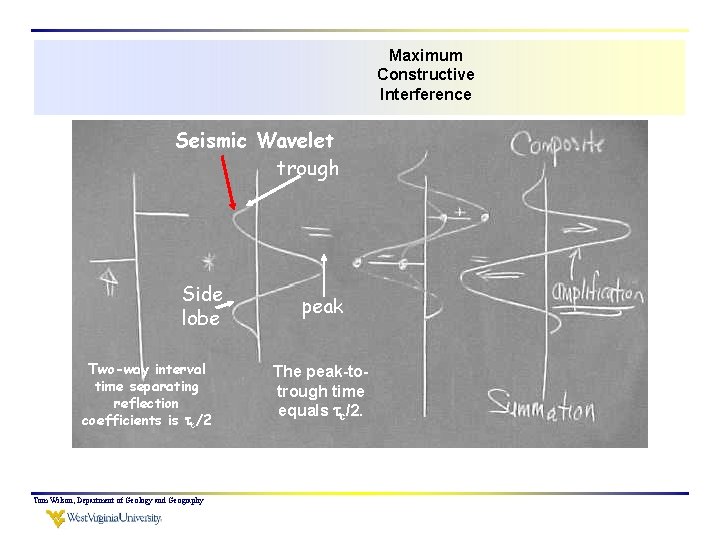
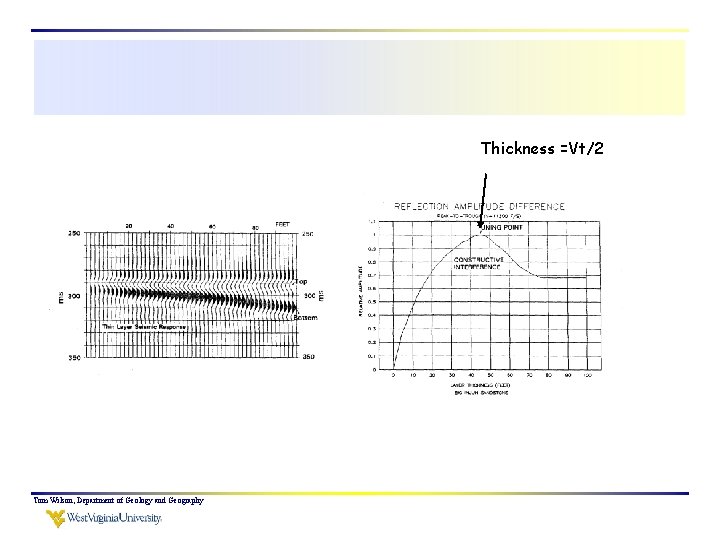
Maximum Constructive Interference Seismic Wavelet trough Side lobe Two-way interval time separating reflection coefficients is c/2 Tom Wilson, Department of Geology and Geography peak The peak-totrough time equals c/2.
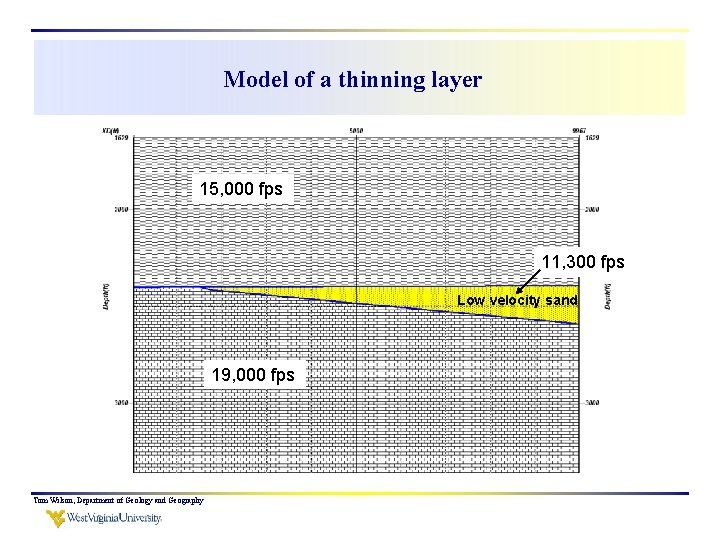
Model of a thinning layer 15, 000 fps 11, 300 fps Low velocity sand 19, 000 fps Tom Wilson, Department of Geology and Geography
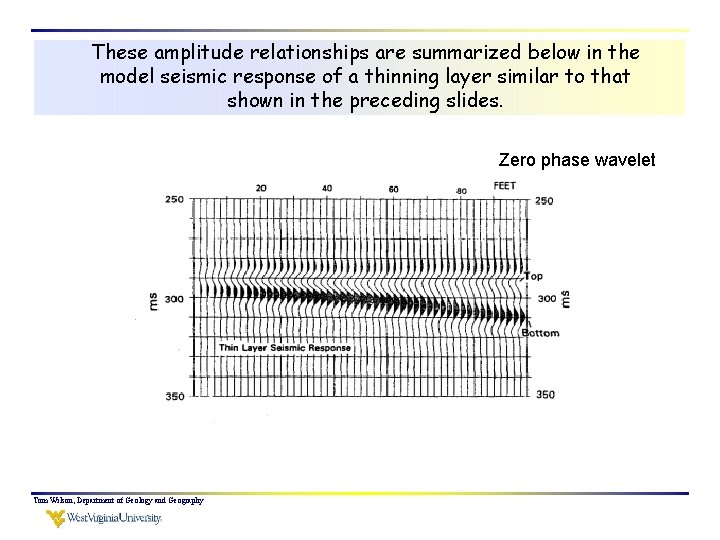
These amplitude relationships are summarized below in the model seismic response of a thinning layer similar to that shown in the preceding slides. Zero phase wavelet Tom Wilson, Department of Geology and Geography
Thickness =Vt/2 Tom Wilson, Department of Geology and Geography
Tom Wilson, Department of Geology and Geography
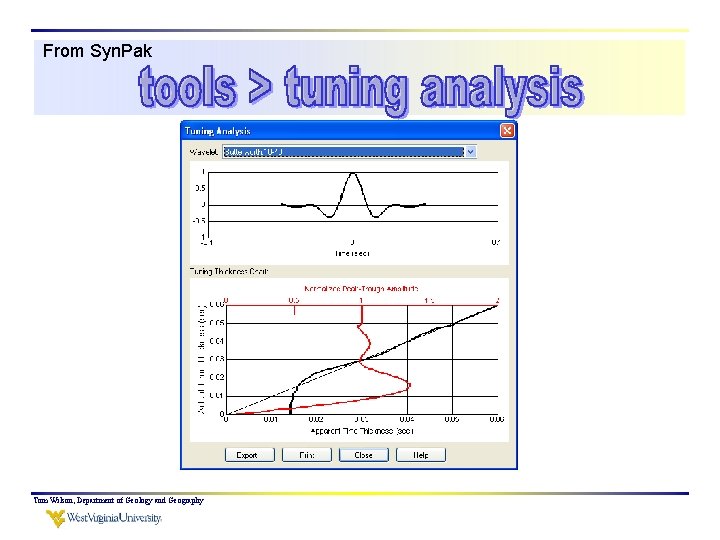
From Syn. Pak Tom Wilson, Department of Geology and Geography