
Environmental Abiotic Factors Climatic Factors TEMPERATURE Temperature differs
Environmental Abiotic Factors Climatic Factors TEMPERATURE
Temperature differs from one part of the world to the other. Since Insolation is the basic source of energy for the atmosphere, the distribution of insolation would determine the temperature of the earth. Thus latitude, altitude, distance from sea, features of the surface, nature of the landscape are some important factors that affect the distribution of temperature.
Since, the insolation is highest at equator; temperature should be highest at the equator and lowest near the poles, however actually it is not. Highest temperature on earth is recorded at a few degrees north of equator. Altitude is the second major control of temperature of a place. The temperature depends upon albedo of the surface also.
One major factor affecting the distribution of the temperature of Earth is distribution of Land Oceans. Since there is more land in Northern Hemisphere and more waters in Southern hemisphere and there is a big difference between the specific heat of land water; the loss of heat from the continents is bigger than the oceans. The continents get heated faster and get cooled faster in comparison to the Oceans. This is the reason that the temperatures of the Oceans are moderate while that of continents is extreme. The moderating effect on temperature of the land due to proximity of the seas is called Maritime influence. The increasing effect on temperature of the land at interior of the continents is called Continental Influence.
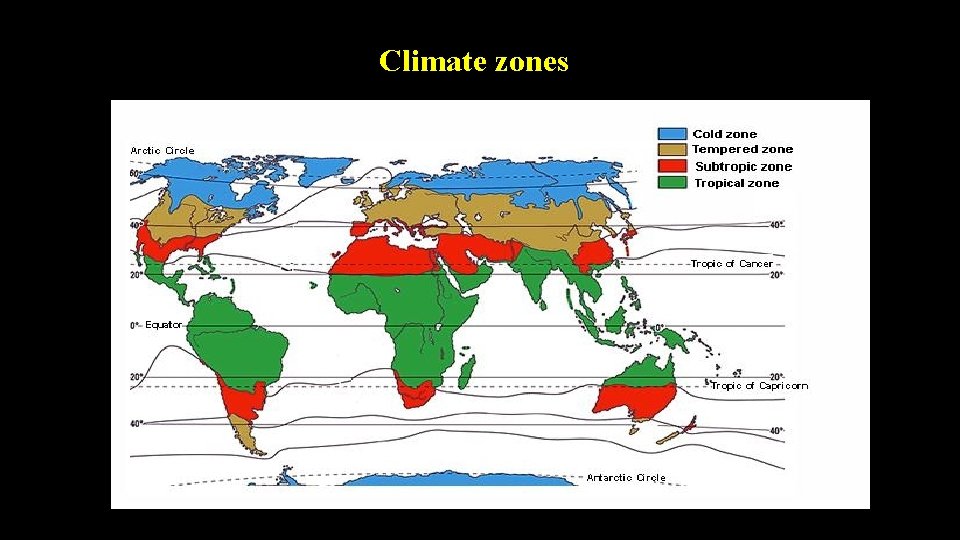
Climate zones
TROPICAL ZONE from 0°– 23. 5°(between the tropics) In the regions between the equator and the tropics (equatorial region), the solar radiation reaches the ground nearly vertically at noontime during almost the entire year. Thereby, it is very warm in these regions. Through high temperatures, more water evaporates and the air is often moist. The resulting frequent and dense cloud cover reduces the effect of solar radiation on ground temperature.
SUBTROPICS from 23. 5°– 40° The subtropics receive the highest radiation in summer, since the Sun's angle at noon is almost vertical to the Earth, whilst the cloud cover is relatively thin. These regions receive less moisture (see trade winds), what increases the effect of radiation. Therefore, most of the deserts in the world are situated in this zone. In winter, the radiation in these regions decreases significantly, and it can temporarily be very cool and moist.
TEMPERATE ZONE from 40°– 60° In the temperate zone, the solar radiation arrives with a smaller angle, and the average temperatures here are much cooler than in the subtropics. The seasons and daylength differ significantly in the course of a year. The climate is characterised by less frequent extremes, a more regular distribution of the precipitation over the year and a longer vegetation period - therefore the name "temperate".
COLD ZONE from 60°– 90° The polar areas between 60° latitude and the poles receive less heat through solar radiation, since the Sun has a very flat angle toward the ground. Because of the changes of the Earth axis angle to the Sun, the day length varies most in this zone. In the summer, polar days occur. Vegetation is only possible during a few months per year and even then is often sparse. The conditions for life in these regions are very hard. The characteristics of the climate zones change with great altitude differences within a small area, like in mountain areas, since temperatures decrease rapidly with altitude, changing the climate compared to valleys.
Inversion of the Temperature In the mountain valleys, the temperature of the air is found increasing with increasing altitude. Thus, there is an inversion of the temperature. This is because during the night, the quick radiation from the upper exposed slopes of the mountains causes the surface and air over it to cool rapidly. This cooler air is denser and gets drained by the valley slopes and displaces the warmer air toward up. Therefore, when we go up in a valley, the temperature seems to getting increased. This phenomenon is also called drainage inversion.

Mean Thermal Equator The highest absolute temperatures are recorded in the Tropics but the highest mean annual temperatures are recorded at equator.
Earth reaches perihelion (the minimum distance from the Sun in its orbit) in early January and is at aphelion (maximum distance) in early July. During winter season of the respective hemispheres, the angle of incidence of the sun’s rays is low in tropics. The average annual temperature of the tropical regions is therefore lower than the observed near the equator, as the change in the angle of incidence is minimum at equator.

The thermal equator shifts towards north and south with north south shift in the position of vertical rays of the sun. However, annual average position of the Thermal equator is 5° N latitude. The reason is that highest mean annual temperature shifts towards northwards during the summer solstice to a much greater extent than it does towards south at the time of winter solstice.
Daily variation of Temperature
Annual temperature range ON EQUATOR ON POLES NEAR OCEANS

Impact of Winds
Effect of temperature on plants
PHOTOSYNTHESIS MINIMUM OPTIMUM MAXIMUM
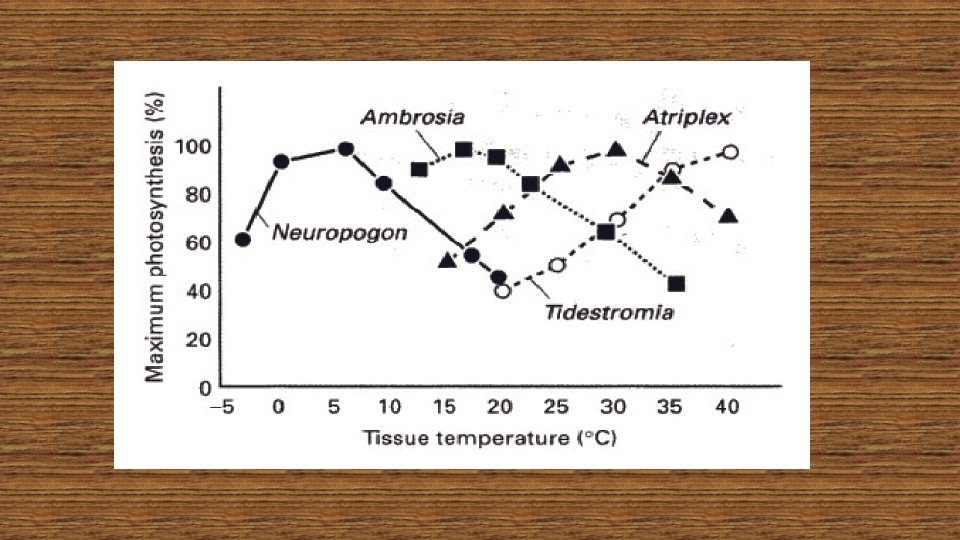
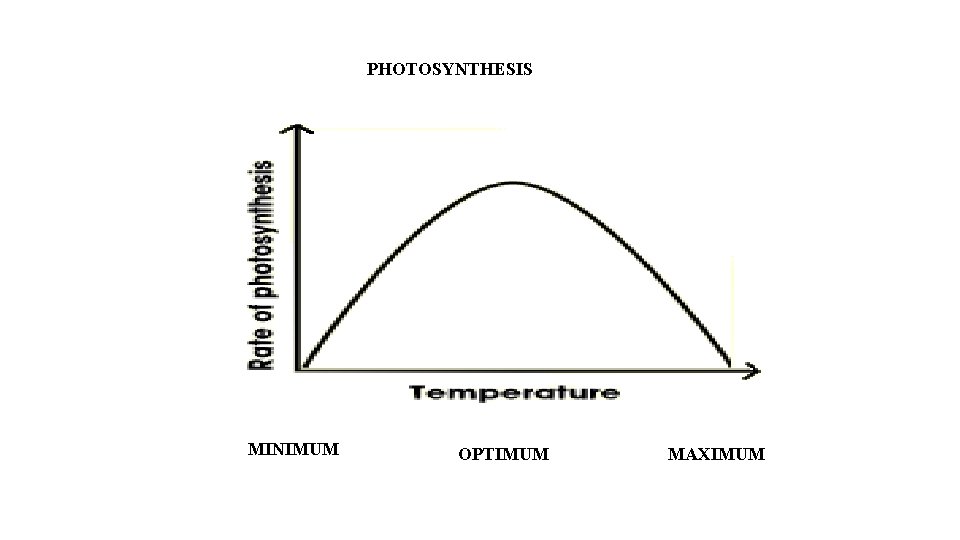
There is an initial increase in the rate of photosynthesis at this temperature. But this is soon followed by a decline. Higher the temperature the more rapid is the decline. The decline may be due to one or more of the following causes: Accumulation of the end products of photosynthesis. Inhibitory effect of high temperature on the activity of enzymes. Failure of carbon dioxide to diffuse rapidly. Increased consumption of the photosynthate in photo- respiration Destructive effect of high temperatures on chlorophyll.
Effect of Temperature on respiration
Effect of Temperature on water absorption Low temperatures cause a decrease in the absorption and movement of water in plants. This reduction is less in species native to cool environments than in species which normally grow in warm ones. This has been attributed to the combined effects of decreased permeability of the root membranes and the increased viscosity of the water. Kramer observed that water flow through root systems increased as temperature was increased to 35 C, the highest temperature studied.
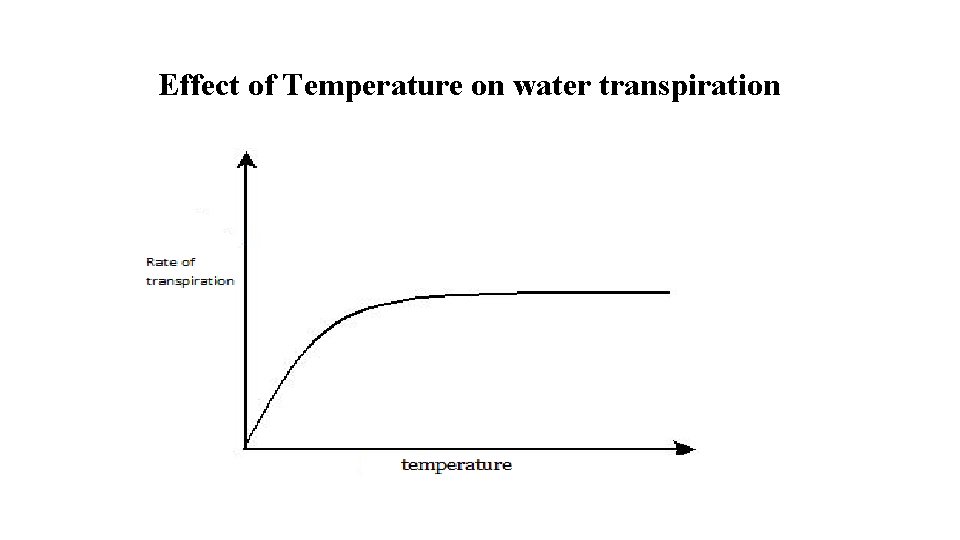
Effect of Temperature on water transpiration
Effect of Temperature on seed germination Germination is a miraculous event that involves a number of factors that include air, water, light, and, of course, temperature. Germination increases in higher temperatures – up to a point. Once the seeds reach optimum temperatures, which depends on the plant, germination begins to decline.
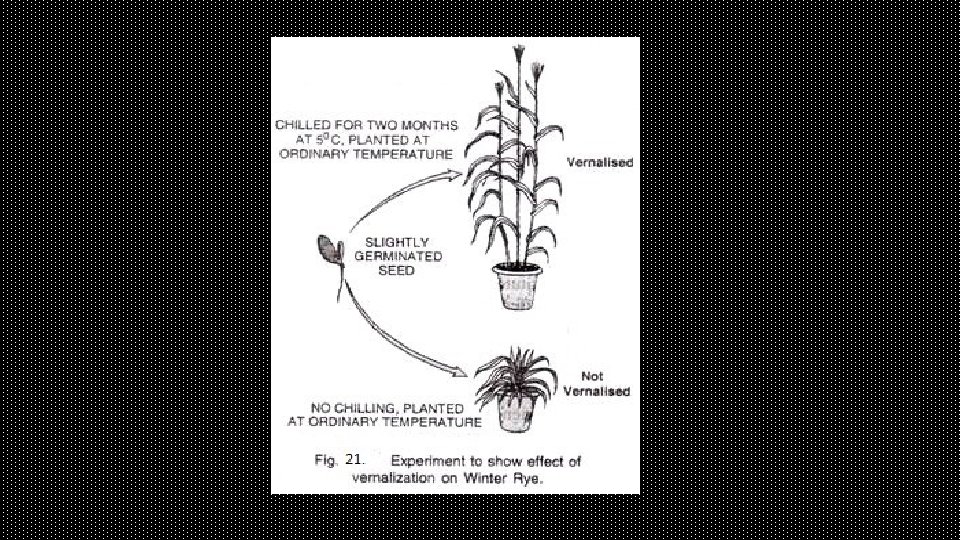
VERNALIZATION Many species of henbane require vernalization before flowering. Vernalization (from Latin vernus, "of the spring") is the induction of a plant's flowering process by exposure to the prolonged cold of winter, or by an artificial equivalent.
Plant temperatures Maximum optimum minimum

Range of tolerance

Hardening
PLANT ADAPTATIONS IN DIFFERENT ECOSYSTES Desert Plant Adaptations Temperate Grassland (Prairie) Plant Adaptations: Temperate Rain Forest Plant Adaptations: Temperate Deciduous Forest Plant Adaptations: Taiga Plant Adaptations: Plant Adaptations in Water:
- Slides: 30