
Environment is everything that surrounds us It consists
- Slides: 11
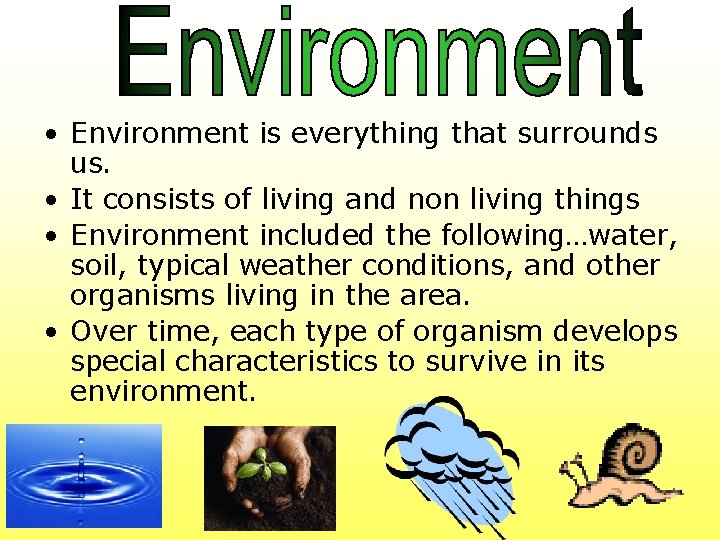
• Environment is everything that surrounds us. • It consists of living and non living things • Environment included the following…water, soil, typical weather conditions, and other organisms living in the area. • Over time, each type of organism develops special characteristics to survive in its environment.
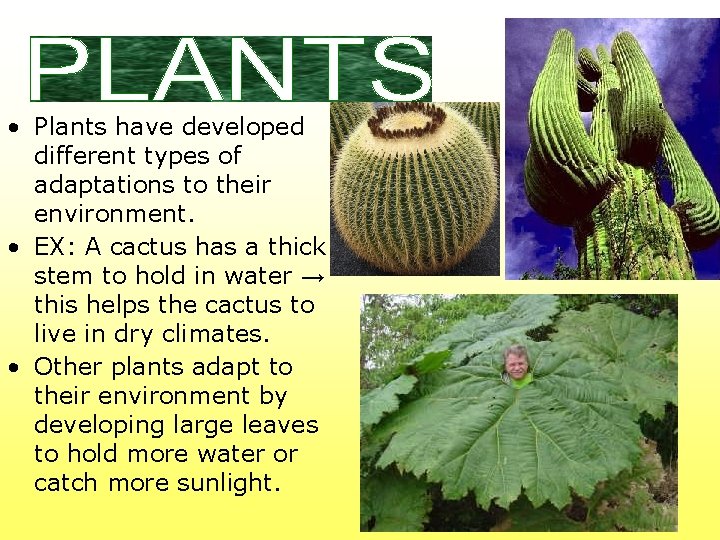
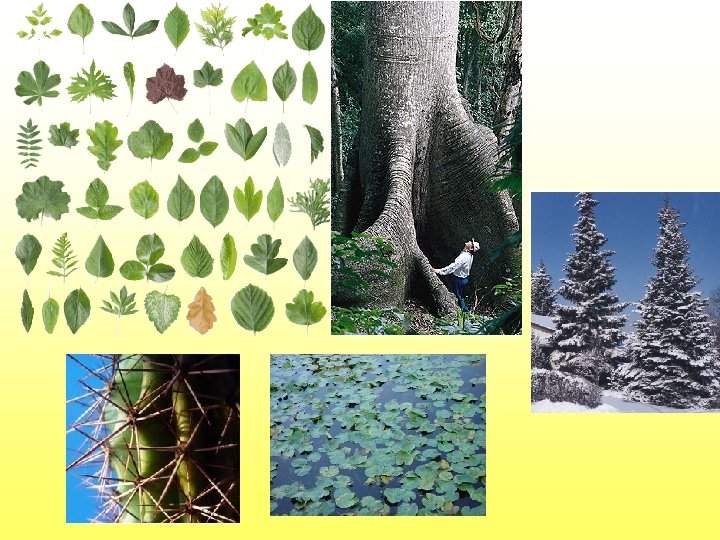
• Plants have developed different types of adaptations to their environment. • EX: A cactus has a thick stem to hold in water → this helps the cactus to live in dry climates. • Other plants adapt to their environment by developing large leaves to hold more water or catch more sunlight.
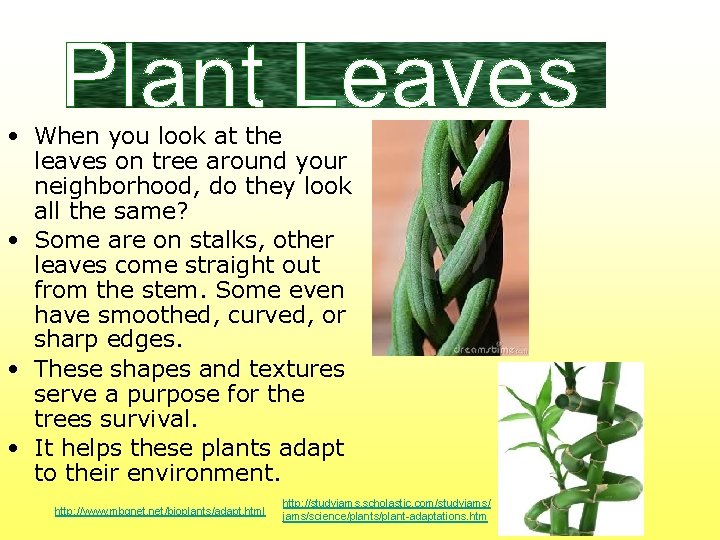
• When you look at the leaves on tree around your neighborhood, do they look all the same? • Some are on stalks, other leaves come straight out from the stem. Some even have smoothed, curved, or sharp edges. • These shapes and textures serve a purpose for the trees survival. • It helps these plants adapt to their environment. http: //www. mbgnet. net/bioplants/adapt. html http: //studyjams. scholastic. com/studyjams/science/plants/plant-adaptations. htm
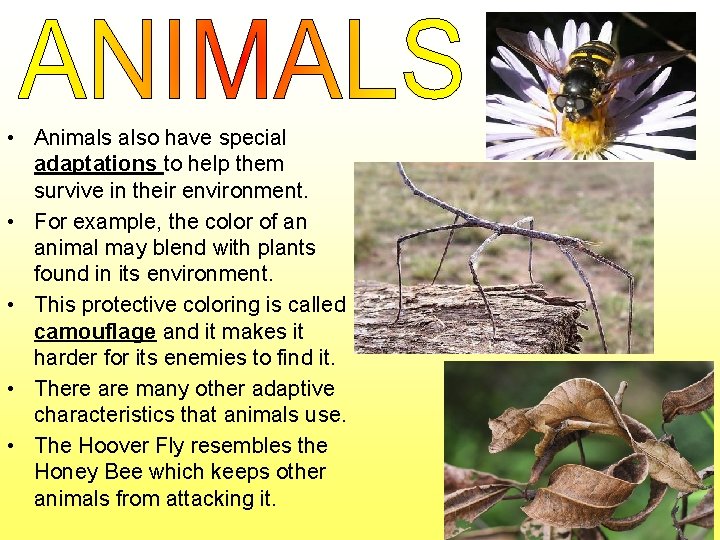
• Animals also have special adaptations to help them survive in their environment. • For example, the color of an animal may blend with plants found in its environment. • This protective coloring is called camouflage and it makes it harder for its enemies to find it. • There are many other adaptive characteristics that animals use. • The Hoover Fly resembles the Honey Bee which keeps other animals from attacking it.
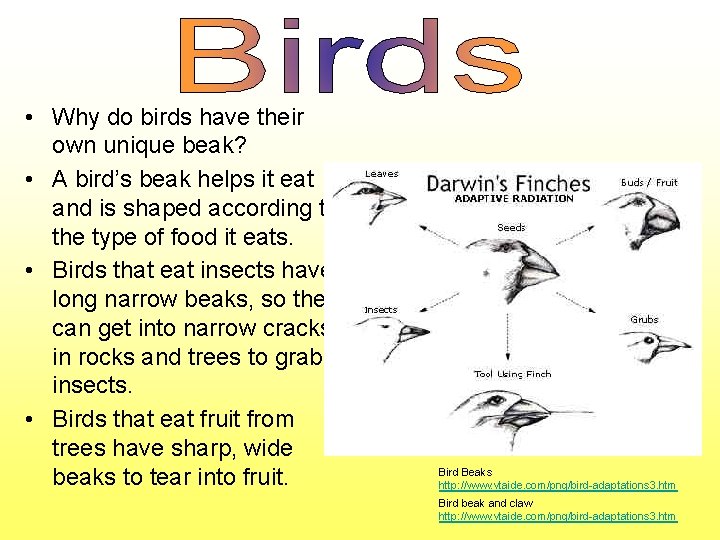
• Why do birds have their own unique beak? • A bird’s beak helps it eat and is shaped according to the type of food it eats. • Birds that eat insects have long narrow beaks, so they can get into narrow cracks in rocks and trees to grab insects. • Birds that eat fruit from trees have sharp, wide beaks to tear into fruit. Bird Beaks http: //www. vtaide. com/png/bird-adaptations 3. htm Bird beak and claw http: //www. vtaide. com/png/bird-adaptations 3. htm
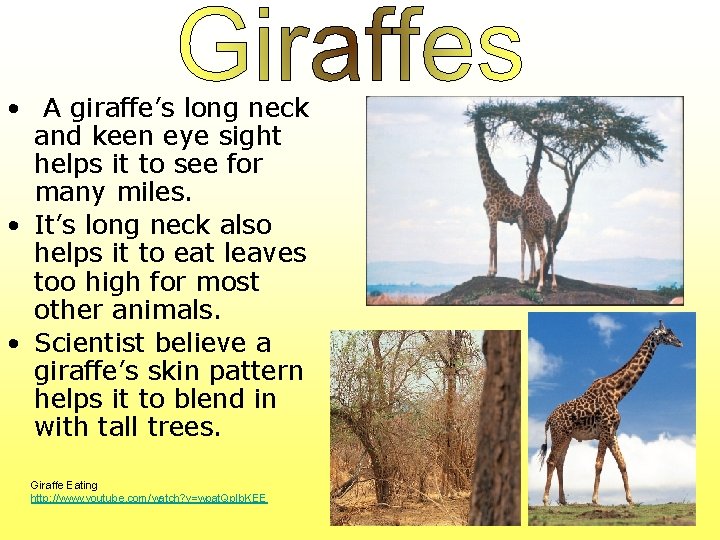
• A giraffe’s long neck and keen eye sight helps it to see for many miles. • It’s long neck also helps it to eat leaves too high for most other animals. • Scientist believe a giraffe’s skin pattern helps it to blend in with tall trees. Giraffe Eating http: //www. youtube. com/watch? v=wpat. Qp. Ib. KEE
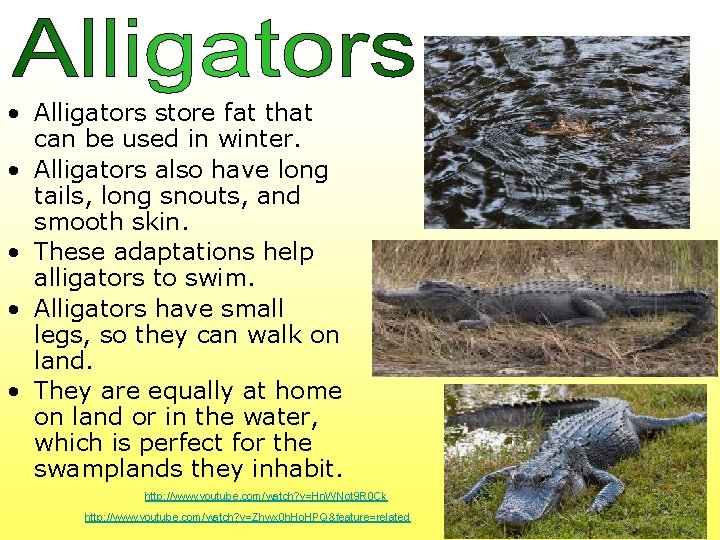
• Alligators store fat that can be used in winter. • Alligators also have long tails, long snouts, and smooth skin. • These adaptations help alligators to swim. • Alligators have small legs, so they can walk on land. • They are equally at home on land or in the water, which is perfect for the swamplands they inhabit. http: //www. youtube. com/watch? v=Hn. WNot 9 R 0 Ck http: //www. youtube. com/watch? v=Zhwx 0 h. Ho. HPQ&feature=related
Animal Adaptations (Elephant and Penguin) http: //www. youtube. com/watch? v=N 56 Or. Rvd. H 24&feature=related Adaptation Song http: //www. youtube. com/watch? v=Boo 1 n. So 73 Gs&feature=related http: //www. youtube. com/watch? v=f. RX 2 Jt. KFUzk&feature=related
NOTES • Organisms develop special characteristics to help them survive in their environment. • Plant leaves- Every type of tree has its own unique kind of leaf. • Smaller leaves develop where there is bright sun and little rainfall. • Animals- also have special adaptations to help them survive in their environment. • Birds have different types of beaks based on the kind of food they eat.