
Environment evolution and inheritance Photosynthesis Plants make oxygen

- Slides: 9
Environment, evolution and inheritance
Photosynthesis • Plants make oxygen by photosynthesis • They take in carbon dioxide • They use the sunlight to make glucose (sugar) and oxygen • When plants decay, the carbon dioxide in them goes back into the atmosphere
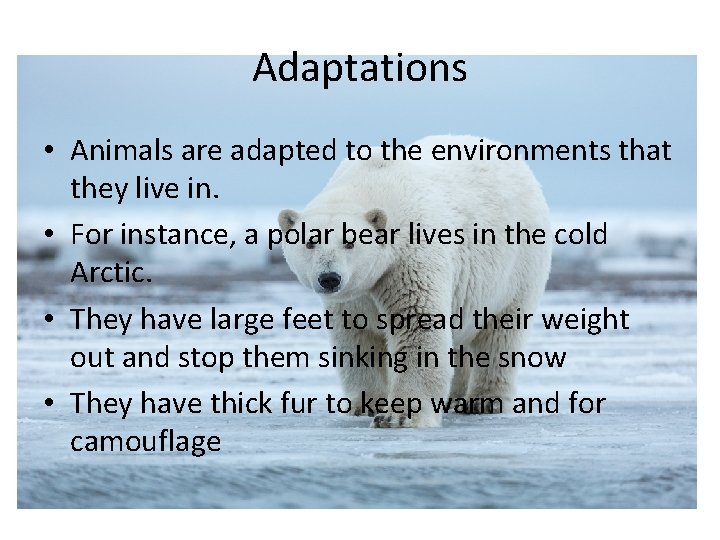
Adaptations • Animals are adapted to the environments that they live in. • For instance, a polar bear lives in the cold Arctic. • They have large feet to spread their weight out and stop them sinking in the snow • They have thick fur to keep warm and for camouflage
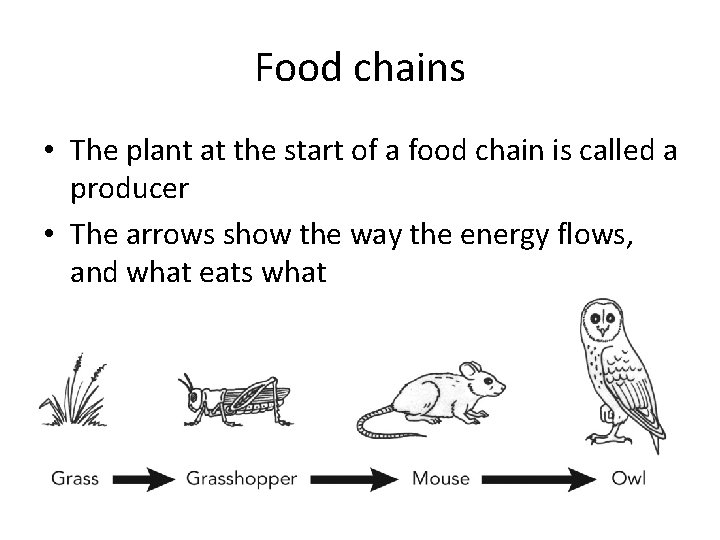
Food chains • The plant at the start of a food chain is called a producer • The arrows show the way the energy flows, and what eats what
Competition • Plants compete for water, space, light and nutrients • They are affected by non-living environmental factors like a rise in average temperature • They are affected by living environmental factors like being trampled on by humans
Pollution • Burning fossil fuels often releases sulfur dioxide into the atmosphere. • This gas dissolves in water and forms acid rain. • Humans also affect the environment by making waste and using up resources
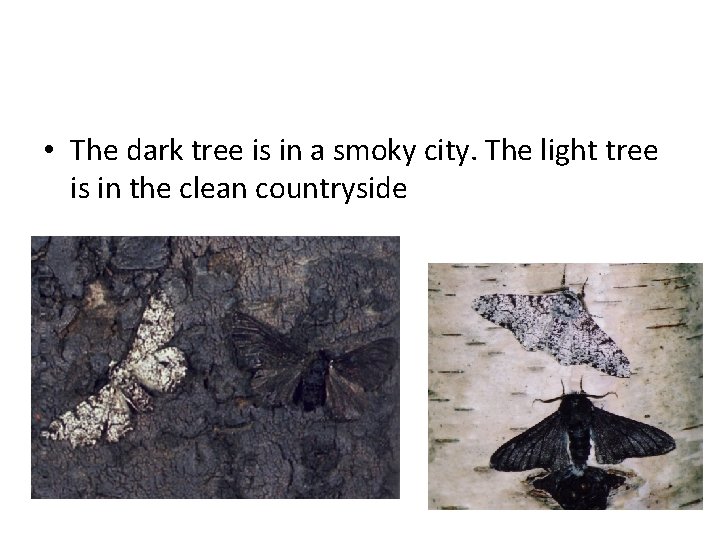
Natural selection • This helps us understand how some animals survive while others die. • Dark peppered moths are more common in smoky cities because they are better camouflaged. This means they don’t get eaten so they can breed more • (next slide for images)
• The dark tree is in a smoky city. The light tree is in the clean countryside
Reproduction • There are two types of reproduction • When male and female sex cells join together, this is sexual reproduction • When only one parent is needed, this is asexual reproduction. • Offspring identical to their parents are called clones. • Genes (smallest) make up chromosomes which are in the nucleus of a cell (largest)