
ENVIRONMENT Every organism in this earth is surrounded
- Slides: 10
ENVIRONMENT
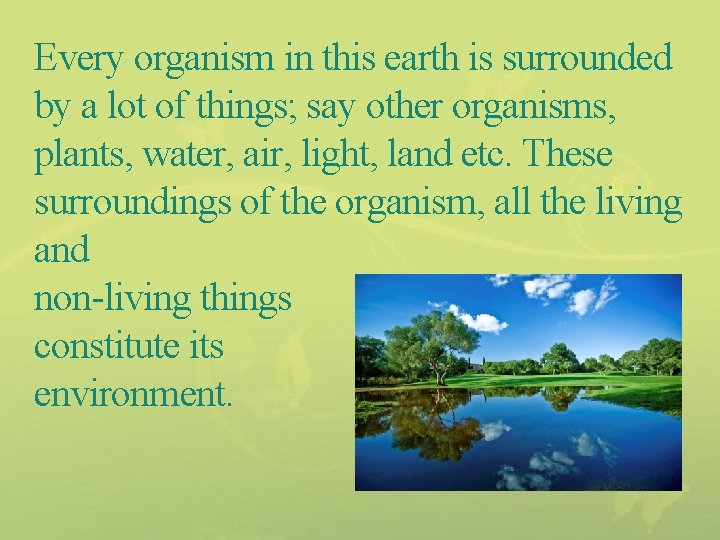
Every organism in this earth is surrounded by a lot of things; say other organisms, plants, water, air, light, land etc. These surroundings of the organism, all the living and non-living things constitute its environment.
Environment can be defined as the natural surroundings of that organism which directly or indirectly influences the growth and development of the organism. Environment is the total sum of all living and non living factors that compose the surroundings of man
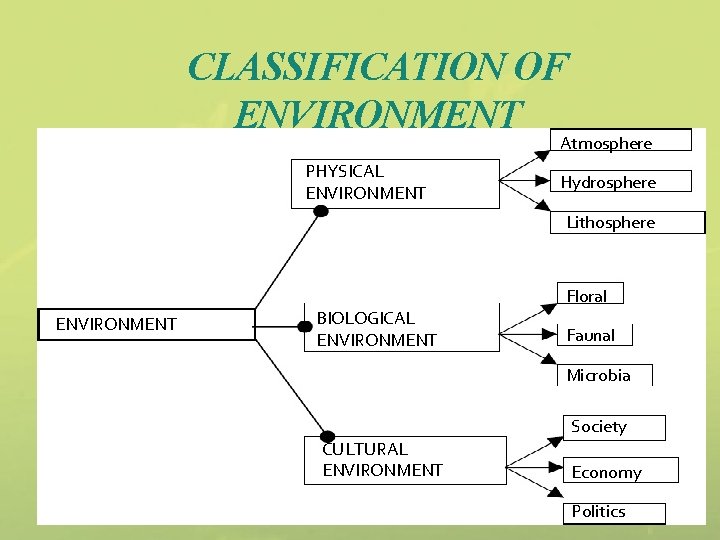
CLASSIFICATION OF ENVIRONMENT Atmosphere PHYSICAL ENVIRONMENT Hydrosphere Lithosphere Floral ENVIRONMENT BIOLOGICAL ENVIRONMENT Faunal Microbia Society CULTURAL ENVIRONMENT Economy Politics
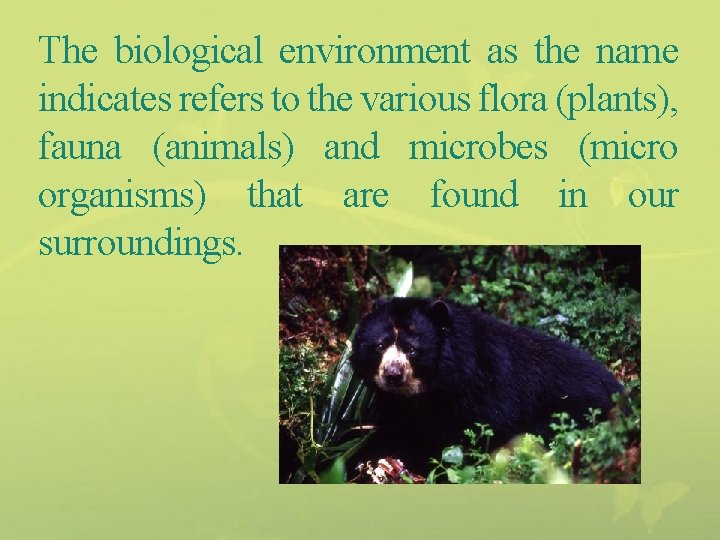
The biological environment as the name indicates refers to the various flora (plants), fauna (animals) and microbes (micro organisms) that are found in our surroundings.
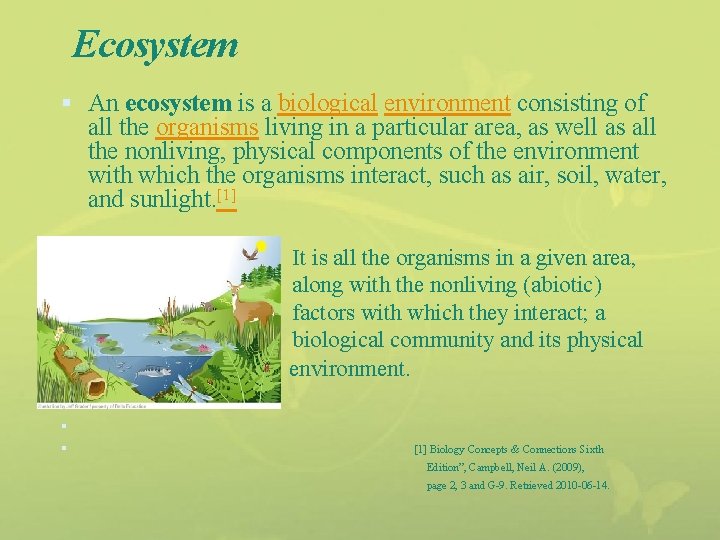
Ecosystem An ecosystem is a biological environment consisting of all the organisms living in a particular area, as well as all the nonliving, physical components of the environment with which the organisms interact, such as air, soil, water, and sunlight. [1] It is all the organisms in a given area, along with the nonliving (abiotic) factors with which they interact; a biological community and its physical environment. [1] Biology Concepts & Connections Sixth Edition”, Campbell, Neil A. (2009), page 2, 3 and G-9. Retrieved 2010 -06 -14.
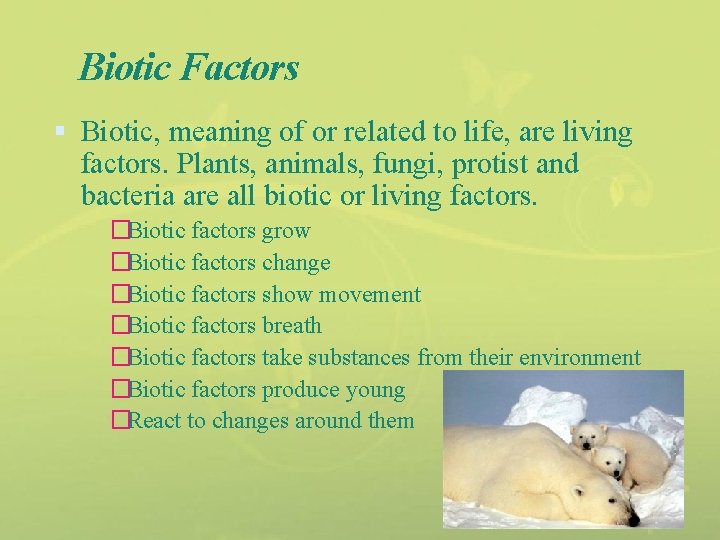
Biotic Factors Biotic, meaning of or related to life, are living factors. Plants, animals, fungi, protist and bacteria are all biotic or living factors. �Biotic factors grow �Biotic factors change �Biotic factors show movement �Biotic factors breath �Biotic factors take substances from their environment �Biotic factors produce young �React to changes around them
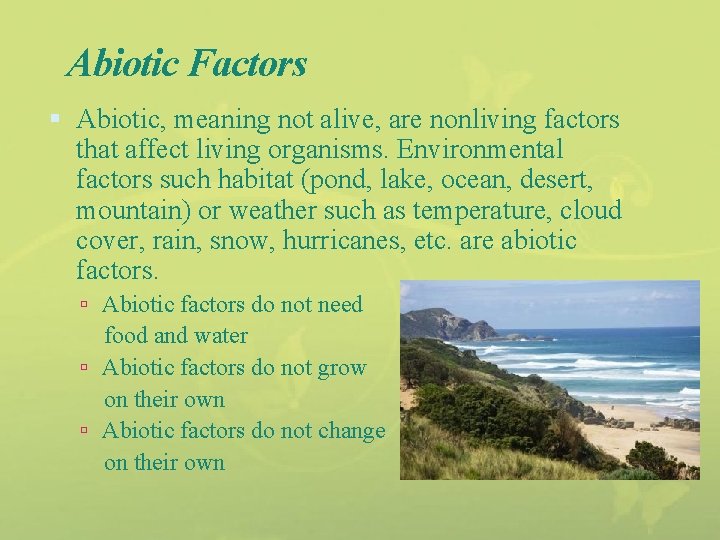
Abiotic Factors Abiotic, meaning not alive, are nonliving factors that affect living organisms. Environmental factors such habitat (pond, lake, ocean, desert, mountain) or weather such as temperature, cloud cover, rain, snow, hurricanes, etc. are abiotic factors. Abiotic factors do not need food and water Abiotic factors do not grow on their own Abiotic factors do not change on their own
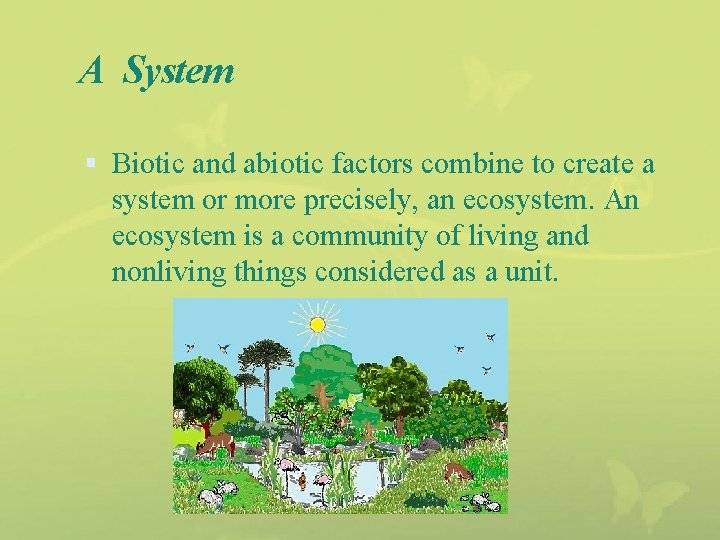
A System Biotic and abiotic factors combine to create a system or more precisely, an ecosystem. An ecosystem is a community of living and nonliving things considered as a unit.
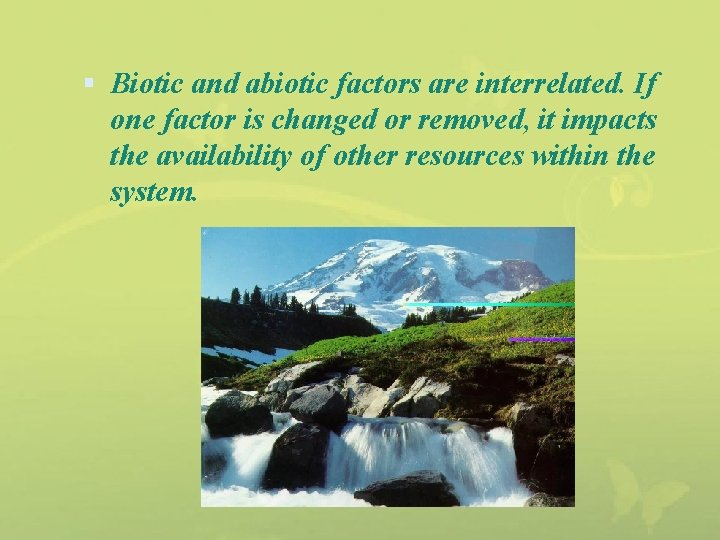
Biotic and abiotic factors are interrelated. If one factor is changed or removed, it impacts the availability of other resources within the system.