
Environment Canada United States Environmental Protection Agency Environment
- Slides: 10
Environment Canada United States Environmental Protection Agency
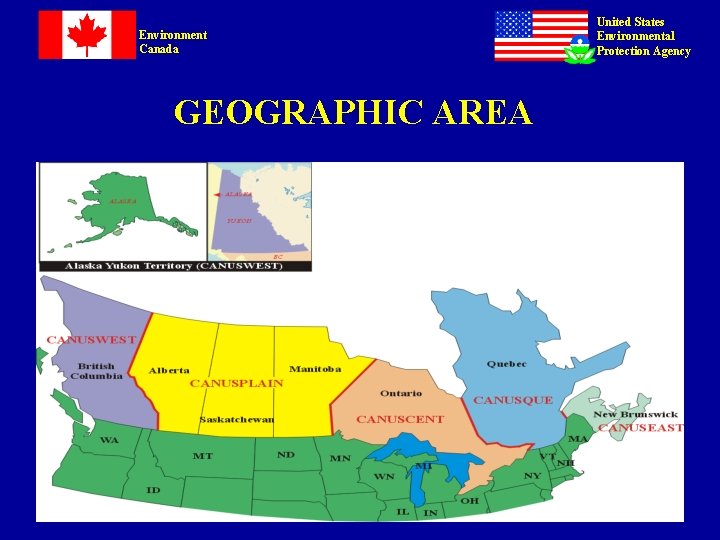
Environment Canada United States Environmental Protection Agency CANADA-UNITED STATES JOINT INLAND POLLUTION CONTINGENCY PLAN • Signed by Canada and the US in 1994 • Divided the common border into 5 segments we – Southern border of British Columbia and the US is called “CANUSWEST” • Tasked regional Environment Canada (EC) & EPA offices to develop regional annexes – CANUSWEST Plan • Complements the Canada-U. S. Joint Marine Pollution Contingency Plan
Environment Canada GEOGRAPHIC AREA United States Environmental Protection Agency
Environment Canada United States Environmental Protection Agency CROSS-BORDER WORKING GROUP • Formed in 1995; co-chaired by EPA & EC • Quarterly meetings • Drafted, reviewed, published and distributed CANUSWEST Participants and special advisors: • Tribes/First Nations • County/Municipal • State/Provincial • Other Federal
Environment Canada United States Environmental Protection Agency MAJOR TRANSBOUNDARY ISSUES IDENTIFIED • • Response roles and responsibilities Integration with other plans Movement of people and equipment across the border Worker health & safety Worker compensation First responder training requirements Communications Information Management (Joint Information Center)
United States Environmental Protection Agency Environment Canada PURPOSE • Facilitate effective joint response to crossborder incidents • Address response issues unique to international hazmat & oil releases along the inland border
Environment Canada United States Environmental Protection Agency PRIMARY OBJECTIVES • Establish international coordination mechanism and the Regional Joint Response Team (RJRT) • Ensure timely notification • Ensure timely and meaningful information sharing with responders and public • Facilitate efficient international movement of equipment and personnel
Environment Canada United States Environmental Protection Agency SUPPORTING CONTINGENCY PLANS • CANUSWEST is intended to complement existing plans – Northwest Area Contingency Plan – International Hazardous Materials Response Plan for Whatcom County and Lower Mainland British Columbia – BC Major Industrial Emergency Plan – BC Emergency Program Act
Environment Canada United States Environmental Protection Agency RESPONSE OPERATIONS Responsible Party (RP) is always expected to take full operational and functional responsibility Principle of Escalation • Local responders • State/Provincial • Federal
Environment Canada United States Environmental Protection Agency RESPONSE MANAGEMENT ORGANIZATION • Incident Command System (ICS), based on U. S. National Interagency Incident Management System (NIIMS) uses five major functional groups – Unified Command – Finance – Logistics – Operations – Planning