
Environment and Business Part I Introduction Prof Dr
Environment and Business, Part I Introduction Prof. Dr. Ir. Ab Stevels Chair of Applied Eco. Design for Sustainability Dept. Design Engineering, School of Industrial Design Delft University of Technology stevels@xs 4 all. nl 1
Content 1. Eco. Design (environment) has become part of Sustainability 2. Eco. Design has become part of Corporate Strategy 3. Making of Environmental Strategies 4. Roadmaps and Performance Measurement 2
Ecodesign has become part of the (wider) Sustainability Dimension • Economic Dimension • • Commitment to customers: employees, shareholders, suppliers, business, partners Business integrity: honesty, transparency, fairness • Environmental Dimension • • Products: Reduction of energy, weight, packaging, substances, Increase recyclability Production: Reduction of energy, water, auxiliary materials • Social Dimension • • Listening to stakeholders: politics, consumer groups, general public, labor unions, universities Employees: employment/careers diversity and inclusion (gender, regional origin of executives) 3
Commonalities to all these aspects • • Have principles, policies, procedures how to handle Have a program with tangible targets Measure progress, performance Reward, recognition, sanctions Performance in the Economic, Environmental, and Social dimension of Sustainability should be on similar levels 4
Examples: codes of conduct • Global Business principles – Anonymous hotlines to report violations • Code of Ethics for financial executives – Business control, audits • Child labor issues in de supply chain – audit by thirds • Business Excellence Model for a basis to reward people • Transparency in hiring, salary system and promotion 5
Examples: human resources • Company values in job description, appraisal • Satisfaction surveys (anonymous) • Personal growth (career center) • Trade unions, Employment • Heath and safety statistics 6
Examples: economic performance • • • Employment, added value statistics Wage bills, contribution to local economy (suppliers) Share price Technology / innovation contributions Production (re)location 7
Examples: social responsibility • • • Employee engagement in communities Contribution to quality of life (education and health) Sponsoring (cultural, nature, university research) Meaningful technology, empowerment Access to products/services for underpriviliged 8
Why Environment into Corporate Strategy? IT’S BUSINESS! • IT IS BUSINESS not just technicalities. • Upstream: suppliers, creativity • Downstream: marketing and sales, image • IT IS BUSINESS not just design • Vision, strategy, programme • IT IS BUSINESS • Managing the green processes • GREEN IS ABOUT MONEY! 9
Environmental thinking as a new creative management approach • “Look with fresh eyes at old problems. ” • Prevention (“do not make it happen”) • Functionality thinking, paradigm shift • (“why are things as they are”) • Life cycle approach (“stakeholder benefits”) 10
How to make money with green? (Supplier) • Less use of utilities, auxiliaries • Example: printed wiring boards (Lucent) • Use of recycled material • Example: TV cabinets (Philips) • Contributions to Eco Design • Example: IC, subassemblies • Example: simplify structure of subassemblies/products 11
How to make money with green? (Ecodesign) • • • Less materials • Example: bill of material of green flagships (Philips) Application of smart materials • Example: self disassembly of phones Application of recycled material • Example: 10% recycled cardboard = 3% less cost Less Packaging, weight, volume’ • Example: Philips packaging reduction strategy Less environmentally relevant substances • Example: TV cabinets Lower disassembly time lower assembly cost • Example: Philips Monitors 12
How to make money with green? (Customer) • Lower cost of ownership • Example: reduce energy consumption in use phase • Easy, fun, convenience • Unpack, packaging waste • Feel good, examples: • Philips is a caring company (image) • This product is 100% recyclable • No hazardous substances 13
How to make money with green? (Quality) • Increase quality, reduce reject level • Increase lifetime for instance by thermal balancing inside product • Reduction of design complexity • Match in the Hinkley diagram (balance capabilities of a production organization and the complexity of the product) 14
How to make money with green? (Paradigm shift) Functionality instead of embodiment focus *Life Cycle Optimisation (example smart IC) *Different Physical Principles (example: LCD instead of CRT LED Lighting) *Service capabilities without mechanics (example IT applications) *New business models (trade in, trade up) 15
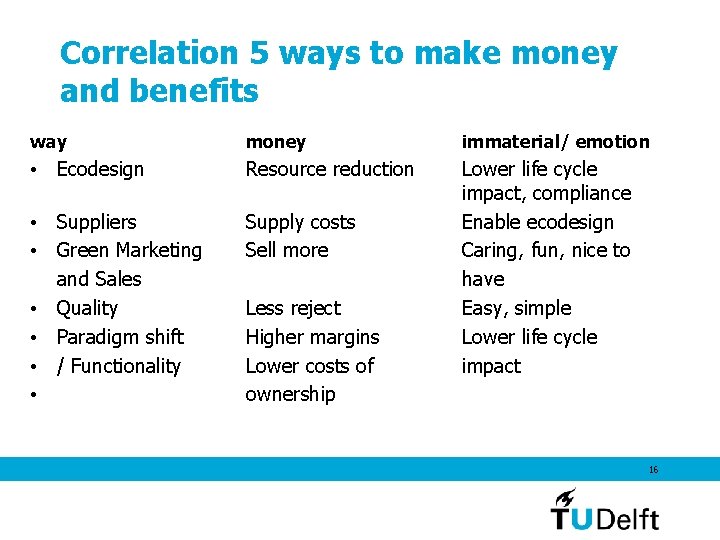
Correlation 5 ways to make money and benefits way money immaterial/ emotion • Ecodesign Resource reduction • Suppliers • Green Marketing and Sales • Quality • Paradigm shift • / Functionality • Supply costs Sell more Lower life cycle impact, compliance Enable ecodesign Caring, fun, nice to have Easy, simple Lower life cycle impact Less reject Higher margins Lower costs of ownership 16
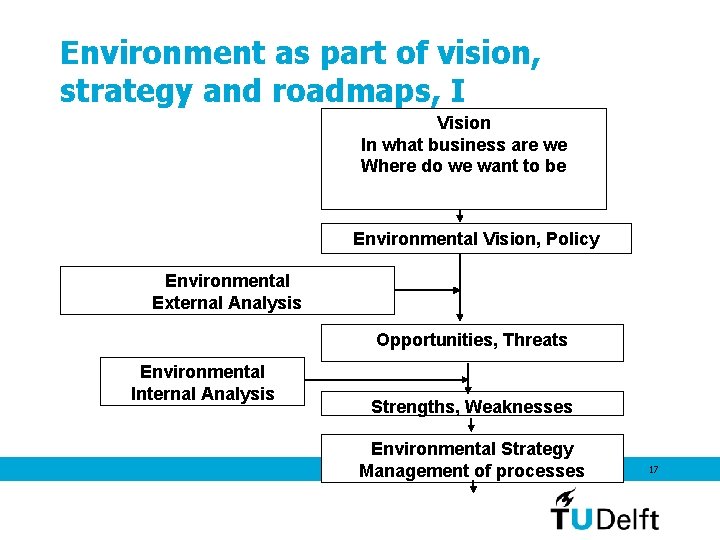
Environment as part of vision, strategy and roadmaps, I Vision In what business are we Where do we want to be Environmental Vision, Policy Environmental External Analysis Opportunities, Threats Environmental Internal Analysis Strengths, Weaknesses Environmental Strategy Management of processes 17
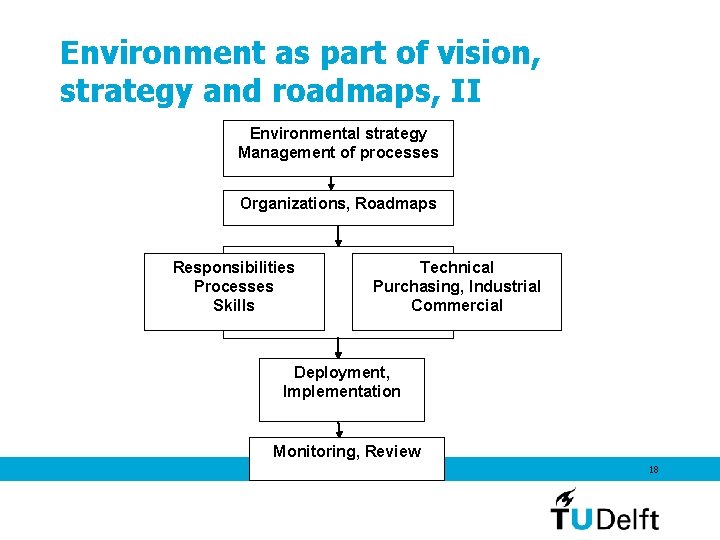
Environment as part of vision, strategy and roadmaps, II Environmental strategy Management of processes Organizations, Roadmaps Responsibilities Processes Skills Technical Purchasing, Industrial Commercial Deployment, Implementation Monitoring, Review 18
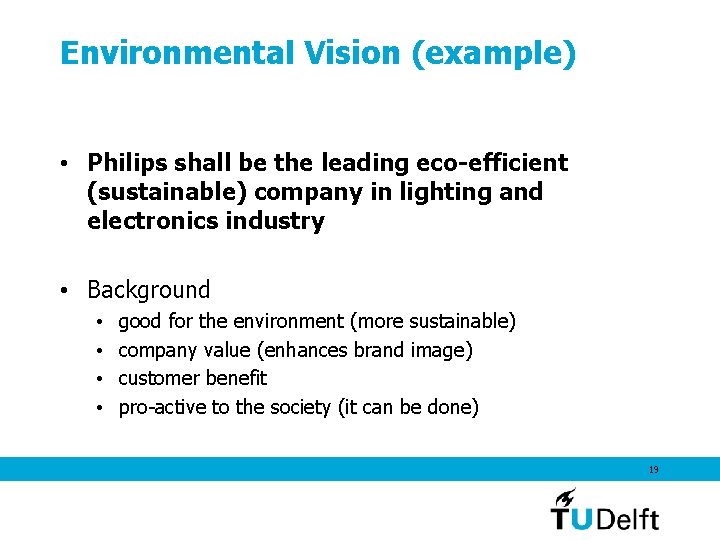
Environmental Vision (example) • Philips shall be the leading eco-efficient (sustainable) company in lighting and electronics industry • Background • • good for the environment (more sustainable) company value (enhances brand image) customer benefit pro-active to the society (it can be done) 19
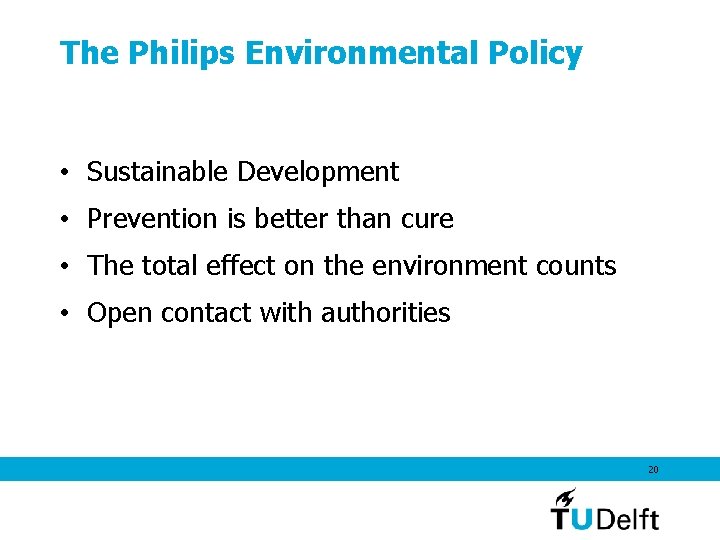
The Philips Environmental Policy • Sustainable Development • Prevention is better than cure • The total effect on the environment counts • Open contact with authorities 20
Environmental trends, I • Awareness consumer • • Increasing Diverging interest • OEM requirements • Public sector purchasing requirements • Green labeling to increase • • Energy consumption Labeling schemes Blue Angel TCO ’ 95 • Market is becoming the driver instead of regulation • Competition is using green in marketing 21
Environmental trends, II • Legal/regulation requirements • • differences per country (priority) voluntary programs self declaration Restriction on use of chemicals/substances Energy declarations Take-back Limitation on landfill, incineration ‘Green’ taxation, levies on energy and material use 22
Environmental trends, III • Environmental management systems (ISO 14000) • Environmental reporting, auditing will come • Environmental design manual/integration of green in design process • Use of Life Cycle Analysis and Life Cycle Cost techniques • Recycling companies offer their services • Japanese companies catching up fast, threaten to take the lead 23
Environmental trends, IV • More and more companies develop environmental strategies, roadmaps, programs, …. . • Environment is seen as a managerial tool for • cost reduction • quality improvement • employee motivation • More and more environmental constancy bureaus offer their services, quality of service is increasing • Well educated environmental specialists become available at the labor market 24
Environmental trends, V • Technology has huge environmental consequences • miniaturization • digitalization • software • portability • Function integration/ Lots of functionality for little money • Electronic transport versus mechanical transport • Global village (information) • Costs of raw materials and energy go up (scarcity) 25
Roadmap characteristics • • • Where do we stand? Where do we want to be 5 years from now Improvement roadmap: • formulation and deployment • implementation • monitoring Two levels • corporate roadmap • BU roadmap (tailored to business situation) Three area’s • defensive (compliance) • cost driven • pro active/gaining market share on basis of green Roadmap items • image • technical attributes 26
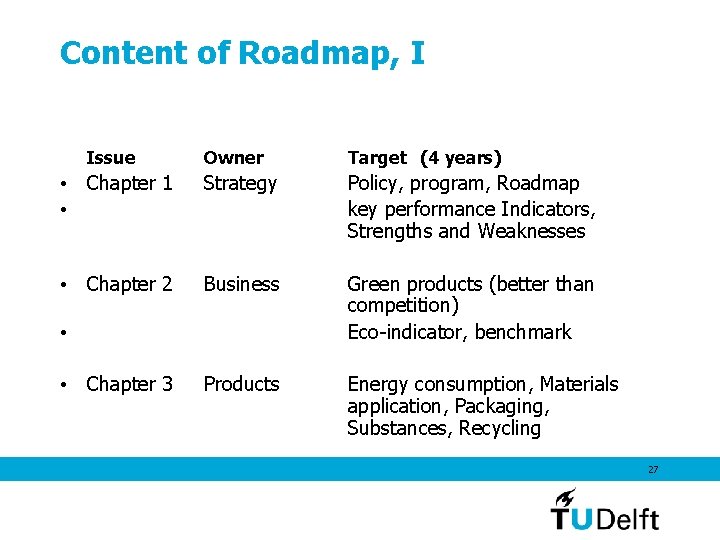
Content of Roadmap, I Issue Owner Target (4 years) • Chapter 1 • Strategy Policy, program, Roadmap key performance Indicators, Strengths and Weaknesses • Chapter 2 Business Green products (better than competition) Eco-indicator, benchmark Products Energy consumption, Materials application, Packaging, Substances, Recycling • • Chapter 3 27
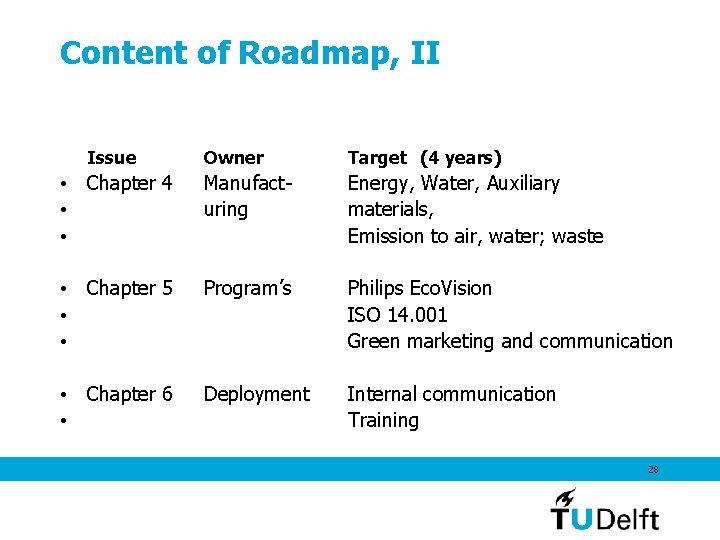
Content of Roadmap, II Issue Owner Target (4 years) • Chapter 4 • • Manufacturing Energy, Water, Auxiliary materials, Emission to air, water; waste • Chapter 5 • • Program’s Philips Eco. Vision ISO 14. 001 Green marketing and communication • Chapter 6 • Deployment Internal communication Training 28
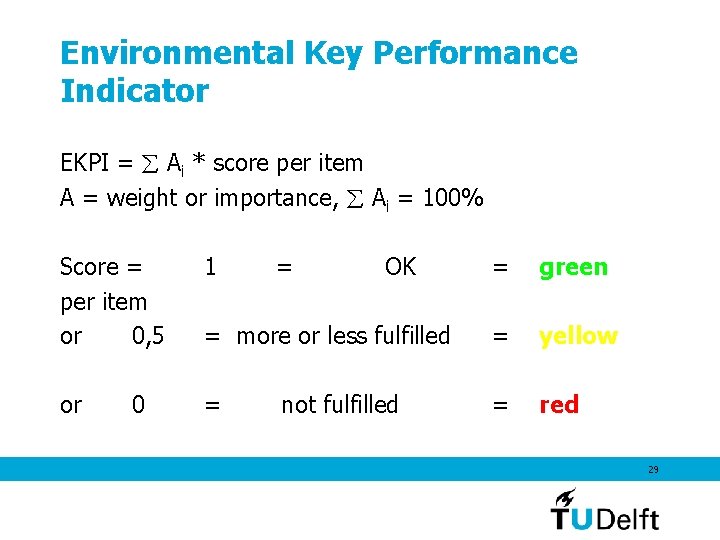
Environmental Key Performance Indicator EKPI = Ai * score per item A = weight or importance, Ai = 100% Score = per item or 0, 5 1 or 0 = OK = green = more or less fulfilled = yellow = = red not fulfilled 29
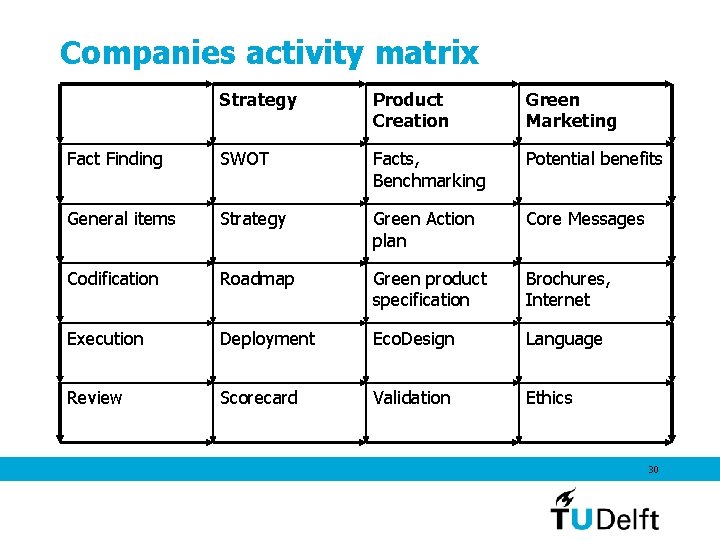
Companies activity matrix Strategy Product Creation Green Marketing Fact Finding SWOT Facts, Benchmarking Potential benefits General items Strategy Green Action plan Core Messages Codification Roadmap Green product specification Brochures, Internet Execution Deployment Eco. Design Language Review Scorecard Validation Ethics 30
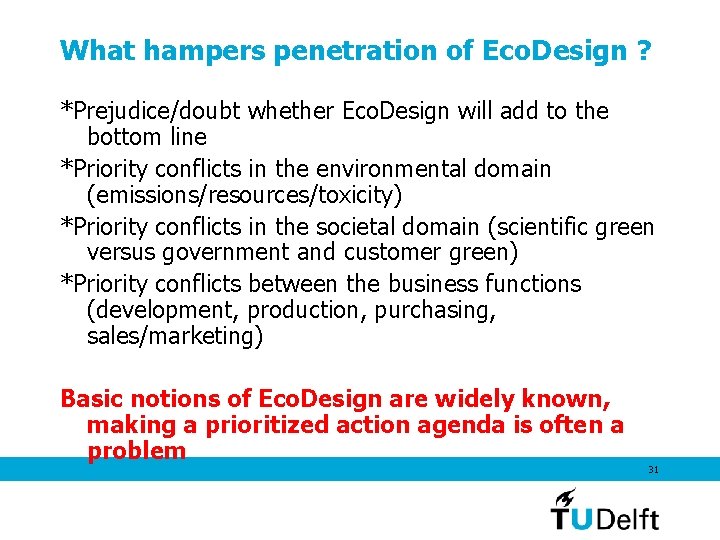
What hampers penetration of Eco. Design ? *Prejudice/doubt whether Eco. Design will add to the bottom line *Priority conflicts in the environmental domain (emissions/resources/toxicity) *Priority conflicts in the societal domain (scientific green versus government and customer green) *Priority conflicts between the business functions (development, production, purchasing, sales/marketing) Basic notions of Eco. Design are widely known, making a prioritized action agenda is often a problem 31
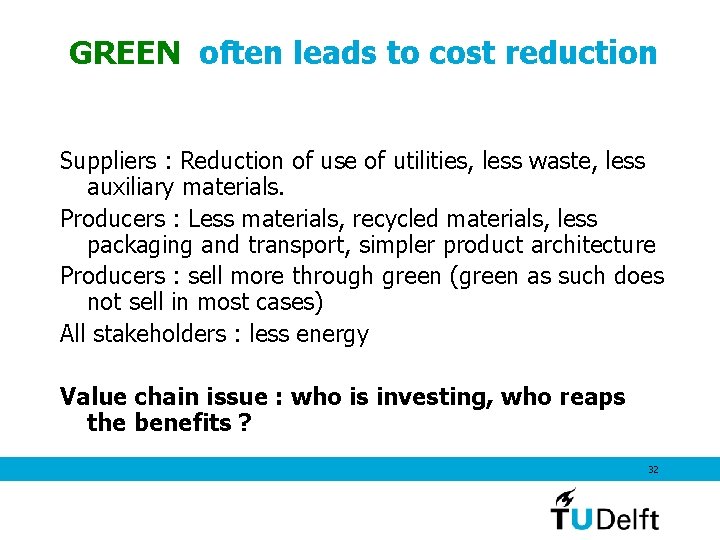
GREEN often leads to cost reduction Suppliers : Reduction of use of utilities, less waste, less auxiliary materials. Producers : Less materials, recycled materials, less packaging and transport, simpler product architecture Producers : sell more through green (green as such does not sell in most cases) All stakeholders : less energy Value chain issue : who is investing, who reaps the benefits ? 32
But : Green as such does not sell ! In the Netherlands/Western Europe : 80 – 85% of the public says that they will buy green products (even if these cost - a little bit - more) In practice only some 25 % shows this through their actual buying behavior ! Environment is nice, but what is in for me ? Green is a collective good, consumers are individuals ! Linking green with value >>> the Ecovalue concept 33
Conclusions 1. Environment is a business item (not just a technical item) 2. Vision, strategy, roadmap should be the framework for activities and programs 3. Look at what is happening in the outside world (trends, competition) 4. Eco. Design to be understood and organized/ integrated into product creation 5. Role of Eco. Design to be properly communicated 34
- Slides: 34