
EntryLevel Interviews Are We Asking the Right Questions

- Slides: 24
Entry-Level Interviews: Are We Asking the Right Questions? J. C. S T O N E R, P H. D. U N I V E R S I TOY F T E X A SA T A R L I N G T O N K YLE M CC RACKEN T EXAS A & M U NIVERSITY
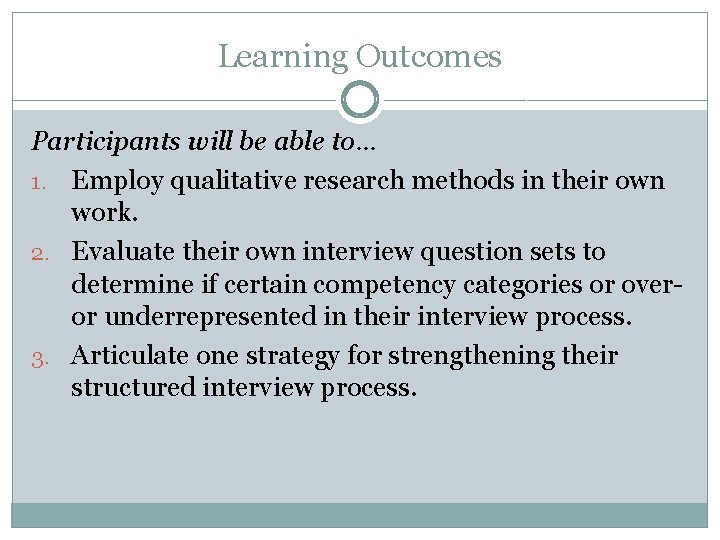
Learning Outcomes Participants will be able to… 1. Employ qualitative research methods in their own work. 2. Evaluate their own interview question sets to determine if certain competency categories or overor underrepresented in their interview process. 3. Articulate one strategy for strengthening their structured interview process.
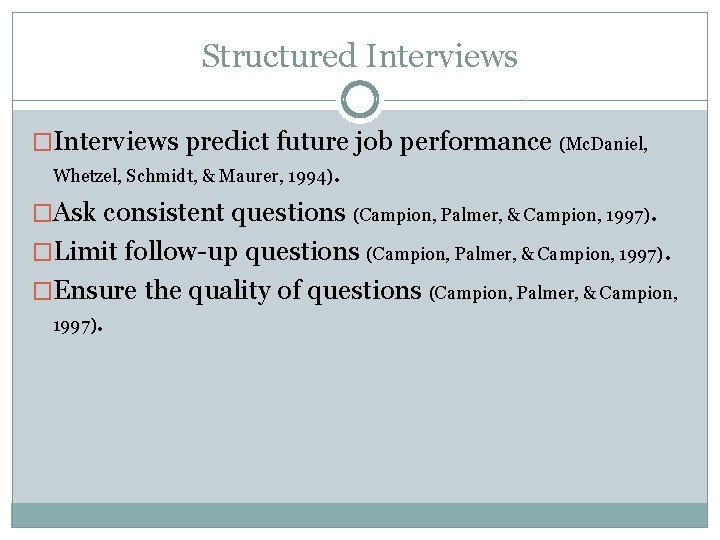
Structured Interviews �Interviews predict future job performance (Mc. Daniel, Whetzel, Schmidt, & Maurer, 1994). �Ask consistent questions (Campion, Palmer, & Campion, 1997). �Limit follow-up questions (Campion, Palmer, & Campion, 1997). �Ensure the quality of questions (Campion, Palmer, & Campion, 1997).
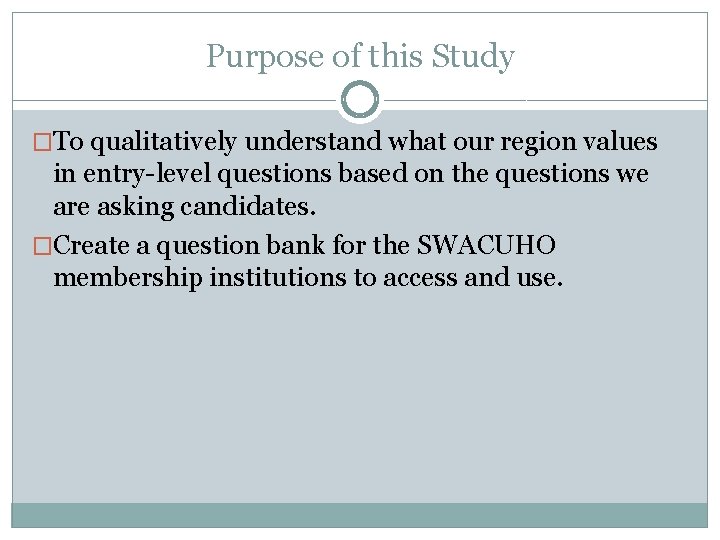
Purpose of this Study �To qualitatively understand what our region values in entry-level questions based on the questions we are asking candidates. �Create a question bank for the SWACUHO membership institutions to access and use.
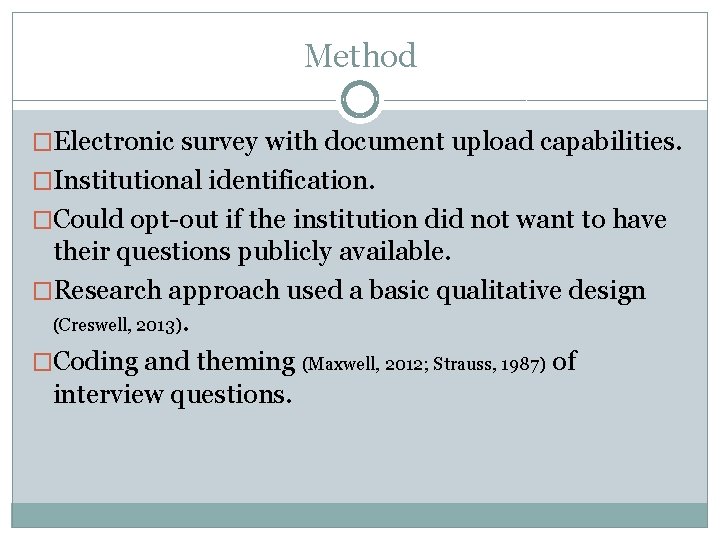
Method �Electronic survey with document upload capabilities. �Institutional identification. �Could opt-out if the institution did not want to have their questions publicly available. �Research approach used a basic qualitative design (Creswell, 2013). �Coding and theming (Maxwell, 2012; Strauss, 1987) of interview questions.
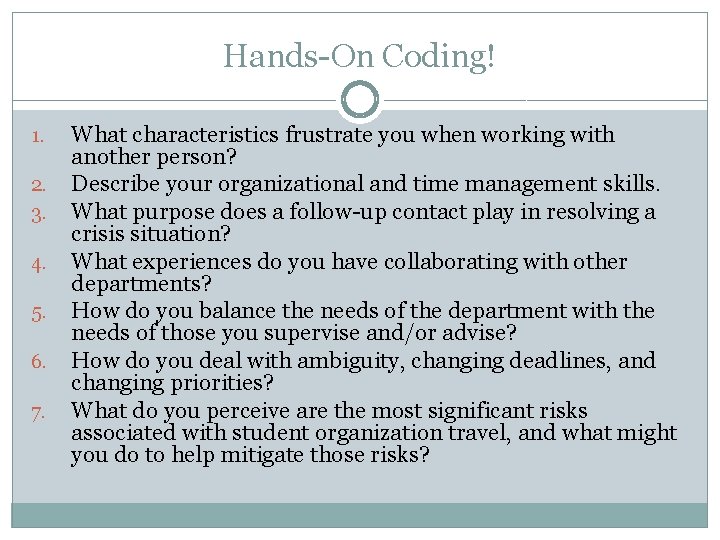
Hands-On Coding! 1. 2. 3. 4. 5. 6. 7. What characteristics frustrate you when working with another person? Describe your organizational and time management skills. What purpose does a follow-up contact play in resolving a crisis situation? What experiences do you have collaborating with other departments? How do you balance the needs of the department with the needs of those you supervise and/or advise? How do you deal with ambiguity, changing deadlines, and changing priorities? What do you perceive are the most significant risks associated with student organization travel, and what might you do to help mitigate those risks?
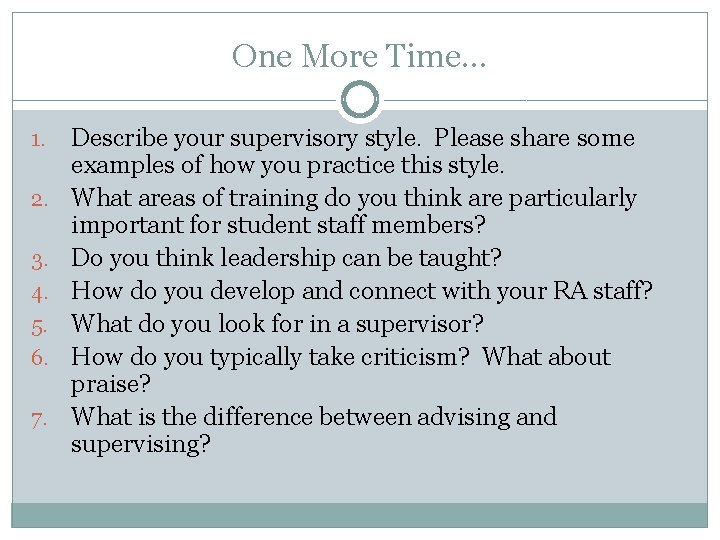
One More Time… 1. 2. 3. 4. 5. 6. 7. Describe your supervisory style. Please share some examples of how you practice this style. What areas of training do you think are particularly important for student staff members? Do you think leadership can be taught? How do you develop and connect with your RA staff? What do you look for in a supervisor? How do you typically take criticism? What about praise? What is the difference between advising and supervising?
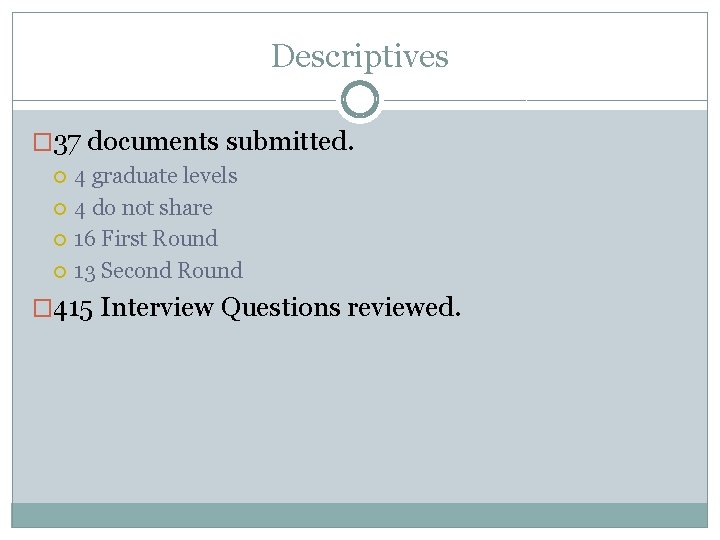
Descriptives � 37 documents submitted. 4 graduate levels 4 do not share 16 First Round 13 Second Round � 415 Interview Questions reviewed.
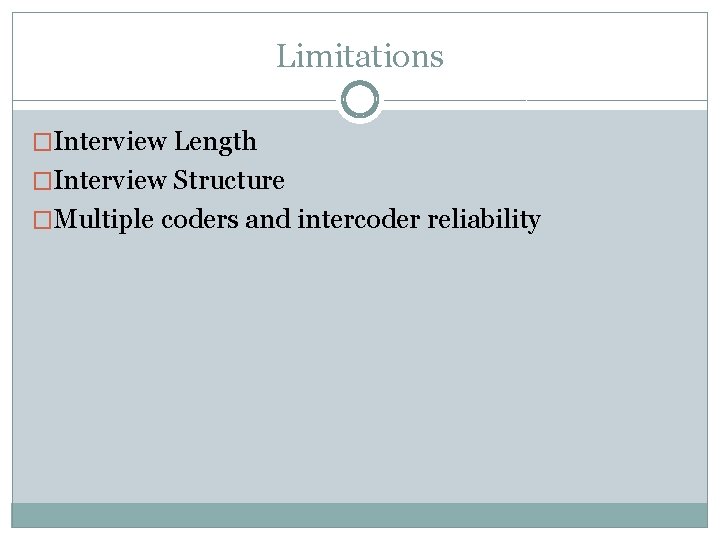
Limitations �Interview Length �Interview Structure �Multiple coders and intercoder reliability
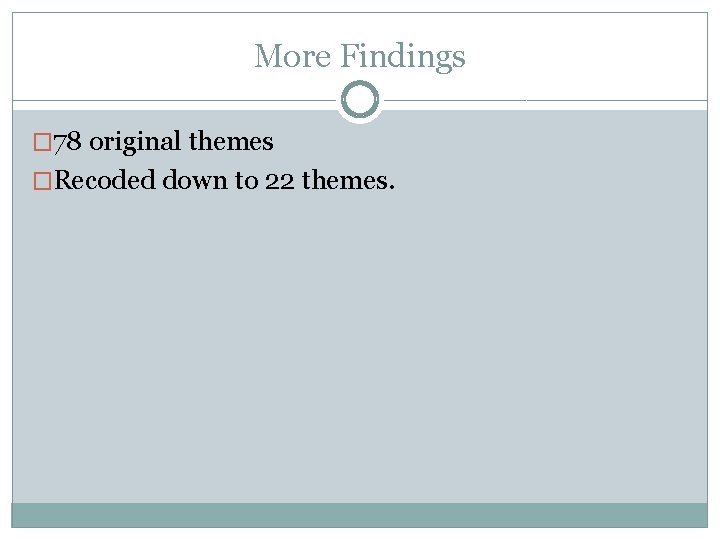
More Findings � 78 original themes �Recoded down to 22 themes.
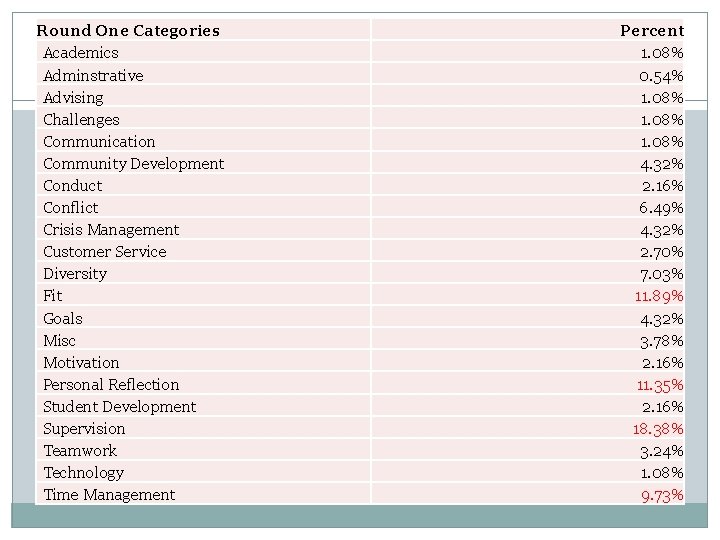
Round One Categories Academics Adminstrative Advising Challenges Communication Community Development Conduct Conflict Crisis Management Customer Service Diversity Fit Goals Misc Motivation Personal Reflection Student Development Supervision Teamwork Technology Time Management Percent 1. 08% 0. 54% 1. 08% 4. 32% 2. 16% 6. 49% 4. 32% 2. 70% 7. 03% 11. 89% 4. 32% 3. 78% 2. 16% 11. 35% 2. 16% 18. 38% 3. 24% 1. 08% 9. 73%
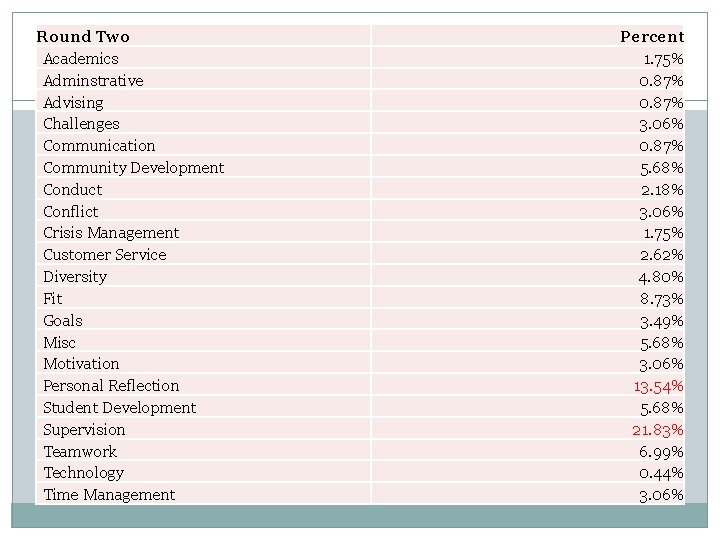
Round Two Academics Adminstrative Advising Challenges Communication Community Development Conduct Conflict Crisis Management Customer Service Diversity Fit Goals Misc Motivation Personal Reflection Student Development Supervision Teamwork Technology Time Management Percent 1. 75% 0. 87% 3. 06% 0. 87% 5. 68% 2. 18% 3. 06% 1. 75% 2. 62% 4. 80% 8. 73% 3. 49% 5. 68% 3. 06% 13. 54% 5. 68% 21. 83% 6. 99% 0. 44% 3. 06%
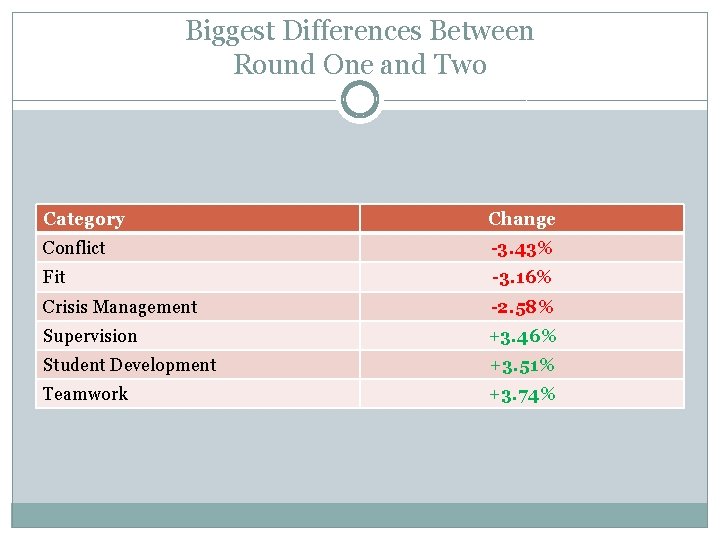
Biggest Differences Between Round One and Two Category Change Conflict -3. 43% Fit -3. 16% Crisis Management -2. 58% Supervision +3. 46% Student Development +3. 51% Teamwork +3. 74%
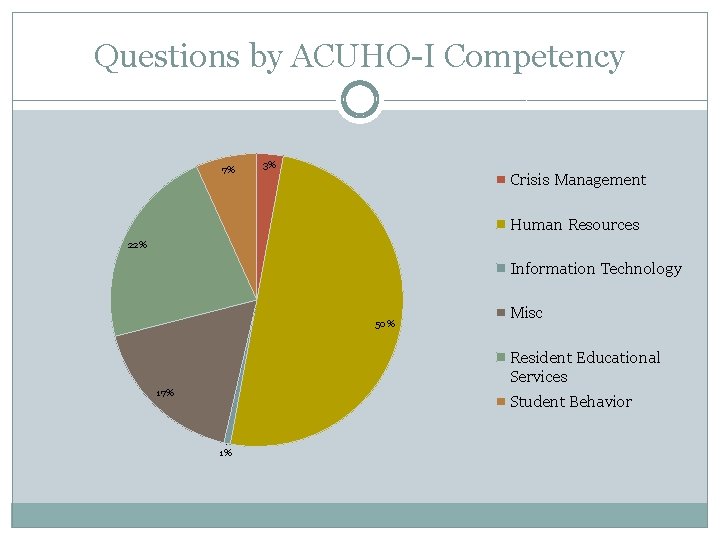
Questions by ACUHO-I Competency 7% 3% Crisis Management Human Resources 22% Information Technology 50% Misc Resident Educational Services 17% Student Behavior 1%
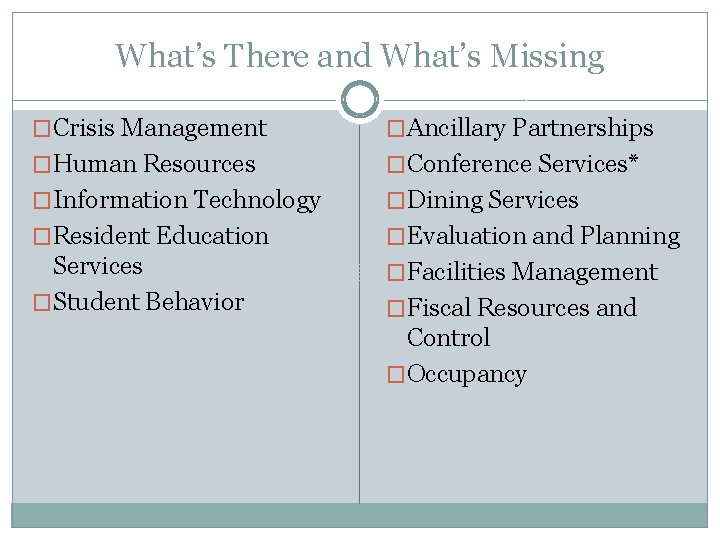
What’s There and What’s Missing �Crisis Management �Ancillary Partnerships �Human Resources �Conference Services* �Information Technology �Dining Services �Resident Education �Evaluation and Planning Services �Student Behavior �Facilities Management �Fiscal Resources and Control �Occupancy
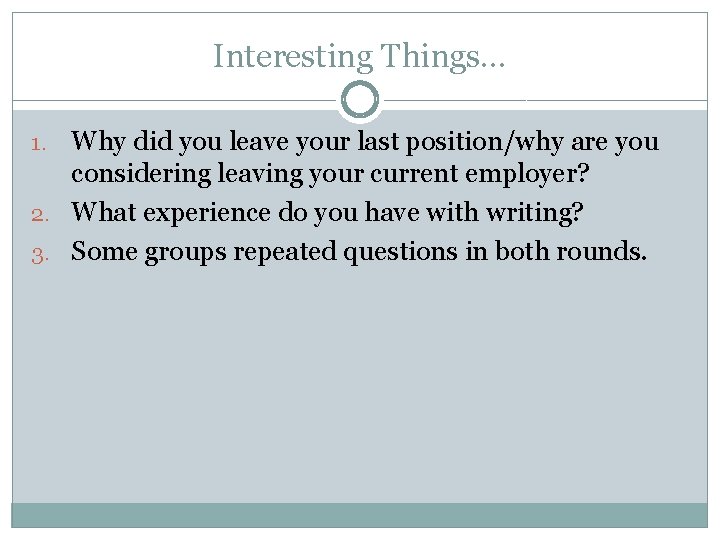
Interesting Things… Why did you leave your last position/why are you considering leaving your current employer? 2. What experience do you have with writing? 3. Some groups repeated questions in both rounds. 1.
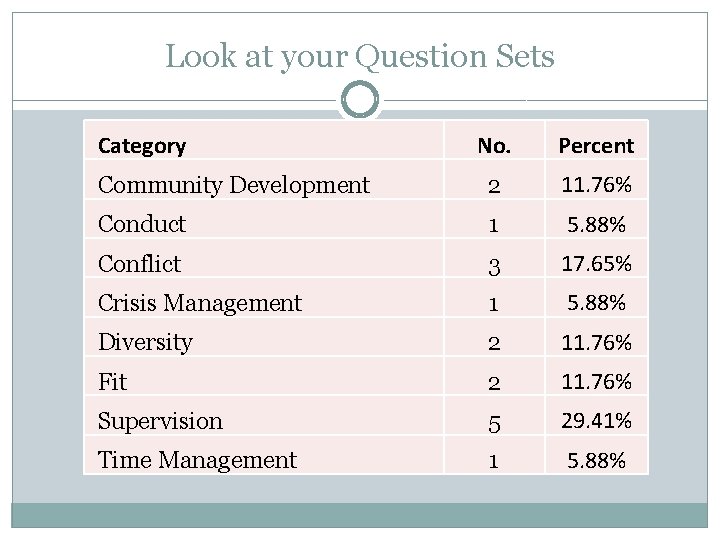
Look at your Question Sets Category No. Percent Community Development 2 11. 76% Conduct 1 5. 88% Conflict 3 17. 65% Crisis Management 1 5. 88% Diversity 2 11. 76% Fit 2 11. 76% Supervision 5 29. 41% Time Management 1 5. 88%
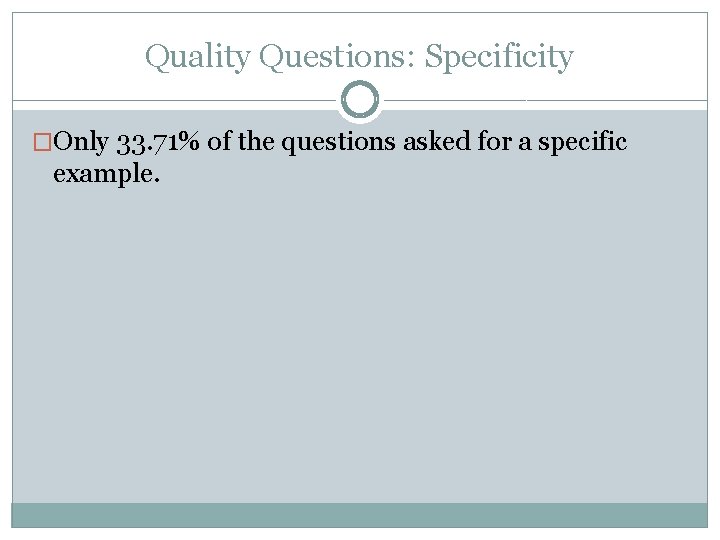
Quality Questions: Specificity �Only 33. 71% of the questions asked for a specific example.
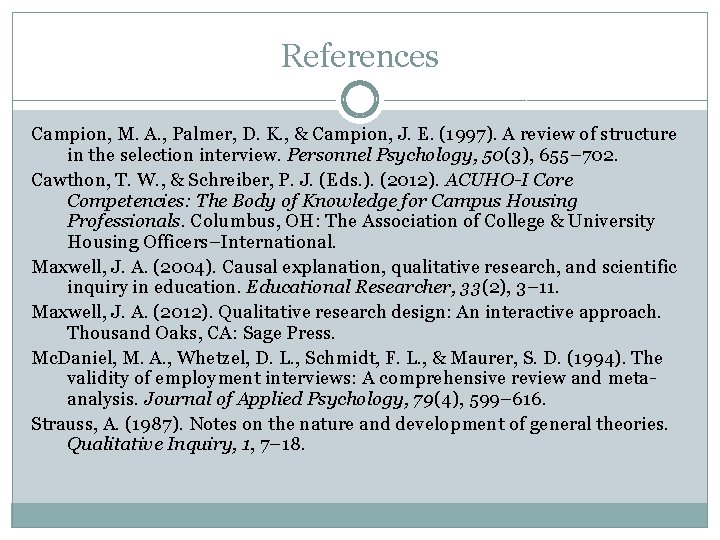
References Campion, M. A. , Palmer, D. K. , & Campion, J. E. (1997). A review of structure in the selection interview. Personnel Psychology, 50(3), 655– 702. Cawthon, T. W. , & Schreiber, P. J. (Eds. ). (2012). ACUHO-I Core Competencies: The Body of Knowledge for Campus Housing Professionals. Columbus, OH: The Association of College & University Housing Officers–International. Maxwell, J. A. (2004). Causal explanation, qualitative research, and scientific inquiry in education. Educational Researcher, 33(2), 3– 11. Maxwell, J. A. (2012). Qualitative research design: An interactive approach. Thousand Oaks, CA: Sage Press. Mc. Daniel, M. A. , Whetzel, D. L. , Schmidt, F. L. , & Maurer, S. D. (1994). The validity of employment interviews: A comprehensive review and metaanalysis. Journal of Applied Psychology, 79(4), 599– 616. Strauss, A. (1987). Notes on the nature and development of general theories. Qualitative Inquiry, 1, 7– 18.