
Entropy Second Law of Thermodynamics PHYS116 A01 1232014
- Slides: 14
Entropy, Second Law of Thermodynamics PHYS-116 A-01 12/3/2014 Lecture 42 Momchil Velkovsky
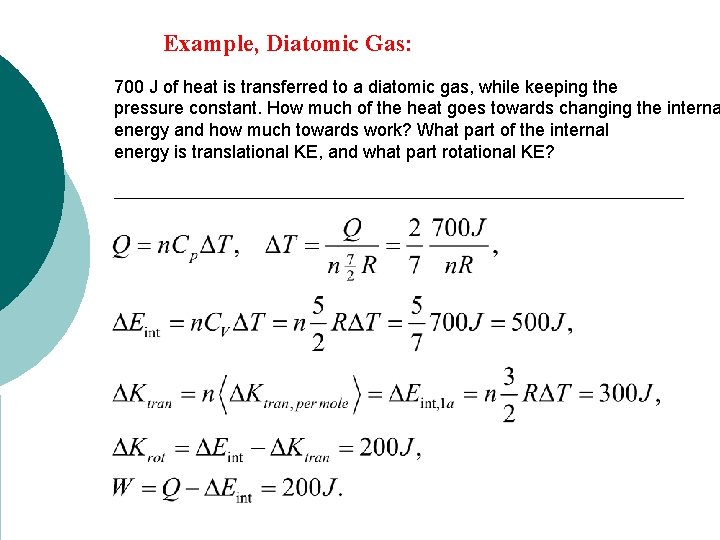
Example, Diatomic Gas: 700 J of heat is transferred to a diatomic gas, while keeping the pressure constant. How much of the heat goes towards changing the interna energy and how much towards work? What part of the internal energy is translational KE, and what part rotational KE?
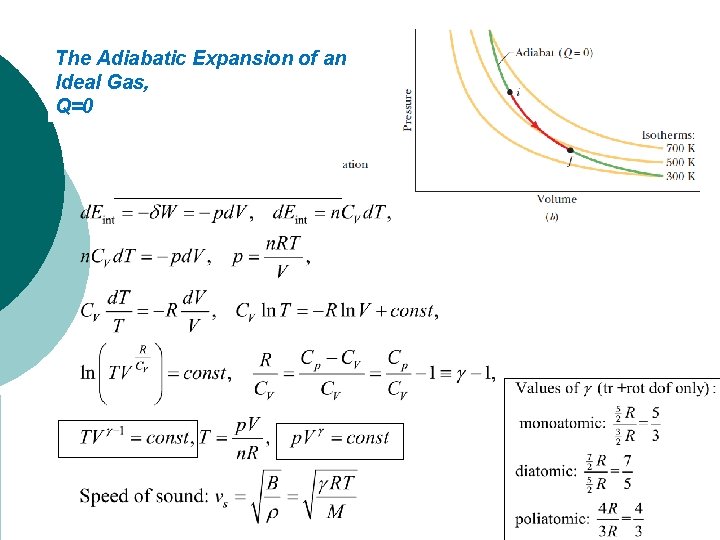
The Adiabatic Expansion of an Ideal Gas, Q=0
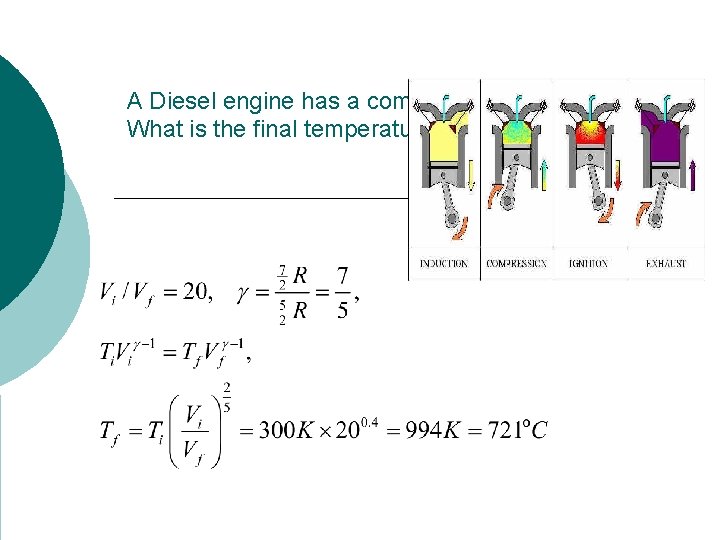
A Diesel engine has a compression ratio of 20: 1 What is the final temperature in the cylinder?
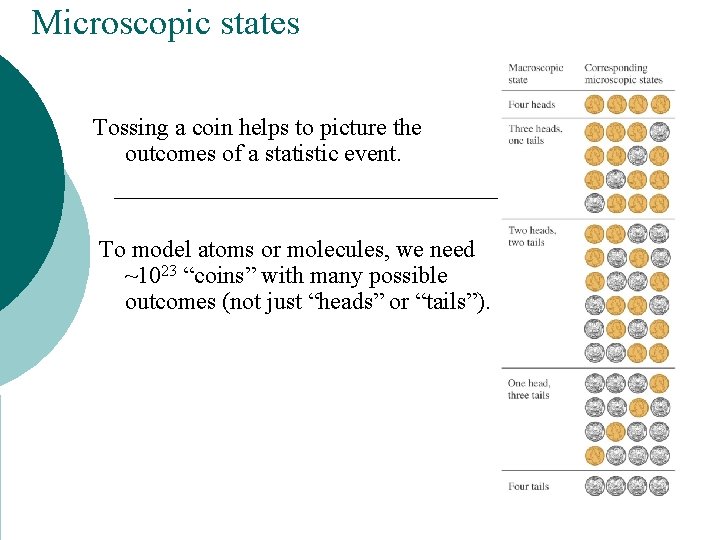
Microscopic states Tossing a coin helps to picture the outcomes of a statistic event. To model atoms or molecules, we need ~1023 “coins” with many possible outcomes (not just “heads” or “tails”).
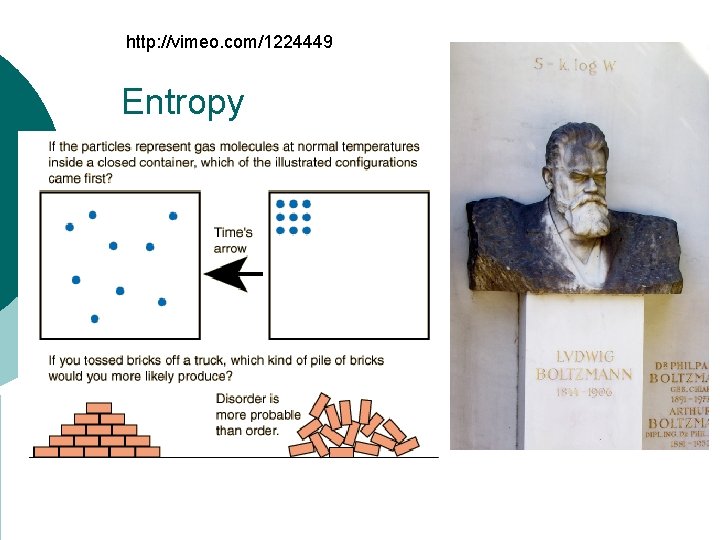
http: //vimeo. com/1224449 Entropy
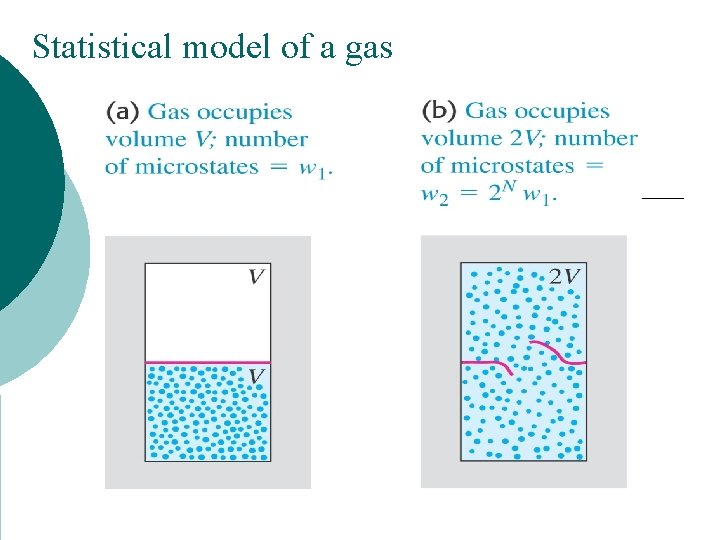
Statistical model of a gas
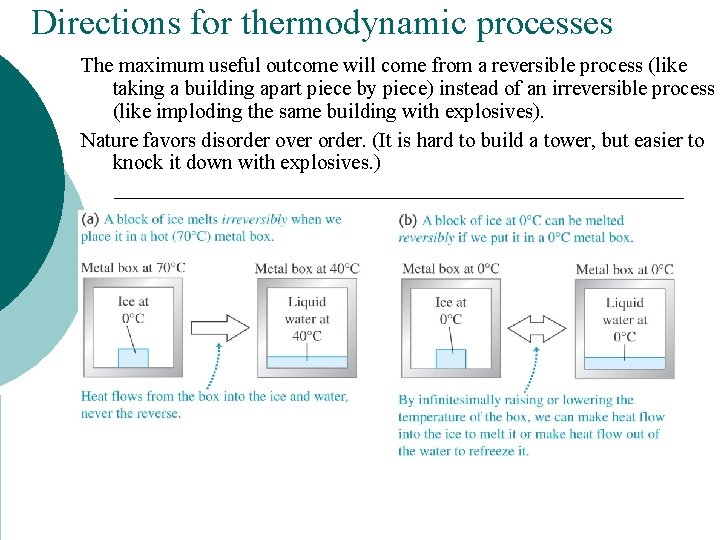
Directions for thermodynamic processes The maximum useful outcome will come from a reversible process (like taking a building apart piece by piece) instead of an irreversible process (like imploding the same building with explosives). Nature favors disorder over order. (It is hard to build a tower, but easier to knock it down with explosives. )
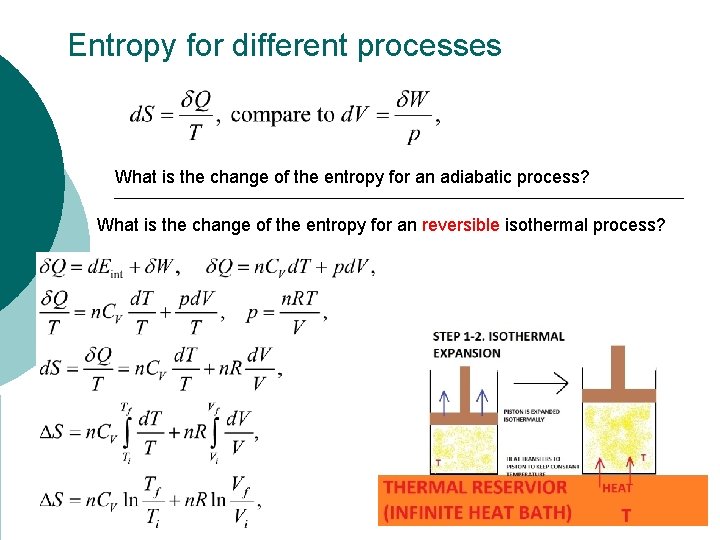
Entropy for different processes What is the change of the entropy for an adiabatic process? What is the change of the entropy for an reversible isothermal process?
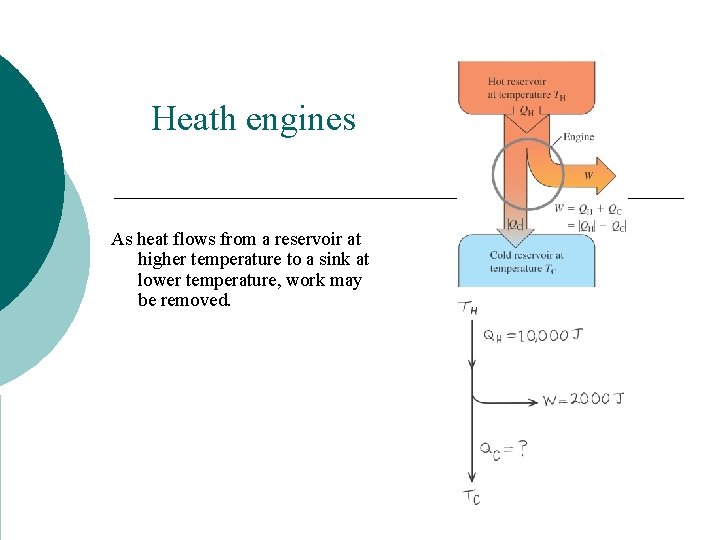
Heath engines As heat flows from a reservoir at higher temperature to a sink at lower temperature, work may be removed.
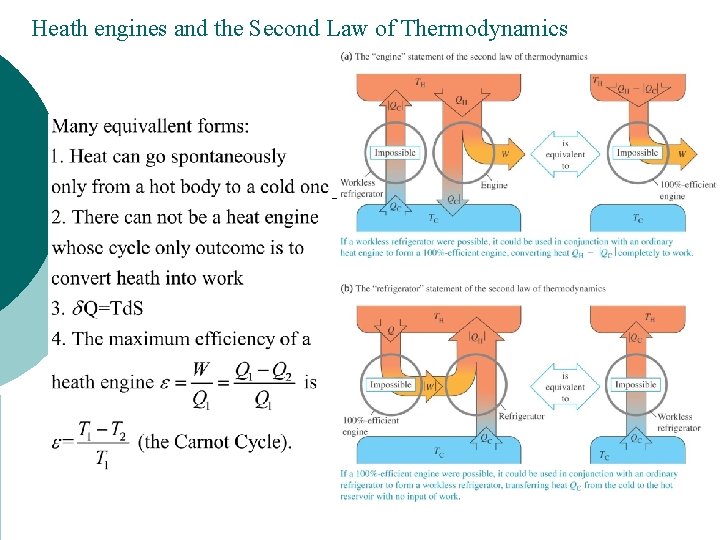
Heath engines and the Second Law of Thermodynamics
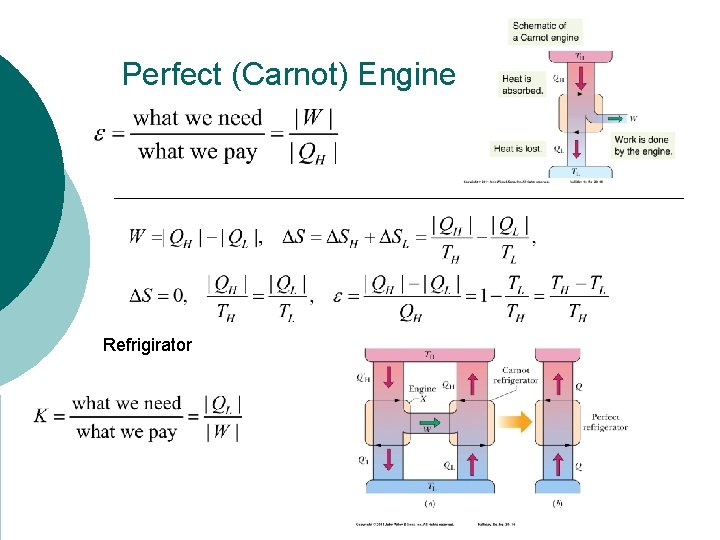
Perfect (Carnot) Engine Refrigirator
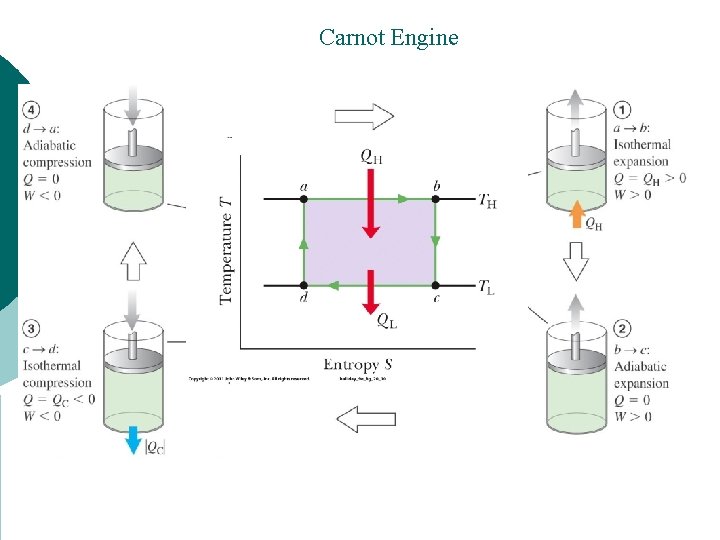
Carnot Engine
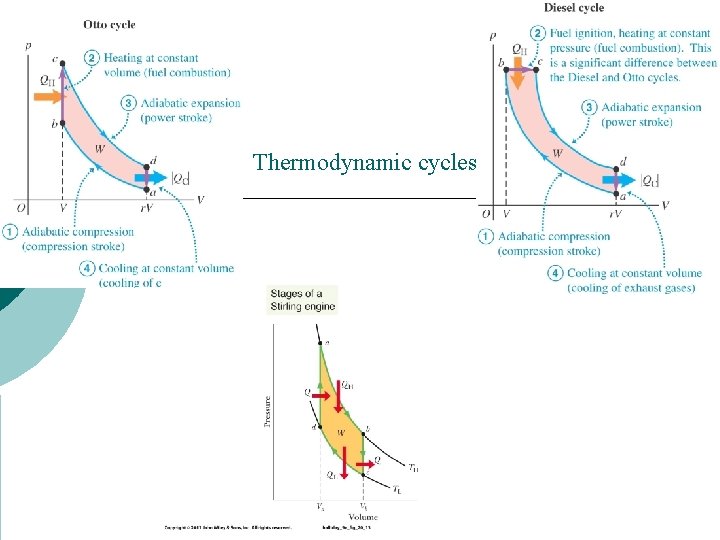
Thermodynamic cycles