
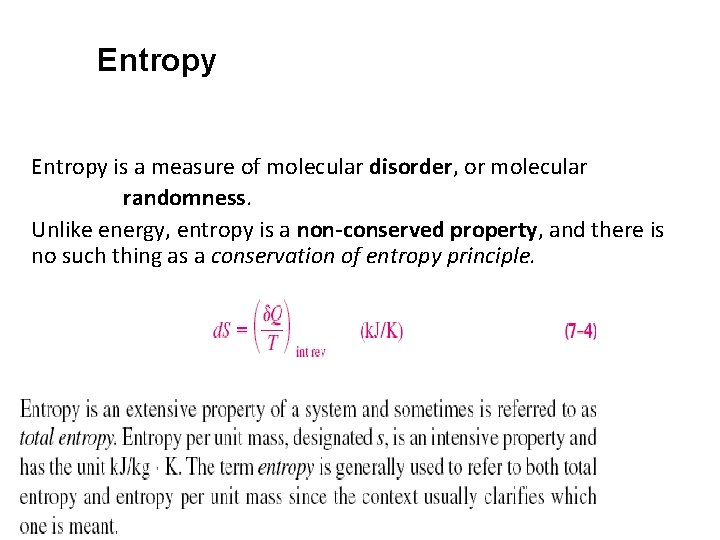
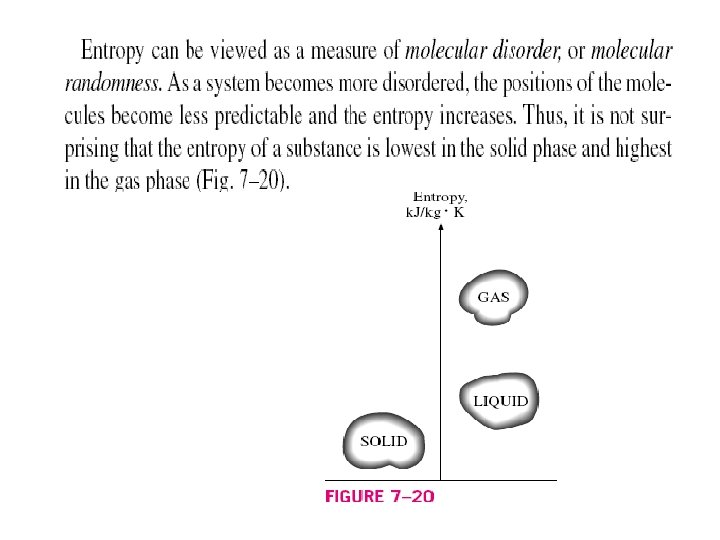
Entropy is a measure of molecular disorder or
- Slides: 23
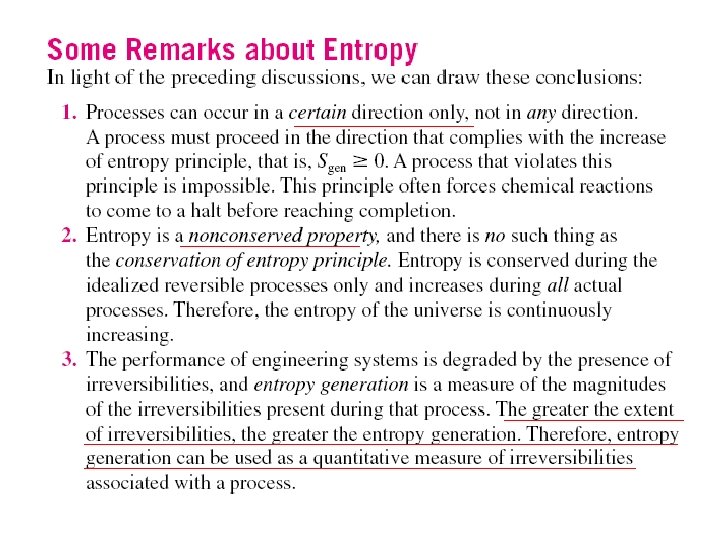
Entropy is a measure of molecular disorder, or molecular randomness. Unlike energy, entropy is a non-conserved property, and there is no such thing as a conservation of entropy principle.
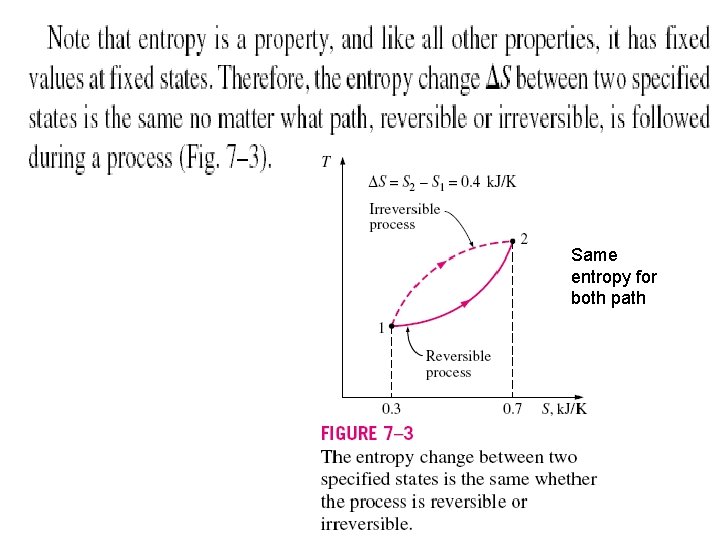
Same entropy for both path
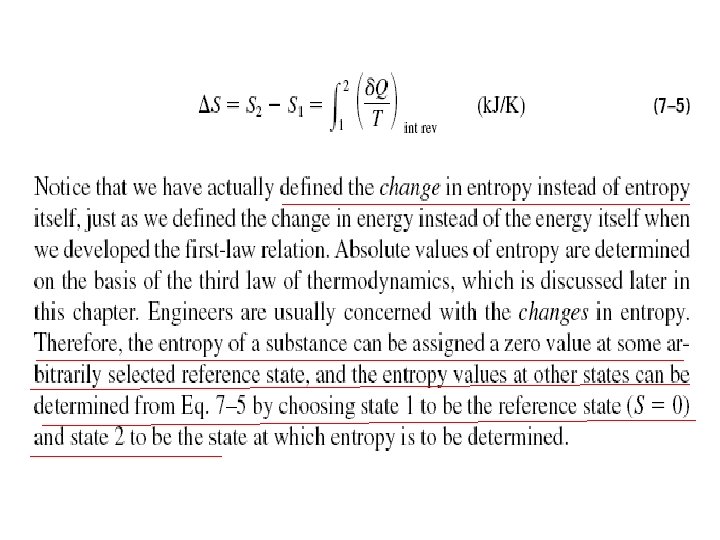
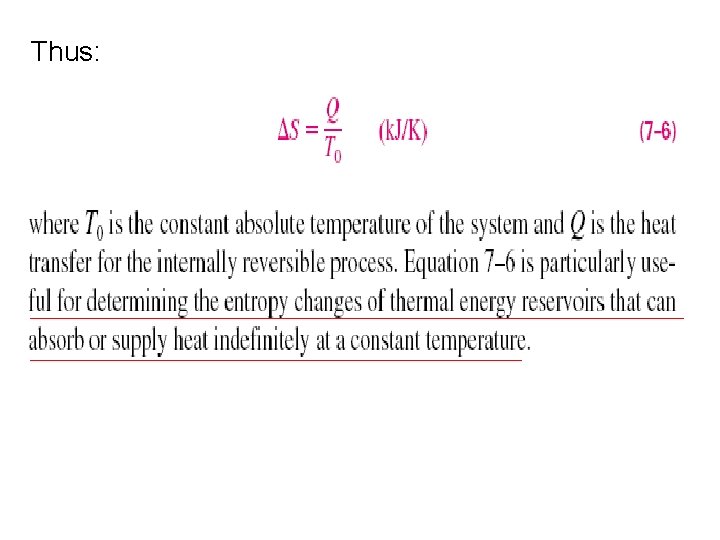
Thus:
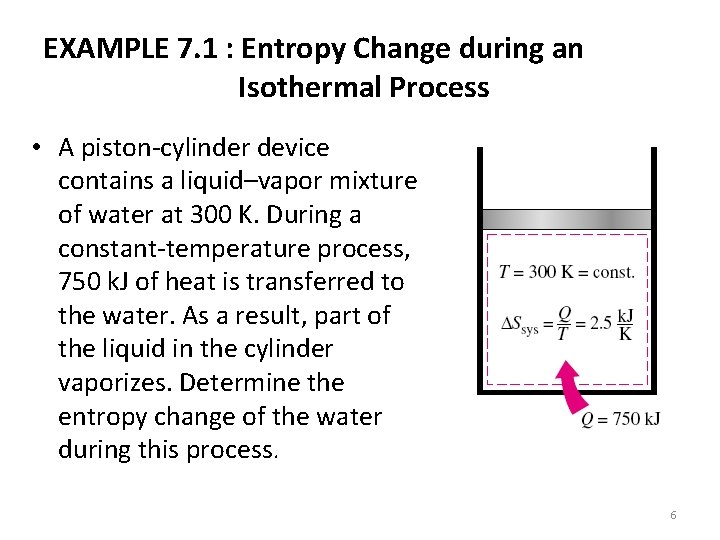
EXAMPLE 7. 1 : Entropy Change during an Isothermal Process • A piston-cylinder device contains a liquid–vapor mixture of water at 300 K. During a constant-temperature process, 750 k. J of heat is transferred to the water. As a result, part of the liquid in the cylinder vaporizes. Determine the entropy change of the water during this process. 6
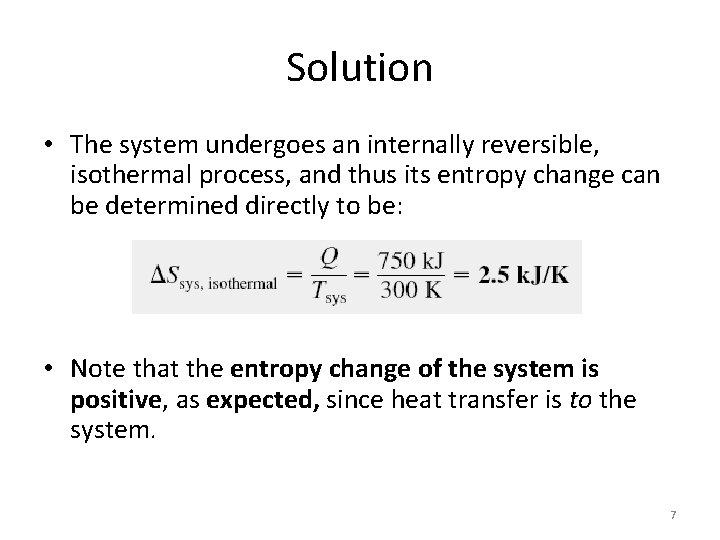
Solution • The system undergoes an internally reversible, isothermal process, and thus its entropy change can be determined directly to be: • Note that the entropy change of the system is positive, as expected, since heat transfer is to the system. 7
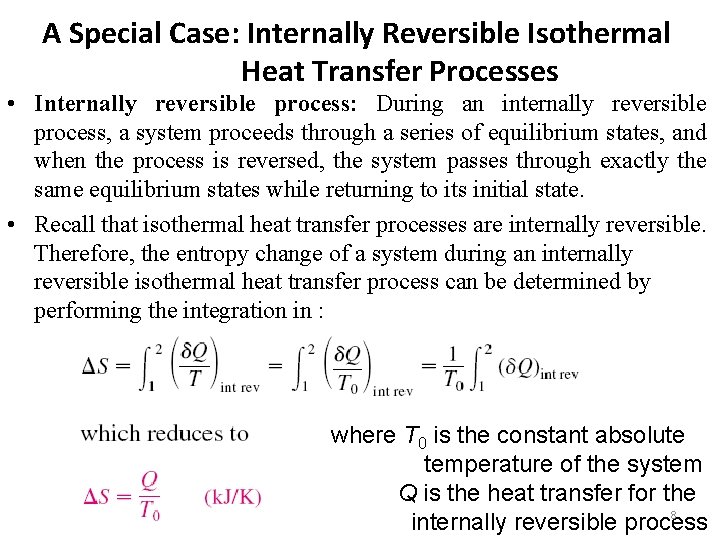
A Special Case: Internally Reversible Isothermal Heat Transfer Processes • Internally reversible process: During an internally reversible process, a system proceeds through a series of equilibrium states, and when the process is reversed, the system passes through exactly the same equilibrium states while returning to its initial state. • Recall that isothermal heat transfer processes are internally reversible. Therefore, the entropy change of a system during an internally reversible isothermal heat transfer process can be determined by performing the integration in : where T 0 is the constant absolute temperature of the system Q is the heat transfer for the 8 internally reversible process
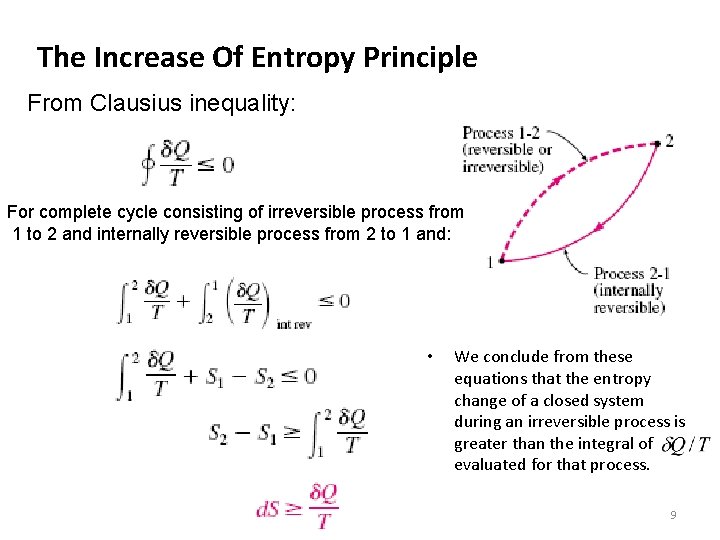
The Increase Of Entropy Principle From Clausius inequality: For complete cycle consisting of irreversible process from 1 to 2 and internally reversible process from 2 to 1 and: • We conclude from these equations that the entropy change of a closed system during an irreversible process is greater than the integral of evaluated for that process. 9
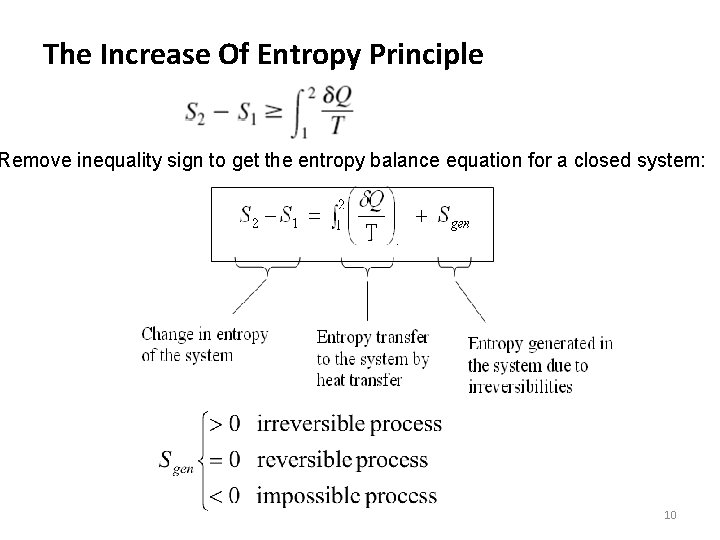
The Increase Of Entropy Principle Remove inequality sign to get the entropy balance equation for a closed system: 10
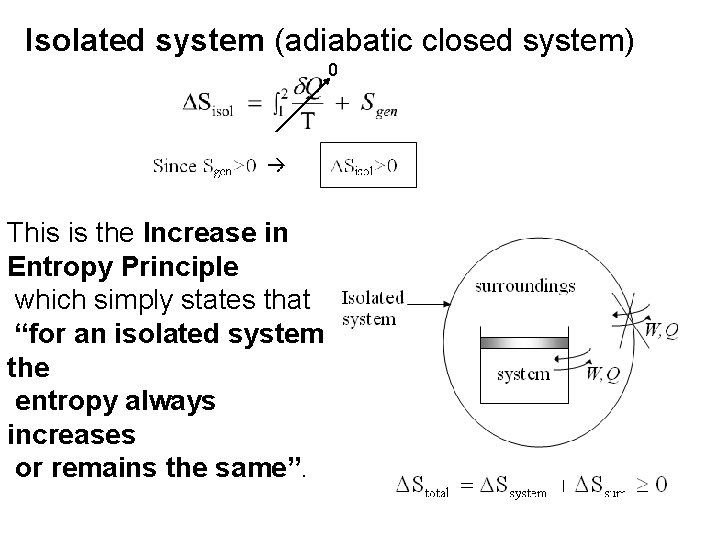
Isolated system (adiabatic closed system) 0 This is the Increase in Entropy Principle which simply states that “for an isolated system the entropy always increases or remains the same”. 11
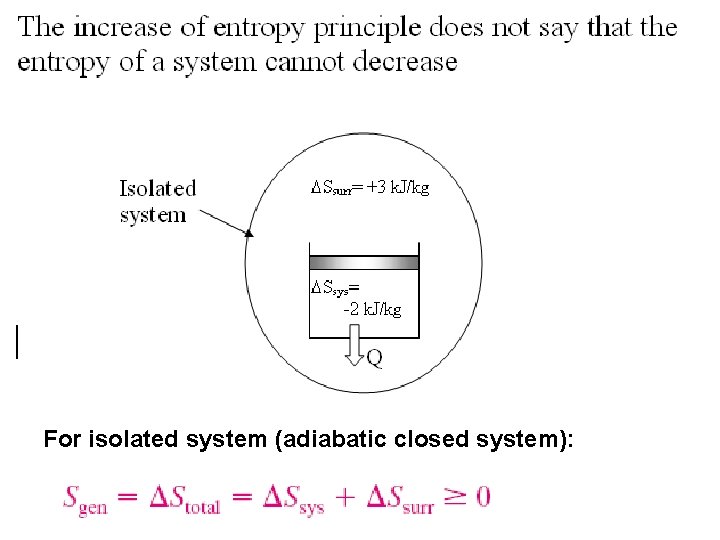
For isolated system (adiabatic closed system):
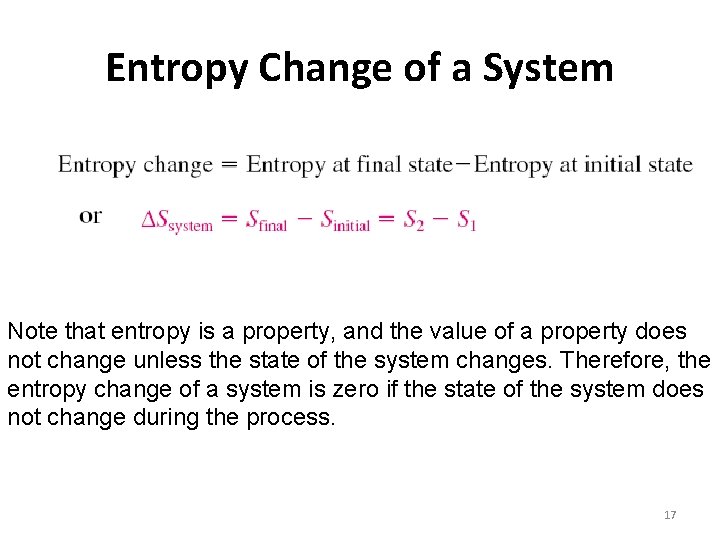
Entropy Change of a System Note that entropy is a property, and the value of a property does not change unless the state of the system changes. Therefore, the entropy change of a system is zero if the state of the system does not change during the process. 17
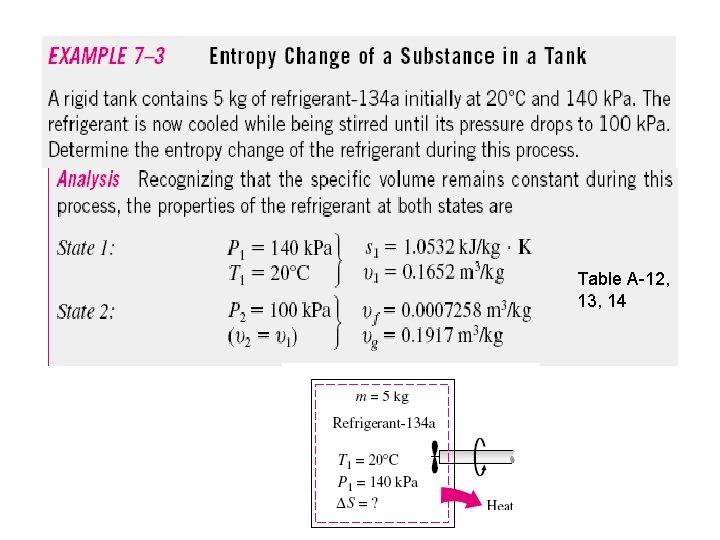
Table A-12, 13, 14
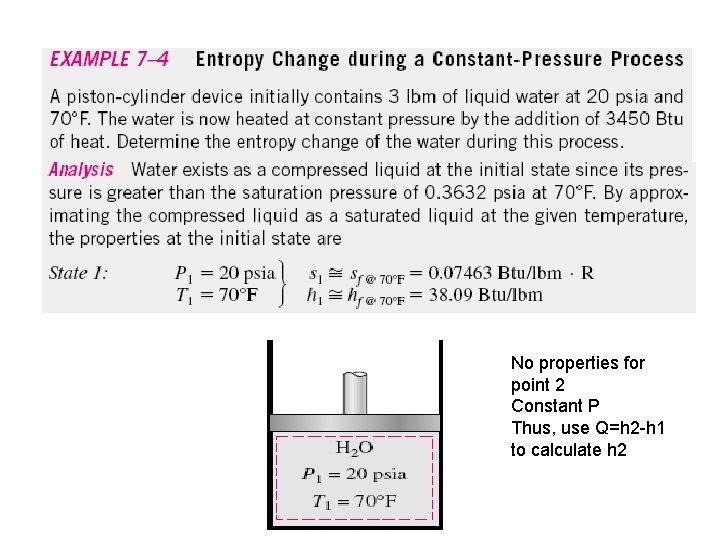
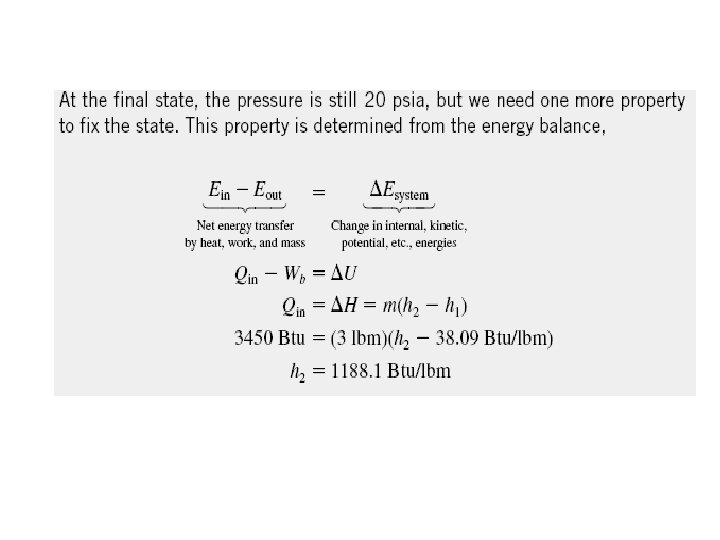
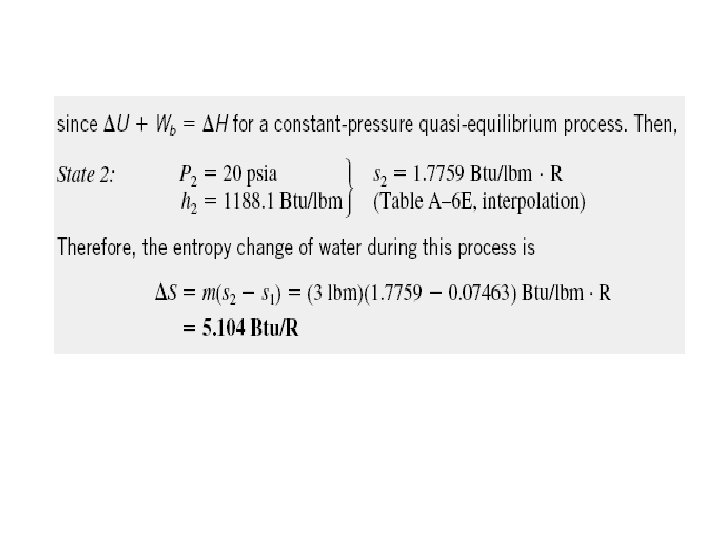
No properties for point 2 Constant P Thus, use Q=h 2 -h 1 to calculate h 2