
Entrepreneurship Small Business Policy in Canada Small Business

Entrepreneurship & Small Business Policy in Canada Small Business Policy Branch Industry Canada Presentation to OECD Entrepreneurship Indicators Workshop October 27, 2005
Contents of Presentation Ì Context Ì Entrepreneurship Policy in Canada Ì Ì 1. Add title of section 1 Canada’s Small Business Policy Agenda 2. Add title of section 2 3. Add titleof of Entrepreneurship section 3 Indicators and Small 4. Add titleinof. Canada section 4 Business 5. Add title of section 5 6. Add title of section 6 2
Entrepreneurship Policy in Canada: Context Ê Canada had a National Entrepreneurship Policy 1989 -1993 Ì Ì Goal was to encourage an entrepreneurship culture Promote entrepreneurship as an option Income support, e. g. Self-employment Assistance Program Ø Community development e. g. Community Futures for rural regions to encourage self-sufficiency Ø Ê Comprehensive review of small business policy in 1994 developed by departments of Industry and Finance shifted emphasis Ì Ì Entrepreneurship policy funded federally but developed and delivered at regional and local level Small business policy revamped at national level, with emphasis on encouraging growth of small businesses 3
Current Entrepreneurship Policy Ê Ê Ê Diverse pattern across Canada regarding information, delivery and development National information system for potential and actual entrepreneurs (Business Canada) via entrepreneurship centres also provide path -finding Programs administered by four (federally funded) regional agencies (Atlantic, Western, North Ontario, Quebec) Ì Ê Ê Delivery vehicles for programs are typically Community Futures Development Corporations Community development is an important objective for encouraging entrepreneurship While funded federally, program content and delivery thus reflect local diversity 4
Entrepreneurship Policy: Activities Ê Activities include Ì Ì Ê Business planning and start-up Technical assistance; Financial assistance; repayable loans, loan loss guarantees Improving telecommunications infrastructure in remote areas Target groups: Ì Ì Ì Aboriginal entrepreneurs Women entrepreneurs Young entrepreneurs Rural businesses; community development Francophone entrepreneurs 5
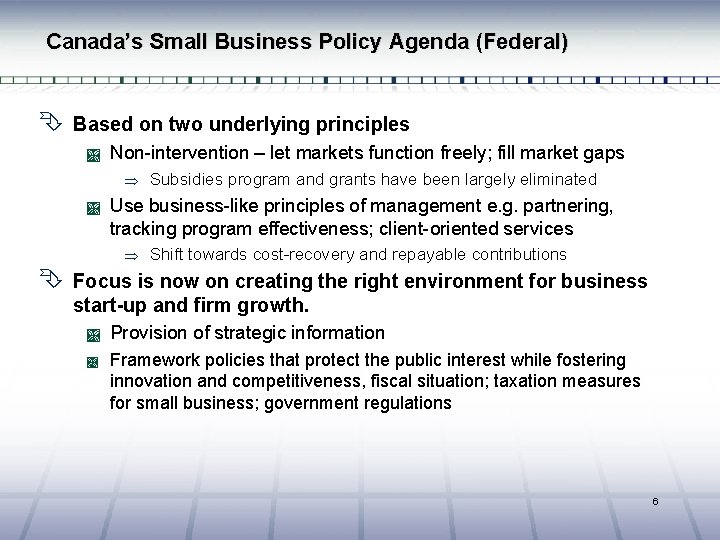
Canada’s Small Business Policy Agenda (Federal) Ê Based on two underlying principles Ì Non-intervention – let markets function freely; fill market gaps Þ Ì Use business-like principles of management e. g. partnering, tracking program effectiveness; client-oriented services Þ Ê Subsidies program and grants have been largely eliminated Shift towards cost-recovery and repayable contributions Focus is now on creating the right environment for business start-up and firm growth. Ì Ì Provision of strategic information Framework policies that protect the public interest while fostering innovation and competitiveness, fiscal situation; taxation measures for small business; government regulations 6
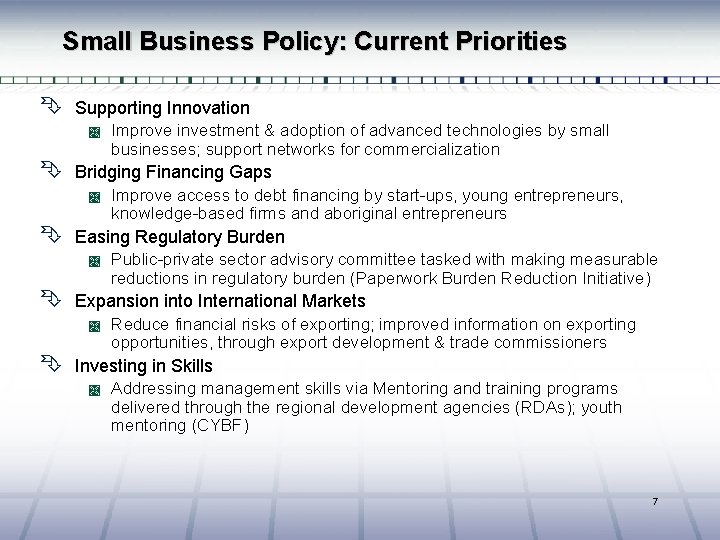
Small Business Policy: Current Priorities Ê Supporting Innovation Ì Ê Bridging Financing Gaps Ì Ê Public-private sector advisory committee tasked with making measurable reductions in regulatory burden (Paperwork Burden Reduction Initiative) Expansion into International Markets Ì Ê Improve access to debt financing by start-ups, young entrepreneurs, knowledge-based firms and aboriginal entrepreneurs Easing Regulatory Burden Ì Ê Improve investment & adoption of advanced technologies by small businesses; support networks for commercialization Reduce financial risks of exporting; improved information on exporting opportunities, through export development & trade commissioners Investing in Skills Ì Addressing management skills via Mentoring and training programs delivered through the regional development agencies (RDAs); youth mentoring (CYBF) 7
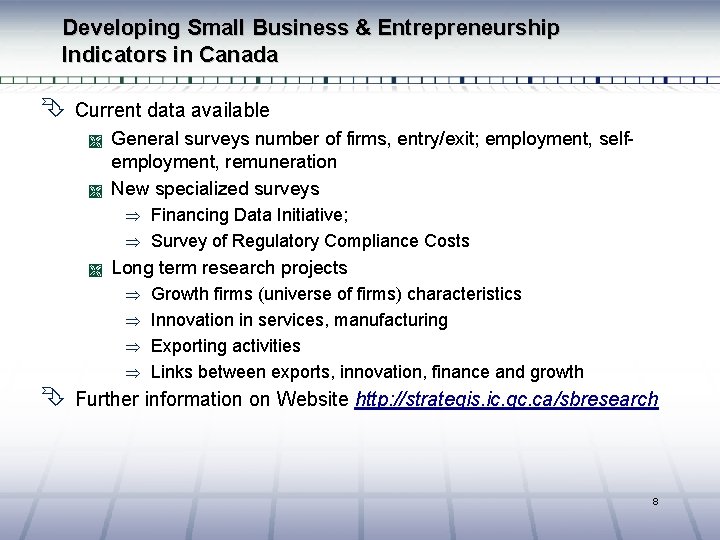
Developing Small Business & Entrepreneurship Indicators in Canada Ê Current data available Ì Ì General surveys number of firms, entry/exit; employment, selfemployment, remuneration New specialized surveys Financing Data Initiative; Þ Survey of Regulatory Compliance Costs Þ Ì Long term research projects Growth firms (universe of firms) characteristics Þ Innovation in services, manufacturing Þ Exporting activities Þ Links between exports, innovation, finance and growth Þ Ê Further information on Website http: //strategis. ic. gc. ca/sbresearch 8
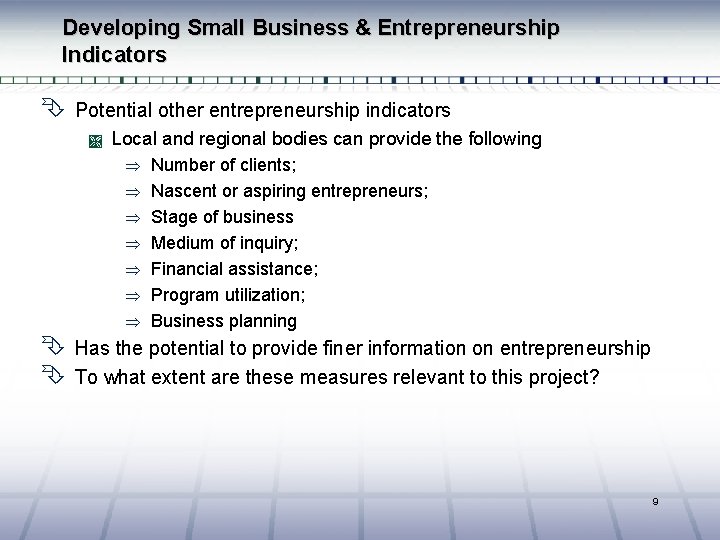
Developing Small Business & Entrepreneurship Indicators Ê Potential other entrepreneurship indicators Ì Local and regional bodies can provide the following Þ Þ Þ Þ Ê Ê Number of clients; Nascent or aspiring entrepreneurs; Stage of business Medium of inquiry; Financial assistance; Program utilization; Business planning Has the potential to provide finer information on entrepreneurship To what extent are these measures relevant to this project? 9

10
- Slides: 10