
ENTREPRENEURIAL FINANCE HARVESTING THE BUSINESS VENTURE INVESTMENT Chapter

ENTREPRENEURIAL FINANCE HARVESTING THE BUSINESS VENTURE INVESTMENT Chapter 14 1
Chapter 14 : Learning Objectives � Plan an exit strategy � Understand the meaning of systematic liquidation � Describe outright sales of the venture to various potential buyers � Discuss the terms “leveraged buyouts” and “management buyouts” � Describe the process of going public � Identify what investment banking involves 2
Planning an Exit Strategy �Evidence suggest that over one-half of entrepreneurs either develop formal exit strategies or at least have thought about harvest strategies at the outset of the venture �Having a harvest plan in place makes it easier to take advantage of windows of opportunity to exit 3
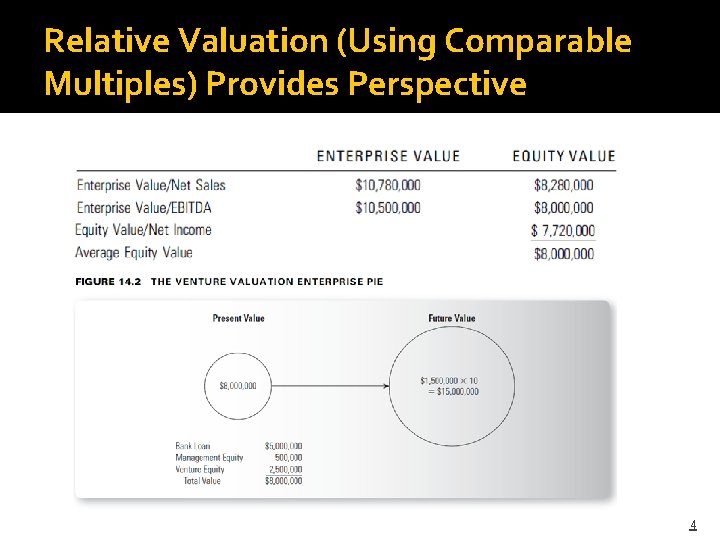
Relative Valuation (Using Comparable Multiples) Provides Perspective 4
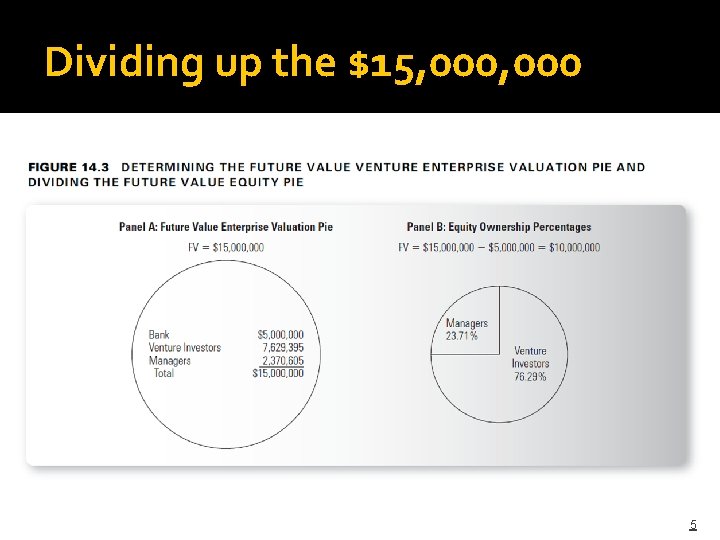
Dividing up the $15, 000 5
Harvesting � Harvesting: process of exiting the privately held business venture to unlock the owners’ investment value � Methods of harvesting Systematic distribution of assets directly to the owners Outright sale of the venture to others Two-step public equity registration/sale 6
Methods of Exiting a Privately Held Venture �Systematic Liquidation: venture liquidated by distributing the venture’s cash flows to the owners � However, other than when the venture is operating in a declining industry, it is difficult to think of cases where the advantages of liquidation outweigh the disadvantages 7
Systematic Liquidation �Advantages: Entrepreneur maintains control throughout the harvest period Harvesting of the venture can be spread out over several years Time, effort, and costs of finding a buyer for the venture can be avoided 8
Systematic Liquidation �Disadvantages: Liquidation proceeds are treated as ordinary income (rather than capital gains) Difficulty for the entrepreneur to maintain focus on a dying venture The value of the venture may decline more rapidly when competitors respond to the venture’s lack of investment 9
Methods of Exiting a Privately Held Venture �Outright Sale – venture sold to others including: family members managers employees outside (external) buyers 10
Outright Sale to Management �Leveraged Buyout (LBO): purchase price of a firm is financed largely with debt financial capital �Management Buyout (MBO): special type of LBO where the firm’s top management continues to run the firm and has substantial equity position in the reorganized firm 11
Outright Sale to Employees �Process can use a leveraged Employee Stock Ownership Plan (ESOP) �The ESOP uses proceeds from the sale of debt to purchase venture equity �Employees gain an ownership stake in the private venture �ESOP strategy was made possible by an act of Congress 12
Sale to Outside Buyers �Control Premium: amount typically applied to the base valuation to reflect the value of controlling the venture rather than just being a minority shareholder �Illiquidity Discount: amount typically applied to the base valuation to compensate for the difficulties in reselling private equity 13
Going Public: Initial Public Offering (IPO) �Initial Public Offering (IPO): a venture’s first offering of SEC-registered securities to the public �Primary Offering: sale of new securities �Secondary Offering: sale of used securities 14
Going Public: Role of Investment Banking �Investment Banking: an intermediary assisting in the creation, sale, and distribution of financial assets Due to their extensive network of possible buyers for the securities (through affiliated brokerage and client services), investment bankers are considered to be the experts in predicting the value of newly issued securities 15
Going Public: Role of Investment Banking � Underwriting Spread: difference between what the investment bank gets from selling securities to public investors and what they pay to the issuing firm � Red Herring Disclaimer: obligatory disclaimer disavowing any intent to act as an offer to sell, or solicit an offer to buy, securities � Due Diligence: process of ascertaining, to the extent possible, an issuing firm’s financial condition and investment intent 16
Going Public: Role of Investment Banking �Firm Commitment: type of agreement with investment bank involving the investment bank’s underwritten purchase and resale of securities �Best Efforts: type of agreement with investment bank employing only marketing and distribution efforts �IPO Underpricing: syndicate’s offering price when it is less than the market price immediately following the offering 17
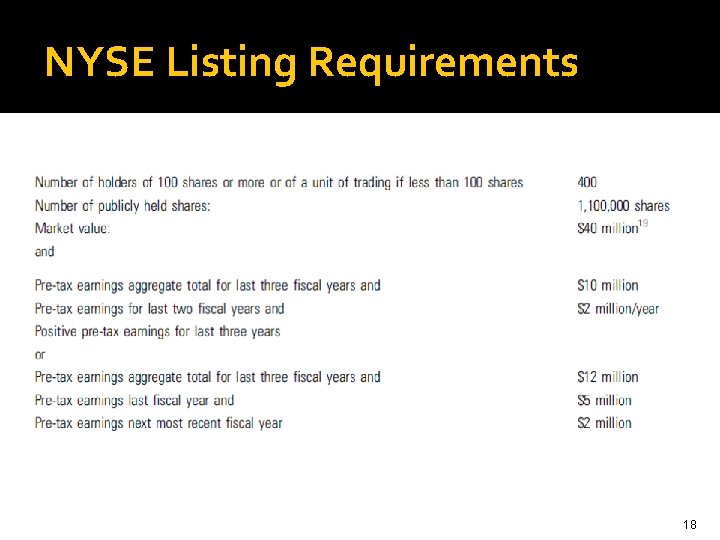
NYSE Listing Requirements 18
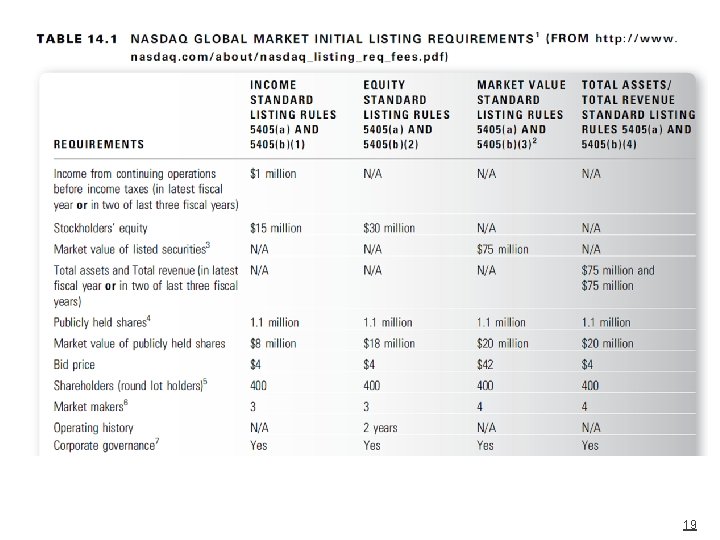
19
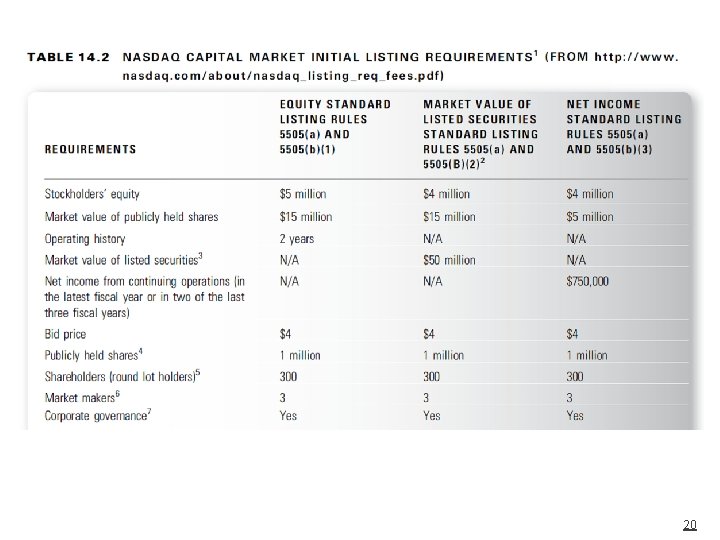
20
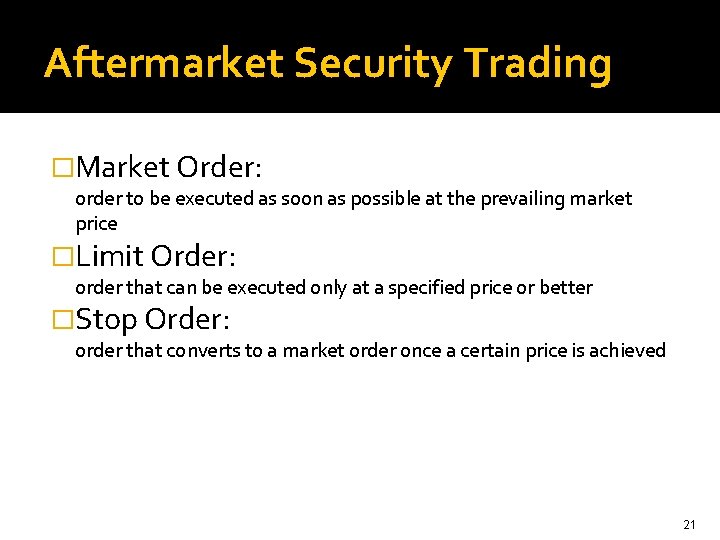
Aftermarket Security Trading �Market Order: order to be executed as soon as possible at the prevailing market price �Limit Order: order that can be executed only at a specified price or better �Stop Order: order that converts to a market order once a certain price is achieved 21
Contemplating & Preparing for the IPO Process � For the officers of a publicly traded corporation, there is minimal personal privacy. They are public figures and their lives are subject to scrutiny in a way that most entrepreneurs have never imagined or desired. � Entrepreneurs in a public company will quickly find out what they can and cannot say about the company 22
Preparing for The IPO �Typical Steps to Follow Organization meeting and due diligence Drafting and attendant activities Initial 30 -day SEC review Pre-marketing Marketing Pricing and closing 23
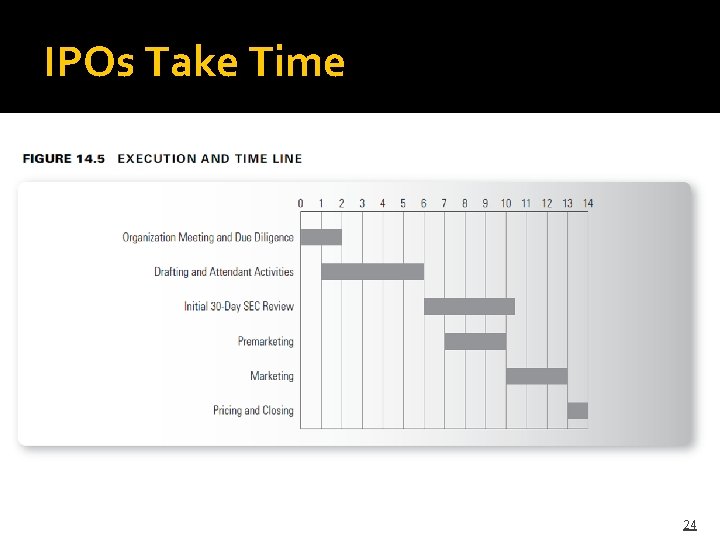
IPOs Take Time 24
- Slides: 24