
Entrainment in stratocumulus clouds Stephan de Roode KNMI






- Slides: 43
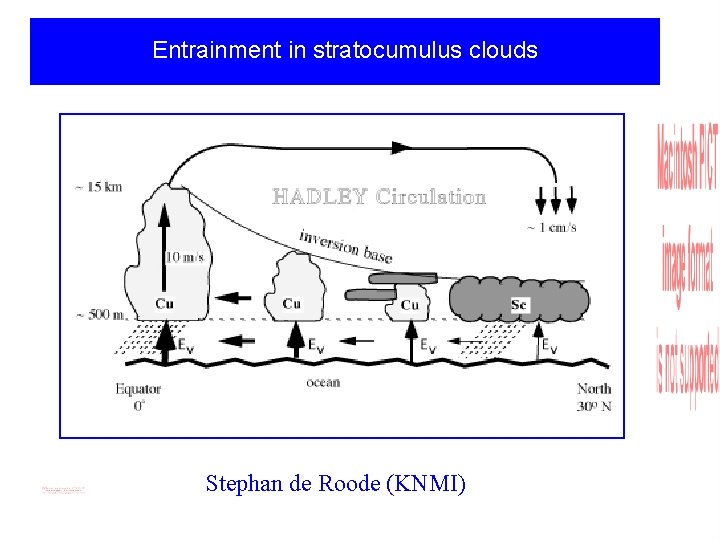
Entrainment in stratocumulus clouds Stephan de Roode (KNMI)
stratocumulus vertical structure
stratocumulus: vertical structure
Key questions • How well is stratocumulus represented in models? • Entrainment - what is it? - why important? - how parameterized? • Boundary-layer mixing and cloud liquid water path - perfect boundary-conditions, perfect cloud structure? • FIRE I observations revisited - a different view on entrainment
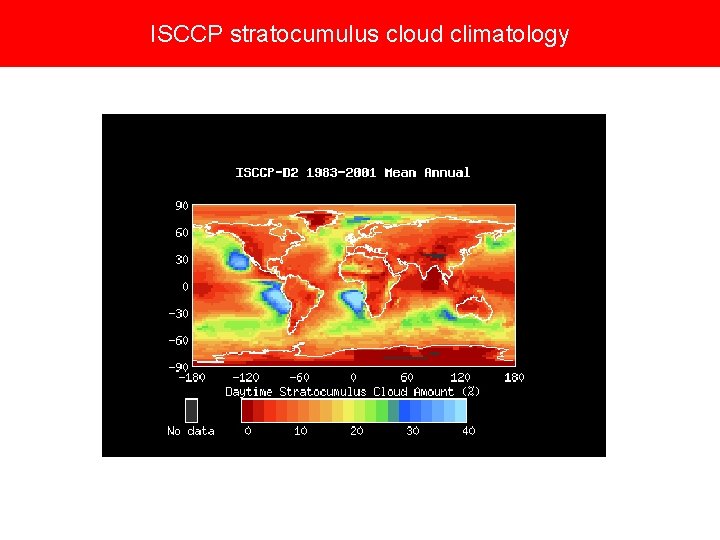
ISCCP stratocumulus cloud climatology
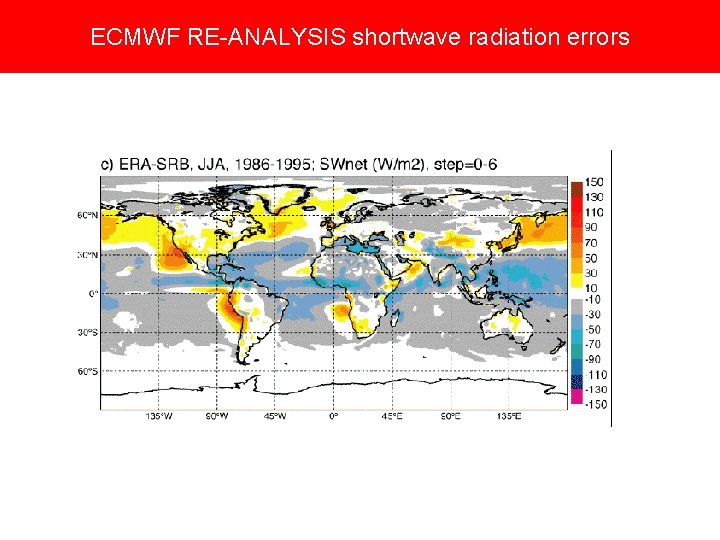
ECMWF RE-ANALYSIS shortwave radiation errors
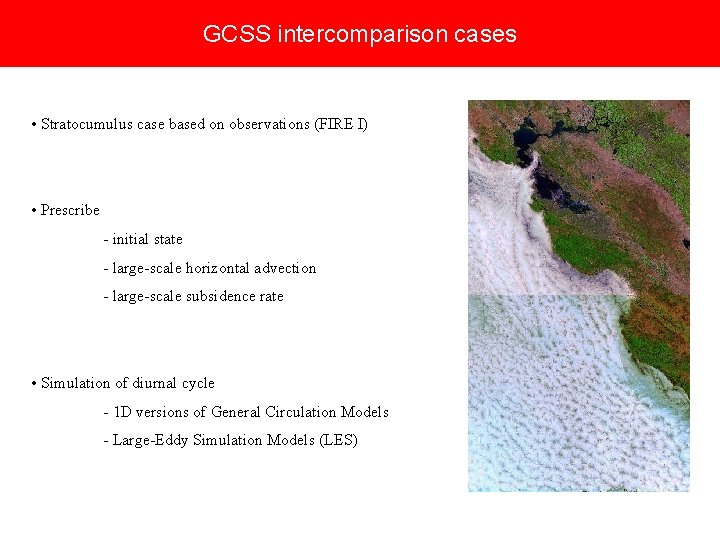
GCSS intercomparison cases • Stratocumulus case based on observations (FIRE I) • Prescribe - initial state - large-scale horizontal advection - large-scale subsidence rate • Simulation of diurnal cycle - 1 D versions of General Circulation Models - Large-Eddy Simulation Models (LES)
GCSS intercomparison cases • Stratocumulus case based on observations (FIRE I) • Prescribe - initial state - large-scale horizontal advection - large-scale subsidence rate • Simulation of diurnal cycle - 1 D versions of General Circulation Models - Large-Eddy Simulation Models (LES) initial jumps for three GCSS stratocumulus cases
GCSS FIRE I intercomparison participants Fine-scale turbulence models [Large-Eddy Simulation Models (LES)] : Dx=Dy=50 m, Dz=10 m 1. IMAU - Peter G. Duynkerke, Stephan de Roode, M. C. van Zanten and P. Jonker 2. MPI - Andreas Chlond, Frank Müller, and Igor Sednev 3. WVU - David Lewellen 4. INM - Javier Calvo, Joan Cuxart, Dolores Olmeda, Enrique Sanchez 5. UKMO - Adrian P. Lock 6. NCAR - Chin-Hoh Moeng (NCAR) 1 D versions of General Circulation Models [Single-Column Models (SCM)] 1. LMD - Sylvain Cheinet 2. MPI - Andreas Chlond, Frank Müller, and Igor Sednev 3. Meteo France I - Hervé Grenier 4. Meteo France II - Jean-Marcel Piriou 5. ECMWF - Martin Köhler 6. CSU - Cara-Lyn Lappen 7. KNMI - Geert Lenderink 8. UKMO - Adrian P. Lock 9. INM - Javier Calvo, Joan Cuxart, Dolores Olmeda, Enrique Sanchez
3 D results from Large-Eddy Simulation results The cloud liquid water path
What is entrainment? Why is entrainment important? Entrainment - mixing of relatively warm and dry air from above the inversion into the cloud layer - important for cloud evolution
3 D results from Large-Eddy Simulation results Entrainment rates
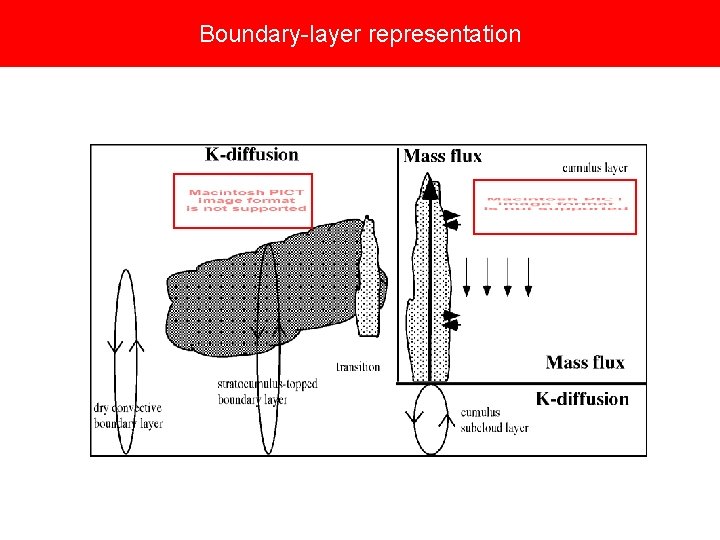
Boundary-layer representation
1 D results from General Circulation Models The cloud liquid water path (LWP) Single Column Model liquid water path results very sensitive to • entrainment rate • drizzle parameterization • convection scheme (erroneous triggering of cumulus clouds)
Key questions • How well is stratocumulus represented in models? • Entrainment - what is it? - why important? - how parameterized? • Boundary-layer mixing and cloud liquid water path - perfect boundary-conditions, perfect cloud structure? • FIRE I observations revisited - a different view on entrainment
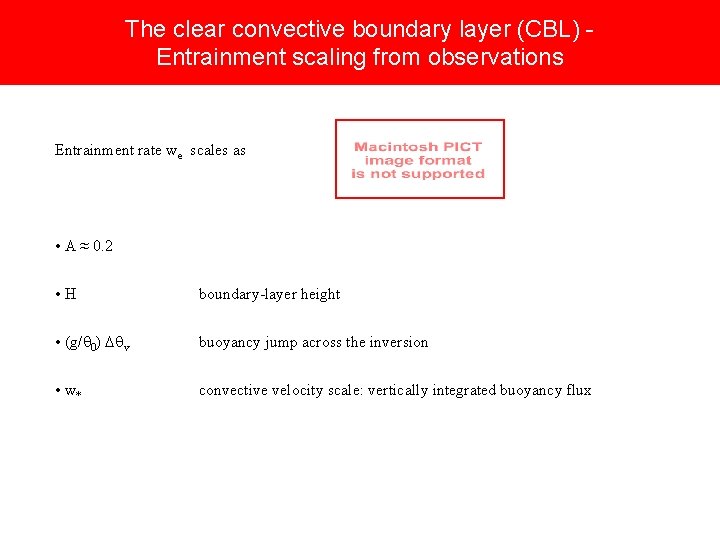
The clear convective boundary layer (CBL) Entrainment scaling from observations Entrainment rate we scales as • A ≈ 0. 2 • H boundary-layer height • (g/q 0) Dqv buoyancy jump across the inversion • w* convective velocity scale: vertically integrated buoyancy flux
Buoyancy flux in stratocumulus convective velocity scale w* depends on entrainment rate we
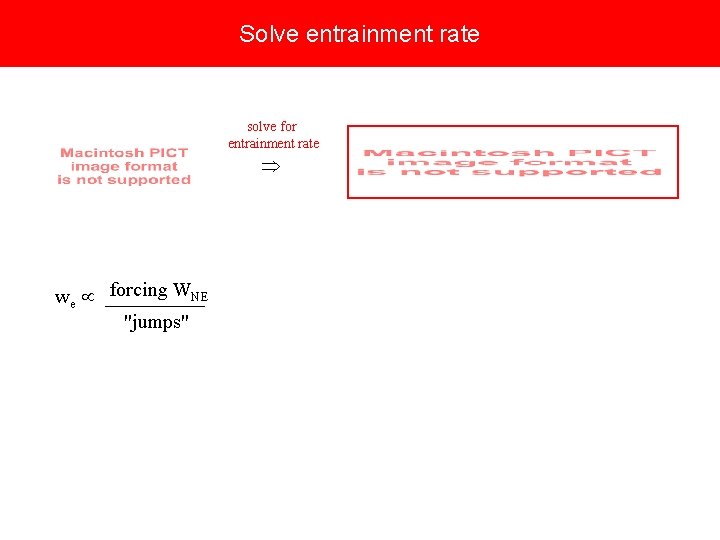
Solve entrainment rate solve for entrainment rate forcing WNE we _____ "jumps"
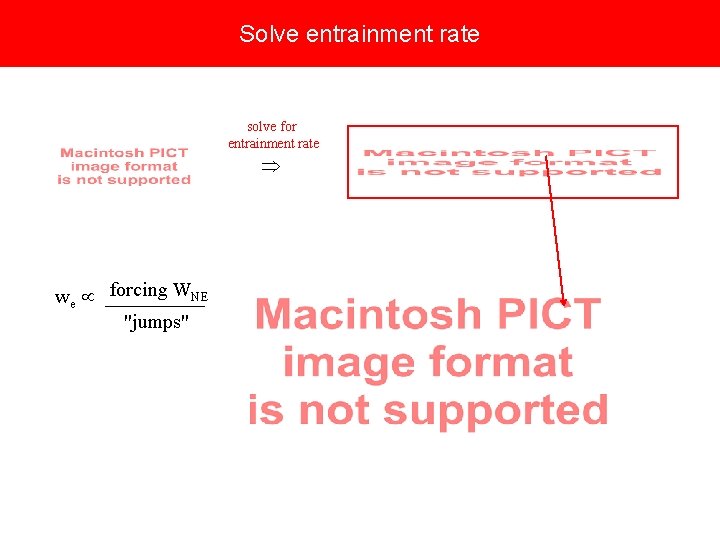
Solve entrainment rate solve for entrainment rate forcing WNE we _____ "jumps"
Solve entrainment rate solve for entrainment rate forcing WNE we _____ "jumps"
Solve entrainment rate solve for entrainment rate forcing WNE we _____ "jumps"
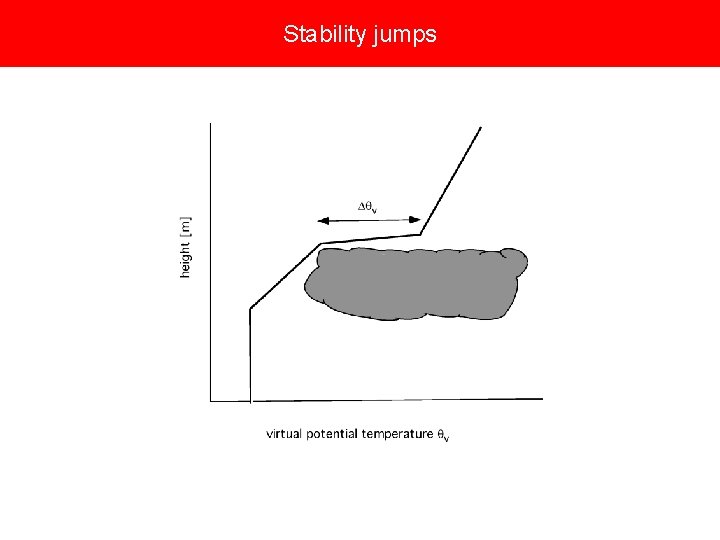
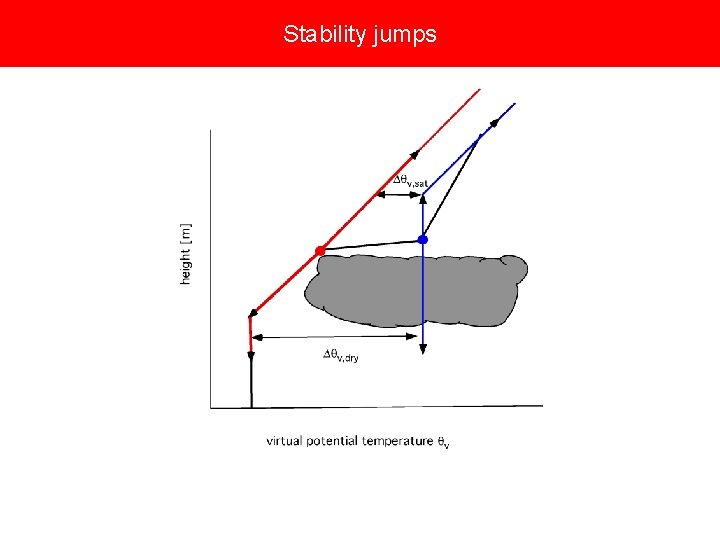
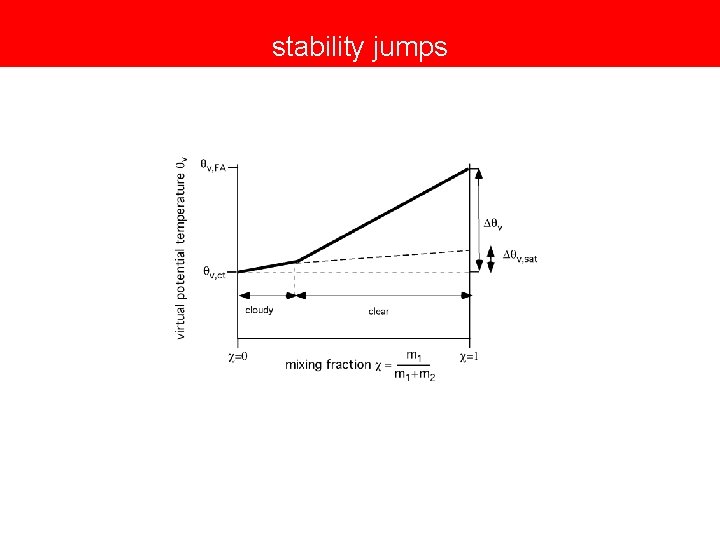
Stability jumps
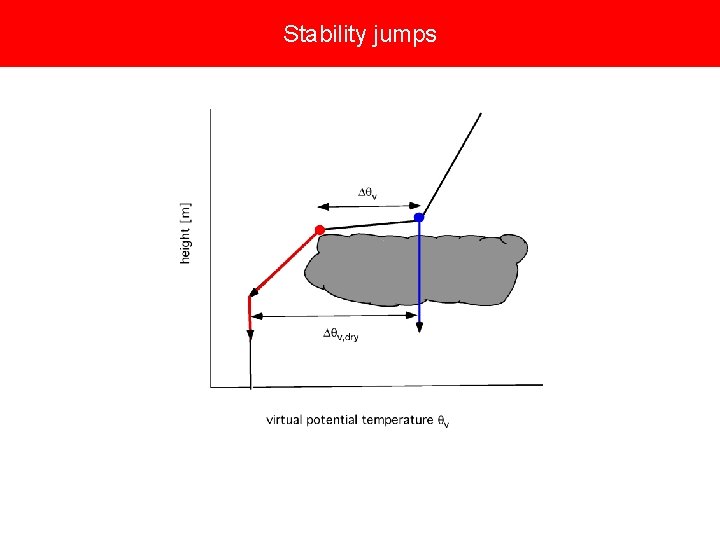
Stability jumps
Stability jumps
Entrainment parameterizations for stratocumulus Results based on LES results • Based on observations of clear CBL • Nicholls and Turton (1986) • Stage and Businger (1981) Lewellen and Lewellen (1998) Van. Zanten et al. (1999) • Lock (1998) • Lilly (2002)
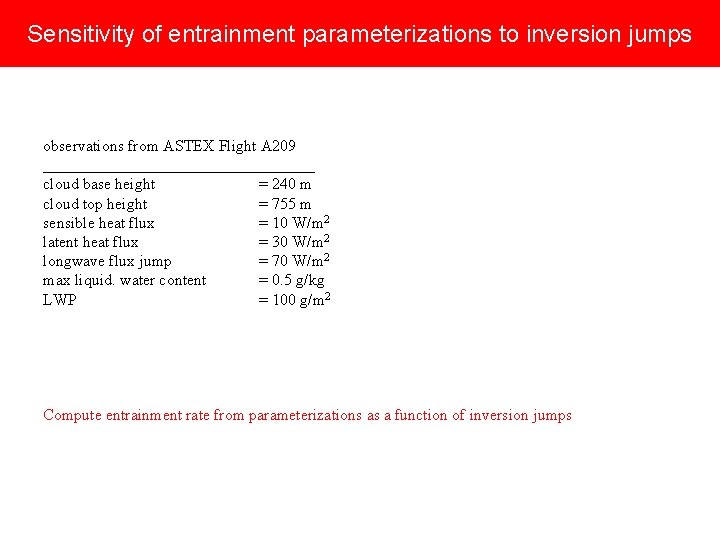
Sensitivity of entrainment parameterizations to inversion jumps observations from ASTEX Flight A 209 _________________ cloud base height = 240 m cloud top height = 755 m sensible heat flux = 10 W/m 2 latent heat flux = 30 W/m 2 longwave flux jump = 70 W/m 2 max liquid. water content = 0. 5 g/kg LWP = 100 g/m 2 Compute entrainment rate from parameterizations as a function of inversion jumps
Entrainment rate [cm/s] sensitivity to inversion jumps
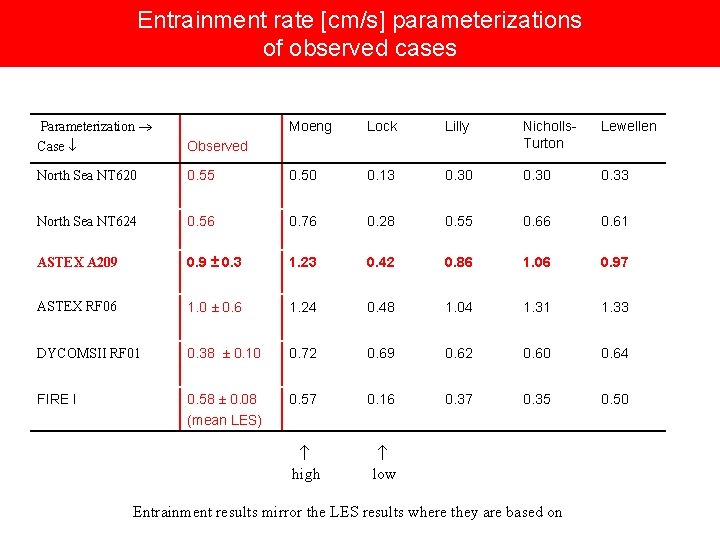
Entrainment rate [cm/s] parameterizations of observed cases Parameterization Case Observed North Sea NT 620 Moeng Lock Lilly Nicholls. Turton Lewellen 0. 55 0. 50 0. 13 0. 30 0. 33 North Sea NT 624 0. 56 0. 76 0. 28 0. 55 0. 66 0. 61 ASTEX A 209 0. 9 ± 0. 3 1. 23 0. 42 0. 86 1. 06 0. 97 ASTEX RF 06 1. 0 ± 0. 6 1. 24 0. 48 1. 04 1. 31 1. 33 DYCOMSII RF 01 0. 38 ± 0. 10 0. 72 0. 69 0. 62 0. 60 0. 64 FIRE I 0. 58 ± 0. 08 (mean LES) 0. 57 0. 16 0. 37 0. 35 0. 50 high low Entrainment results mirror the LES results where they are based on
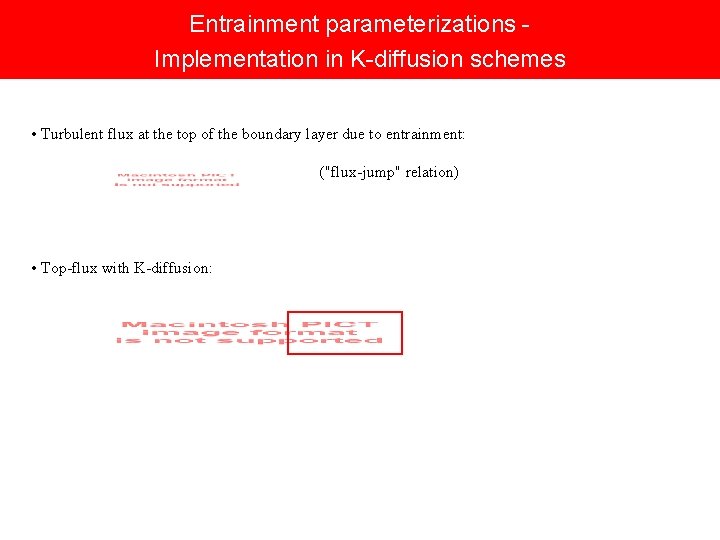
Entrainment parameterizations Implementation in K-diffusion schemes • Turbulent flux at the top of the boundary layer due to entrainment: ("flux-jump" relation) • Top-flux with K-diffusion:
Key questions • How well is stratocumulus represented in models? • Entrainment - what is it? - why important? - how parameterized? • Boundary-layer mixing and cloud liquid water path - perfect boundary-conditions, perfect cloud structure? • FIRE I observations revisited - a different view on entrainment
Compute eddydiffusivity coefficients from FIRE I LES
K-coefficients from FIRE I LES
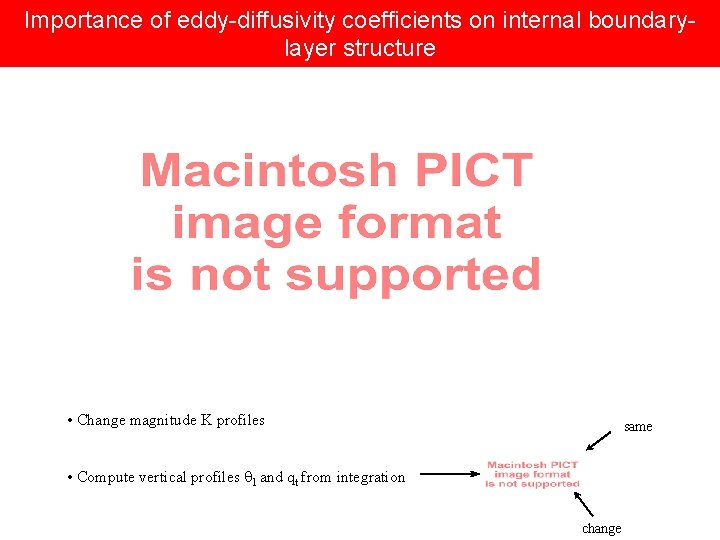
Importance of eddy-diffusivity coefficients on internal boundarylayer structure • Change magnitude K profiles same • Compute vertical profiles ql and qt from integration change
Total water content profiles for different K-profiles but identical vertical flux
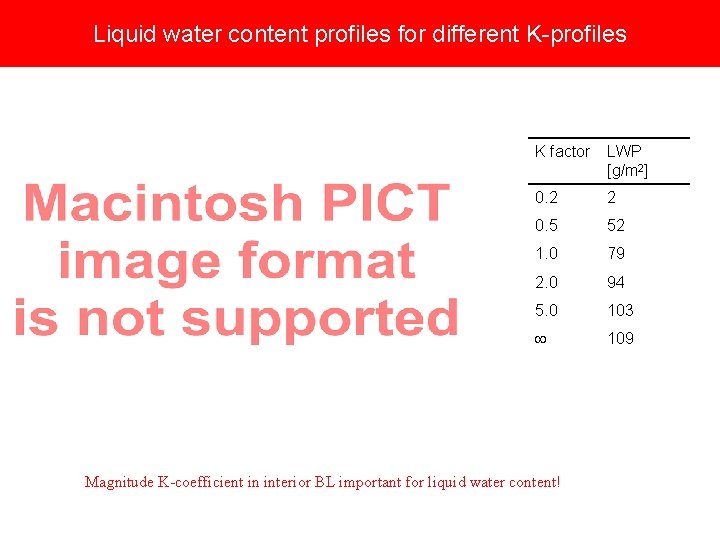
Liquid water content profiles for different K-profiles K factor LWP [g/m 2] 0. 2 2 0. 5 52 1. 0 79 2. 0 94 5. 0 103 109 Magnitude K-coefficient in interior BL important for liquid water content!
Key questions • How well is stratocumulus represented in models? • Entrainment - what is it? - why important? - how parameterized? • Boundary-layer mixing and cloud liquid water path - perfect boundary-conditions, perfect cloud structure? • FIRE I observations revisited - a different view on entrainment
FIRE I stratocumulus over the Pacific Ocean Aircraft lidar observations of cloud-top height
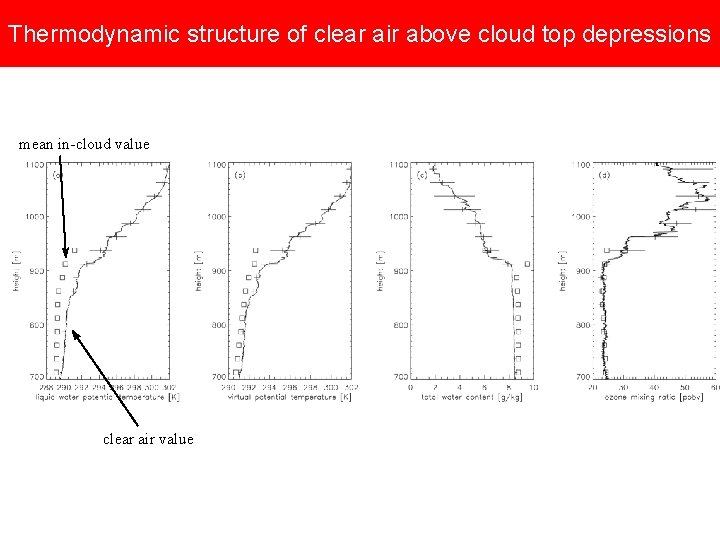
Thermodynamic structure of clear air above cloud top depressions mean in-cloud value clear air value
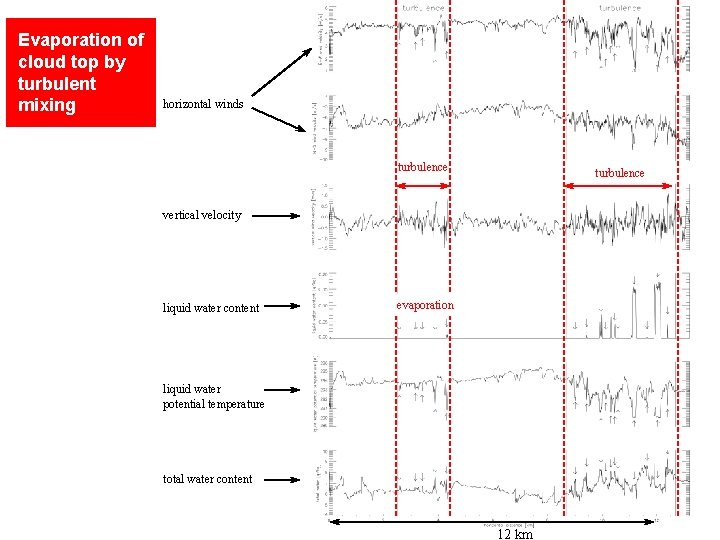
Evaporation of cloud top by turbulent mixing horizontal winds turbulence vertical velocity liquid water content evaporation liquid water potential temperature total water content 12 km
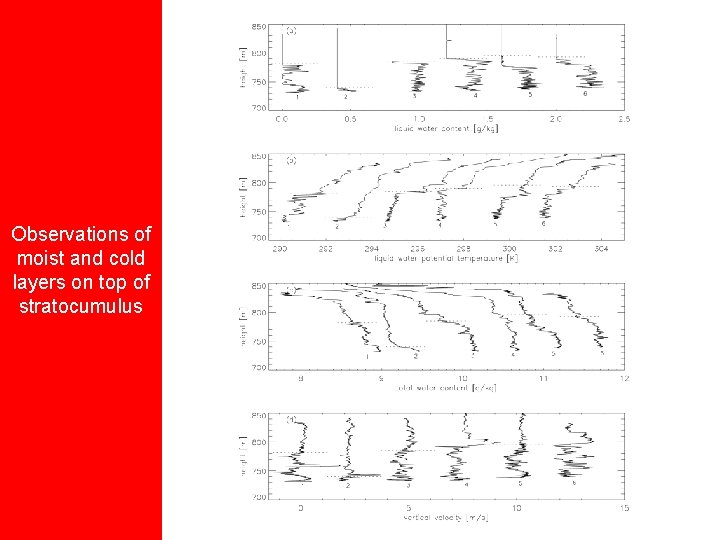
Observations of moist and cold layers on top of stratocumulus
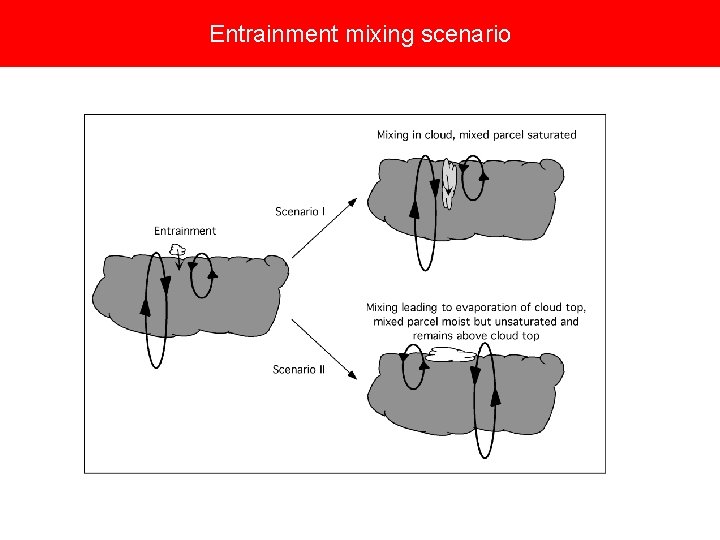
Entrainment mixing scenario
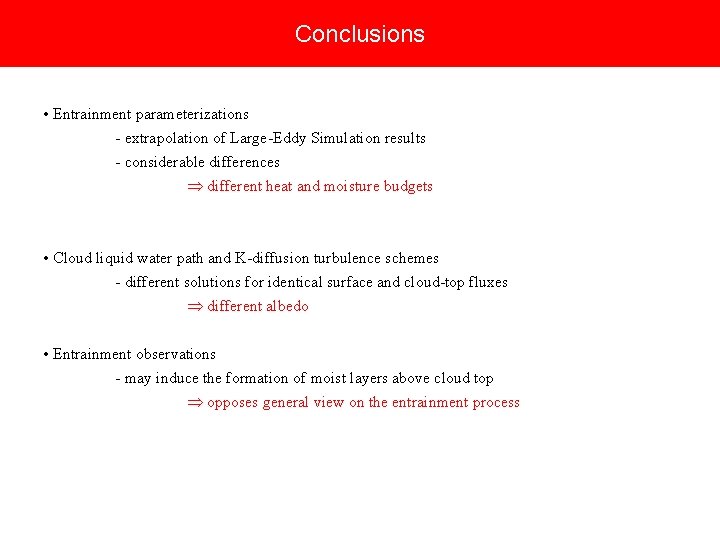
Conclusions • Entrainment parameterizations - extrapolation of Large-Eddy Simulation results - considerable differences different heat and moisture budgets • Cloud liquid water path and K-diffusion turbulence schemes - different solutions for identical surface and cloud-top fluxes different albedo • Entrainment observations - may induce the formation of moist layers above cloud top opposes general view on the entrainment process
stability jumps