
ENTOMOLOGY MEDICALLY IMPORTANT INSECTS In common the medically

- Slides: 19
ENTOMOLOGY MEDICALLY IMPORTANT INSECTS
In common the medically important insects have criteria: �All in common have: �Head, thorax, abdomen. �Also have: mouth part, wings, and legs. �These insects seen by naked eye but we need to see the details by low power 4 X.
These medically important insects can be: � 1 - Mosquitoes: �Anopheles �Culex � 2 - Phlebotomus �Sand fly
Anopheles: Female mosquitoes lay eggs on water, which hatch releasing larvae, which then converted to pupa, then within two days, adults are formed and fly out of the water. Adults ----- eggs ------ larva ----- pupa ------ adult. Here we only see the adult and larva stage.
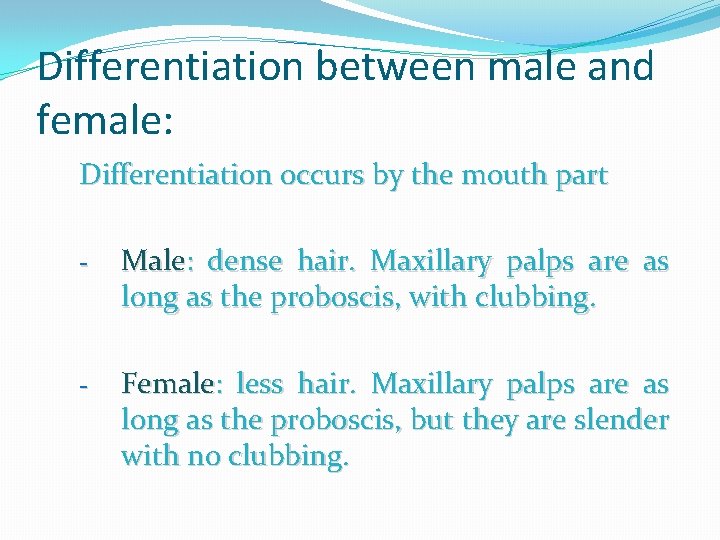
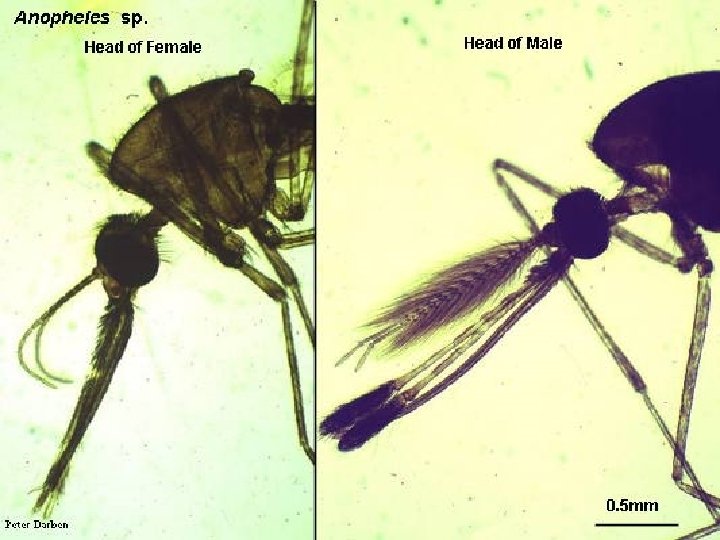
Differentiation between male and female: Differentiation occurs by the mouth part - Male: dense hair. Maxillary palps are as long as the proboscis, with clubbing. - Female: less hair. Maxillary palps are as long as the proboscis, but they are slender with no clubbing.
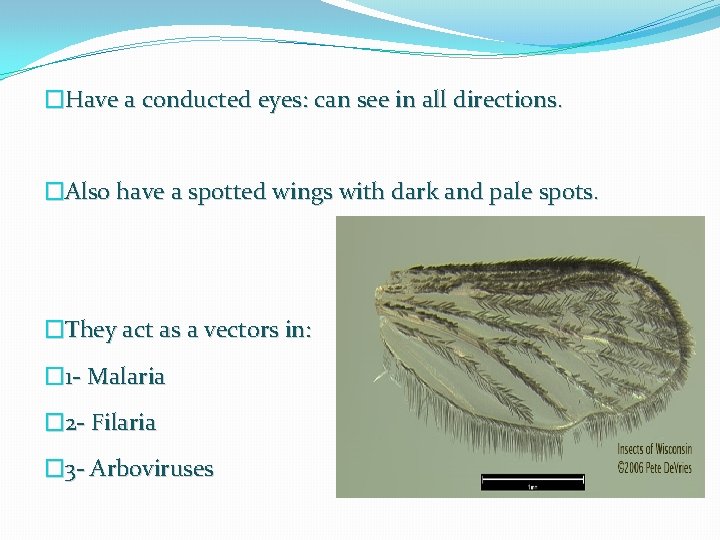
�Have a conducted eyes: can see in all directions. �Also have a spotted wings with dark and pale spots. �They act as a vectors in: � 1 - Malaria � 2 - Filaria � 3 - Arboviruses
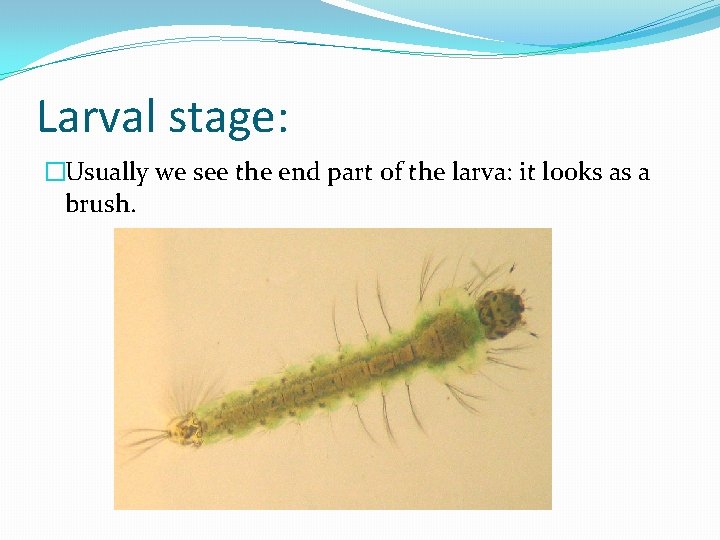
Larval stage: �Usually we see the end part of the larva: it looks as a brush.
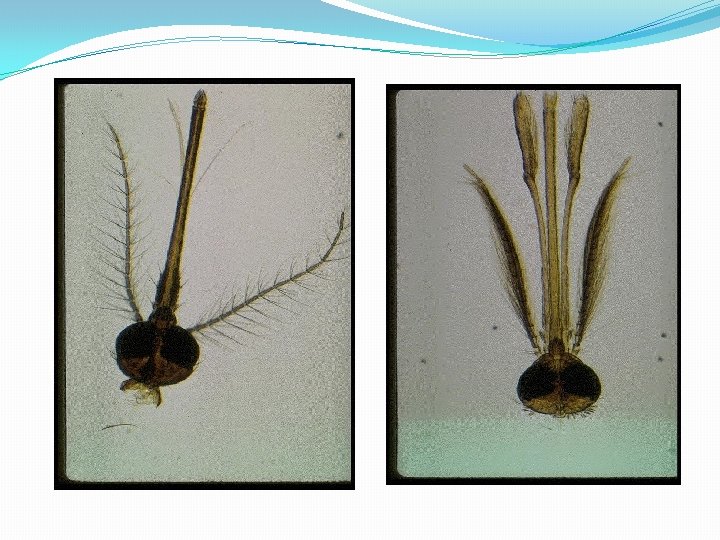
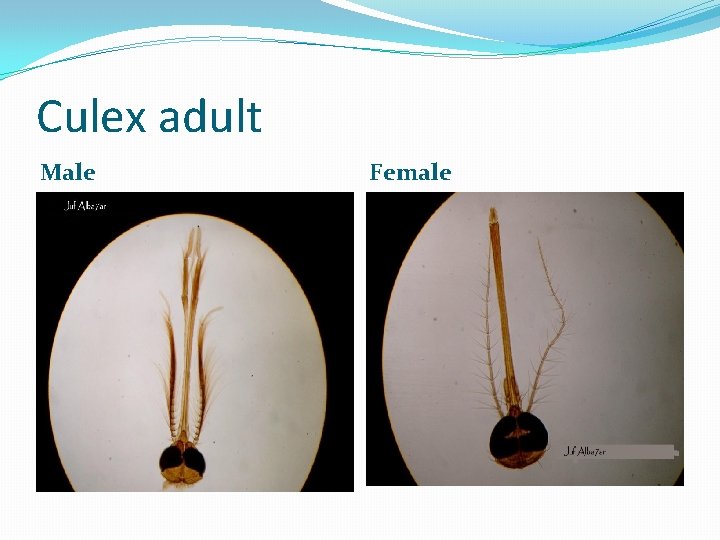
Culex: Differentiation occurs by the mouth part - Male: dense hair. Maxillary palps are as long as the proboscis, they are slender. - Female: less hair. Maxillary palps are shorter than the proboscis.
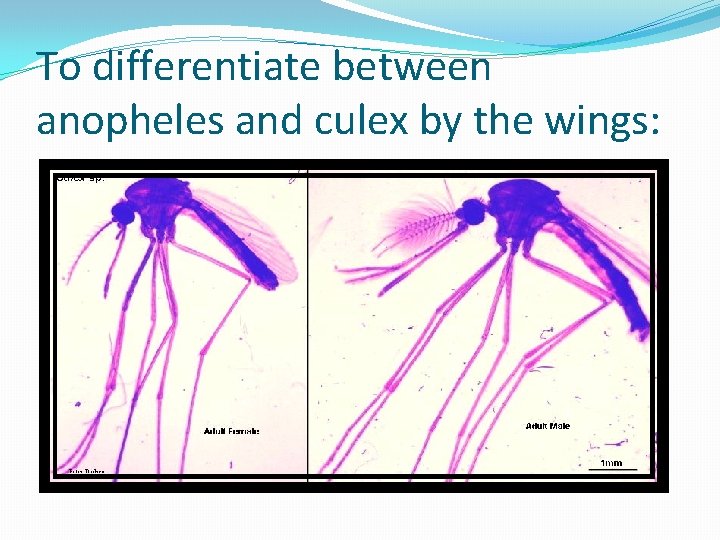
To differentiate between anopheles and culex by the wings:
Culex adult Male Female
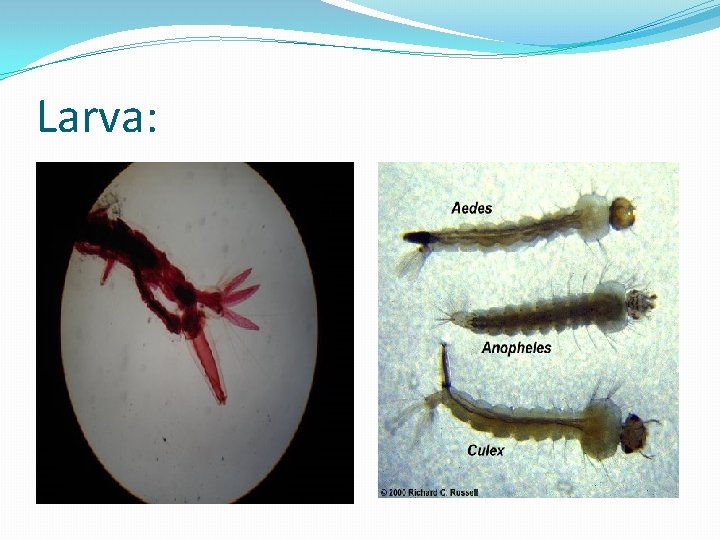
Larval stage: - Culex: The 8 th abdominal segment carries a respiratory siphon. - In anopheles no siphon at end part.
Larva:
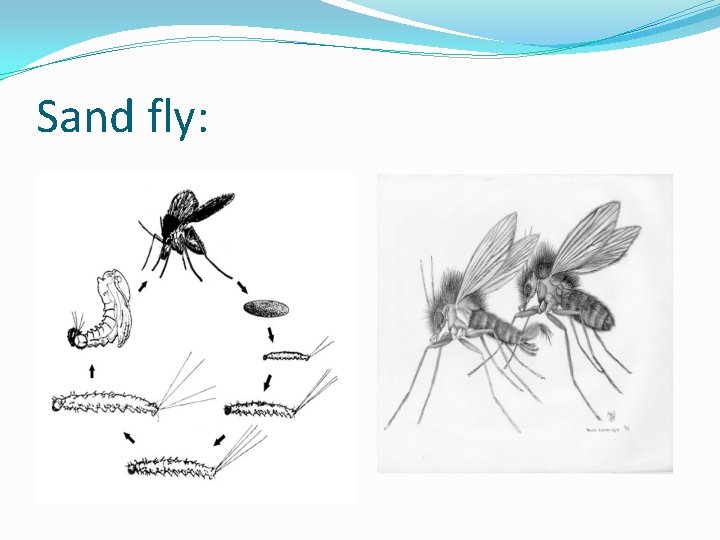
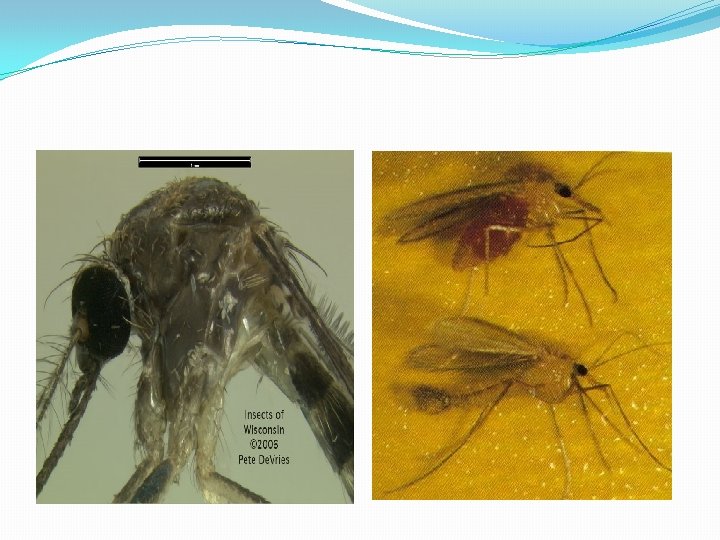
Sand flies (phlebotomus): Head, thorax and abdomen. Hairy, the hairs cover the body, wings and legs. Has humped thorax, attached to it one pair of wings and 3 pairs of legs. Male has claspers on the posterior end. It’s a vector for leishmania.
Sand fly:
Control of mosquitoes 1 - Protection of man from bites of mosquitoes by: - Sleeping under nets Wearing protective clothes Living away from water collections. 2 - Destruction of mosquitoes by: - Physical methods: drainage of any water collection on filling with sand.
- Chemical methods: Application of substances in water that are toxic to the aquatic stages. - Biological methods: Application of living organisms in water to eat the larva. 3 - Control of adult mosquitoes: By spraying insecticides