
ENTOMOLOGY 101 Reproduction Reproduction Topics Attracting a Mate











- Slides: 28
ENTOMOLOGY 101 Reproduction
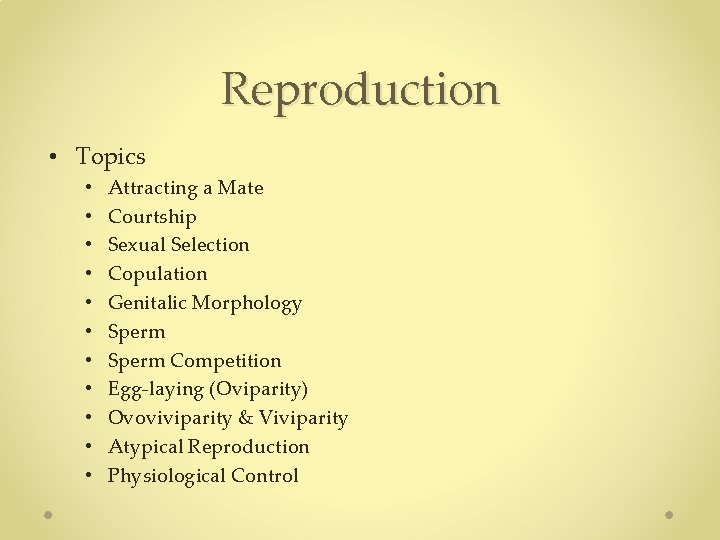
Reproduction • Topics • • • Attracting a Mate Courtship Sexual Selection Copulation Genitalic Morphology Sperm Competition Egg-laying (Oviparity) Ovoviviparity & Viviparity Atypical Reproduction Physiological Control
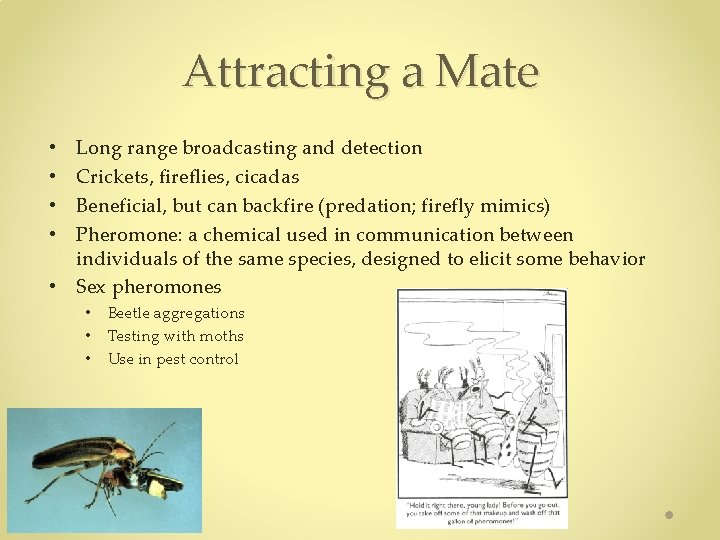
Attracting a Mate Long range broadcasting and detection Crickets, fireflies, cicadas Beneficial, but can backfire (predation; firefly mimics) Pheromone: a chemical used in communication between individuals of the same species, designed to elicit some behavior • Sex pheromones • • Beetle aggregations Testing with moths Use in pest control
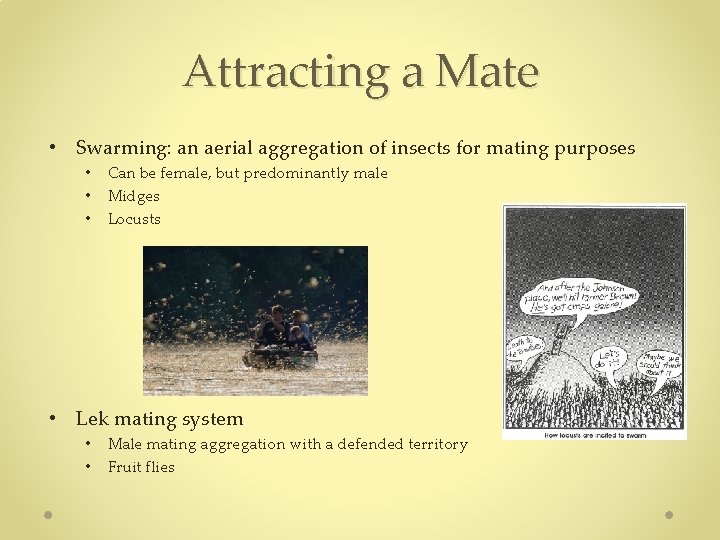
Attracting a Mate • Swarming: an aerial aggregation of insects for mating purposes • • • Can be female, but predominantly male Midges Locusts • Lek mating system • • Male mating aggregation with a defended territory Fruit flies
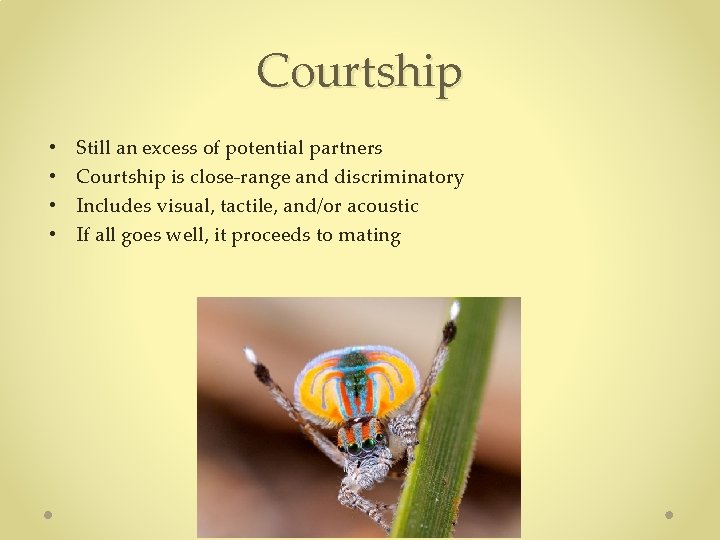
Courtship • • Still an excess of potential partners Courtship is close-range and discriminatory Includes visual, tactile, and/or acoustic If all goes well, it proceeds to mating
Sexual Selection • Courtship is competitive • Female beetles preferentially select males with larger horns • Benefits of doing so include: better defensive capabilities to protect the food source, their mate, and their young • Males ‘pay for’ their large horns, however
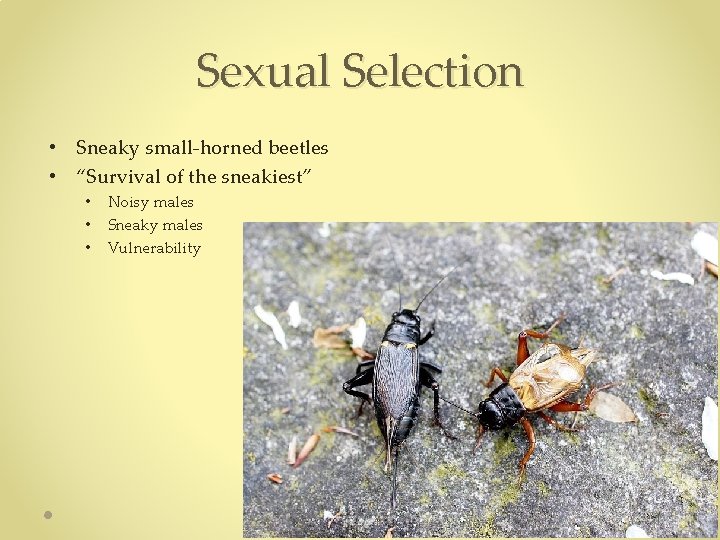
Sexual Selection • Sneaky small-horned beetles • “Survival of the sneakiest” • • • Noisy males Sneaky males Vulnerability
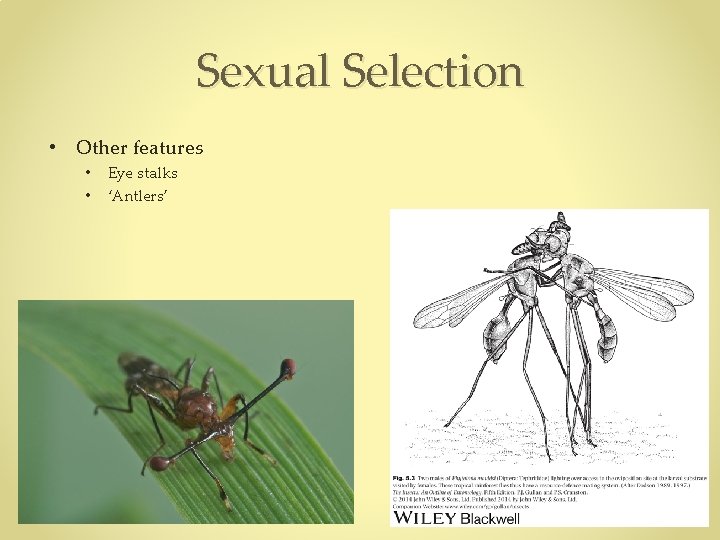
Sexual Selection • Other features • • Eye stalks ‘Antlers’
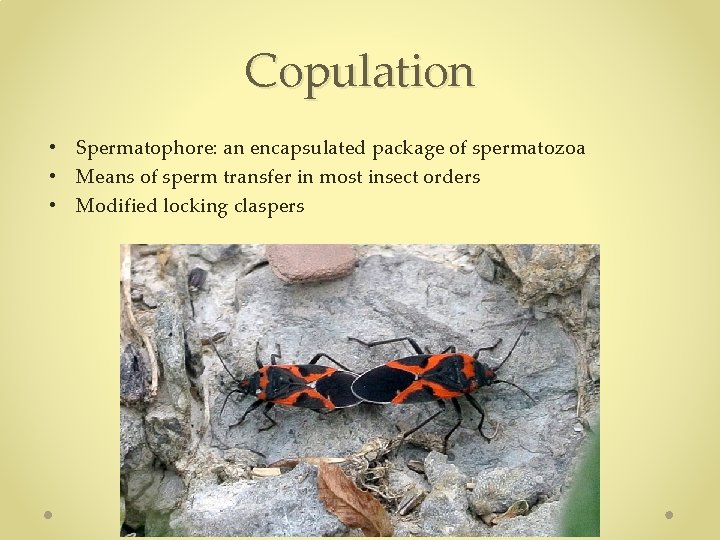
Copulation • Spermatophore: an encapsulated package of spermatozoa • Means of sperm transfer in most insect orders • Modified locking claspers
Copulation • Nuptial gifts • • • Male locates prey item Presents to female Size and duration correlated • If she rejects = no copulation • If prey is small = rejection or incomplete passage by male • If prey is large = sufficient time for male to pass complete ejaculate • • • Evolved independently in many insect groups Females benefit from offerings Males parental investment
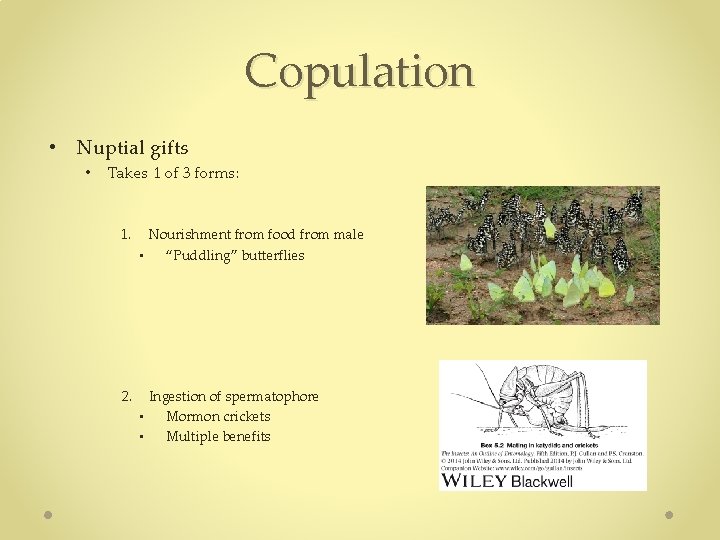
Copulation • Nuptial gifts • Takes 1 of 3 forms: 1. Nourishment from food from male • “Puddling” butterflies 2. Ingestion of spermatophore • Mormon crickets • Multiple benefits
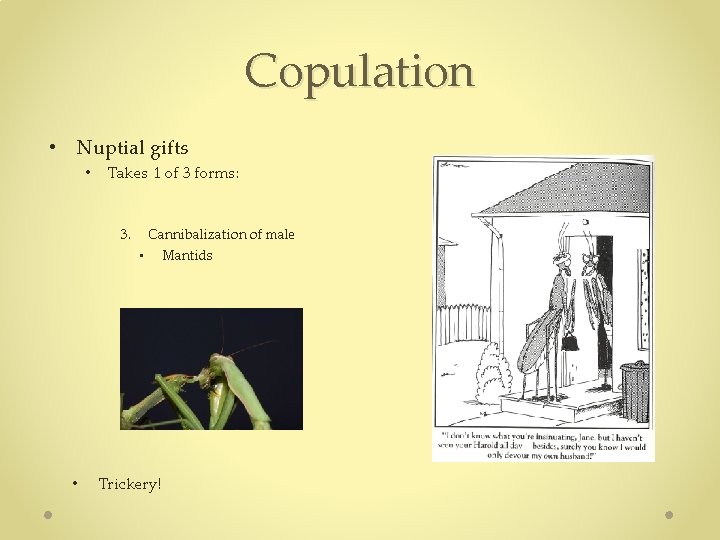
Copulation • Nuptial gifts • Takes 1 of 3 forms: 3. • Cannibalization of male • Mantids Trickery!
Genitalic Morphology • • Diverse in otherwise similar species “Lock-and-key” hypothesis Selects against hybridization Interspecific breeding can result in damage (ex: Carabus beetles)
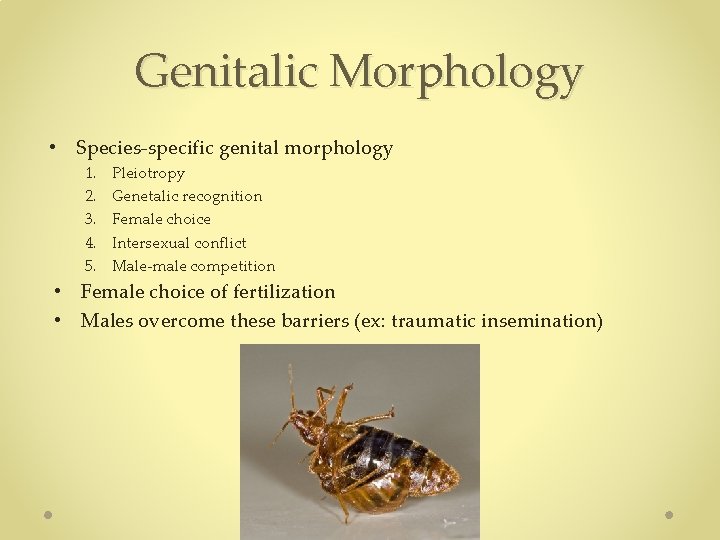
Genitalic Morphology • Species-specific genital morphology 1. 2. 3. 4. 5. Pleiotropy Genetalic recognition Female choice Intersexual conflict Male-male competition • Female choice of fertilization • Males overcome these barriers (ex: traumatic insemination)
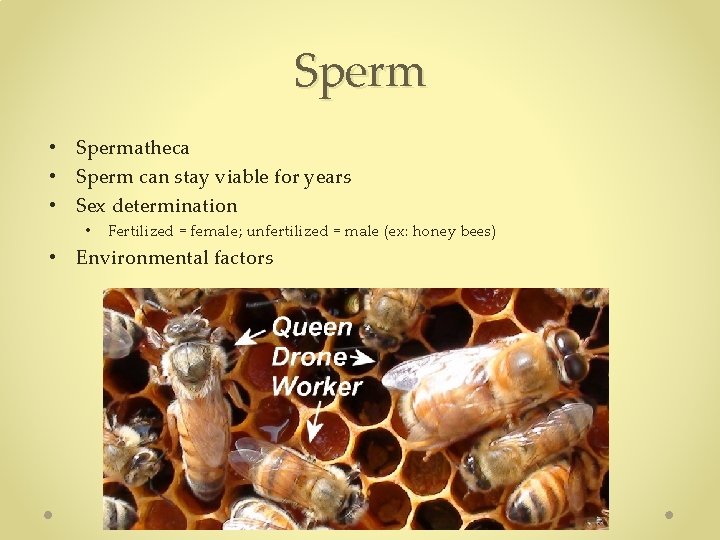
Sperm • Spermatheca • Sperm can stay viable for years • Sex determination • Fertilized = female; unfertilized = male (ex: honey bees) • Environmental factors
Sperm Competition • Multiple matings are common (ex: butterflies) • Sperm competition: combination of internal fertilization, sperm storage, multiple matings, and overlap of ejaculates • Occurs within the reproductive tract at time of oviposition
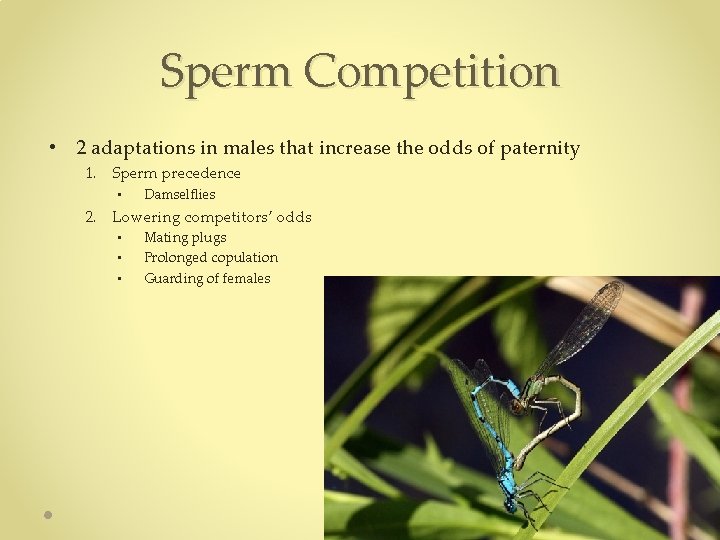
Sperm Competition • 2 adaptations in males that increase the odds of paternity 1. Sperm precedence • Damselflies 2. Lowering competitors’ odds • • • Mating plugs Prolonged copulation Guarding of females
Egg-laying (Oviparity) • Majority are oviparous • Oviposition • • Digging, probing, dropping Deposited on or near offspring food source • Care of eggs ranges
Egg-laying (Oviparity) • • Egg-tending is rare by insects, even more rare by male insects Giant water bugs Paternal protection as an adaptation for large size “Back-brooding”
Egg-laying (Oviparity) • Egg structure • Vitelline membrane • Chorion
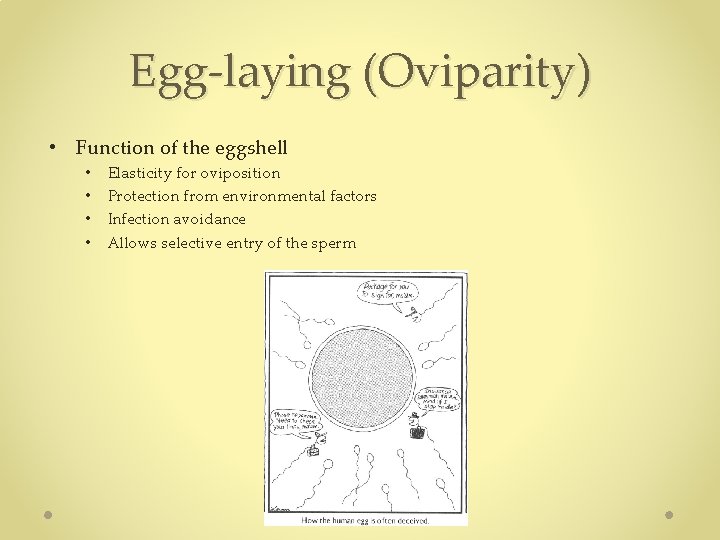
Egg-laying (Oviparity) • Function of the eggshell • • Elasticity for oviposition Protection from environmental factors Infection avoidance Allows selective entry of the sperm
Egg-laying (Oviparity) • Ovipositor modifications • Parasitic wasps; bees • Egg secretions / cement • Ootheca
Ovoviviparity & Viviparity • • Mother’s body provides necessary nourishment Young develop inside mother Live young Example: Tsetse flies • Ovoviviparity • • • Midway between oviparity and viviparity Appears to be viviparous on the outside Egg created with enough nourishment Hatch immediately prior to, or after, being laid Example: Tachinidae flies
Atypical Reproduction • • Alternating sexual/asexual reproduction Parthenogenesis: development from unfertilized eggs Obligatory vs. faculatative Thelytokous parthenogenesis: female only (aphids) Arrhenotokous parthenogenesis: male only (honey bees) Amphitokous parthenogenesis: both Larval pedogenesis
Physiological Control • Reproductive events may start or stop due to: • • • Temperature Humidity Photoperiod Availability of food Suitable egg-laying site • May also be modified by internal events such as: • • Nutritional condition Maturation of oocytes • Hormones • • • Juvenile Hormone- triggers functioning of certain organs Ecdysteroids- influence morphogenesis and gonad functions Neuropeptides- regulate endocrine function
1. 2. 3. 4. 5. 6. 7. 8. 9. 10. 11. 12. 13. 14. 15. 16. 17. 18. 19. 20. 21. 22. 23. 24. 25. (no picture) http: //www. news. cornell. edu/sites/chronicle. cornell/files/fireflyeatingmale. 72. JPEG / The Far Side Gallery 4 by Gary Larson, 1993, page 74 Attracting a mate https: //commons. wikimedia. org/wiki/File: Kanizsa. jpg The Far Side Gallery 2 by Gary Larson, 1986, page 135 https: //commons. wikimedia. org/wiki/File: Male. Peacock. Spider. jpg https: //commons. wikimedia. org/wiki/File: Proagoderus_%28%3 DOnthophagus%29_nigricornis_Fairmaire, _1887_male_%283232050794%29. jpg https: //commons. wikimedia. org/wiki/File: Gryllus_bimaculatus_02. jpg Other features: 1. https: //en. wikipedia. org/wiki/File: Teleopsis_dalmanni. jpg 2. Wiley Blackwell: The Insects: An Outline of Entomology, 4 th edition – Figure 5. 3 https: //commons. wikimedia. org/wiki/File: Mating_Small_Milkweed_bugs_Lygaeus_kalmii. jpg https: //commons. wikimedia. org/wiki/File: Zygaena_filipendula_240503. jpg Nuptial gifts: 1. Butterfly: https: //commons. wikimedia. org/wiki/File: Common_Emigrant_%28 Catopsilia_pomona%29_%26_Lime_Butterfly_%28 Papilio_demoleus%29_mudpuddling_W_IMG_0283. jpg 2. Cricket: Wiley Blackwell: The Insects: An Outline of Entomology, 4 th edition – Box 5. 2 Nuptial gifts: 1. Mantis: https: //commons. wikimedia. org/wiki/File: Praying_Mantis_Sexual_Cannibalism_European-26. jpg 2. The Far Side Gallery 3 by Gary Larson, 1988, page 114 http: //tarantulas. tropica. ru/files/images/spermatheca_2. jpg (see permission) https: //commons. wikimedia. org/wiki/File: Traumatic_insemination_1_edit 1. jpg http: //1. bp. blogspot. com/_qz 9 a. E 02 ggbw/TGATWpwg. HVI/AAAAB-4/EMrc 8 ay 5 b. Pc/s 1600/Caste. jpg (no picture) https: //commons. wikimedia. org/wiki/File: Common_blue_damselflies_%28 Enallagma_cyathigerum%29_female_dull_green_form_mating_wheel. jpg https: //commons. wikimedia. org/wiki/File: Dolichomitus_imperator_Eiablage-02 -R_Bartz. jpg https: //commons. wikimedia. org/wiki/File: Toe-Biter. jpg / The Far Side Gallery 3 by Gary Larson, 1988, page 166 Wiley Blackwell: The Insects: An Outline of Entomology, 4 th edition – Figure 5. 10 The Far Side Gallery 4 by Gary Larson, 1993, page 15 https: //commons. wikimedia. org/wiki/File: Mantis_laying_ootheca. jpg http: //www. warrenphotographic. co. uk/06910 -tsetse-fly-female-laying-larva Atypical Reproduction: https: //commons. wikimedia. org/wiki/File: Aphid-giving-birth. jpg https: //commons. wikimedia. org/wiki/File: Mycocepurus_smithii_CASENT 0173989_1. jpg (no picture)
Questions?
Permission